Tag: GDP

  • Why Singapore Is The World’s Most Successful Society

    Why Singapore Is The World’s Most Successful Society

    Singapore turns 50 on Aug. 9, 2015. Is Singapore the most successful society since human history began? Or, to put it differently, did Singapore improve the living standards of its people faster and more comprehensively than any other society?

    The only way to answer these questions is with empirical data. The most basic needs of any human being are food, shelter, health, education and employment. Did Singapore improve the delivery of those basic needs faster than any other society?

    When Singapore was expelled from Malaysia in 1965 and thrust into an unwanted independence, it was a typical Third World country. Its per capita income of $500 was the same as Ghana’s then. It was not desperately poor, but it had malnutrition. I know this personally as I was put on a special feeding program when I joined school in the first grade, drinking milk from a pail with a ladle shared by other children.

    Table 1: Comparison of real GDP per capita gdpchart
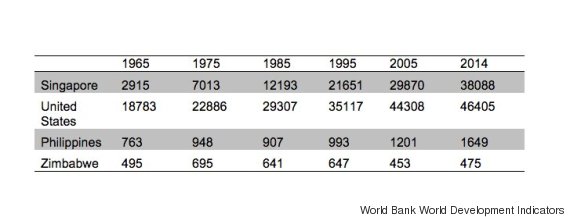
    *Using constant 2005 USD

    This malnutrition disappeared quickly. Singapore’s per capita income has shot from $500 to $55,000 today, the largest increase any newly independent nation has enjoyed. This spectacular economic success story of Singapore is clearly amazing. Yet, when I was Singapore’s ambassador to the UN in the 1980s, the then head of UNICEF, the American James Grant, used to chide me for speaking about it.

    Table 2: Percent increase in real GDP from year listed to 2014 gdpchart2
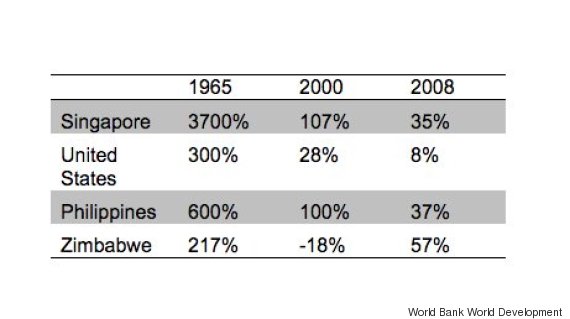
    *Using constant 2005 USD

    He told me that Singapore’s success in another area was even more spectacular. We had reduced our infant mortality faster than any other society, going down from 35 per 1,000 live births in 1965 to 10.90 in 1985. James Grant was right. Babies are the most vulnerable members of any society. When they live instead of dying, they reflect an improving social ecosystem that keeps them alive.

    The babies who lived in Singapore went on to enjoy one of the best education systems in the world. The OECD ranked 15-year-old Singaporean children number one in the world in a recent global ranking of “Universal Basic Skills” in mathematics and science. Singapore students also topped the OECD PISA problem solving test in 2012.

    There are many other areas where Singapore’s social standards top the charts. From the Singapore with slums that I grew up in, we now have the highest home ownership of any country in the world, with 90 percent of residents living in homes they own. Even amongst households in the lowest 20 percent of incomes, over 80 percent own their own homes. Rapidly rising salaries and strong compulsory saving schemes, through the Central Provident Fund, led to this incredibly high home ownership.

    So why did Singapore succeed so comprehensively? The simple answer is exceptional leadership. Many in the world have heard of Mr. Lee Kuan Yew, the founding prime minister who passed away in March this year. Far fewer have heard of Dr. Goh Keng Swee, the architect of Singapore’s economic miracle, and Mr. S. Rajaratnam,Singapore’s philosopher par excellence.

    Together, they made a great team.

    This exceptional team also implemented three exceptional policies: Meritocracy, Pragmatism and Honesty. Indeed, I share this “secret” MPH formula with every foreign student at the Lee Kuan Yew School, and I assure them that if they implement it, their country will succeed as well as Singapore. Meritocracy means a country picks its best citizens, not the relatives of the ruling class, to run a country. Pragmatism means that a country does not try to reinvent the wheel. As Dr. Goh Keng Swee would say to me, “Kishore, no matter what problem Singapore encounters, somebody, somewhere, has solved it. Let us copy the solution and adapt it to Singapore.” Copying best practices is something any country can do. However, implementing “Honesty” is the hardest thing to do. Corruption is the single biggest reason why most Third World countries have failed. The greatest strength of Singapore’s founding fathers was that they were ruthlessly honest. It also helped that they were exceptionally shrewd and cunning.

    Still, Singapore has its fair share of detractors. Its political system was widely viewed as being an “enlightened dictatorship,” even though free elections have been held every five years. Its media is widely perceived to be controlled by the government and Singapore is ranked number 153 out of 180 by Reporters Without Borders in 2015 on the Press Freedom Index. Many human rights organizations criticize it. Freedom House ranks Singapore as “partially free.”

    Undoubtedly, some of these criticisms have some validity. Yet, the Singapore population is one of the best educated populations and, hence, globally mobile. They could vote with their feet if Singapore were a stifling “un-free” society. Most choose to stay. Equally importantly, some of the most talented people in the world, including Americans and Europeans, are giving up their citizenship to become Singapore citizens. Maybe they have noticed something that the Western media has not noticed: Singapore is one of the best places to be born in and to live in. Quite amazingly, a society destined to fail in 1965 has become one of the world’s greatest success stories.


    Source: www.huffingtonpost.com

  • It’s The Singapore Way: Very Wealthy And Still Living With Mum

    It’s The Singapore Way: Very Wealthy And Still Living With Mum

    Everyone knows Singapore is an expensive country that’s transforming itself into a smart city. Here are five less-known facts about the island nation as it marks its 50th year of independence.

    Costly cars

    Car buyers in Singapore must bid for a limited number of permits — called Certificates of Entitlement — that are auctioned by the government. It’s tool used to control pollution and congestion and can more than double the vehicle’s market value. Consequently, an average family sedan can cost almost as much as a home in the U.S.

    Economic miracle

    The country went from third world to first in two generations. Singapore took 22 years to double its GDP per capita, about half the time of other developed economies including Australia. Its GDP per capita was S$71,318 ($52,000) in 2014, among the highest in the world. The island also has among the highest proportions of millionaire households, according to Boston Consulting Group.

    Living at home

    The majority of housing in Singapore is built by the government. More than 80 percent of the resident population lives in such accommodation, which is typically cheaper than privately developed properties. Because of these dynamics and a rule that prohibits most single Singaporeans from buying a public housing apartment while single — unless they are at least 35 years old — an overwhelming majority of unmarried adults live with their parents. And are big fans of Airbnb.

    Mandatory military service

    Singapore is among a handful of developed nations with compulsory military service for its male residents and citizens. The National Service is for a period of about two years, and typically begins at age 18, unless there are exceptional circumstances — like training for the Olympics, for example.

    Highly paid ministers

    Singapore’s prime minister is among the world’s highest paid heads of state. The government has justified his and other ministers’ salaries on the grounds that it helps attract top talent that might otherwise be lost to the private sector, and that it discourages corruption. It cut ministers’ salaries in 2012 after voter unhappiness over a widening income gap in the country. But they’re still very comfortably off.


    Source: http://english.astroawani.com

  • Poor People In A Rich Country

    Poor People In A Rich Country

    Cardboard collectors

    Growing up in Singapore through the 1970s and 1980s, the karung guni man was a common feature.  They collected newspapers and cardboard boxes.  Over time, the karanguni men that collected old stuff became more interested in electrical items.  There is a garbage collection/recycling industry out there that is lucrative.  As usual, it is lucrative for those higher up the economic food chain.

    At the lower end of this food chain are those that wheel around a trolley looking for discarded cardboard boxes at rubbish disposal areas behind shophouses and business premises.  Many of us are too busy rushing back and forth from work and we hardly come across these people.  However, I am sure that a growing number of Singaporeans have been noticing a trend of elderly individuals collecting cardboards or tin cans.  When my office was in the Bugis area, I used to come across a regular tin-can collecting uncle probably in his 70s or in his late 60s at the very least.  He would hang around the coffee shops to pick empty cans from tables.  There is an old lady with bent back that can be seen struggling to pull an old trolley loaded with flattened cardboard boxes.  With my office now located near Chinatown, I do come across more such old people in the back alleys of Chinatown.

    These are hardworking men and women. They are around the age of my mother and father or even older.  These are the men and women that have been working hard all their lives.  They struggle but they soldier on.  When I look at these elderly people, the thought that crosses my mind is: ‘Why? Why do they still need to work at this age?’  I know that the answer to this question cannot be unidimensional.  Cardboard collectors don’t make a fantastic amount of money.  I understand that a daily average can be anywhere from $2 to $5.

    Are these elderly people living on their own?  Do they not have children?  Do their children not provide for them?  Is it that their children cannot afford to take care of them?  Do these elderly people want to have their sense of dignity and fend for themselves?  Do they want to keep themselves occupied in their old age by doing the one job that they know?

    The State perspective

    One of the most disturbing aspects of the Singapore government’s official position on poverty has been its non-acknowledgement.  From statements to the effect that there are no homeless persons in Singapore to a refusal to define a poverty line, the state has systematically tried to keep the problem of poverty under wraps.  However, it cannot be denied that the government has rolled out initiatives to assist low-income families.  I remember attending a closed door seminar where Minister Shanmugam characterised the Singapore government as being socialist but giving the appearance of being capitalist.  From what he said on that occasion, I understand that the PAP leaders probably see themselves as being in a position where they need to appear to be very pro-business to keep investment in whilst at the same time quietly carrying out welfare measures.  Perhaps, this could be the reason for often sounding very pro-business and appearing to ignore the existence of a social underclass.  Perhaps, appearing to ignore but not really ignoring.

    That would be a kinder way of looking at how our leaders perceive the masses.  I’m not so sure if that is true.  I truly wonder if our leaders and decision makers are living too much in an ivory tower to fully appreciate what is going on at the ground level.

    Today I noticed some funny comments on facebook about elderly people exercising by collecting cardboard boxes in the hot sun.  I traced those comments to the origin and it turns out that Minister Tan Chuan Jin has posted on his facebook about elderly people collecting cardboard boxes.  To be fair, he appears to acknowledge that there are different reasons why the elderly engage in this work.  However, what is disturbing is that the post is intended to build on the narrative that old people want to have a sense of dignity and they derive that through work and also for the elderly people work is a way of keeping themselves occupied or even getting some exercise.

    I reproduce the Minister’s post in full here as I don’t want to take him out of context:

    “While I often chat with them when I meet them, I haven’t gone so far up the value chain to know the middle man and the whole set-up. I was most happy to join a group of young Singaporeans from Youth Corp on a project they initiated – to get first hand insight into the lives of elderly cardboard collectors: what motivated them to do what they do; and the challenges they face. The youngsters devoted their weekends over a 2-month period to befriend the cardboard aunties and uncles on the streets in the Jalan Besar area, and spent time talking to them to understand what they are going through in life.

    They shared with me that they were surprised by their own findings! The normal perception that all cardboard collectors are people who are unable to take care of themselves financially is not really true. There will be some who do this as their main source of income. Some do so to supplement what they have. Some prefer to earn extra monies, treat it as a form of exercise and activity rather than being cooped up at home. They do this to remain independent, so that they can have dignity and not have to ask their families for help.

    For members of the public, the simplest thing that one can do for these people is to talk to them to understand them. More often than not, people make judgements without finding out the facts of the matter, in this instance, the stigma surrounding cardboard collectors. But of course, for those who genuinely need financial help because they are unable to find other jobs to supplement their income from cardboard collecting, the government will do what it can to help these people. If you know of individuals who need help, do let us know.

    I’d like to thank Zaihan Mohamed Yusof who started it all with his articlehttp://www.tnp.sg/news/when-cardboard-gold in The New Paper. The youngsters picked up on the idea and followed up. Cheers to Koh Cheng Jun (Tm Lead) and Muhammad Syazwan Bin Mohamed Suhri who were with me on the ground, and thanks to the team who shared their thoughts with me…Goh Pei Yi Valerie, Janarthanan Ahalya, Khoo Lay Keat Bryan, Lee Jun Xian, Serena Mok Jia Xin.

    Inspired by you guys for taking that extra step. We all can too!”

    The truth is that there are bound to be some elderly people working for those reasons pointed out as there will be those that work because they have no other choice. I have nothing against looking at cardboard collecting elderly people from a nuanced perspective by considering all the varieties of reasons for which they collect cardboard boxes. However, I do object to highlighting a particular perspective that assists in bolstering the state narrative that there is no poverty in Singapore.

    I know many of my fellow Singaporeans (especially professionals) have no idea that there is poverty in Singapore. I have engaged in social work with residents in rental flats and some of these in localities such as Chai Chee where the flats house the elderly. Many of these residents are surviving on a mixture of government grants and charitable donations of food and groceries from social workers. (As an aside, the great redeeming feature of our rat-race driven country is the existence of a decent number of charitable, socially conscious and responsible citizens. There is still hope for our society.) The plight of the underprivileged in our society is unpardonable considering that we are a 1st world country. Clearly more can be done by average Singaporeans as well as by the state. It really doesn’t help to build a narrative that eventually makes it acceptable for our pioneer generation to work till the day they die. If they are to work as an MP till the day they die without having to turn up in Parliament or carry out active constituency duties, I don’t think anyone would object to that kind of work for the elderly. If you expect someone in his/her 80s to work as a cardboard collector with no safety net, then somewhere along the way, the system has failed these people.

    One problem with my parents’ generation is that many of them had no retirement planning. That was their background. It is not possible to blame them. To many, their kids would have been the retirement safety net. My parents have been fortunate to be able to retire. I know that this is not the case for many elderly people. Some elderly people have to resort to working because they don’t want to burden their children. They see their sons and daughters struggling to maintain their families. Wages for many have not increased to keep up with inflation and many low-income families find it virtually impossible to fully support their parents. It is true that if you asked some of the working elderly they would reply that they work to have dignity and not to have to ask their families for help. The sub-text in that reply is that their children are not in a position to properly support them.cardboard-collector

    This year we celebrate 50 years of our nationhood. We have progressed economically and many have benefited but many have also been left behind. Let’s not forget the back breaking work of a generation of Singaporeans that continue to work in the shadows of our skyscrapers. There is no point in constructing myths about how the PAP turned a fishing village into a modern metropolis when the people that were responsible for the rapid growth of the 1970s are now left to toil till the day would die.

    Let’s acknowledge the existence of a problem. Let’s see what can be done to solve it.

    (P.S. To be fair to Tan Chuan Jin, he does mention in his post to let the government know if we know of individuals that need help.)


    Subra

    * The author blogs at article14blog.wordpress.com primarily about the law & politics in Singapore, occassionally veering off into socio-economic issues. Article 14 of the Singapore Constitution protects the Freedom of Speech, Expression, Peaceful Assembly and Association. But, there are excessive restrictions on these Freedoms. He hopes that he can, in his own small way, contribute to the gradual realisation of these Freedoms in this land.


    Source: www.tremeritus.com

  • Senarai 10 Negara Terkaya Di Dunia

    Senarai 10 Negara Terkaya Di Dunia

    Tabung Kewangan Antarabangsa (IMF) adalah sebuah organisasi antarabangsa yang menyelia sistem kewangan dunia mengikut polisi makroekonomi sesebuah negara.

    IMF mengambil kira kadar pertukaran asing dan imbangan pembayaran sesebuah negara semasa menentukan keluaran dalam negara kasar (KDNK).

    Kadar kekayaan sesebuah negara itu boleh diukur menerusi KDNK yang merangkumi pendekatan produk, pendapatan dan perbelanjaan.

    Berdasarkan data perbandingan populasi yang diperoleh daripada IMF pada 15 Jun 2015, ketahui 10 negara yang dianggap paling kaya di dunia.

    10 – Hong Kong

    Semenjak tahun 70-an, Hong Kong beransur menjadi penghubung kepada dunia dan negara China. Selama beberapa dekad, negara yang mempunyai populasi 7 juta orang ini berkembang menjadi pusat dagangan paling popular di dunia.

    Cukai yang rendah dan sistem perdagangan bebas menjadikan Hong Kong masyhur sebagai hab perdagangan utama global serta pusat kewangan paling penting selepas New York dan London.

    9 – Switzerland

    Laporan Daya Saing Global (GCR) menyatakan Switzerland sebagai yang negara yang paling berdaya saing di dunia. Sebahagian besar ekonomi negara yang ditubuhkan pada tahun 1300 ini dipacu oleh industri berkaitan bahan kimia, farmaseutikal dan kesihatan, mesin dan lain-lain.

    Selain itu, pelbagai jenama bertaraf dunia berasal dari Switzerland seperti Nestlé, Swatch, Adecco, Zurich Financial Services, Credit Suisse dan lain-lain.

    8 – San Marino

    Negara Eropah ini kurang mendapat perhatian dunia. Terpencil dikelilingi Itali, struktur ekonomi San Marino sebahagian besar bergantung pada sektor kewangan, perindustrian, perkhidmatan dan pelancongan.

    San Marino mempunyai keadaan ekonomi yang sangat stabil dan kadar pengangguran antara terendah di benua Eropah. Satu-satunya negara di dunia di mana jumlah kenderaan melebihi penduduk.

    7 – Emiriah Arab Bersatu

    Emiriah Arab Bersatu (UAE) adalah sebuah negara persekutuan merangkumi tujuh emiriah iaitu Abu Dhabi, Ajman, Dubai, Fujairah, Ras al-Khaimah, Sharjah dan Umm al-Quwain.

    Presiden pertama UAE, Sheikh Zayed menyelia pembangunan negara lantas memacu hasil minyak untuk penjagaan kesihatan, pendidikan dan infrastruktur.

    Petroleum dan gas asli menyumbang kepada kekayaan UAE. Simpanan petrol dan gas aslinya masing-masing adalah yang ketujuh dan ke-17 terbesar di dunia.

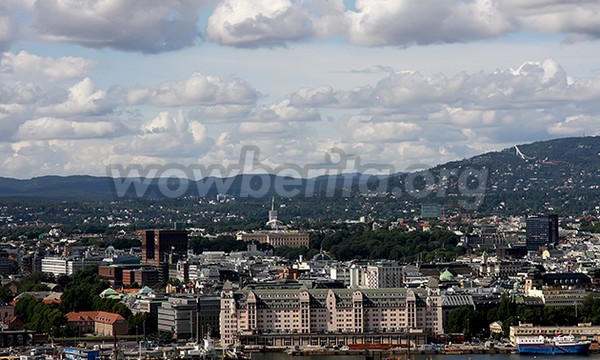
    6 – Norway

    Norway merupakan salah sebuah negara dengan kerajaan tertua di dunia. Ia ditubuhkan sekitar 1,100 tahun lalu dan sehingga kini mengekalkan pemerintahan monarki.

    Norway kaya dengan bekalan petroleum, gas asli, mineral, kayu balak, makanan laut, air tawar dan kuasa hidro. Industri petroleum sahaja menyumbang sekitar satu perempat daripada keluaran dalam negara kasar negara.

    5 – Kuwait

    Meskipun mempunyai jumlah penduduk seramai 4.1 juta, hanya 1.2 juta adalah warga Kuwait manakala 2.8 juta yang lainnya adalah ekspatriat. Bank Dunia mengiktiraf Kuwait sebagai sebuah negara dengan ekonomi yang berpendapatan tinggi.

    Petroleum sahaja menyumbang hampir separuh dari keluaran dalam negara kasar. Petroleum dan baja merupakan dua sektor utama yang memonopoli ekonomi Kuwait. Mata wangnya, iaitu Dinar adalah unit mata wang dengan nilai paling tinggi di dunia.

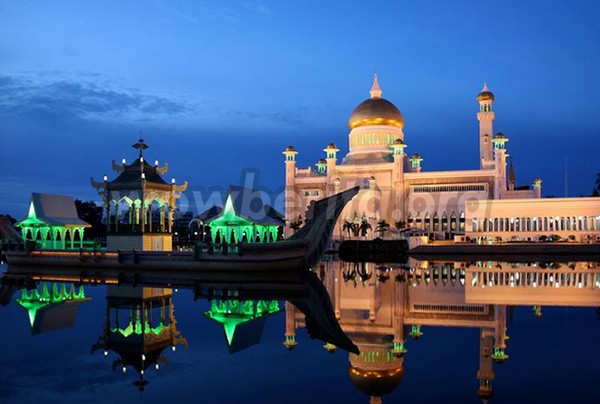
    4 – Brunei

    Pertumbuhan ekonomi sekitar tahun 1990-an hingga 2000, membawa perubahan kepada Brunei sehingga menjadi sebuah negara perindustrian. Purata peningkatannya adalah 56 peratus bagi tahun 1999 hingga 2008 sahaja.

    Sektor petroleum dan gas asli menjana kekayaan negara yang mencapai kemerdekaan dari United Kingdom pada 1 Januari 1984 ini. IMF turut menyatakan bahawa hutang Brunei berada di kadar kosong peratus daripada KDNK negaranya.

    3 – Singapura

    Selain menjadi salah satu hab perdagangan utama dunia, Singapura merupakan pusat kewangan keempat terbesar dan salah satu daripada dua pelabuhan kontena paling sibuk di dunia.

    Ekonomi global Singapura yang pelbagai tertumpu pada sektor perdagangan, terutamanya perkilangan yang menyumbang kira-kira 30 peratus daripada KDNK Singapura.

    Negara yang terletak di selatan Semenanjung Malaysia ini juga menduduki kedudukan yang tinggi bagi taraf hidup, pendidikan, penjagaan kesihatan serta daya saing ekonomi.

    2 – Luxembourg

    Walaupun dilihat sebagai sebuah negara yang kecil dan dilitupi hutan Ardennes yang padat, ekonomi maju Luxembourg berjaya meletakkan negara Eropah ini di tangga kedua terkaya di dunia.

    Ekonomi stabil dan berpendapatan tinggi Luxembourg didominasi oleh perindustrian besi sehingga 1960-an. Sejak beberapa dekad lalu, sektor kewangan mula mengambil alih sehingga menjadikan Luxembourg pusat pelaburan kedua terbesar di dunia selepas Amerika Syarikat.

    1 – Qatar

    Negara yang terletak di semenanjung Arab ini muncul sebagai negara terkaya dengan hasil keluaran dalam negara kasar tertinggi di dunia. Penduduk Qatar tidak perlu membayar cukai pendapatan kerana taraf kehidupan yang tinggi.

    Negara berpendapatan tinggi ini mempunyai ekonomi yang maju disokong oleh simpanan gas asli ketiga terbesar di dunia. Selain itu simpanan minyaknya melebihi 25 bilion tong. Pada tahun 2012 sahaja, simpanan minyak Qatar menyumbang lebih 13 peratus daripada sumber keperluan global.


    Source: http://wowberita.org