Tag: hijab

  • Tempers Flare Over Australia Day Ad Featuring Hijab-Wearing Girls

    Tempers Flare Over Australia Day Ad Featuring Hijab-Wearing Girls

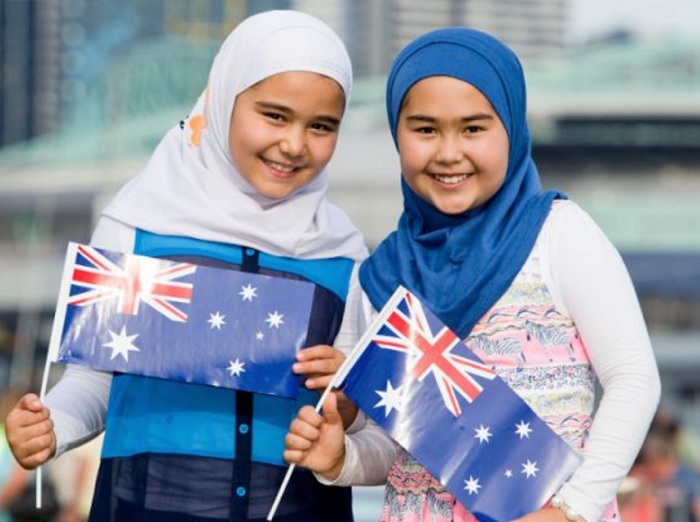
    Tempers have flared over an Australia Day advertising campaign featuring children wearing Muslim headscarves, fanning debate over the meaning of the January 26 Australian national holiday.

    The image of the young girls wearing hijabs was removed from a Melbourne billboard this week after the advertising firm behind the campaign to promote the holiday, which was backed by the Victoria state government, received threats.

    Far-right groups posted a picture of the poster on social media claiming it to be a misrepresentation of Australia Day and accused the government of being too politically correct.

    In response, a crowdfunding campaign to raise A$20,000 (S$21,561) to have the advertisement reinstated kicked off Wednesday and by late Thursday had received more than A$140,000 in pledges.

    “The people who found it offensive are the same ones that complain ‘the Muslims don’t assimilate’, and yet here we have two lovely girls celebrating Australia Day,” the campaign’s organiser, Dee Madigan, told the Australian Broadcasting Corporation.

    The money raised will be used to publish the ad on billboards and in newspapers in major cities across the country from Friday, according to the campaign’s page on the Go Fund Me website.

    Weighing into the debate, Immigration Minister Peter Dutton told Australian radio that images representing diversity in Australian society meant showcasing people from different backgrounds.

    “I think it’s great that we’ve got young girls, young boys from whatever background who are embracing Australian values, flying the Australian flag, proud to be Australian, proud to be part of our society,” he said.

    Mr Dutton also took aim at the Australian Greens political party for failing to distance itself from a hard-left faction who have advocated the burning of the Australian flag, erecting protest banners and interrupting Australia Day activities.

    Celebrated annually, Australia Day marks the arrival of the first English settlers more than 200 years ago, and is supposed to be a day of reflection on national achievements as new citizens are sworn in.

    But for many people, particularly in the Aboriginal community, Australia’s most disadvantaged group, it is known as “Invasion Day”, when colonial forces began to take land and lives from the indigenous population.


    Source: Today
  • Father Tried His Best To Put On The Tudung For His Child Everyday For School

    Father Tried His Best To Put On The Tudung For His Child Everyday For School

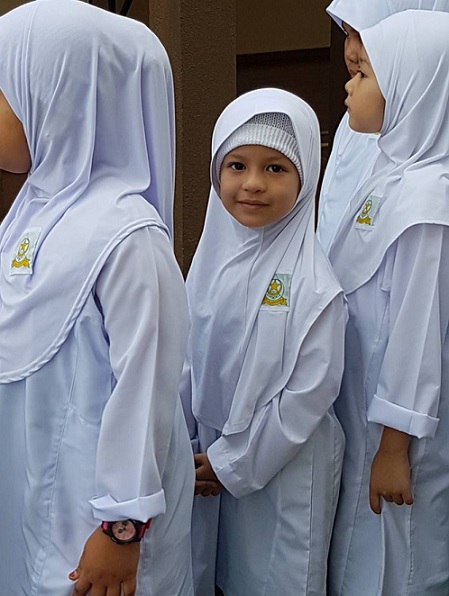
    40 year old Zubayry Abady did not know how to put on the tudung for his daughter which always ended up titled.

    He uploaded a photo of her on Facebook and it went viral after receiving much attention and sympathy.

    It probably resonated with the public and people started contacting him to pass him tudung for the child, and even offered to come over to give some pointers. Many gave him encouragement to carry on.

    Truth is, the man’s wife passed away a year ago and he have been taking care of his children by himself.

    And Zubayry meant it as a sharing session but did not expect the overwhelming response. His word of advice is: do not complain when your wife or children take a longer time to get ready as it really takes time and effort to put on the tudung properly.


    Source: Zubayry Abady

  • Islam Is A Woman-Friendly Religion

    Islam Is A Woman-Friendly Religion

    There is widespread Islamophobia in the world today and Islam, that literally means ‘peace’, is continually vilified. The religion has perhaps come under maximum criticism for its alleged mistreatment of women. However, Muslim women feel that Islam is at the forefront of gender justice and it has been misinterpreted by proponents of patriarchy to subjugate women over the ages.

    An equal Quran

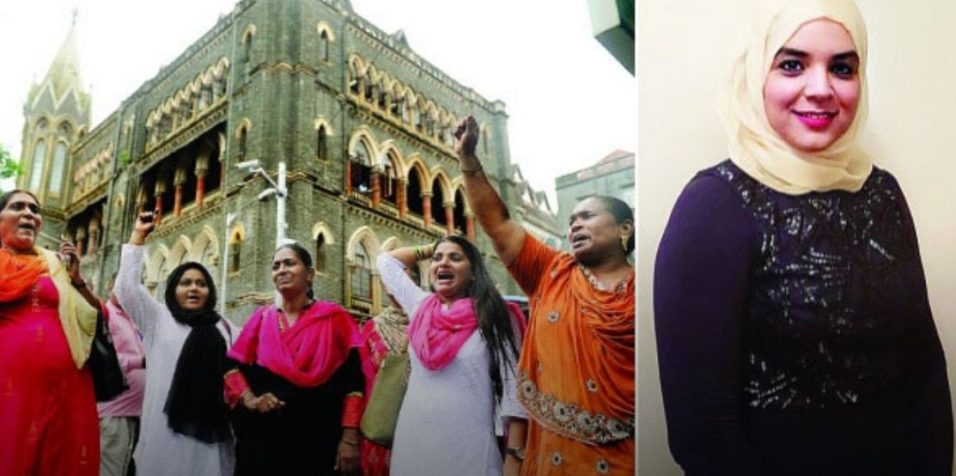
    Zakia Soman of the Bharatiya Muslim Mahila Andolan (BMMA) says, “The Holy Quran says man and woman are equal in the eyes of Allah and will be rewarded equally for their good deeds on the Day of Judgement. They will also be punished equally for their bad deeds.” Soman is the co-founder of BMMA that has been at the forefront of fighting for women’s rights and recently emerged victorious in securing for women the right to enter the sanctum sanctorum of the Haji Ali Dargah in Mumbai.

    She says Islam never discouraged women from gaining an education or working. “Prophet Muhammad’s first wife, Bibi Khadija, ran a multi-national business empire spread across Syria, North Africa and Arabia. His other wife, Aisha, was renowned for her knowledge of the law. She was a teacher and also played an important socio-political role by making public speeches, meeting representatives of different factions in a bid to secure consensus and keeping the community together after the Prophet’s death. How could that have been possible if women were considered inferior to men,” asks Soman.

    Hijab of liberation

    Sahar Suhail Deshmukh, who was born in Saudi Arabia, grew up in Canada, and now lives in England, agrees that Islam is misunderstood. She points out that modest dressing is prescribed for both men and women in Islam. Deshmukh who has been willingly wearing a hijab since she was 16 says she feels judged for following her religious beliefs. “People look at my hijab and feel I’m oppressed. They don’t understand how liberating it is to wear a hijab or even a burqa. I don’t have to worry about constantly adjusting my clothes so that nothing is showing when I bend or sit down. I don’t have to worry about distractions like styling my hair. My hijab sets me free and I feel more focused when I wear it,” explains Deshmukh.

    Islam empowers women

    “Islam was one of the first religions to officially encourage widow remarriage,” says Deshmukh, who insists Islam is a feminist religion. It empowers women by laying down the law with respect to women’s rights regarding property, marriage, divorce, wages and division of domestic responsibilities. “It is a well-documented fact that Prophet Muhammad shared domestic duties with his wives and advised husbands to do everything in their power to ease their wives’ burdens,” points out Deshmukh. She says Mehr is the best example of the feminist side of Islam. “It is a form of financial security for a woman in case of her husband’s death or if she is ousted from her marital home or any other kind of crisis,” explains Deshmukh.

    Misunderstood customs

    There are some outright misogynist practices such as Halala and Mutah. In Halala, if a couple gets second thoughts after divorce and they wish to reunite, the woman must first marry another man, consummate the marriage, get divorced and only then can she remarry her first husband. Soman informs that this was a custom that evolved without any sanction or mention in the Quran.

    Mutah, or temporary marriage, was a custom for soldiers who were away from their wives. Over time it has been misused and young girls have been forced into this form of temporary marriage. On practices such as triple talaq, Soman insists they were never prescribed in religious texts. “There is no Quranic sanction for triple talaq,” says Soman. She believes that clarity can be brought about by properly codifying Islamic Law and enacting reforms instead of establishing a single common law. Many people believe that UCC might erase Islam’s cultural identity including some of the woman-friendly Islamic laws.


    Source: DnaIndia

  • Don’t Agree To Men Who Want To Video Having Sex With You

    Don’t Agree To Men Who Want To Video Having Sex With You

    Hi.

    I would like to share this story with your site.There is a video circulating on tumblr showing a couple doing an obscene act in public.

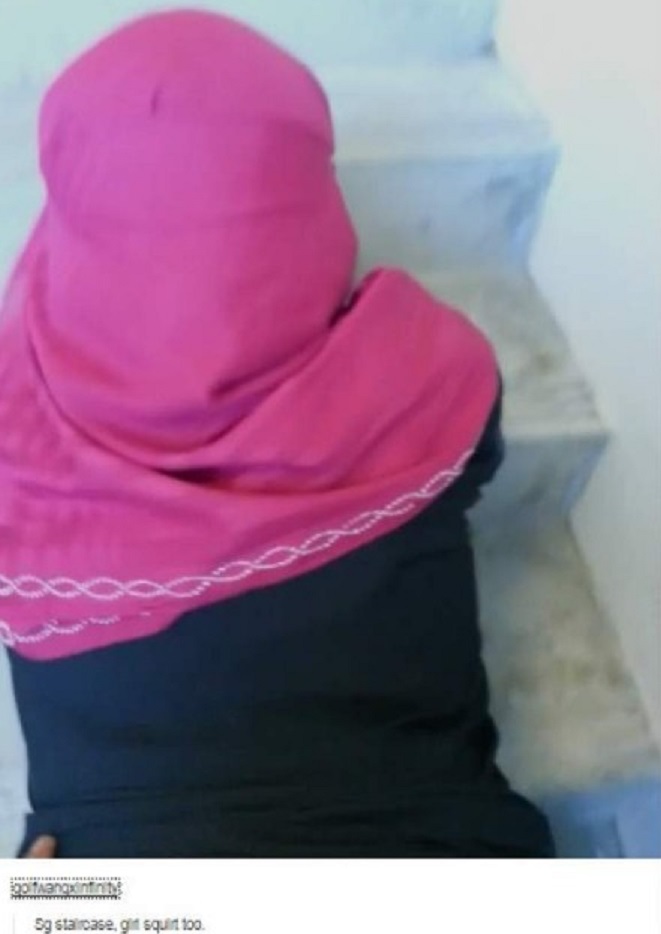
    The video begins by showing an attractive woman passionately performing oral sex on the man who is holding the camera. She is wearing a pink tudung and the video appears to be taken on a secluded HDB staircase landing.

    The couple then proceed to have sexual intercourse on the steps of the staircase itself and at the end of the video, the woman appears to be so excited that she squirted all over the steps of the staircase! Oh man, I pity the town council’s cleaners.

    It is disgraceful that this young lady is wearing a tudung while she has sex in public. She should show more respect to religion and customs. Perhaps the younger generation does not value modesty as much as the older generation did. Too bad for her, because the chap she had sex with betrayed her soon afterwards, leaking the sex video he took onto the Internet. This seems
    to be a common trend these days! Why are girls so naive to believe that guys are just taking sex videos for the sake of remembering the moment of love.

    The videos can be sold online or traded on notorious forums, so why would a guy keep the video and not sell it, especially if he just broke up with the girl.

    Are youngsters so horny and desperate for sex that they cannot control themselves until they reach the nearest bedroom? Or are they simply taking Minister Josephine Teo’s words to heart. “You do not need much space to have sex”. Perhaps Minister Josephine Teo would be proud to see them doing it out in the open, without worrying about whether they can afford a HDB flat.

    Source: www.allsingaporestuff.com


  • Hijabi Rejected For Role With Shangri-La Rasa Sentosa Resort & Spa

    Hijabi Rejected For Role With Shangri-La Rasa Sentosa Resort & Spa


    We wish this wasn’t happening, but it seems like it is, once again.

    We learned on Thursday that the Shangri-La Rasa Sentosa Resort & Spa denied employment to a lady because she wears a hijab — the reason: “we have a strict grooming code”.

    The lady originally took to Facebook to share her experience in a public post that she later took down.

    In it, she explained that she applied for a part-time Kids’ Club assistant position, went through the job scope with the hiring manager and confirmed that her availability matched the period she was required.

    “… everything was okay except for the fact that I cover myself,” she wrote.

    Here’s a screenshot of what she wrote, which we’re sharing with her permission:

    hijabi-rejected-1

    “that thing on your head”

    As if this situation wasn’t bad enough, she said the staff referred to her headscarf as “that thing on (her) head”.

    Following her post, a person claiming to be an employee of the resort’s kids’ club shared it, with the following comment:

    hijabi-rejected-2

    For the best of both world [sic] — we’re not sure the lady benefited in any way from this experience, though.

    A spokesperson from the Shangri-La Rasa Sentosa Resort confirmed that this did happen in an email to Mothership.sg, with the following:

    “We confirm that we interviewed a part time applicant for the position of Kids Club Assistant.
    We could not offer her the position as she was not able to meet our grooming and uniform guidelines.

    In addition, we pride ourselves in embracing fair employment practices in our resort.”

    What do the authorities say about this?

    Earlier this year, a Today article quoted TAFEP (Tripartite Alliance for Fair and Progressive Employment Practices) on this issue, after another lady was told she would not be allowed to wear a hijab at an administrative role.

    Here’s what they said:

    “… while employers may prescribe a dress code, such dress code requirements should not be differentiated by an employee’s race or religion.

    Rather, the dress code should be suited to the nature of work, taking into account business, operational and safety considerations.”

    According to TAFEP’s job advertisement guidelines stated in its fair employment practices handbook,

    “Employers who advertise a position requiring a specific attribute which may be viewed as discriminatory should ensure it is indeed a requirement of the job and state the reason for the requirement in the advertisement…

    Race should not be a criterion for the selection of job candidates as multiracialism is a fundamental principle in Singapore. Selection based on race is unacceptable and job advertisements should not feature statements like ‘Chinese preferred’ or ‘Malay preferred’.

    Religion is unacceptable as a criterion for recruitment except in cases where employees have to perform religious functions as part of the job requirement. In such cases, the requirements should be clearly and objectively presented”.

    We’ll let you decide if Shangri-La met the hiring guidelines as stipulated by TAFEP, which you can find here, as well as their employment guidelines here.


    Source: http://mothership.sg