BANDA ACEH — Two suspected lesbians detained earlier this week by Islamic Shariah police in Indonesia’s conservative Aceh province will undergo rehabilitation instead of being charged with a crime, a police chief said today (Oct 3).
The women, 18 and 19 years old, were taken in for questioning Monday night by Sharia police officers who saw them sitting and hugging each other in Ulee Lheue, a coastal neighbourhood in the capital, Banda Aceh, according to the Shariah police chief, Evendi Latief.
“They later confessed to be a lesbian couple and that was supported by pictures found on their handphones,” Mr Latief said.
The two women, identified only by the initials “AS” and “N” will not be charged because a new criminal code for Aceh that criminalises homosexuality won’t take effect until later this month, he said.
Under that code, any person found guilty of homosexuality could face up to 100 cane lashes or a maximum fine of 1,000 grams of fine gold or imprisonment of up to 100 months. Indonesia’s national criminal code doesn’t regulate homosexuality.
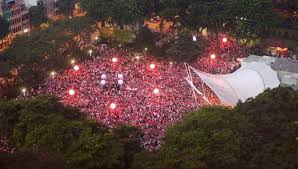
Pink Dot, the annual gay celebratory event of “the freedom to love”, will take place this Saturday at Hong Lim Park for the seventh time since its inauguration in 2009.
Each year, the event is headlined by celebrities and has attracted global brands as sponsors. It has also seen an increasing number of people turning up to give it support. Last year’s event reportedly attracted 25,000 people.
“Pink is the colour of our ICs,” the group’s Facebook page says. “It is also the colour when you mix red and white – the colours of our national flag. Pink Dot stands for an open, inclusive society within our Red Dot, where sexual orientation represents a feature, not a barrier.”
An inclusive society is also the aim of the Lee Hsien Loong Government which has repeatedly urged Singaporeans to see one another as one people, and has boasted of its inclusive policies.
Mr Lee, however, raised recently some ire among those in the gay community for comments he made about same-sex marriage and the gay community.
In an interview with ASEAN journalists in Singapore earlier in June, he said Singapore society “is still conservative although it is changing gradually” and that it is “not ready” for same-sex marriage, as the Straits Times reported.
But, Mr Lee said, the gay community have the space to live their lives in Singapore.
“We do not harass them or discriminate against them,” he explained.
This seemingly more conciliatory position of the Government first came into the spotlight in 2003, when then-prime minister Goh Chok Tong caused a bit of an uproar among conservative circles when he said the government was employing openly gay people in the civil service.
Mr Goh famously said then: “In the past, if we know you’re gay, we would not employ you. But we just changed this quietly.”
Critics, however, point to the presence and retention of Singapore’s anti-gay law, section 377a of the Penal Code. The law criminalises sex between adult males.
Mr Lee said that the gay community “should not push the agenda too hard because if they push the agenda too hard, there will be a very strong pushback.”
“And this is not an issue where there is a possibility that the two sides can discuss and eventually come to a consensus. Now, these are very entrenched views and the more you discuss, the angrier people get,” he said.
Pink Dot, in response to Mr Lee’s remarks, said that while it acknowledged Mr Lee’s concerns – given Singapore’s unique position as a multi-cultural, multi-racial and multi-religious society, there will be a plurality of viewpoints, some deeply entrenched – it nonetheless feels that “it is not a topic that can be swept under the carpet and allowed to fester.”
Lee
“We firmly believe that dialogue is our best way forward,” Pink Dot said. “As such, we would like to invite Prime Minister Lee to join us in celebrating the Freedom to Love, this Saturday, June 13, at Hong Lim Park, and meet with the individuals, families, and loving couples who form a vibrant part of Singapore’s social fabric.”
Mr Lee’s office has not responded to the invitation publicly.
Pink Dot also noted that racial and religious minorities are protected under the constitution.
“Whether Singapore will eventually abolish Section 377a and create a society truly based on justice and equality, that values all contributing citizens regardless of race, religion, sexual orientation or gender identity; a lot will depend on fostering goodwill and encouraging respect among groups and individuals.”
Will Mr Lee accept Pink Dot’s invitation and turn up at Hong Lim Park on Saturday, in the name of inclusiveness or fostering an inclusive society? Should he?
Well, if we go by what his government itself has said – that it wants to build an inclusive society – and what is declared in our National Pledge – that we “pledge ourselves as one united people… to build a democratic society based on justice and equality” – then there is no reason for Mr Lee to decline the invitation.
But of course if Mr Lee accepts the invite, it will be seen by the conservatives as a sign of support, or at least of tacit endorsement of the gay community.
Indeed, Pink Dot’s invitation could also be seen as putting Mr Lee on the spot, perhaps nudging him to take a stand, instead of the fence-sitting one he currently adopts when it comes to gay issues.
Whatever it is, it will an interesting Saturday indeed.
WEST HOLLYWOOD, Calif. (Reuters) – Seven gay and lesbian couples from China were married in the Southern California gay capital of West Hollywood on Tuesday after winning a contest sponsored by a pair of Chinese Internet companies.
The seven couples were selected from among more than 2,000 based on videos they submitted detailing their love stories, after Internet users voted for their top 10 favorites on Taobao, Alibaba’s popular e-commerce site.
West Hollywood Mayor Lindsey Horvath officiated the wedding ceremonies at a city library for six gay and one lesbian couple who managed to get U.S. visas. The contest was also sponsored by Blued, a social media app popular with gays in China.
“We’re so honored and happy to have them in West Hollywood,” Horvath said. “We’ve long been a community committed to equal rights for all people, and advancing and protecting the rights especially of our LGBT community.”
While these couples’ marriages are recognized in California, which legalized gay marriage in 2013, their unions will not be legal in China. China decriminalized homosexuality in 1997, but does still not allow gay marriage.
“We’ve been together for almost eight years, so we want to give each other a promise or a commitment for life,” said Hu Zhidong, 32, who met his partner, Liu Xin, also 32, at a party, where they found out they shared the same birthday.
REUTERS/Lucy NicholsonA gay couple prepares to get married at a group wedding for seven same-sex couples from China, in West Hollywood, California, United States, June 9, 2015.
To Xu Na, 29, and Xue Meng Yao, 21, the only lesbian couple participating in the ceremony, the opportunity to use this event to come out was also important.
“We want to find a proper time to tell our parents,” Xu said. “This could be a good chance for them to see a lot of positive exposure.”
During the ceremony the couples recited their vows in both English and Chinese, often while shedding tears.
Geng Le, Blued’s founder and chief executive, said that while many online media outlets in China were interested in covering this event, Chinese television stations might hesitate, because homosexuality was still a sensitive topic there.
(Editing by Dan Whitcomb and Eric Walsh)
Read the original article on Reuters. Copyright 2015. Follow Reuters on Twitter.
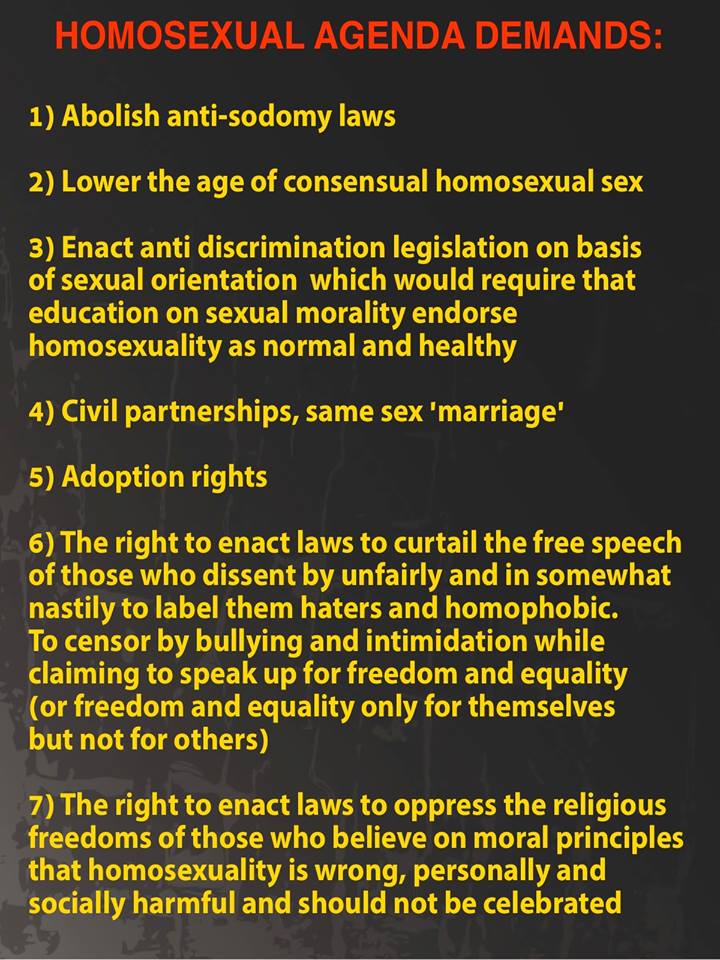
Homosexual activists have always claimed that there is no gay agenda. However, by watching how homosexuality has gained acceptance elsewhere, especially in some Western countries like the U.S., we know that this is a blatant lie.
Moreover, U.S. President Barack Obama has criminally pushed its LGBT agenda worldwide by making use of the United Nations as a platform to further its goal. In fact, the Obama administration has made the acceptance of homosexuality one of its prime foreign policies. In a memo to his State Department and US agencies, he said: “Under my Administration, agencies engaged abroad have already begun taking action . . . . . as we in the United States bring our tools to bear to vigorously advance this goal”.
As have been seen, the U.S. and some of its Western allies have tried to bully African nations into accepting homosexuality by withholding foreign aids. However, kudos to these impoverished nations, they stood their ground. In April 2014, the African, Pacific and Caribbean Group of States (ACP) released a strongly worded resolution condemning wealthy Western nations for their repeated attempts to blackmail African nations into legalizing homosexual behaviour.
Nevertheless, we must not let our guard down as the scourge of the LGBT agenda continues to spread like wildfire, backed by major U.S. corporations. For example, the wealthiest and most powerful LGBT activist group, the Human Rights Campaign (HRC) is funded by Apple, Google, Microsoft, Citibank, Bank of America, JP Morgan, Coca Cola, Pepsico, Starbucks and IBM, just to name a few. (Access the full list here:http://www.massresistance.com/docs/gen2/14c/hrc-attacks-on-pro-family/hrc-corporate-sponsors.html).
Funding by such mega corporations can have a big impact in advancing homosexual rights. A good example is Ireland which just voted “Yes” to same-sex marriage. This is done with the financial backing of U.S.-based Atlantic Philanthropies which reportedly invested between 17 to 25 million U.S. dollars between 2004 and 2014 to effectively catalyse the homosexual-rights lobby in the Catholic country.
Considering that Ireland had only passed a law decriminalizing homosexuality on the basis of equality in 1993 and overturning laws dating back to the 19th century that prohibited homosexual activities, the victory by homosexual activists is indeed stunning.
To understand how the homosexual agenda has advanced so rapidly, we shall examine the strategies being crafted and meticulously carried out over the years. This was first highlighted by the article “The Overhauling of Straight America”, which was later published in a book titled “After the Ball: How America Will Conquer Its Fear and Hatred of Gays in the ’90s.”
The strategies are detailed in a simple stair-step fashion that turns homosexuality from a “prohibition” (against natural norms) to “acceptance” (through deceit, deception, propaganda and ambivalence of the silent majority) and then to “dominance” (funding politicians in key government positions to enact LGBT-friendly laws that persecute anyone deemed to act against “human rights”, “equality”, “non-discrimination”, “tolerance” and “freedom to love”).
We shall also draw parallels to what is happening in Singapore with the Pink Dot LGBT movement.
“Step 1: Talk About Gays And Gayness As Loudly And As Often As Possible.”
Make homosexual behaviour looks normal by exposing it as much as possible. When there is enough exposure in close quarters, for example among acquaintances and colleagues, almost any behaviour begins to look normal.
In the early stages, homosexuality is projected softly to avoid shocking the masses and by downplaying the imagery of sex.
In The Context of Singapore
Pink Dot, the homosexual movement in Singapore has been trying to gain as much exposure as possible. Besides organising the annual Pink Dot event at Hong Lim Park, they have also held smaller events in other parts of Singapore throughout the year. For the 2015 Pink Dot event, they even plan to work with the eateries along North Canal Road (just beside Hong Lim Park) to “turn it into a pink street”. The purpose is obvious – pushing the boundaries to expand their reach. However, they may be breaching Singapore laws if their activities spill beyond the confines of Hong Lim Park. If so, they must be taken to task.
Whatever Pink Dot is doing, their aim is obvious – EXPOSURE. By increasing their exposure, they seek to incrementally desensitize the public. They have also sought local celebrities to grace the event and use them to reach out to the older generation of Singaporeans who are mostly conservative. Again, the motive is to achieve even more publicity.
On the event day itself, which falls on 13 June this year, many performances are also lined up. This is done for the sole purpose of changing the negative perception of homosexuality. By portraying themselves as friendly, fun-loving and “normal”, they hope to project homosexuality in a favourable light. Their theme of “Freedom to Love”, “Non-Discrimination” and “Inclusiveness” is simply to project themselves as victims of the wider society and gain sympathy from the less informed, which unfortunately, remain quite sizeable on the issue of homosexuality.
As can be seen, they have been completely silent on the adverse effects of homosexuality and same-sex marriage on society. This is deliberate as studies have shown the advancement of LGBT rights have serious repercussion on society. Some of these are as follow:
The destruction of traditional marriage. As we know, marriage is the permanent, exclusive union of one man and one woman. It is the fundamental building block of a society and therefore, upholding marriage is in everyone’s interests.
Same-sex marriage leads to the casualization of heterosexual unions and separation of marriage and parenthood. It may be the end-game of long-running anti-marriage, anti-family policy typified by Sweden.
Same-sex marriage and commercial surrogacy deprive children of either a father or mother, which is detrimental to their psychological, emotional, intellectual and physical well-being. Commercial surrogacy also treats children as a commodity that can be sold and bought with money.
Higher rate of domestic violence and child molestation compared to heterosexuals
And for people who live a homosexual lifestyle, the following are found:
Indulge in risky sexual practice
Have high numbers of sex partners in their lifetime, even when married
Have high relationship and mental health problems
Suffers from substance and alcohol abuse
Have disproportionately high numbers of HIV and other sexually-transmitted diseases
Have higher suicidal tendencies and mortality rate than heterosexuals
“Step 2: Portray Gays As Victims, Not As Aggressive Challengers.”
In an effort to win over the public, gays are cast as victims in need of protection so that straights will be inclined by reflex to assume the role of protector.
To be effective, the visual media, film and television are plainly the most powerful image-makers in the Western civilization. By reaching out to the straights using such medium, a Trojan horse might be planted without them knowing consciously. Such efforts to desensitize the mainstream can be seen in gay Hollywood.
To further portray gays as victims of society, graphic pictures of brutalized gays, dramatizations of job and housing insecurity, loss of child custody, and public humiliation are being brought to the fore of straights in an effort to soften their stance on homosexuality.
In The Context of Singapore
One of Pink Dot’s main trusts is to promote its “Freedom to Love” regardless of gender identity and sexual orientation. Anyone who does not subscribe to their definition of “Love” will be accused of “discrimination” and violation of their “human rights”.
To achieve this objective, Pink Dot has produced videos portraying homosexuals not only as victims of society, but their family as well. In fact, they have produced numerous videos with such themes, with some featuring school children. All these are premeditated in an attempt to draw sympathy from the masses.
And of course, social media, television and the internet have been used to milk as much publicity as possible. By playing up the plight of homosexuals, they hope to soften the stance on homosexuality by the wider public.
“Step 3: Give Protectors A Just Cause.”
By casting gays as society’s victims, they hope to encourage straights to become their protector. However, it is found that there are few straights who would want to defend homosexuality boldly.
Instead straights would prefer to attach their awakened protective impulse to some principle of justice or law, as well as to some general desire for consistent and fair treatment in society.
Hence, the homosexual lobby would not demand direct support for their agenda. Instead, they focussed on anti-discrimination as its theme – the right to free speech, freedom of beliefs, freedom of association, due process and equal protection of laws.
It is especially important for the gay movement to hitch its cause to accepted standards of law and justice because its straight supporters must have at hand a cogent reply to the moral arguments of its enemies. When the homophobes clothe their emotional revulsion in the daunting robes of religious dogma, the defenders of gay rights will counter dogma with principle.
In The Context of Singapore
An Institute of Policy Studies survey has found Singaporeans to be mostly conservative and does not accept homosexuality. So are major religions here like Christianity and Islam.
Therefore, to gain acceptance, Pink Dot has constantly portrayed LGBT people being discriminated against. This can be seen following the failed Constitutional challenge to repeal 377A of the penal code that criminalizes sex between two men. In its statement, Pink Dot said: “It gives carte blanche for discrimination and reinforces prejudice, leading to censorship in the media and the aggravation of negative stereotypes, and impacting the health and well-being of a significant segment of society”.
Curiously, when homosexuals make up less than 2 per cent of the population in Singapore, how can this be considered “a significant segment of society”? Also, by portraying LGBT people as being widely “discriminated”, they hope that special provisions, rules or even laws must be enacted to protect them. A good example is seen in the University Scholars Programme in NUS that specifically spelt out what “sexual respect” is. (See link:http://www.usp.nus.edu.sg/community-college/sexual-respect-in-the-usp.html)
No surprisingly, Pink Dot has been deafeningly silent about the adverse impact of LGBT rights on society. The following are just some examples why LGBT rights must never be allowed to advance:
In the U.S. and some Western countries, people of faith have been persecuted by so-called anti-discrimination laws when they refuse to do business related to same-sex wedding.
Therefore, in order to change public perception, words such as “freedom to love”, “diversity”, “non-discrimination”, “tolerance” and “diversity” have been ceaselessly broadcast. They have also reached out to straight friends for support to show that those against homosexuality are “right-wing or religious fanatics”, “homophobes”, “bigots” and “haters”.
Many LGBT groups have also been established in our tertiary institutions in an attempt to raise their visibility. The purpose is to desensitize the wider student population and to show that LGBT people are “normal” like everyone else. Eventually, it is hoped that homosexuality will be more widely accepted by the next generation.
“Step 4: Make Gays Look Good.”
In order to make a Gay Victim sympathetic to straights, portray him as Everyman. But an additional theme of the campaign should be more aggressive and upbeat: to offset any bad press about homosexual men and women, paint gays as superior pillars of society.
In The Context of Singapore
As mentioned above, Pink Dot has been trying to change the perception of LGBT people. By courting straight allies, they hope to show that homosexuality is “normal” and LGBT people are just like everyone else.
On a more aggressive move, they have brought together LGBT student groups from our tertiary institutions to participate in this year’s Pink Dot event for the first time with the stated purpose of “helping student groups support the LGBT community and promote a better school environment”. Again, they are portraying LGBT people as a discriminated class, even in Singapore’s education system.
As in previous Pink Dot events, sponsors include mega U.S. corporations such as Google, JP Morgan, Goldman Sachs and Bloomberg. By having such corporations supporting them in the name of “diversity”, they want to show that being “inclusive” (which include employing LGBT people) is a necessary ingredient for their successes.
“Step 5: Make The Victimizers Look Bad.”
At a later stage of the media campaign for gay rights-long after other gay ads have become commonplace — it will be time to get tough with remaining opponents. To be blunt, they must be vilified.
To achieve this, the public should be shown images of ranting homophobes whose secondary traits and beliefs disgust Middle America. These images might include: the Ku Klux Klan demanding that gays be burned alive or castrated; bigoted southern ministers drooling with hysterical hatred to a degree that looks both comical and deranged; menacing punks, thugs, and convicts speaking coolly about the ‘fags’ they have killed or would like to kill; a tour of Nazi concentration camps where homosexuals were tortured and gassed.
In The Context of Singapore
Luckily for Singapore, we have not reached this stage of development yet. However, we must not let our guard down amid the constant barrage of misinformation from LGBT activist groups. As can be seen, newspaper forums have seen an increased number of articles on LGBT issues. Reporting by our mainstream media on homosexuality issues has also tended to be more liberal than necessary. In fact, we have not seen any reports that portrayed homosexuality in a negative light.
Comments in newspaper forums have also seen pro-LGBT activists vilifying anyone that do not agree with them, calling them “bigots”, “homophobes”, “haters” and even “dogs”. They will make use of every single opportunity to attack people who do not accept homosexuality. A good example is the recent uproar over Ikea’s offering of discounted ticket prices to its members for the Vision magic show by Pastor Lawrence Kong who is known for his stance against the sin of homosexuality.
Lastly, deception that there is a growing acceptance of homosexuality is very much at play. Last year, Pink Dot claimed that 26,000 people participated in its event. But, judging from the space constraint of Hong Lim Park and making a comparison in which 26,000 runners participated in a marathon, you decide which is the BIG LIE!
It is important that Muslims – in Singapore and elsewhere – speak up, donate, and craft solutions to issues beyond traditional ones that we are used to be passionate about (hijab, Islam and homosexuality, Palestine etc). A good example would be the collection of funds for the Nepali victims a couple of weeks ago.
We should be more proactive in dealing with issues of poverty, homelessness, refugees, amongst others, so as to truly display the ‘mercy to all’ conduct that is befitting of our faith.
Don’t get me wrong: i’m not saying that we should not take up those traditional issues, i am saying we must go beyond that as well.
It is especially difficult to speak up/do something in issues where there is minimal gain (due to the unpopularity of the matter, like the Rohingyan refugees, as opposed to the Palestinian crisis) and plenty of costs (for example, ‘sensitive’ topics like poverty), but it has to be done. And, i believe this is one of the things that religion in general can offer to the modern world.
On that note, anyone knows of anything we could do/could think of w.r.t the Rohingyan crisis? Any idea is welcomed, from the trivial to the sustainable.