The PAP often tells us to look at their track records. Well I have, and I am pretty confident that I have a pretty good idea of what they are doing, or their lack thereof for that matter.
Truth be told, looking at the track record of the voters in Singapore, the PAP stands a high chance of winning.
I have compiled a list, of what citizens should expect, should the PAP win the mandate, and be allowed to continue their reign unopposed for another 5 years.
Keep in mind that while these are mostly speculations, they are based on the track record of the PAP. Feel free to disagree with hit.
Here is the list:
1) Primary focus of the government to be on the economy-
2) More foreigners will come in-
3) Population will eventually hit 6.9 million and beyond-
4) GST will rise again-
5) More sponsoring of free scholarships to foreign students-
6) More investments to foreign countries from government-owned institutions, using state-controlled funds-
7) More spending on celebrations and public events-
8) More exorbitant housing prices-
9) More mandatory insurance plans that you have to pay for-
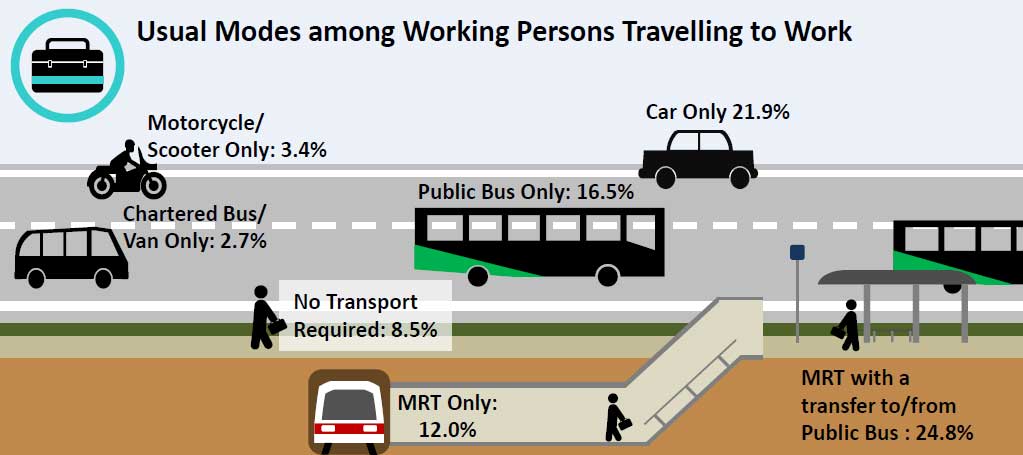
10) Even higher public transport costs-
11) Press freedom index ranking will drop even lower-
12) More unopposed unilateral one-sided decisions in parliament-
13) More politicians suing ordinary citizens-
14) More unexplained revocation of patents-
15) More government organizations applying for protection from harassment act-
16) More unfair use of NSFs-
17) More mudslinging from the ruling party-
And here are the details. Be warned, it is long.
1) Primary focus of the government to be on the economy-
Regardless of the claims by word-of-mouth, the goal and aim of the government had always been clear: the Economy. Boosting the economy at all costs has always been their objective, and will continue to be so.
2) More foreigners will come in-
The PAP has made it crystal clear, they will not stop the inflow of foreigners, they will merely slow down the inflow.
It’s like you’re fast approaching the edge of the cliff, but the driver chooses to decelerate instead of braking hard.
These foreigners may indeed boost the economy. But the large numbers also pose a problem for citizens, as these foreigners will be competing with the true citizens for resources, which include jobs, housing, public transportation, and even basic necessities.
3) Population will eventually hit 6.9 million and beyond-
You have to ask yourself, of these 6.9 million, how many of them will be true Singaporeans? Do we have the necessary infrastructure and resources to support a 6.9 million population?
If the answer is yes, then you have absolutely nothing to worry about!
But I suggest you take a look at our MRT stations, our HDB queues, our foodcourt and hawker-center crowds, our school balloting, and think carefully first.
4) GST will rise again-
Going by the PAP track record, there is a very high likelihood that GST will eventually rise again. I personally estimate this at 9%, though some say it will be higher.
5) More sponsoring of free scholarships to foreign students-
A recent report say that in recent years, at least 20 million a year is funded to give foreign students free scholarships. The exact figures of the total amount spent so far for foreign scholarships is unclear.
The PAP has also made it clear that they will not stop funding foreign students with free scholarships.
Personally, I think that 20 million is a lot, and this money could have been better spent on our own citizens. But what the hell do I know? PAP knows everything, so throw out your encyclopedias, and never visit wikipedia again.
6) More investments to foreign countries from government-owned institutions, using state-controlled funds-
http://www.wsj.com/articles/SB124350003544761935
https://www.youtube.com/watch?v=7qFUDmsFTYk
In spite of the claims made by local media bragging about the huge profits made, many reports I have read talked about the billion dollar losses made by Temasek Holdings.
Personally, when I read about this, the first few questions that come to mind are:
Who authorized Temasek Holdings to invest money in foreign companies?
Why is no one punished for the screw-ups?
The money that is lost to bad investments, who does it belong to?
Even now, Temasek Holdings and the GIC is adamant about taking state-controlled funds to invest in foreign organizations. My question is this, who authorized the government to use these funds for foreign investments?
And till now, do we even know the true source of this money? I mean, it has to come from somewhere, right? Do we even know where did the money that was lost to bad investments, come from?
I really don’t understand why this money needs to be invested elsewhere, or why it even needs to be invested at all. Why can’t this money be used to invest in Singapore itself?
When the Singapore government chooses to invest state-controlled funds to invest in foreign organizations, it really shows how much confidence they have in our own country.
7) More spending on celebrations and public events-
Without a doubt, more money will be spent on events similar to SG50 celebrations. More events like the YOG will be held.
The YOG was grossly overbudgetted, with no one punished for the oversight. But the good news is that the government learns from their mistakes. So this year, in the SEA Games, the organizers outsourced for free volunteers instead of paid workers. That greatly reduced the costs for manpower. The plan was so simple yet so brilliant, I can’t help but be amazed. Why pay for workers when you can get them for free?
To quote a line from the Noose:
If the government can spend so much money on two useless pandas, they must be treating the people really well!
Obviously, more money should go into such events, and NOT social spending. Having more money on social spending will lead citizens to have a clutch mentality and cause them to be dependent on government handouts.
Right?
8) More exorbitant housing prices-
Someone once claimed that you can own a hdb flat with $1000 per month salary.
Seriously?
I’m not going to call that bullshit. But to me, it sounds like I’m looking at some kind of fringe science, where the professor draws a few impossible calculations using extreme numbers from improbable events, and presents to us the argument that something thought to be virtually impossible, is actually in fact possible.
I’m definitely not the most mathematical oriented person. But do you honest believe that you can own a hdb flat with 1k salary?
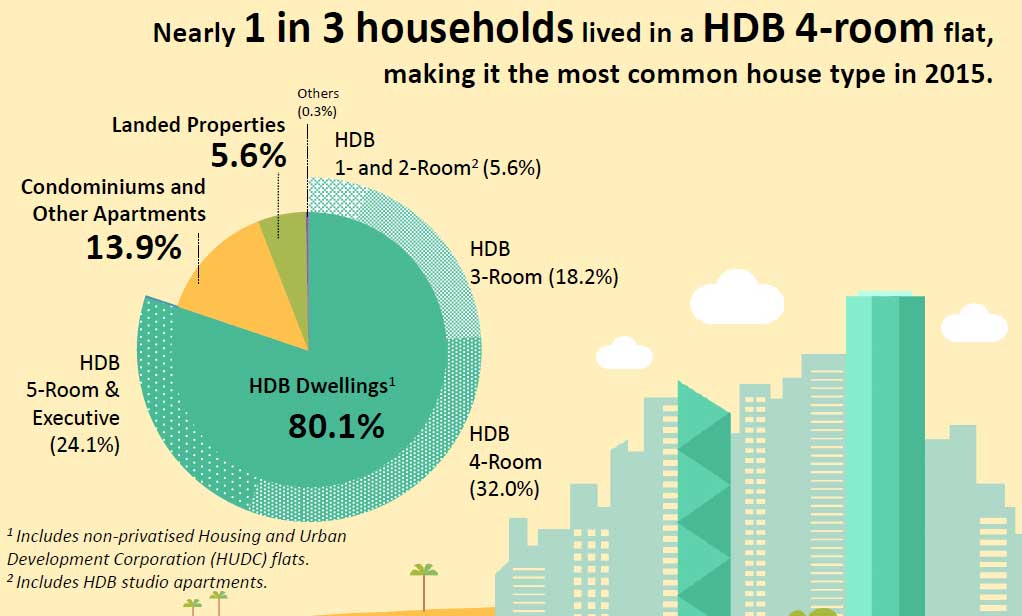
Let me use an example. Suppose you are an ordinary worker earning a modest $1,500 a month, trying to afford a $240,000 3 room flat. Let’s assume that you eat grass and pump every cent you earn, including your CPF, into your flat payment. It will take working at least 13+ years, just to pay off your flat alone.
And let’s not forget the 2.6 compounded interest rates from HDB. Every year, you have to pay $6,240, just for the interest. It will reduce if you can pay, otherwise, it will snowball. How much of your salary per year do you have to sacrifice, just to pay off the interest itself?
And on top of that, let’s not forget the fact that you DON’T actually own your flat. You rent it for 99 years. At the end of 99 years, you lose it, with NOTHING refunded back to you.
Some people argue, HDB flats will never last 99 years, you will be moved by the government after 40 years of staying, and they will pay the rate of the remaining lease. Well that still means you don’t actually own it. Hello? When the government moves you, you think that the government is going to give you your flat for free?
Like it or not, every year you live in your flat, you lose 1/99 of it’s value. So every year, you rent it for $2,424. And for some reason, you still have to pay land tax.
I’m no expert on this, so feel free to correct it if you have more accurate numbers.
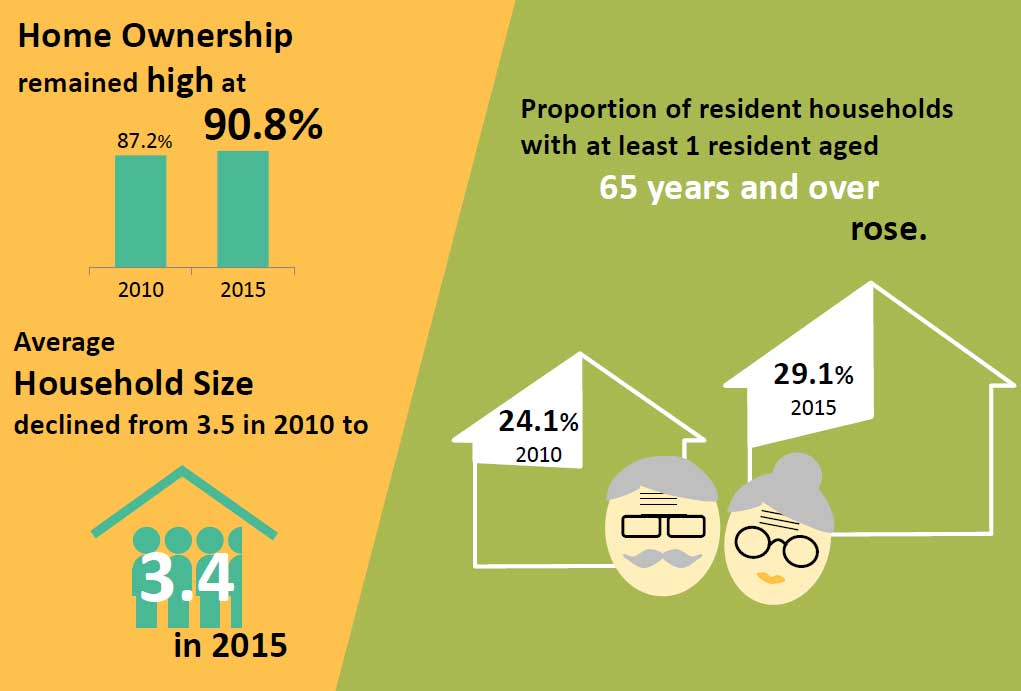
The PAP claims that it is possible to own a flat with only $1k salary, and boasts of a high home-ownership ratio (99-year “ownership”) on a global scale. By all means, feel free to believe them.
9) More mandatory insurance plans that you have to pay for-
The PAP has already decided that you will pay for CPF Life and Medishield Life. It doesn’t matter what your opinion is. It’s been decided.
10) Even higher public transport costs-
Even when oil prices were dropping, and SMRT was earning record high profits, the transport fares were raised, citing a reason like “opportune time”.
Just before elections, fare prices were announced to be dropped. But god knows how soon the next fare hike will hit us.
It’s common knowledge that if you wish to encourage use of public transport, and improve traffic conditions, you should raise the price of private transportation, but reduce the price of public transportation. But the government, being the genius that it is, decided to raise both public and private transportation costs.
I guess this means that the message they are trying to send us is, “Don’t go out. Stay home and sleep!”
11) Press freedom index ranking will drop even lower-
The PAP has already made it clear that they don’t care about the press freedom index.
The unnamed person-in-charge said the following line:
We manage our press, our media and our freedom of information in a way that makes sense for Singapore.
The very same person also claims that the very same newspaper is “credible, balanced, and objective”.
WTF……
12) More unopposed unilateral one-sided decisions in parliament-
When the PAP proposes a bill, it is as good as approved. No matter what kind of decision the PAP makes, the bill will be passed successfully unopposed.
One of the most recent bill passed was about ISEAS, where only the ministers will be able to appoint board members, while the President and the other organizations will not be able to do so.
This bill was piggy-backing on the proposed bill to honor Yusok Ishak…. I meant, Yusof Ishak.
Of course, the WP rejected with all their might, but the bill was still passed.
You would think that if they really wanted to honor the late president, they would actually learn to spell his name right….
You can be sure to expect more one-sided unilateral decisions made if the PAP wins.
13) More politicians suing ordinary citizens-
In the past, PAP ministers would use defamation lawsuits on their political opponents.
Prime Minister Lee Hsien Loong took it a step further, and decided to sue an ordinary blogger.
At the rate this is going, you can expect secondary and primary school students to be sued too.
If you feel that an internet posting has defamed you, one of the first recourse is mediation. The legal recourse should only be used as a last resort.
You see, it’s one thing to preach about a gracious and forgiving society. It’s another thing to be a gracious and forgiving person.
14) More unexplained revocation of patents-
If you have a patent that results in a conflict with the government’s interest, your patent does not exist.
Dr Ting Choon Meng has a valid patent for medical vehicles as of 2005. In 2009, Mindef, instead of seeking recourse to contest or dispute the patent, they blatantly ignored it and produce their own.
In a lawsuit that latter ensued, the court of law revoked the patent owned by Dr Ting in 2014. This is despite the fact that the proper procedure of contesting a patent not being used, and no evidence supporting the revocation was ever seen.
http://www.ipos.gov.sg/Services/HearingsandMediation/ProceedingsatIPOS/P…
To add insult to injury, Cyberpioneer issued the following arrogant public statement:
Respecting Intellectual Property means honouring patents that are valid, not protecting those that aren’t.
So let me get this straight. In 2009, Cyberpioneer could tell the future, and knew that the patent will be invalidated in 2014?
Oh, one more thing. Did you know that you cannot apply for a patent in another country, without asking for permission first?
http://www.ipos.gov.sg/AboutIP/TypesofIPWhatisIntellectualProperty/Whati…
One can only wonder what the basis of that is.
15) More government organizations applying for protection from harassment act-
A government organization applying for protection from harassment from an individual, is possibly the stupidest thing I can think of. And yet it happened.
It’s almost as if these people are challenging us to think of what is the most asinine thing they can possibly do, and they actually make it happen.
These guys never fail to amaze me at whatever they do.
16) More unfair use of NSFs-
The LTA recently announced that NSFs can be mobilized to help SMRT in the event of an MRT breakdown.
I have absolutely no idea how the LTA has authorization over Mindef to help a private company like SMRT. There must be some kind of grand logic here at work.
17) More mudslinging from the ruling party-
It is said that if you live in a house of glass, you shouldn’t throw rocks.
Well the PAP doesn’t care. They keep attacking the WP for the lapses, even though their own management has lapses highlighted by the Auditor General Office.
In one of the latest saga, Mr Tharman relentless carried on his attack on the WP. Despite the other problems found by the AGO, Tharman claimed that “The house is safe and there is no question whether public monies are fully accounted for.”
Instead of correcting his own problems, he decided to attack WP for theirs. A typical rock-throwing kind of behavior.
Conclusion:
This is by no means an exhaustive list. But I have been paying attention to the PAP’s actions long enough to know how they handle things. Feel free to disagree if you think such things will never happen.
Source: http://sgkbwarrior.livejournal.com