Tag: humanitarian aid

  • Malaysia’s Defence Minister Plans To Send Humanitarian Aid To Marawi

    Malaysia’s Defence Minister Plans To Send Humanitarian Aid To Marawi

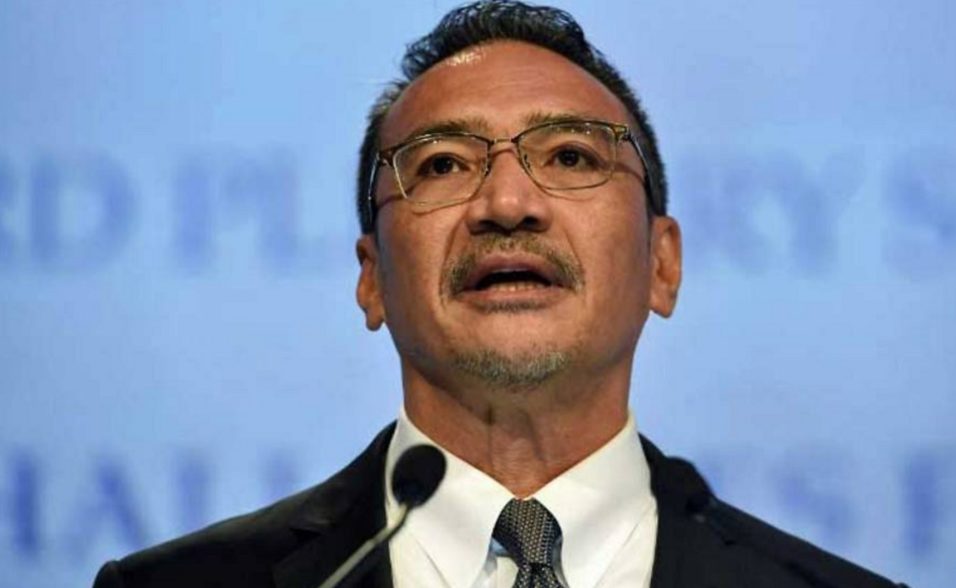
    Malaysia’s Defence Minister Hishammuddin Hussein said he is in discussions with his Philippine counterpart to send humanitarian aid to conflict-hit Marawi.

    “We want to make sure Islamic State (IS) doesn’t have a foothold in the region, whether it’s in Marawi or anywhere in ASEAN,” he said. “The winning of hearts and minds also require human touch, and that’s why we are in discussions with secretary Delfin on sending humanitarian relief to help those fleeing Marawi because we don’t want them to turn to militancy because they are angry.”

    Hishammuddin was speaking to local media after officiating Malaysia’s military trading co-op facilities at the Subang Airforce Base on Thursday (Jul 6).

    The defence minister, who last month witnessed the launch of trilateral maritime patrols in the Sulu Sea with the Philippine and Indonesian armed forces, said he hoped to launch joint air patrols soon from Subang military airport outside Kuala Lumpur.

    While details are being ironed out, he reiterated that the armed conflicts in Marawi concerned the entire region, in particular the presence of foreign fighters there.

    He added that Malaysia had stepped up its military presence in the east coast of Sabah to prevent these fighters from slipping into the country.

    “Foreign fighters in Marawi is my biggest concern, as you know there were not just Malaysians who were shot dead in Marawi,” he said. “With Islamic State fighters fleeing former IS-controlled areas like Aleppo, Mosul and Raqqa, we do not know where they are fleeing to next.”

    Hishammuddin said he will be visiting Saudi Arabia to tighten efforts in fighting IS militancy through the sharing of assets and intelligence .

    He will be meeting the Crown Prince of Saudi Arabia to discuss the setting up of the King Salman Regional Centre of Peace to counter narratives to win the war against IS.


    Source: CNA

  • ASEAN Ulama & NGO Comes Up With Action Plan For Rohingya

    ASEAN Ulama & NGO Comes Up With Action Plan For Rohingya

    THE ACTION PLAN

    ASEAN + ULAMA DAN NGO MEETING TO STOP THE MYANMAR MASSACRE

    1. Distribution of the Shah Alam Declaration Worldwide ( English and Arabic )
    – all OIC Head of State members and OIC  Special Envoy on Rohingya
    – UN Security Council members
    – UN Secretary General and UN Special Envoy on Rohingya
    – all Asean Head of State members
    – Chair of EU
    – main international Media

    ACTION : MAPIM and SHURA

    2. Food and Humanitarian Flotilla to Myanmar
    – defining the objectives ( humanitarian and advocacy )
    – determing of vessel and route ( options  from Penang or Aceh or Krabi or Phuket or India or Bangladesh)
    – solicit support from UN and OIC and EU and Asean member state
    – shipping of food, medical , basic needs
    – participation : ngo activists, international media, celebrities , nobel peace prize winners, ulama, journalist ..ect
    – Funding
    – voyage schedule
    –  public mobilization and public annoucement
    – target dates and time line.

    ACTION : MAPIM and other Ngos

    3. Inter religious Dialogue and  missions with Religous Leaders in Asean +
    – issuing a collective declaration
    – inter religous mission to advocate for peace to Myanmar
    – sending message to Dalai Lama

    ACTION :
    4. Special letter to China , India and Bangladesh
    – demand to pressure Myanmar to stop the genocide
    – demand Bangladesh to protect the rights Rohingya refugees and access to humanitarian assistance
    – send delegate to embassies

    ACTION :
    5. Memorandum to Asean Human Rights Commission
    – demand Myanmar to comply to protection of the Human Rights of minorities
    – send a delegate to Asean Secretariate in Jakarta
    – call to suspend and boycot Myanmar iin Asean if genocide persist.

    ACTION :
    6. Solidarity call to all International  Muslims and Ulama Associations to stop the Myanmar Massacre.
    – call to the International Union of Ulama to urge all ulama world wide to stand up against Myanmar genocide.
    – urge all Muslims to hold special prayers for Rohingya brothers and sisters.
    – call to contribute to humanitarian assistance to Rohingya victims of oppression by Myanmar regime.
    – call to defend the victims of injustice by the Myanmar regime on the Rohingya

    7. International Boycott Campaign on Myanmar
    – to consider an international boycott against Myanmar if genocide persist within the next 7 days.
    – to look into ways of launching an effective boycot in trade , cultural, social , diplomatic and labor.
    9. International Campaign to revoke Peace Prize from Aung San Su Kyi.
    – to send a letter to Aung San Su Kyi conveying a reminder message to her of her responsibilty as a Nobel Peace Prize Winner that she is beholden to carry the duty of protectiong human rights of the oppressed and minorities.
    – to write a petition to the Panel Board of the Nobel Peace Prize

    10. Calling International Ulama for a Fatwa on the Myanmar Rohingya Massacre :
    – to write to the Chairman of International Ulama Union
    – to call on all imam of world masaajid to conduct a special prayer on the oppression on the Rohingya .

    Action Plan Proposed by the Delegates:

    1. Talk with China to put pressure on the Myanmar government as China is influential. Propose solution to PM Najib to talk to China for negotiation.
    2. UN is paralyzed with inaction, hence the neighbouring countries should put pressure on them to take actions through ASEAN channels.
    3. Asian Rohingya Centers (think tank) published a declaration called the “Declaration of Selayang” which initiated the 2017 International Year of Solidarity for Rohingya. Its objective is also to revoke Aung San Suu Kyi’s Nobel Peace Prize award;
    a. Planning for a workshop & public hearing at town halls to hear & share the problems of the Rohingya in Malaysia
    b. Engage with the local Rohingyas to assist them through Whatsapp & Facebook & go global.
    4. Hold dialogues between Buddhists & Muslims in Myanmar.
    5. Stakeholders such as the British, Bangladesh & Myanmar Governments to hold an international conference.
    6. Use OIC as a platform by sending letters to the Myanmar Government on the genocide
    7. Freedom Flotilla for Rohingya
    8. Investigation for the crimes against humanity in Arakan

    Source: www.mapim.org

  • Gilbert Goh: Thank You Singaporeans For Contributing To Betterment Of Child Refugees In Lebanon

    Gilbert Goh: Thank You Singaporeans For Contributing To Betterment Of Child Refugees In Lebanon

    Had a very interesting time spending half a day interacting with the refugee children at Shatila camp Beirut yesterday.

    They appear happy and contented when classes resume after a one-week Haji break. The classes are managed by the Palestinian NGO based in Beirut – National Institution of Social Care & Vocational Training.

    You can look through their activities at www.socialcare.org.

    I remember my parents took me out of a kindargarten permanently as we were very poor and couldn’t afford the school fees then. I would walk past the school regularly and peep inside marvelling at those who are so priviledged to attend the classes.

    The kids spend 6 years here in a refugee childcare facility before moving on to the government schools.

    Its the only fun time kids have before they return home to their shoddy apartment. Some are orphans and will return to the orphanage.

    The school hours are from 8am to 1pm and most kids are Palestinian refugees with some coming from Syrians and others.

    Its a priviledge knowing the kids and they appear strong in the face of adversity. Kudos also to the teachers who show dedication and commitment in their line of duty.

    Most of the teachers are refugees themselves.

    Sometimes you find tears rolling down your cheek unknowingly when you move around the centre – its that emotional.

    It only takes USD $150 to sponsor a refugee child per annum to ensure that he has a decent pre school education before he ventures into the government school. We have so far collected close to $3000.

    We are targetting 100 children and it can be a one-off thing.

    Let us try to make a small Singaporean dent in this part of the war-torn world…

    ***

    Visited another kindargarten centre at Bourj AlBarajneh Beirut today.

    childcare-in-lebanon

    Its a 2-storey building full of kids from age 3 to 6 years old.

    Some just enter the nursery yesterday for the new school term and are abit bewildered.

    I am glad to catch them before they leave at 1pm.

    Both the centres I visited yesterday and today will be funded by the many Good Samaritans who donated to the refugee cause.

    The school also requested for gas heater as winter is approaching and it can be quite cold at 15 deg average. We went around sourcing and will try our level best to donate a few sets to the centre soon.

    Each gas heater costs around USD $100 to $120.

    Thanks alot Singaporeans as we have made our little significant mark here in Beirut Lebanon.

    We may be a small country but we have a big heart!


    Source: Gilbert Goh


  • 101 Year Old Man Pulled Alive From Rubble In Nepal

    101 Year Old Man Pulled Alive From Rubble In Nepal

    A 101-year-old man has been pulled alive from the rubble of his house in Nepal, seven days after it collapsed in a deadly earthquake, police say.

    Funchu Tamang was rescued on Saturday with only minor injuries and airlifted to a district hospital, local police officer Arun Kumar Singh said.

    “He was brought to the district hospital in a helicopter. His condition is stable,” Mr Singh said.

    “He has injuries on his left ankle and hand. His family is with him.”

    Mr Tamang was found in Nuwakot district about 80 kilometres north west of Kathmandu.

    Police also rescued three women from under rubble on Sunday in Sindupalchowk, one of the districts worst hit by the quake, although it was not immediately known how long they had been trapped.

    This was a calamity of enormous proportions and the relief operations have been a challenge given the resources we have.

    Nepalese information minister Minendra Rijal

    One had been buried by a landslide while the other two were under the rubble of a collapsed house.

    “They are being taken to hospital for treatment,” police officer Suraj Khadka said.

    On Saturday, Nepal’s government had ruled out finding more survivors buried in the ruins of Kathmandu.

    Multiple teams of rescuers from more than 20 countries have been using sniffer dogs and heat-seeking equipment to find survivors in the rubble of the capital.

    The government said the death toll from the earthquake had reached 7,040 and 14,123 people had been injured.

    A police team from Nepal pulled out the bodies of about 50 people, including some foreign trekkers, from an avalanche-hit area on Saturday, officials said.

    None of the bodies have been identified, deputy superintendent of police in the northern district of Rasuwa, Pravin Pokharel, said.

    Race against time to distribute aid

    Kathmandu’s tiny international airport has been operating round the clock to allow aid flights to land, but a shortage of parking space and damage to the runway has meant some aircraft have been turned away.

    The manager at the airport said large planes carrying relief supplies had been banned from landing because of pot holes on the runway.

    “This runway is the only lifeline for Kathmandu,” airport manager Birendra Prasad Shrestha said.

    “If it goes, everything goes.”

    Authorities announced that larger aircraft of 196 tonnes and over will not be allowed to land or take off because of the condition of the runway.

    This would mean a 747-size plane, full of emergency essentials, would not be able to get into Nepal.

    Some officials have denied reports of cracks appearing on the runway, saying the move to stop larger planes from landing is simply a precautionary measure.

    More than a week after the magnitude-7.8 earthquake, large swathes of the Himalayan nation have yet to receive any outside help as aid workers battle landslides, avalanches and a helicopter shortage to reach communities in some of the world’s most remote terrain.

    Relief workers have said it is now a race against time to get desperately needed shelter, food and clean water to survivors in the far-flung mountain villages flattened by the disaster before the monsoon rains begin in June.

    What we do know is that there is a lot more need out there than the places we are able to get to. Our priority now is really to try to reach those people, get immediate assistance to them.

    UN humanitarian chief Valerie Amos

    But many of the worst-hit communities are tiny villages perched on the side of mountains that are inaccessible by road and where it is difficult or impossible for helicopters to land.

    The country’s poor infrastructure and a weak national government beset by in-fighting among coalition partners have compounded the difficulties of mounting a vast emergency relief operation in the world’s highest mountains.

    “One of the big challenges of working in Nepal, and we knew that this would happen should a major earthquake happen here, is the nature of the terrain,” the UN humanitarian chief Valerie Amos said in Kathmandu.

    “There are a lot of villages which are on the top of hills, they’re quite small villages but there are no real roads that go up to those villages, and we know that there are quite a few areas like that because the epicentre is in a mountainous region.

    “It’s not been possible to land even small helicopters [in some places] because there have been landslides.”

    Indian Air Force pilot Avik Abhijit S Bali described how he had to abandon efforts to rescue survivors from a remote village in Gorkha, one of the worst-hit districts, because he could not land.

    “We tried for 20 minutes but there was no possibility of landing in a village that was on a slope and covered in debris from collapsed houses,” he said.

    The Nepal government has said it faces a severe shortage of both helicopters and heavy machinery to clear roads blocked by landslides.

    The army has just seven helicopters of its own and while India has lent the country another six for rescue and relief efforts it desperately needs more help to transport aid materials.

    “This was a calamity of enormous proportions and the relief operations have been a challenge given the resources we have,” information minister Minendra Rijal said.

    “We are putting all our resources into increasing the effectiveness of our relief efforts.

    “We have deployed people to reach every affected district by air, road or even on foot.”

    90 per cent of homes destroyed in worst-affected areas

    With authorities saying up to 90 per cent of homes in the two worst-affected districts have been destroyed, the United Nations said providing shelter was the priority.

    It estimates more than eight million survivors are in need of aid, and says it has received reports of desperate survivors clamouring to get on to helicopters evacuating the badly wounded from rural areas and forcing relief trucks off the road.

    “Remarkably, few modern, concrete, buildings have been affected in the capital,” said Nepal expert and former UN official John Bevan in a blog post this week.

    “In the countryside, however, most buildings are old, made of mud or weak bricks and stand on vertiginous slopes.

    “These are the remote hill villages which it would appear have borne the main brunt of the quake.”

    Ms Amos said there had been reports of some areas getting repeated aid deliveries, while others had still received nothing.

    “What we do know is that there is a lot more need out there than the places we are able to get to,” she said.

    “Our priority now is really to try to reach those people, get immediate assistance to them.”

    The government of landlocked Nepal has also faced criticism for holding up foreign relief deliveries at customs, with reports of aid trucks being turned away at the border with India because they did not have the correct documentation.


    Source: www.abc.net.au
  • Segelintir Rakyat Singapura Di Nepal Belum Dapat Dihubungi

    Segelintir Rakyat Singapura Di Nepal Belum Dapat Dihubungi

    Ada segelintir rakyat Singapura di Nepal yang masih belum dapat dihubungi.

    Salah seorang daripada mereka ialah Cik Jannah Suairi, 25 tahun. Beliau gagal dihubungi sejak 20 April lalu. Jannah dipercayai berada di kem Annapurna sejak 17 April.

    Ibu Jannah, Cik Mainah Ahmad berkata: “Harapan saya, kalau saya dapat berhubungan dengan anak saya, semoga dia selamat dan kalau boleh cepatlah hubungi rumah.

    “Dan kalau boleh, saya harap dia duduk di mana sahaja dia berada sekarang dan jangan ke Kathmandu sebab keadaan di sana tak berapa mantap untuk dia pulang.

    “Saya harap dia dapat buat panggilan ke rumah, itu adalah keutamaan bagi saya untuk dengar suara dia dan harap dia dalam keadaan selamat.”

    Dalam pada itu, Kementerian Ehwal Luar (MFA) menyatakan ia sudah dapat menghubungi sebilangan besar rakyat Singapura di Nepal.

    Sejauh ini pihaknya belum menerima sebarang laporan mengenai rakyat Singapura yang cedera dalam gempa dahsyat kelmarin.

    MFA sedang berusaha untuk membawa pulang rakyat Singapura yang masih berada di Nepal. Menurut MFA, pihaknya sedang bekerjasama dengan Kementerian Pertahanan bagi membolehkan mereka pulang menaiki pesawat RSAF.

    MFA juga menubuhkan sebuah pasukan bertindak krisis di Lapangan Terbang Antarabangsa Kathmandu untuk memberi bantuan konsular kepada rakyat Singapura.

    Source: http://berita.mediacorp.sg