Tag: ideology

  • ISIS Gunakan “Crowdsourcing” Untuk Perluas Rangkaian Ideologi Radikal

    ISIS Gunakan “Crowdsourcing” Untuk Perluas Rangkaian Ideologi Radikal

    BERITAMediacorp:  Pasukan-pasukan anti-pengganasan kini berdepan dengan cabaran-cabaran serius untuk membanteras ISIS, khususnya untuk mengenal pasti sama ada satu-satu serangan pengganasan itu dilancarkan oleh penyerang secara sendirian atau berkumpulan. Menurut pengamatan Penganalisis Kanan Sekolah Pengajian Antarabangsa S. Rajaratnam (RSIS), Syed Huzaifah Alkaff, ISIS kini memanfaatkan kumpulan individu radikal selepas ditentang hebat di Iraq dan Syria. Dengan ini, ISIS seolah-olah menyatukan penyerang sendirian dan anggota mereka sendiri dalam percubaan menjadi kumpulan pengganas yang dominan. Artikel KOMENTAR ini disumbangan Syed Huzaifah Alkaff kepada BERITAMediacorp:

    ISIS kini memanfaatkan sumber kumpulan individu yang lebih besar atau ‘crowdsourcing’ untuk serangan-serangan tempatan bagi menebus kerugian yang dialaminya di Timur Tengah. Ini merupakan jambatan utama strategi kumpulan itu untuk memperluas rangkaian radikalnya serta mencetuskan keganasan global.

    ISIS sejauh ini berstruktur hierarki dari segi arahan dalaman di Iraq dan Syria dan pengurusan wilayah-wilayahnya. Kumpulan itu juga mempunyai struktur pangkat rendah yang secara langsung menyelia kegiatan-kegiatan anggotanya. Namun ia sekarang ini mendapatkan penyerang bersendirian untuk melakukan keganasan atas namanya.

    Ternyata walaupun ini bercanggah, pendekatan hierarki dan langkah memanfaatkan sumber kumpulan individu yang lebih besar saling melengkapi.

    Kawalan pusat ISIS yang kian melemah disebabkan serangan-serangan ke atas mereka akan diperkuatkan menerusi strategi memanfaatkan sumber kumpulan individu yang lebih besar.

    Strategi sedemikian sesuai dengan objektif ISIS sekarang. Strategi itu boleh bergantung kepada rangkaian sokongan ISIS yang merentasi negara bagi memperolehi khidmat yang diperlukan untuk mencetuskan keganasan. Tambahan pula, mendapatkan sumber menerusi cara itu membolehkan ISIS membahagikan kerja antara para penyokongnya bagi mencapai kesan yang lebih menyeluruh.

    ISIS dengan mudah boleh mengeksploitasi rangkaiannya dengan memanfaatkan masyarakat radikal bagi meneruskan agendanya. Masyarakat radikal ialah yang berkongsi perspektif dan objektif ISIS, yang bersetuju dengan bentuk-bentuk keganasan tertentu dan juga yang (sekurang-kurangnya pada satu tahap) menyokong kumpulan pengganas itu baik dari segi moral mahupun logistik.

    (Gambar: REUTERS/Stringer)

    RANGKA KERJA SERANGAN ISIS

    Dalam satu rencana yang diterbitkan dalam majalah ISIS, Rumiyah, pada bulan Januari lalu kumpulan itu mengarahkan secara terperinci, kepada para penyokongnya, cara-cara melancarkan serangan. Ini termasuk bagaimana meninggalkan bukti di tempat kejadian supaya ISIS boleh mendakwa bertanggungjawab.

    Selain senjata tentera, ISIS juga menggalak penggunaan senjata ringan seperti pisau dalam melancarkan serangan pengganas. Ini mempermudahkan laluan bagi para “aktivis pengganasan” kumpulan itu untuk memperolehi senjata.

    Menyusuli kegagalan kumpulan militan itu sejak beberapa bulan kebelakangan ini, ia bukan sesuatu yang mengejutkan untuk melihat bagaimana ISIS mengubah strateginya agar ia kekal relevan. Langkah ISIS memanfaatkan sumber kumpulan individu yang lebih besar sekaligus akan memperkukuh reputasi kumpulan itu sebagai pertubuhan pengganasan yang dominan di peringkat antarabangsa.

    Strategi itu boleh terbukti berkesan kerana anggotanya tidak lagi terhad secara geografi dan boleh melancarkan serangan-serangan menjangkaui radius fizikal pusat ISIS. Lagipun, sasaran ISIS, senjata yang pelbagai dan masyarakat yang radikal wujud di mana-mana. Hakikatnya serangan-serangan pengganas yang ISIS akan mendakwa bertanggungjawab hanya menunggu masa untuk berlaku.

    Strategi konvensional ISIS adalah penggunaan taktik gerila dan perang yang tidak seimbang bagi melancarkan serangan-serangan pengganasan. Majalah Rumiyah menekankan taktik yang sama di samping memperkenalkan elemen ‘crowdsourcing’ bagi pengganasan dalam taktik ISIS.

    Majalah itu turut mengajar para penyokong ISIS bagaimana untuk berkomunikasi dengan kumpulan militan tersebut untuk mendakwa bertanggungjawab selepas serangan dilancarkan, lebih-lebih lagi jika serangan itu bukan diarahkan secara langsung oleh ISIS.

    Misalnya, meletakkan satu simbol yang ada kaitan dengan kumpulan tersebut – seperti bendera hitam ISIS – di tempat serangan dilancarkan. Dengan cara itu, ISIS dengan mudah memperolehi dan mengekalkan namanya menerusi para penyokong yang di luar daripada kumpulannya sendiri.

     (Gambar: AFP)

    SASARAN ISIS

    ISIS sebelum ini secara terang-terangan dan meluas mengisytiharkan dan memaklumkan sasarannya menerusi propagandanya. Analisis yang dilakukan ke atas beberapa penerbitan ISIS – Dabiq, Rumiyah dan An-Naba’ – dan juga corak kumpulan itu mendakwa bertanggungjawab ke atas serangan-serangan pengganasan menunjukkan empat ciri utama teras ISIS:

    – Tidak bertolak ansur terhadap agama lain: Ini jelas boleh dilihat pada serangan-serangan yang dilancarkan terhadap kuil-kuil, rumah ibadat serta tempat-tempat lain yang tidak menyokong nilai-nilai agama ISIS.

    – Diskriminasi sektarian: ISIS menerapkan sikap benci-membenci di kalangan Muslim dan masyarakat lain. Kumpulan itu menyasarkan hegemoni, dan memperolehi kuasa untuk menindas fahaman-fahaman lain agama dan masyarakat.

    – Anti-barat: ISIS sering menyalahkan kuasa Eropah-Amerika bagi kejatuhan kedudukan politik Islam khususnya sejak kejatuhan empayar Uthmaniyah. Retorik ini kemudian diburukkan lagi dengan rasa benci terhadap penyertaan negara Barat dalam mana-mana peperangan di Timur Tengah.

    – Pemerintah “Taghut” (melanggar undang-undang): ISIS mengutuk mana-mana pemerintah yang menentang kumpulan itu dan juga yang tidak mematuhi undang-undang Islam menurut cara ISIS. ISIS menyebarkan perspektif seolah-olah ia menjadi mangsa pemerintah seumpama itu kerana menghalang matlamatnya untuk mendirikan Khilafah Islam.

    Kesemua empat ciri itu secara keseluruhannya menjelaskan sasaran ISIS kepada para penyokongnya. Ini amat membimbangkan memandangkan sasaran-sasaran ISIS ini tersebar luas dan mudah didapati di negara-negara di merata dunia.

    (Gambar: AP)

    KESAN PENGGANASAN MENJANGKAUI ANGGOTA ISIS

    Memerangi ISIS kian mencabar. Strategi memanfaatkan masyarakat radikal menjangkaui anggotanya sendiri mengaburkan perbezaan antara penyerang bersendirian dengan keganasan yang dilancarkan secara berkumpulan.

    Penyerang juga tidak terhad pada arahan-arahan ISIS. Radikalisasi menerusi strategi ini juga mempercepat proses merubah individu-individu radikal kepada seorang pengganas. Anggota ISIS pula tidak lagi diperlukan untuk menyertainya sama ada di wilayah ISIS, Iraq atau Syria.

    Tambahan lagi, menyertai ISIS menerusi Bai’ah (ikrar setia) boleh dilakukan secara online. Ini mempermudahkan kumpulan itu mengelak kawalan keselamatan yang lebih ketat oleh pemerintah negara-negara lain.

    Ini menunjukkan fenomena yang semakin meningkat di mana para penyokongnya boleh melancarkan serangan di mana-mana dan pada bila masa saja tanpa arahan atau komunikasi secara langsung dengan pusat ISIS. Justeru, ini akan meningkatkan kadar pengambilan anggota ISIS.

    Masyarakat radikal juga mudah memperolehi senjata menyusuli pelbagai propaganda mengenai senjata buatan sendiri ataupun senjata lain secara amnya. Kempen ISIS sekarang iaitu menggunakan pisau sebagai senjata memudahkan mobilisasi “para aktivis pengganasan” untuk melancarkan serangan. Menerusi strategi ini, masyarakat yang radikal lebih mudah dikaitkan dengan identiti ISIS.

    (Gambar fail: AFP/HO/ALBARAKA NEWS)

    MASA AKAN DATANG

    Dengan adanya strategi memanfaatkan sumber kumpulan individu yang lebih besar untuk melancarkan serangan-serangan, tugas memerangi ISIS akan lebih mencabar. ISIS kini terdesak memerlukan sokongan dan tenaga manusia menyusuli kekalahan besar baik di dalam mahupun luar Iraq dan Syria.

    Oleh itu para penggubal dasar perlu menanggap sebarang tanda perubahan dalam pergerakan dan strategi ISIS. Khususnya bagi rantau Asia Tenggara, masyarakat-masyarakat berbilang agama dan kaum adalah tumpuan dalam rangka kerja serangan ISIS.

    Langkah-langkah untuk memelihara ‘fabrik’ sosial masyarakat di Asia Tenggara semakin penting memandangkan ISIS sedang mengembangkan masyarakat radikal dan memanfaatkannya.

    (Gambar: Syed Huzaifah Alkaff)

    MENGENAI PENULIS:

    Syed Huzaifah Othman Alkaff ialah Penganalisis Kanan di Pusat Antarabangsa bagi Kajian Keganasan Politik dan Pengganasan (ICPVTR), Sekolah Pengajian Antarabangsa S. Rajaratnam (RSIS).

    Source: http://berita.mediacorp.sg
  • Saudi Arabia Quietly Spreads Its Brand Of Puritanical Islam In Indonesia

    Saudi Arabia Quietly Spreads Its Brand Of Puritanical Islam In Indonesia

    When Ulil Abshar-Abdalla was a teenager in Pati, Central Java, he placed first in an Arabic class held at his local madrasa. The prize was six months of tuition at the Institute for the Study of Islam and Arabic (LIPIA), a Jakarta university founded and funded by the Saudi Arabian government. At the end of six months, LIPIA offered him another six. He stayed on.

    After that, it offered him four more years of free tuition to obtain a bachelor’s degree in Islamic law, or shariah. He accepted that too. In 1993, after five years at LIPIA, he was offered a scholarship to continue his studies in Riyadh. He finally said no.

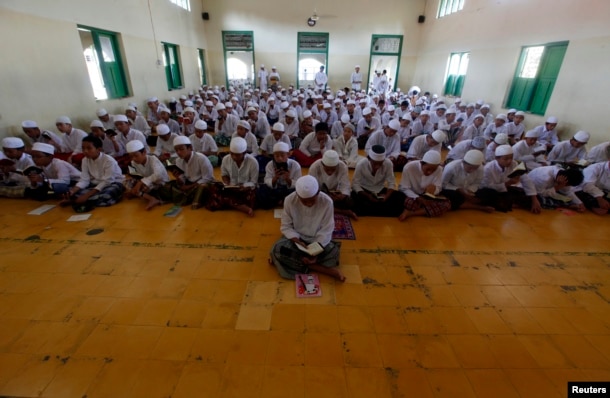
    FILE - Students pray during the first day of the holy month of Ramadan at Al-Mukmin Islamic boarding school in Solo, in Indonesia's Central Java province, August 1, 2011.

    FILE – Students pray during the first day of the holy month of Ramadan at Al-Mukmin Islamic boarding school in Solo, in Indonesia’s Central Java province, August 1, 2011.

    “Once you accept that, you’re on their payroll for life,” Abshar-Abdalla told VOA. “But they made it awfully easy to stick around. I’m from a poor family, and it was quite tempting… I think they managed to pull a few good minds from my generation that way.”

    Since 1980, Saudi Arabia has been using education to quietly spread Salafism, its brand of puritanical Islam, in Indonesia, the world’s most populous Muslim nation. The two main arms of this effort are LIPIA and scholarships for higher education in Saudi Arabia.

    Salafism is an ultra-conservative reform movement that advocates a return to Koranic times. LIPIA teaches Wahhabi Madhab, a strain of Salafi Islam expounded by the medieval Sunni theologian Ibn Taimiyah.

    “Saudi alumni” are now visible in many arenas of Indonesian public life, holding positions in Muhammadiyah, the Prosperous Justice Party, and the Cabinet. Some have also become preachers and religious teachers, spreading Salafism across the archipelago.

    The effects of Saudi Arabia’s massive soft power exercise on the Indonesian citizenry are just starting to become clear.

    ‘The most important post in Jakarta’

    The nexus of Saudi educational diplomacy is the religious attaché, a special office affiliated with its embassy in Jakarta. The office grants scholarships for students to study in Saudi Arabia, although the current attaché, Saad Namase, refused to confirm how many students were involved.

    “We don’t really work with the Indonesian government,” said Namase. “We just try to strengthen cultural ties between our two countries by, for example, holding Quranic recitation competitions.” On the topic of scholarships, he said many countries, including the Netherlands and the U.S. offer scholarships to Indonesian students and the Saudi program was just one among many.

    FILE - A teacher gestures during an Islam personality class during the holy month of Ramadan at the Al-Mukmin Islamic boarding school in Solo, Indonesia Central Java province, Aug. 2, 2011.

    FILE – A teacher gestures during an Islam personality class during the holy month of Ramadan at the Al-Mukmin Islamic boarding school in Solo, Indonesia Central Java province, Aug. 2, 2011.

    “The Saudi religious attaché is the most important post in Jakarta,” said Abshar-Abdalla, who now runs the Liberal Islam Network. “It is the portal for all Saudi efforts to influence Indonesian culture.”

    The attaché’s office also pays the salary of prominent Salafi preachers and supplies Arabic teachers to boarding schools across Indonesia, according to Din Wahid, an expert on Indonesia Salafism at the Syarif Hidayatullah State Islamic University in Jakarta.

    Beyond the attaché’s office, several Saudi Arabian universities directly offer scholarships to Indonesian students.

    One reason the Indonesian government is unlikely to present roadblocks to Saudi cultural expansion is its precarious annual Hajj quota, according to Dadi Darmadi, a UIN researcher who focuses on the annual pilgrimage to Mecca.

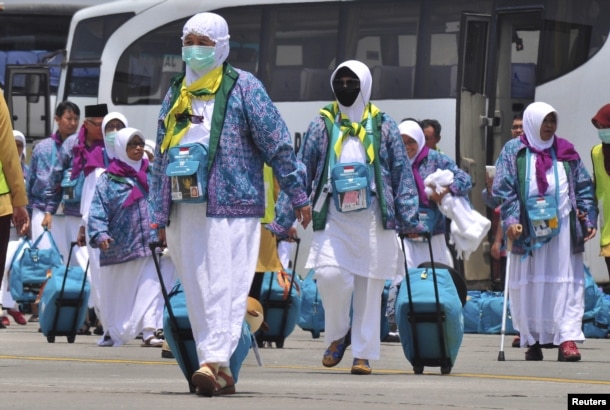
    FILE - Indonesian Haj pilgrims walk towards their flight at the airport in Solo, Central Java province, Indonesia, Sept. 17, 2015, in this photo taken by Antara Foto.

    FILE – Indonesian Haj pilgrims walk towards their flight at the airport in Solo, Central Java province, Indonesia, Sept. 17, 2015, in this photo taken by Antara Foto.

    “We were just granted 10,000 extra Hajj permits this year, which is still a drop in the bucket considering Indonesia’s population of 203 million Muslims,” said Darmadi, “I think Indonesia would hesitate to antagonize Saudi Arabia and prompt cuts to that hard-won quota.”

    Divergent paths

    Hidayat Nur Wahid, a member of Indonesia’s House of Representatives and a leader of the right-wing Prosperous Justice Party (PKS), is one of the most prominent national politicians who have passed through Saudi universities. He studied, through a series of scholarships, for an undergraduate, master’s and doctorate degree in theology and history of Islamic thought at the Islamic University of Medina.

    FILE -- In this July 5, 2013 file photo, worshipers visit the Prophet's Mosque in Medina, Saudi Arabia.

    FILE — In this July 5, 2013 file photo, worshipers visit the Prophet’s Mosque in Medina, Saudi Arabia.

    “The majority of Islamic texts are in Arabic, which is why I wanted to study in Saudi Arabia,” Nur Wahid told VOA. “Plus, the spirit of the Prophet Muhammad animates Medina. I enjoyed my years there.”

    Nur Wahid said he was not exposed to radicalism or “anti-social” teachings in Medina. “We just learned how to be good Muslims. And it’s a misconception that everyone who studies in Saudi Arabia becomes a preacher or religious teacher. Many graduates become officials or politicians like me.”

    “Since it is the place where Islam originated, many students think that Saudi Arabia represents authentic Islam,” researcher Din Wahid.

    Saudi theology had the opposite effect on Abshar-Abdalla, who gradually grew disenchanted with the Salafi movement during his five years at LIPIA.

    “Although I had some short-lived enthusiasm for that simplistic theology, I found it to be puritanical at its core,” said Abshar-Abdalla. Instead, he started to read various other Islamic texts on his own, including Sufi and Shia ones, and eventually founded the Liberal Islam Network (JIL) in 2001.

    Ironically, he himself was once recruited for the student movement that would develop into PKS. “I was invited for a rafting trip in Bogor one weekend at university, and I realized they were trying to get me to join Tarbiyah, the embryo of the current PKS party,” said Abshar-Abdalla. “I sort of ran in the opposite direction.”

    Extremist connection

    Although Saudi-educated preachers in Indonesia might be causing a subtle rightward shift in national ideology, a more immediate concern is whether Salafi teachings encourage terrorism or extremism.

    “By and large, I think not, because official Salafism is quietist, or apolitical, in order to preserve the authority of Saudi royalty in its homeland,” said Wahid. “That being said, when this ideology migrates back to Southeast Asia, all bets are off.”

    One prominent example of non-quietist, or jihadist, ideology is the Salafi-influenced Ngruki pesantren in Solo, Central Java, which has incubated a number of known Indonesian terrorists.

    And Zaitun Rasmin, a graduate of Medina Islamic University, was one of the chief organizers of the hardline demonstrations against the governor of Jakarta in late 2016. “He’s an example of an Indonesian Salafist who is unconcerned with being ‘apolitical,’” said Wahid.

    Wahid’s point is that, for all the resources Saudi Arabia is directing towards Indonesian students, it remains to be seen how exactly Salafi ideology evolves in its new Southeast Asian context. “There are three ‘flavors’ of Salafi ideology: quietist, political, and jihadist. We don’t know what exactly it looks like in Indonesia. All we know is that it’s here, and it’s growing.”


    Source: VOA

  • MUIS: Ideologi ISIS Masih Terus Jadi Ancaman Serious

    MUIS: Ideologi ISIS Masih Terus Jadi Ancaman Serious

    PENANGKAPAN terkini satu lagi kumpulan pekerja Bangladesh menunjukkan ISIS dan ideologi pengganas terus menimbulkan ancaman serius.

    Demikian menurut satu kenyataan Majlis Ugama Islam Singapura (Muis), semalam.

    Meskipun adanya penangkapan ini, Muis berkata pengalaman pihaknya dengan pekerja Bangladesh selalunya positif.

    Ramai pekerja Bangladesh menyumbang masa dan tenaga sebagai relawan di masjid bersama-sama dengan relawan setempat yang lain.

    “Misalnya semasa bulan Ramadan, mereka membantu menyiapkan makanan dan buka bersama para jemaah yang lain,” kata Muis.

    Ia menambah bahawa masjid akan terus menyambut kedatangan Muslim daripada pelbagai latar belakang dan kerakyatan bagi program keagamaan dan kelas yang dijalankan guru agama bertauliah di bawah Skim Pengiktirafan Asatizah (ARS).

    Muis telah bekerjasama dengan Persatuan Bangladesh Singapura untuk meneroka lebih banyak inisiatif bagi menyokong pekerja Bangladesh dalam kehidupan sosio-agama mereka dan berintegrasi dengan masyarakat setempat.

    Muis juga menekankan pentingnya masyarakat Muslim Singapura terus berwaspada dan tidak membenarkan sebarang ajaran yang menggalak keganasan dan ekstremis berlaku dalam masyarakat.


    Source: www.beritaharian.sg

  • Countering The Narrative Of Terrorism

    Countering The Narrative Of Terrorism

    The recent arrest of one Singaporean teenager and the detention of another for being involved in terrorism-related activities is a matter of serious concern for all Singaporeans, for several reasons.

    Firstly, they are some of the youngest would-be “jihadis” encountered here thus far. Post-secondary student M Arifil Azim Putra Norja’i is 19 years old, while the other unnamed individual is only 17.

    Secondly, not only had Arifil desired to travel to Syria to join the Islamic State in Iraq and Syria (ISIS), he also planned to carry out attacks on public places and prominent leaders in Singapore, and attempted to recruit others.

    Thirdly, Arifil attempted to link up with ISIS by befriending people online who he thought could help him join the terrorist group.

    LONG-LASTING THREAT

    The threat posed by such young recruits to militancy is potentially long-lasting. Should they succeed in going to the Middle East and joining ISIS, they will become battle hardened, and if they survive, become the nucleus of a group of South-east Asians in the ISIS ranks. Upon their likely return to Singapore, they will engage in terrorist acts, thereby extending the reach of ISIS to South-east Asia.

    However, the issue of very young people getting involved and taking an interest in terrorism, especially in ISIS, is not exclusive to Singapore. It is a trend evident in many countries, including Indonesia and Malaysia, with some teenagers as young as 14 years old attempting to travel to join ISIS. Many are drawn to the ISIS propaganda on the Internet and social media.

    To prevent terrorist groups from taking root in Singapore and radicalisation permeating into the community, the security authorities need the support of all segments of society. Family, friends, school, religious leaders and the community all have a role to play in countering radicalisation. The case of Arifil is illustrative: He was reported to the authorities by a member of the community who knew him and noticed the changes in his behaviour, enabling further investigation to be conducted.

    Friends and family members who are aware of similar behavioural changes in their circles can do likewise. They should realise that reporting their friends’ suspicious behaviour is not “putting them in trouble” but helping them from causing greater harm or damage to the community.

    On a broader level, there needs to be more community engagement programmes in schools, for the community to raise awareness of the dangers of radicalisation and the distorted and extremist ideology of ISIS and such groups. With early intervention, religious teachers can come forward to help vulnerable individuals from becoming even more radicalised.

    In Singapore, the Religious Rehabilitation Group (RRG) has provided counselling to citizens who have been influenced by radical ideology, since 2003. From its inception, the RRG has provided religious counselling to members of Jemaah Islamiyah (JI), self-radicalised individuals, and their family members.

    In its efforts to counter ISIS narrative and engage the community, the RRG has published two public educational pamphlets, The Syrian Conflict and The Fallacies of ISIS Islamic Caliphate, which are accessible on the RRG’s Facebook page.

    Singapore has also adopted a system of recognition of Islamic teachers and scholars called “Asatizah Recognition Scheme”. They are accredited to teach Islam to the public so the latter are not religiously misled or become self-radicalised by materials found on the Internet and extremist websites.

    COUNTERING INTERNET-SAVVY ISLAMIC STATE

    Countering radical ideological narratives has to be done both online and offline. ISIS has exploited the Internet, especially social media, to disseminate its ideology and propaganda.

    There are 46,000 Twitter accounts supporting ISIS globally, and at least 1,000 Facebook accounts of the same nature in South-east Asia. To counter ISIS online, the community needs to work with social media. For example, Facebook and Twitter have taken down accounts of ISIS members and supporters that post ISIS narratives.

    Shutting down such accounts is necessary even though some analysts might protest that such a measure would cut off access to a trove of information about extremist groups. Removing online support for ISIS ideology is one of the ways of carrying out the uphill task of countering online extremism and radicalisation.

    There is also a need for a model to counter extremism and terrorism online. Such efforts should complement successful real-world engagements that are already taking place today. Participants should be moved to be the counter-force and spread the message of peace. Not only would this create an effective dissemination of counter-messages, it would also provide continuity in community engagement efforts on the ground.

    On a positive note, the announcement of the arrest of one teenager and the detention of another by the Ministry of Home Affairs came with the news that three former JI members who were under Detention Order had been released under Restriction Order (RO), and five individuals under the RO had their RO lifted. They had been receptive and cooperative to rehabilitation.

    While the fight against radicalism is not over, it is not a lost cause. The two detained teenagers can change, and there is still a chance for them to become responsible Singaporeans with proper engagement, religious counselling and family support.

    ABOUT THE AUTHORS:

    Nur Irfani and Nur Azlin are Associate Research Fellows of the S. Rajaratnam School of International Studies (RSIS), Nanyang Technological University, Singapore. Ms Irfani is also a volunteer with the Religious Rehabilitation Group (RRG). This commentary first appeared in RSIS Commentaries.


    Source: www.todayonline.com

  • Syed Danial: Challenge The Pink Dot Ideology, Engage In Civil Way And Help Those Struggling With Same-Sex Attraction

    Syed Danial: Challenge The Pink Dot Ideology, Engage In Civil Way And Help Those Struggling With Same-Sex Attraction

    Dear friends (and various assortment of ‘spies’ from the other side),

    We should offer thanks to God Almighty for all the Favours and Mercies He has bestowed upon us.

    Although we are pleased with PM Lee’s remarks, we should not pat ourselves on the back. His statement is actually doubled-edged. And it is instructive of govt thinking on the matter. The operative phrase here is that SG is ‘still a conservative society’. And his remarks that it’s ‘changing’ offers sobering reminder not to rest on our laurels.

    I think right now it’s important to act strategically. Our opponents are adept at media manipulation. The biggest mistake we can do right now is to appear too aggressive. They would play the victims card. We should therefore continue our activism in a civil way. Even polite. And we challenge the ideology. Not individual persons. We extend a helping hand of mercy to those struggling with same sex attraction.

    There’s talk of wanting to ‘gatecrash’ Pinkdot to distribute pamphlets or carry placards etc.

    My view is that would be a mistake. It would just make them look like victims.

    Methinks we continue to engage in a civil way both online and off.

    And let’s not rest on our laurels. We should do as much as poss to ensure that society does not change. And remain conservative.

    We do what we can. God will do what we cannot.

    Have a wonderful day in the Remembrance of God.


    Syed Danial

    Source: We are against Pinkdot in Singapore