Tag: ISEAS

  • Academic: Malay Presidential Candidates Should Be Judged By Ability To Articulate Singapore’s Interests

    Academic: Malay Presidential Candidates Should Be Judged By Ability To Articulate Singapore’s Interests

    Just who should be considered a “Malay”? Article 19B of the Singapore Constitution defines a Malay as “any person, whether of the Malay race or otherwise, who considers himself to be a member of the Malay community and who is generally accepted as a member of the Malay community by that community”.

    This definition also applies to Malay candidates intending to stand in a Group Representation Constituency (GRC) in a general election. The law requires that in a GRC, at least one member of the team is a Malay, an Indian or from other minority communities.

    The definition of Malay here is quite an open, all-inclusive one.

    In Malaysia, the issue of Malay identity has been widely discussed by sociologists. Debates over who qualifies as Malay took place against the backdrop of the New Economic Policy, which grants Malays certain economic and other benefits.

    Sociologists underline three schools of thought on Malay identity. The first is primordialism, which underscores the role of ancestry. Thus, a person’s ethnic identity is determined by birth. But inter-ethnic marriages have made this perspective irrelevant.

    The second is constructivism, which highlights the heterogeneity of the social group called “Malays”. Essentially, this argues that identity is constructed socially and that, over time and across communities, the definition of what a Malay person is can become porous.

    Scholars upholding more extreme interpretations of this perspective grapple with the role of Islam: how important a marker of Malay identity is it? Can someone living in Malaysia (or Singapore), become Malay (masuk Melayu) if he or she embraces Islam?

    The third perspective is situationalism, which implies that some people identify with Malayness when it is advantageous to be part of the community.

    Ultimately, there is generally a stable core which the majority of Malays identify with. In Malaysia, this is recognised in the Malaysian Constitution: Malays are Muslims, speak the Malay language and follow Malay custom.

    VOICE OF THE COMMUNITY

    How is acceptance into the Malay community measured, as worded in the Singapore Constitution?

    So far, online discussions have emphasised the presidential aspirants’ race, their ability to converse in the Malay language and religion. The extent to which these aspirants have spoken for their community is somehow neglected.

    Here, Singaporeans should draw inspiration from the history of the Malays. Singapore Malays have identified some prominent names as part of their community, though they may not strictly come from the Malay race. These individuals have defended the Malays and struggled for their plight.

    One such individual was Abdullah Abdul Kadir Munshi (1796-1854), a famous chronicler, Malay language teacher and interpreter who worked for Sir Stamford Raffles. His grandfather was of Yemeni Arab descent and his grandmother a Tamil. Malays accept Munshi Abdullah as an intellectual. He wrote on the plight of the Malays during the feudal era and colonial period, and was critical of the Malay ruling class for not investing enough in educating their people.

    The other personality was Professor Syed Hussein Alatas (1928-2007), a former head of Malay Studies at the National University of Singapore. Of hadrami (Yemeni) descent, the sociologist spent most of his life in Malaysia and Singapore. His writings focused on the modernisation of the Malays and the community’s development lag. He also wrote a pioneering book, The Myth Of The Lazy Native, debunking negative stereotypes about the Malays imposed by colonial scholars.

    A name more familiar to Singaporeans is that of Mr Yusof Ishak, whose ancestors originated from Sumatra in Indonesia.

    Throughout his life, Mr Yusof struggled for the Malays. In 1939, he founded the newspaper Utusan Melayu because he wanted the Malays to have an equal voice in the public sphere which, he claimed, was dominated by Indian Muslims and Arabs. Having shown this empathy for his community, Mr Yusof fit smoothly into the role as Singapore’s first head of state.

    Today, Mr Yusof is remembered as an outstanding member of the pioneer generation, as someone who defended multiculturalism and meritocracy, the building blocks of Singapore society.

    In today’s context, there is a convergence of interests among all ethnic communities. It is difficult to distinguish Malay issues from Chinese or Indian ones, and problems facing Singaporeans are not unique to any community.

    Thus, Malay presidential candidates should be judged by their ability to articulate the interests of Singaporeans.

    Granted, the role of the presidency is not a political but symbolic one. The president is not required to act as a check and balance on the Government, apart from being a gatekeeper of the country’s reserves and key public appointments.

    Still, Singaporeans expect their president to rise to the occasion and unite all citizens in times of crisis. So, a candidate’s track record of speaking up for their people is key.

    • The writer, Norshahril Saat, is a fellow at the ISEAS – Yusof Ishak Institute, and author of Yusof Ishak: Singapore’s First President.


    Source: www.straitstimes.com
  • 198 Points For PSLE, But Now Master’s In Sociology At Oxford University

    198 Points For PSLE, But Now Master’s In Sociology At Oxford University

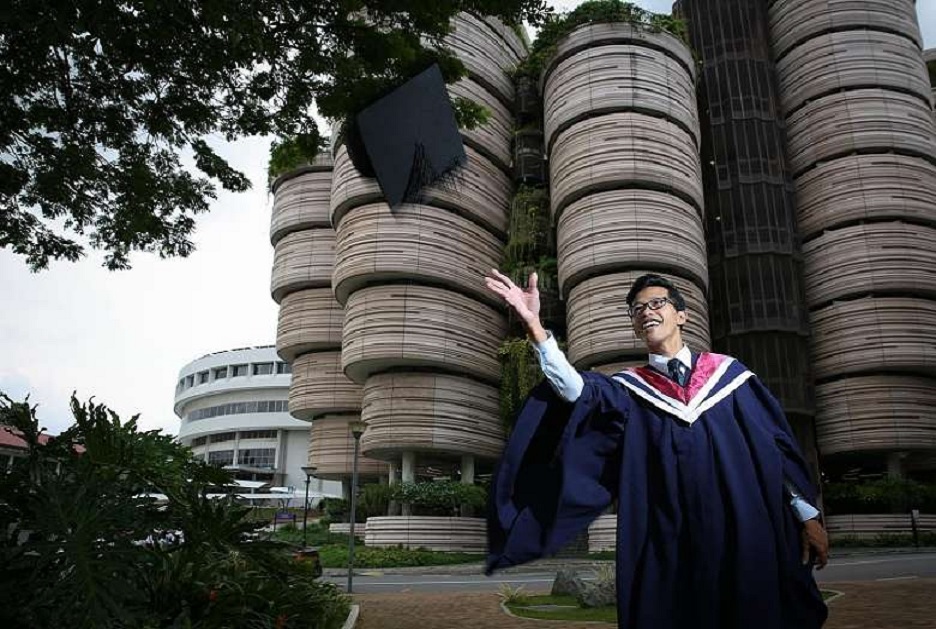
    Mohammad Syafiq Mohammad Suhaini, who got 198 points for his Primary School Leaving Examination (PSLE) was once a playful and distracted student at Siglap Secondary School. Now, after graduating from Nanyang Technology University’s (NTU) sociology, he is waiting to start his master’s in sociology at Oxford University. Upon completing his studies, Mohammad Syafiq will take up a research officer job at the ISEAS – Yusof Ishak Institute, which is sponsoring his studies in Oxford.

    Considering how he had struggled with subjects like mathematics, Mohammad Syafiq is surprised by his own achievements. Despite his achievements, he contributes back to society by volunteering on weekends at Darul Ghufran Mosque in Tampines, Malay-Muslim organisation Perdaus and non-profit youth organisation Majulah Community. He has since taught and mentored about 60 students, mostly from the Normal stream, polytechnics and the Institute of Technical Education.

    Source: The Straits Times

  • Norshahril Saat: Tingkatkan Takrif Kesederhanaan Ke Paras Lebih Tinggi Lagi

    Norshahril Saat: Tingkatkan Takrif Kesederhanaan Ke Paras Lebih Tinggi Lagi

    Siapakah sebenarnya seorang Muslim sederhana? Menolak pengganasan atau pun sekadar menghormati orang lain dengan memberikan ucapan selamat tidak cukup untuk menunjukkan sikap sederhana. Menurut Dr Norsharil Saat, masyarakat Islam perlu pergi lebih jauh lagi dengan benar-benar menyerap nilai-nilai sejagat yang diajarkan Islam sebelum kita boleh menggelarkan diri kita Muslim sederhana.

    MASYARAKAT Melayu/Islam yang menetap di rantau ini sering dilihat sebagai satu kelompok yang mengamalkan Islam secara sederhana. Walaupun mereka kuat beragama, mereka masih memberi ruang terhadap budaya lokal.

    Orientasi kesederhanaan sedemikian mungkin natijah daripada cara Islam disebarkan ke rantau Asia Tenggara. Salah satu golongan yang memainkan peranan penting dalam penyebaran Islam di sini adalah golongan Sufi dan pedagang.

    Islam tidak disebarkan dengan cara paksa. Sebaliknya, kumpulan yang membawa Islam ke sini menitikberatkan soal akhlak selain soal ketuhanan. Mereka juga memberi masyarakat tempatan waktu untuk mengubah cara mereka berdagang, berkeluarga, bekerja, mengamalkan budaya atau adat istiadat, dalam masa yang sama mengaku sebagai seorang Muslim.

    Disebabkan peranan yang dimainkan oleh ulama-ulama terdahulu, banyak sekali aspek budaya yang masih kekal hingga ke hari ini, dan ia tidak dilihat sebagai bercanggah dengan nilai-nilai Islam. Misalnya, adat bersanding dalam majlis perkahwinan masih dikekalkan walaupun ia bukan berasal daripada Islam. Begitu juga dengan diet orang-orang Melayu, tarian Melayu, dan muzik Melayu; semuanya dikekalkan dan dianggap sebati dengan ajaran Islam.

    Tambahan lagi, kesederhanaan dinilai dari aspek masyarakat Islam yang tidak canggung bergaul dengan masyarakat bukan Islam. Prinsip ini diterapkan dalam perlembagaan negara-negara jiran kita yang majoriti Muslim.

    Perlembangaan Indonesia dan Malaysia menggaris-bawahi aspek menghormati hak-hak bukan Islam atau golongan minoriti. Ini adalah contoh bahawa pendiri-pendiri negara-negara tersebut percaya pada nilai Islam dan menghormati perbezaan.

    Merenung pada pengalaman peribadi saya sebagai seorang yang lahir pada awal 80an, dan belajar di sebuah sekolah kejiranan, saya tidak ada masalah bergaul dengan rakan-rakan sedarjah yang bukan Islam.

    Malah kita melakukan kegiatan riadah bersama, makan bersama di kantin sekolah, dan menurut serta dalam kegiatan luar darjah bersama-sama. Saya masih ingat apabila muncul musim-musim perayaan, seperti Hari Raya Puasa, Tahun Baru Cina, Krismas, atau Deepavali, pengetua sekolah kami akan menyuruh setiap pelajar untuk memberikan ucapan selamat kepada pelajar-pelajar yang lain.

    MRT bertema Krismas. (Gambar: Ernest Chua, TODAY)

    Tidak timbul pada masa itu bahawa saya seorang yang mengamalkan Islam sederhana kerana memberi ucapan tersebut, kerana itu adalah nilai universal yang dianjurkan bukan sahaja oleh agama Islam, tetapi agama-agama lain juga.

    Namun, gelaran “moderat” atau “ekstrim” dinilai dari ukuran yang berbeza hari ini. Semasa di zaman sekolah, persoalan sama ada saya boleh mengucapkan “Merry Christmas”’ kepada rakan-rakan beragama Kristian tidak timbul.

    Masyarakat Islam kita secara umumnya juga tidak meminta sebarang fatwa atau pandangan orang alim sebelum mengucapkannya. Tiada keraguan sama-sekali bahawa ucapan tersebut boleh menyebabkan saya kurang Islam.

    KONSISTEN DALAM PEMIKIRAN

    Bagi saya, hal yang lebih meruncing dalam mengamalkan Islam sederhana adalah bersikap konsisten dalam pendirian. Sikap konsisten ini perlu dinilai dari sudut pandangan terhadap dunia.

    Sebagai contoh, umat Islam tentu marah dengan sikap Presiden Amerika, Donald Trump, yang berbaur perkauman dan Islamofobik. Mereka marah dengan sekatan kemasukan imigran dari tujuh buah negara Islam.

    Kita mahu Presiden Amerika itu bersikap sederhana terhadap Muslim. Namun, apakah sikap kita terhadap pemimpin negara-negara Islam yang menghambur bibit-bibit permusuhan terhadap orang bukan Islam? Kita harus jujur tentang kelemahan pemimpin-pemimpin Islam yang bertindak di luar landasan Islam.

    Dalam masa yang sama, kita perlu muhasabah diri dalam memerhatikan tindakan kita terhadap golongan yang berbeza pandangan daripada kita. Sebagai contoh, kita seringkali mengecam golongan yang tidak berfahaman Ahlus Sunnah Wal Jamaah (Sunni) dan terus mengatakan mereka kafir.

    Begitu juga dalam pertembungan Sufi dan Wahhabi, bila mana kedua-dua golongan sering mengatakan pendirian mereka sahaja yang betul.

    Tetapi sejauh mana masyarakat kita didedahkan dengan Deklarasi Amman, di mana tokoh-tokoh Islam terkemuka dunia bersetuju bahawa banyak sekali fahaman, Sunni, Sufi, Wahhabi, dan beberapa golongan Syiah adalah termasuk dalam golongan Islam? Seorang yang berjiwa sederhana harus berani menyatakan pendirian yang benar walaupun ia ia boleh menjejas populariti sendiri atau dikecam sebagai salah.

    (Gambar hiasan: AFP/MOHD FYROL)

    CIRI-CIRI SEDERHANA

    Di sini saya menyeru masyarakat kita agar menaikkan takrifan sederhana ke satu aras yang lebih tinggi. Isu seperti bolehkah kita memberi salam kepada penganut agama lain adalah perkara lama, dan saya tidak fikir seorang boleh digelar sederhana hanya dengan membolehkannya. Ia dibolehkan oleh majoriti ulama di merata dunia.

    Contoh yang kedua, seseorang tidak boleh digelar moderat hanya dengan mengutuk keganasan. Kutukan terhadap keganasan bukanlah ukuran bahawa seseorang berjiwa sederhana. Isu keganasan adalah isu yang jelas keluar daripada agama, bukan hanya bagi penganut agama Islam, tetapi agama-agama lain juga.

    Dalam erti kata lain, terorisme adalah masalah universal. Yang harus diberikan perhatian adalah sama ada golongan yang mengutuk terorisme ini berlaku adil terhadap masyarakat minoriti yang berbeza pandangan daripada.

    Yang lebih mendukacitakan sekali, kita hanya bersuara apabila sesuatu hal menjejas masyarakat kita atau kelompok kita, tetapi membisu apabila nilai-nilai kemanusiaan dicantas terhadap masyarakat lain.

    Kesederhanaan, pada hemat saya, adalah seorang yang benar-benar menyerap nilai-nilai universal yang diajarkan dalam agama. Ini termasuk prinsip keadilan, kejujuran, dan kemanusiaan.

    Sebelum kita menggelar agama kita sebagai sebuah agama rahmat untuk seluruh alam, kita perlu mengambil masa untuk fikirkan sejauh masa kita mendekati golongan berfahaman lain. Kalau masih ada bibit-bibit kebencian yang ditanamkan terhadap golongan minoriti—dari sudut agama, fahaman, dan gender — seseorang itu masih belum boleh bergelar moderat.


    MENGENAI PENULIS:
    Seorang pakar dan pengamat politik Asia Tenggara, Dr Norshahril Saat adalah Zamil di ISEAS – Institut Yusof Ishak.

    Source: http://berita.mediacorp.sg

  • Norshahril Saat: Changes To Elected Presidency Necessary Tokenism To Boost Long Term Multiracialism

    Norshahril Saat: Changes To Elected Presidency Necessary Tokenism To Boost Long Term Multiracialism

    Of the changes to the elected presidency passed by Parliament last week, the one to reserve an election for a particular racial group is the most contentious.

    With that change to the Constitution, a presidential election will be reserved for a particular racial group if no one from that group has been president for five terms in a row. That means in the course of six presidential terms, there should be at least one Chinese, one Malay, plus one president from the Indian and other minority communities.

    Candidates in the reserved elections will meet the same criteria as those running in open elections.

    Other changes include stricter qualifying criteria for presidential candidates and more powers for an expanded Council of Presidential Advisers.

    The changes have several implications. First, Singapore will, after a 46-year wait, see a Malay president in the next election provided there are qualified candidates. The Republic’s first president Yusof Ishak was Malay and held the post from 1965, when Singapore became independent, to 1970, when he died in office. Before that, he was Yang di-Pertuan Negara (Head of State) from 1959, the year Singapore achieved self-rule from the British.

    With the Prime Minister’s announcement that the next presidential election, due next year, will be reserved for Malays, President Tony Tan Keng Yam will not be able to run for a second term. He has since confirmed that he will not be standing again. There will also be no repeat of the fierce contest between four candidates – all of them Chinese men – seen in 2011. That turned out to be a close fight between Dr Tony Tan and Dr Tan Cheng Bock, who obtained 35.2 per cent and 34.85 per cent of votes respectively. The changes to the Constitution passed last week effectively deny Dr Tan Cheng Bock the chance to take part in the next election and that has raised questions about the timing of the amendment.

    Under changes to the elected presidency passed by Parliament last week, a presidential election will be reserved for a particular racial group if no one from that group has been president for five terms in a row. Candidates in reserved elections will meet the same criteria as those in open elections. ST PHOTO: STEPHANIE YEOW


    Another big concern is what these changes will mean for Singapore’s founding principles of meritocracy and equality. These principles tell us that leaders should be assessed based on their capabilities, and not race, family or social status. Would not the changes passed last week be a blow to Singapore’s meritocracy and instead entrench race-based politics? That is the basis of some people’s opposition.

    But even within the Malay/ Muslim community, there is a diversity of views. Some consider the Government’s plan as tokenism, akin to letting Malays win a runners-up medal since no one from the community is capable of competing in an open and fair election against other ethnic groups. On the other hand, there are Malays who embrace the amendments with open arms. They have long regarded the late Mr Yusof as a symbol of pride and cannot wait to see another president emerge from the community. Whatever the shortcomings, the amendments passed ensure that the sanctity and prestige of the elected presidency are not compromised, through the provision of several safeguards. The first is a higher bar for candidates such that only capable individuals need apply. There are no exceptions and minorities have to meet the same strict qualifying criteria.

    The second safeguard is that since the next election is reserved for Malays, Malay candidates who want to win must drum up support among all Singaporeans, regardless of their race or religion. He or she cannot campaign solely on a platform of Malay interests but must instead seek to represent Singapore’s multicultural and secular values.

    Mr Yusof exemplified these values. In the 1940s and 1950s, he was managing editor of Utusan Melayu – a popular Malay language newspaper which advocated for the upliftment of the Malays. Yet, he championed the interests of all races throughout his presidency, earning praise from all racial groups.

    As a nation, we must hold fast to a vision of a Singapore that is race-blind. Recent polls, however, show that we have not quite achieved that yet. At the same time, there is a risk that if there is no president from a particular racial group for a long time, the issue could be politicised should some claim that discrimination is at play. Therefore, there is a need to intervene to ensure multiracial representation in the years before our ideal of a race-blind nation is realised.

    Some countries introduce affirmative action to level the playing field for all races. While Singapore has made huge strides in fair treatment of minorities, we have to be upfront and admit that the system has never been a perfect meritocracy. Instead, it has always been an “abridged” one. Nonetheless, it is this abridged meritocracy that has ensured minority representation in our parliamentary democracy, which also stabilises race relations in the country. Thus, applying it to the elected presidency scheme is not unprecedented and has its merits.

    Questions about how a race-based election will affect our meritocracy will persist. However, on a broader trajectory, reserving the next presidential election for Malays is in my view a necessary form of tokenism to develop trust among the races.

    After a break of more than four decades, it is timely to elect a Malay president and give him or her a chance to represent all Singaporeans, just as Mr Yusof did during his tenure in the 1960s.

    But even as we do so, we must not lose sight of our principles that guide us to elect our leaders based on their capabilities.


    • The writer, Norshahril Saat, is a fellow at the Iseas – Yusof Ishak Institute. He is the author of Yusof Ishak: Singapore’s First President.


    Source: www.straitstimes.com

  • Masyarakat Melayu Singapura Tiada Krisis Identiti

    Masyarakat Melayu Singapura Tiada Krisis Identiti

    Masyarakat Melayu Singapura tiada masalah krisis identiti.

    Sikap inklusif, terbuka serta identiti yang berbilang sudah lama ada dalam diri masyarakat Melayu dan ini dibuktikan sejarah.

    Lantaran itu, masyarakat Melayu perlu menggali sejarahnya, yang sudah banyak diabaikan.

    Demikian antara pandangan para sarjana semasa mengupas tentang apakah Identiti Melayu Kini Dalam Krisis, dalam satu seminar baru-baru ini, anjuran ISEAS – Institut Yusof Ishak.

    Ia berdasarkan buku tulisan Profesor Anthony Milner berjudul ‘Kerajaan Budaya Politik Melayu di Ambang Pemerintahan Penjajah, yang dilancarkan dalam sesi ini.

    SEJARAH BEGITU DIABAIKAN

    Menurut Profesor Milner, mantan Profesor Pelawat Raffles di Jabatan Sejarah NUS dan Penyampai Seminar untuk memahami pendekatan orang dan negara Melayu seperti Malaysia tentang Laut China Selatan atau hubungan etnik di Malaysia, jawapannya ada dalam lipatan sejarah.

    “Saya fikir terdapat pengabaian besar terhadap sejarah – bukan kerana sejarah penghurai segalanya, tetapi ia membantu menyediakan rujukan bagi apa yang berlaku di rantau ini.
    Bahawa dunia pra penjajahan merupakan peringatan tentang suatu masa di mana bangsa tidak begitu penting,” kata Prof Milner.

    Beliau yang banyak menulis tentang kaum Melayu dan sejarah Malaysia, dalam bahasa Inggeris menambah: “Perkembangan tentang perasaan bangsa Melayu yang jelas adalah perkembangan moden,” menurut Profesor Milner.

    Para sarjana dalam sesi itu juga berhujah bahawa sejarah juga berguna untuk mengupas identiti Melayu Singapura.

    Ini lebih relevan di tengah-tengah perbahasan tentang isu berbilang bangsa dan pengaruh agama Islam.

    ORANG MELAYU BERSIKAP TERBUKA, TAAT, INKLUSIF

    Penolong Profesor di Jabatan Pengajian Melayu NUS, Dr Sher Banu merupakan antara sarjana yang berpandangan bahawa masyarakat Melayu di Singapura tidak mengalami masalah identiti krisis.

    “Sebab, kalau kita tengok bahagian sejarah, masyarakat Melayu selalu sudah berpeluang untuk menyesuaikan diri dan juga mereka selalu bersikap cara terbuka, bersikap secara inklusif. Kalau kita lihat pemerintahan yang lalu, yang berasaskan kepimpinan Islam, kita boleh dapat contoh ciri-ciri pemerintahan yang bagus, yang dapat disesuaikan dalam konteks di Singapura dan juga di Malaysia.

    “Jadi kalau mereka ada identiti berbeza, ketaatan berbeza, ia sesuatu yang mereka berupaya menyesuaikan diri,” kata Dr Banu, yang juga menjadi Pengulas Seminar Identiti Krisis Melayu itu.

    Lantaran itu juga, penganjur seminar tersebut cuba mengupas mengapa perbincangan mengenai politik Melayu tidak boleh dikupas tanpa mengambil kira aspek budaya dan sejarah Melayu itu sendiri.

    Kalangan peserta seminar termasuklah peminat sejarah, antropologi dan budaya, selain pelajar seperti Muhd Suhail Mohd Yazid.

    Mengulas perbincangan seminar tersebut, beliau berkata: “Kita tidak boleh lupa bahawa Singapura terletaknya di nusantara, di alam Melayu. Jadi sejarah Melayu juga sejarah Singapura. Pada masa yang sama kita harus kritikal juga adakah cara pemikiran orang Melayu di zaman kerajaan juga relevan pada zaman modern kini?”

    Seminar dua jam itu dihadiri sekitar 60 peserta.

    Source: http://berita.mediacorp.sg