Tag: Jalan Ampas

  • Reliving The Golden Age Of Malay films

    Reliving The Golden Age Of Malay films

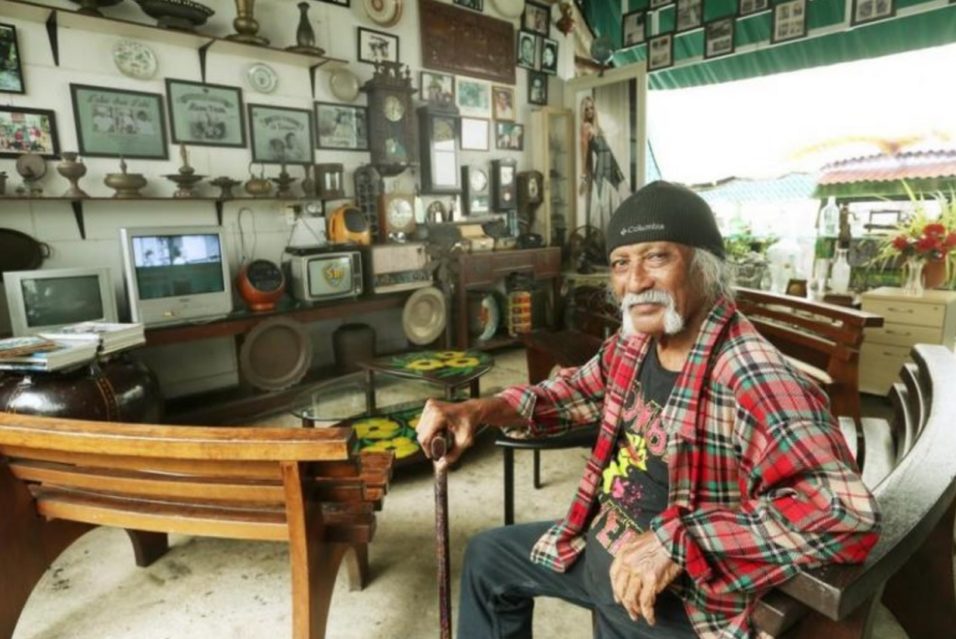
    As a teenager, Mr Jumahat Abu Bakar would peer through the gates of the Malay film studios in Jalan Ampas, hoping to catch a glimpse of actors such as the famed P. Ramlee.

    In 2012, when he was offered a caretaker job at the studios, located off Balestier Road, he leapt at the chance, even at the age of 70.

    The first thing he did was spruce up the studios, which stopped operating in 1967. He put up photos of old artists and painted the walls with a nostalgic motif featuring bamboo shoots and sugar cane.

    On Sunday (Aug 13), Mr Jumahat, now 75, showed off his work as over 160 visitors went there to relive the golden era of the Singapore Malay film industry, from the 1950s to 1960s.

    The visit was part of the Jejak Warisan tour, an initiative by Woodlands grassroots volunteers to run heritage trips for the Malay community to promote the cultural legacy.

    Sunday’s tour, the third since the effort began in February, saw the largest number of participants. It was conducted by local lyricist and film researcher Yusnor Ef, 80, once a student of P. Ramlee, who was also a musician and film-maker.

    He said: “This place holds a lot of pride for the Malays. Great artists were nurtured here. They worked from the heart. I hope it can be kept as a reminder of our heritage.”

    Parliamentary Secretary for Health and Home Affairs Amrin Amin, who was at the event, said Malay films that showcase tradition and heritage remain relevant even in a modern world dominated by Hollywood blockbusters.

    He added that “Hollywood can’t touch the heart like they can” with “their simple everyday language”.

    He said he was certain such films could be made again. “We just need to have the cultural confidence.”

    Veteran actors Zaiton Abdullah, K. Fatimah and Zaini Sattar were there to answer questions during the tour.

    Mr Jumahat said it made him very happy to see the usually empty studios filled with people. He said: “This place holds so much meaning for me, and I hope more Singaporeans will know about it and visit it.”


    Source: http://www.tnp.sg/

  • Seniwati Zaiton Dan Artis-Artis Veteran Jalan Ampas Muncul Di Kg Gelam

    Seniwati Zaiton Dan Artis-Artis Veteran Jalan Ampas Muncul Di Kg Gelam

    Mereka sudah lama tidak muncul di khalayak ramai. Namun seniwati Zaiton, K. Fatimah, Sri Dewi, Rahmah Hassan, dan seniman Zaini Sattar berkumpul di Singapura baru-baru ini.

    Lebih 70 orang peminat dan pengunjung juga berkesempatan untuk bergambar bersama artis-artis veteran Jalan Ampas itu, yang pernah menempa kemasyhuran di era kegemilangan zaman filem hitam-putih di Singapura.

    Semua ini anjuran Ahli Filem & Muzik Klasik Melayu Singapura, sebuah kelab berwadahkan media sosial. Para anggotanya menganjurkan program lawatan ke studio Jalan Ampas, diikuti dengan acara santai berhibur sambil menjamu selera di kafe Kaw Kaw Sg, di Aliwal Street, Sabtu lalu (5 Nov).

    Acara perjumpaan berkenaan diadakan demi mengingati dan menghargai pengorbanan dan sumbangan para seniman dan seniwati Jalan Ampas itu.

    ZAITON DARI BUJANG LAPOK SIBUK LAYAN PEMINAT

    Seniwati Zaiton (Zaiton Abdullah) yang cukup dikenali sebagai watak ‘Jeyton’ di dalam filem Seniman Bujang Lapok, dilihat cukup berseri dan sibuk melayani para peminat yang ingin bergambar dengannya.

    Perjumpaan ‘Mengenang Pelakon Malay FIlem Productions’ oleh aktivis-aktivis peminat filem-filem klasik Melayu Singapura itu hasil inisiatif Encik Nazran Hamid, 56 tahun, penulis blog Ukhti Aminah serta rakan-rakan lain seperti, Azlan Mohamed Said, Pengaji muzik Nusantara, Saedah Samat-Alkaff seorang guru muzik professional serta penyanyi Fir Ramlee dan Rudy Djoharnaen.

    Menurut Encik Nazran, menerusi program ini, diharapkan para ahli Filem & Muzik Klasik Melayu di Singapura khususnya, dapat mengetahui lebih dalam lagi mengenai sejarah perfileman Melayu Singapura di masa dahulu.

    “Saya berpendapat, dengan mengadakan acara di Singapura ini peminat-peminat kelab di sini boleh menghadirinya dengan mudah dan dapat melihat sendiri bagaimana gahnya arena seni perfileman Melayu kita pada suatu masa dahulu, terutama sekali dunia perfileman di era tahun 1950-an dan 1960-an.

    “Di samping itu juga, saya dapat mengetahui kisah dan penglibatan ibu-bapa saya sendiri ketika mereka bekerja di Jalan Ampas dahulu,” jelas Encik Nazran yang merupakan anak kepada bintang terkenal seniwati jelita, Mariani (Allahyarhamah) atau nama sebenarnya Mariam Ismail. Bapanya pula adalah seorang Penolong Pengarah dan Penulis Lirik lagu, Allahyarham H.M. Rohaizat.

    ADIK AZIZ SATTAR MAHU PROGRAM PERJUMPAAN DITERUSKAN

    Acara privet itu, walaupun kecil mendapat sambutan yang menggalakkan daripada para ahli kelab itu dan juga peminat-peminat filem-filem klasik.

    Para hadirin diserikan dengan nyayian lagu-lagu Melayu klasik malar segar dendangan merdu dari artis-artis popular seperti Kamaliah Latiff, Rudy Djoharnaen, Fir Ramlee dan bakat baru di persada seni suara, Mai Dhaniyah. Pengarah muzik bagi acara ini adalah, Cik Saedah Samat-Alkaff.

    Bagi pelakon Zaini Sattar, iaitu adik kepada seniman Aziz Sattar, program perjumpaan sebegini harus diteruskan oleh peminat-peminat atau penggiat filem Melayu setempat. Menurut Pak Zaini lagi, perjumpaan sebegini boleh menggamit kenangan dan mengingati kisah-kisah manis ketika bekerja di Jalan Ampas dahulu, sambil mengeratkan lagi silaturrahim sesama mereka.

    “TINGGAL BERAPA KERAT SAJA…”

    “Bayangkanlah tinggal berapa kerat saja lagi orang-orang lama (pelakon Jalan Ampas) yang masih hidup. Kami semua memang rapat. Bagi Uncle, acara sebegini memang baik dan harus diteruskan. Mungkin boleh buat lebih besar dan gah lagi.

    Uncle berharap generasi muda dapat mengetahui sejarah perfileman Melayu kita waktu dulu. Artis-artis ini memang hebat dan berbakat besar! Mereka semua berkarya dengan sungguh ikhlas dan dari hati,” ujar anak seni veteran berusia 83 tahun dan dianggap sebagai ‘wakil’ dari Jalan Ampas ini.

    Antara yang turut menghadiri acara ini adalah Cik Som Said, Pengasas Sri Warisan, Presiden Perkamus, Cikgu Yusnor Eff, Kartunis tersohor dari Malaysia, Datuk Lat, dan wakil dari Perbadanan Kemajuan Filem Nasional Malaysia (FINAS).

    Penulis lirik terkenal, Cikgu Yusnor Eff, 80 tahun berpendapat, acara murni sebegini seperti mengingati artis-artis lama Jalan Ampas harus diteruskan dan dipelihara sejarah demi mengetahui perkembangan dan perindustrian perfileman Melayu kita sendiri.

    “Bagi saya, mereka ini bak ‘khazanah’ dan permata perfileman dan warisan Melayu kita. Generasi akan datang perlu mengambil tahu dan mengetahui asal usul dunia perfileman Melayu kita, khsususnya di Jalan Ampas.

    “Oleh yang demikian, saya telah pun menyiapkan rancangan dokumentari sebanyak 39 episod, menyingkap sejarah dan perkembangan dunia perfileman Melayu kita sendiri, agar kisah ini tidak hanyut ditelan zaman” ujar Encik Yusnor, yang enerima anugerah Pingat Budaya pada tahun 2011.

    Di akhir acara ini, setiap seniman dan seniwati telah pun diberikan cendarhati lukisan water colour dari Rudy Djoharnaen sendiri sebagai menghargai sumbangan besar mereka di persada seni dan perfileman Melayu, suatu ketika dulu.

    SEDIKIT LATAR BELAKANG FILEM MELAYU LAMA

    Tahukah anda, filem Melayu pertama telah diterbitkan di Singapura pada tahun 1933, dan pada tahun 1939 Momo Latiff telah menjadi heroin dalam filem Laila Majnun terbitan Shaw. Malangnya filem-filem ini telah pupus sewaktu perang dunia kedua tercetus.

    Setelah tamat peperangan, pasangan adik-beradik dari China, Runme dan Run Run Shaw atau juga dikenali sebagai Shaw Brothers, sekali lagi membina semula studio perfileman mereka pada tahun 1945 dan menamakan studio itu dengan panggilan studio ‘Malay Film Productions’(MFP) yang masih utuh bangunannya dan terletak di lokasi yang sama, iaitu di No 8, Jalan Ampas.

    Ketika di studio Jalan Ampas inilah bermulanya perjalanan seni dan lahirnya nama-nama hebat seniman dan seniwati seperti Tan Sri P.Ramlee, Puan Sri Saloma, Datuk Aziz Sattar, Datuk Mustapha Maarof, Datuk Sarimah Ahmad, S. Shamsudin, Zaiton dan ramai lagi yang telah menghiasi dan mewarnai dunia perfileman Melayu kita.

    Walaupun ada yang sudah meninggalkan kita lebih empat dekad yang lalu, namun lakonan mereka masih diingati dan disanjungi hingga kini dan diminati juga oleh generasi muda kita.

    Apa yang lebih menarik lagi, para legenda ini pernah mendapat jolokan sebagai bintang ‘Hollywod Filem Melayu’ suatu ketika dulu.

    Source: Berita MediaCorp
  • Local Performer, Ashmi Roslan, Passed Away Aged 34

    Local Performer, Ashmi Roslan, Passed Away Aged 34

    Local singer and actor Ashmi Roslan died on Wednesday (Jun 10). He was 34 and is believed to have suffered a heart attack.

    In a statement on its Facebook and Instagram pages, MediaCorp Suria described him as a local artiste with great talent – adding that he first rose to fame after appearing in the 2006 season of Anugerah Skrin.

    BELASUNGKAWA: Suria berdukacita dan ingin merakamkan takziah atas pemergian artis tempatan berbakat besar, Allahyarham…

    Posted by MediaCorp Suria on Wednesday, 10 June 2015

    Ashmi last appeared on the variety stage via Projek Kasih, and was part of the main cast for Jalan Ampas, a drama also starring Fizah Nizam and Hashimah Hamidon that is currently airing on Suria.

    Tributes have begun pouring in for Ashmi, who had a wide circle of friends, many of whom are in the entertainment business.

    Local performer and creative director at Sri Warisan – Som Said Performing Arts, Ms Marina Yusoff, described Ashmi as a “very pleasing, respectful person” in her condolence message on Facebook.

    “You go too soon my brother,” she added in another post, accompanied by a photo of them having a meal together.

    The Noose’s Suhaimi Yusof also took to Facebook, just before midnight on Wednesday: “Just received the news. At such a young age, Ashmi Roslan has passed away because of a heart attack.”

    According to Ashmi’s Instagram page, he had been warded in hospital just about a week ago. In the post, he described the experience as an “unexpected turning point”, saying he was thankful for “a reminder to better take care of (himself)”.


    Source: www.channelnewsasia.com

  • Aiseyman! Lee Kuan Yew Destroyed Our Local Malay Film Industry

    Aiseyman! Lee Kuan Yew Destroyed Our Local Malay Film Industry

    “Can I use the master’s tools to dismantle the master’s house?” The film asked introspectively, the master alluding to the our late founding father Mr Lee Kuan Yew. Looking at the prosperity that sloshes around this island, I think it is easy to forget what was destroyed to achieve what we have today. Snakeskin, a part dream documentary, part city symphony, is a film directed by local filmmaker Daniel Hui, that was shown at the recently concluded Southeast Asian Film Festival 2015 organised by the Singapore Art Museum.

    The film is set in year 2066, and the sole survivor of an enigmatic cult recounts his country’s traumatic history and reminisces about the oppression that has been inscribed on Singapore’s physical landscape. It traces the Japanese Occupation, Operation Coldstore and other chapters of Singapore’s history. One particular chapter worth highlighting was the destruction and demise of the Malay film industry in the 1960s; credit to Daniel Hui, a Chinese filmmaker for bringing out this latent issue carefully concealed among the local Malay identity.

    In its heyday, the Malay film industry, epitomized by the legendary P Ramlee, was a creative cauldron financed by the Chinese, (the Shaw and Cathay enterprises), technically helmed by Indians from Bollywood and artistically inspired by Malays from Malaya. But the grand nationalism project of newly independent Singapore led by LKY meant that these vestiges of genuine inter-racial business cooperation and racial harmony was to be replaced by mistrust and tension so as to justify a new raison d’etre of growth at all costs and attracting western investments. Malay cultures, local traditions, Chinese schools, were systematically removed from the nation’s memory and siege mentality assumed control.

    Using long shots and pensive moods, Daniel Hui’s narration speak to the long hollow corridors of our forgotten collective subconscious as a true Malayan people, “He (cult leader LKY) especially detested the Malay film industry. The radically egalitarian society these films dreamed of…he could never accept the idea in these films that the different races could live together as brothers. He needed us to believe that the different races lived in constant tension…that even the smallest spark can start a fire…”

    Daniel Hui even managed to interview Yusnor Ef, one of the famous lyricist during the heyday of Malay cinematic grandeur. He penned lyrics to many hits, such Kasih Sayang Suami Isteri and Gelisah.  As I watch Yusnor recount the splendor at Jalan Ampas (the film studio of Shaw Brothers), I mourn for the missed opportunities that my community could have had, but most of all, I mourn for the lost kampongs and the spirit that was destroyed along with our zinc roofs and wild fruit trees, to be replaced by mindless concrete and carefully manicured plants.A

    Sunday Times 26 Apr

    If there was one line from a movie that stuck with me as the curtains were drawn, “He only wanted us to remember the legacy of the Chinese people, who according to him built Singapore. That meant erasing the Malay culture that came before the Chinese.”

    I hope Snakeskin will one day make it to the big screen so that more young Malays and youths of other races can appreciate our history. Although it’s esoteric art form would probably mean negative profits. But as our nation celebrates its 50th birthday, it is timely for us to remember not only what we have created, but what we have destroyed.

    Before the cult unleashes hell on me. RIP LKY.


    Sharifah H.

    Editor’s Note: This is a film review of the movie Snakeskin which was screened at the recent Southeast Asian Film Festival 2015. This is a contribution by our resident film critic.


    Source: www.aiseyman.com

  • Throwback: No.8 Jalan Ampas

    http://1.bp.blogspot.com/_Ga7D7K5SM7Y/SYxryd7JyoI/AAAAAAAABAI/FweGRxNXqwI/s1600/Batu+Peringatan+di+8+Jalan+Ampas.JPG

    http://4.bp.blogspot.com/_Ga7D7K5SM7Y/SYxrx1e-DTI/AAAAAAAAA_4/Z6LOONsLf78/s1600/Bangunan+pengurusan+studio+Jalan+Ampas.JPG

    The founder of the group called Singapore Malay Film Society (in Facebook and Friendster but now with an impressive website (www.smfs.sg) left a comment in one of the earlier posts which was about us not considering film as part of our cultural heritage. In response, I would like to post this little trip down memory lane.

    I went to Singapore a couple of years ago to help get some pics for my father’s autobiography. These were photos of the famous Malay Film Production studios in Jalan Ampas. When I headed there, I’m not really sure what to expect or if the studio still existed. The last time I set foot in the studio was in the mid 60s during the shoot of my father’s movie Raja Bersiong.

    I took along my family as I planned it during the holidays. When we reached the destination, what I saw was a fence covering the famous entrance to the studio. The address? No 8 Jalan Ampas. Trust Run Run Shaw to find an auspicious address for his studio.

    I stepped out of the car and stared at the entrance. All locked up. This was the exact junction where once a coffee shop stood – the infamous coffee shop owned by one woman named Siput (no relation to the famous Siput Sarawak). It was here that many actors, including the late Tan Sri P. Ramlee had coffee and played dam or checkers for money.

    Now, the junction is empty and nondescript. But I saw what seemed to be a fairly new pillar erected right in front of the fenced gate. I approached it and found that it was actually a signboard built to commemorate the existence of the once famous studio. On it was a photo of my father directing a scene from the movie Raja Bersiong.

    I looked through the chained fence and saw the studio which I still remembered clearly. I saw a guard approaching me. He was a Malay guard. When he approached, I asked him politely if I could enter the premises to take the photograph. He refused at first as I had no official permission to do so, but when I mentioned that I was Jamil Sulong’s son, he gladly allowed me access to the old studio.

    As I entered, I felt strange. Vivid memories popped into my mind. I remembered the area where my parents played badminton with the studio staff. I remembered where the studio boss’s office was – he was Mr Kwek.

    I walked around and took photos of the mostly dilapidated studio. Sadness overcame me as I wondered why this historical place was not turned into a museum of sorts.

    One of the buildings still had the Shaw Brothers logo on it. And in another, film processing equipment still existed! One would have thought that after nearly 50 years, the equipment would have been destroyed or taken away, but no, it was still there. In one of the film processing machine, I can clearly see some celluloid still entwined in between reels. I wonder what movie the celluloid reels were from.

    I wanted to enter the rooms, but was afraid that I had overstayed my welcome. So, I quickly took all the shots I needed and thanked the jaga and left the studio feeling elated and yet despondent at the same time.

    As the son of Jamil Sulong, I was glad to have made this journey back to the studio, and as a filmmaker, I felt that I had paid tribute to the place where it (the Malay film industry) all began. My parents were part of this history. Now, so am I.

    Authored by Anwardi Jamil*

    *Anwardi Jamil is the son a of creative genius, Jamil Sulong.

    Source: http://sayaanakwayang.blogspot.sg/2009/02/malay-film-studios-jalan-ampas.html

    Anwardi Jamil

    EDITOR’S NOTE

    Thank you Anwardi Jamil for rehashing this beautiful gem of a place. We admire your dad’s works and his contribution to the film industry.

    Time for SuriaChannel to do a TV programme and explore the glorious places in Singapore like Jalan Ampas.

    letters to R1C banner