Tag: Jesus Christ

  • Malaysia Haramkan Mainan Video Jesus Lawan Buddha

    Malaysia Haramkan Mainan Video Jesus Lawan Buddha

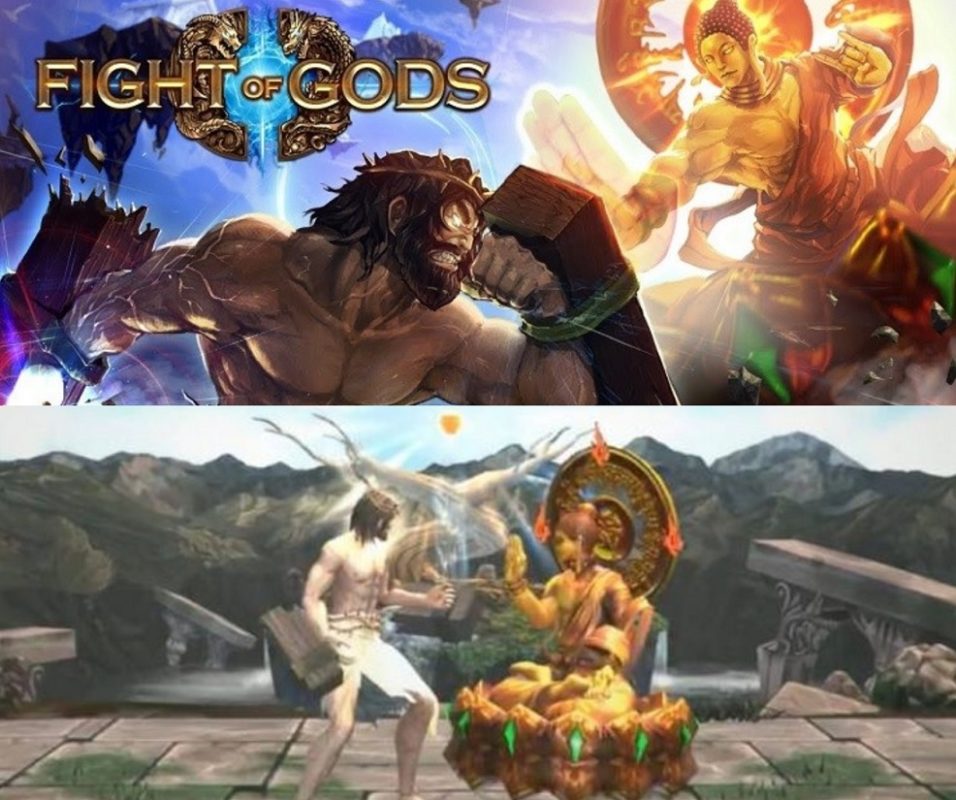
    Suruhanjaya Komunikasi dan Multimedia Malaysia (MCMC) meminta penyedia platform permainan video Fight of Gods untuk menyekat pautannya kepada pengguna Malaysia.

    Menteri Komunikasi dan Multimedia, Datuk Seri Salleh Said Keruak dalam satu kenyataan media di sini hari ini menegaskan bahawa arahan tersebut perlu dilaksanakan pihak penyedia muat turun itu dalam tempoh 24 jam.

    “Tindakan susulan akan diambil jika tidak dipatuhi,” katanya sebagai mengulas berhubung permainan video Fight of Gods menampilkan watak Jesus Christ atau Nabi Isa bagi umat Islam konon bertarung dengan Gautama Buddha itu.

    Beliau menyifatkan permainan video yang dibangunkan oleh sebuah studio teknologi maklumat berpusat di Taiwan itu sebagai mengaibkan agama tertentu serta boleh mengancam keharmonian antara kaum majmuk di Malaysia.

    “Langkah serta-merta perlu diambil demi melindungi kemaslahatan masyarakat,” kata Salleh sambil menegaskan bahawa tindakan mencipta dan menyebarkan kandungan berbaur jelik sedemikian merupakan satu kesalahan.

    Pihak terbabit malah boleh didakwa di bawah Seksyen 233 Akta Komunikasi dan Multimedia 1998 namun pada masa sama, MCMC akan terus bekerjasama dengan semua pihak berkaitan untuk mengekang jenayah berkenaan.

    Media global semalam melaporkan penyedia permainan atas talian terkenal, Digital Crafter melancarkan Fight of Gods menerusi aplikasi Steam Early Access awal bulan ini dengan diskaun harga 40 peratus hingga 11 September.

    “Rakyat Malaysia amat menghormati sensitiviti budaya dan agama, bahkan aktiviti penjualan serta pengedaran permainan video komputer yang tidak sensitif ini hendaklah dihentikan dengan serta-merta,” tegas Salleh lagi.

    Beliau dalam pada itu turut mengingatkan kepada pengguna supaya membuat pilihan yang bijak apabila memilih kandungan bahan untuk diakses terutama melibatkan pautan dari luar negara.


    Source: http://www.mynewshub.cc

  • Muslims And The Birth Of Jesus Christ

    Muslims And The Birth Of Jesus Christ

    When the Prophet Muhammad migrated to Madina he was surprised to find the Jewish community fasting on a day known as ‘Ashura’, which fell in the Arabic (later Islamic) month of Muharram. During his life in Makkah, the Prophet used to observe a fast on this day. When he asked them why they fast on this day, the Jewish community replied that it was in celebration of Moses’ deliverance from Pharoah. The Prophet told his community that they too were believers in Moses and were deserving of commemorating the momentous occasion of his deliverance. Without questioning the authenticity of the date, despite the Hebrew calendar being different to the Arabic, the Prophet accepted their reason and instructed his community to observe the fast too. Acknowledging a sacred event is not related to the time of its happening as much as it is related to its meaning, which is to celebrate it in joy of God’s favours and love for the righteous.

    Maintaining a connectedness to religious occasions that are intimiately tied to sacred symbols is common in Islam and deeply connected to faith. Hajj, the annual pilgrimage, is the fifth pillar of Islam and replete with these meanings. For example, the circumambulation of a House built by Ibrahim and his son Ismail; the walking between Safa and Marwa where Hajar went on her search for water for her infant child; the throwing of stones in Mina where the devil tried to tempt Ibrahim away from sacrificing his son; and the ritual slaughter that marks the willingness of Ibrahim to sacrifice his son for God. This is the greatness of religious rituals; that they are forms imbued with profound meanings and not simply actions which are meant to be ritually repeated.

    The Quran tell us: “And remind them of the days of God; indeed, in them are signs for those who are forbearing and grateful.” As we approach the occasion of Jesus Christ’s birth, we feel that we are confronted with a day from among the ‘days of God’. This day was distinguished by an immense miracle related to his birth. This birth was connected to meanings of peace that we are in dire need of today.

    Yes, God made Jesus Christ a symbol of peace for this world.

    Did the Quran not inform us of Christ’s words, “Peace was upon me the day I was born, and will be on me the day I shall die, and the day I am raised to life again.”? These words alone are sufficient enough as a reason for our joy on this noble occasion, irrespective of its exact date and the differing opinions that exist among Christian denominations. The birth of Jesus Christ is less about the precise date and more about the meaning embodied in his emergence into this world.

    I offer my greetings to the Prophet Muhammad on the birth of Jesus Christ, who affectionaly described the son of Mary as his brother and said of him, “I have the best right to Jesus son of Mary in this world and the next.”

    Likewise, I offer my greetings to Muslims, Christians and humanity at large on this blessed occassion.

    And I say to Jesus Christ: my master, the spirit of God and His word, peace be upon you the day you were born, the day you shall die and the day you will be raised to life again.


    Source: www.huffingtonpost.com

  • A Christmas Note From Sultanah Johor, Raja Zarith Idris

    A Christmas Note From Sultanah Johor, Raja Zarith Idris

    During the days before Christmas last year, I wished my friends who were celebrating it “Merry Christmas” in much the same way they would wish me “Selamat Hari Raya” or “Happy Eid”.

    I find it rather sad that such a simple greeting – one which I grew up with and which I have never regarded as something that would compromise or de-value my own faith – is now regarded as something so religiously incorrect for us Malaysian-Muslims.

    When I was at boarding school in England, I had to go to church every Sunday because it was part of the rules. My father advised me to consider it as part of my “education” and he had no doubt that the experience would strengthen, rather than weaken, my own faith.

    I was able to see the similarities and differences between Christianity and Islam. I learned more than the average Malaysian-Muslim would about Christianity. I learnt that just as we Muslims categorise ourselves according to the four different schools of thought of the four Imams (Imam Malik, Imam Al Shafi, Imam Abu Hanifa and Imam Ahmad Abn Hambal) and are either Sunnis or Shias, so Christians too are divided into different sects or churches.

    Going to church did not make me less of a Muslim when I was a young girl, and neither does saying “Merry Christmas” make me less of a Muslim now. My faith has not been shaken just because I wished some friends a time of joy with their families. Neither will I suddenly suffer from amnesia and forget what my religion is.

    What I do not wish to forget, however, is that there are good, kind people who are not of the same faith as me.

    As Harun Yahya, the Turkish writer (he was selected last year as one of the 500 most influential Muslims in the world by the Royal Islamic Strategic Studies Centre of Jordan) noted: “Islam is a religion of peace, love and tolerance.”

    Today, however, some circles have been presenting a false image of Islam, as if there were conflict between Islam and the adherents of the two other monotheistic religions. Yet, Islam’s view of Jews and Christians, who are named “the People of the Book” in the Quran, is very friendly and tolerant.

    “This attitude towards the People of the Book developed during the years of the birth of Islam. At that time, Muslims were a minority, struggling to protect their faith and suffering oppression and torture from the pagans of the city of Mecca. Due to this persecution, some Muslims decided to flee Mecca and shelter in a safe country with a just ruler. The Prophet Muhammad told them to take refuge with King Negus, the Christian king of Ethiopia.

    “The Muslims who followed this advice found a very fair administration that embraced them with love and respect when they went to Ethiopia. King Negus refused the demands of the pagan messengers who asked him to surrender the Muslims to them, and announced that Muslims could live freely in his country.

    “Such attitudes of Christian people that are based on the concepts of compassion, mercy, modesty and justice, constitute a fact that God has pointed out in the Quran.”

    I do not wish to be a self-centred Muslim who expects friends of other faiths to wish me Selamat Hari Raya or, for those who are not Malaysians and therefore do not know about Hari Raya, a Happy Eid and yet do not return their goodwill when it is Christmas, Chinese New Year, Deepavali or Vesak Day.

    Every year, friends who are Christians, Buddhists, Hindus, Sikhs or those without any faith come to our home to celebrate Hari Raya with us. They do so with sincerity and as a mark of respect for one of the most important days in the Muslim calendar. Why should we not reciprocate their kindness, show them the same mark of respect for their religion and wish them the same joy on their holy days of celebration?

    An Islamic scholar and lecturer also reminded me that as Muslims we must remember the importance of both the five Pillars of Islam and in the six Pillars of Iman (Faith), which are:

    Belief in Allah;

    Belief in the angels;

    Belief in the revealed Books (which include the Bible, the Torah and the Holy Quran);

    Belief in the Prophets (May Peace be Upon Them);

    Belief in the Resurrection and the events of Kiamah, the Day of Judgement; and

    Belief in the predestination (Qada’ and Qadar) by Allah in all things.

    The prophets include not just Muhammad (May Peace Be Upon Him) as the last prophet and as the Messenger of Islam, but also in the 24 earlier ones who are mentioned in both the Bible and the Quran. Four of them are Ibrahim (Abraham), Musa (Moses), Daud (David), and Isa (Jesus).

    So, if Christmas is the celebration of the birth of Isa (Jesus), a prophet respected and revered in Islam, is it so wrong to wish a blessed day for those who celebrate it?

    We are now in the second decade of the 21st century. Surely, we should, now more than ever, be far more enlightened at a time when information of any sort and of all kinds are so readily available to us.

    What is most important is that we regard one another as fellow citizens and treat each other with respect, regardless of our race or religion.

    The writer is a Royal Fellow, School of Language Studies and Linguistics, Universiti Kebangsaan Malaysia (UKM), and holds a BA (Honours) degree in Chinese Studies, University of Oxford. The writer is also the Permaisuri of Johor.


    Source: www.freemalaysiatoday.com
  • Walid J. Abdullah: Jesus Christ Is An Important Figure In Islam

    Walid J. Abdullah: Jesus Christ Is An Important Figure In Islam

    Jesus Christ and Muslims:

    *disclaimer: i am not an Islamic scholar, so these are the opinions of a lay Muslim*

    Jesus Christ is an important figure in Islam. In fact, no Muslim can claim to be one if he/she does not believe in Jesus Christ. Islam is perhaps unique for being a non-Christian faith that requires belief in the Christ in order to be an adherent to the faith.

    This is not to say that Muslims and Christians believe exactly the same things about Jesus. This is an attempt to highlight some similarities and differences on Jesus Christ in the two great Abrahamaic faiths.

    Similarities:

    Like Christians, Muslims believe Jesus was born of a virgin. Both Mary and Jesus are accorded important positions in Islam. Three of 114 chapters of the Quran are named after Jesus/his family/occurrences in his life: Jesus is mentioned 25 times by name in the Quran.

    Jesus is a righteous Messenger and Prophet. And, Muslims actually believe he is the Messiah promised by the God of Abraham to the Jewish people.

    Muslims also believe that Jesus will be reappearing near the end of days, for the second coming. His reappearance, will be one of the major signs of the last hour.

    Differences:

    Muslims however, depart from Christians on an important point: we do not believe that Jesus was divine, God, the son of God, or a second person of the trinity.

    Muslims also believe that Jesus was not crucified, or according to some scholars, he did not die by crucifixion. Details aside, the Quranic narrative is that Jesus did not die on the cross.

    Furthermore, Muslim theology is similar to Jewish theology in the sense that each person is accountable for his or her own sins, or as stated in the book of Ezekiel, ‘the father shall not bear the iniquity of the son; the son shall not bear the iniquity of the father. The righteousness of the righteous shall be upon him; the wickedness of the wicked shall be upon him.’ Thus, Muslims do not believe that Jesus, or anyone else, could die for the sins of mankind.

    —–

    Obviously, there will be other similarities and differences; these are perhaps the main ones.

    If we are serious about inter-faith dialogue and understanding, we must be honest about what we agree on, and where we disagree. ‘Feel-good’ dialogues that talk about similarities are as unproductive as rants focusing exclusively on differences.

    True harmony can only be achieved, i think, when people understand where they disagree, and agree to accept those disagreements as part and parcel of life. Pretending that we share same theologies is not just dishonest, but can be counter-productive.

    And, we must also get over the idea that just because we disagree (not just in religion, but in politics and everything else!), we must hate each other. And just because we like each other, we must not talk about differences. Both these notions will end up achieving very little for a multi-cultural, multi-religious society.

    Merry Christmas to my Christian friends!


    Source: Walid J. Abdullah