Tag: language

  • No By-Election If Mdm President Halimah Yacob (Minority MP) Leaves GRC, Explained Chan Chun Sing

    No By-Election If Mdm President Halimah Yacob (Minority MP) Leaves GRC, Explained Chan Chun Sing

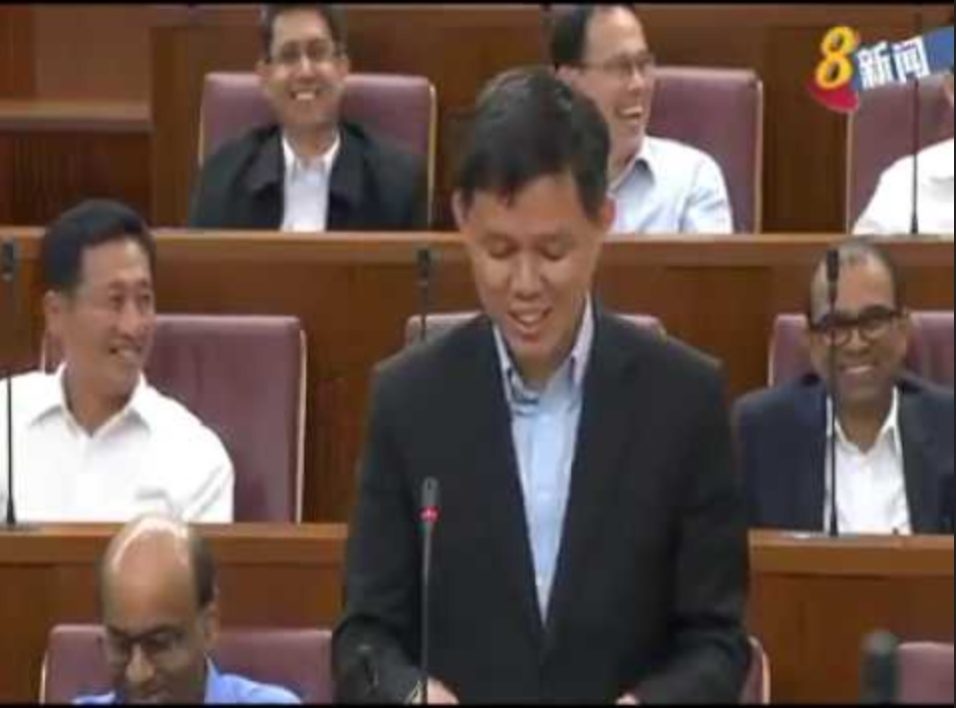
    If a minority candidate leaves his group representation constituency (GRC), a by-election will not be called, Minister in the Prime Minister’s Office Chan Chun Sing said in February 2017.

    That was the response he gave to the opposition Workers’ Party’s Mr Pritam Singh (Aljunied GRC), who wanted to know what would happen if a minority member of a GRC were to step down to run for presidency.

    Mr Singh specifically used Speaker of Parliament Halimah Yacob as an example in his question.

    As most Singaporeans have known, Madam Halimah, the minority member of Marsiling-Yew Tee GRC, has been tipped as a potential candidate for the upcoming election, which is reserved for Malays since months ago.

    Mr Chan said that when Emeritus Senior Minister Goh Chok Tong explained the GRC system in Parliament decades back, he said its intent was to achieve two purposes:

    One, to ensure enough minority members in the House. This, Mr Chan said, had been achieved over the years.

    Two, to ensure no political campaign on issues of race and religion, “that we will all, regardless of party lines, campaign on the basis that we are all Singaporeans, that we will not use race, language or religion for political reasons”, Mr Chan said.

    Elected members are also expected to serve all residents, regardless of race, language and religion.

    These key goals would not be affected if one member of the GRC left, Mr Chan added.


    Source: http://www.straitstimes.com

  • Academic: Calls To Make Malay Official ASEAN Language Futile

    Academic: Calls To Make Malay Official ASEAN Language Futile

    The proposal to adopt the Malay language (Bahasa Melayu) as ASEAN’s “main and official language” is a non-starter, and even futile. This call, made by Malaysian Prime Minister Najib Tun Razak in Kuala Lumpur on 26 July 2017, comes after a similar suggestion by his Communications and Multimedia Minister Salleh Said Keruak in 2015 when Malaysia held the rotating ASEAN chairmanship. He made the case that Malaysia “need to show that the Malay language is a relevant and dynamic language that can act as the ASEAN language.”

    These calls will fall on deaf ears outside of selected audiences in Malaysia. In the first instance, ASEAN has adopted English as the working language since its establishment in 1967. This practice was later institutionalised in the ASEAN Charter in 2007, Article 34 of which unequivocally states that “the working language of ASEAN shall be English.” Revising this provision requires the unanimous support from Malaysia’s fellow ASEAN member states, most of whom may find it onerous to support a seemingly nationalistic cause to promote the cultural and linguistic heritage of only one particular member state.

    It is interesting to note that the ASEAN Leaders, in approving the Charter, opted for the term “working language” instead of “official language,” which can be interpreted as a sign of respect for the plethora of member states’ national languages. The adoption of any part of a specific Southeast Asian language as the official language would stir political backlash from other ASEAN communities, which may interpret the move as a form of political and cultural dominance. Arguably, the English language might be a non-native language of a former colonial power in the region, but this “neutral” attribute serves to unite ASEAN’s diverse socio-cultural make-up, providing a level political playing field for all member states.

    The fact that English is lingua franca has facilitated ASEAN’s interactions with its Dialogue Partners and the wider global community.  ASEAN can play a more effective role in bring the “regional story” beyond Southeast Asia and reaching out to other regions using a global language. In multilateral organisations throughout the world like the United Nations and World Trade Organisation, English is the working language. Thus, attempts to replace English as the working language with any other languages would rollback ASEAN’s gains in positioning the regional organisation as a global entity, and hamper future efforts to connect with the wider global community.

    At face value, Prime Minister Najib’s proposal is an attempt to bolster his political credentials by championing the Malay language ahead of the general elections due by May 2018. However, his actions cannot be summarily dismissed as a domestic matter because as an ASEAN Leader, he has the recourse to push this cause at ASEAN Summits. If he follows through with this unrealistic proposal at the regional level, he might force his fellow ASEAN leaders into the conundrum of having to defend the primacy of their respective languages and promote their language as ASEAN’s main and official language as well.

    Instead of focusing on the trivial, ASEAN should attend to more urgent and pressing matters of community-building. Playing up the divisive nature of language politics might fray ASEAN unity.

    The writer, Dr Tang Siew Mun, is Head of the ASEAN Studies Centre, ISEAS–Yusof Ishak Institute.


    Source: https://iseas.edu.sg


  • Promote Racial Harmony, Encourage Learning Of Each Other’s Mother Tongues

    Promote Racial Harmony, Encourage Learning Of Each Other’s Mother Tongues

    While agreeing with the letter “Spark interest in Mandarin with fun, creative lessons” (July 27), I must add that the teaching process should be simplified.

    People lose enthusiasm when they find the lessons difficult to understand, and many give up learning halfway.

    The learning of mother tongues or other languages is an asset, regardless of one’s reasons for doing so.

    In a multiracial society, the importance of promoting social cohesion cannot be overemphasised, and this can be achieved by being able to communicate effectively with one another.

    There have been cases of conflict and suspicion owing to miscommunication or a lack of communication, as people of different races have different perceptions of the issues they face. Hence, the ability to put messages across to others is paramount.

    One way is to learn more of our own mother tongue and that of others.


    Source: www.todayonline.com

  • Celebration Of 50 Years Of National Service Forgets Past Discrimination Against Malays

    Celebration Of 50 Years Of National Service Forgets Past Discrimination Against Malays

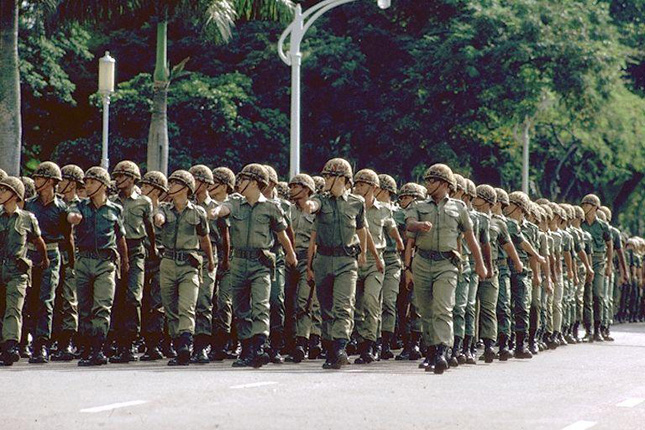
    Despite all our gripes and grouches about National Service (and its yearly reservist call-ups) it’s widely regarded as A Good Thing for a variety of reasons: Singapore has too small a population to rely on citizens volunteering for the military, it forces people from different backgrounds to assimilate, etc. etc.

    It’s been 50 years since mandatory conscription came into effect, and it’s become a cultural phenomenon unique enough to inspire films and literature revolving around national service. Criticisms abound, of course, but nobody can deny that Singapore stands ready when disaster (or God forbid, war) goes down.

    NS50, the year-long commemoration of National Service’s 50th anniversary, however does not bring back warm nostalgic memories for all Singaporean men. We’re not even talking about recalling the time you messed something up and caused everyone else to be punished, nor the time you wore the same dirty underwear for a week straight in the field — we’re talking about structural discrimination that disadvantaged people based on their race.

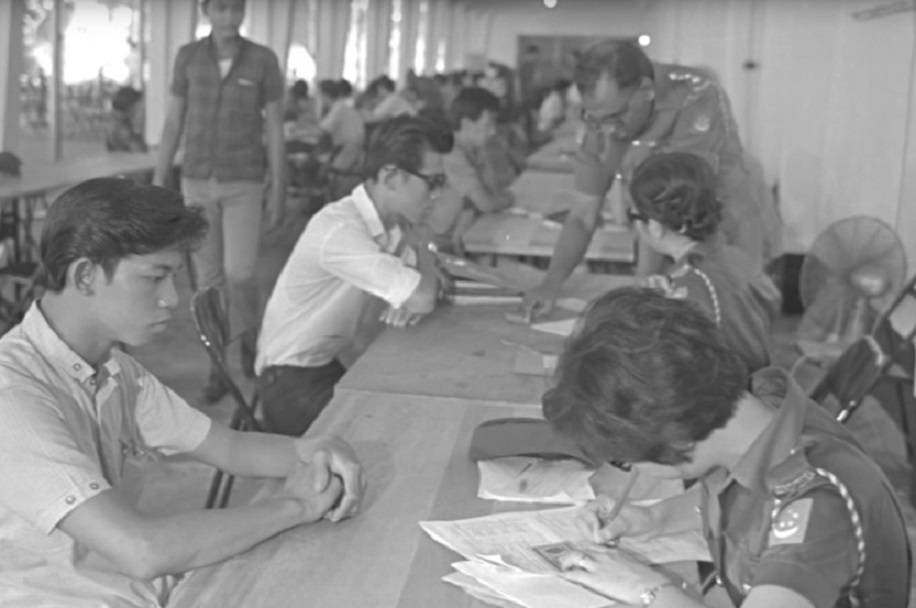
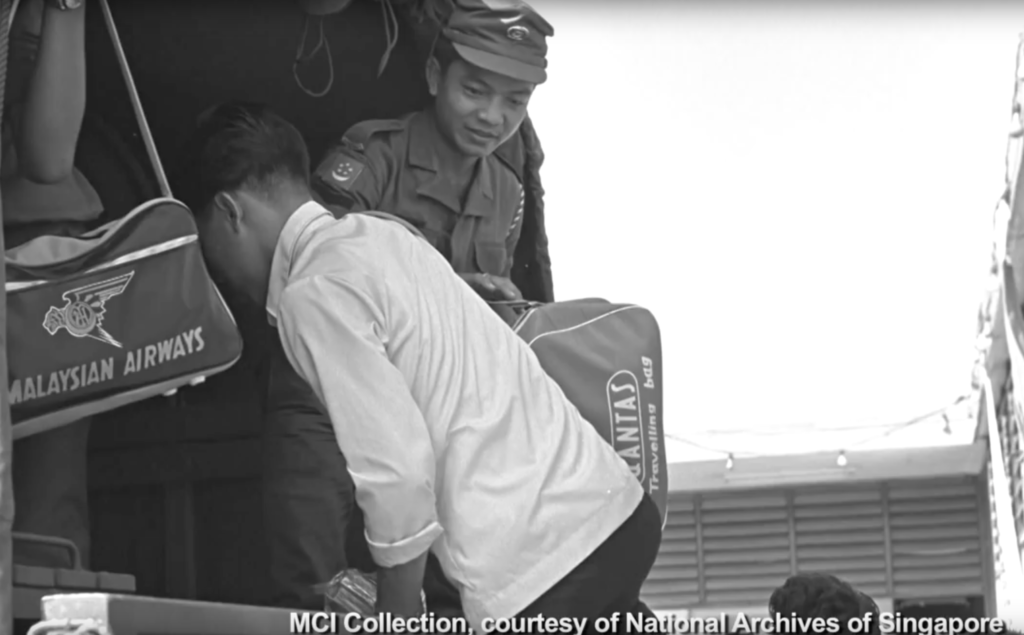
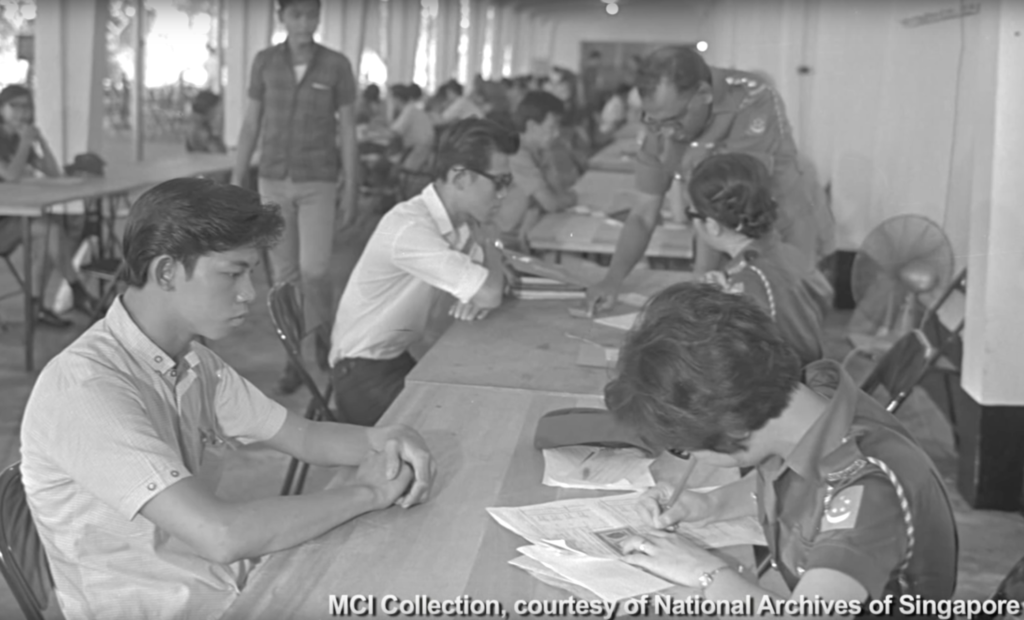
    Suspiciously missing from all the NS50 bluster and forced pride is the fact that Malay youths were virtually (not officially, mind you) excluded from conscription from 1967 till 1977.

    Even when they were eventually let in, they were mainly positioned to serve in the police force or the fire brigade. The small minority of Malays who manage to be called up into the military were given menial jobs, and are (almost always) excluded from key defense roles such as intelligence, the air force, commandos, artillery units and more — a practice that arguably continues to this day.

    The Ministry of Defence keeps insisting that the selection of personnel in various military vocations is not based on race. “The ethnic composition of commanders is similar to that in the general population,” Minister for Defence Dr Ng Eng Hen said in a  2014 response to a Parliamentary query about the racial breakdown across National Service vocations.

    The unofficial, widely understood reason is this: There is uncertainty as to where the loyalties of the Malay community lie should Singapore engage in war with neighboring Muslim-majority countries such as Indonesia and Malaysia.


    Alon Peled, an associate professor and political scientist at the Hebrew University of Jerusalem, noted in his paper (A Question of Loyalty: Ethnic Minorities, Military Service and Resistance) that discrimination against Malays in the military didn’t need to be spoken out loud to be felt.

    “By the second half of the 1970s, Malay exasperation with military recruitment and discrimination polices reached an all-time high. Even without official data, Malay parents knew that their children alone were not called upon to serve. Malay officers and (non-commissioned officers) who had been transferred from field command positions to the logistics corps were also frustrated. Nearly every officer knew that military units had informal quotas on Malays.”

    Though pleas were made to Malay leaders to change things, the figures of the day didn’t help ease the malaise. They stated that Malay youth lacked education and couldn’t speak English well (even though drafted Chinese Hokkien youth were the same). They argued that the government didn’t have enough facilities to train Malay soldiers (even though race should make no difference to when it comes to military training).

    1969 image from National Archives of Singapore

    It may not be much of an issue today, but the impact of Singapore’s blatant exclusion of Malays in the service back then was severe. Tania Li argues in her book Malays in Singapore: Culture, Economy, and Ideology that it left the Malay community behind in socio-economic standing.

    “There was an unfortunate side effect to the non-recruitment of Malays into National Service. Employers in Singapore are generally unwilling to recruit or train young male workers who have not completed National Service or obtained exemption papers as these youths can be called up at any time. Since Malays were not officially exempted from National Service, Malay youths were unable to obtain apprenticeships or regular jobs, and many were forced into an extended limbo period of about 10 years from ages 14 to 24 … (this) was in part responsible for the high percentage of Malay youths who became involved in heroin abuse during the late 1970s”.

    Peled repeats similar sentiments.

    “Malay servicemen were pushed out of the military, and young Malays found that the military doors, once their prime avenue for social mobility and a promising career, were firmly closed. Years of exclusion resulted in social bitterness, frustration and a major collision between the state and its principal ethnic minority group”.

    The silent ostracizing did not last, fortunately. Policies were eventually eased as the Malaysian invasion threat diminished, and Malay citizens were slowly integrated into the military. By the 1980s, more Malays were being posted in sensitive positions, including the Commando Battalion, while more began graduating as officers.

    The memories of the past however are hard to erase, and for former Straits Times’ senior political correspondent Ismail Kassim, the ongoing NS50 campaign did nothing but revive painful memories. Nonetheless, he asserts that it’s a good time for the government to make amends for the past wrongdoings.

    “Surely it is not beyond the ability of the present star-studded scholar-leaders to think of some way to assuage the hurt of the past.”


    Source: https://coconuts.co

  • Javanese Spoken To Share Secrets

    Javanese Spoken To Share Secrets

    As a child, Mr Suryakenchana Omar would often eavesdrop on his parents speaking in Javanese from his bedroom.

    “As soon as they realised I was awake, they would switch to Malay,” said the 44-year-old director of a training firm.

    Mr Haider Sahle has similar memories from his childhood spent with his grandaunt. “Whenever my elders didn’t want the children to overhear or understand what they were saying, they would speak in Javanese,” recalled the 36-year-old production editor.

    But eavesdropping helped him to pick up Javanese words and phrases.

    Mr Haider and Mr Suryakenchana serve as vice-president and honorary secretary respectively of the Javanese Association of Singapore, which was formed in 2015.

    There are 89,000 ethnic Javanese in Singapore, according to 2010 census records, making them the largest Malay sub-group here.

    But few speak the language, said Mr Suryakenchana.He added that there may be many more Javanese Singaporeans but they now identify themselves as Malay.

    According to 1825 census reports, there were only 38 Javanese residing in Singapore. But by 1891, the number had climbed to 8,541, with many first moving to Kampung Java. They assimilated quickly, picking up the more commonly spoken languages of Malay and English, said Mr Haider.

    That was what happened with Mr Mohamed Saat Mokhtar’s Javanese father, who emigrated to Singapore as a labourer in the 1940s. Although both Mr Mohamed Saat’s parents were from Java, they spoke to their children in Malay.

    “My father was looking for a better future in an environment that was alien to him,” said the 53-year- old senior manager in an engineering firm. “He had to assimilate into the culture here and make sure that his children also fit in.”

    Now, these men want to rediscover the language and culture.

    Mr Mohamed Saat has been learning Javanese primarily through conversations with his Indonesian domestic helper.

    In 2010, Mr Haider started a Javanese language class with seven others under the tutelage of linguist Gloria Poedjosoedarmo. But in 2014, the classes had to be stopped due to Dr Poedjosoedarmo’s poor health.

    Though many are interested, Mr Suryakenchana said there are few qualified Javanese teachers here, adding that the hierarchical nature of the language makes it difficult to learn.

    There are three different registers – Ngoko, Madya and Krama – and the words used differ based on the status of the audience. Ngoko is used between friends while Madya is used between strangers. Krama is used when speaking to elders and those of higher social standing.

    In Ngoko, the question “What is your name?” would be “Jenengmu sapa?”, while in Madya, it would be “Asmane sampeyan napa?”. The same question, in Krama, would be “Asmanipun panjenengan punapa?”

    Apart from vocabulary, the intonation also differs. While Ngoko is spoken in short bursts, Krama is softer and more nuanced.

    “Just to say one word, you have to think through the three levels for which word to use,” said Mr Suryakenchana, who also researches and gives talks on Malay and Javanese culture.

    He added that while the language may be lost here, the culture lives on in the enduring popularity of batik as well as nasi ambeng, a traditional dish of a mountain of rice served with various meat and vegetable dishes on a communal tray.

    Non-Javanese are also embracing aspects of the culture.

    About a third of the members of the Singa Ngalaras Gamelan Ensemble – a National University of Singapore group which plays traditional Javanese music – are not of Javanese descent.

    They include master’s student Thow Xin Wei, 33, who started playing a decade ago. In 2010, he was given a scholarship by the Indonesian authorities to further his studies in gamelan music in Solo.

    For his 25-year-old daughter’s wedding next month, Mr Mohamed Saat plans to hold a traditional Javanese ceremony complete with unique rituals such as the timbang, where the couple sit on the lap of the bride’s father to symbolise that he will treat both fairly.

    Mr Suryakenchana said the Javanese here have not been as active as other Malay sub-groups in promoting their culture. But he holds to the Javanese philosophy of “sepi ing pamrih, rame ing gawe”. “It means to work without drawing attention to yourself,” he added.

    Balancing two cultural identities – Javanese and Malay – is not a problem. “I’m both. I could be wearing baju kurung in the morning and a batik shirt in the afternoon,” he said.


    Source: www.straitstimes.com