I read with dismay that a man extorted large sums from a male teacher by threatening to reveal their sexual relationship to the Ministry of Education and the teacher’s school (“Man pleads guilty to extorting S$197k, gifts from male teacher he had tryst with”, TODAYonline, Jan 12).
These criminal acts were carried out by an unscrupulous individual. But he was enabled by the atmosphere of secrecy that our society has collectively imposed on LGBT people.
While any married person might fear exposure of adultery, the teacher in this case faced further vulnerability because of the legal, societal and institutional discrimination that treats same-sex relationships as invalid and shameful.
Section 377A of the Penal Code stigmatises sexual activity between men, LGBT people are not protected against employment discrimination, and same-sex relationships are routinely censored from media representation.
As long as we demand that these relationships stay furtive, the people in them will remain vulnerable to abuse.
Indeed, the prevalence of sexual blackmail was cited by British parliamentarians in the 1960s as one reason for decriminalising homosexuality.
The experience of the Sexual Assault Care Centre (SACC) at the Association of Women for Action and Research (AWARE) reveals a similar disturbing issue: Section 377A can discourage some men from reporting sexual violence against them to the police.
They fear that in describing the sexual assault or their interactions with their attackers, they will reveal that they have, themselves, violated Section 377A, and thus be, themselves, subject to police investigation.
Most people face great social and emotional barriers to reporting sexual assault.
For some, Section 377A adds the fear that the authorities will treat them not as the victim of a crime, but as a perpetrator.
The Government’s position that the law will not be proactively enforced does not adequately allay this concern.
Individuals are understandably nervous about whether such a stand will truly override the weight of the written law, which plainly says they have committed a crime.
Moreover, for someone who has faced a potentially traumatic sexual assault, even if he is not subsequently prosecuted, the prospect of police investigations for an alleged crime can be enough to deter reporting.
His attacker is, therefore, never held to account.
The extortion case and SACC’s experiences show some of the great human costs of a supposed moral stance against homosexuality.
As long as our society continues to discriminate against LGBT people, we will aid and abet their abuse.
The opinion by Jolene Tan, Programmes and Communications Senior Manager, Association of Women for Action and Research, was published in Voices, Today, on 19 Jan 2015.
Lately on my way back home in the train, from Orchard to the northern side of singapore, ive been seeing this very open gay couple.
2 young malay guys, very slim and pretty tanned. U guys hold hands and hug each other in the train. Acting like how any other hetrosexual couple.
I applaud for both your braveness to be very open. This is what every other gay couple are looking forward to. Making it more like a norm.
On Monday, you guys were quarrelling with each other. I find that pretty cute. Its not like everyday u get to see gay couple on the street and what more arguing with each other. Im not saying that u guys are a nuisance and should quarrel more but it makes me happy seeing u guys together.
im like aww… look at them.. gay couple.. arguing.. soo cute…
There was a lady beside me with her boyfriend. The boyfriend was looking at you guys and giving that kinda disgusted look but the lady was saying ‘they are quarrelling but that makes them a stronger couple’. Zero homosexual comment. She even jokingly said to her boyfriend, ‘stop staring at them with that look or else im not gonna talk to you!’
It warms my heart to hear that. Just sharing some stuff… Cheers!
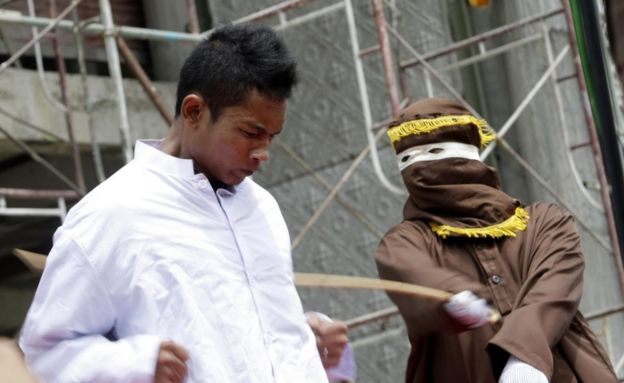
Strict laws against homosexuality have come into effect in the conservative Indonesian province of Aceh.
Gay sex between Muslim men or women, both locals and foreigners, can now be punished with 100 strokes of the cane.
The law, passed in 2014 but only now being enforced, has faced opposition by rights groups.
The strictly Muslim province has become increasingly conservative in recent years and is the only one in Indonesia allowed to implement Sharia law.
Under the new laws, adultery also carries a possible penalty of 100 strokes. Those who accuse someone of adultery without proof could themselves face 80 lashes.
“The law is to safeguard human dignity. It is to protect Aceh’s Muslims from committing immoral acts,” provincial Sharia chief Syahrizal Abbas told the AFP news agency.
But Ismail Hasani, from human rights group the Setara Institute for Democracy and Peace, criticised the law as “cruel, inhumane and against the constitution”.
Gay sex is not illegal in the rest of Indonesia.
Aceh has allowed brought in its own laws ever since reaching an agreement with the national government in 2001 to end a separatist movement.
The province has recently seen a deterioration in relations between the Muslim majority and smaller religious groups such as Christians.
Churches have been destroyed in violent protests in recent weeks or have been demolished by local authorities who said they lacked proper permits.
Kenneth Chee and Gary Lim have been together for almost two decades, but in the eyes of the law they’re criminals.
The couple met by chance at a shopping mall in Singapore in 1997. “I guess my ‘gaydar’ went off,” Chee recalls. “I just went up to him and asked him for his number.” They’ve been inseparable ever since.
“If gay marriage was legal here, we would get married in a heartbeat,” Lim says. Chee, by his side, nods in agreement.
But gay marriage is not legal in Singapore. Same-sex civil partnerships are also not recognized, and there are no laws that protect against discrimination on the grounds of gender expression or sexual orientation.
In 2007, Singapore, which is a former British colony, made headlines when it struck colonial-era penal code Section 377 from its books. The statute had criminalized “carnal intercourse … against the order of nature,” which included anal and oral sex. The law, which dates back to 1860 and was exported to many British colonies, is still in place in several countries, including India, Malaysia and Myanmar. The statute has been called “England’s least lovely law export.”
Though 377 was removed, a related provision — called Section 377A — was kept intact. 377A specifically targets sexual acts between two men. Under this law, homosexuality is criminalized and punishable by imprisonment of up to two years.
The LGBT community in Singapore was incensed. Lim and Chee, who are both graphic designers, say they were shocked.
“Why are we being singled out to be punished? It’s legal for straight people to have anal sex and oral sex, so why are we seen as criminals?” Lim says. “This law is now always hanging over our heads.”
Outraged by the “blatant discrimination,” the couple decided to challenge the state in court — a decidedly unusual move.
“I just refused to accept this nonsensical label,” Chee says. “We didn’t want to be seen as ‘illegal.’”
In 2010, a Singaporean man named Tan Eng Hong was charged under 377A for having oral sex with another man in a public restroom. At the time, Tan challenged the constitutionality of the law. Two years later, Lim and Chee raised a second challenge.
This was the first time in Singapore’s modern history that the constitutionality of a law was being challenged, according to the couple’s attorney, Peter Low.
Last October, the final ruling for the case was delivered after several years of bouncing through the courts. Singapore’s Court of Appeal, the nation’s highest court, determined that 377A is constitutional.
Homosexuality remains illegal in Singapore.
“We were very disappointed,” Lim says, his lips pursing grimly. “The message was loud and clear: We’re not ready for change.”
Singapore’s government has repeatedly said that it will not “proactively enforce” Section 377A. (In the case of Tan Eng Hong, the charge against him was later changed to “committing an obscene act in a public place.”) But Jean Chong, co-founder of LGBT rights group Sayoni, says the law — whether enforced or not — has had a profound effect on the country’s LGBT community, and on human rights in general.
“377A may be targeted at men, but it has a cascading effect. It shapes public opinion, and informs policy. It impacts the entire LGBT community,” she says.
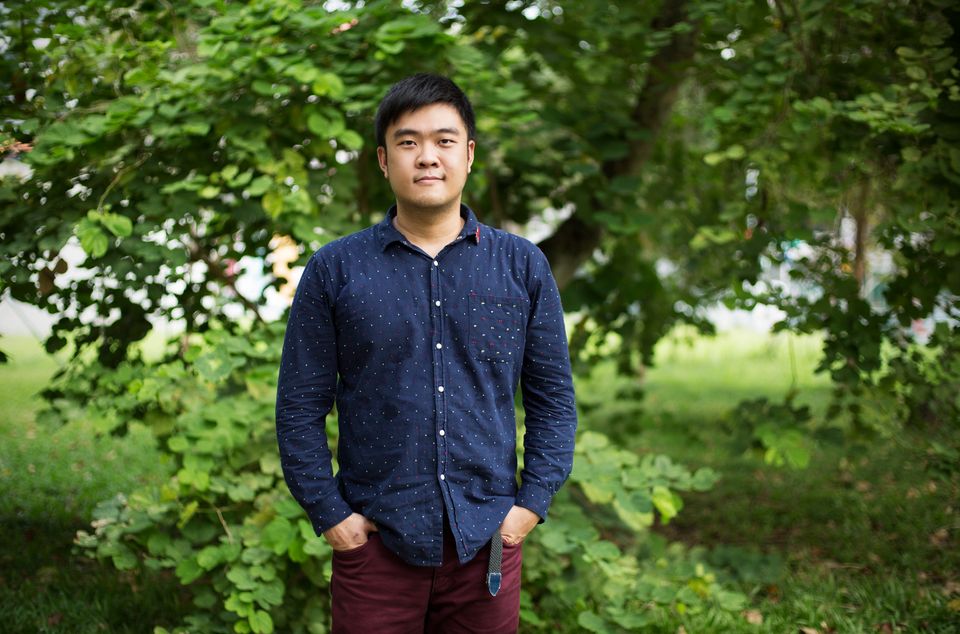
Scott Teng, a 30-year-old gay man, points out that the government’s stance on the law is akin to “holding a gun to a person’s head, but saying, ‘oh, we’ll never pull the trigger.’ That’s the case here. You always wonder — at what point will the trigger be pulled?”
Such a law, he adds, can encourage marginalization.
“It gives people the justification to treat you as a lesser Singaporean, as a lesser human being,” Teng, who is an associate director at a brand consultancy, says. “It filters down to individual experiences, to the hurtful words people choose to use.”
SEAN LEE“When I first came out to my mother, it went horribly,” said Scott Teng. “My family’s very traditional, and the first reaction I got was ‘Get out of my house, you devil spawn!’ She took it very hard. But though it took her a few months, she’s accepted it and now she’s honestly the best mom ever. She told me, ‘Even if the sky falls down, mom will be here for you.”
Sayoni has been documenting cases of violence and discrimination against Singapore’s LGBT community for several years.
Most abuse is underreported Chong says, and she’s been “shocked” by many of the stories she’s heard.
“Transgender women and gay women spoke about being assaulted, sometimes sexually, because of their appearance,” she says. “One trans woman said she was gang-raped at a hotel room, but she didn’t report it to the police. She’s trans and she used to do sex work, so she didn’t feel comfortable.”
Chong says that the poor and the under-educated are particularly vulnerable to abuse. “They have less vocabulary to articulate what’s happening to them and they have fewer resources,” she says. These are individuals who don’t have access to the growing, though still small, LGBT community here.
Avin Tan, 30, is a gay man living with HIV. According to Tan, there have only been two gay people with HIV who have come out publicly in Singapore about their condition. Paddy Chew, who died in 1999 from HIV-related complications, was the first. Tan is the second. “More people need to come out. It takes guts and yes, it’s a risk, but we need people from every walk of life to speak up,” he said. “Only then will we see change.”
The first gay protagonist in a local TV series featured in a 2003 docu-drama called “Crunchtime,” which was aired on Singapore’s Channel U. It was a landmark moment, but the series, supposedly based on a true story, was criticized for promoting homophobia.
A subsequent exhibition about the history of Singaporean television, suggested that homosexuality was depicted as a mental illness in the show. The protagonist, named Shaohua, is seen visiting a counseling service in an effort to find the “correct and normal” path. By the end of the series, Shaohua is happily married to a woman, with whom he has a son.
Storylines like this aren’t unique in Singapore.
“A happy LGBT character, who has a good job or family support, isn’t allowed on Singaporean television,” LGBT activist and corporate attorney Paerin Choa says. “They have to be sad, troubled, or suicidal. In Chinese dramas, the gay character is often a serial killer or a comical sidekick.”
The “promotion or glamorization of the homosexual lifestyle” is not allowed on television or in radio broadcasts, according to guidelines established by Singapore’s Media Development Authority.
“Information, themes or subplots on lifestyles such as homosexuality, lesbianism, bisexualism, transsexualism, transvestism, pedophilia and incest should be treated with utmost caution,” the guidelines state. “Their treatment should not in any way promote, justify or glamorize such lifestyles.”
Activists say that media restrictions like these have impacted their ability to organize and advocate.
More than 50 percent of the 6,000 people who have been diagnosed with HIV in Singapore are gay men, yet, “because of the media law, we cannot run LGBT-specific campaigns,” Avin Tan, the head of advocacy and partnerships at Action for AIDS Singapore, the only organization in the country dedicated solely to HIV/AIDS awareness, treatment and prevention, tells HuffPost.
“We can’t even run condom ads” on mainstream media, he adds. “We have to rely on putting posters up in clubs or using social media. We end up only reaching 10 percent of the community.”
Tan, who lives with HIV, says that these restrictions aren’t just frustrating for advocates, but are potentially fatal for vulnerable individuals who are not being reached.
“For every person who is diagnosed, one is not,” Tan says, quoting an as-yet unpublished AFA study. “One of the greatest challenges right now when it comes to HIV/AIDS is a serious lack of access to information.”
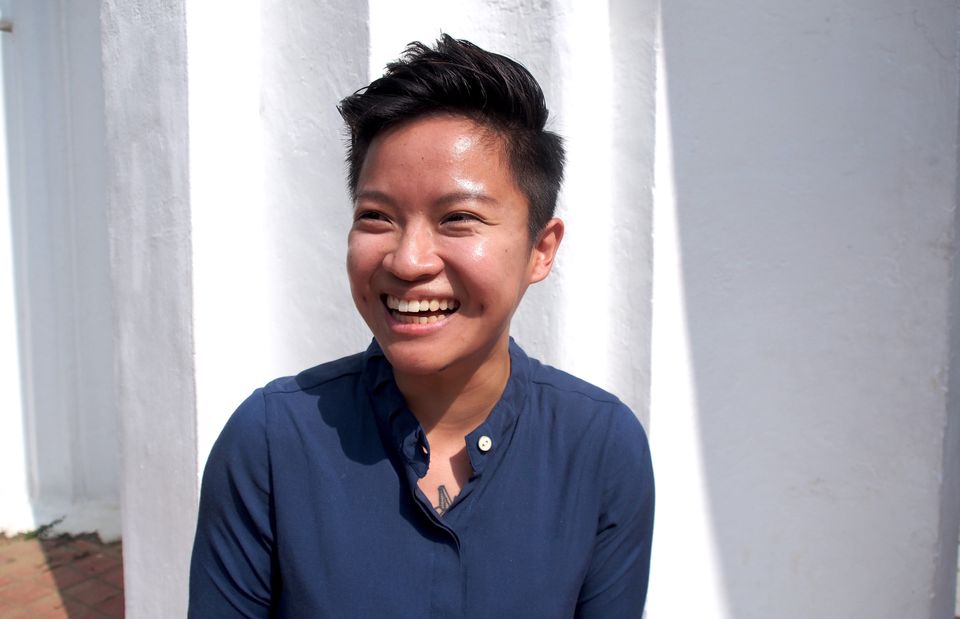
Later this year, 32-year-old Ching S. Sia, a PhD student in architecture at the National University of Singapore, will be going to Australia to freeze her eggs. “Since young, I’ve always thought that I want to have a family one day,” she said. “As a gay woman, I want the option of having a kid when I want to.”
But for all the obstacles facing the country’s LGBT community, “there has been positive change,” according to Lynette Chua, an assistant law professor at the National University of Singapore and the author of Mobilizing Gay Singapore.
“As a scholar, if you solely study outcomes and if your main concern is what laws on the books have been changed, then you’d say activism in Singapore has not been successful,” Chua says. “But if you look at other outcomes, at what’s happening on the ground, there definitely has been progress.”
LGBT activism has a 25-year history in the country. The movement emerged in the early 1990s with small community groups, according to Chua. It was only a few years ago, however, that local activism gained real momentum. In 2009, Singapore’s first public gay pride event — the annual Pink Dot — was launched, and Sayoni was founded in 2012.
The size of the LGBT movement has ballooned in the last decade, Chua says, “and young people are coming out earlier.” There are more activists than ever before and the government has shown “an increased willingness to acknowledge the existence of gay activism.”
“Even as recently as 2009, the word ‘gay’ was very taboo. It wasn’t used in the media, it wasn’t often used in public. LGBT event were held behind closed doors. People were scared of being outed, of losing their jobs, that their families would find out. But that’s slowly changing,” said Pink Dot spokesperson Paerin Choa.
Indeed, when speaking to some members of the community, there is a tangible uniting sentiment: hope.
“When I was younger, ‘gay’ was such a disgusting word to me,” Teng says. “I had trouble even saying it. There wasn’t a sense of pride associated with the term at all. Instead the negative power of the word made me question if I even wanted to be called that.”
But the situation, he says, has “changed significantly.”
“Now being gay is associated with a lot of positive attributes. There’s a better narrative attached. There were no gay role models when I was a kid, but that’s changed too,” Teng says.
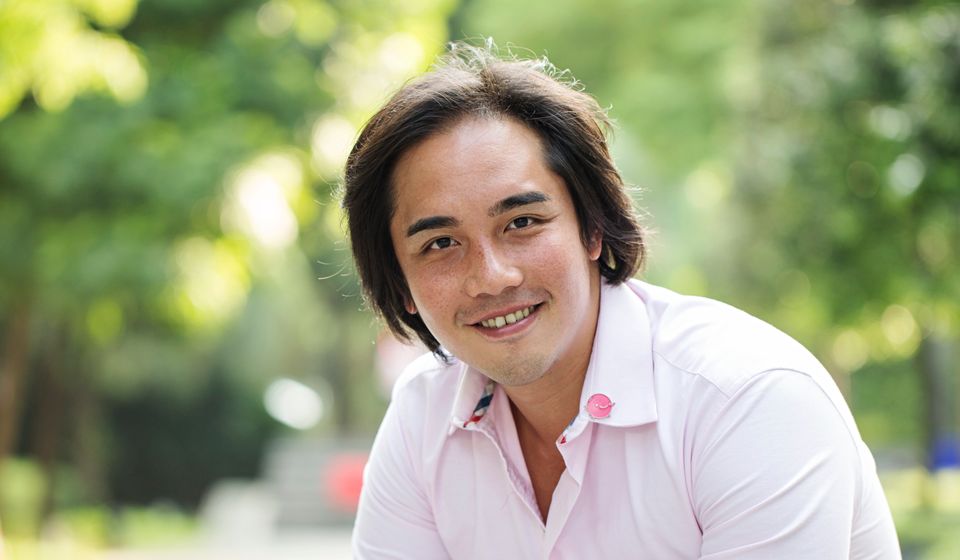
In recent years, a handful of local celebrities have come out. Kumar, a prominent comedian, revealed that he was gay in 2011 after years of being in denial. Last year, local actor and theater director Ivan Heng announced in a moving Facebook post that he had married his longtime partner in a ceremony in the U.K.
Paerin Choa, the spokesperson for Pink Dot, says that the LGBT community has grown “more fearless.” The younger generation is “not so frightened or constrained by societal norms.”
“Just look at Pink Dot’s numbers,” Choa says. “In 2009, the first year it was held, 2,500 people showed up. The following year, we had 4,000. In 2015, we had 28,000 people.”
(Pink Dot has had its share of challenges, however, as conservative Christian and Muslim groups have called for believers to oppose the event.)
Progress has been visible in other ways too.
Christopher Khor, a 24-year-old transgender filmmaker, is releasing next year what promises to be a groundbreaking documentary about Singapore’s trans community.
“When we started making this film, there was absolutely nothing, no exposure for the community. I was the first trans person that I knew,” Khor says, his face breaking into a smile. “We hope this film will start to challenge the idea of trans as ‘other.’”
As for the future of Section 377A, both legal experts and activists tell HuffPost that it’s unlikely the statute will be removed anytime soon. “Not in my lifetime anyway,” attorney Peter Low says.
Activists say that there’s plenty of work to be done before that goal can be reached.
“It’s going to be a long fight,” Chong says. “Activists must work the ground and it’s going to take a long, long time. Look at the U.S. How did they win gay marriage? Activists worked the ground for years, they knocked on doors, they educated people, they worked so hard. You need resources, you need tenacity and you need the commitment to slog it out for 10 to 20 years. You need to not give up, and yes, it’s going to be hard.”
Lim and Chee say they’re crossing their fingers that they’ll be around to see the needle shift.
“It took the U.S. 40 to 50 years to get where they are. We’re heading in the right direction, it’s just a matter of when,” Lim says. “I wouldn’t mind being 80 and getting married. I’d do it.”
Singapore-based photographer Sean Lee captured many of the portraits featured in this article. See more of his work here.
BANDA ACEH — Two suspected lesbians detained earlier this week by Islamic Shariah police in Indonesia’s conservative Aceh province will undergo rehabilitation instead of being charged with a crime, a police chief said today (Oct 3).
The women, 18 and 19 years old, were taken in for questioning Monday night by Sharia police officers who saw them sitting and hugging each other in Ulee Lheue, a coastal neighbourhood in the capital, Banda Aceh, according to the Shariah police chief, Evendi Latief.
“They later confessed to be a lesbian couple and that was supported by pictures found on their handphones,” Mr Latief said.
The two women, identified only by the initials “AS” and “N” will not be charged because a new criminal code for Aceh that criminalises homosexuality won’t take effect until later this month, he said.
Under that code, any person found guilty of homosexuality could face up to 100 cane lashes or a maximum fine of 1,000 grams of fine gold or imprisonment of up to 100 months. Indonesia’s national criminal code doesn’t regulate homosexuality.