Tag: malay language

  • Early P1 Ballot Likely At 5 Popular Schools; Not For Malay Students

    Early P1 Ballot Likely At 5 Popular Schools; Not For Malay Students

    Parents hoping to place their six-year-olds in five of the most popular primary schools this year may face a ballot next week.

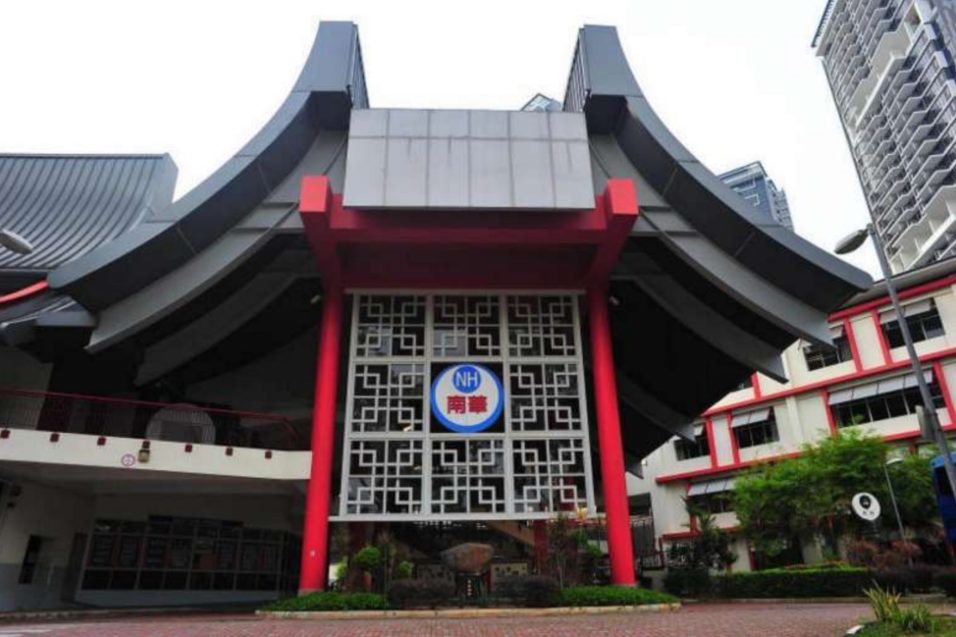
    The schools are CHIJ St Nicholas Girls’ School, Nanyang Primary, Nan Hua Primary, Red Swastika School and Catholic High School.

    A total of 29 schools were left with fewer than half of their vacancies after Phase 2A1, the second of seven Primary 1 registration stages, closed on Wednesday. Last year, only 19 schools were in this situation.

    The phase, which follows Phase 1 for children with siblings currently studying in the school, is for children whose parents had joined the school alumni association at least one year ago, or are on the school advisory committee.

    The next phase, 2A2, is for children whose parents or siblings are former pupils, or whose parent is a staff member at the school. Registration starts next Tuesday and ends the next day.

    A rule introduced in 2014, which requires all primary schools to set aside 40 places for children in the later stages, may also put a squeeze on places available for the next phase. The 40 places will be split equally between children registering in Phases 2B and 2C.

    In the past three years, balloting has been taking place at an earlier stage of the registration exercise, partly as a result of this new rule.

    Phase 2B is for children whose parents are school volunteers, active community leaders or have ties with church or clan associations directly connected with the schools. Phase 2C is for children with no ties to the school.

    After reserving the 40 places, CHIJ St Nicholas has only seven spots left for Phase 2A2, after 95 children registered this week.

    Nanyang Primary and Nan Hua Primary have 10 and 19 places respectively left for Phase 2A2, while Red Swastika and Catholic High have 23 and 31 spots respectively left for Phase 2A2.

    Communications professional Ow Yong Weng Leong successfully registered his daughter for a place at Red Swastika School this week.

    “The school offers Higher Chinese from Primary 1, so I hope it will help my daughter in becoming bilingual as she currently speaks English more,” said the 37-year-old.


    Editors Note:

    Based on sources, students who take Malay as a second language cannot enrol in any of the five popular primary schools namely CHIJ St Nicholas Girls’ School, Nanyang Primary, Nan Hua Primary, Red Swastika School and Catholic High School (https://www.moe.gov.sg/a…/primary-one-registration/vacancies). Perhaps if they make millions, one day one of them they can become President of Singapore. What a shame.

    Is the kind of elite tokenistic multiracialism the DAG believes in?


    Source: StraitsTimes

  • Salleh Marican Admits His Malay Rabak, Asserts That Mastery Of English Language Is Sufficient For President To Fulfill Duties

    Salleh Marican Admits His Malay Rabak, Asserts That Mastery Of English Language Is Sufficient For President To Fulfill Duties

    Presidential hopeful and CEO of Second Chance Properties Mohd Salleh Marican said he is taking Malay lessons ahead of the upcoming presidential election after he was criticised for his poor grasp of the language during an interview.

    In an exclusive interview with Yahoo Singapore, Salleh, 67, said the weekly lessons would enable him to converse in Malay fluently about his candidacy during media interviews and interactions with the electorate. Salleh was talking to Yahoo Singapore on Monday (19 June) at the house of his eldest daughter Nadia Marican in the eastern part of Singapore.

    On 5 June 2017, Salleh struggled to answer in Malay during an interview with a group of reporters outside the Elections Department after he collected his presidential election forms. The incident prompted criticisms online about his inability to speak the language well given that the September presidential election is reserved for Malay candidates.

    Instead of being affected by the criticisms, Salleh said he is taking firm steps to address the issue. The father of four added that while he is able to converse in “everyday Malay” currently, he wants to improve his conversational skills by taking lessons from a Malay newspaper and television media veteran.

    “You don’t need to be good in Malay to carry out your duties as a president because the official language is English.

    “Now that this has happened, I have to do my best to improve my mastery of the language and I am taking it as a challenge. I am taking several Malay lessons a week and I am challenging myself that on Nomination Day, I will make an off the cuff public speech in the language,” he added.

    Source: https://sg.news.yahoo.com

  • Commentary: Weakening Position and Diminishing Role of the Malay Language in Islamic Education and Development in Singapore. Is that the case?

    Commentary: Weakening Position and Diminishing Role of the Malay Language in Islamic Education and Development in Singapore. Is that the case?

    Weakening Position and Diminishing Role of the Malay Language in Islamic Education and Development in Singapore. Is that the case?
    – A Personal Reflection

    “Dosa besar” or ‘A Major Sin’ – that’s how I’ve been made to feel whenever the Malay Language has allegedly been said to be the cause for non-Malay speaking Muslim to be alienated from learning Islam within the local context. And that’s how distasteful the Malay Language has been viewed by some Muslims. It’s been accused of creating social distance among Muslims, and of alienating non-Malay speaking Muslims. Perhaps, some Muslims here may not know how Islam came to Nusantara and how the Malay Language was the primary medium of instruction in the spread of Islam in this region. The Malay Language was THE UNIFYING LANGUAGE for Muslims in the Nusantara. But now, it has been flamed, blamed and shamed as the language that’s preventing non-Malay-speaking Muslims from learning Islam.

    It is indeed a reflection of changes within the Muslim Community in Singapore. Slowly but surely it seems, the significant role that the Malay Language used to play in Islamic learning is now becoming more diminished. It is said that the younger generation of Malays are more comfortable using the English Language than their Mother Tongue Language. It is said that more and more parents are reporting that English has replaced Malay as the preferred medium of communication at home. We are not sure though if such changes, if indeed true, have resulted in better scores in English Language by Malay students during exams. Are Malay students performing better in English language and less so in their Mother Tongue language?

    Personally, I see that the Islamic Education scene in Singapore is undergoing a transition from a predominantly Malay language based shifting more and more towards the English language as the medium of instruction in class, especially for the younger audience.

    Most, if not all, of the asatizahs teaching at such programmes come from our local Madrasahs where English has not been the main and primary medium of instruction. Arabic still feature highly in the local Madrasah scene. Despite that, we have witnessed more and more younger asatizah demonstrate better command of the English language. To many of them, English is a second or even third language, after Arabic and Malay. Granted that some of them started education at mainstream schools before joining the full-time madrasahs. Asatizah from such background may demonstrate better grasp and command of the English language.

    Generally, for centuries, Muslims in Singapore, as those living in Nusantara, have been attuned to using the Malay language in religious instruction and discourse. It is not about placing the Malay language on a pedestal and to sanctify its position as sacred.

    No. None of such things.

    Simply, the Malay language used to be the lingua franca of the region and perhaps for still many Malays in Singapore. And the Malay language has indeed been the medium for religious instruction since Islam came to the region. And for many of asatizah, it’s not surprising that they too received their own religious instructions early in their lives through the use of Malay language. The Arabic language become a must when they dwell deeper into the religion. To transfer that past Malay-Arabic dominated learning experience right away into the current English-dominated learning environment is no mean feat

    It is not easy. Not many can do the switch easily. It will take time.
    We are in a transition. Probably the current batch of students in the madrasahs would perform better in creating a 100% English language driven learning environment when they teach later in their lives.

    Demand for Malay language to be replaced by English as the main medium of instruction for Islamic Education for the younger generation seems to be getting louder. More and more Mosques and Private Centres are creating classes in Islamic learning in English to cater to the growing demand.

    Perhaps that demand for change from Malay to English language seems louder within the Malay community because it forms the bulk of Muslims here in Singapore.

    I still come across the Indian Muslim community here conducting their religious classes in their Mother Tongue language, despite some classes being conducted in the English language. In fact, religious instructions in many parts of the region are still being delivered mainly in the mother tongue. Regionally, there is yet a proliferation of religious instructions being conducted in the English language. Where there are, the speed is not as fast and furious as that found locally.

    With changing demography, with the growing presence of non-Malay speaking Muslims and a decline on the use of the Mother Tongue language among younger Malays, there is no denying the fact that there is certainly a need to have Islamic Learning delivered in English.

    Nevertheless, it would be a monumental task to expect and place delivery of such Islamic Learning classes in the same light and standard as lessons taught in English at mainstream schools. There are already loud voices demanding the same standard of delivery by Asatizah at Mosque as that at mainstream school. In fact, such voices have been around for quite some time now.

    And it’s not the case that nothing has been done about such demands. Asatizahs have indeed been sent for training at NIE to attain national level teaching competencies and accreditations.
    But it will certainly take time to see standards of delivery of religious classes using English as the main medium of instructions on par with those classes conducted in mainstream schools. It will take a bit more time. As of now, seeing the use of English language being toggled with Malay is only to be expected.

    Some have already expressed their angst that such toggling shouldn’t happen in the first place, and should not be tolerated.
    But to expect a generational learning experience to change suddenly from one language to another is something that don’t usually happen overnight in a social environment.

    Not many can do the switch in record time. Not many are as eloquent as Ust Noor Deros or Ust Mizi Wahid or Al Marhum Ustaz Zhulkeflee Bin Haji Ismail who have delivered religious instructions in the English Language almost effortlessly. To expect every Asatizah to be able to deliver lessons in English with such poise will definitely take time. The change will eventually happen insyaaALlah, but over time and not over night.

    Delivering religious instructions well in any language at all involves not only the transference of information or facts. It is also about resorting to the teacher’s own socio-religious experience in growing up, learning about and experiencing the religion itself. Not many can simply switch to an alternative mode, ie from the current predominantly Malay-Arabic socio-religious experience to the expected English-Arabic socio-religious milieu.

    This is not about buying insurance for the asatizah.

    Work is in progress (WIP). Many efforts have been done and will continue to be done to raise the standards of delivery of religious instructions across the board. And as in any WIP, there are hiccups along the way that need to be addressed.

    This brief write-up is also by means as attempt to sanctify the position of Malay language in Islam and its development locally. Instead, it is a witness to the possibly dying use of the Malay language in the socio-religious life, environment, experiences and learning of Muslims in Singapore, especially among the younger generations of Malays. (Could this be a research topic for anyone doing Masters or Phd?)

    And the ensuing online altercation of a recent outburst on the non-use of English language in a religious class (it was supposed to be a religious class conducted in English), it is also interesting to note that Malays are expected, subtly or otherwise, to abandon the use of their Mother Tongue language in their interaction with other Muslims in favour of the English language. That appears to be the line of argument taken by both Malay and non-Malay speaking Muslims online.

    This seems not to be the case for Muslims in the region, at least not among Muslims in Indonesia, Malaysia, Thailand, Cambodia, Vietnam, and even China and Japan. (In fact, Islam came to China even earlier than it did to Nusantara, and the Chinese became Muslims earlier than the Malays.) The Mother Tongue languages in those countries still play an important role in the socio-religious life and learning among Muslims there.

    In summary, is it really true that we are witnessing a weakening of the position and diminishing role of the Malay language in socio-religious life of and leaning of Islam among Muslims in Singapore, unlike decades ago? Is it also true that the Malay language has become a cause for concern as far as local Islamic development is concerned, as it is being alleged to have created barriers for non-Malay-speaking Muslims to learn Islam and hence has alienated them from Muslims in Singapore?

    Perhaps these are plausible research questions worthy of consideration for a post-graduate work.
     

    Source: Mohd Khair

  • Angry Abang: Malay Community Must Not Look Down On Members Who Speak Malay

    Angry Abang: Malay Community Must Not Look Down On Members Who Speak Malay

    So everyone is talking about this Coco girl who is faking her accent to claim that she is mix. And everyone is like slamming her for it. Some people are going to the extent of saying that she is forgetting her roots and that she is just some Malay minah.

    I would just like to then ask a question—How about the Malays who are being fucking put down for TRYING to speak MALAY, but now feel inferior, cos people keep saying that they have a funny accent?

    Bear with me…. I am trying to make my point.

    I am MALAY. I am fucking proud to be a MALAY, because I believe that the MELAYUS have a rich culture and tradition. However, I have a problem. I have a speech problem. It was hard for me to admit it back then, but thanks to the people around me, I am slowly gaining the confidence to speak the language.

    It all started with my life in primary school. Not to sound pompous, but somehow, I was among the few Malays who got into the A class. I was in primary 2A, 3A, 4A, 5A, 6A. My father was a very strict man (actually he still is). If I were to drop in my grades back then, I would have to answer to the buckle of the belt. So that explains my grades, and my overachieving nature in primary school. Being the few Malays in my class, and a painfully shy one, my close friends are therefore those in the same class as me; all of them are non-Malays. I did try to mix with the Malays from the other classes during the common Malay Language classes. However, the Malays in the other classes weren’t so open to making friends with me, cos they say “I eat ‘babi’ with the students in my class, and therefore I am haram”. So I spoke a lot more English and a bit of Mandarin in primary school. However, I did well in Malay writing classes—I even have a few of my writings published in the newspaper… My mum even had them laminated and stuck onto the fridge till today. But I couldn’t speak Malay fluently.

    In secondary school, I had to take Malay O level twice cos the first time I took it, I scored C5 for the first attempt… and having Malay teachers who literally slept in class wasn’t helping the situation. But I finally managed to get A2 in the end. The oral examiners weren’t so impressed with the way I spoke in Malay.

    In Madrasah, there is also the equivalent of PSLE. For the oral examination, you had to read a few pages of the Quran, which I did. In my head, I thought I did okay… that is until the Ustazah, who is the teacher, openly asked me if I had mixed parentage. I innocently told her that my father is Malay and my Mother is Javanese. I had no idea why she asked the question in the first place. She then asked her next question—Abeh kenapa awak baca Quran macam ada slang? (translation—Why are you reading the Quran with an accent?).

    Many years ago, I was also dropped out of a Malay production because apparently my accent couldn’t be improved within the rehearsal period.

    Then I also attended an audition for another Malay stage production. During the audition, I was asked to do a monologue in Malay. I did. At the end of the audition, the director, asked me in a condescending tone, “when you sleep, do you dream in Malay or English?” At this point the other panellists started laughing. I remembered walking out of the audition room feeling humiliated and hopeless. I remembered cursing the production and hoping that it would never fucking make it to stage… this is something that I am not proud of. Anyway, the production never did make it to stage. I also remembered wanting to give up speaking Malay or ever wanting to do any production in Malay.

    However…

    I persevered. I still kept on speaking the language even though I have to, most of the time, struggle a lot. And I am not afraid to claim out loud that I am Malay. And right now, I am using my company A.D.I Concept as a platform to front productions that explore Malay cultures, tradition and the different superstitious beliefs. I am still trying to improve on my Malay, even though the accent is still stuck there.

    The point I want to make out of this long post is… There are MALAYS who are fucking trying to be proud of the language and culture and tradition. WE ARE FUCKING TRYING. SO BEAR THAT IN MIND BEFORE YOU PUT US DOWN JUST COS WE HAVE AN ACCENT. WE ARE FUCKING TRYING.

    Terima kasih kerana sudi membaca. Thank you for reading.


    Source: Adi Jamaludin

  • Rahayu Mahzam: “Beautiful And Dynamic” Malay Language Must Be Preserved

    Rahayu Mahzam: “Beautiful And Dynamic” Malay Language Must Be Preserved

    Describing the Malay language as a “beautiful and dynamic” one, Member of Parliament for Jurong Group Representation Constituency Rahayu Mahzam said on Saturday (Sept 3) that it was important to keep up efforts in preserving and bringing life to the language from a young age.

    “This year, we lost literary giants and language experts Allahyarham Cikgu Muhammad Ariff Ahmad, Cikgu Aliman Hassan and Dr Liaw Yock Fang. With the passing of these culture and literary figures, the responsibility of ensuring the continued usage and love of the Malay language now falls squarely on the shoulders of the next generation.”

    Ms Rahayu was speaking at the launch of the Bulan Bahasa 2016 (Malay Language Month 2016) at the National Museum of Singapore this afternoon.

    Speaking to TODAY on the sidelines later, she explained that the Bulan Bahasa was initially something that was celebrated every two years, and “it was limited to the literati, those who are very savvy with the language”.

    “Then there was the decision to bring in more people and once we started doing it every year, we also started looking at appropriate spaces where there’s a natural crowd and we can bring in families to enjoy and celebrate together,” she said.

    They began to scope out locations in the heartlands, intending to focus on just one spot. But they soon realized that they could reach out to more people if activities were expanded to more communities, she added. “So we decided to do more in the heartland and neighbourhoods and it went down very well.”

    Organized by the Malay Language Council, Singapore, this year’s festival, which runs from Aug 15 to Oct 15, showcases the dynamism of the Malay language through tours of exhibits and artifacts of significance to the Malay community, such as jewellery from Fort Canning as well as from well-known personalities such as the first President of Singapore Yusof Ishak.

    There are also a diverse array of Malay language and cultural activities at the museum and beyond. Over at Nee Soon, Chua Chu Kang and Sembawang, where the festival will also be extended to, residents there get to partake in activities such as Malay handicraft and Traditional Malay games, and view exhibition displays by Malay dialect groups. 

    Ms Rahayu, who is a first-time chairperson of the Bulan Bahasa committee, said “more than 50 partners have come together to produce over 100 programmes so everyone can continue to enjoy Bahasa Melayu as a beautiful and dynamic language”. New partners this year include Islamic artwork design firm Haz Workz Design, concept creation and production house Big Tree Pictures and youth music group Nusantara Arts.

    Mr Ng Chee Meng, Acting Minister for Education (Schools) and Senior Minister of State for Ministry of Transport, who was the guest-of-honour at the launch, said during his speech that the events and programmes in this year’s Bulan Bahasa “are varied, rich and representative of how dynamic and alive the Malay language is in Singapore today”.

    “We are here today, because we share a common desire to preserve the Malay language and culture, and to pass on this love for the language and culture to our future generations. In diverse and multi-cultural Singapore, our Mother Tongues are pivotal in strengthening our ethnic roots, as well as our cultural and national identities.”

    During the launch, Mr Ng also presented musician Megat Muhammad Firdaus Mohamad, actress Siti Khalijah Zainal and Jamiyah Ar-Rabitah Mosque education officer, Ustazah Nurul ‘Izzah Khamsani with certificates. The trio, who were appointed by the Malay Language Council, Singapore as its new language ambassadors, were chosen for their passion for the Malay language, culture and heritage.

    Meanwhile, students will also be heavily involved in the festival. Some 118 students from 60 schools were appointed in May to participate in the preparations for the festival, under its initiative Rakan Bahasa, or friends of the language. The students will be providing special tours at the Singapore History Gallery, as part of a special effort to ensure the Malay language and culture is appreciated by non-Malay speakers as well.

    Additionally, there is Rentak Kita!, a Malay Traditional Orchestra performance with sharing sessions in both English and Malay conducted by Orkestra Sri Temasak, which was founded by musicians Megat Muhammad Firdaus Mohamad and Afi Hanafi.

    Ms Rahayu said the increased programmes in the heartlands align with the future direction of Bulan Bahasa. “It allows us to showcase the platform to non-Malays at the grassroots level and that allows Malay as a national language to reach out to the masses,” she said.

    “I think (the future) direction is greater outreach, definitely, and a more impactful experience for those who participate in Bulan Bahasa as well as extending this spirit of preserving the Malay language culture over and beyond the two months of the festival,” she added.

    Source: www.todayonline.com