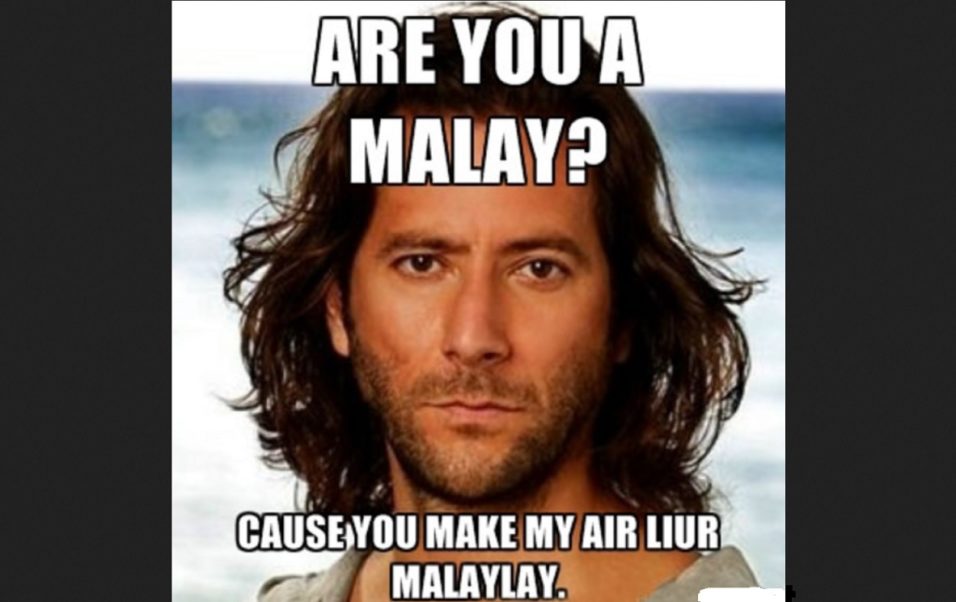
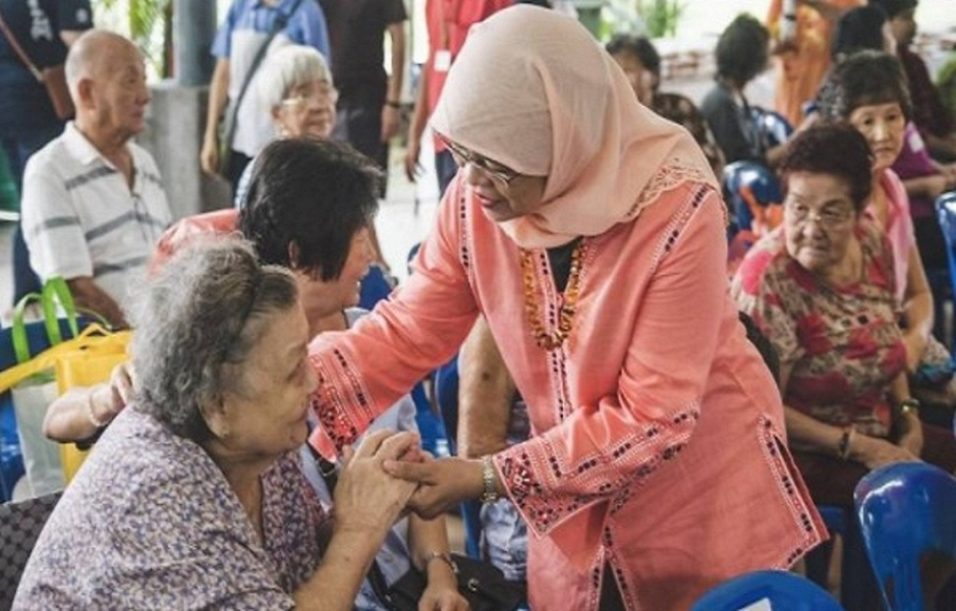
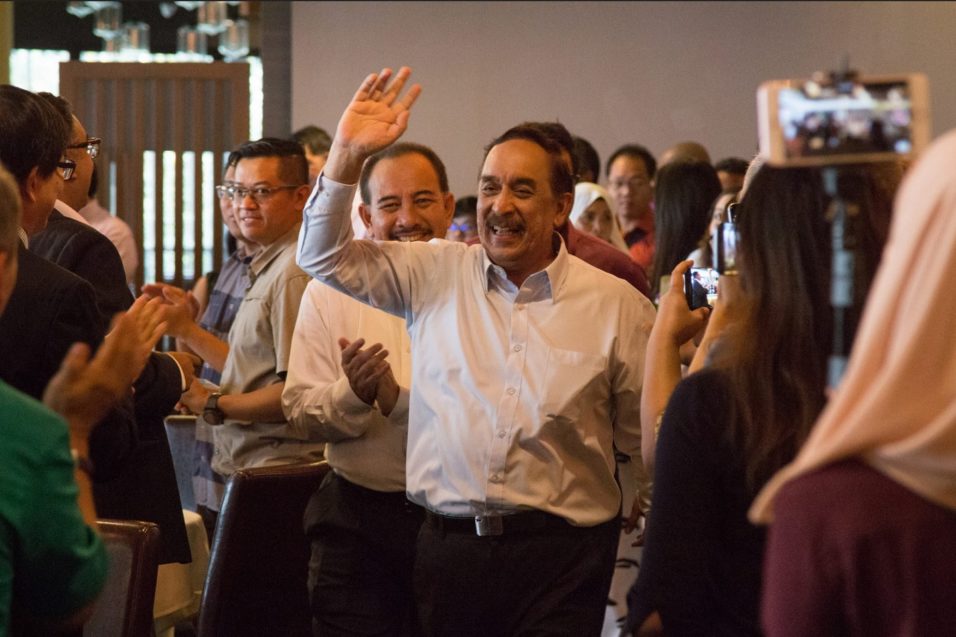
So the Presidential election is coming around and suddenly everyone wants to be Melayu. Well, unfortunately this is not really up to you and me. There’s a committee appointed by the Elections Department that decides if someone is Melayu. It is not an easy job.
So far the candidates not Melayu true blood siol. Not Acehnese, Bugisnese, Boyanese, Javanese Malay. More Pakistan and Indian blood. The only Malay thing is they are Muslims and can speak Malay, in the case of Salleh Marican, not very well.
So we have come up with this totally serious and not-stereotypical list of traits that make a genuine Melayu:
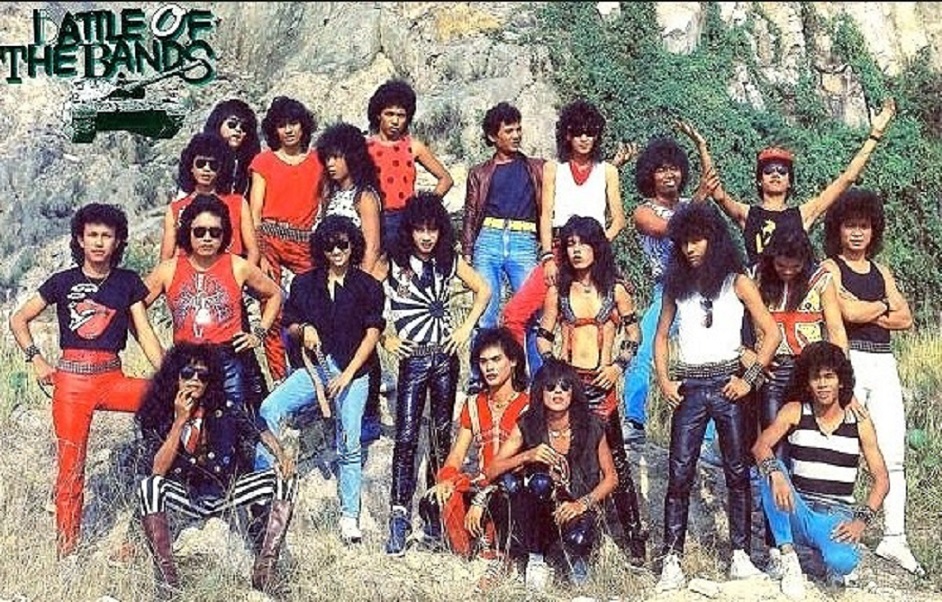
The Melayu is very musical. Fact: Singapore Idols – all Melayu. They know all the lyrics to the evergreen rock love ballad, Isabella. Even better if they can play the guitar and play percussions.
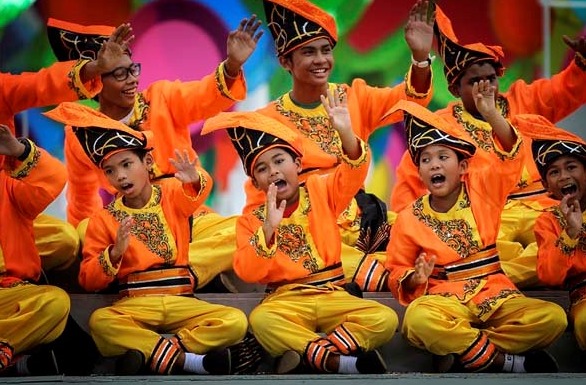
2. Speaking of percussions….A Melayu must know how to dikir barat because lets face it, all Melayu students pernah perform dikir barat for Hari Raya concert in school kan?
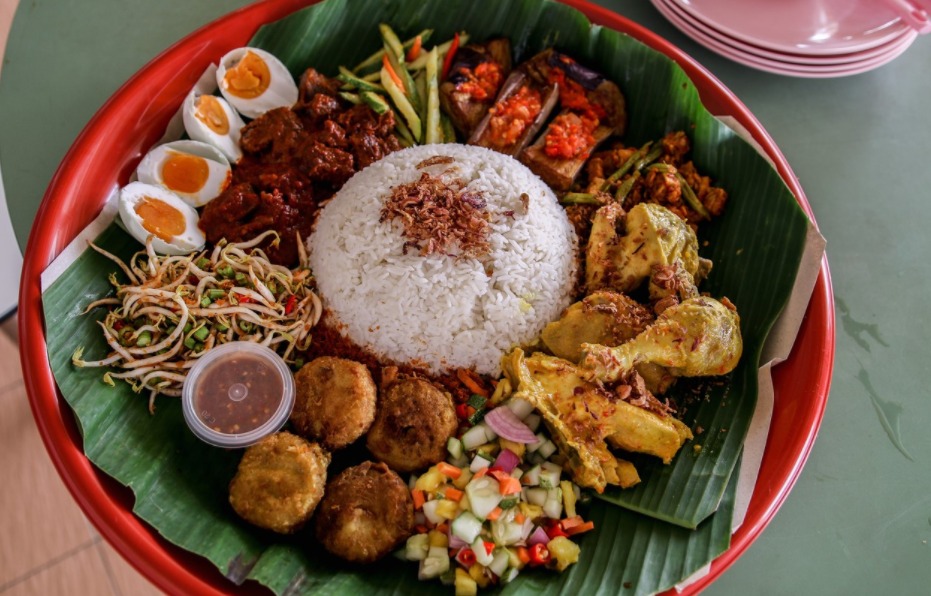
3. A Melayu loves his makan. Maybe a little too much. Nasi Ambeng is their favourite food. Not Nasi Briyani. When they become President, don’t forget the Nasi Ambeng. All state dinners at the Istana will be Nasi Ambeng hidang.
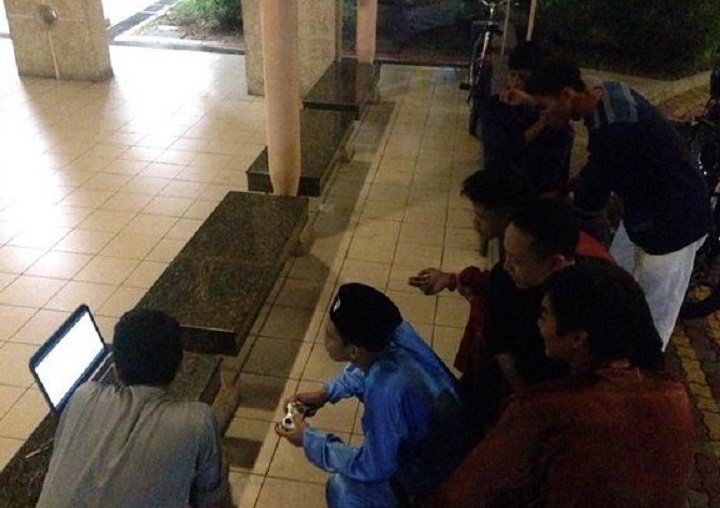
4. After eating all that Nasi Ambeng, what do they do? Of course lepak with their friends at the void deck. This is quality time. Where bonds of friendship are forged. Until the police come and chase them away from the void deck.
5. So what to do. Find another place to #rilek1corner. Because chilling is life lah bro.
Do you see the corner?
So there we have it. So between Halimah Yacob, Salleh Marican and Farid Khan, who is the most Melayu?
Rilek1Corner
DISCLAIMER: This article is meant to inject some humour into your Tuesday. Don’t take it seriously. Seriously.
So how does one define who is or isn’t Malay? Having actually researched this for my thesis for the past two years, please let me share with ya’ll SOME of what I’ve learned.
How Malays define Malayness has always been head-scratchingly confusing to those who are not Malay and even to us who identify as Malay in Singapore, it’s blatantly inconsistent. It is something of a pet passion of mine, probably because people keep assuming I’m chinese. Also, why is Malayness confusing? This is because there are actually competing definitions of Malayness. Dr. David Tantow identifies three which can be found in Sg:
1) there is the Islamic ummah, which basically imagines ALL Muslims in the Malay archipelago regardless of ethnicity as being part of the larger Malay community (basically, it’s: you are Arab? Pakistani? Well, hello, welcome, cuz as long as you Muslim, you my bro). Apparently, This emerged as kind of an identity-based counter to Western imperialism and colonialism in the 19th and early 20th centuries but which has now gotten a pretty bad rep because talk about a southeast Asian caliphate now (which is what this definition alludes to) and people will be like, eh, don’t become Isis leh, I call police.
2) Then, for the second, we have Malayness defined by cultural signifiers and codes, where we talk about people who practise Malay customs (adat), speak the Malay language (Bahasa), and practise Islam (agama). These three thingies form the basis of whether someone is either Malay (Melayu) or if that person has “enter (has become) Malay” (masuk Melayu). What confuses people about THIS definition is that it does NOT take genetic heritage into account. Basically, it’s: oh, you have Pakistani parents? But you now speak Malay, love motorcycles, know how to eat nasi ambeng, and go Friday prayers? Then we same-same Melayu lah bro.
3) The third definition is the one Mendaki and the gahmen loves cuz it’s the simplest one; using parentage/ancestry or “genetic and territorial qualifiers”. It’s really just, oh, your father is Malay, your mother is Malay, then two plus two equals four cikgu. It’s the most exclusive kind of Malayness but also one that people who are not Malay are least confused by. Also, can anyone spell “administrative convenience”?
(Source: www.tandfonline.com/doi/abs/10.1080/13639811.2012.725553)
4) THEN, as if these three ways of defining Malayness is not enough, we’ve not even touched on the fact that “Malay” also refers to an umbrella term for “the Malay races”, which is when we further divide Malays up into whether they are Minang, or Bawean (Boyan), or Javanese, or Bugis, even Filipinos and Orang Asli,etc, etc, oh so many many, many of which have their own languages, customs, even religious practices, some of whom are chill with being called Malay and others who are less chill because of reasons. All of them are represented in singapore so JOY.
5) THEN, as if I don’t have a migraine already, not only are all these different ways of defining Malays competing with each other, they are COEXISTING in some kind of strange equilibrium because, you know, we Malays don’t have enough problems in our lives. It’s why some of us say, Wah, this Marican cannot Bahasa Melayu, is he really Melayu (second definition)? Then with Khan, whom no one has criticised for not being able to speak Malay, people are like, eh, he Pakistani ancestry means he’s not Malay right (third definition).
6) THIS EQUILIBRIUM SHIFTS, because Malays cannot duduk diam-diam, between each other but also internally within the three definitions as well. For example, increased religiosity in recent decades means many Malays absolutely require someone to be Muslim to be considered Malay while others like the 1960s Malay nationalists placed a premium on customs and heritage. Before that, there was also the phrase “Bahasa jiwa bangsa” (language is the soul of a nation) which was a huge draw for the malay intelligentsia because they ardently believe that MALAY LIT IS MORE LIT THAN YOUR ROKOK. It’s only really with the (racist) British system of colonial administration, and later on with the (rac-Er-problematic) CMIO system that the third definition really became much more dominant in the lives of Malays in sg. All in all, these shifting lines evolve to adhere to historical and cultural changes.
7) So, really, what I am trying to say is defining who is Malay and how has been one long historical ?&$?? that has resulted in the inconsistency many people are now seeing in how the Malay community is treating the candidates. ALSO, AND MOST IMPORTANTLY, it has resulted in me extending my MA Programme by one semester, WHICH LIKE WAHLAO NI MELAYUNESS MAKAN MELAYU KE PE, incidentally. Now, with this development in the Presidential Election, this headache is finally going to be passed on to, as it usually happens here, a committee. I’m kinda looking forward to what they’re gonna say. For research purposes. Of course, they could just use the simplest, most boring way which is the third, genetically defined one, which will disqualify Khan. But this would leave us with Marican who many Malays would like to instinctively disqualify because of the second definition.
Of course, likely, both will be disqualified because of the 500 million dollar in whatever equity rule, neatly avoiding this headache, which will mean, happily, that this migraine will continue, resulting in more MC days for my Malay brethren and me.
Disclaimer: While Malay identity is important to my thesis, it’s not the main subject I am investigating for my research project. As such, what I know is limited and no doubt incomplete. So please feel free to add in any gaps or correct any inaccuracies as you spot them.
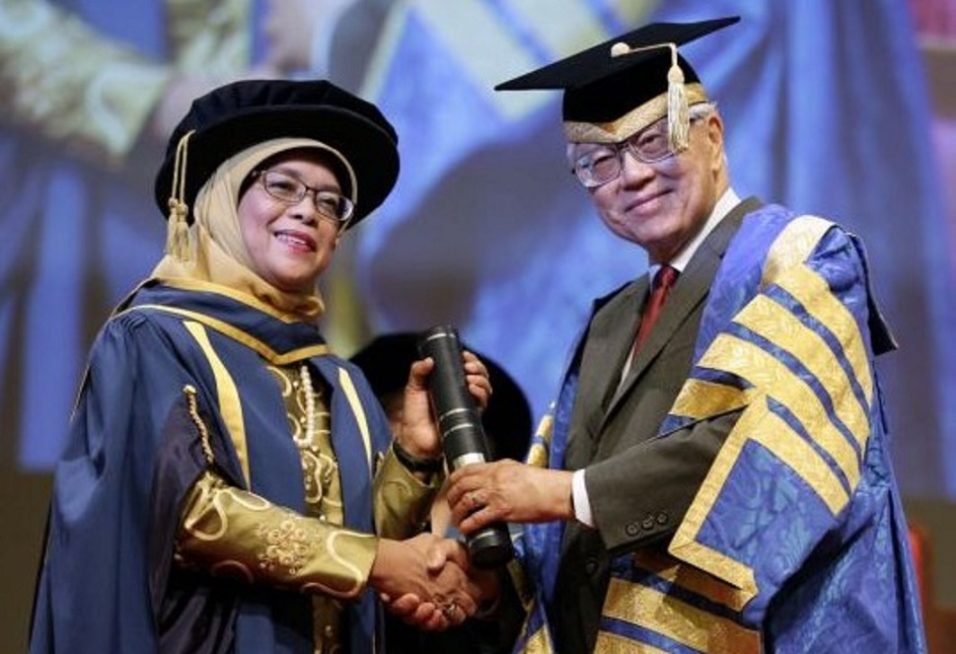
Speaker of Parliament Halimah Yacob will be a front-runner for the highest office in the land if she decides to throw her hat into the ring, said political analysts interviewed by TODAY.
Citing her long record of public service, they noted that voters of all races are familiar with her credentials, while the other two presidential hopefuls would have their work cut out seeking to appeal to Singaporeans outside of their community.
Nevertheless, Mdm Halimah — who said on Sunday that she was thinking about contesting in the polls — could be disadvantaged by her ties with the ruling People’s Action Party, the analysts said, should voters look for independence from the Government in a candidate. Some, like former Nominated Member of Parliament Calvin Cheng, have also questioned Mdm Halimah’s financial acumen, given that the Parliament Speaker does not have the responsibility of managing “huge billion-dollar budgets and hundreds to thousands of civil servants” like a Cabinet Minister.
Starting out as a lawyer, Mdm Halimah, 62, has spent 40 years in the public service, including over three decades in the National Trades Union Congress. Before she became Speaker of Parliament in 2013, she had served as Minister of State at the then-Ministry of Community Development, Youth and Sports. Dr Singh pointed out that Mdm Halimah has enjoyed solid support from her constituents since she first entered politics in 2001, winning four successive General Elections along the way.
Describing Mdm Halimah as a “warm, compassionate and humble” person who is “well-loved by her constituents”, Mr Cheng said she has also carried out her duties as Speaker of Parliament “with dignity”.
However, if Mdm Halimah — who made history as Singapore’s first female Speaker of Parliament — were “deemed to have the necessary skill-sets to guard our financial reserves”, it would “detract from the credibility of recent changes to private-sector eligibility criteria”, Mr Cheng said.
But other analysts pointed out that the Elected President would be supported by the Council of Presidential Advisers on issues relating to the country’s reserves.
“I don’t think you will have a person who will check off all the boxes. I don’t think Singaporeans envisage someone who can be the symbol of multiracialism and be a top finance person,” said Singapore Management University law don Eugene Tan.
On Mdm Halimah still holding her cards close to her chest, the analysts said she could be waiting to see who her potential challengers are, as well as gauging public reaction to her potential candidacy before making her decision.
By all accounts, Madam Halimah Yacob is a warm, compassionate and humble person, and a popular MP; she is well-loved by her constituents. Madam Halimah has also carried out her duties as Speaker of Parliament with dignity, as the first female Speaker of Parliament in Singapore’s history.
However, I feel she should not run for the office of Elected President.
Firstly, she has been elected not only as a Member of Parliament, but as the all-important minority candidate of Marsiling-Yew Tee GRC. She owes a duty to those who elected her to stay on and fulfil her responsibilities as MP. It would also call the whole raison d’être of the GRC into question, if it is left without a minority representative. The role of Speaker of Parliament is also a vey important one. It shouldn’t be resigned from lightly.
Secondly, although the position of Speaker is equivalent to a Minister in protocol, it surely isn’t in responsibility. One reason for raising the criteria for private sector candidates (chief executive role in a 500m company) was to benchmark it to the responsibilities of a Minister, who has to manage huge billion dollar budgets and hundreds to thousands of civil servants. The Speaker of Parliament has no such equivalent responsibility. It would thus detract from the credibility of recent changes to private sector eligibility criteria, if a former Speaker were deemed to have the necessary skill-sets to guard our financial reserves.
Madam Halimah is already a highly respected MP. She has already cemented her place in history as being the first female Speaker of Parliament. Her services are arguably more needed amongst the constituents she loves, and who love her in return.
I do hope Madam Halimah will seriously consider whether to run for EP, as she is doing, and decide eventually not to.
His is a classic tale of rags-to-riches Singapore citizenry.
It was more or less an open secret among those following the developments of folks in the Malay community who might stand for the presidency this year.
Last month, four men emailed the press to inform them that they would be picking up forms for a then-unidentified candidate from the Elections Department.
When they were interviewed, they were coy on who they collected the forms for, but it emerged soon after that the man they were there for is Farid Khan Bin Kalim Khan, currently chairman of marine multinational firm Bourbon Offshore‘s Asia Pacific branch.
His last-held executive position at the firm was Southeast Asian Regional Managing Director, which he stepped down from about two years ago, according to his campaign manager Borhan Saini.
Now, while his automatic qualification to stand for president in the upcoming reserved election is not completely clear, Farid has nonetheless lived a story we reckon quite a few Singaporeans can rally around quite easily.
A classic rags-to-riches Singaporean
Photo by Chiew Teng
The second of 10 children — his older brother passed away at a young age —, Farid, who will turn 62 in November, felt the need to step up to support his family after his father passed away just as he was entering his teenage years.
He dropped out of his second year at Bartley Secondary School when he was 14, working by day at a timber processing factory and by night washing cars at a petrol station.
Two years later, he got a job as an assistant mechanic at a workshop, and discovered he really enjoyed working on board ships for projects. He then spent a few years working at a shipyard, got his first passport after his 21st birthday, and sailed as a captain’s steward for 14 months.
Spurred by passion for maritime engineering, Farid then completed a diploma in marine engineering at Singapore Polytechnic during his breaks onshore, and was finally appointed as a junior engineer in 1983, at the age of 28.
From there, he worked at Neptune Orient Lines and other shipping firms based in Singapore and Jakarta, after which he started up the Asian branch of Bourbon Offshore in 2005 as a partner.
He spent a decade at its helm, first as managing director and eventually stepping down from the post of Regional Managing Director to assume chairmanship at the French MNC’s subsidiary.
And somewhere in the middle of that, Farid got married, and now has a daughter, 24, and a son, 18.
Fulfilling people’s wish and trust
Photo by Chiew Teng
Tuesday’s press conference was held at the far-flung Village Hotel Changi, followed by a fancy lunch event attended by almost 200 supporters of Farid’s — many of whom come from the maritime sector.
Not only was there much fanfare welcoming him, complete with a rally-style speech, making rounds to meet attendees and even getting garlanded on the way, it was also pretty evident that the people who were there are fans of his.
Speaking to media, Farid said he felt like it was time to step up and serve the nation after spending decades achieving his dreams and building a strong career in the maritime sector.
“You see, all my life, 48 years I have worked in this country which I love. I worked very hard for my family, I worked very hard for my community. And now I’m 62 years old, I can do two things: live comfortably, retire and walk away from all this, or whatever that I’ve learned from my 48 years of working in this country, use that experience and serve the nation, which is what I’m doing right now.”
At another point during the conference, when asked if he would run if this was not going to be a reserved election, he said he had been a workaholic through most of his life:
“Few years ago I was building companies, very busy building companies — career, you know… I’m one of the workaholics ah, you can call me that — those who worked with me will say this guy is a workaholic, 7 o’ clock in the morning until 10 o’ clock at night working.
So I build companies… so I’ve come to a point now where the companies are all stable, 62 years old, I wanted to spend more time with my family; I’m going into retirement mode actually now. But this opportunity came, and I feel that I can serve this country.”
“Malay” enough?
Photo by Chiew Teng
All this aside, however, this round’s new qualification criteria stand as two rather daunting hurdles for Farid — apart from the financial and professional criteria that he doesn’t clearly meet, there is also the issue of his ethnicity.
You see, Farid, who in the press conference showed great fluency in both English and Malay, is of Pakistani descent, and has “Pakistani” written on his identity card.
In his speech and during the press conference, Farid said he grew up in Geylang Serai and his family and relatives speak Malay and practice the Malay culture, and hence identifies as part of the larger Malay community.
“The thing is, in the Malay community you have all kinds of people, right, from Balinese, Javanese, all kinds of descent that are there. It’s difficult for me to call myself otherwise. I live in a society that I love very much. I went to the same school with them, I shared the same fears, I shared the same joys with the people around me in the Malay village.
So I consider myself a Malay or Pakistani, even tomorrow my daughter got married, Insyallah, it will be the same, the same ceremonial like the Malay. We’ve kind of accepted that we are here to stay, and we are Malay in the community, in the Malay community.”
So will Farid Khan qualify to run for the Singapore presidency? The Presidential Elections Committee will have to decide, and we’ll just have to see.
 2. Speaking of percussions….A Melayu must know how to dikir barat because lets face it, all Melayu students pernah perform dikir barat for Hari Raya concert in school kan?
 3. A Melayu loves his makan. Maybe a little too much. Nasi Ambeng is their favourite food. Not Nasi Briyani. When they become President, don’t forget the Nasi Ambeng. All state dinners at the Istana will be Nasi Ambeng hidang.
 4. After eating all that Nasi Ambeng, what do they do? Of course lepak with their friends at the void deck. This is quality time. Where bonds of friendship are forged. Until the police come and chase them away from the void deck.