Tag: Ministry of Education

  • This Principal Is The Reason Why Other Teachers Are Jealous Of Those Working At West Spring Primary School

    This Principal Is The Reason Why Other Teachers Are Jealous Of Those Working At West Spring Primary School

    At West Spring Primary School, teachers are banned from replying to work-related e-mails and texts before 7.30am and after 5pm on weekdays, as well as over the weekend.

    They also get two days in the work week when they can leave for home immediately after class, at about 2pm.

    This is its principal, Mrs Jacinta Lim’s way of ensuring that her teachers have a work-life balance.

    She implemented this when she became principal of the school, which opened in 2014.

    Mrs Lim told The New Paper: “It stems from my personal conviction that a good balance of work and private time is important.

    “When my staff is well rested, they will be happy teachers. When they are happy, the children will be in good hands. It’s what I tell parents during briefings too.”

    Her efforts won her the Work-Life Leadership Award by the Tripartite Committee on Work-Life Strategy in 2014.

    Last year, West Spring was also named one of the 15 exemplary employers by Tripartite Alliance for Fair and Progressive Employment Practices (Tafep) for not just prioritising work-life harmony, but also setting aside time for cohesion programmes to help employees bond, and having a mentorship coaching programme to ensure that all staff receive professional development support and guidance for their career growth.

    To ensure her “e-mail and text during work hours” rule sticks, Mrs Lim nags at her staff to “sing the same tune”.

    She said: “The moment you start giving in a little, eventually nobody is going to adhere to the rule.

    “For me, I play the role of the gatekeeper to ensure things don’t get moved down to the teachers.

    “There are some teachers who are very nice and see it as their responsibility to respond (to parents) on weekends or at night. There’s a limit and I’ll draw the line.”

    Initially, Mrs Lim received “feedback” from parents about her hard-handed approach, but she did not relent.

    “If we take things easy and sway, parents may grow to become demanding. At the end of the day, it’s about mutual respect,” she said.

    The Ministry of Education provides guidelines on educators’ interaction with parents and the community, via the Code of Professional Conduct.

    The underpinning principles include building mutual trust and respect with parents in making decisions that are best for the child, and exercising professional integrity and judgment in communicating and working with parents.

    West Spring Primary School teacher Lim Ker Wee, 39, gives his work mobile number to parents because it allows him to update parents on the pupils’ progress and vice versa.

    The teacher of seven years said parents usually text about their children’s school work, or when their children have to miss school for various reasons.

    He told TNP: “When I started teaching, my colleagues told me it’s not really advisable (to give out numbers), but the landscape is changing.

    “What we emphasise here is mutual respect. I will let my class know that my number is available to all, but their parents must also know when is the right time to contact me. Once we agree on that, I don’t see a problem.”


    Source: www.tnp.sg
  • Desperate Father: Will My Son Ever Get A Place In Autism SPED School When Even My Own MP Cannot Help?

    Desperate Father: Will My Son Ever Get A Place In Autism SPED School When Even My Own MP Cannot Help?

    NOT ASKING FOR THE MOON…Just A Place For My Son In Autism Sped School…!!!

    I rarely post on social media. But today is an exception. Today I can’t help but to post this.

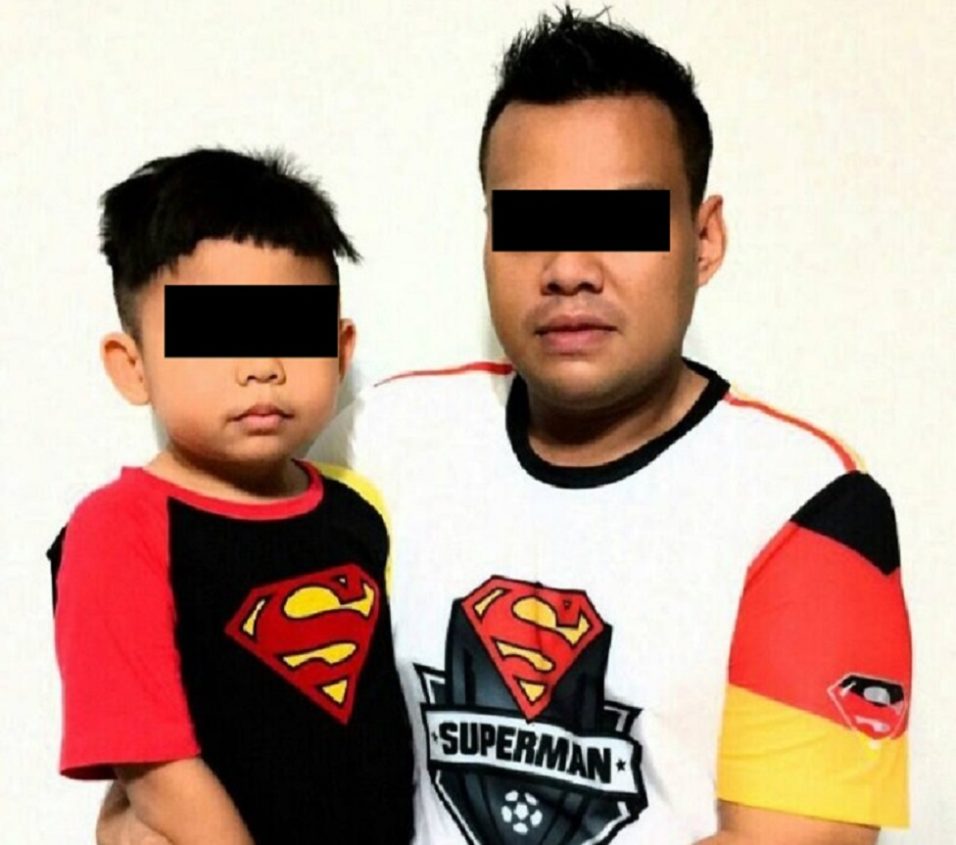
    After much persuasion from my wife… today after work, I accompanied both my wife and son to Eden School / Eden Centres for Adults / Eden Children’s Centres / AAS for Autism, in hopes to plead for a slot this year for Nabil in there.

    After meeting with the in charge for enrollment, to our disappointment we were told that the earliest most possible intake for Nabil is next year in January 2018.

    He’s of a P2 age this year…it’s been 2 lengthy years already..how long more do you expect my son to wait… I can’t help feeling the negative vibes that Nabil is like not being considered for a place at all when being told to go and try for other sped schools or private schools…..this is easier said than done.

    It is beyond my understanding why distance between school and home is not being considered during a sped school enrollment just like how it is being applied in mainstream primary schools.

    Really could not comprehend the system how a student who resides in as far as pasir ris and tampines are prioritized and get a slot in Eden (Bt Batok) while we the apparent west residents (CCK) are left hanging precariously by the hook.

    We as parents are truly exhausted. Have tried numerous means of help…even to the extend of approaching the Member of Parliament of our area Mr Zaqy Mohamad in hopes to expedite the enrollment but till today..we have yet to receive even a reply from him regarding the matter regrettably.

    It is just emotionally tiring and draining to say the least…as a husband, seeing your wife shedding her tears helplessly in public as we step out of Eden School earlier on while hugging my son was the last straw for me!

    Seek help from Ministry of Education, Singapore you say?? How could we when in the first place, they couldn’t even help to issue a student ezlink card for Nabil just because he has yet to get enrolled into a school. Yes. My son all this while has been paying adult fare whenever he took the train since he turns 7. How justifying is this…?! You see how my son has been tossed back and forth all these while….

    The system got to change…someone has got to look into the cases which falls through the cracks…that’s where our unheard voices are being suppressed unfairly….?


    Source: Aqil Alid

  • Former Army General Teach Teachers How To Teach Students

    Former Army General Teach Teachers How To Teach Students

    Former Chief of Defence Force-turned-Education Minister Ng Chee Meng talked down on more than 500 principals and teachers at the Appointment and Appreciation Ceremony for Principals today (Dec 29).

    The former army general who has never been a teacher a day in his 25 years-long career in the military, told educators that they should not “intervene too early” and that students should be allowed to learn from their mistakes:

    “Students need to learn to be resilient and self-reliant, as well as learn from their mistakes. Are we, out of the best intentions, preventing our students from going through setbacks and failures and in the process, learn and build resilience? Perhaps we need to let our students learn from their own mistakes, find their own solutions, and put in the necessary hard work or corrective action to eventually succeed. School leaders, teachers and parents alike, may need to learn how to selectively stand back and be an observer rather than intervene too early.”

    Education Minister Ng Chee Meng shares half the education ministry portfolio with Minister Ong Ye Kung, despite having workload not as strenuous as the Transport Ministry or Foreign Affairs Ministry – both which saw major hiccups in recent years.

    Minister Ng Chee Meng continued his lecture-speech on the principals and teachers:

    “The importance of cultivating in students an attitude of lifelong learning, one that comes from a joy of learning, and of the need to prepare students for an increasingly connected and high-tech workplace to reduce the growing skills gap between what we learn in schools and the jobs (graduates) are applying for. The schools’ Applied Learning Programmes can help prepare our students for the future workplace as they can learn innovation, and nurture an entrepreneurial attitude in their learning.”

    Minister Ng Chee Meng was brought in to Parliament through the GRC election system and was fast-tracked to a  full ministerial position without any merit. He currently draws S$1.1 million a year alongside another inexperienced Education Minister, with both ministers double taxing the Education Ministry’s ministerial salaries budget. Under the two Education Ministers, two students have committed suicide due to academic stress in 2016. There is also no significant changes in the education system either.


    Source: http://statestimesreview.com

  • SDP: MOE Must Downsize Class Sizes To Encourage Creativity

    SDP: MOE Must Downsize Class Sizes To Encourage Creativity

    The latest IMD report shows Singapore falling in ‘talent’ ranking. This is partly due to “inadequate investment and development of its own talents” (compared to being tops for attracting foreign talent) – a serious indictment of the PAP’s priorities.

    http://www.businesstimes.com.sg/…/singapore-losing-edge-in-…

    The report also cites the poor pupil-teacher ratio, ranking 41st for primary education and 35th for secondary education. This why the SDP proposes that our pupil-teacher ratio be halved to 20-1.
    http://yoursdp.org/publ/sdp_39_s_alternatives/education/26

    The Problem

    Our education system puts too much emphasis on exams and rote learning which kill creative impulses in our children. Also, these statistics paint a depressing picture of what the education system is doing to our children:

    • 20% of our children exhibit signs of anxiety and mood disorders. (The Straits Times, 2012)
    • One in three students say they sometimes think that life is not worth living because they fear exams. “That’s scary. What kind of life are we putting our kids through if they’re so frightened of examinations?” a psychiatrist said. (Far Eastern Economic Review, 2001). Children actually commit suicide because of the pressure they feel to perform.
    • The number of youths seeking psychiatric help increased by 16% from 2005, reaching 3,126 in 2010. More than half of these were primary school children. (The Sunday Times, 2010)
    • The number of children warded for “aggressive, suicidal or hallucination tendencies” at IMH jumped by 35% between 2005 to 2010. Mental health professionals attribute these problems to academic stress. (The Sunday Times, 2010)
    • Psychiatrists found that 12.5% of primary school children show signs of emotional problems including anxiety and depression. Researchers say that this might be an underestimation of the prevalence of mental health problems among children. (Singapore Medical Journal, 2007)

    1. Remove PSLE and delay streaming

    The stress of exams inflicts psychological trauma on children. It is not an intelligent approach to assess the abilities of primary-school students on a single examination.

    2. Cultivate creative minds

    Build confidence in children by helping them develop independent thinking, willingness to make mistakes, and perseverance in the face of failed attempts.

    3. Broaden curricula, reduce syllabi

    Subjects such as music appreciation, speech and drama, literature, etc. as well as periods for students to collaborate and interact to develop their creativity will be introduced to al schools.

    4. Reduce class size

    The SDP will reduce class size in our schools to 20 pupils per class from the current 40 to provide students with the necessary individual attention to help them develop academically.

    5. Introduce dedicated-teacher system


    One teacher will be assigned to each class from Primary 1 and follow them through Primary 3; another will take them through from Primary 4 to 6. This will allow students to bond with their teachers and give parents and teachers time to develop trust and cooperation.

    6. Scrap school and class rankings

    Comparing examination results and ranking students and classes detracts from the real purpose of education, which is self-improvement and self-actualisation.

    7. Encourage reading

    Reducing the current syllabus will free up students and allow them time to read for pleasure. A love of reading encourages life-long learning and cultivates a creative mind.

    8. Convert all schools to single-session ones

    School hours will be from 8 am to 4 pm during which time will be put aside for students to complete their assignments. This will allow teachers to help students with their work thereby ruling out the need for private tuition.


    Source: Chee Soon Juan 徐顺全

  • Former Teacher And NIE Lecturer: Youths Must Still Be Encouraged To Do Embrace Knowledge

    Former Teacher And NIE Lecturer: Youths Must Still Be Encouraged To Do Embrace Knowledge

    I am going to humbly go against the grain here and state that I don’t think sharing our past PSLE scores and telling kids what we are doing/where we are now is helpful. I think every kid’s performance in PSLE should only be compared to their own past performance or to targets they have set for themselves. I think sharing our PSLE scores forces a comparison between the kids and ourselves, which is terribly unfair because we did not go through the same education syllabus nor the same exams as they did. Our context and upbringing were different. Our circumstances will be different from theirs. Our measure of what success is will also be very different from one another. So why limit their possibilities by projecting ours?

    I also find telling kids that PSLE scores don’t necessarily impact your future is misleading, because to an extent it does. Kids need to know that their actions (choosing to study/ not study) will have consequences (which school they go to/what courses they take) but what’s important is that they know we are here to help support them so together we can deal with situations where the consequences are not ideal. For the kids who may not have done well…hug them, kiss them, tell them it’s alright and you love them, and help them reflect on what is it that they thought went wrong. Empower them with skills and abilities they need to be autonomous learners who know their own strengths and weaknesses. For the kids who have done well, again, hug them, kiss them, tell them well done on their efforts and it is well deserved. And empower these kids too so that in case they find themselves facing failure in the future, they will be resilient.

    My concern is that that in our attempt to convince some kids that “results don’t matter”, we belittle the efforts taken by other kids, educators and parents who believe in achieving academic excellence, with much grit and determination.

    We have to tell our kids…YOU need to study. You need to learn and love learning. Be disciplined. Continue to put in the effort. Don’t use examples of people who have made it without doing well academically as an excuse to slack off. They charted their own journeys, good on them. But as for you, while you have the ability, the capacity, the chance to study… give it your best and aspire to achieve your dreams and plans you have for your own future.

    The pursuit of knowledge is not a choice. It is incumbent on you. On all of us.

    May Allah swt protect our children and make them intelligent, learned and compassionate human beings always.

    Amin.


    Source: Cikgu Roszalina Rawi

deneme bonusu