If Mdm Halimah runs for the Malay President, SDP will be ready to give the people of Marsiling and Yew Tee another chance to consider us to be in Parliament to voice the people’s concern now having seen the outcome of their vote 2 years on.
The PAP must play it fair, the minority representation by an MP must be replaced in a GRC by-election.
Thaipusam and the Right to Religious & Cultural Practice in Singapore
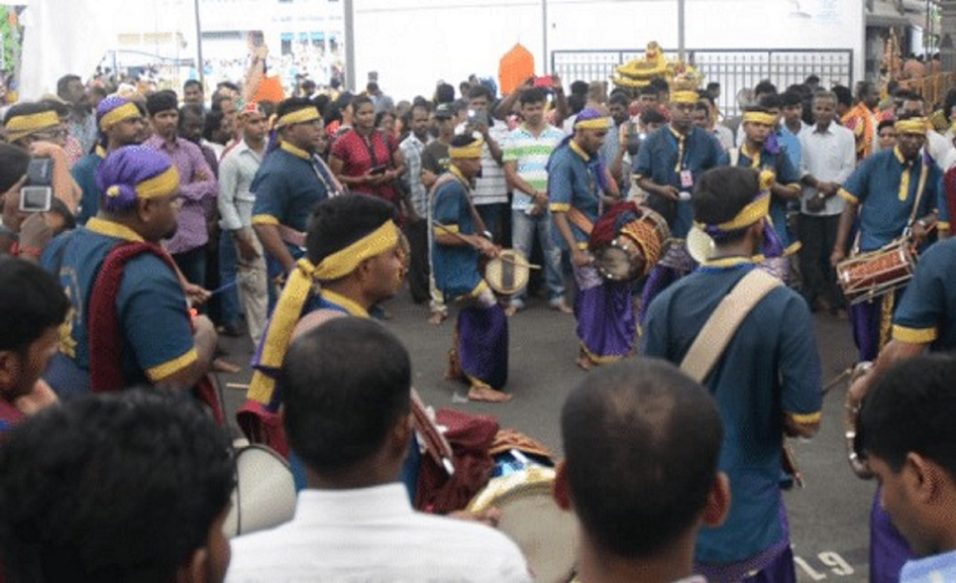
Thaipusam has been an integral part of my religious and cultural upbringing. As a child, I attended, supported and even participated in the festival. Singapore’s Tourism Board lists Thaipusam as an event in its rich diverse cultural heritage calendar. Each year, the streets are lined with supporters, devotees and curious tourists alike. The festival, however, has been shrouded in controversy in Singapore – the consequence being that thousands of Singaporeans would rather chose to flock to Batu Caves in Malaysia to celebrate the festival.
The reason for the controversy was a 42-year-old ban on the playing of live music during the festival. First imposed in 1973, the government argued that the blanket ban on loud live music was necessary to quell disorder as several fights often disrupted between competing groups, thus disrupting the procession and risking the lives of spectators and accompanying supporters.
I have written previously about this “Silenced Festival” in my book Kampong Boy and how in 2011, I myself stepped up as a plaintiff with the Attorney-General’s Office and the Hindu Endowments Board (HEB) that is responsible for running and organising the festival, as the defendants. This was the first time someone challenged the live music ban in court. Unfortunately, my legal action before then Justice Steven Chong, did not succeed due to the points I listed in the book.
The Legalities
Article 15(4) of the Constitution gives the executive branch of the government the broad authority to restrict the practice of religion in accordance with the law – the caveat being that the decision-maker’s power to do so may be challenged in Court. Additionally, the Public Order Act and its related regulation empower the Commissioner of Police to impose such conditions as he deems fit for the purposes of making an application for a licence to hold a public assembly or a public procession.
Of particular relevance to Thaipusam are regulations 8(1)c and 8(2)c which do not permit singing or music, gongs, drums or the playing of music-producing equipment. Also public processions require permits and applications which also have conditions attached.
2015 Case
In 2015, three men were arrested during a scuffle which took place during a Thaipusam festival. In the ensuing case, Vijaya Kumar s/o Rajendran v Attorney-General, the three Applicants cited their constitutional rights to freedom of religious practise and equality before the law to challenge the conditions which prohibited the use of musical instruments (other than at certain fixed points) during the procession.
The Applicants argued that music from an urumi is a fundamental aspect of the religious practice of marching in the Thaipusam procession and that the music conditions imposed constituted a breach of their rights to practice their faith without interference.
The case raised important questions including firstly, the proper meaning of the term “public order” under Article 15(4) of the Constitution, secondly, the type of state interests which can justify restricting a religious liberty, thirdly, the degree of harm that must be posed by a religious liberty before it can be restricted, and fourthly, whether the possible hostility of third parties to a person’s peaceful exercise of faith can be deemed as constitutionally relevant under the “public order” consideration.
I got involved in the case through my connections with the legal team at Eugene Thuraisingam LLP representing the Applicants. Everything balanced on being able to prove that the relevance of musical instruments was an integral part of Thaipusam and therefore to the practice and religion of Hinduism. We tried to find experts in Singapore who were able to affirm the position in our favour. We were confronted with the reality that as most temples in Singapore are affiliated to the government’s HEB, no one was willing assist the Applicants. I recall the day, I travelled with Eugene Thuraisingam who led the legal team to seek Hindu experts from across the border who were willing to share the history and origins of the procession and to explain the relevance of music and devotional songs played during the festival. We were thrilled to find Tan Sri Datuk R. Nadarajah, Chairman of the Batu Caves temple in Kuala Lumpur.
The expert stated that the “playing of the musical instruments forms an integral and inseparable part to the carrying of the Kavadis” because the music facilitates the Kavadi carriers to “enter into a trance” which then enables them to bear the enormous physical burden and pain of weight of the hoisted Kavadi. The music is an essential part not just to the procession but also to the “nature of worship”. The expert’s affidavit went as far as to state that the taking away of the musical instruments would be “traumatic” for the Kavadi carrier as the trance will be broken and he will feel immense physical burden and unbearable pain from the body piercings. Without the music, the devotee is more likely to be “distracted from focusing on the divine”.
In the end, the High Court dismissed the application on the grounds that the public order proviso to freedom of religion was made out, and the differential treatment was justified. The Applicants appealed, but later decided to withdraw their case in the light of increased dialogue between interested parties and the announcement by the government to relax the live music rule.
Music to the Ears – Latest Developments
In 2016, Hindu devotees in Singapore received their first bout of good news. The 42 year old ban on live music was lifted and live music was allowed to be played from 3 stages at different points during the procession. Broadcasted music was also permitted at 7 other locations. The Chairman of HEB was able to proudly announce that “there won’t be a stretch that is without music”. He also added, “The kavadi bearers pierce their bodies, causing enormous pain, as part of the vows they have taken. The music will be useful in reducing the pain and enhancing their spiritual focus throughout their journey.
The latest bout of good news came last week. This year’s festival which will fall on the 9th of February, will see music broadcasted at 23 points along the 4km stretch. Live music will be continued to be played at 3 stages where musicians will play traditional classical Indian instruments so that the younger generation understands their rich cultural heritage and be interested to learn these instead of the modern western style drums and bongos which have appeared at the festival in recent years.
No doubt tremendous progress has been made to listen to feedback from the Hindu community and from devotees. Participants are still not yet allowed to bring their own musicians or musical instruments and some restrictions remain. I personally hope some faith will be restored in the celebration of this festival in Singapore and that fewer Singaporean Hindus see the need to cross the border to partake in such a monumental and colourful festival.
As I wrote in my book, it is hard to think that over 155 years of tradition and devotion could be “cowed into quietude”.
Earlier today, I wrote an e-mail to my MP and Speaker of Parliament, Mdm Halimah Yacob, to express my total disagreement on the coming Reserved Presidential Election.
Even though I know that what I wrote to her maybe put aside, I still feel that as her resident and as a Singaporean, she should know and be aware of the sentiment on the ground.
Not all Malays are supporting this reserved Election, as it is a big insult to the community by the PAP Government.
I will like to urge all who are against the reserved Election to write in to your MPs too.
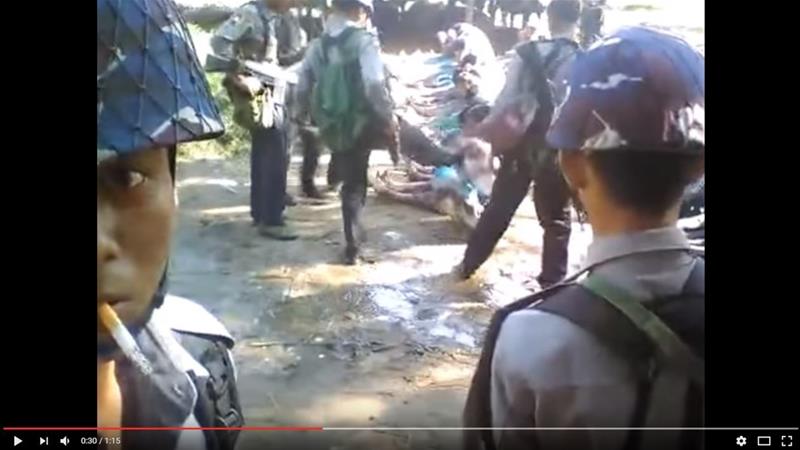
YANGON • Myanmar’s government yesterday said it has detained several police officers over a video apparently showing Rohingya civilians being beaten, a rare admission that the authorities may have carried out abuses against the Muslim minority.
Tens of thousands of people from the persecuted ethnic group – loathed by many of Myanmar’s Buddhist majority – have fled a military operation in Rakhine province launched after attacks on police posts in October.
Bangladesh says some 50,000 Rohingya have crossed its borders over the past two months. Many have brought harrowing accounts of rape, murder and arson at the hands of Myanmar’s security forces. Their stories have raised global alarm and galvanised protests against Myanmar’s de facto leader, Ms Aung San Suu Kyi, who has been accused of not doing enough to help the Rohingya.
Her government has said troops are hunting militants behind deadly raids on police border posts, denying claims of atrocities and launching a dogged information campaign against reports of abuse.
However, the authorities yesterday pledged to take action “against police officers who allegedly beat villagers during area clearance operations on Nov 5 in Kotankauk village”.
Ms Suu Kyi’s office named four officers who were involved in the operation, including constable Zaw Myo Htike, who filmed the “selfie-style” video.
“Those who (were) initially identified were detained,” it said in a statement. “Further investigations are being carried out to expose other police officers who beat villagers in the operation.”
Dozens of videos have emerged apparently showing security forces abusing Rohingya, but this is the first time the government has said it will take action over them.
The footage shows police hitting a young boy on the head as he walks to where dozens of villagers are seated in rows on the ground, hands behind their heads. Three officers then start attacking one of the men, beating him with a stick and kicking him repeatedly in the face.
A Rohingya activist contacted by Agence France-Presse said the footage had been verified by a refugee from the nearby camp, Shilkhali.
Around 600 people have been detained since the military operation, according to state media, including six who have died in police custody.
Buddhist-majority Myanmar has long discriminated against the stateless Rohingya, who rights groups say are among the most persecuted people in the world.
More than 120,000 have been trapped in squalid displacement camps since violence erupted in 2012 in Rakhine, where they are denied citizenship, access to healthcare and education.
More than a dozen Nobel laureates wrote to the UN Security Council last week urging action to stop the “human tragedy amounting to ethnic cleansing and crimes against humanity” in northern Rakhine.
Last month, UN rights commissioner Zeid Ra’ad Al Hussein criticised the government’s “callous” handling of the crisis, describing it as “a lesson in how to make a bad situation worse”.
Under Myanmar’s junta-era Constitution, Ms Suu Kyi’s civilian administration has limited power over the army, which maintains control of the defence, home and border ministries.