Tag: MUIS

  • Muslim Mother: This Is Why A Madrasah Education Is As Good As Any Schools In Singapore

    Muslim Mother: This Is Why A Madrasah Education Is As Good As Any Schools In Singapore

    Whenever I tell my non-Malay/Muslim friends (or even some Muslim friends) where my children are schooling, a common reaction would be, “Do they cover the same syllabus?” “Are they on par with the national schools?” My answer would always be a resounding “Yes!” and then I’ll proceed to share a bit more about their school.

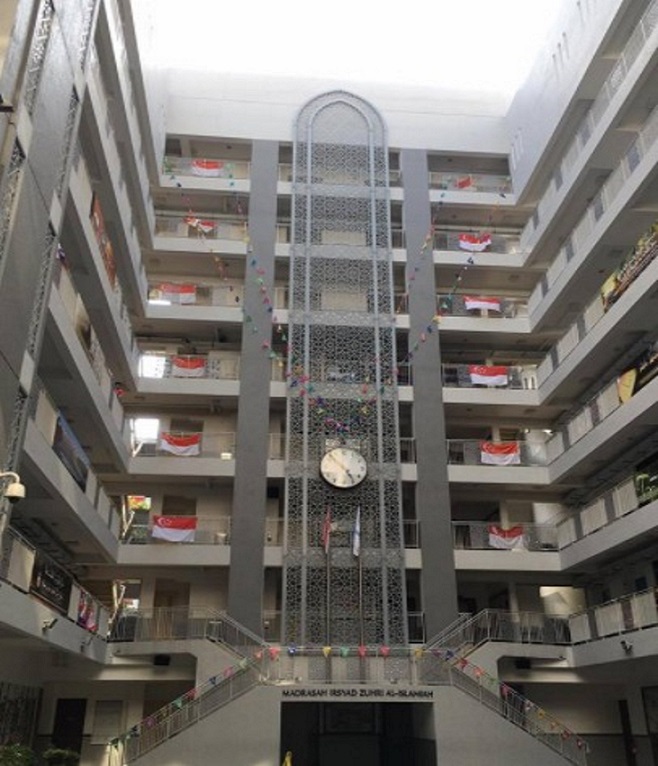
    But when I read a comment by some guy online about how Madrasah students only learn Arabic and English (not even Malay??) as if they are undergoing some kind of ‘Arab colonisation’, I felt the need to share more about what at least one of our local full time Madrasahs – Madrasah Irsyad Zuhri – is like.

    📙Admission 📁
    When the kids are in K2 (or at 6yo that year) in April, they will have to sit for an entrance test which comprise of written and oral papers for English, Maths, Malay and Arabic. Applications tend to exceed the number of vacancies available by more than 100%, so it is a very stressful test for parents actually! That half or less than half that got in really did by the Grace of God.

    📕 Curriculum 🗂
    At primary school, these are their subjects:
    ✏️English language (based on latest MOE syllabus, STELLAR and all)
    ✏️Mathematics (based on latest MOE syllabus)
    ✏️Science (based on latest MOE syllabus)
    ✏️Malay language (based on latest MOE syllabus)
    ✏️Arabic language
    ✏️Al Qur’an
    ✏️Tarbiyyah (Islamic knowledge, consisting of Islamic history, theology, jurisprudence and Islamic social studies – one per term)

    As for the first four subjects, MOE-approved textbooks and workbooks are used. The books for the Islamic subjects are locally published in consultation with and under the supervision of the Madrasah Education branch in MUIS.

    📗 Enrichment and CCA 🤗

    1. They have what they call ‘whitespace’ (2 periods) weekly, where they get to experience different activities (one per term, different progs for different levels) not limited to:
    📎 Art programmes
    📎 ICT lessons
    📎 Aikido
    📎 Gymnastics
    📎 Leadership programmes
    📎 Robotics
    📎 Sports and games
    and the list goes on

    2. After-school enrichment classes may include mathematical problem solving classes and English/Malay writing workshops, among others. There is also the Tahfiz (Quran memorisation) class that students can enrol in.

    3. A plethora of interesting CCAs are highly sought after and students even had to ballot to get a place in CCAs such as:
    👍 Archery
    👍 Junior Masterchef
    👍 Taekwando
    👍 A variety of sports – soccer, badminton, swimming, netball
    👍 Robotics
    👍 Khat (Arabic calligraphy)
    and a few others

    4. They are not left out in international/national competitions such as ICAS, Maths Olympiads, robotics competitions, Babble and Speak, etc.

    5. The P5 camps are usually in training centres/campsites in Malaysia for a more rigorous/interesting outdoor experience. I heard there’s also overseas CIP in the pipeline for them.

    6. Once or twice a year, the p3-6 students will have a 2D1N Mukhayyam, a spiritual retreat filled with motivational talks, reminders and night prayers (Tahajjud).

    📘Teachers 👩🏻‍🏫
    Teachers for the four PSLE subjects comprise of both NIE-trained teachers (ex teachers in MOE schools) and teachers trained in education from local and overseas universities/institutions. They also attend short courses/teacher conferences organised by NIE as well as publishers here. Teachers for the Islamic subjects are qualified ustazs and ustazahs who graduated from Islamic institutions/universities locally and abroad too.

    At this point, I must say I have much respect for all the teachers in the Madrasahs, for their sincere dedication and love for the students. If you already feel that the students are going through a lot, imagine the teachers! May Allah reward all the teachers with the best of rewards!

    📙 Assessments 📋
    The P1s and P2s have bite-sized assessments for English and Maths but CA1, SA1, CA2 and SA2 for all other subjects. Other levels have all four main assessments for all subjects. Yes, it is stressful for both kids and parents! 😅 But we survived, and will continue to survive these ‘tests’ on our mental and spiritual strength!

    📕 PSLE 📝
    The P6s will take the same PSLE papers for the four main subjects on the same dates and times as the other P6 students in Singapore. What I always admired is their love and care for the P6 students in terms of their spiritual, mental and physical preparation for the exams. Will share more when the time comes.

    PSLE results? 100% passes for a few years running and mean score has always been above national average, Alhamdulillah. May it continue that way, Aameen!

    📗School hours 🕢
    Assembly begins at 7.30 am but classes start at around 7.55 am. Lessons continue till 2.25 pm with 1 recess break (@ canteen) and 2 snack times (in class). At 2.25 pm, they proceed to the adjacent mosque for Zuhr prayers till about 3pm (on Fridays they join the mosque jamaah for Friday prayers and end the day after that). Yes, the kids are very tired (and hungry) at the end of the day, but as many Madrasah grads would say, these are the things (on top of the many subjects and assessments, and climbing of stairs) that mould them into stronger individuals. I pray the same for my children!

    Of course, the day does not end there when they have after-school activities/enrichment/CCA/remedial.

    They enjoy the same gazetted school and public holidays in Singapore.

    📘National Education 🇸🇬
    Here, students also learn to love their country. One of the chapters in their Arabic textbooks is about the late Mr Lee Kuan Yew, narrating his achievements in bringing up Singapore. In their annual Social Studies project, there was a year where the P2s did a scrap book on the different kinds of food unique to the different ethnic groups in Singapore. The P3s did on important landmarks/symbols of Singapore and the P4s did on past leaders of Singapore, with the aim of instilling love for the country. During the recently celebrated Racial Harmony Day, there was an inter-class competition which requires each level to decorate the classes according to a certain ethnic group in Singapore. These projects and programmes certainly raised their awareness about the different cultures and races in Singapore.

    📚📚📚🖇🖇🖇📚📚📚📐📐📐📚📚📚
    I hope this sharing creates more awareness on the kind of education our local full-time madrasah students are getting. There are different reasons why Muslim parents may decide to enrol their children in one – mine is a mixture of them all:
    📚To provide them with a holistic education which encompasses Islamic education as well – either to groom them into religious leaders with great foundation in academic knowledge, or into Muslim professionals grounded by their Islamic knowledge.
    📚To allow them to study in an Islamic environment.
    📚To allow them to wear uniform that properly covers what they need to cover once they reach puberty (we prefer to start young though).
    📚To provide them with more options/pathways in education in the future – be it the academic or religious pathway.

    What is clear is that, we have no intention of grooming them into narrow-minded, exclusive citizens or worse, into radicalised Muslims for whatever purpose. With the kind of education they are getting, I am more than confident that they can integrate well with the society and will be important assets to the nation too!

    The above is based on my knowledge of the system as a parent (please do NOT treat this as official info on the Madrasah!) If you are a staff from the Madrasah, pls feel free to comment on any inaccurate information and I’ll gladly edit it. (My apologies for sharing all these without consulting any of you!) While this information may not be representative of the other full time Madrasahs in Singapore, I believe that they largely operate in the same way. At least where the academic subjects are concerned 🙂.

    There are of course many other things about the Madrasah that I may not have shared here, but these are the basic info. May the Almighty continue to bless all Madrasahs with prosperity and progress!


    Source: Sri Aisyah

  • AMLA: New Rules To Be Implemented For Muslim Couples On Marriage And Divorce

    AMLA: New Rules To Be Implemented For Muslim Couples On Marriage And Divorce

    Muslim couples who are minors will have to attend a compulsory marriage preparation programme, while couples seeking a divorce also have to attend a marriage counselling programme, as part of a string of changes to the Administration of Muslim Law Act (AMLA) passed in Parliament on Tuesday (Aug 1).

    Muslims who are younger than 18 and want to get married must attend and complete a marriage preparation programme approved by the Ministry of Social and Family Development. These sessions are aimed at helping couples better understand, clarify and address any concerns that they and their families may have about marriage.

    They will also learn essential skills like how to build a stable marriage and family at marriage education workshops for the minor couples to learn essential skills and knowledge to build a stable marriage and family.

    Parents of these couples, who will now also be required to give consent to the marriage, are also encouraged to be involved in such sessions. Previously, only the consent of the wali, the lawful guardian for the marriage of a Muslim woman, is required.

    Muslim marriage numbers are on the rise, while minor marriages – where at least one party was below 21 years at the time of marriage – have been in “steady decline.” Divorce rates have also remained stable.

    Nevertheless, Minister-in-charge of Muslim Affairs Dr Yaacob Ibrahim pointed out that minor marriages are more “vulnerable”. Citing the trend of Muslim marriages involving younger grooms, the recent marriage cohorts have seen one and a half times the divorce rate compared to older grooms, he said.

    “This move thus reinforces the importance of parents’ or guardians’ support in a minor marriage as their guidance, especially in the crucial initial years of the marriage, is critical to help younger couples build strong marriage foundations for a lifetime,” said Dr Yaacob.

    To provide greater support for divorcing Muslim couples, they will be required to first attend the Syariah Court’s Marriage Counselling Programme, before seeking a divorce, so as to see if the marriage can be saved.

    About 64 per cent of divorce cases in the last five years involved at least one child of the marriage under 21 years old, with more than 85 per cent of these involving at least one child under 14 years.

    Since the Syariah Court introduced the programme in 2004, over 33,000 couples have been counselled, and almost half of these marriages have been saved, said Dr Yaacob.

    If the couples decide to go ahead with the divorce, this programme will provide the platform to discuss care and living arrangements for their children, while counsellors on hand can refer them to other services like financial assistance or education support for school-going children.

    The Syariah Court will also have the power to refer parties for further counselling or a family support programme at any stage of their divorce proceedings.

    For instance, it can order a registered medical practitioner, psychologist, counsellor, social worker, or mental health professional to examine and assess the child.

    The AMLA covers the three public agencies – the Islamic Religious Council of Singapore (MUIS), the Registry of Muslim Marriages (ROMM) and the Syariah Court – dedicated to implement and administer the provisions of the Act.

    The AMLA was last amended in 2008 to strengthen these key institutions, as well as to improve the quality of life for the Muslim community in Singapore.

    Several amendments were also made to enhance the management of Muslim assets, most notably the wakafs (Muslim endowments) and the Mosque Building and Mendaki Fund (MBMF).

    In 2017, MUIS disbursed $3.1 million of the revenue generated from wakafs to various beneficiaries such as mosques, madrasahs, and Muslim organisations. This amount is nearly 3 per cent more, or about $90,000, compared to the previous year.

    Of the total disbursement, more than $1.52 million was channelled to 27 mosques to help fund upgrading projects and to support mosque programmes.

    “All these are a result of MUIS’ management of the wakafs, which include careful planning to ensure maximisation of wakaf returns, and attracting good tenants for wakaf properties…We must continue to ensure that the wakafs are well managed so as to maximise their potential,” said Dr Yaacob.

    To enable MUIS to better safeguard against the mismanagement of wakafs, there will be expanded grounds under the AMLA to which a trustee or mutawalli (those appointed to manage the wakaf) can be removed. For instance, when a mutawalli fails to furnish information or particulars as required by MUIS, or fails to allow MUIS’ inspection of wakaf properties, accounts, and records. This is to ensure greater transparency and clarity, and to allow for more timely intervention.

    Current provisions enable MUIS to do so when it appears that the wakaf has been mismanaged, or if there have been no trustees appointed. However, for these conditions to be met, the wakaf “might already be in jeopardy”, explained Dr Yaacob.

    Additionally, the appointment of a new trustee to a wakaf will be void unless there is MUIS’ prior approval in writing, so that MUIS can ensure that the individuals appointed as trustees are qualified to manage the wakaf.

    A court must also not entertain or proceed with any proceedings relating to the appointment or removal of wakaf trustees and mutawallis, as it will fall on parties to work with MUIS to such matters.

    MUIS will also be able direct a portion of the income of the wakaf towards a sinking fund, primarily for the upkeep and development ofthe wakaf , such as repairs or installation works.

    Citing how many of the trust deeds of older wakafs do not specifically address long-term upkeep of the wakaf, including that of the creation of a sinking fund to maintain it for the long run, Dr Yaacob said that such properties often fall into disrepair given the lack of sufficient savings or reserves.

    Lastly, he reiterated that the MBMF can be tapped for the purchase of new or additional land or property for existing and future mosques, as well as for the building or maintenance works of any religious education premises or facilities.

    Wrapping up his speech, Dr Yaacob said: “The amendments we are proposing today seek to better protect Muslim families because they are the very building blocks of a strong and resilient community.We want to reinforce our institutions so that they are effective in serving the community.”

    He added: “We want to enhance the management of our assets so that the community continues to benefit from them and prosper.”


    Source: http://www.todayonline.com

  • Mengapa Susah Nak Dapat Bantuan Dari Mendaki Atau MUIS?

    Mengapa Susah Nak Dapat Bantuan Dari Mendaki Atau MUIS?

    Nak register anak masuk madrasah mingguan, registration fee satu pelajar berharga $110, 2 anak dah $220. Itu belum termasuk buku dan uniform. Pancit juga. Isteri bilang boleh minta subsidise dari Mendaki atau Muis. Aku bilang dia jangan buang masa minta bantuan dgn 2 badan ni.

    Selagi ada tv kat rumah, application bantuan kewangan akan fail. Dah 4 tahun aku sorang cari rezeki untuk keluarga. Memang penat, itu pun ada yg hutang tak bayar2 termasuk duit penat bekam.

    Ya aku sindir keras gila vavi ni. Pelajaran dunia dan ukhrawi mahal mana pun, aku tetap akan usaha untuk pendidikan pelajaran anak2. Yg penting aku tak hutang siapa2 melainkan hutang rumah, kenderaan, dan hutang budi pada Allah.

    Yg kuat hutang tu, tak kiralah dgn siapa, hidupnya tak akan tenang, hidupnya akan makin susah. Ni bukan aku doakan tapi kata2 dari kalam ulama. Saje nak bersuara. Kalau tak bersuara orang tak tahu kepeee…kepala pistol tembak satu. 😂🔫

    Atok Bekam
    Atok Khairuddin


    Source: Ahmad Khairuddin

  • 40 Belia Sunni, Syiah Anjur Majlis Iftar, Pupuk Persefahaman

    40 Belia Sunni, Syiah Anjur Majlis Iftar, Pupuk Persefahaman

    Sekumpulan belia Islam mengadakan majlis iftar di Masjid Baalwie hari ini bagi mengikrarkan sokongan terhadap dalam masyarakat Islam tempatan.

    Inisiatif itu adalah sebahagian daripada siri sesama umat Islam anjuran kumpulan belia Muslim Collective (TMC).

    Ia adalah kali pertama acara sedemikian diadakan di sebuah masjid tempatan.

    Seramai 40 belia Islam dari pelbagai latar belakang berbeza hadir di acara ini, yang dihoskan oleh Imam Masjid Baalwie, Habib Hassan Al-atas.

    Mereka mengikrarkan sokongan terhadap interaksi sesama umat Islam dari fahaman-fahaman berbeza, untuk menentang radikalisme.

    Majlis iftar yang serupa diadakan sebelum ini di sebuah pusat masyarakat Syiah tempatan yang baru dibuka.

    Ia adalah kali kedua iftar sebegini diadakan di bulan Ramadan ini.

    Sebelum ini ia dihoskan oleh masyarakat Syiah tempatan yang disertai 100 belia dan pemimpin masyarakat Islam.


    Source: http://berita.mediacorp.sg

  • Kian Ramai Asatizah Gunakan Media Social Untuk Tangkis Naratif Radikal

    Kian Ramai Asatizah Gunakan Media Social Untuk Tangkis Naratif Radikal

    Dalam usaha menangani mesej radikal yang tersebar luas di internet, lebih ramai asatizah kini menggunakan media sosial untuk mendekati masyarakat dengan tumpuan diberikan kepada kelompok belia.

    Laporan berikut menyingkap usaha yang dijalankan MUIS dan para asatizah di sini.

    Akaun Instagram Ustazah Liyana Musfirah mempunyai ramai pengikut termasuk di kalangan belia Singapura.

    Beliau antara golongan asatizah yang giat aktif menggunakan wadah media sosial untuk menyampaikan ajaran Islam dengan cara yang menarik dan mudah difahami.

    “Para remaja dan juga pengguna-pengguna di luar sana amat aktif dalam media sosial – dengan Facebook, Instagram dan seterusnya. Dengan itu kami perlu gunakan platform ini untuk mengajar atau menyebarkan unsur-unsur positif yang menjawab kembali atau menerangkan kekeliruan,” Ustazah Liyana memberitahu BERITAMediacorp.

    Lebih 2,800 asatizah sudah berdaftar di bawah Skim Pengiktirafan Asatizah sejak ia diwajibkan awal tahun ini.

    Semakin ramai daripada mereka menawarkan pendidikan Islam secara online.

    Ia sebahagian daripada usaha inovatif untuk mendampingi golongan belia bagi mengatasi ideologi pelampau dan radikal yang tersebar luas di internet.

    “Pemahaman radikal ini hadir di internet. Jadi kita juga harus hadir di tempat yang sama. Itu jadi yang paling efektif untuk menangani dan juga mengatasi pemahaman-pemahaman yang sesat dan juga menyelewengkan mereka,” menurut Ustaz Tarmizi Wahid, pengasas Institut Safinah.

    Dalam usaha mengukuhkan lagi penglibatan para belia, MUIS juga memanfaatkan wadah internet termasuk menambah laman web yang berbentuk anti-fahaman radikal.

    Laman web dan forum MUIS sendiri dipenuhi dengan banyak ilustrasi, gambar, video, dan sebagainya bagi menjawab sebarang kemusykilan pembaca.

    Para asatizah juga dilatih untuk menggunakan media sosial secara lebih berkesan dan memudahkan perbincangan tentang isu-isu yang sensitif.

    Source: http://berita.mediacorp.sg