Tag: Multiracialism

  • ST Commentary: Of Minorities, Majorities And Sensitivities Across Race And Religion

    ST Commentary: Of Minorities, Majorities And Sensitivities Across Race And Religion

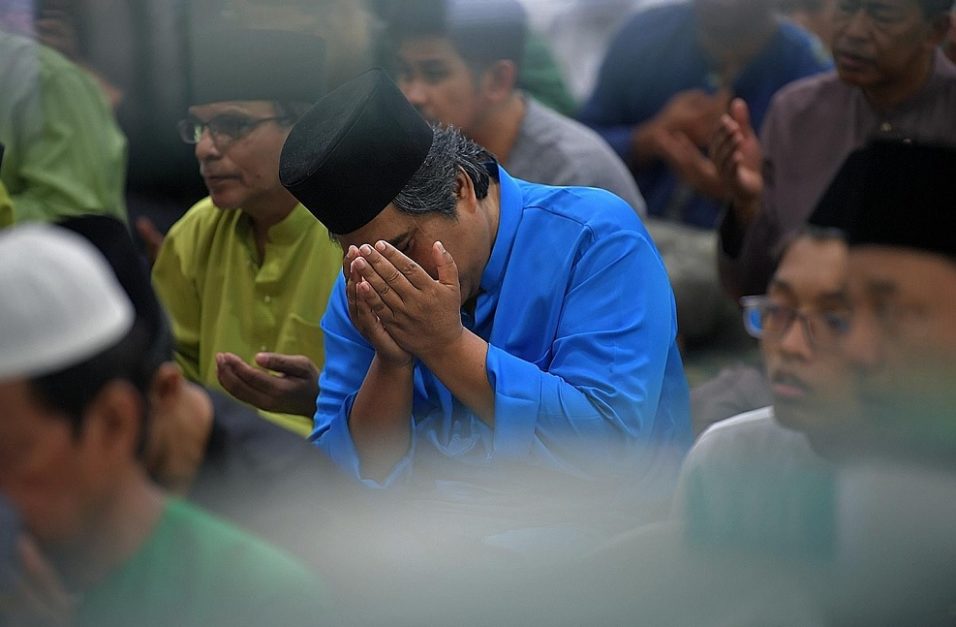
    Do individual Muslims have a special obligation to speak up when radicalised Muslims are in the news for attacks or arrests – such as by condemning the acts or clarifying that Islam is a religion of peace?

    Some non-Muslims in Singapore think so, and it can cause unease among their Muslim friends.

    This discomfort was given voice in Parliament this month, in speeches by two Muslim MPs, in the debate on a motion to strengthen multiracialism in the fight against terror.

    Ms Rahayu Mahzam (Jurong GRC) cited a conversation with a non-Muslim friend about terrorism. She was made to feel defensive and frustrated when he pressed her to say what “true Muslims” were doing to address the problem.

    “I told him, I do not know these people, I do not understand their psyche and it was unfair to put the burden on Muslims alone to resolve this issue,” she said.

    She found a similar situation playing out on social media, noting: “I saw many Facebook postings of Muslim friends condemning the terrorist attacks but also expressing similar frustrations of having to explain to non-Muslim friends that the terrorists’ actions were not aligned with Islamic teachings.”

    Dr Intan Azura Mokhtar (Ang Mo Kio GRC) also warned against “religious suspicion against the Muslims”, adding that “we cannot allow Muslims to feel apologetic for what these terrorist groups – which proclaim to carry out their heinous acts in the name of Islam – have done”.

    It is not that non-Muslims are not allowed to expect anyone from the Muslim community to come out firmly against terrorism or to detail what is being done about the problem within the community. The point here is that they should not expect each and everyone in the Muslim community to have to explain themselves to the satisfaction of any non-Muslim who happens to have doubts on where they stand.

    The fact is, each time someone in the Singaporean Muslim community is implicated in terrorist activity or detained for being radicalised, prominent representatives of the community do issue statements setting out in no uncertain terms the view of the community as a whole. These representatives may be from the Islamic Religious Council of Singapore or other groups, such as the Federation of Indian Muslims, or they may be political leaders who are Muslim. These statements should suffice.

    Non-Muslims should accept them in good faith as being representative of the views of Singaporean Muslims in general – which they are – and not require each individual Muslim they meet in the course of the day to have to prove his or her sincerity afresh.

    Pressing individual Muslims on the issue in person and on social media or requiring them to speak apologetically or to feel apologetic reflects an underlying distrust. It can feel like a slight. It is incumbent on non-Muslims here to be sensitive in their words and actions.

    The reality on the ground is that the Muslim community in Singapore is far more committed to multiculturalism and far less inclined towards the radical ideology of groups like the Islamic State in Iraq and Syria and Al-Qaeda than Muslims in most countries.

    The radicalised segment of Muslims here is very small by proportion. Furthermore, they receive virtually no support from the wider community. There is thus no basis for the kind of scepticism implied by the encounters Ms Rahayu spoke about. (If the radicals in fact receive a lot of latent warmth from ordinary Muslims, then it would be a different story. But that is not the case.)

    What non-Muslims should do, therefore, is: first, understand there is a majority who are distinct from a very small minority, and second, not let that minority colour the way they interact with the majority. But it is possible that the corollary is also true – that Muslims need to approach the issue in a similar way.

    Muslims can see things this way: There is a small minority of non-Muslims who lack prudence in the way they converse with Muslims on the issues of terrorism and radicalism. The broad majority of non-Muslims are not like that – they understand the subtleties or, if not, they are careful not to broach the topic. If this is true, then Muslims too should not allow the actions and words of a minority among non-Muslims to colour their interactions with the majority of non-Muslims.

    In other words, the majority of Muslims and the majority of non-Muslims – who together are the majority of Singapore – instinctively understand, believe in and show respect for multi-religious norms.

    But the two minorities complicate the picture – a Muslim minority who are radicalised, and a non-Muslim minority who are callous or ignorant in the way they speak or act.

    The worst outcome for Singapore is for the two minorities to be allowed to dominate the narrative, thereby dragging the whole of society into an insalubrious atmosphere of suspicion and counter-suspicion.

    The two majorities need to do two things. Each majority must draw a line of principle between itself and its minority, and it must then stand in solidarity with the other majority, so that society stays united.

    In the aftermath of terror attacks in the West, this majority-minority dynamic is often in play.

    In Britain, London and Manchester have reported sharp spikes in the number of anti-Muslim hate crimes after terrorist attacks in the two cities this year – that is, a minority of Muslims conducting attacks on society, and a minority of non-Muslims carrying out just as malignant reprisals on Muslims.

    But when the two majorities defend one another and show solidarity, they can prevail.

    An example of this was the #illridewithyou campaign, a social media campaign in Australia after the Sydney cafe hostage incident in 2014. Non-Muslim Australians offered to ride on public transport with Muslim Australians, to ensure the latter’s safety.

    When the two majorities stand as one, the two minorities are forced back into their dark corners on the fringe of society.

    In Singapore, no physical attack has happened yet, in one direction or the other. But if the country can guard against verbal unpleasantries, like those highlighted in Parliament this month, then there can be more confidence about preventing physical ones too.


    Source: http://www.straitstimes.com (Elgin Toh, Insight Editor)

  • Osman Wok Chose PAP, Angered UMNO, Branded As Infidel

    Osman Wok Chose PAP, Angered UMNO, Branded As Infidel

    Othman Wok suffered many an assassination on his character in his 18 years in politics, standing up for a multi-racial Singapore, where he was denounced by Malay supremacists as an “infidel” and “traitor to the Malay race”.

    He never wavered. But he was threatened repeatedly as an election candidate for the multiracial People’s Action Party (PAP) over the United Malays National Organisation (Umno).

    He received a flurry of death threats in the fractious months leading to independence. One such missive was from an anonymous Malay letter-writer using the nom de plume Anak Singapura in early July 1964: “At this time you are a traitor to the community and religion โ€ฆ if you persist in doing this to the Malays, we dare to sharpen the long parang that you’ve been asking for.”

    That same month, Umno leader Syed Jaafar Albar said in a July 12 speech in Pasir Panjang to thousands of Malays: “If there is unity, no force in this world can trample us down, no force can humiliate us, no force can belittle us… not one Lee Kuan Yew, a thousand Lee Kuan Yewsโ€ฆ we finish them offโ€ฆ kill him, kill him. Othman Wok and Lee Kuan Yew.” Mr Albar’s words were, ironically, published in Utusan, the newspaper where Mr Othman had worked for 17 years.

    Pasir Panjang was Mr Othman’s ward, after he won the nationwide poll there in September 1963. He quit journalism shortly after, when Mr Lee appointed him Minister for Social Affairs, making him the only Malay in Cabinet then. He was, however, not Singapore’s first Malay Cabinet minister, as the late Ahmad Ibrahim had been Minister for Health, and then Labour, between 1959 and 1962.

    Nine days after Mr Albar’s invective, at around 4.30pm on July 21, 1964, Singapore’s worst racial riots erupted. Mr Othman was then leading a PAP contingent in a procession from the Padang to Lorong 12 Geylang, to celebrate the Prophet Muhammad’s birthday. When Chinese and Malays began hurling bottles at one another and punching policemen, Mr Othman led his group to safety within the old Kallang Airport building – and called his comrades in Cabinet to impose a curfew. A total of 23 people were killed, and 454 others injured.

    A week later, a former Utusan colleague admitted to him that he had known the riots would break out – a good two hours before they happened. In Mr Othman’s 2000 biography Never In My Wildest Dreams, he recalled his colleague telling him thus: “We knew beforehand. We have our sources, you know.”

    Mr Othman mused later in Men In White, the 2010 book on the history of the PAP: “I believe the riot was planned; it did not start spontaneously. They were very smart to choose a religious procession so that if we had stopped it, we would be called anti-Muslim. The inflammatory communal and racial speeches made by Malaysian Umno leaders worked up Malay sentiments in Singapore.”

    In the aftermath of the riots, Mr Lee relied heavily on Mr Othman, his old unionist friend whom he found “capable, dedicated and with integrity”, to defuse tensions among all the races here.


    Source: www.straitstime.com

  • Family Remebers Othman Wok As Humble, Kind And Loving

    Family Remebers Othman Wok As Humble, Kind And Loving

    Pioneer Cabinet Minster Mr Othman had been warded at SGH since April 6 for a chest infection and stomach complications.

    Madam Lily, 60, said she usually does the night duty in caring for him.

    “I will read some prayers for him and pat him to sleep before I go off,” she recounted his final hours to The Straits Times on Monday (April 17), after Mr Othman died just after noon. He was 92.

    “We hope that he will always be remembered as part of the Singapore Old Guard and a contributor to the harmony of Singapore,” she added.

    “We tried our best to take care of him to the best of our ability, but I think God knows better, and you know we are quite happy to let him go. He passed away…peacefully, so we are happy with that,” Madam Lily told reporters during the wake for Mr Othman outside the family home in Kew Avenue in Bedok.

    Madam Lily, a housewife, described him as a kind and loving father who was also devoted to his work when he was MP for Pasir Panjang constituency from 1963 to 1981.

    “We know that we are more or less like his second family compared to his political work. We totally got it and we appreciated that as well,” she said with a laugh.

    But he always made time for the family, especially when he returned from his overseas trips as Singapore’s first Minister for Social Affairs, a post he held from 1963 to 1977.

    “Whenever he (came) back from his travels, he (spent) at least one night with us, sharing his overseas stories, souvenirs,” she said.

    One lesson he often drummed into them was the importance of racial harmony as he lived through the 1964 race riots. He also emphasised humility, she said. “You could be the president’s daughter or the king’s daughter, but humility should be your middle name,” she recalled him saying.

    Mr Othman had been in and out of hospital since last November, and his last message to his children was to live peacefully with each other and maintain good relationships with one another, she said.


    Source: www.straitstimes.com

  • Chef Bob Has Amazing Neighbour – Taoist Neighbour Asked Permission To Carry Out Prayers And Burn Incense

    Chef Bob Has Amazing Neighbour – Taoist Neighbour Asked Permission To Carry Out Prayers And Burn Incense

    I am blessed to have the best and amazing neighbour ever!

    Yesterday she asked for my permission: “Eh Ah Bob ah!!! Malam ini gua mau sembahyang lu tau? Gua letak balang-balang depan lumah gua. Gua mau bakar balang. Boleh ah?”

    In English:Ce
    “Bob, tonight I need to do my prayers. I’m placing an altar infront of my house and burn incense. Can?”

    Subhan’Allah.
    She definitely do not need to inform me yet alone ask for my permission to do that but yet she did. I love you lah aunty!!!! ๐Ÿ˜˜๐Ÿ˜˜๐Ÿ˜˜๐Ÿ˜˜๐Ÿ˜˜๐Ÿ˜˜๐Ÿ˜˜. Should I have said cannot, I’ll be the biggest jerk-ass in Pasir Ris. But by now you all already know that yours truly is a lover, not a fighter right? ๐Ÿ˜๐Ÿ˜

    The Prophet Muhammad (peace be upon him) said:
    โ€œIf anyone is pleased to love God and His Messenger or to have God and His Messenger love him, he should speak the truth when he says anything, fulfill his trust when he is put in a position of authority and be a good neighbor.โ€ โ€“ Al-Tirmidhi, Hadith 1289

    So me corazon, be good to your neighbours, to everyone and anyone. No matter if they are good to you or not. We need to be the “bigger” person and show kindness and compassion.
    Love begets love.
    Respect begets respect.
    Hate begets hate.

    One Love. ๐Ÿ˜˜
    #love#compassion#islam#taoist#faith#neighbour#kowtow#prayers#doa#hadith#altar#alterbridge


    Source: Sharizal Salleh

  • Love Thy Neighbour – Neighbour’s Altar Offerings Blown Away, Muslim Bro Puts Them Back In Place

    Love Thy Neighbour – Neighbour’s Altar Offerings Blown Away, Muslim Bro Puts Them Back In Place

    Love Thy Neighbour
    .
    Our neighbour’s altar offerings blown by the wind so my bro pick and arranged them back. We have been neighbours for more than 10 years they have always been so respectful to my mom and late dad
    .
    Faith is a conviction of heart that need to be respected while humanity is a shared value that needs to be cherished
    .
    #zahidzin #ustazceo


    Source: Zahid Zin