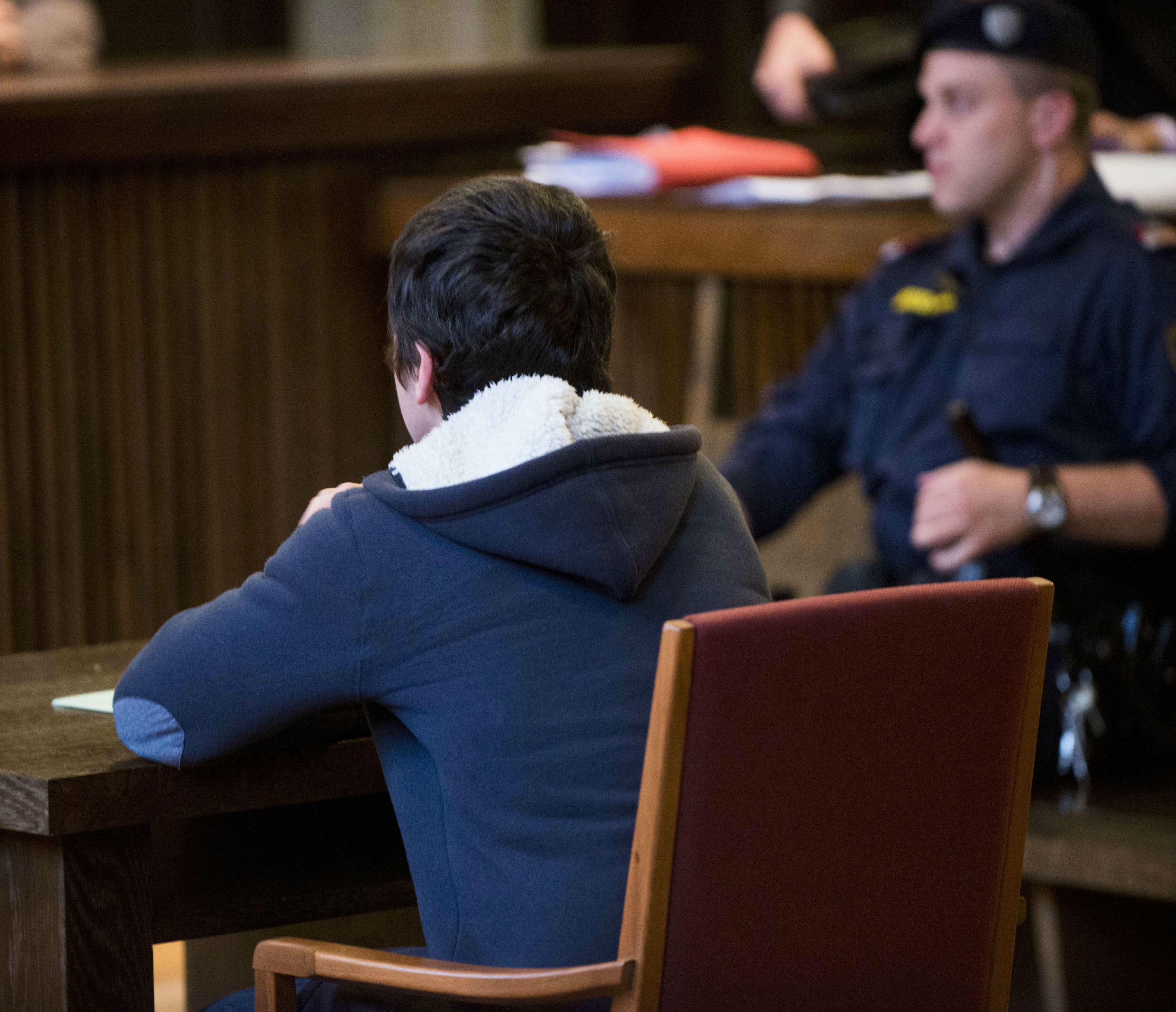
14-year-old boy from Austria who downloaded bomb-making plans onto his Playstation games console was sentenced to a two-year jail term on Tuesday after pleading guilty to terrorism charges, a court spokeswoman said.
As well as researching how to build a bomb, the boy made contact with militants supporting the Islamic State jihadist group in Syria, prosecutors said ahead of the trial. Sixteen months of the sentence were suspended.
AFP Photo
The boy, a Turkish national, will serve what remains of the eight-month custodial term in a juvenile detention centre, the spokeswoman for the regional court in Sankt Poelten said. He had been briefly placed in investigative custody in October on suspicion of terrorism-related activity, before being conditionally released.
AFP Photo
He was detained for a second time in January. He had faced up to five years in jail for supporting a terrorist organisation and planning an attack. Those charges were based on data found on the boy’s Playstation, including bomb-building plans downloaded from the internet, prosecutors said.
More than 200 people have left Austria to fight in the Middle East, some 30 of whom have been killed while around 70 have returned, according to the interior ministry. In a separate case, a court in Vienna on Tuesday acquitted a 16-year-old girl accused of preparing to join a jihadi terrorist organisation, according to a court spokeswoman.
Jasmina Milovanov left her two children with a babysitter earlier this month in Sydney, Australia, saying she was on her way to pick up a new car. She never came back.
Milovanov’s ex-husband said that he received a text message from her on May 3 while he was in Turkey, telling him to return home to Australia and that she was in Syria, reported The Daily Telegraph. The mother is also believed to have written a now-deleted post on Facebook saying that she was in “Sham,” using an Arabic term for Syria.
Milovanov’s mother told Australia’s Network 10 television station that her daughter hadn’t mentioned anything about going to Syria, saying, “I even saw her the week before and she was alright. Probably she is brainwashed. She is so young and naive.”
Milovanov was also friends on Facebook with Zehra Duman, a woman known in Australia to be a recruiter who finds brides for IS extremists,Agence France Presse reported.
Australia’s counterterrorism minister, Michael Keenan, said Tuesday that authorities are currently monitoring the reports of Milovanov’s recruitment and flight.
The disappearance of Milovanov comes as Australia is planning to pass a law that would strip citizenship from people suspected of terrorist activities, even if they are not convicted of any crime. The proposed law would only apply to those who possess dual nationality, so as not to leave anyone completely stateless.
Australia has between 100 to 250 citizens fighting for militant groups in Syria and Iraq, according to a January report from The International Centre for the Study of Radicalisation and Political Violence.
The residents of Wang Kelian sensed something was amiss when a number of people stumbled on to their streets, weak and injured, and began to beg for food and water.
“They would walk into my shop, with injuries covering their hands and feet. Some were just too weak to even speak properly,” said Lyza Ibrahim, who runs a food stall in the town on the northern Malaysian border with Thailand.
“One asked me, ‘[Is this] Malaysia?’ Then he pointed in the other direction, said ‘Thailand’ and shook his head to signal that he was not wanted there.”
Police say some of those graves contain multiple bodies – raising the terrible prospect of hundreds of unexplained deaths. On Tuesday Malaysian authorities began the grim task of exhumation.
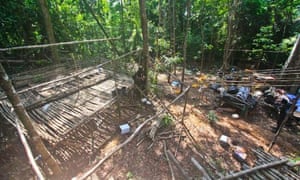
Some of the campsites included wooden pens, some with barbed wire and guarded by sentry posts. In one pen, police found several parts of a decomposed body.
The camps appear to be part of a complex of bases stretching into Thailand on what had been a well-established route smuggling mostly Rohingya people from Burma and Bangladesh.
But the trade has been in chaos since early May, when Thai authorities launched a crackdown after the discovery of mass graves on their side of the border.
Thousands of migrants headed for Thailand started landing elsewhere in south-east Asia. And as the smugglers fled their jungle hideouts, migrants were spotted in Wang Kelian.
Ibrahim said she had seen several migrants, whom she believed to be Rohingya, and heard stories about many others, including that they would go to a nearby mosque to ask for help.
Others echoed her story. Another woman said she had spotted a Bangladeshi migrant wandering in the area and knocking on her neighbour’s door.
“It is very sad. We have been hearing these stories, but we can’t do much,” said the woman, who declined to give her name. “We could only offer food, clean clothes, but we have to call the police and they will be taken away by the police after that.”
Malaysian officials acknowledged the camps had been around for some time but defended themselves against criticism that no action was taken earlier. Authorities had previously vehemently denied there were any such sites in the country.
“We have been building up intelligence and information,” the national police chief, Khalid Abu Bakar, told reporters on Monday, vowing tough action against any Malaysians involved.
“There were stories about these camps that went back nearly 10 years,” Matthew Friedman, the former chief of the UN inter-agency project on human trafficking, told the Guardian. He now heads the Mekong Club, which campaigns against slavery in Asia. “We passed the information on to the local authorities, but there was no follow-up.”
In addition, it said there were questions about the “level of participation” of government officials in Malaysia and Thailand.
Villager Mahyuddin Ahmad said he has seen migrants in Wang Kelian for the past two years but more had been spotted in the past month – the largest group being about 10 people, including women and children.
The 55-year-old businessman, who said he had given food such as instant noodles and clothes to migrants, added: “It is a common sight here. We didn’t suspect anything because we thought they just come from Thailand.
“So we are really shocked to hear what the police revealed yesterday about the grave sites and jungle camps.”
Wakaf (Islamic endowments) in Singapore are typically properties bequeathed for a charitable purpose by a philanthropist. Our pioneering wakifs such as Syed Sharif Omar Ali Aljunied, Syed Mohamed bin Ahmad Alsagoff and many others left behind significant assets that are still benefiting our community today.
We will be sharing with you “info bites” of some of these great philanthropists in the upcoming days. We hope you get to learn more about our forefathers and their contributions to our country.
============================================
Philanthropist #1: Syed Mohamed bin Ahmad Alsagoff
============================================
Born of royal parentage and a respectable Arab clan, Syed Mohamed bin Ahmad Alsagoff engaged in the export of Straits produce and Malayan tin to Arabia and Europe. From his vast assets, Syed Mohamed bequeathed a portion of his estate to Wakaf SMA Alsagoff.
Together with other pioneers, he also set up the Muslimin Trust Fund Association (MTFA) in 1904 to look after the welfare of poor and underprivileged Muslims. In his last will just before his death, he had stated that a school be built to teach Islamic knowledge, Arabic language as well as English for the Muslim community. The school, Madrasah Alsagoff Al-Arabiah was later opened in 1912.
NAYPYIDAW (MYANMAR), Selasa – Etnik muslim Rohingya terus ditekan kumpulan pelampau Buddha dengan terbaru, dihalang menghantar anak ke sekolah, tidak boleh membuat perjalanan di antara kampung ke kampung, dan memulakan perniagaan kecil.
Kerajaan Myanmar memberi tempoh sehingga 31 Mei ini sebagai tarikh akhir kepada warga Rohingya untuk menyerahkan ‘kad putih’ yang diberi sebelum ini.
“Tiada pergerakan bermaksud tiada perniagaan, tidak ada peluang untuk kehidupan yang lebih baik, tiada wang.
“Ia akan menyebabkan keadaan menjadi terdesak dan akan melarikan diri,” kata Shwe Maung, salah seorang daripada dua anggota Parlimen dari etnik Rohingya.
Etnik minoriti Muslim Rohingya juga berdepan dengan undang-undang perancangan keluarga baru yang telah ditandatangani oleh Presiden Thein Sein beberapa hari yang lalu.
Undang-undang baru itu menarik kemarahan beberapa kumpulan hak asasi dan aktivis di seluruh dunia.
“Kami berkongsi kebimbangan bahawa rang undang-undang ini boleh memburukkan lagi perpecahan etnik dan agama,” kata Timbalan Setiausaha Negara Amerika Syarikat, Antony Blin Ken.
Kekejaman pelampau Buddha terhadap muslim Rohingya semakin teruk sejak akhir-akhir ini sehingga memaksa etnik minoriti itu melarikan diri dengan bot kecil, meminta pertolongan dari negara Asia lain.
Penghijrahan terdesak di laut itu telah menyebabkan ratusan mati dan beribu-ribu terkandas, menyebabkan satu krisis pelarian paling teruk di dunia dalam beberapa dekad.
Pelampau Buddha terus menerus menanam kebencian agar memerangi umat Islam Rohingya, yang turut disokong kerajaan kerajaan apartheid Myanmar.
“Mengapa mereka sanggup lari ke laut dengan bot? Mengapa mereka mengambil risiko mati di laut? Kerana kewujudan mereka (pelampau Buddha), dan masa depan yang buruk,” kata Penny Green, Pengarah Inisiatif Jenayah Antarabangsa dari Queen Mary University of London.
Rohingya disenaraikan oleh PBB sebagai etnik paling tertindas di dunia.
Selain berdepan ‘penghapusan etnik’, mereka juga dinafikan hak kewarganegaraan sejak pindaan undang-undang negara itu pada tahun 1982 yang menyebabkan mereka dilabel pendatang haram di negeri sendiri.
Kerajaan Myanmar dan juga majoriti Buddha enggan mengiktiraf istilah “Rohingya”.
Antara 2012 dan 2013, serangan Buddha telah mengakibatkan ratusan muslim Rohingya terbunuh dan 140,000 lagi dipindahkan dari rumah mereka.