Tag: Muslims

  • Hijabrella Girl: Chill And Learn To Love Lah Singaporeans, Don’t Make Snap Judgements

    Hijabrella Girl: Chill And Learn To Love Lah Singaporeans, Don’t Make Snap Judgements

    Give me a moment to quit cringing at the sight of this shot, and let me explain the mix of feelings I am currently harbouring for about 48 hours now. If I could wrap up and summarise (summaries have never been my forté, my ex-boss would know that too well haha) all that’s floating in my head, it would be this:

    I now know how animals on exhibition feel
    (which is sort of a paradox because I am professionally an education facilitator at the Singapore Zoo haha)

    Hold on a sec, I’m not going to go feign humility and go boohoo why expose my kind act like that…but I’ll just say I feel a bit exposed and violated (which is, again, ironic considering how I’m covered up head-to-toe in the picture). Why? Well here are my list of reasons:

    1. People feel like they have the right to decide whether or not she’s my grandmother or some random Chinese lady, just based on their yet-to-mature worldview.
    I have grown up with both sets of grandparents; Malay and Chinese, an opportunity I am immensely grateful for, for 23 years now. My grandparents, whether or not they be Muslim or not, have taught me a great deal of things of how to be a loving Muslim from the way they accepted my parents’ counter-intuitive fate of love. So I don’t get why 1 photo suddenly flushes my family’s beautiful history, of tolerance and patience, down the drain with insensitive comments like “Is the uploader dumb? they don’t look the same“. Dude, that comment hurt like a wrecking ball straight through my heart, just so you know. (so please rot with guilt, whoever shared that same italicised sentiment)
    She is my beloved Nainai, and actually I’ll explain later in this post what’s been up with her.
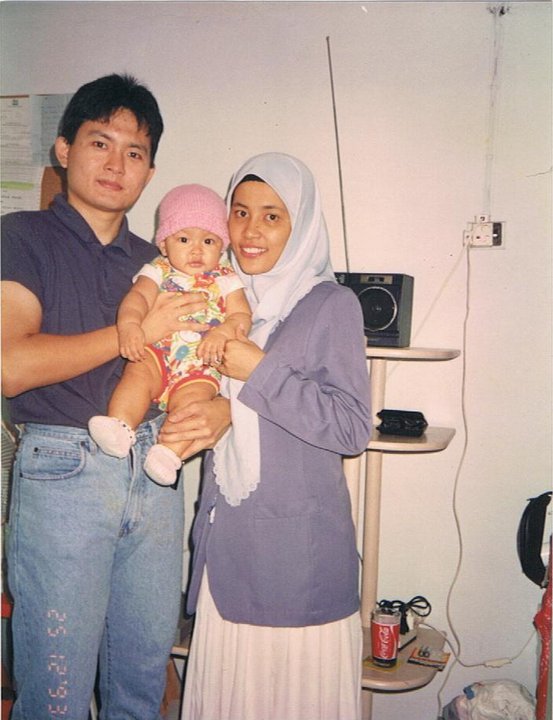
    2. I feel like a tree that’s been peed on by countless number of patrons
    I’m not a person who knows exactly how to deal with being in the limelight (I ran from a number of acapella auditions because I can’t take such stresses haha), and so the past 48 hours was a nightmare for me. Acquaintances, friends from 10 years back, and snarky people have all taken a shot at reposting that picture, and other (funny) articles on my Facebook wall; my Instagram inbox is booming with the same picture over and over, from friends who tell me ‘congratulations‘ and ‘oh its you!‘, and I’m just thinking “why you all acting like I’m the lost child at the Ikea info counter that every person wants to claimmmmm?” (this is in reference to that Barisan Nasional post that claimed I was rakyat Malaysia, i.e. Malaysia’s citizen)
    It was funny the first few times, but dude…..I get it, I went viral. Please stop reminding meeeeee. I feel like hiding in a hole for not knowing how to respond to these recognition posts. Do I say thank you? Do I act all smug about it? Do I vehemently refuse to be mentioned? What?

    3. This is the one that’s got me most unsettled: People suddenly feel like they have the right to judge my intentions
    I’ll link this to a concern of mine, which has to do with my belief; It isn’t right to bathe in glory over a good act; good acts should be done with sincerity and not with ostentation in mind.
    So when someone says I did it to pose for the gahmen, I think I have every right to feel offended and upset that someone is accusing me of doing the dirty, when truth was I didn’t even fathom my picture being taken and spread online. Gosh -_-
    I don’t know why some righteous people take it upon themselves to (un)sanctify my act towards my granny – I didn’t ask you to.

    And beyond all those feelings, is the truth behind the photo that matters. So here it is, for all you heart-shaped sweeties out there, who said this photograph melted your hearts (I’m glad and feel honoured that it warmed your hearts amongst all the hatred that’s been going about <3):

    On that fateful rainy day, I was sending my Nainai to the clinic and having breakfast with her instead of my mother because I wanted to lighten my mother’s burden of travelling on her injured leg, and I honestly just missed my Nainai. Mr Jason Quah was under the block with his professional lens and camera, seeking shelter from the freshly-subsiding rain, when he happened to catch eye of my Nainai and I alighting from the cab. And that’s the truth and history of the current Hijabrella meme.

    My interracial/inter-religious family

    My grandmother (Nainai/奶奶; yes, Mandarin is my Mother Tongue) lives alone with my equally aged grandfather (Yeye/爷爷). They’re both into their late 70’s, and they only have 2 sons, so you could say this side of my family is quite closely knit for the very fact that it’s quite a small family. My mother, the daughter-in-law to my nainai, is more of a hero than I am – she used to send my nainai to her regular doctor and hospital checkups, even with her deteriorating knee condition. We don’t live too far off from (Bukit Batok – West Coast) my grandparents, so we are quite accustomed to being the pillars for them.
    My nainai is a very bubbly and loving soul. Though she isn’t even officially Muslim (yet, fellow Muslims please make du’a for my Nainai who already believes in One God), she threw out her pots and pans, at a time when her family was still considerably poor, to welcome my father’s at-the-time Muslim girlfriend (my now-mother), who had dietary restrictions because of her faith. My nainai and yeye, bless their souls, accepted my mother and my father’s love for the Islamic faith with open arms. My nainai reminds me to perform my obligatory prayers every time I visit her.
    My nainai voluntarily sheds light about basic tenets of the Islamic faith and practices to my brother’s non-Muslim girlfriend (haha a ‘phew’ moment for my parents, who are probably glad they get to skip the hard-talk).
    My nainai used to visit my Malay grandmother every first day of Hari Raya, up till last 2 years when she was hit with Meniere’s Disease.
    My nainai watches Korean dramas and gushes about comedic reality Korean shows. (I love korean drama and reality shows – I actually learn the Korean language academically)
    My nainai is the epitome of what every interracial/inter-religious family needs – and I’m extremely grateful/proud that she is my role model.

    She constantly makes it a point to tell people I’m her grand daughter
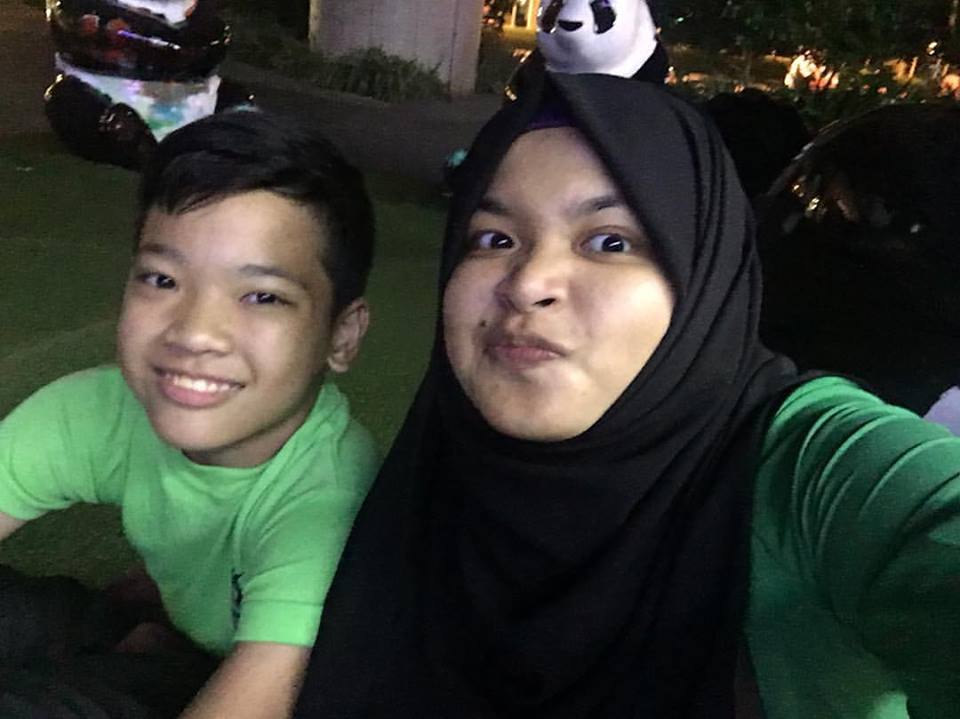
    Let’s face it – you see a Malay/brown woman holding an elderly Chinese/fair lady….what’s the first thing that comes to your mind (especially when you’re Singaporean)? MAID AND EMPLOYER
    Right? Don’t shy 😉 I know it’s true. My lil bro’s wonderfully Thai classmate easily uttered to my brother, one day when I was fetching him from school: “Hey Ihsan, tell your maid to go home and let us play basketball first”. (to be fair, my brother looks very Chinese and I….am a little browned, and the hijab doesn’t help reveal that I’m racially Chinese by law)
    So my Nainai having been aged and becoming increasingly frail, she always holds on to me like her life depends on it, with her walking stick in other hand, just as the (in)famous viral picture depicts. Her equally elderly neighbours would greet her as we make our way to the bus stop, and speak in Hokkien and I would smile because I understand but have trouble keeping up to converse with them in the same dialect.

    My nainai always starts her convos with them with: “Wa eh soon”; which means “this is my grandchild”. 
    And the person’s eyes would change from a look of “haha” to “wait, really?” to “wow” and then followed by a compliment of how pretty I am, and how lucky my Nainai is to have me hold her. (< this is the part that always tugs at my heart strings) HOW CAN YOUNG PEOPLE NOT LOVE OLD PEOPLE RIGHT. THEY ALWAYS HAVE NICE THINGS TO SAY (…..unless, of course, they’re not fed/waiting in line for the doctor/forced to do things the younglings make them do)

    I don’t blame onlookers when they assume I’m her maid, although its always been a concern of my Nainai’s. However, isn’t it sad that this is even still a concern? sigh c’mmon, metropolitan city….live up to your title!
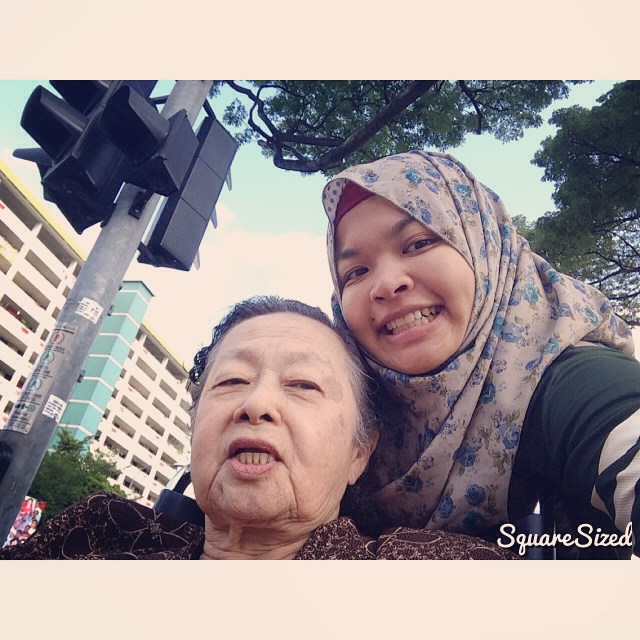
    (this shot was when I pushed her on a wheelchair for the first, and only, time to the dentist last year. She wanted me to specifically say I was her grand daughter and not some social service lady)
    ———-

    A layer beyond all that truth and feelings above is actually my personal purpose in life.
    As a Muslim who blends in the crowd, more often than not, my small efforts can only go so far.
    Call me an opportunist, but I reckon it’s high time I take advantage of this temporary viral phase to point out a few issues, just from my point-of-view, as a racially-mixed Muslim:

    1. Multiple non-Malay Muslims (be they born or converted to Islam) struggle with acceptance from their families, and I’m actually spearheading a few quiet but ground-shaking projects to rectify this issue; and I need all your help.
    Many of them end up homeless because they’re kinda excommunicated from family due to lack of understanding of their change-of-heart; many of them can’t explain why they felt the urge to convert/follow Islam, in spite of the cultural rules society has concretised over many generations.
    I’m not asking to house every Muslim you meet; I’m asking you to merely read up a lil on the basics of what this “Malay-ised” religion (only in this region it seems that way), and dispel all the confusion and misfired aggression toward non-Malay Muslims.
    (I’m coming up with a book related to this, but maybe when it’s out then you guys will see what its all about)

    2. Interracial families are becoming more and more prominent but the stigma persists…especially with the youth *cringe*
    I’ve heard of painful family dramas when racially-opposing couples get together, I’ve experienced the best of beautiful friends’ interracial matrimonial stories, and I’ve also come across the SGAG comments section (ugh). Singapore, we gots a problem – should we not fix it? Especially with the ‘bright-eyed’ youth who make the bulk of mindless keyboard warriors, talking snap about sensitive issues they can’t even wrap their still-yet-to-mature minds around?
    Dear government, maybe you should consider shedding light on interracial families in the future Social Studies syllabi? (just a suggestion!)

    3. The old lack the lovin’.
    Across, from my Nainai’s block, is where her younger brother resides, alone with no wife or children. He is my granduncle (Kukong/姑公), and he suffers from diabetes and deteriorating eyesight.
    He and my grandfather are in their 70’s, they’re still working their butts off to keep the food on the table, but what’s more important is that these old folks, inclusive of their other independently-living neighbours, always seem so sombre.
    I find it quite sad that me just sheltering my Nainai has stirred hearts for the mere fact that it’s rare to find a 3rd gen care for the 1st gen. My Nainai lights up when she hears my usually-busy-with-school cousins come to visit just because they want to see her, and not because they have an errand to run with her. Imagine how much happy this pioneer gen is being deprived of 🙁
    —————

    Again, this post is just me speaking out beyond the virally-shared picture/meme(< sigh)
    How you wish to view this post, is not of my concern 🙂

    May we all learn to love, more than hate, amidst all the terror going on elsewhere in the world. <3
    Thank you, Jason Quah, for causing the spark that lit up a few other issues linked to the Hijabrella shot 😉
    Can’t believe I’m adding this…but: Hey Singapura, Majulah, ok?

    PS: I know how to have fun and I take this whole situation lightly except for the racial ouchies in the comments section (but haters gonn’ hate, right?). My friends are a fun bunch too. Check out the joke of a photoshop attempt, just to show me how much of an MVP they think I am. HAHA:
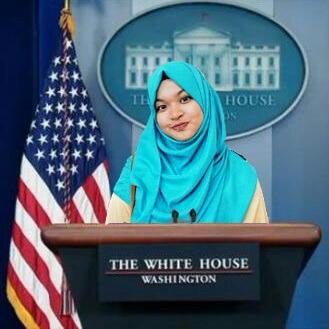
    quote my friend: “A face I can trust”

    Just because people make a heck out of my small hijab-to-umbrella act hahah

    …… learn to chill and lighten up~ #notetoself


    Source: https://rojakgirlthoughts.blogspot.sg

  • Singapura Tidak Boleh Biarkan Serangan Pengganas Pecah Belahkan Negara

    Singapura Tidak Boleh Biarkan Serangan Pengganas Pecah Belahkan Negara

    Keharmonian kaum antara kaum dan agama berbeza adalah prinsip asas bagi Singapura.

    Perdana Menteri Lee Hsien Loong berkata demikian sempena Hari Keharmonian Kaum hari ini (21 Jul).

    Dalam satu catatan Facebook, PM Lee menulis rakyat Singapura harus merai kepelbagaian mereka dan berkongsi adat dan budaya satu sama lain.

    Beliau berkata di banyak negara ada lebih banyak kes orang menolak kepelbagaian.

    PM Lee merujuk kepada serangan pengganas baru-baru ini di Orlando, Amerika Syarikat, Dhaka, Bangladesh, Nice di Perancis dan Puchong di Malaysia.

    Setiap kejadian itu kata beliau sifatkan sebagai menakutkan, didorong kebencian dan menyayat hati.

    Beliau menambah bahawa Singapura harus sentiasa bersatu sebagai satu bangsa, dan tidak membenarkan keadaan sedemikian memisah atau memecahbelahkan negara.

    Sekolah di Singapura memperingati Hari Keharmonian Kaum bagi mengingati rusuhan kaum di Singapura pada 1964.

    Dua rusuhan kaum selama lima hari itu mengakibatkan lebih 30 orang terbunuh dan sekurang-kurangnya 500 cedera.

    Source: http://berita.mediacorp.sg

  • Arabisation Of Islam In Asia: A Clash Within Civilisation

    Arabisation Of Islam In Asia: A Clash Within Civilisation

    The spate of terrorist attacks and the attendant violence witnessed in the last couple of months, including the recent attacks in Dhaka, Kishoreganj and Ektarpur in Bangladesh, and Nice in France, brings home the truth that something perverse is happening within Islam and Muslims alone can fight that scourge.

    Analysts attribute the growth of Islamist radicalism to Muslim grievances about their culture and way of life not being given what they consider their rightful place in their own societies; transnational links with organisations like Al-Qaeda and now an even more dangerous phenomenon called the Islamic State in Iraq and Syria or Daesh; hostility towards the policies of the West, in particular the United States and its support of Israel’s policies towards the Palestinians, the occupation of Iraq and now intervention in Syria; and opposition to crackdowns on domestic militancy like in Bangladesh.

    These factors have, undoubtedly, contributed to a sense of growing alienation and feeling of victimisation and oppression among certain Muslim groups, and to an attempt to redress their grievances and frustrations through violence and terror.

    More importantly, a fundamental transformation is taking place within the Muslim community all over the world – an identity formation based on a world view taken from early Quranic precepts and a code of conduct resembling a way of life that was prevalent in the Arab world in the mediaeval period during the formative stage of Islam.

    This form of identity is premised on an understanding and belief that to be a true Muslim, one has to be different from “others” in every aspect of life and that there cannot be a meeting ground between Islam and other religions. Adaptation to other customs, traditions and cultures in its path towards the expansion of the religion had only led to aberration and corruption of original and pristine ideas of Islam. It is only through the practice of mediaeval Arab traditions and way of life that the evil eyes of other religions can be kept at bay.

    A group of Indonesian women with their children offering morning prayers during Eid al-Fitr celebrations in Tangerang, Jakarta, earlier this month. Since the first Muslims were mostly Arab, everything associated with them has been associated with Islam, even though the vast majority of Muslims today are not Arabs. PHOTO: AGENCE FRANCE-PRESSE


    Such an exclusivist world view may not be the most predominant among the Muslims of the world yet, but is surely gaining slow and steady ground. The external manifestation is the wearing of Middle Eastern clothes by men and women. Strict observance of fundamentalist Islam is also a means of asserting identification with reform and protesting against upper-class corruption in many societies, which might somewhat explain the fundamentalists’ prescription for an austere way of life free from temptations and pleasures.

    Since the first Muslims were mostly Arab, everything associated with them – their culture, names, and family structures – has been associated with Islam, even though the vast majority of Muslims today are not Arabs. The niqab ( face-veil) was rarely seen outside the Arab world until most recently. Most Muslims see the niqab as a by-product of Arab culture. The practice of wearing veils can be traced from a Quranic prescription given at the time of Rasullulah, who saw Arab women wearing veils – not due to any religious motives but rather due to the harsh and dusty desert climate – but leaving their bosoms wide open. He then urged the women “to wear their veils over their bosoms” for modesty, but this was not necessarily a particular dress code. It is only recently that the veil has been interpreted as religiously authentic, instead of a cultural expression, and therefore a must for all Muslim women.

    Arabisation and Islamisation are inseparable parts of a single cultural ideal that now pervades the Arab world. In their drive towards authentication and uniformisation of Islam, the transmitters (Saudi Arabia and other Arabic countries) and the recipients (non-Arab Islamic societies) are equally emphasising “Arabisation” as the norm of the pure and ideal form of Islam to be followed by Muslims all over the world.

    The Hadith, or records of the sayings of Prophet Muhammad, is the basis for the development of notions of syariah (Islamic law) that are heavily influenced by early and mediaeval Arab cultural norms.

    Arabisation poses a threat to all Muslims who believe in Islam’s divine character and universalism, and can be combated only by them.

    It is not a crisis between civilisations as Samuel Huntington noted, but a crisis within civilisation, and it needs to be fought from within.

    Arabisation’s major appeal emanates from Islam’s millenary expectations and the unfounded utopia of a just and prosperous society under Islamic rule. This is also fed by the silence of the moderates in the face of the more vocal minority trying to hijack Islam for their perverted gain.

    Christianity has passed through this phase and the contradictions between the sacred and the profane were resolved by separating the Church from the State during the period of renaissance and reformation.

    If the powerful, modern ideas of “jihadi” Islamism are not met in the marketplace of ideas with an equally vigorous, contemporary articulation of peaceful, syncretic and inclusive Islam, then “the centre of gravity” of public discourse will inevitably slide towards those ideas that appear most powerful and relevant to the modern world.

    The progressive interpretation of Islam developed by the late Nurcholish Madjid and former president Abdurrahman Wahid in Indonesia, Anwar Ibrahim and Dr Chandra Muzaffar in Malaysia, Dr Surin Pitsuwan, the former secretary-general of Asean, in Thailand, and progressive intellectuals from India and Bangladesh, represent a powerful alternative to “jihadi” Islamism.

    The need of the hour for Muslims in Asia is to de-Arabise Islam from its exclusivist mould and promote a more inclusive Islam based on their own indigenous cultures and traditions blending with the universal message of Islam, as was the case in Indonesia, Malaysia, India and Bangladesh in the period before the inroads made by the Islam of the desert.

    There is also an urgent need for the moderates to break their deafening silence against the tyranny of the small minority who are bringing shame and a bad name to the religion, and shed their inertia and fear of being branded as not “good Muslims” by the perverted radical minority.

    In this project, Indonesia and India, the two largest Muslim countries in the world, can make a positive contribution in projecting their composite culture manifested in Borobudur and Prambanan in the former and Ajmer Dargah Sharif and Fatehpur Sikri in the latter.

    • The writer, Baladas Ghoshal, is secretary-general of the Society for Indian Ocean Studies based in New Delhi, India.


    Source: www.straitstimes.com

  • New Faith, New Lives

    New Faith, New Lives

    When train captain Muhammad Joy Kumar Paul turned 25 in May, he celebrated by converting to Islam.

    The ceremony was held at the Muslim Converts’ Association (MCAS) and witnessed by his closest friends and fiancee’s family. That same day, he attended his first Friday prayers as a Muslim at Assyakirin Mosque, near his home in Taman Jurong.

    Mr Muhammad was brought up in a Buddhist family, but growing up with Malay friends, he knew “how a Muslim behaves, what they are supposed to do and what they do not do”.

    Still, he never expected to become a Muslim until he met Ms Syuhaidah Sha’ada, a 24-year-old pre-school teacher.

    The couple got engaged in June but it was not an easy decision. They had a serious talk about their relationship in the long term and considered breaking up.

    On his own accord, however, he researched and watched videos by Islamic scholars online, as well as talked to Muslim friends, to learn more about the religion.

    Mr Muhammad lives with his mother, who is divorced, and elder sister. Both felt it was his decision to make. He also attended beginner courses at MCAS last year.

    Every year, about 600 people convert to Islam at the three-storey building located in Onan Road in Joo Chiat.

    Also known as Darul Arqam Singapore, the one-stop centre for converts was set up in 1980 to oversee the welfare, religious guidance and problems of new converts.

    All prospective converts are encouraged to take up basic courses on Islam. Mr Muhammad went through Ramadan as a Muslim for the first time this year. The ninth month of the Islamic lunar calendar, Ramadan is a holy period of fasting, reflection, devotion, generosity and sacrifice observed by Muslims around the world.

    While there have been challenges, he has been touched by the support of his loved ones.

    His mother, a Buddhist, cooks the food he wants to eat and made sure there was food in the morning when he woke up to break fast during Ramadan. She buys meat and produce that is certified halal for his sake.

    Like Mr Muhammad, Ms Rachel Aryssa Chung, 39, converted to Islam two months ago. The customer insight and communications manager at a gas company found fasting during Ramadan to be particularly challenging.

    “What’s more, coffee is not recommended because it dehydrates the body but I don’t function well without coffee. I always tell my colleagues I’m not human until I have my coffee,” she said, laughing.

    Divorced for 10 years, Ms Chung has two daughters. She has been dating a Muslim for a year and is still learning about her new faith.

    It was her own decision to convert. She said of her new faith: “I feel that it’s a very comprehensive and disciplined faith. How you should treat other people, how you should behave as a person. We’re encouraged to pray five times a day. When you do things like that, I feel that it changes you as a person.”


    Source: The Straits Times

  • Is My Intolerance Of Your Intolerance, Intolerant?

    Is My Intolerance Of Your Intolerance, Intolerant?

    Imagine the scene: a small group of opinion writers from major newspapers in the United States sit in a meeting room in Riyadh with robed and keffiyeh-wearing officials from Saudi Arabia’s Ministry of Education. The subject is intolerance. As a syndicated columnist and editorial writer, I am among those journalists. Our questions focus on textbooks used to educate millions of Saudi children in public schools.

    Why, we ask, are the books so full of intolerance toward people of other faiths? They reek of degrading and insulting descriptions of Christians, Jews, and anyone who doesn’t subscribe to the Saudis’ strict brand of Islam. The textbooks condone—nay encourage—violence against people of other faiths, claiming it is necessary to protect the integrity of Wahhabism. We ask: Aren’t you planting seeds of hate and setting up the conditions for young people to be more easily recruited by terrorist organizations?

    Relevant questions. The year was 2002.

    We’d heard a lot of Orwellian thinking during that trip to the King­dom of the House of Saud. Veiling women is a form of freedom. Mossad was behind the events of September 11, 2001. Islam is a religion of peace. But what we heard at the education ministry was right up there on the delusion-meter.

    We were the intolerant ones, they said. Our impertinent questions were proof. How dare we question their cultural and religious traditions? Any suggestion that their textbooks smacked of bigotry was an affront to their sovereignty and a form of religious intolerance.

    We were being intolerant of their intolerance.

    You can see how this distorted view can happen in a theocratic monarchy such as Saudi Arabia’s. The Saudis have a lot riding on trying to convince the West to keep quiet about the ugly attitudes and backward rules that shape their country—a system built around religious pronouncements that women are less than men in law, commerce, and the domestic sphere and that anyone non-Muslim is worthy of persecution and, in many cases, death.

    You would think that the best Saudi Arabia could hope for would be to keep its head down while asking the West to ignore its peculiar institutions. But that’s not Saudi Arabia’s MO. With preachy sanctimony, the Saudis proclaim that any criticism of their system violates international norms of human rights.

    Last year, at an international summit in France, Saudi Arabia lashed out at the media and countries that value free speech for allowing religious criticism, according to the Saudi Gazette. “We have made it clear that freedom of expression without limits or restrictions would lead to violation and abuse of religious and ideological rights,” said Abdulmajeed Al-Omari, director for external relations at the Ministry of Islamic Affairs. “This requires everyone to intensify efforts to criminalize insulting heavenly religions, prophets, holy books, religious symbols, and places of worship.”

    This from a country that doesn’t allow Christmas trees, teaches the Protocols of the Elders of Zion as historical fact, and in 2005 sentenced a schoolteacher to 750 lashes and three and a half years in prison for praising Jews and discussing the Gospels. (The teacher was pardoned after protests.)

    In Saudi Arabia today, atheism is legally designated as terrorism. Earlier this year, a man who tweeted on atheism was sentenced to ten years in prison and two thousand lashes. The Center for Inquiry (CFI) has been advocating on behalf of Saudi poet Ashraf Fayadh, who was sentenced to death in 2015 for apostasy, then resentenced on appeal earlier this year to eight years in prison and eight hundred lashes. CFI sent a letter to President Barack Obama to urge him to push for Fayadh’s release during his visit to Saudi Arabia in April. And CFI has been drawing international attention to the case of imprisoned Saudi human rights activist Raif Badawi, sentenced to ten years and one thousand lashes for insulting Islam. The charges stemmed from articles Badawi wrote criticizing religious figures on his website devoted to free expression of ideas.

    When, in 2014, CFI representative Josephine Macintosh spoke before the United Nation’s Human Rights Council, drawing attention to the desert kingdom’s brutal and repressive treatment of religious dissenters in general and of Badawi in particular, the representative from Saudi Arabia interrupted Macintosh three times. This attempt to shut down Macintosh’s critique was unsuccessful after other member states, including the United States, Ireland, Canada, and France, expressed their support for the right of Macintosh, CFI, and other nongovernmental organizations to speak.

    And the Saudis claim we are the human rights violators.

    This pity party would be a party of one were it not for a borderline-pathological alliance some on the political Left have made with this way of thinking. Bizarrely, a subset of progressives has bought into the idea that any criticism of the tenets of Islam is an attack on Muslim people. The two are not the same, of course. Discriminatory ideas found in the Qur’an and practiced as part of Sharia law—such as that women’s testimony is worth only half that of men’s—should be open to criticism. And the critic is not a bigot for saying so.

    Perhaps the most famous example of this conflation was the attack on Sam Harris by actor Ben Affleck on Bill Maher’s HBO show Real Time. Affleck’s apoplectic reaction to Harris’s criticisms of Islam as “gross and racist” reinforced the point of the conversation, which was that the Left cares about women’s equality and homo­sexual rights except when Islamists are the ones oppressing women and gays—then the oppression is excused out of hyper-cultural sensitivity.

    Consider what happened last De­cem­ber to the courageous feminist crusader and Islamic critic Maryam Namazie. During Namazie’s talk on blasphemy and apostasy at Goldsmiths University in the United Kingdom, a group of young men from the school’s Islamic Society entered the room with the intention of making it impossible for her to continue. They laughed, heckled, and generally disrupted the talk, at one point turning off her projector when a slide depicting a cartoon of the Prophet Muhammad was shown.

    Rather than defend Namazie, the Goldsmiths Feminist Society issued a statement standing “in solidarity” with the Islamic Society and condemning the student group of atheists, secularists, and humanists who invited Namazie to their campus. “Hosting known islamophobes [sic] at our university creates a climate of hatred,” the statement read.

    I’d like to take these Goldsmiths feminists on a tour of Saudi Arabia to see what they are fighting for. The gleaming office towers of that country don’t have ladies’ rooms. There’s no need, since women are not permitted to work alongside men.

    Blasphemy laws are the legal extension of this Goldsmiths no-one-should-ever-be-offended attitude. Used as tools of repression to keep the faithful in line, minority faiths small and quiet, and nonbelievers in the closet, blasphemy laws are a menace to enlightenment values. CFI is helping to lead the international effort to vanquish them.

    Defenders of Islam’s untenable dictates on women, gays, atheists, and members of other faiths have only one arrow in their quiver, which is to try and silence their critics because they have no valid responses to them. As much as they would like to convince us that our intolerance of their intolerance is a form of cultural hegemony, we’re not buying it.


    Robyn E. Blumner is the CEO of the Center for Inquiry and the CEO and president of the Richard Dawkins Foundation for Reason & Science. She was a nationally syndicated columnist and editorial writer for the Tampa Bay Times (formerly the St. Petersburg Times) for sixteen years.


    Source: www.secularhumanism.org