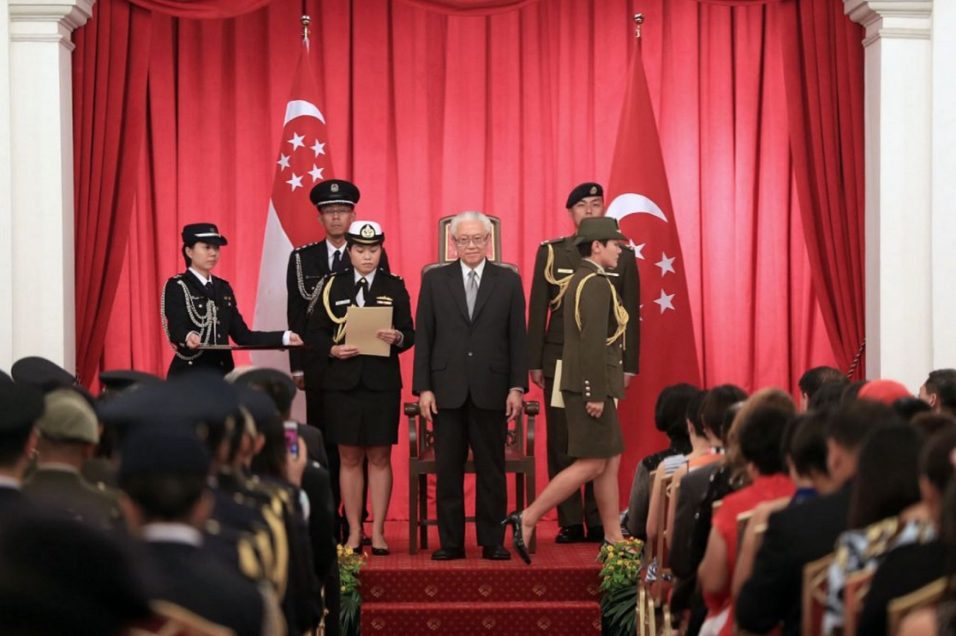
Tag: PE

  • Issues That Need To Be Addressed Fast Before The Formal PE 2017 Process Begins

    Issues That Need To Be Addressed Fast Before The Formal PE 2017 Process Begins

    PE 2017 by Former MP Inderjit Singh

    In less than 2 months, Singaporeans will get a new elected President. Unlike the past Presidential Elections (PE), the run up to this year’s PE has not been a smooth sailing one. Parliament passed a new ruling allowing for a Reserved Election. While many have questioned the wisdom of a reserved PE, Parliament has passed the law and this is our current system of how we will select our future Presidents.
    As the Head of State, the President must have the respect of all Singaporeans once he or she is elected (or appointed as in the past). After the new President has been elected in the reserved PE in September this year, I hope all Singaporeans will give that elected person the respect the office of the President of Singapore deserves.
    Many of us are saddened with the recent developments and comments from different quarters of society but I hope that we can put all these differences behind us. Once the new President is elected, we should all unite behind that person and focus on uniting the nation so that the respect accrued to the office of the President remains intact.
    To help that process, I feel that the following issues need to be addressed fast before we go into the formal PE 2017 process:

    1. For the purposes of effecting a reserved election, it is important to establish who our first elected president was Some feel that it is Mr Ong Teng Cheong. He was the first person who was formally elected to the office of President. Before him though, Mr Wee Kim Wee had exercised the powers of the elected president during his term, which was when the constitutional changes were made to allow for Singapore to have an elected President. The court will be deciding on this very soon, but I feel the policy makers could have avoided this question all together by paying more attention to this issue – the constitution could have said that the 5th election should be a reserved election and not the 6th. Nevertheless, once the courts decide, we have to move on.

    2. The concept of “Malayness” has also become a debatable issue. Questions about how Mendaki and SINDA classify who is a Malay and who is an Indian do not seem to be aligned with how a Malay or an Indian is defined for the purposes of a GE or a PE. For now, it is critical that the leaders of the Malay community and the government come out and make this position clear and hopefully this position will apply to all aspects of life in Singapore. I hope this can be resolved before the formal process of PE 2017 starts.

    3. This being the 1st ever reserved PE, many hope to see qualified Malays step forward and give Singaporeans an opportunity to choose their President. It is also very important that Singaporeans and the rest of the world see that we have enough qualified Malays in Singapore who meet the very stringent requirements set in the constitution. It will be a pity if we don’t have enough qualified candidates to choose from for the first ever reserved PE. So, I hope all those who meet the criteria, come forward for this wider call.

    4. While the constitution is open about having a current sitting government politician standing for the PE, some Singaporeans have expressed concerns on the prospects of a current government MP, still in parliament, resigning as an MP and immediately standing for the PE. The spirit of the Elected President is independence of office as intended by Mr Lee Kuan Yew when the idea was mooted. While I have no question about how each person will do his or her duty to serve the office they are elected to serve, public perception is also important. While Mr Ong Teng Cheong also did the same in 1993, I sense people are increasingly uncomfortable with this.

    As the Head of State, the President of Singapore holds the highest office and he or she must get the full respect of all Singaporeans. I hope the above issues are addressed before PE 2017 kicks off formally. It is good that Singaporeans are debating the issue of the reserved PE. My hope is that we can largely come to an understanding of the above 4 issues before we kick off PE 2017. And once our President has been elected, let’s all show respect for the President of Singapore and stand united as Singaporeans.


    Source: Inderjit Singh
  • Cannot Tell If Someone Is Malay? This Is Your Definitive List Of A Melayu

    Cannot Tell If Someone Is Malay? This Is Your Definitive List Of A Melayu

    So the Presidential election is coming around and suddenly everyone wants to be Melayu. Well, unfortunately this is not really up to you and me. There’s a committee appointed by the Elections Department that decides if someone is Melayu. It is not an easy job.

    So far the candidates not Melayu true blood siol. Not Acehnese, Bugisnese, Boyanese, Javanese Malay. More Pakistan and Indian blood. The only Malay thing is they are Muslims and can speak Malay, in the case of Salleh Marican, not very well.

    So we have come up with this totally serious and not-stereotypical list of traits that make a genuine Melayu:

    1. The Melayu is very musical. Fact: Singapore Idols – all Melayu. They know all the lyrics to the evergreen rock love ballad, Isabella. Even better if they can play the guitar and play percussions.

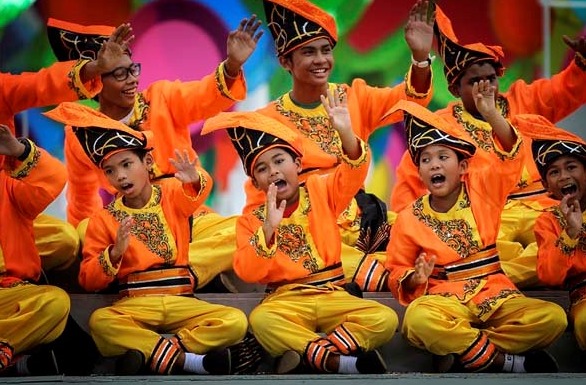
    2. Speaking of percussions….A Melayu must know how to dikir barat because lets face it, all Melayu students pernah perform dikir barat for Hari Raya concert in school kan?
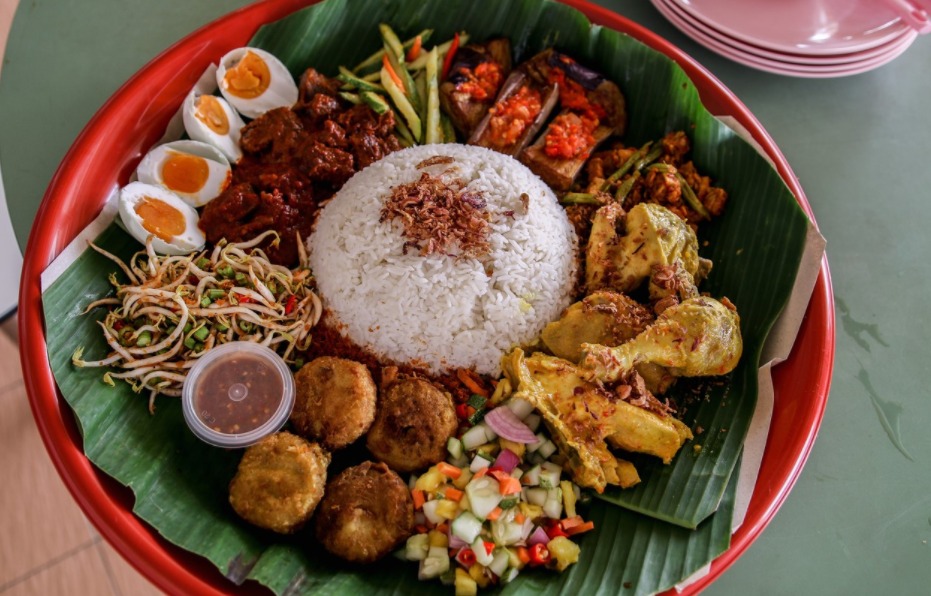
    3. A Melayu loves his makan. Maybe a little too much. Nasi Ambeng is their favourite food. Not Nasi Briyani. When they become President, don’t forget the Nasi Ambeng. All state dinners at the Istana will be Nasi Ambeng hidang.
    4. After eating all that Nasi Ambeng, what do they do? Of course lepak with their friends at the void deck. This is quality time. Where bonds of friendship are forged. Until the police come and chase them away from the void deck.
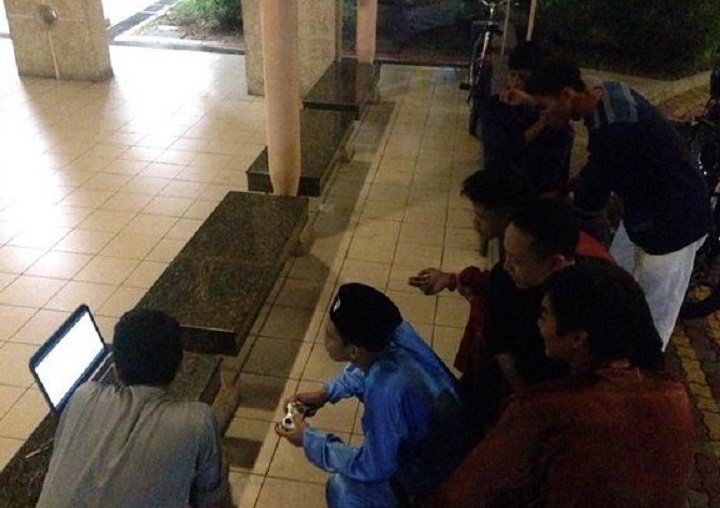
    5. So what to do. Find another place to #rilek1corner. Because chilling is life lah bro.

    Do you see the corner?

    So there we have it. So between Halimah Yacob, Salleh Marican and Farid Khan, who is the most Melayu?


    Rilek1Corner

    DISCLAIMER: This article is meant to inject some humour into your Tuesday. Don’t take it seriously. Seriously.

  • How Can Indian-Muslim Halimah Yacob Run For EP Reserved For Malay Community?

    How Can Indian-Muslim Halimah Yacob Run For EP Reserved For Malay Community?

    Yesterday (1 Jun), ST published a news report stating that PAP MP and Speaker of Parliament, Halimah Yacob, is widely considered a front runner for the forthcoming Presidential Election.

    It will be the first election reserved for candidates from the Malay community, following a recent review of the constitution.

    According to the amended Singapore Constituion Section 19B, the Presidential Election will be reserved for a community if none of its members has held office of President for 5 or more consecutive terms.

    “19B (1) An election for the office of President is reserved for a community if no person belonging to that community has held the office of President for any of the 5 most recent terms of office of the President.”

    Sub-Section (6) defines a community:

    “(6) In this Article, “community” means —
    (a) the Chinese community;
    (b) the Malay community; or
    (c) the Indian or other minority communities;

    ‘person belonging to the Chinese community’ means any person who considers himself to be a member of the Chinese community and who is generally accepted as a member of the Chinese community by that community;
    ‘person belonging to the Malay community’ means any person, whether of the Malay race or otherwise, who considers himself to be a member of the Malay community and who is generally accepted as a member of the Malay community by that community;
    ‘person belonging to the Indian or other minority communities’ means any person of Indian origin who considers himself to be a member of the Indian community and who is generally accepted as a member of the Indian community by that community, or any person who belongs to any minority community other than the Malay or Indian community;”

    Now, notice that in the case of Malay community, there is an addition clause added – “whether of the Malay race or otherwise”.

    In other words, you don’t have to be a person of Malay race to be considered part of the Malay community. Persons of other race can also be considered part of the Malay community, presumably as long as he or she is a Muslim.

    Halimah is an Indian Muslim

    Take Mdm Halimah for example, she is actually not a Malay as her father is of Indian origin.

    This was disclosed in an ST article in 2013 when Halimah was selected to be the new Speaker of Parliament after the former one, Michael Palmer, resigned from politics due to his marital affair with a PA woman.
    ST did a write-up to feature Halimah (‘A strong advocate for workers, women and minorities‘, Jan 2013):

    In the article, it mentioned: “Her (Halimah’s) Indian-Muslim father was a watchman who died when she was eight years old.”

    In fact, news of Halimah becoming Singapore’s first woman speaker also made its way to India. The Hindu described her as an “Indian-origin politician” (‘Indian-origin politician to be Singapore’s first woman speaker‘):

    So, what all this means is that in the coming Presidential Election which is reserved for the Malay community, a non-Malay person who is a Muslim can also contest.

    If Halimah, an Indian Muslim qualifies as part of the Malay community, then a Chinese Muslim, for example, can qualify too.


    Source: Facebook


    Source: www.theindependent.sg

  • Singapore’s New Malay President Will Only Be Known In September

    Singapore’s New Malay President Will Only Be Known In September

    If contested, the next Presidential Election, which has been reserved for Malay candidates, will be held in September rather than in August, which is when voting typically takes place. Minister in the Prime Minister’s Office, Chan Chun Sing, announced this in Parliament during the second reading of the Presidential Elections (Amendment) Bill. The date revision does not require changes to the law. The Government is announcing changes early for transparency and so that prospective candidates can be aware of the changes.

    In his speech, Mr Chan provided the reason for the shift in timing. He said voting for a new president has typically been held in the last week of August, to ensure the process falls within the term of the sitting President, which ends on Aug 31.

    In 2011 for example, the Writ of Election was issued in the first week of August. Mr Chan said campaigning began shortly after National Day, and coincided with the month-long National Day celebrations. The revised timing would ensure the election is not held during the celebrations.

    For the upcoming election, Mr Chan said the government will issue a Writ in the later part of August, before President Tony Tan’s term expires. The shift of the election from August to September will also “reset the clock” so that future elections will take place outside the National Day period.

    Mr Chan said the Constitution allows for an acting President to assume office from the end of the incumbent President’s term until a new President assumes office.

    “If a new President is not elected by the time President Tony Tan’s term expires on Aug 31… the Constitution provides for the Chairman of the Council of Presidential Advisers or, if he is unavailable, the Speaker, to be the acting President. The acting President cannot exercise the functions of the President indefinitely,” he said.

    Mr Chan said current laws allow for changes to the timing of the polls to be made in time for this year’s Presidential election.

    The shift in timing will also cater to the longer time period required to assess prospective candidates as part of legislative changes.

    Under proposed changes to the Act, the deadline for prospective candidates to apply for a certificate of eligibility (COE) will be extended to five days after the Writ is issued. This is up from the current three days. This will give candidates more time to prepare their applications.

    Another change being proposed is that nomination day be held at least 10 days after the day the Writ is issued, up from the current five days.


    Source: www.channelnewsasia.com

  • The Next President, Hopefully Female, Likely Malay, Will Be Served By An All-Men Council Of Advisers

    The Next President, Hopefully Female, Likely Malay, Will Be Served By An All-Men Council Of Advisers

    In 1991, Parliament passed a Bill to amend the Constitution of Singapore to change Singapore’s presidency to an Elected Presidency.

    The Elected President (EP) was given new discretionary powers to safeguard Singapore’s past reserves and to appoint key personnel in government organisations.

    One of the less prominent aspects of turning the President’s office into an elected office in 1991 was the creation of the Council of Presidential Advisers (CPA).

    What does the CPA do?

    Currently comprising of six members and two alternate members, the CPA’s role is to advise EP, particularly regarding the use of his/her discretionary veto powers.

    Following the recent legislation in November to amend the Constitution regarding the EP, there will be eight members of the CPA in future.

    As the CPA is unelected, its powers to act is constrained. For instance, it does not have the power to block the EP.

    The chairman of the CPA also plays an additional role as Acting President whenever the EP is unavailable.

    When current President Tony Tan was away on a State Visit to Japan recently (Nov. 28 to Dec. 6), the current CPA chairman, J Y Pillay, stood in for Tan as Acting President.

    As Acting President, Pillay hosted Myanmar State Counsellor Aung San Suu Kyi when she came to Singapore on a three-day visit in late November.

    In the event that the both the EP and CPA chairman are unavailable, the Speaker of Parliament stands in as Acting President.

    How is the CPA formed?

    The eight members of the CPA are appointed in the following ways:

    – EP nominates three members.
    – Prime Minister (PM) nominates three members.
    – Chief Justice (CJ) nominates one member
    – Chairman of the Public Service Commission (PSC) nominates one member

    CPA members are initially appointed on a six-year term, and are eligible to be re-appointed on subsequent six-year terms.

    Under the Constitution, a CPA member must:
    a) be a Singapore citizen who is at least 35 years old;
    b) be resident in Singapore; and
    c) not be subject to certain disqualifications.

    Powers of CPA were recently strengthened

    Besides the increase in the number of members in the CPA, the powers of the CPA have also been strengthened.

    The next EP would be required to consult the CPA before exercising his/her discretion in respect of all fiscal matters touching on Singapore’s reserves and all public service appointments.

    This is not the case at present.

    The EP’s decision would be subject to Parliamentary override (by simple majority) where he acts against the CPA’s advice.

    However, if the EP was to act with the support of an absolute majority of the CPA, Parliament should not be able to override the President’s decision.


    Source: http://mothership.sg