Tag: Rakhine

  • Not Welcomed, U.N. Investigator To Assess Human Rights Across Myanmar Barred Before Visit

    Not Welcomed, U.N. Investigator To Assess Human Rights Across Myanmar Barred Before Visit

    GENEVA (Reuters) – The U.N. independent investigator into human rights in Myanmar called on Wednesday for stronger international pressure to be exerted on Myanmar’s military commanders after being barred from visiting the country for the rest of her tenure.

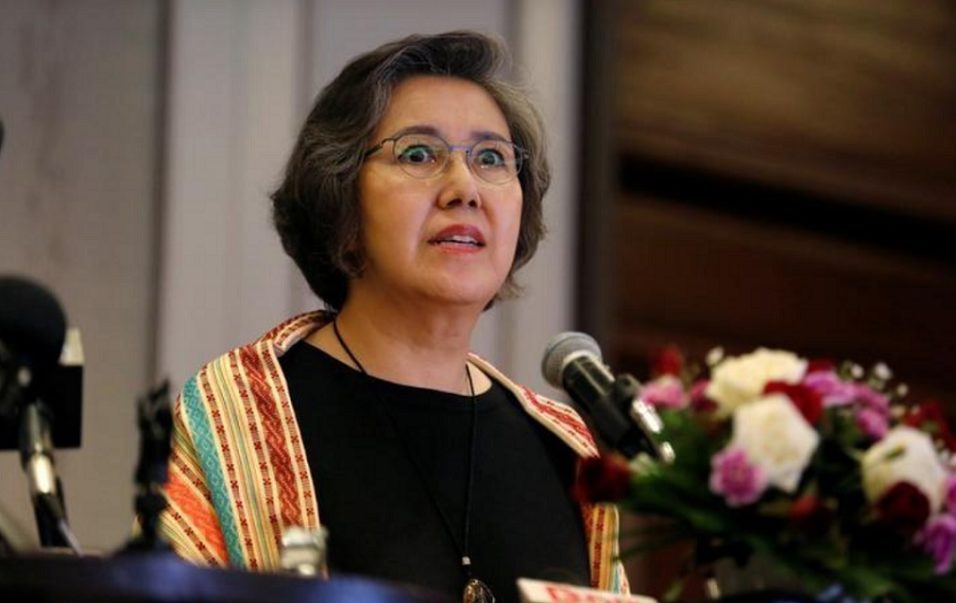
    Yanghee Lee, U.N. special rapporteur, had been due to visit in January to assess human rights across Myanmar, including alleged abuses against Rohingya Muslims in Rakhine State.

    But Myanmar had told her she was no longer welcome, she said, adding in a statement that this suggested something “terribly awful” was happening in the country.

    “From what I see right now I’m not sure if they are feeling pressured. I’m not sure if there is the right kind of pressure placed on the military commanders and the generals,” she later told Reuters by phone from Seoul.

    She said it was alarming that Myanmar was strongly supported by China, which has a veto at the U.N.’s top table in New York. Other countries including the United States and human groups were advocating targeted sanctions on the military, she said.

    “It has to work. And I’m sure the world has to find a way to make it work. And I think the United Nations and its member states should really try to persuade China to really act towards the protection of human rights,” she said.

    More than 650,000 Rohingya have fled into Bangladesh since Aug. 25, when attacks by Muslim insurgents on the Myanmar security forces triggered a response by the army and Buddhist vigilantes.

    Surveys of Rohingya refugees in Bangladesh by aid agency Medecins Sans Frontieres have shown at least 6,700 Rohingya were killed in Rakhine state in the month after violence flared up on Aug 25, MSF said last week.

    The U.N. High Commissioner for Human Rights Zeid Ra‘ad al-Hussein has called the violence “a textbook example of ethnic cleansing” and said he would not be surprised if a court eventually ruled that genocide had taken place.

    Lee had planned to use her visit to find out procedures for the return of Rohingya refugees, and to investigate increased fighting in the Kachin and northern Shan areas of Myanmar.

    Lee, in an earlier statement, said Myanmar’s refusal to cooperate with her was a strong indication that there must be “something terribly awful happening” throughout the country, although the government had repeatedly denied any violations of human rights.

    “They have said that they have nothing to hide, but their lack of cooperation with my mandate and the fact-finding mission suggests otherwise,” she said.

    She was “puzzled and disappointed”, since Myanmar’s Ambassador in Geneva Htin Lynn had told the U.N. Human Rights Council only two weeks ago that it would continue to cooperate.

    “Now I am being told that this decision to no longer cooperate with me is based on the statement I made after I visited the country in July,” she said.

    Lynn did not respond to a request for comment. Neither Zaw Htay, spokesman for Myanmar’s de facto leader Aung San Suu Kyi, nor Kyaw Moe Tun, a spokesman for the ministry of foreign affairs that Suu Kyi heads, were immediately available.


    Source: uk.reuters.com
  • Asean No Longer Able To Handle Rohingya Issue, Says KL

    Asean No Longer Able To Handle Rohingya Issue, Says KL

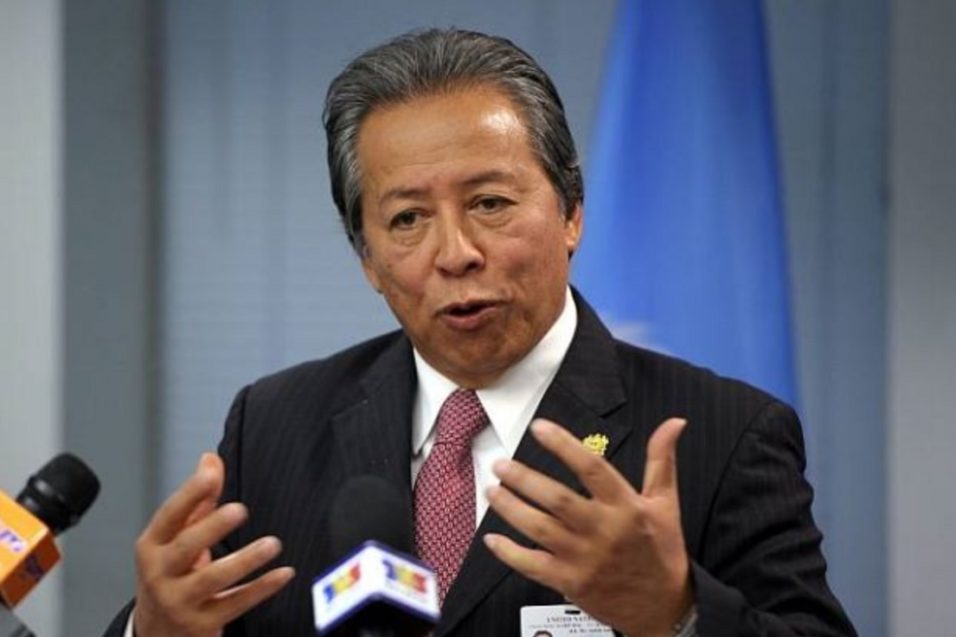
    Asean is no longer able to handle the issue of Rohingya persecution in Myanmar, said Malaysian Foreign Minister Anifah Aman.

    “I think Asean can no longer handle this issue. Within Asean, I have given up hope. We had seven meetings, and Malaysia had expressed our concerns to Myanmar and they (Myanmar) promised to address the concern.

    “Until today, nothing has been done. Therefore, Malaysia may raise it at other levels, like the United Nations and OIC (Organisation of Islamic Cooperation),” he said on Wednesday when asked to comment if Malaysia would bring up the issue of the continuing violence against the Rohingya at this month’s United Nations General Assembly.

    The Foreign Ministry on Tuesday summoned Myanmar envoy U Sein Oo to express Malaysia’s displeasure over the latest violence in Rakhine state. In a statement that day, Mr Anifah was quoted as saying that Malaysia was gravely concerned over the “sustained violence and discrimination” against the Rohingya in Myanmar.

    Some 164,000 mostly Rohingya refugees have now crossed into Bangladesh in the last fortnight to escape fighting between militants and Myanmar’s military, the United Nations said yesterday.

    The latest data means more than a quarter of a million Rohingya Muslims have fled Myanmar since fighting first broke out last October.

    Those flocking into Bangladesh have brought with them harrowing testimony of murder, rape and widespread arson at the hands of Myanmar’s army. Myanmar’s government, led by Nobel Peace Prize laureate Aung San Suu Kyi, has, however, rejected allegations of atrocities, accusing the international media, non-governmental organisations and the UN of fabrications.

    Ms Suu Kyi on Wednesday blamed “terrorists” for “a huge iceberg of misinformation” on the strife in the north-western state of Rakhine but made no mention of the Rohingya who have fled. Yesterday, she repeated that her government was doing its best to protect everyone in Rakhine.


    Source: http://www.straitstimes.com/

  • Tutu: If The Political Price Of Your Ascension To The Highest Office In Myanmar Is Your Silence, The Price Is Surely Too Steep

    Tutu: If The Political Price Of Your Ascension To The Highest Office In Myanmar Is Your Silence, The Price Is Surely Too Steep

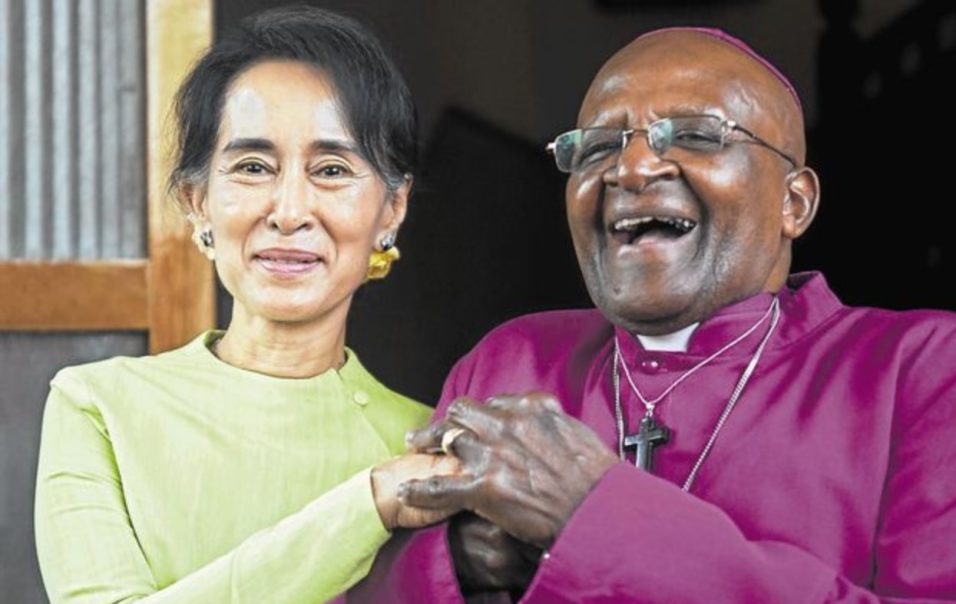
    South Africa’s outspoken Archbishop Desmond Tutu on Thursday (Sep 7) castigated Aung San Suu Kyi over the Myanmar government’s treatment of its Rohingya Muslims and urged her to intervene in the crisis.

    The United Nations on Thursday said that nearly 164,000 Rohingya have escaped to Bangladesh over the past two weeks in the wake of a massive security sweep and alleged atrocities by the country’s security forces and Buddhist mobs against the Rohingya.

    Aung San Suu Kyi, feted for her years of peaceful opposition to Myanmar’s military rulers, has been urged to speak up for the Rohingya, with Muslim nations and the UN leading condemnation of her government.

    Tutu, who helped dismantle apartheid in South Africa and became the moral voice of the nation, joined in the condemnation.

    “If the political price of your ascension to the highest office in Myanmar is your silence, the price is surely too steep,” Tutu said in a statement.

    “It is incongruous for a symbol of righteousness to lead such a country; it is adding to our pain,” he said noting that “the images we are seeing of the suffering of the Rohingya fill us with pain and dread.”

    “As we witness the unfolding horror we pray for you to be courageous and resilient again … for you to speak out for justice, human rights and the unity of your people,” said Tutu.

    Witnesses in Myanmar’s Rakhine state say entire villages have been burned to the ground since Rohingya militants launched a series of coordinated attacks on Aug 25, prompting a military-led crackdown.


    Source: http://www.channelnewsasia.com

  • Myanmar Arrests Buddhist Monks Accused Of Targeting Muslims

    Myanmar Arrests Buddhist Monks Accused Of Targeting Muslims

    Myanmar police have arrested two hardline Buddhist nationalists and are seeking several more after they clashed with Muslims in the country’s commercial capital Yangon, underscoring the authorities’ growing concern over rising religious tensions.

    The arrests came after nationalists led by the Patriotic Monks Union (PMU) raided flats on Tuesday in a Yangon district with a large Muslim population, igniting scuffles that were only broken up when police fired shots into the air.

    Two weeks ago, the same people had forced the closure of two Muslim schools.

    “We have arrested two people since yesterday evening, and are still looking for the rest of them,” said Police Major Khin Maung Oo, in charge the police station in Yangon’s Mingalar Taung Nyunt district, where this week’s clashes took place.

    The 13-month-old administration of Aung San Suu Kyi had made tentative moves against nationalist hardliners, but the arrests mark a significant step-up in the government’s efforts, highlighting official concerns over a potential outbreak of violence in the country’s main city, which has a substantial Muslim population.

    Tensions between majority Buddhists and Myanmar’s Muslim minority have simmered since scores were killed and tens of thousands displaced in intercommunal clashes accompanying the onset of the country’s democratic transition in 2012 and 2013.

    Mutual distrust has deepened since October, when attacks by Rohingya Muslim insurgents in northwestern Rakhine state provoked a massive military counter-offensive, causing about 75,000 Rohingya to flee across the border to Bangladesh.

    Brigadier-General Mya Win, the commander of Yangon’s regional police security command, said extra security forces had been deployed and the police were on high alert to prevent communal violence.

    “We are patrolling around Muslim areas and have taken security measures around places of worship,” he told Reuters news agency.

    Leaders of the PMU said they were acting independently of the Ma Ba Tha, a larger hardline Buddhist and anti-Muslim organisation that counts among its leaders the firebrand monk Wirathu, who once called himself “Myanmar’s Bin Laden.”

    Ma Ba Tha holds its nationwide congress in Yangon – a city of more than five million that has been a focus of foreign investment since a former military government ceded power in 2012 – in two weeks and is expecting about 10,000 monks to attend.

    Targeting Muslims

    In both incidents, PMU monks and lay sympathisers targeted Muslim areas after attending a trial of fellow nationalists facing charges of inciting violence during a protest in front of the United States embassy in Yangon last year.

    “We didn’t want any confrontation with the nationalists so we allowed them to shut down our schools,” said Tin Shwe, the chairman of the Muslim schools, referring to an incident on April 28.

    Tin Shwe, and a lawmaker from the ruling National League for Democracy, said the nationalists came to the schools with local administrators and policemen.

    On Tuesday the group – again accompanied by local authorities and police – searched a building in a different part of Yangon shortly before midnight, claiming some Rohingya Muslims were staying there illegally.

    Local residents confronted the nationalists, gathered in front of the building, prompting police officers to fire warning shots to break up the crowd.

    A Yangon court issued the arrest warrant against seven people, including two monks, charging them with inciting communal violence, which carries a penalty of up to two years in prison.

    At a news conference on Tuesday, organised shortly before the arrest warrants were issued, the nationalists vowed to keep fighting Muslim influence in the country, citing government reluctance to “protect race and religion” in Myanmar.

    “We are protecting our people because government authorities are reluctant to do that. Even though many people hate us, we are not creating problems,” U Thuseikta, a monk and a senior official of the PMU, told reporters.

    Tin Shwe, the Muslim community leader, said: “We want to get equal treatment and be protected by the government – we voted for them with our hands.”


    Source: www.aljazeera.com

  • Anti-Rohingya Protests Greet Malaysia Rohingya Aid Ship

    Anti-Rohingya Protests Greet Malaysia Rohingya Aid Ship

    A Malaysian ship carrying aid for thousands of Rohingya Muslims who have fled a bloody army crackdown arrived in Yangon Thursday, where it was met by nationalist protesters.

    Health workers and activists crowded onto the deck of the Nautical Aliya as it docked at Thilawa port near Myanmar’s commercial capital carrying food, medical aid and clothing.

    Myanmar’s social welfare minister was among a delegation meeting the ship, which has been at the centre of a rare diplomatic spat with fellow ASEAN member Malaysia.

    Outside the docking area, dozens of Buddhist monks and demonstrators waited waving national flags and signs reading: “No Rohingya.”

    “We want to let them know that we have no Rohingya here,” a Buddhist monk named Thuseitta, from the Yangon chapter of the Patriotic Myanmar Monks Union, told AFP at the docks.

    Myanmar denies citizenship to the million-strong Rohingya, despite many of them living on its soil for generations.

    Buddhist nationalist groups are especially strong in their vitriol, rejecting them as illegal immigrants from Bangladesh.

    Hundreds of Rohingya are thought to have been killed in a brutal campaign launched by security forces in October, which the United Nations says may amount to ethnic cleansing.

    Tens of thousands have fled to neighbouring Bangladesh, bringing harrowing tales of murder and rape.

    Myanmar’s treatment of the Rohingya has sparked criticism from Muslim-majority Malaysia, in a rare spat between Southeast Asian neighbours.

    Myanmar initially refused to allow the ship into its waters and has barred it from sailing to Rakhine’s state capital Sittwe.

    Part of the aid will instead be unloaded in Yangon and transported overland to the north of Rakhine state, site of the military crackdown.

    The rest will be taken to Teknaf port in southern Bangladesh, where almost 70,000 Rohingya have fled since October to escape the violence.

    The government has also demanded that the aid be distributed to both Rohingya and Buddhist ethnic Rakhines.

    The delivery comes days after a blistering report from the UN accused Myanmar’s security forces of carrying out a campaign of rape, torture and mass killings against the Rohingya.

    Based on interviews with hundreds of escapees in Bangladesh, investigators said the military’s “calculated policy of terror” very likely amounted to ethnic cleansing.

    For months Myanmar has dismissed similar testimony gathered by foreign media and rights groups as “fake news” and curtailed access to the region.

    The UN’s top official on preventing genocide, Adama Dieng, said this week that a government commission tasked with investigating allegations of abuse was “not a credible option”.

    Critics have rejected the state-appointed body, which is led by retired general and Vice President Myint Swe and includes no Muslims, as toothless and biased.

    In a meeting on Wednesday Myint Swe admitted that “among the facts and accusations included in the (UN) report, there may be something special to be investigated,” state media reported.

    Source: https://sg.news.yahoo.com