Tag: Science

  • Madrasah Wak Tanjong Student Becomes 2-Time Valedictorian

    Madrasah Wak Tanjong Student Becomes 2-Time Valedictorian

    Valedictorian Nisha Mohd Rafiq, who will graduate with a PhD in Biological Sciences from NUS and King’s College London on 9 July, has been interested in science since she was young.

    At fourteen years of age, the avid reader established a Science Club in her secondary school — Madrasah Wak Tanjong — so that she could gather like-minded individuals for discussions about science. Generous with her time and knowledge, Nisha conducted extra lessons and practical sessions in the laboratory for her peers in Secondary Four. Upon completion of her O Levels, Nisha studied biomedical science at Temasek Polytechnic and as part of her course, served as an intern with a research institute. The experience inculcated in her a deep passion for scientific research, so much so that as an undergraduate, the NUS Life Sciences major would seek every opportunity to work in the laboratories during school vacations.

    Nisha is the inaugural PhD student for the four-year PhD programme jointly offered by NUS and King’s College London under the NUS Research Scholarship. As part of her graduate degree, Nisha conducted research on the mechanical signalling in podosomes. Podosomes, which are found in cells such as immune cells, break through barriers, allowing cells to move to a new location. The study of podosomes appealed to Nisha as cancer cells also had structures similar to podosomes, and she hoped that the study of the latter would provide some insight into the migration of cancer cells.

    Speaking of what drives her, Nisha said, “In science research, more than 90 per cent of your experiments are likely to fail, but there is always this excitement and promise about uncovering something new or totally unexpected. And this really motivates me to pursue science.”

    nisha_rafiq-2.jpg

    For her PhD degree, Nisha carried out research on mechanical signalling in podosomes

    In June 2016, Nisha served as the co-chair of the Gordon Research Seminar meeting on “Signalling by Adhesion Receptors”. These two-day meetings, which take place before the Gordon Research Conference, provide post-doctoral fellows and students with the opportunity to meet with established professors in their respective fields. The week-long Conferences are intensive affairs, with sessions starting at 7.30am and ending around 11.00pm daily. Earlier this year, Nisha gave two talks on fibronectin, integrins and related molecules at a Gordon Research Conference held in California, US.

    During her PhD candidature, Nisha also co-authored four research papers in peer-reviewed international journals, including Nature Communications and The Journal of Cell Biology. In spite of her busy schedule, Nisha makes time for the Women in Science Initiative at Mechanobiology Institute, Singapore (MBI) where she is currently a Research Associate. The Initiative seeks to encourage more girls to pursue science through interactive platforms such as talks and visits.

    The two-time valedictorian — the first time being upon completion of her undergraduate degree — had this to share with aspiring researchers, “They should know that they will keep failing.” Nisha opines that success is achieved when a researcher, with minimal supervision, is able to shed light in a particular field.

    Upon graduation, Nisha will continue working at MBI till the end of the year, after which she will seek a post-doctoral fellowship position in either Europe or the US. Her heart remains rooted to Singapore though, and she sees herself returning in the future to work on issues that the country faces, such as an ageing population.


    Source: NUS

  • Science Backs Islam’s Logic Of Eating Halal Meat Instead Of Haram

    Science Backs Islam’s Logic Of Eating Halal Meat Instead Of Haram

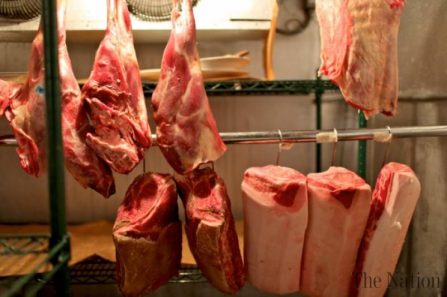
    Islam, considered to be the perfect religion, has always provided reasons for the dos and don’ts in its properties. Just as science backs Islam’s logic of declaring pig haram and how praying 5 times a day helps a person stay healthier, there is also a specious logic behind eating halal meat (where the animal is slaughtered) instead of chopping its head off directly, which makes it haram.

    Source: thenation.com

    Source: thenation.com

    Muslims all over the world abstain from eating meat that has been slaughtered in a haram manner, or through mechanical slaughter. Here’s how science backs the logic with proper reasoning.

    WHAT MAKES MEAT HALAL OR HARAM?

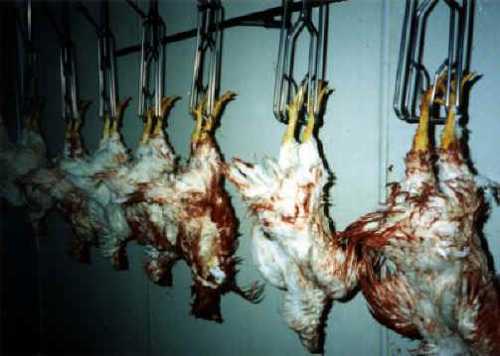
    Haram slaughter

    Source: Muslimvillage.com

    The blood that does not drain out of the animal’s body, contaminated the meat completely, be it in a chicken, cow or a goat. This clotted blood ruins the freshness of the meat and becomes the cause for multiple illnesses when the humans eat it.

    The butchers, who slaughter the animal in a haram way, which is also known as the ‘Jhatka’ – chop the head off the animal completely, especially a chicken. This results in discretion of the brain and heart; which makes the heart stops pumping and beating blood in a jiffy. With no driving force left to push the blood out of the body, the blood stagnates in the veins and arteries, contaminating the blood and causing it to affect the meat.

    Science proves that blood is the most capable medium of bacterial growth. This contaminated meat makes the human body more vulnerable to infections and considerable pain in the joints, due to the rising uric acid level in the blood.

    WHY MUSLIMS PREFER HALAL MEAT AND ITS PROPER WAY

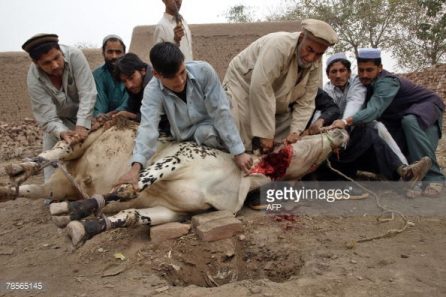
    Halal slaughter

    Source: gettyimages.com

    Muslim butchers who serve Halal meat do not chop the animals head off. Instead, the main jugular vein of the animal is cut, which holds the venous blood in high pressure. Due to the cut, the blood is directed out of the animal’s body, which is connected to the atrium of the heart without any irregularity.

    This method of slaughtering the animal preserves the link between heart and brain of the animal, allowing the animal to breathe out naturally. With this method, the heart keeps pumping until all the blood from the body is drained out and only meat is left, without any contamination, leaving the meat pure and Halal.

    THE FAMOUS QUESTION OF WHY FISH IS CONSIDERED HALAL WITHOUT BEING SLAUGHTERED

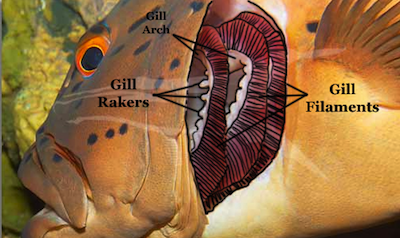
    Epiglottis of fish

    Source: shmoop.com

    Many non-Muslims have asked this question, that why the fish has been declared Halal without being slaughtered. The answer too, lies in science.

    Allah Almighty created everything in perfect balance. The moment the fish is taken out of the water, the entire blood of the fish redirects and moves into a part called the epiglottis, which is in its mouth – draining the blood from the whole body and leaving the meat pure and Halal.

    Thus, Science too backs Islam’s logic of heating Halal meat instead of Haram.

    BY: S.K PAKISTAN


    Source: Parhlo

  • Singapore Students Score Big In International Maths And Science Competition

    Singapore Students Score Big In International Maths And Science Competition

    Students from Singapore have performed well at International Olympiads for Biology, Chemistry, Mathematics, Informatics and Physics in the months of July and August, the Ministry of Education (MOE) announced on Tuesday (Aug 11).

    In the 28th International Young Physicists’ Tournament, the Singapore team clinched first place in a field of 27 countries – making them champions for the third year in a row. Koh Jin Ming from NUS High School of Mathematics and Science (HSMS), together with Shen Yu Jun, Lee Yu Tse, Wittmann Goh Ghin Fong and Lim Jun Heng from Raffles Institution (RI) represented Singapore in the tournament held in Nakhon Ratchasima, Thailand, from Jun 27 to Jul 4.

    The Singapore team won three gold medals and one silver medal at the 26th International Biology Olympiad, placing third overall out of 60 countries. Daniel Tan Chee Hian from Hwa Chong Institution, and Fong En Lei Samuel and Cheng Jia Geng from RI won the gold, while Theophila Toh Ying Lin from NUS HSMS won the silver. The competition was held in Aarhus, Denmark, from Jul 12 to 19.

    At the 47th International Chemistry Olympiad, Singapore placed eighth overall in a field of 75 countries, winning one gold medal and three silver medals. Li Bingjian from RI won the gold, while the silvers went to Kee Jing Yee from NUS HSMS, Kang Yi Cheng from RI and Lim Song Jie, Bram from Hwa Chong Institution. The Olympiad was held in Baku, Azerbaijan, from Jul 20 to 29.

    For the 56th International Mathematical Olympiad held in Chiang Mai, Thailand from Jul 4 to 16, Singapore was placed 10th overall out of 104 countries. The team won one gold medal, four silver medals and one bronze medal in the competition: RI’s Sheldon Kieren Tan won the gold; Lin Kewei David, Ma Zhao Yu and Tan Siah Yong from RI, together with Dylan Toh Shan Hong from the NUS HSMS won the silver; and the bronze went to Liu Yijia from RI.

    Singapore also placed 10th overall in the 46th International Physics Olympiad held in Mumbai India from Jul 5 to 12, out of a total of 83 countries. Chua Yee Shuen Darren from RI (Junior College) scored the only gold, while the four silver medals went to Garett Tok Ern Liang, Joel Tan Shi Quan and Joshua Lim Yong Kiat from NUS HSMS and Peter Yuen Ho Hin from RI (Junior College).

    In the International Olympiad in Informatics held in Almaty, Kazakhstan from Jul 26 to Aug 2, Singapore won one silver and three bronze medals, placing 27th overall out of 83 countries. The silver went to Teo Por Loong, Jacob from NUS HSMS; while the bronze medals went to Howe Choong Yin from NUS HSMS, and Feng Jiahai and Pang Wen Yuen from RI.

    The participation of students in these international science and mathematics and science competitions is a joint effort between MOE and DSO National Laboratories; Institute of Physics, Singapore; Singapore National Institute of Chemistry; Singapore Institute of Biology; Singapore Mathematical Society; National University of Singapore; and National Institute of Education, Nanyang Technological University, said the ministry.


    Source: www.channelnewsasia.com

  • Rote Learning Is Not The Way To Learn Science

    Rote Learning Is Not The Way To Learn Science

    From ‘Only one right answer to science questions?’23 Feb 2015, article by Amelia Teng and Pearl Lee, ST

    EXPLAIN how the hard, bony body of a seahorse could be an advantage. The right answer, according to one Primary 6 science teacher, is: “It protects the seahorse from injury and reduces the chances of predators successfully feeding on it.”

    But the child who wrote “It acts as an armour that protects the seahorse from predators” was told that her answer was wrong. This was one of several examples thrown up by parents, who have complained recently that primary school science teachers are too rigid in marking open-ended questions, and are emphasising rote learning over the understanding of concepts.

    This, despite schools having shifted to an inquiry-based learning approach in science since 2008. With the approach, pupils are encouraged to ask questions, analyse data and come to their own conclusions.

    Several parents wrote to The Straits Times Forum page earlier this month, calling for schools to be more flexible. Most said their children were unduly penalised for answers that had the same meaning as the correct ones, but did not contain the right “key words”.

    The children had been told by teachers to stick to key phrases and words found in textbooks, in order to get full marks in assignments or tests.

    Here’s another Primary 3 head-scratcher for you:

    What is the difference between a bird and a lion?

    If you said the ‘bird has feathers but the lion does not’, you’re wrong. You’re also wrong if you said ‘The bird can fly but the lion can’t’, ‘birds evolved from flying dinosaurs but not lions’, or even ‘birds poop on cars but lions poop on the ground’ (assuming the question involves you staring at a picture of a bird and a lion). The correct answer, according to a parent complaining to the ST Forum earlier this month (‘Good science=Poor English’, Feb 5 2015) is ‘The bird has feathers but the lion does NOT HAVE FEATHERS’, which basically means the same damn thing as your original answer, except annoyingly repetitive. (Well if you want to be even more specific: a bird has feathers but a lion has fur, not feathers).

    Clearly, the student knows what he’s talking about, that a lion does not have feathers, but the science teacher here doesn’t give a hoot about your ‘understanding’ if it does not fit into the template answer scheme, even if the same statement in a composition about bird and lions would make your English teacher squirm in her seat, and accuse you of trying to make up the 500 word quota with redundancies. The parent summed it up perfectly in his letter: “Is there rigidity in the teaching of science? It would certainly appear so (that there is rigidity in the teaching of science)”. Take that, Rigidity!

    Not convinced that teachers can be anal about science answers? Here’s another puzzler on animals.

    You could be thinking of the following possible answers:

    1) Both the bull and the lion give birth to their young
    2) Both the bull and lion poop and pee
    3) Both the bull and lion can kill you
    4) Both the bull and lion are mammals

    ALL OF THE ABOVE ARE WRONG. (The answers are ‘4 legs’, ‘have hair’, or ‘similar body shape’ i.e something you can actually see from the illustration). The thing that you should be staring hard at isn’t the actual drawing, but the phrase ‘STUDY the animals BELOW’. Gotcha.

    Let’s up the ante with a dreaded multiple choice question about the properties of a light bulb.

    Now read the last option carefully before you make your choice. If you chose ‘all of the above’, you are interpreting D as ‘the bulb lights up only when electricity passes through it’. If you chose ‘A, B and C’ you read it as ‘light energy is the only energy that is given off when electricity passes through it’. The correct answer happens to be the latter. Answer D, in the spirit of the other animal questions, happens to be the grammatical equivalent of the rabbit/duck gestalt optical illusion. Given the ambiguity of this shitty question, no student should be penalised for seeing a rabbit when the answer scheme says duck.

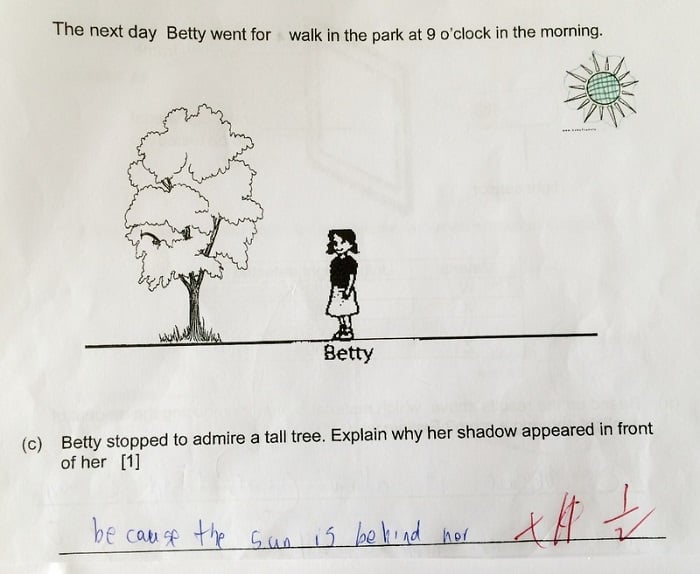
    Do you know how a shadow is formed? Here’s one student’s answer to a puzzle that has tickled the intellect of many an ancient Greek philosopher.

    The complete answer is ‘Because the sun is behind her and she is blocking the path of the light’. You know what this obsession with ‘complete’ answers will do to our kids? They’ll never be able to complete their paper on time because they’d want to add details like ‘because light travels in straight lines and Betty is an opaque human being and she will generate a penumbra and umbra depending on the angle and intensity of the sunlight’. Just to play safe. Except that some teachers will still mark you wrong for ‘trying to be clever’ when penumbrae and umbrae are not taught until you’re in secondary school. If you mention anything about photons or the particle-wave duality you may be suspended from school altogether.

    But back to the seahorse question. If I were grading the student I’ll not only let it go, I would also give her BONUS marks for using her imagination and drawing a figurative analogy between ‘hard skin’ and ‘armour’. By our school standards, this paper published in the rather obscure ‘Acta Biomaterialia’ journal is pure BULL. Its title?Highly deformable bones: Unusual deformation mechanisms of seahorse armor(Porter et al).

    All this nitpicking over ‘key words’ will not only kill our children’s love for science, but also restricts how individuals grasp concepts, punishing those who, well, ‘think outside the box’. A student who sees beyond 4 legs and digs deeper into the taxonomic characteristics of mammals vs birds is given zero marks vs another who memorises ‘key words’ because his tuition teacher said so. Flowery language, like ‘armour’, is not ‘scientific’ and has no place in a science paper, they say. Well try describing DNA to laymen without ‘unscientific’ analogies like zippers and enzyme/cell receptor interactions without using ‘lock and key’.

    Final question: What’s the difference between a robot and a typical Singaporean Science student?

    Answer: The robot needs electricity to recharge but the student does not need electricity to recharge.


    Source: http://everythingalsocomplain.com