Tag: Singapore

  • Why Are Fewer Women Interested In Singapore Politics Than Men?

    Why Are Fewer Women Interested In Singapore Politics Than Men?

    In the month of August, I’ve been writing mainly about politics and reduced the frequency of my other type of content like personal development and travel significantly. This was due to our upcoming elections on 11 September 2015.

    Traditionally, I track my reader’s demographic by looking at the breakdown of the Facebook followers I have. Last month, I started using Google Analytics instead of the built-in analytics platform on blogger. This gave me a better insight into the type of readers I was getting.

    I checked my Google Analytics recently and found some unexpected results after focusing on politics primarily for a month.

    What disturbed me was that the proportion of female readers I had fell significantly. Previously the ratio was about 50:50 (based on my follower count on Facebook). Now, female readers only constitute 35.8 percent!

    I used to think that I had fewer female commenters because they were less vocal and didn’t like confrontation in general. However, numbers don’t lie I guess.

    Jeraldine-Blog-Stats-Gender


    I did some research about this phenomenon and realized that in general, women are less aware about political issues and active. This is the case even for rich and developed countries in the world.

    Professor James Curran, Director of the Goldsmiths Leverhulme Media Research Centre at University of London, carried out a research by interviewing 10,000 people across 10 countries – Australia, Canada, Colombia, Greece, Italy, Japan, South Korea, Norway, the UK and the US.

    The survey contained 8 questions and in every country, men scored better than women in their own country. British men scored an average of 5.8 correct answers out of eight on subjects such as the name of the United Nations secretary general, the national unemployment rate and what job Vladimir Putin did. Their female counterparts failed the test scoring 3.9/8 on average.

    Researchers report that besides having lesser knowledge, women are also more disconnected from the political process; inclined to say they are not interested in politics and more inclined to say politics are complicated and difficult to understand,” reported the researchers.

    Here is why:

    1) The lack of female representation

    First of all, men are more likely to be encouraged to take part in political activity than women. Ananalysis of primetime TV news coverage found it was “heavily weighted towards male sources”, with women interviewed and cited in fewer than a third (30%) of news stories.

    Instead, women were interviewed for topics such as “family, lifestyle and culture”.

    According to co-author of the research above, Kaori Hayashi, gaps in exposure to media are related to the gaps of knowledge between men and women.

    “Such under-representation and topical bias of women in news media may curb women’s motivation to acquire political knowledge actively, and discourage them from political participation, and even prevent women from engaging as citizens in a democratic society,” he said.

    Curran agreed with him saying that “Politics is projected as a man’s world and that encourages a sense of disconnection…It’s enormously off-putting for women to be looking at the news as always being about men,”

    This situation is worsened by the fact that women are always super underrepresented in governments across the world.

    Looking at the candidates for General Elections, I can’t help but notice there are so few women representatives when we constitute 50 percent of the population.

    For the Worker’s Party candidate list, I could only find four women out of 25 candidates. The Singapore Democratic Party has only three women out of 11 candidates. Reform party has 0 female candidates out of 6.  PAP’s numbers are no better as well though I’ve noticed they try to have one female representative in every GRC. Then again, they have more people and more resources.

    Singaporean female politicians have differing views. According to Sim Ann, “in politics, women get it a lot worse than men… Names heaped on women are nastier”. I definitely agree with her because of what poor Tin Peiling had to go through in 2011. =(

    SPP’s Jeannette Chong believes this is could also be due to “ruling party’s focus on co-opting military men and reliance on old boy’s networks is limiting the space in the front bench for equally capable women who do not come from those backgrounds.”

    Either way, I really hope to see more women contesting in the next elections!
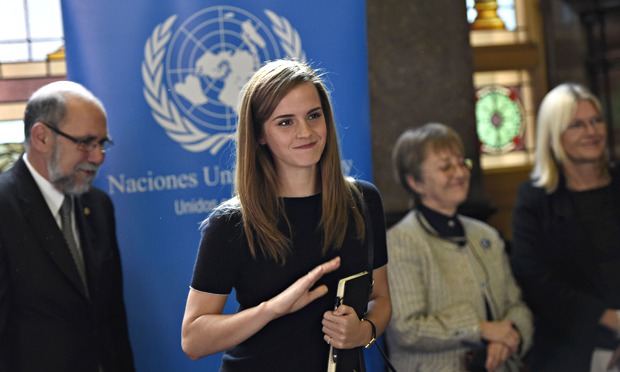
     

    Emma Watson a good role celebrity model who focuses on doing well at school and championing causes like environmental protection and women’s rights.


    2) Women lack confidence to discuss sociopolitical affairs

    A separate study also found that a mere 20% of op-eds are written by women. While women wrote more frequently than men about so-called “pink” topics (like family concerns and home life), they were almost mute on matters such as Occupy Wall Street and other protests or rallies (14% of commentaries), international politics (13%), and the economy (11%).

    According to Katherine Lanpher, an instructor for the Op-Ed Project, a group that works to increase the diversity of voices in the media, this is due to self-confidence.

    She observed that women will write in when they feel certain they have specialized knowledge of a subject, whereas men don’t feel they need much more than a strong opinion or an interesting idea.

    She explains:

    “A significant part of the problem appears to be that women just don’t have confidence that their opinions matter, or that they are informed enough. Therefore, they don’t bother aiming for the op-ed pages…they are usually the first people to say, ‘Oh, I’m not an expert in that, you could find someone better to talk to,’” “‘What if someone who knows more calls me on it?”


    3) Women’s interest are defined by society

    Life isn’t just about fashion and beauty

    In the magazine section, book shops or in online portals like elite daily, you often see a section titled “Women” or “Women’s interest”. The thing that falls under this category will be cooking; beauty; lifestyle; fashion; parenting; how to get boys to like you etc.  So perhaps from this type of social conditioning, many women begin to develop narrow interests in these areas.

    Furthermore, what I find disturbing in society is that women are mostly taught to focus on beauty alone.  Female characters on television rarely have much character development beyond their main role of being ‘pretty’ or the ‘object of male attention’. Of course this is gradually changing with the rise of movie characters like Katniss in Hunger Games and Tris Prior in Divergent.

    Similarly, in interviews with female actresses, they are often asked dumb and shallow question like their fitness regime or skincare secrets. This includes even smarter actresses like Angelina Jolie and Natalie Portman.


    4) Women care more about harmony

    Research has shown that women are, on average, more concerned with connecting to others and maintaining group harmony. They care more about what others think of them; how others feel and less likely to debate.

    Thus, while men are likely to hold their ground, act independently, and refuse to conform, women are more likely to conform to the opinions of others in order to prevent social disagreement.

    Perhaps due to these personality differences, women are less interested in politics where one has to make a stance about an issue or voicing it out.


    As we move closer to the General Elections period, I’d like to encourage more women to pay attention to current affairs and social issues.

    It is really important because ultimately who gets selected determines the path we will take over the next decade. Do you want more foreign talents in Singapore? Do you want more affordable housing? Would you like a less stressful education for your children next time? All these is determined by your vote and who you choose.

    Politics is not a ‘guy thing’. Neither is it too ‘cheem’ or difficult to understand. It is not a topic you need to be an expert in to discuss. What makes you think you know less than the coffee shop uncle anyway?

    I really hope to see more ladies coming forward to participate in the political process whether it is championing a cause they care about; expressing a political stance or even running as a candidate.


    Source: www.jeraldinephneah.me

  • GE2015: I Am A Malay Voter

    GE2015: I Am A Malay Voter

    I am a Malay/Muslim and will be voting in the upcoming General Elections in Singapore.

    Who do I vote for. What am I voting for. What exactly is it in for me?

    I spoke to my parents, my friends, my cousins, even the Malay barber under the void deck where I just had my hair cut.

    This used to be Singapore’s land they say but now the Malays are being discriminated left, right and centre …

    geylang-serai-malay-kampong-1960

    (Source: iRememberSG)

    Mendaki? MUIS? Yaacoob Ibrahim? . . . Ahhhh no point.

    They won’t even help their own kind and are just government puppets. How many times have we heard stories of the poor Malay student being turned down by MENDAKI for help or of the needy and broken family being denied MUIS financial disbursements?

    There is always that somebody’s friend saying that it is a fact that they are being discriminated because they are Malay.

    “Tak boleh kasi chance dengan Cina, Mesti jaga diri sendiri” they remarked. (translated: Cannot give face to the Chinese, we must look after our own)

    It was a horror story that Malay children of my generation grew up listening to – that it is tough to be Malay in Singapore.

    The stereotype was further enforced when national figures  year on year shows that the Malay community form the largest percentage of broken families and are living in rental flats. (Even the PM admitted that they are a group to be concerned about in his latest NDP rally).

    Why are the Malays lagging despite article 152 of the constitution:

    (2)    The Government shall exercise its functions in such manner as to recognise the special position of the Malays, who are the indigenous people of Singapore, and accordingly it shall be the responsibility of the Government to protect, safeguard, support, foster and promote their political, educational, religious, economic, social and cultural interests and the Malay language.’

    Who do I vote for. What am I voting for. What exactly is it in for me and more importantly my community.

    Will voting the opposition empower the Malays and increase their standard of living?

    I closed my eyes and touched my heart in silence and  searched for the answer…..

    I want my community to be given opportunities to progress and improve their lives.

    I want my community to have equal access to education, healthcare, housing and employment as with the other races

    I want my community to be able to practice Islam without fear or prejudice and to be able to perform our religious obligation with relative ease.

    I want my community to be able to contribute to the Singapore story and be a part of its success.

    I want a minister that stand up for our rights and represent the concerns of the common Makcik and Pakcik in parliament – without reservation.

    I want a Minister that speaks good Malay because that Minister is going to be the role model that I ask my child to look up to.

    Minutes passed, I steadied my breath, opened my eyes and looked around me.

    For a race that comprises only 13% of Singapore’s population, we have 70 well maintained mosques with quality teachers, programmes and support services.

    img3

    (Iman.edu.sg)

    We have grants and subsidies that are set aside for only our community that others do not enjoy, such as the Mosque Building Fund; ensuring that we are able to continue and perform our religious obligations with ease (and not rely solely on donations and auctions to buy land and build a mosque).

    Yes, Malays currently form the majority of broken families and stay in rental flats but there are now more programmes than ever to help us ‘get out of the poverty cycle’ – if we but find out about them and play our part instead of listening to hearsays. (ST:Many poor Malays do not seek social aid)

    We have Malay pilots, lawyers, doctors and top civil servants. (Speaker of Parliament, i.e. Head of Legislature is Mdm Halimah Yacob)

    Even those that came from Madrasahs were given the same opportunity to succeed as their peers who chose the secular programmes.

    Read: NUS medical school takes in first Madrasah students

    Read: Former Madrasah student wins Berita Harian inspiring young achiever award.

    We are a community that not only receives but also gives back to society – the Yusof Ishak Fund is  managed by the Malay community and helps deserving citizens (of all races) with their professorship.

    We have access to housing and health care; the same standard with other races. In fact, there is a racial quota for housing to ensure that there will always be space for Malay families in every the estate.

    It is time for my community to break away from the stereotypes that we have reinforced on ourselves over the years.

    We have to stop the delusion and feel self-entitled to success and protection just because “Singapore was Tanah Melayu” (Singapore was a Malay land and we the indigenous people) in the constitution.

    We have just as many opportunities as the other races to succeed in Singapore.

    SkillsFuture, Housing Grants and Education were extended to us the same way it was extended to all the other races – if we could but make it count and use it to achieve progress.

    I know that despite the best efforts to level the playing field, there still exist discrimination in Singapore. The “tudung issue” is a prime example of that discrimination . … But still . . . it does not explain why we cannot progress.

    Come September 11, the Malays in Singapore shall vote. 

    Some people will always be more equal than us but just like my parents before me, I vote for a government that allows me to be the best I could be as a Muslim and as a Singaporean, regardless of my race and my background.


    Source: https://thoughtsofrealsingaporeans.wordpress.com

  • Calon PAP Jurong GRC Rahayu Mahzam Beri Jaminan Teruskan Kerja Keras Halimah Yacob

    Calon PAP Jurong GRC Rahayu Mahzam Beri Jaminan Teruskan Kerja Keras Halimah Yacob

    Calon Melayu PAP di GRC Jurong, Rahayu Mahzam memberi jaminan kepada para penduduk bahawa beliau akan meneruskan kerja keras yang sudah diusahakan oleh Cik Halimah Yacob di kawasan undi tersebut.

    Sepanjang empat hari lalu, Cik Rahayu Mahzam berkempen di kawasan Bukit Batok East, yang sebelum ini di bawah jagaan Speaker Parlimen, Halimah Yacob.

    Pagi tadi, Cik Rahayu bertemu dengan para penduduk di tiga kedai kopi di Toh Guan Road.

    Menurut Cik Rahayu, antara keprihatinan yang diutarakan oleh penduduk di kawasan undi ini, ialah infrastruktur dan kewangan.

    “Saya ingin lihat bagaimana kita boleh cuba dapatkan satu jaringan masyarakat yang lebih peduli, sebab dalam kalangan penduduk di Bukit Batok East, ada yang mungkin lebih bernasib baik dan mungkin yang tidak. ^Dan juga ada di kalangan mereka, belia yang saya rasa boleh dilibatkan dalam kerja kemasyarakatan jadi mereka semua dapat saling membantu,” kata Cik Rahayu.

    Cik Rahayu sudah melakukan lawatan bertemu penduduk di Bukit Batok East Ave 4, Burgundy Crescent dan Jalan Selanting.

    Menurutnya, rata-rata penduduk menyambut beliau dengan baik, hasil rekod prestasi Cik Halimah.

    “Puan Halimah telah melakukan kerja yang amat keras di sini jadi ramai penduduk yang gembira dengan apa yang telah dilakukan oleh parti ini. Apa yang mungkin menjadi satu cabaran adalah mereka risau tentang sama ada keadaan ini akan berterusan.

    “Dan ini adalah sesuatu yang saya harus usahakan untuk pastikan mereka rasa yang saya boleh lakukan apa yang Puan Halimah telah lakukan dan membina atas apa segala projek yang telah beliau buat di sini,” ujar Cik Rahayu.

    Cik Rahayu berkata, sepanjang kempen ini, calon-calon Melayu PAP yang lebih berpengalaman banyak membimbing calon-calon baru, dengan berkongsi perangsang dan nasihat.

    Menurutnya, walaupun kadangkala timbul isu atau komen-komen tertentu,mereka saling mengingatkan satu sama lain supaya fokus kepada objektif utama iaitu membantu masyarakat.

    Source: http://berita.mediacorp.sg

  • Calon SDA, Abu Mohamed, Saran Gunakan Wang Simpanan CPF Untuk Tunaikan Haji

    Calon SDA, Abu Mohamed, Saran Gunakan Wang Simpanan CPF Untuk Tunaikan Haji

    Para calon Perikatan Demokratik Singapura (SDA) bagi GRC Pasir Ris-Punggol mengadakan rapat pilihan raya pertamanya malam tadi (4 September).

    Dalam ucapannya, calon baru, Encik Abu Mohamed antara lain, mengusulkan agar sebahagian daripada simpanan akaun khas CPF diketepikan untuk keperluan menunaikan Haji.

    “Kita boleh membentuk sistem perkiraan yang tidak sekali rumit bagi memberi kelonggaran bagi mengeluarkan simpanan tersebut kepada pekerja selama 30 atau 40 tahun.

    Ia adalah wajar bagi kementerian itu melihat pada sudut memberi pilihan kepada pekerja mengeluarkan sebahagian daripada caruman CPF untuk melaksanakan rukun Islam kelima tanpa beban sebelum bersara,” ujar Encik Abu.

    Source: http://berita.mediacorp.sg

  • Why 50K HDB Rentals Can’t Buy When Less Than 1K Can Afford?

    Why 50K HDB Rentals Can’t Buy When Less Than 1K Can Afford?

    1,800 earning less than $1,000 bought HDB

    According to the Straits Times news report GE2015: PM Lee’s assurance on cost of living” (Sep 3) – “With more subsidies, the net price for a two-room flat is now $30,000 and many families have been able to afford it, he said. In the last four years, 1,800 families earning less than $1,000 a month have bought two-room flats.

    “So when I say we have made housing more affordable to help people with the cost of living, I’m telling the truth.””

    50,000 HDB rental tenants can’t afford to buy HDB?

    If even most people earning less than $1,000 a month find buying a HDB flat affordable – then, arguably why do we have more than 50,000 HDB rental flats that are rented by Singaporeans?

    How many of the 1,800 families earning less than $1,000 who bought HDB flats in the last four years were HDB rental flat tenants?

    From the cheapest to the most expensive public housing in the world?

    Our public housing has arguably changed from being the cheapest public housing during our late former Prime Minister’s era, to the most expensive in the world – if measured by the price to wages ratio

    Supply of HDB flats to meet demand?

    The supply of HDB flats to meet demand was also an issue.

    For example, whilst the total number of HDB flats grew by 201,755 or 25,219 per year, in the eight years from 661,163 in 1994 to 862,918 in 2002 – it only grew by 21,438 or 3,063 per year, in the seven years from 868,774 in 2003 to 890,212 in 2010.

    In other words, the average increase in flats per annum declined by a whopping 88 per cent (3,063 divided by 25,219).

    Huge population increase 

    During this seven-year period when very few HDB flats were built – the huge influx of foreigners increased the population by a whopping 961,906 or 23 per cent, from 4.1 million to 5.1 million, from 2003 to 2010.

    HDB prices

    With this huge increase in the population – the HDB Resale Price Index increased a whopping 66 per cent or 7.5 per cent per annum during the same period from 75.1 in 2003 to 124.4 in 2010.

    Housing problems compounded by low CPF %, wages, population increase?

    Our public housing problems were perhaps compounded by the decrease from 6.5 per centCPF interest to 2.5 per cent (the lowest real return amongst national pension schemes in the world since 1999), huge influx of foreigners, hardly any real increase in wages, etc.

    We should relook the “great” policies like HDB and CPF implemented during the late former Prime Minister’s tenure – in the context of how they may have convoluted to become the key problems that Singaporeans have today?


    Leong Sze Hian

    A.S.S. Contributor

    Source: www.allsingaporestuff.com

deneme bonusu