Tag: Singapore

  • K Shanmugam: Difficult To Replace Lui Tuck Yew

    K Shanmugam: Difficult To Replace Lui Tuck Yew

    Minister Lui Tuck Yew has announced that he won’t continue. Several people spoke with him, including myself, to try and get him to change his mind.

    But his mind was made up.

    People like Tuck Yew don’t come along every day. Person of complete integrity and honesty – and spent his life serving the country. By the time he became a Minister, he was hugely experienced. And he brought that experience to his portfolio. Was subjected to daily incessant attacks but carried on doing his duty, calmly, and with equanimity. Could not have been easy for him and his family to be subjected to such incessant and frequently unfair attacks. Many in his position will naturally ask why should they subject themselves to this.

    He had an excellent engineering mind and understood the issues in transport. Oversaw the announcements of so many major initiatives, including the building of expressways, new MRT lines, bus service expansions etc. And you knew that with Tuck Yew in charge, the billions the Ministry were spending would be disbursed honestly .He could have served in any Ministry with distinction. Was in Foreign Affairs with me. And was a great colleague.

    Another good man gone. Another loss to the system.

    Finding people to fill positions is not difficult. But finding good men like Tuck Yew is always more challenging.


    Source: K Shanmugam Sc

  • Workers’ Party In Parliament

    Workers’ Party In Parliament

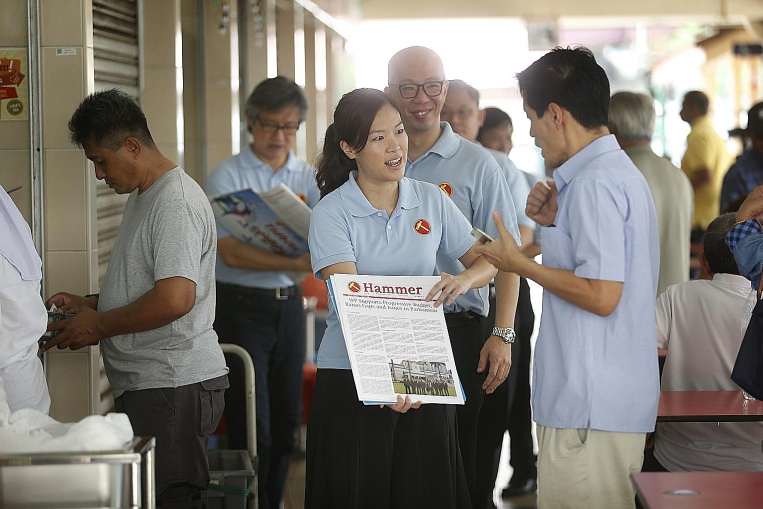
    In this earlier post, I asked whether we are electing MPs or Estate Managers. On the subject of MPs performances in Parliament, much has been written especially in the main stream media (MSM) and on pro-PAP sites on social media about the Worker’s Party (WP) MPs. A common refrain is that they are silent in Parliament and not doing anything to justify their previous election theme of ‘1st World Parliament’ or even to use their words ‘a co-driver.’

    The victorious WP Aljunied team from GE 2011. Accusations have been made specifically against them as being underwhelming, under-performing and silent in Parliament. But how accurate is it? Why not broadcast Parliamentary debates like they were in the 1980s and let the public judge for themselves?

    But how accurate is this? If you only source from the MSM, pro-PAP sites, or even from comments by certain PAP Ministers (even the PM himself if I’m not mistaken), you’re likely to form that view. But how true is it in reality? A good start would be ‘Hansard’ – the Parliamentary record of proceedings. In it you’ll find that the 7 WP MPs and 2 NCMPs are always raising questions, voicing differences and of course voting for or against Bills. Exactly the kind of duties you’d expect from MPs. If you want to be a little bit biased, then go their webpage or FB pages, and you’ll be able to see that they are far from silent. Unfortunately after the roasting that J B Jeyaretnam and Chiam See Tong gave the PAP back in the 1980s when a lot of Parliamentary debates were televised, sometimes in full or at least the exchanges, this is no longer available. Instead now you get snippets from the day’s sittings, where the bulk of the heavily edited and shortened version is to show PAP Ministers and MPs speaking, even rebutting opposition motions or arguments. The WP MPs are rarely given extensive coverage, sometimes even portions of their speech is so heavily edited that you go away thinking that they were asking irrelevant questions or gave silly replies all the time.

    Chiam See Tong and J B Jeyaretnam – the first 2 opposition MPs after independence. They were frequently condemned as being obstructive and destructive because of their hard hitting and searching questions by the PAP top brass. Yet now when the WP employs a less hostile approach, they claim them as ineffective and under-performing. Perhaps it’s time for Dr Chee, Kenneth Jeyaretnam and even M Ravi to be elected so they can get their wish and deal with a far more combative approach.

    But to be fair also, 1 can argue that many expected a more aggressive stance from them. They probably pale in comparison to the hard hitting style that Messrs Chiam and Jeyaretnam frequently employed. However we must also consider what exactly is the style that the WP now employs ever since Low Thia Khiang took over control. If you followed Mr Low during his 20 year stint up to 2011, you’d realise that a very confrontational style is not his modus operandi. It doesn’t mean that he doesn’t question or speak but it’s in a more measured and calculated tone. Suffice to say, that’s also what’s happened since 2011. While questions will be asked and speeches made, not to mention votes, it’s not seen as overly aggressive. So it’s kinda funny to see the PAP top brass now trying to chide them for this style when during the era of the 2 giants, they took great pains to condemn that style as being obstructive and destructive. You can’t have it both ways, gentlemen.

    WP Chief Low Thia Khiang reiterating his and his party’s position in the House.

    Moreover as Low will point out and those with a discerning eye will note, that it’s not the WP’s duty to move policy in the House. They are not a significant opposition, they are not a ‘government in waiting’ with close to a majority. They have never contested more than half the seats ( I think 1/3 would be more accurate). Even this time they are contesting in 1/3 of the seats. The duty to move policy rests with the elected Govt of the day. And it’s not the WP’s duty with just 9 representatives that they must oppose each and every 1 of them. And it’s also not incumbent on them to respond to any call by the Govt to discuss or debate policy. It’s for them to choose and when to choose. As a token opposition, they cannot be expected to oppose or debate each and every item in the House. There’s just so much 9 can do, so much that they can cover or have the expertise to cover without the resources and data which the 80 opposite have.

    Once described as a rising star and capable Minister, but after 2011 since he was dropped from the Cabinet – he became the Invisible Man of Parliament. And the PAP wanna take exception at how the WP MPs perform? Yeah right.

    But let me get to the main point of this writing – the PAP and their proxies accusing the WP of practically not doing anything in Parliament. Instead they claim it’s their own MPs who are religiously asking hard questions, so much so that we don’t really need an opposition, certainly not 7 elected opposition MPs. So let’s look at some the PAP MPs elected in 2011 and how much they have contributed to Parliamentary debate. I’ll quote a few I can recall offhand, I’m sure there are more. Here’s my list of some of them:

    1) Raymond Lim – how many times has he attended Parliament and spoken up? He’s been described as the Invisible Man.
    2) Mah Bow Tan – after relinquishing his Ministerial Portfolio, can you remember the number of times he’s spoken up?
    3) Goh Chok Tong – I can only recall the 1 time during the 6.9 million White Paper that he spoke up and in full support naturally. How many other times?
    4) Wong Kan Seng – the former DPM was described as a bulldog by the PM. Well he’s not even a bullfrog now – more of a silent mouse.
    5) Hri Kumar – for his 1st term, he was nearly silent as a tombstone. But he finally found his voice this time – but not to debate much, rather to attack the WP. He’s hardly performed well at constituency level that part of his ward had to be switched with Josephine Teo. And he even complained on how being an MP was taking a toll on family and work life.
    6) Zainuddin Nordin – He’s pretty good at quoting from the USA’s founding fathers about democracy on FB. But what about in the House? Heck he won’t even admit or confess whether he voted for Sepp Blatter in the FIFA elections as FAS Chairman. Finally he’s decided to call it quits.
    7) Janil Puthucheary – the doctor who proclaimed his medical service is equal to National Service justifying his non-service. How many trees has he pulled up in the House?
    8) Finally to be fair on the subject of speaking in Parliament, we must mention Lee Kuan Yew. What exactly did he do during his final term? He couldn’t even attend his ward’s MPS let alone Parliament. He was just placed on the ballot to secure votes in the event of a contest. That’s about it. What he did in the past is irrelevant to justify election as a practically non-existent MP in 2011.

    I’m not questioning his past leadership or contributions to Parliament. But what justification was there to field him in 2011 and make the taxpayer’s bear the cost when he was clearly incapable of performing his duties? He should have been allowed to retire and rest in his final years.

    Of course there are many more, if you trawl social media there have been several reports on the underwhelming performances of a number of PAP MPs. Or the dumb things they say. Yet the PAP and its supporters have the gall to accuse 9 WP MPs of not doing or saying anything! What makes these 8, I mentioned above different? Were they voted in for a different reason? Were they voted in as MPs or as estate managers and grassroot advisors? In fact it’s precisely because that there are 9 WP MPs and Lina Chiam, that we finally see some PAP MPs attending Parliament a little more often so that they can take turns to attack the WP and Lina Chiam. Yet we still can see the chamber half empty most of the time or some of them dozing off / on the way to dozing off. A majority of them only found their voice, falling over themselves to speak up in LKY’s honour following his death. Yet ‘silence was golden’ and ‘absence makes the heart grow fonder’ for a number of them before/after that.

    Tired? Need a place with a lot of empty comfy chairs? Well then Parliament’s just right for you. Then again I might be being a tad unfair. After hearing the same thing being parroted over and over again and worse by Zaqy, who wouldn’t feel sleepy?

    So why is it different for them, pray tell? But not for 10 opposition MPs and NCMPs? And you can bet that after this elections, you’ll again see a new set of them playing invisible or doorposts. What exactly did their voters vote for in the 2011 elections? Did they vote for MPs or something else? Because instead of paying $13,800, don’t you think it would have been cheaper if they employed parrots and a cardboard figure with tape recorder attached, to say ‘Aye’ during the vote count?


    Source: http://anyhowhantam.blogspot.sg

  • Is HE Ting Ru WP’s Secret Weapon Against PAP’s Tin Pei Ling And NSP’s Kevryn Lim

    Is HE Ting Ru WP’s Secret Weapon Against PAP’s Tin Pei Ling And NSP’s Kevryn Lim

    Macpherson SMC looks set to become an interesting fighting ground for the upcoming Singapore General Election.

    Not only is it one of the only constituencies which will see a multi-corner fight (People’s Action Party (PAP), National Solidarity Party (NSP) and Workers’ Party (WP) have all expressed interest to contest), it could potentially be a showdown of three beauties – Tin Pei Ling, 31, from PAP, Kevryn Lim, 26, from NSP, and now, He Ting Ru, 32, from WP.

    Much has been written about Tin in GE 2011.

    Most of the comments were negative and she was even given the dismissive nickname, “Kate Spade”, referring to a viral image of her showing off a Kate Spade handbag. Since then, she had worked very hard on the ground in Macpherson where she is the current MP and also earned her stripes in parliament by frequently fielding questions. The residents in Macpherson appear to connect well with her, especially the elderly. It will be foolish to write her off as a political lightweight for the coming election as she is very different from the newbie she was in 2011.

    Tin Pei Ling, picture via The New Paper

    Tin Pei Ling, picture via The New Paper

    Tin has just given birth to a SG50 baby boy btw – congratulations to her and her lucky husband! 

    Kevryn Lim runs her own events company and is a one of the fresh new faces which the NSP is introducing for the coming election. Will the NSP be fielding Lim in Macpherson against Tin?

    NSP has expressed their intent to contest in Macpherson. It’s a pity their biggest star in 2011, Nicole Seah, 28, had stated she would not be running in this election. As such, maybe Lim would be the next best choice for NSP to field against Seah’s perceived arch-nemesis in 2011, Tin Pei Ling.

    Lim graduated from the Curtin University in Hong Kong with a Masters in Professional Communication. Prior to her graduate studies, she studied Fashion Design & Product Development at the Chinese University of Hong Kong. She said in a recent media interview that she would like to champion transport and education issues if elected.

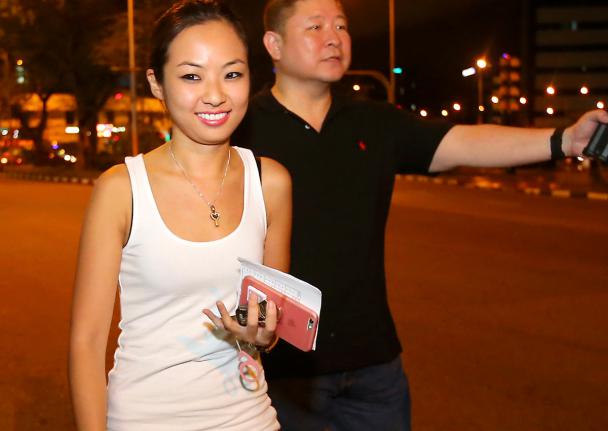
    Kevryn Lim, picture via The New Paper

    Kevryn Lim, picture via The New Paper

    Lim has worked as a part-time model in her younger days and some of her racier photos have since surfaced, drawing criticism from the conservative public and lewd remarks from perverts. So far, she seems to be coping okay and taking things in strides. 

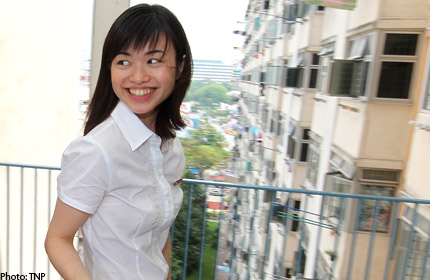
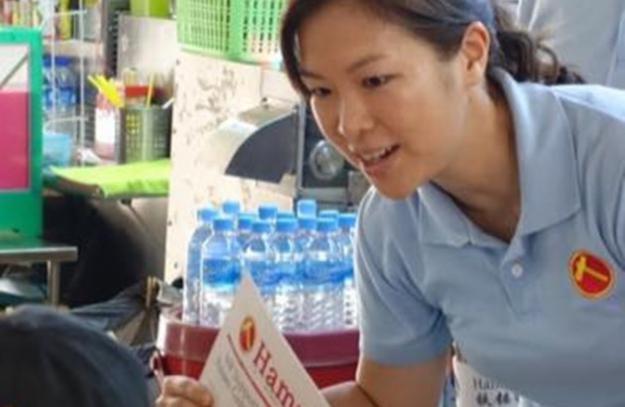
    He Ting Ru is a Cambridge-educated corporate lawyer who had lived and worked in several countries. She has recently been seen walking the ground in Macpherson with the WP team.

    She joined the WP because she “strongly believe that all of us have to play our part in building the type of country we want.”

    “Singapore needs to be a more balanced democracy. There should be no place for divisive politics. We are all Singaporeans who call this our home, no matter our differing views or beliefs. I hope we in the WP will be able to work together with Singaporeans to make this a reality.” Shared He in a interview with the WP Youth Wing.

    Not much else is known about her as the WP is usually very tight-lipped about their strategies and also keep a close guard on the public image of their potential election candidates.

    Will she be fielded in Macpherson against PAP’s Tin and NSP’s Lim?

    Already, comparisons are coming fast and furious in the prolific EDMW forum, with many pointing out that He looks rather like local TV celebrity, Rui En from some angles:

    Picture via omy.sg

    He Ting Ru, Picture via omy.sg

    Picture via StraitsTimes.com

    He Ting Ru, Picture via StraitsTimes.com

    Are you envious of the residents of Macpherson?

    They may have not just two, but THREE BEAUTIES competing for their votes!

    What do we have? We get the likes of Roy Ngerng, Goh Meng Seng and Lui Teck Yew.

    If given a choice, who would you choose between the three to represent your voice in parliament?


    Source: http://alvinology.com

  • Najib Razak: Singaporeans Should Not Judge Malaysia Based On Social Media Postings And Politically Motivated Statements

    Najib Razak: Singaporeans Should Not Judge Malaysia Based On Social Media Postings And Politically Motivated Statements

    Prime Minister Datuk Seri Najib Razak said that amidst the time of opportunity between Malaysia and Singapore now, it was hoped that Singaporeans would not judge Malaysia by what they read on social media, or by politically motivated statements from certain quarters running down the country.

    In a posting on his blog Najibrazak.com titled “Moving Forward In A Spirit Of Mutual Benefit”, the prime minister said both countries were enjoying the results of closer relations as seen in projects such as the High Speed Rail that will benefit the peoples of both countries.

    “I am pleased with the results of our closer relations, and look forward to achieving more. The construction of the High Speed Rail linking Kuala Lumpur and Singapore will certainly transform the way Malaysians and Singaporeans interact with each other, facilitating travel between both capital cities, enhancing business linkages and improving people-to-people ties.

    “At this time of opportunity between our nations, I urge Singaporeans not to judge Malaysia by what you may read on social media, or by politically motivated statements from certain quarters running down our country,” said Najib in a posting written in conjunction with Singapore’s 50th national day yesterday and 50th year of diplomatic ties between Malaysia and Singapore.

    Najib said the changed approach between the two countries has been emphasised soon after he became Prime Minister in 2009, and it had led to breakthroughs in ties between the two neighbouring countries.

    “The win-win solution of the Points of Agreement in 2010 – after a 20 year deadlock – was an example of how we chose to move forward in a spirit of mutual benefit, and put a longstanding stumbling block behind us.”

    Najib said that he and his Singaporean counterpart Lee Hsien Loong had agreed that both countries should not be encumbered by any issues associated with the past.

    “The days when some considered agreement to be a form of weakness are gone. Our future is as partners. Indeed, recently there have even been suggestions that our two countries should formulate an Olympic bid together.”

    While admitting there had been differences before this, Najib said both countries managed to achieve the most when they worked pragmatically together.

    “In 1967, we were among the five founders of Asean, an organisation that has kept peace in the most ethnically and religiously diverse region on earth.

    “We came together in the Five Power Defence Arrangement in 1971; we cooperated closely at the United Nations in the 1980s to ensure a settled future in Indochina; and today we are linked in so many ways,” he said.


    Source: https://sg.news.yahoo.com

  • Housing, Jobs And Healthcare Concerns Weigh Heavily On Singaporean Minds

    Housing, Jobs And Healthcare Concerns Weigh Heavily On Singaporean Minds

    Are Singaporeans happy with life as a whole now – and do they feel confident about the next 10 years?

    According to a survey commissioned by MediaCorp’s Current Affairs Unit, 66 per cent of residents said they are happy while 14 per cent said they are not. Asked whether life is close to ideal, five in 10 said yes.

    Many expressed concerns over issues ranging from transport to housing and security. But even more people said they expected to be more worried about these issues 10 years down the road, reflecting a sense of uncertainty about the future.

    Overall, six in 10 residents think economic conditions here will allow them to reach their personal goals.

    CONCERNS OVER NEXT 10 YEARS

    With the buzz of a General Election in the air, what weighs heaviest on the minds of Singaporeans?

    The affordability of healthcare, availability of affordable housing, and the loss of potential jobs to foreigners were the top three concerns of respondents. All three were hot-button issues in the last General Election in 2011.

    Concerns about elderly needs and the availability of integrated healthcare came in fourth and fifth, respectively.

    The survey involved 2,000 citizens and permanent residents from the ages of 18 to 65, across all races and income groups. Half were surveyed via email while the rest were interviewed face to face.

    HEALTHCARE

    Despite more state funds being pumped into healthcare and subsidies such as the Pioneer Generation Scheme, as well as Medishield Life starting on Nov 1, healthcare affordability topped the list of respondents’ concerns, with 83 per cent saying they were worried about increasing healthcare costs.

    Low-to-middle income workers (earning S$3,000 to S$5,000) were more worried about rising healthcare costs than low-income earners, who are on the receiving end of heavier subsidies and aid.

    One respondent said: “Healthcare costs have increased exponentially over the years, notwithstanding the increase in subsidies.”

    Associate Professor Paulin Straughan of the National University of Singapore’s sociology department said these are real concerns as life expectancy increases. “This quote sums it all. When you ask an individual to project their anxieties to the next 10 years, the only thing they can think of is the trend,” she said.

    “This is one area we’ve been worried about because of the rise in costs. We are living much longer now, and we anticipate that we will be spending a significant portion of our life living with disabilities.

    “And there’s nothing more worrisome than being ill when you don’t have an income any more.”

    HOUSING

    Despite HDB resale and private housing prices falling since early 2014, 78 per cent of respondents said they were concerned about the affordability of housing, with 47 per cent “extremely concerned”. The concern was greater among those aged 18 to 24.

    78% of residents surveyed are concerned about the affordability of housing.“I think it would take at least 2 general elections before people actually change their attitude towards housing,” says cultural critic Nazry Bahrawi. Also hear from sociologist Paulin Straughan and social changemaker Rebekah Lin.Watch the full episode at http://video.toggle.sg/en/series/talking-point/ep24/338939.

    Posted by Talking Point on Friday, August 7, 2015

    Mr James Chia, a financial educator from Innervative Learning, said: “Ultimately you expect the trend to go up, especially with population increasing. It’s demand and supply, so the concern will always be there.”

    Respondents, especially the younger generation, expressed worries about the difficulties of buying their own home.

    Miss Rebekah Lin, co-founder of 50 For 50, a social enterprise, said: “The prices of property have risen much faster than an increase in salary. It is increasingly harder for young couples and singles to afford.”

    Mr Chia said: “Housing is the biggest ticket item you’re going to buy in your life, so there will always be a concern.”

    LOSS OF POTENTIAL JOBS TO FOREIGNERS 

    Since the 2011 General Election, the Government has scaled back foreign worker numbers and employment passes. It has also introduced initiatives such as the Jobs Bank, closer scrutiny of companies’ hiring practices, and even a wage subsidy if companies hire unemployed Singaporean professionals, managers and executives aged 40 and above for mid-level jobs.

    But respondents said they are still worried that they will lose out on potential jobs to foreigners over the next five to 10 years.

    Said Assoc Prof Straughan: “I’m not denying the fact that there are tension spots, but certainly we shouldn’t accept these as broad strokes to describe the implications of having immigration.

    “Because truth of the matter is we don’t have enough of ourselves with a sustained low-fertility rate, (and) we’re not able to maintain the kind of buzz in our labour market.”

    Mr Chia noted: “I think the concern runs deeper than the issue of foreigners.”

    He said foreigners may be an easy target in terms of loss of jobs, but innovation, too, has the potential to displace jobs as Singapore gears towards being a smart nation.

    Agreeing, Assoc Prof Straughan said that this boils down to being “future ready”.

    She said: “You need to be able to future-proof your skill set so that you will always remain relevant no matter who is with you in the competitive arena.”

    “The real issue (concerning foreigners) is really about a disparity that people perceive,” said Dr Nazry Bahrawi, humanities lecturer at Singapore University of Technology and Design (SUTD).

    “I guess the PMETs are probably the ones that feel these most. And some find a bogeyman that is easy to seek,” Dr Nazry added.

    “What we should do then is to look at how we can develop the groups that are caught up in this disparity rather than shape the discourse towards blaming a certain group that may not be the real concern here.”


    Source: www.channelnewsasia.com

deneme bonusu