Tag: Singapore

  • Singaporeans First Party’s Chance Encounter With DPM Tharman Shanmugaratnam In Taman Jurong

    Singaporeans First Party’s Chance Encounter With DPM Tharman Shanmugaratnam In Taman Jurong

    When Mature People Meet….. Collaboration Becomes Possible

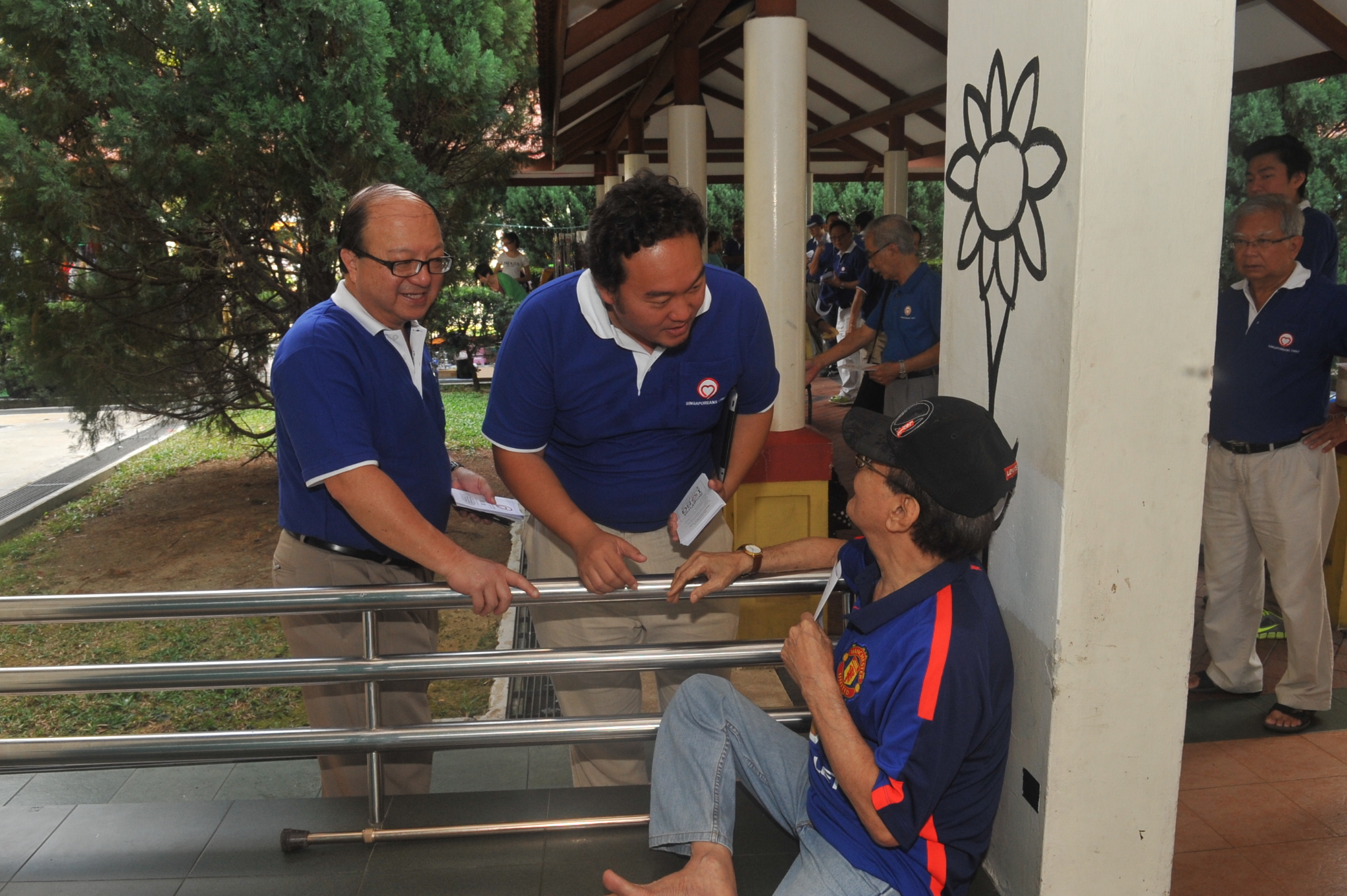
    The walkabout at Taman Jurong Market and Food Centre on Sunday saw SingFirst achieving several “firsts”. This is what we mean:

    1. First walkabout when we met a minister making his round at the same location

    DSC_9553

    DSC_9551

    2. First attempt in getting the members and supporters to take public transport to the walkabout location

    DSC_9488

    DSC_9498

    DSC_9500

    DSC_9484

    3. First largest turn out by our members and supporters

    DSC_96434. First ever longest walkabout route

    DSC_95095. First ever most photo requests by members of the public with our chairman and secretary general

    DSC_9497

    DSC_9637DSC_9636DSC_9624Taking the public transport to the location was our first attempt in building the bond and rapport between the members and supporters. This arrangement also allowed us to gain exposure and to publicise our party name. Everyone was enthusiastic and admitted that it was indeed a refreshing idea.

    This walkabout was by far the largest turn out by our member and supporters. A total of 25 of us gathered at Lakeside MRT before making our way to Taman Jurong Market and Food Centre. SingFirst is encouraged by the great support by our members! It goes to show that we are growing in terms of membership.

    As the market and food centre occupies 3 storeys with several units on each floor, it made its way into our record book for the longest walkabout route. Apart from the market and food centre, we also seized the opportunity to visit the nearby flea market. We were pleasantly surprised that many patrons at the market and food centre immediately recognized our chairman, Dr Ang Yong Guan and secretary general, Mr Tan Jee Say. We were even more surprised when several of them came up to the duo and asked for their pictures to be taken together.

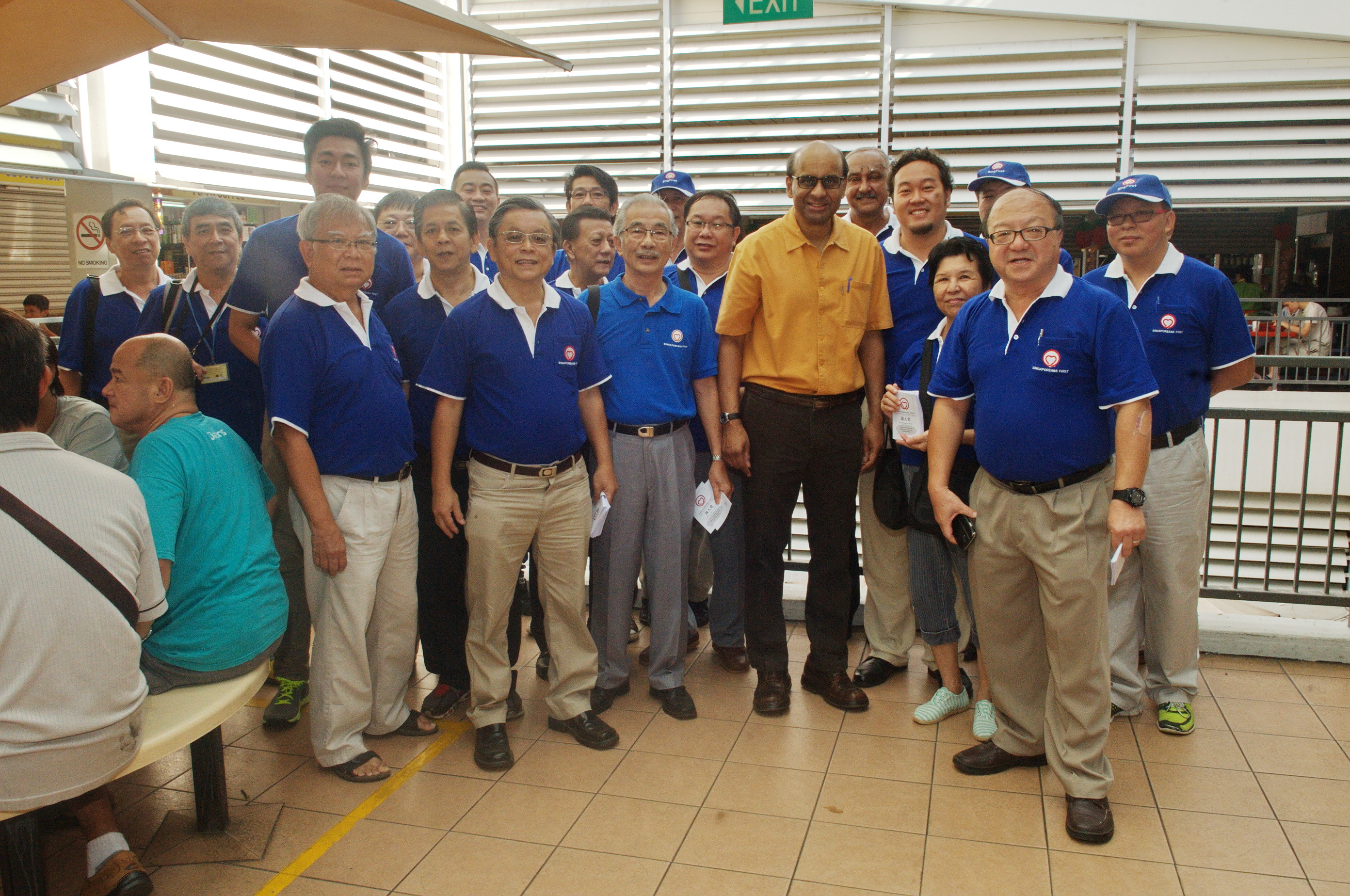
    The most pleasant encounter during this walkabout was the chance meeting with the finance minister, Mr Tharman Shanmugaratnam. He too was at the food centre greeting the residents. He was pleasant and greeted us with warm smiles and handshakes. We suggested having a photo together and he agreed without any hesitation. That wasn’t the end of our encounter with him. While taking a break from the walkabout at a nearby coffee shop, he came to us and said that the coffee shop has the cheapest food in the area.

    DSC_9647

    From this walkabout, we would like to highlight some interesting points from the residents and our brief meeting with Mr Tharman Shanmugaratnam:

    • The residents recognized that there is a need for a political change in Singapore. They are also curious who will be the candidates for SingFirst and whether we are up to the mark to take on the ruling party in the next election. Many still bear the scars from the memory of the 1960s and 1970s during the tussle between Barisan Socialis and the PAP.

    DSC_9545

    DSC_9597

    • They are sincere in their response when approached. The residents either stand up to greet or putting away their utensils to have a brief word with us. They also hope that SingFirst is able to do more to help the citizens.

    DSC_9615

    DSC_9573

    • They hope to see in the coming election younger candidates with a credible party running for the public office and who can take on the PAP.
    DSC_9629

    DSC_9519

    • MPs need to speak their language from the ground to represent them in parliament. They hope the MPs truly understand their plight.

    DSC_9588

    • There is no need for scholars to stand for elections or be MPs. They just need someone who is able to understand their concerns and have a heart to feel and fill their needs. The Punggol East by-election is a good example where a caring candidate won despite a four-corner fight.

    DSC_9566

    DSC_9583

    DSC_9602

    • The SingFirst logo is being etched into the minds of the Singaporeans. One elderly man said he recognized the logo because it resembles an ice cream brand.

    3

    Mr Tharman’s encounter was an encouraging one as he is so open. SingFirst hopes to see more of such PAP politicians to engage alternative parties. Only with such openness can we then build a better Singapore and move Singapore forward.
    DSC_9555e

    Taman Jurong walkabout was a new milestone set for SingFirst. We hope we will set a higher benchmark and be fortunate enough to meet more ministers or MPs in our future visits to the various GRCs.


    Source: http://singfirst.org

  • Is There A Gutter Oil Collector Roaming In Chua Chu Kang?

    Is There A Gutter Oil Collector Roaming In Chua Chu Kang?

    Stomper Michael saw this man who appeared to be pumping out sewer contents from a drain near Choa Chu Kang Block 687 yesterday (Feb 28).

    Michael is concerned that the man might be draining grease traps and collecting ‘gutter oil’.

    This sighting comes after a spate of similar incidents last year, in which people were seen pumping out content from grease traps at various locations in Singapore. Some were eventually arrested and charged for doing so without a permit.

    The tools used by this man look similar to those that had been used by other people who were caught pumping out sewer contents in earlier cases.

    Said the Stomper:

    “Saw this yesterday (Feb 28) at about 9.30am to 10am, at Choa Chu Kang Block 687 coffee shop.

    “Why are there people still doing this nowadays?”


    Source: http://singaporeseen.stomp.com.sg

  • Children In Singapore Start Consuming Alcohol At Increasingly Younger Age

    Children In Singapore Start Consuming Alcohol At Increasingly Younger Age

    Ben had his first drink of whiskey and cola when he was 13 and in Secondary One. It was with a group of friends, after school at a staircase near his Redhill home.

    It was not a big deal, insists Ben (not his real name), now 18. “My older brother was already drinking and my father drank at home all the time,” he said.

    He is part of a new generation of teenagers who are beginning to drink younger, say social workers concerned about a trend they started noticing about four years ago.

    “In the past, most teenagers would start drinking at 15 or 16, but now we are seeing 12- or 13-year-olds,” said Dr Carol Balhetchet, senior director for youth services at the Singapore Children’s Society.

    One of the main reasons is a growing tolerance for social drinking. “Nowadays, it’s not uncommon for adults to drink socially in front of children,” said Dr Balhetchet.

    That was how a seven-year-old girl had her first drink.

    “The mother was drinking wine and left it unfinished on the table, the girl just went up and took a sip,” she said.

    Figures for alcohol abuse among youth are mostly anecdotal, with VWOs saying they deal with between five and 10 cases each year.

    The National Addictions Management Service (NAMS) deals with 10 to 15 cases of problem drinking among youth aged 19 or below each year.

    Dr Gomathinayagam Kandasami, a NAMS consultant and head of addiction medicine at the Institute of Mental Health, said that while some teenagers might miss classes because of a drinking binge or argue with their parents, they are unlikely to experience the serious loss in functioning long-time alcoholics grapple with.

    “Younger people may not experience the full range of alcohol-related problems,” he said.

    Many of them only get help for their drinking habits when the law catches up to them for other offences.

    For Ben, that was in 2012 when he stole a bottle of blackcurrant-flavoured vodka from a convenience store.

    “I hadn’t had a drink in two weeks and I couldn’t afford alcohol. I couldn’t control myself,” said Ben, who is from a single-parent family and currently serving national service. He was caught on the store’s CCTV cameras and arrested.

    The legal age for buying alcohol is 18, but younger people do not have difficulty getting their drinks, social workers said.

    “They can easily get older friends to buy drinks for them,” said Ms Lena Teo, assistant director of counselling at the Children-at-Risk Empowerment Association (Care Singapore). “Some buy rice wine from supermarkets, and easily say it is for their mothers to use in cooking.”

    Ms Sheena Jebal, principal counselling psychologist at NuLife Care and Counselling Services, said teenagers may pour the liquor into soft drink cans so they can drink undetected in public – under void decks and in parks. “I can say now every youth-at-risk would have experienced drinking at least once,” she said.

    The problem is worrying because many go on to more serious vices, she noted. “It’s thrill-seeking behaviour. One starts with smoking first, then drinking – and if they can smoke and drink and not get caught, they will move on to the next level,” she said, adding that some move on to drugs such as Ice and Ecstasy.

    This appears to corroborate Central Narcotics Bureau data which shows that drug addicts under 30 now make up two-thirds of new abusers.

    Mr Moses Huang, counselling therapist at Ain Society, said the common thread that unites young alcohol abusers tends to be parental neglect. “They can come from low-income families or the super rich. If parents don’t spend time with them to educate them about drinking, they can be easily influenced,” he added.

    The VWOs said a concerted effort is needed to address the problem – with education both in schools and in the home.

    The Liquor Control Bill – which bans public consumption of alcohol after 10.30pm, and is expected to come into force in April – will also help, said Ms Sheena.

    She said the ban is coming at the right time, and added: “If not, you would see more and more young people wasting their lives away drinking.”


    Source: www.straitstimes.com

  • Singapore Needs To Look Beyond ‘Swamp To Skyscraper’ Narrative

    Singapore Needs To Look Beyond ‘Swamp To Skyscraper’ Narrative

    It’s good for a country to look back on its history once in awhile. Good to stop and take stock of how far we’ve come, how much more we’ve got to go. It makes sense that we’re doing this on a massive scale during Singapore’s Jubilee year, but there’s one myth that really, really needs to be busted: the narrative of “fishing village to sparkling metropolis”.

    A recent BBC article framed Singapore’s growth as “swamp to skyscrapers” – a narrative most Singaporeans are familiar with by now. It’s a story we were told in schools, reinforced by numerous National Day Parades and referred to so regularly that it’s often left unquestioned.

    Yet it doesn’t take very long to find the flaws in the story. Colonised by the British in the early 1800s, Singapore was a major hub of entrepôt trade. It was an important wealth-spinner for the colonial masters; they would never have left it primitive and under-developed. Infrastructure needed to be built to support all the administrative and commercial activities that came with establishing a major port, and build it they did.

    In fact, the British were only the latest – and most remembered – to have carried out significant activities in Singapore. Textbooks in schools have been revised to go beyond the 1800s, so as to better reflect the richness of Singapore’s history. They now include, for example, Singapore’s role as a trading post in the 1300s – over six centuries before Singapore became a sovereign nation-state.

    The importance of dismantling the “swamp to skyscrapers” myth is not just about correcting historical accuracy. It’s also about politics.

    This narrative – with all its connotations of “swamps” being rough, poor and undesirable, while “skyscrapers” are modern, wealthy and impressive – suggests that Singapore had nothing when we were first required to stand on our own two feet in 1965. If we accept that premise, it then follows that everything we have today came from the efforts and genius of the political leaders who governed this country.

    By the time we get to this point of the story, the politics of gratitude and obedience would have already kicked in. Implicit behind all this is also that fearful, anxious voice, whispering: “How easily all this can be lost, if we make the wrong move, if we vote for the wrong party, if we allow too much dissent!”

    There’s no denying that, for better or worse, the PAP has had a huge impact on Singapore’s development. That our political leaders – especially those in the early years of independence – have accomplished a remarkable feat of forward-looking city planning.

    But to buy into the “swamp to skyscrapers” or “fishing village to metropolis” narrative is to fail to see the full story. It’s to fail to see that by the time Singapore achieved full independence it already had an established legal system and penal code, with administrative centres and even Southeast Asia’s first air-conditioned skyscraper (as pointed out on Twitter). It’s to fail to see that Singapore is, and has always been, far more than the PAP, far more than the colonial masters, far more than any partisan politics or economic philosophy or political ideology we have ever encountered.

    That’s a perspective I find far more honest and exciting than the that of sudden transformation from tropical swampland to glass-and-steel megacity. It’s the idea that Singapore has endured, can endure,will endure far beyond what we can conceive for it – and that leaves us with so much more space to dream, to imagine, and to dare.

    Kirsten Han is a Singaporean blogger, journalist and filmmaker. She is also involved in the We Believe in Second Chances campaign for the abolishment of the death penalty. A social media junkie, she tweets at @kixes. The views expressed are her own.


    Source: https://sg.news.yahoo.com

  • Singapore Not Delaying Progress On Rapid Transit System

    Singapore Not Delaying Progress On Rapid Transit System

    Responding to media queries on Malaysian media reports that Singapore has been delaying a decision on the alignment of the Rapid Transit System (RTS) link connecting Singapore and Johor Baru, the Ministry of Transport (MOT) said yesterday in a statement that this was incorrect.

    “Singapore has informed Malaysia in June 2011 that the RTS terminus in Singapore would be located in Woodlands North near Republic Polytechnic. However, to date, Singapore has not received official confirmation of the location of Malaysia’s RTS terminus in Johor Baru. Only upon confirmation of the location of the terminus can both countries proceed to finalise the alignment of the crossing between Johor Baru and Singapore,” said the MOT in a statement.

    Malaysian media reports had quoted Johor State Executive Committee Member for Public Works, Rural and Regional Development Hasni Mohammad as saying that Singapore was holding back on deciding the alignment for the RTS.

    At the recent Malaysia-Singapore Joint Ministerial Committee (JMC) for Iskandar Malaysia meeting on Feb 6, Singapore and Malaysia agreed that the second phase of the joint engineering study on the RTS link would begin after the terminus location in Johor Baru is confirmed by Malaysia. This was stated in the joint statement issued by the Malaysian and Singapore governments immediately after the meeting. The Johor state government was represented at the meeting.

    The MOT said it looked forward to official confirmation from the Malaysian government on the location of the RTS terminus in Johor Baru. “Singapore remains committed to working closely with Malaysia on the RTS link, which will provide a boost to cross-border connectivity,” said the MOT statement.

    The RTS, if built, will connect Singapore’s Mass Rapid Transit (MRT) system to Johor Baru. It will be the second rail link between Singapore and Malaysia, after KTM Intercity’s North-South line. The RTS is a two-station line designed for high-volume transit, with both sides targeting to finish the project in 2018.

    The first phase of the RTS joint engineering study was endorsed by the JMC in January last year.

    In September last year, some Malaysian media reports said the Johor Baru terminus would be located in Bukit Chagar, but there has been no official word.

    One of the key engineering considerations for the line is whether to build it parallel to the Causeway and above ground; parallel to the Causeway and underground or diagonally opposite the Causeway.


    Source: www.todayonline.com

deneme bonusu