A man was jailed 10 weeks for assaulting a cabby on Sept 22, last year.
Arne Corneliussen, 50, a programme management director of a courier company, had pleaded guilty to one count of voluntarily causing hurt to Mr Chan Chuan Heng, 46.
The taxi driver suffered a fractured left foot following the attack at the intersection of Circular and North Canal roads.
Corneliussen, a Norwegian national, had Mr Chan in a chokehold for 15 seconds before witnesses pulled him away.
Mr Chan was unable to work for five months and only resumed driving his taxi in February.
Can someone tell Alfian Saat person to shut the fuck up?
I am a gay Singaporean and whenever anyone in our local LGBT community speaks up, I will sit up and internalize. Most of the time, I would agree with whatever the person is saying. But I cannot agree with this bloody idiot. There are so many loopholes in his argument that I fume just by scanning it.
Marginalization of Muslims? Yes, it is undeniable that he made comments that may be interpreted as being offensive to Muslims. But are your religious practices being severely restricted?! Are there no Malay-Muslims holding prominent jobs? Does Malay-Muslims have to score better than their Chinese or Indian counterparts to gain entrance into public Universities, like Malaysia?
Why not you shut the fuck up and move to Malaysia or Indonesia then, where Malay-Muslim culture wont be marginalised? Newsflash! Kelantan has just implemented hudud. Happy running around then, because you can get amputated if you put a toe out of the line. And I’m sure Malaysia and Indonesia have a higher degree of intolerance towards the LGBT community than Singapore.
Glorifying LKY? I would like to see how you can still complain and write stupid satirical pieces if LKY was not around to build the infrastructures. It takes guts and wit to lead effectively. Have some respect for that, cant you?! I do have my gripes with certain policies that the PAP has implemented. But I am still grateful that I am a Singaporean – because I have seen how my relatives in other countries have suffered. My cousin’s house was burglar-ed in broad daylight in Malaysia, fyi. You think this security popped up overnight?! Heck, the laptop and the wireless that you used to write those shitty articles are probably made accessible because of LKY’s economic policies.
And even if you still express heavy dissatisfaction at LKY himself, which is totally fine, wait till his funeral is over. I’m sure if your or your friend’s mother died you wont be making some satirical bullshit about her right? It just shows that you and that Amos Yee bitchboy are the same. Pathetic, attention-seeking with no ounce of respect for others as a human being. Even when Kim Jong-Ill died I wasn’t rejoicing or poking fun despite him leading North Korea into more economic ruins. We don’t need you two in our community, not fighting for our cause.
Millennials aren’t exactly celebrating his passing.
In 2013, The Real Singapore posted an article written by Jeremy Sia, titled “More Young People are Looking Forward to LKY’s Death”. Sia quoted two people in his article, Edmund Tan, an undergraduate, and Muhammad Fadhil, a media consultant.
Fadhil was quoted as saying that “any state funeral will just be a sham and that more people will be celebrating LKY’s death.” Tan, on the other hand, acknowledged LKY’s contributions, but suggested that our first Prime Minister “ought to be shot.”
The article ends with Sia stating that “citizens will use the appropriate laws to send the old man and his PAP supporters to hell.”
The thing is, is such a sweeping generalisation right?
He did the right thing over what was popular
Yes, in 2015, with the benefit of hindsight, we can criticize the policies and actions of Mr. Lee. And yes, some policies have turned out to be misjudged.
For example, in 1984 the Graduate Mothers Scheme was introduced to encourage university graduates to procreate. The aim was to have a group of “smart” babies by giving female graduates preferential treatment in primary schools and other material benefits. Following a public outcry, the scheme was quietly rolled back in 1985.
But, without considering the circumstances of the times or understanding the underlying motivations, to wish for the death of another is wrong and disrespectful, regardless of whether that another is the first Prime Minister of Singapore.
Like many of my friends, I started Monday with the realisation that we had witnessed the end of an era; the passing of one of the last of the Old Guard. Mr. Lee was a man of conviction, and he did what he believed was right, instead of what was popular.
Sia’s assumption that all young Singaporeans share his view is inaccurate. I did not look forward or hope for LKY’s passing.
Vitriol, hate is spewed at all who suggest differently
When one brave reader dared to post a comment contrary to the view of the author, he was vilified by other netizens with one stating that the brave reader had been brainwashed. When another tried to point out that that the abuse was harsh, another rebutted by hurling even more vulgarities, ending in sexual comments what can be described as verbal bullying.
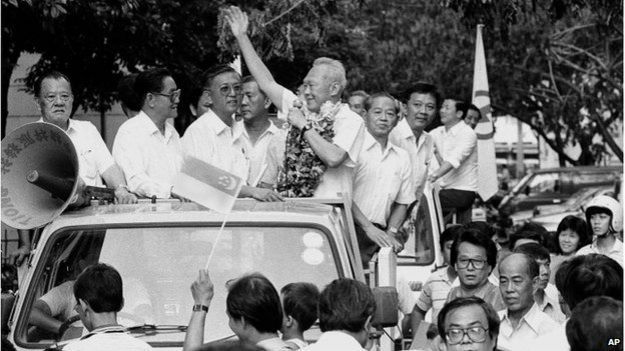
Tens of thousands of Singaporeans braved the long queues to pay their last respects to LKY at Parliament House. Many were from the older generation but a significant number were students and young people.
The silent majority speaks
Look at the amount of well-wishes pouring in from around the world and the number of homages being paid on social media.
For the silent majority, I have this to say to the vocal minority: You are entitled to your own opinion. But cursing and swearing at a man who has offered nothing but his entire life to the service of others is to spit on history and rub mud over his legacy. If you cannot stand the man for what he has done, at the very least, respect him for what he tried to do.
We, the young people, do solemnly declare that just because we are better educated and discerning, we are not as ignorant or ungrateful as many believe us to be.
I, like some of us millennials, have not been celebrating the death of Lee Kuan Yew. And I dare anyone to prove otherwise.
Watching the reaction to Lee Kuan Yew’s death from overseas has been a surreal and difficult experience.
As a Singaporean journalist with the BBC, it’s been a privilege to cover many stories about my country over the years. But here was probably its biggest story, garnering the most global attention, that I was missing entirely as I spend two weeks working in London. I’ve had to watch the events of his death unfold, and my fellow Singaporeans grieving from afar.
But my anguish isn’t just professional, it is also personal. As a Singaporean growing up in the 1970s and 80s under Lee Kuan Yew, the influence he had on my life and the lives of many millions of Singaporeans has been immense. The story has been told a million times, how with a tight grip on power, he and his team took a small third world country with limited natural resources and turned it one of the world’s wealthiest countries per capita in a generation.
But what was it like growing up as that transformation took place?
Even as children, we were aware of the constant change, not just externally, with the nation’s skyline, its factories and rivers, but also internally. Campaigns spearheaded by Mr Lee’s government sought to micromanage our behaviour. From courtesy to anti-spitting campaigns, Singaporeans were taught from a young age how to be compliant.
When we were older, we were told how many children we should have and even whom to marry. As graduates, you were encouraged to marry someone with the same level of education, to make real Mr Lee’s vision of social engineering and becoming a nation producing smarter babies.
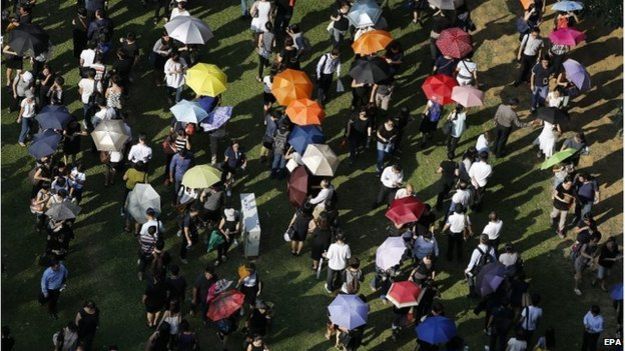
Watching the thousands throng the streets – first to show their respects to his coffin at Parliament House and then to watch his funeral motorcade go by in a tropical downpour – made me think at first that here at work was the same thing: compliance, from a nation so accustomed to doing as he said. The alternative often meant being sued, or thrown into detention without trial. Most Singaporeans traded up personal freedoms for economic success.
But here at work was something more. Tears and emotions were high, not just in Singapore but for the many Singaporeans living overseas. My extended family, many of whom have emigrated to the US and Canada, spent days debating his legacy on our family group on WhatsApp. If he was having that impact on them, years after they left their country, imagine what sort of influence his death still wielded on many millions more.
It’s hard to put in words the effect he had. For many, including myself, it was a love-hate relationship. Love for the immense transformation his governance brought to Singapore. How it’s now admired as a nation to be emulated by giants such as India, which has Singapore building a new city for it, and China, which had President Xi Jinping dispatching generals to live there to study its model of governance. Being Singaporean makes me hold my orange-red passport proud at immigration lines worldwide.
But hate for the way his executed the transformation, depriving many of free speech, a two-party state, their native Chinese dialects and, if you were a man, the freedom to wear your hair long, get out of military conscription and love a member of the same sex. And then there’s the ban on chewing gum that many foreigners seem to delight in pointing out.
Mr Lee’s influence spanned well over the 31 years that he actually governed. As a senior minister and then “minister mentor” – titles he took after standing down as prime minister in 1990 – his counsel was regularly sought by Singapore’s next generation of leaders, including the current leader, his son, Lee Hsien Loong.
Such a cult of personality has been built around Lee Kuan Yew’s intelligence and vision that continuing on as a successful nation almost seems impossible without him.
It’s made me nervous about the Singapore I shall find when I return, stepping through the comfortable gates of Changi Airport in a little over a week’s time. A Singapore without Lee Kuan Yew.
Washington, D.C., is fast becoming an acronym for “Dysfunctional Capital.” Singapore, in contrast, has become the poster child for “the concept of good governance,” to quote the Financial Times’s obituary for the country’s longtime leader, Lee Kuan Yew, who was laid to rest on Sunday. For Americans in particular, this contrast presents a conundrum. On the one hand, Americans hold as a self-evident truth that their democracy is the best form of government. On the other hand, they see mounting evidence daily of Washington’s gridlock, corruption, and theatrical distractions, which makes their system seem incapable of addressing the country’s real challenges.
In assessing the quality of national governance, international rankings often focus on three related baskets of indicators: first, a nation’s level of democracy and civic participation, and the degree to which citizens exercise political rights; second, the effectiveness of its government in facing issues, making policy choices, executing policy, and preventing corruption; and third, its performance in producing the results people want, including rising incomes, health, and safety.
Let’s start with performance, since it is easiest to measure. As a Russian proverb declares, it is better to be healthy, wealthy, and safe than sick, poor, and insecure. Who can disagree? On these criteria, how has Singapore performed over the course of its first five decades versus the United States; or the Philippines (which the U.S. has been tutoring in democracy-building for a century); or Zimbabwe (an African analogue that declared independence from the United Kingdom just a few years after Singapore, and where dictator Robert Mugabe has been as dominant a national force as Lee Kuan Yew has been in Singapore)?
Real GDP per Capita by Country: 1965-2013
The table uses constant 2005 U.S. dollars. (World Bank)
As the table above shows, over the past 50 years, real per-capita GDP in Singapore grew 12-fold. In current dollars, the average Singaporean’s income grew from $500 a year in 1965 to $55,000 today. Over that same period, real per-capita GDP in the United States and the Philippines doubled, and Zimbabwe’s actually dropped. When comparing the United States and Singapore, it is important to note that Singapore was essentially catching up to America. But what about economic performance in the 21st century? Over the past decade and a half, U.S. GDP has grown an average of less than 2 percent a year—while Singapore’s averaged nearly 6 percent. In the World Economic Forum’s latest Global Competitiveness Index, Singapore was ranked second overall, behind only Switzerland (the United States came in third). For the past seven years, Singapore has also been ranked the best place in the world to do business by the Economist Intelligence Unit.
As for its healthcare services, Singapore’s infant-mortality rate has fallen from 27.3 deaths per 1,000 births in 1965 to only 2.2 in 2013. A child born in the United States has three times the chance of dying in infancy of one in Singapore. In the Philippines, 23 out of every 1,000 children born die in infancy. In Zimbabwe, 55. In 2012, Bloomberg Rankings judged Singapore the world’shealthiest country based on the full array of health metrics; the United States ranked 33rd, the Philippines 86th, and Zimbabwe 116th. Singapore also has one of the lowest crime rates in the world. A citizen is 24 times more likely to be murdered in the United States than in Singapore. And in 2012, less than 1 percent of Singaporeans reported that they struggled to afford food or shelter, by far the lowest percentage in the world.
The second basket in assessing governance focuses on what experts call the effectiveness of the governmental process itself. Each year, the World Bank produces Governance Indicators metrics on government effectiveness, regulatory quality, rule of law, and control of corruption. Singapore leads the United States by a significant margin on each of these measures and is not even on the same level with the Philippines and Zimbabwe. Singapore’s widest lead over both the United States and comparable nations comes in the prevention of corruption and graft. Singapore scores in the top 10 while the United States ranks 20 countries lower on the list, with the Philippines and Zimbabwe in the bottom third. According to the 2014 Gallup World Poll, 85 percent of Americans see “widespread” corruption in their government, while only 8 percent of Singaporeans believe their government is corrupt.
On democratic participation and personal liberties, Freedom House produces an annual report. In its 2014 ranking, the United States was among the freest countries in the world. Singapore scored in the bottom half, behind South Korea and the Philippines. It lost points mainly for Lee Kuan Yew’s People’s Action Party’s tight management of the political process. According to its report, “Singapore is not an electoral democracy. … Opposition campaigns have typically been hamstrung by a ban on political films and television programs, the threat of libel suits, strict regulations on political associations, and the PAP’s influence on the media and the courts.”
The contrast between Singapore’s ranking in the first two categories, and the third, reminds us of a fundamental question of political philosophy: What is government for? Contemporary Western Europeans and Americans tend to answer that question by emphasizing political rights. But for Lee Kuan Yew, “the ultimate test of the value of a political system is whether it helps that society establish conditions that improve the standard of living for the majority of its people.” As one of his fellow Singaporeans, Calvin Cheng, wrote this past week in The Independent, “Freedom is being able to walk on the streets unmolested in the wee hours in the morning, to be able to leave one’s door open and not fear that one would be burgled. Freedom is the woman who can ride buses and trains alone; freedom is not having to avoid certain subway stations after night falls.” Lee Kuan Yew always insisted that the proof is in the pudding: rising incomes for the broad middle class, health, security, economic opportunity.
To Western ears, the claim that an autocratic state can govern more effectively than a democratic one sounds heretical. History offers few examples of benevolent dictatorships that delivered the goods—or stayed benevolent for long. But in the case of Singapore, it is hard to deny that the nation Lee built has for five decades produced more wealth per capita, more health, and more security for ordinary citizens than any of his competitors.
Thus Lee Kuan Yew leaves students and practitioners of government with a challenge. If Churchill was right in his judgment that democracy is the worst form of government except for all the others, what about Singapore?