Tag: Southeast Asia

  • Academic: Calls To Make Malay Official ASEAN Language Futile

    Academic: Calls To Make Malay Official ASEAN Language Futile

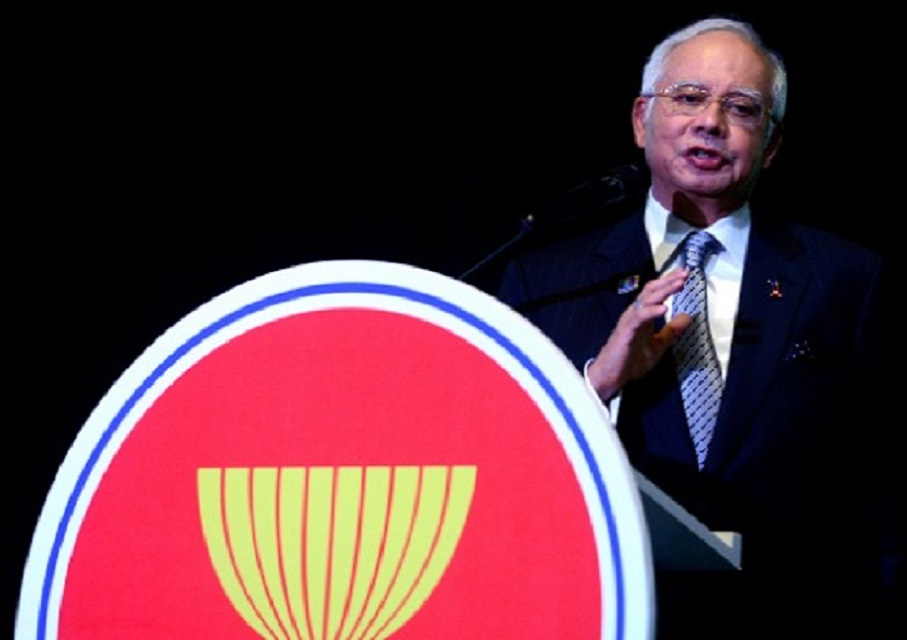
    The proposal to adopt the Malay language (Bahasa Melayu) as ASEAN’s “main and official language” is a non-starter, and even futile. This call, made by Malaysian Prime Minister Najib Tun Razak in Kuala Lumpur on 26 July 2017, comes after a similar suggestion by his Communications and Multimedia Minister Salleh Said Keruak in 2015 when Malaysia held the rotating ASEAN chairmanship. He made the case that Malaysia “need to show that the Malay language is a relevant and dynamic language that can act as the ASEAN language.”

    These calls will fall on deaf ears outside of selected audiences in Malaysia. In the first instance, ASEAN has adopted English as the working language since its establishment in 1967. This practice was later institutionalised in the ASEAN Charter in 2007, Article 34 of which unequivocally states that “the working language of ASEAN shall be English.” Revising this provision requires the unanimous support from Malaysia’s fellow ASEAN member states, most of whom may find it onerous to support a seemingly nationalistic cause to promote the cultural and linguistic heritage of only one particular member state.

    It is interesting to note that the ASEAN Leaders, in approving the Charter, opted for the term “working language” instead of “official language,” which can be interpreted as a sign of respect for the plethora of member states’ national languages. The adoption of any part of a specific Southeast Asian language as the official language would stir political backlash from other ASEAN communities, which may interpret the move as a form of political and cultural dominance. Arguably, the English language might be a non-native language of a former colonial power in the region, but this “neutral” attribute serves to unite ASEAN’s diverse socio-cultural make-up, providing a level political playing field for all member states.

    The fact that English is lingua franca has facilitated ASEAN’s interactions with its Dialogue Partners and the wider global community.  ASEAN can play a more effective role in bring the “regional story” beyond Southeast Asia and reaching out to other regions using a global language. In multilateral organisations throughout the world like the United Nations and World Trade Organisation, English is the working language. Thus, attempts to replace English as the working language with any other languages would rollback ASEAN’s gains in positioning the regional organisation as a global entity, and hamper future efforts to connect with the wider global community.

    At face value, Prime Minister Najib’s proposal is an attempt to bolster his political credentials by championing the Malay language ahead of the general elections due by May 2018. However, his actions cannot be summarily dismissed as a domestic matter because as an ASEAN Leader, he has the recourse to push this cause at ASEAN Summits. If he follows through with this unrealistic proposal at the regional level, he might force his fellow ASEAN leaders into the conundrum of having to defend the primacy of their respective languages and promote their language as ASEAN’s main and official language as well.

    Instead of focusing on the trivial, ASEAN should attend to more urgent and pressing matters of community-building. Playing up the divisive nature of language politics might fray ASEAN unity.

    The writer, Dr Tang Siew Mun, is Head of the ASEAN Studies Centre, ISEAS–Yusof Ishak Institute.


    Source: https://iseas.edu.sg
     

  • Indonesia Says Seized Islamic State Propaganda Books Likely Used By Children

    Indonesia Says Seized Islamic State Propaganda Books Likely Used By Children

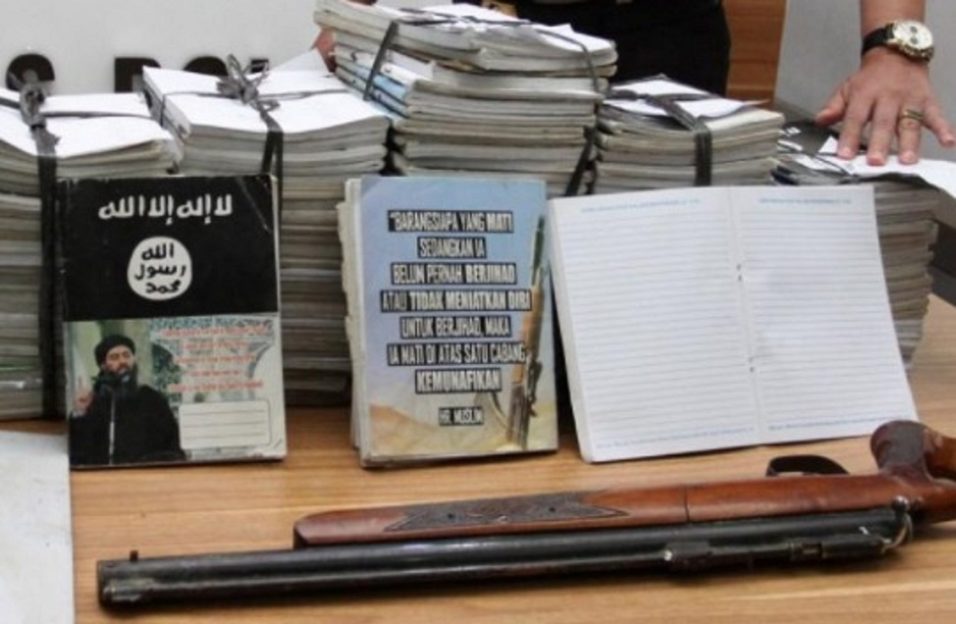
    JAKARTA – Indonesian police displayed on Friday scores of notebooks inscribed with Islamic State propaganda seized during a raid on the home of suspected militant and said some appeared to have been used by children.

    Police found hundreds of notebooks containing Islamic State propaganda in Indonesia during the raid in connection with the stabbing death of a policeman in Medan, the capital of North Sumatra province on June 25.

    At the top of every page of the books read the inscription: “You are all obliged to go to war”.

    Authorities believe Islamic State has thousands of sympathizers in Indonesia and are increasingly worried about the group trying to get a foothold in Southeast Asia as it loses territory in the Middle East.

    “We’re still investigating who funded the printing of these books,” police spokesman Rikwanto told a news conference.

    The material was displayed at the national police headquarters, alongside an air gun and other items.

    The front covers of the notebooks had a picture of Islamic State leader Abu Bakr al-Baghdadi and quotes attributed to him as made at Friday prayer,

    “Tell all the apostates in the Muslim countries, these are their last days. And tell every infidel, we’re not playing anymore,” a quote attributed to Baghdadi read.


    Children’s handwriting was found in some of the books, including notes about the solar system, which police said could mean the books had been used by children to take notes in school.

    Police believe the men were part of Jemaah Ansharut Daulah, an umbrella organization on a U.S. State Department “terrorist” list which supports Islamic State and has hundreds of Indonesian followers.


    Source: www.todayonline.com

  • Ominous signs of an Asian hub for Islamic State in the Philippines

    Ominous signs of an Asian hub for Islamic State in the Philippines

    Dozens of foreign jihadis have fought side-by-side with Islamic State sympathizers against security forces in the southern Philippines over the past week, evidence that the restive region is fast becoming an Asian hub for the ultra-radical group.

    A Philippines intelligence source said that of the 400-500 marauding fighters who overran Marawi City on the island of Mindanao last Tuesday, as many as 40 had recently come from overseas, including from countries in the Middle East.

    The source said they included Indonesians, Malaysians, at least one Pakistani, a Saudi, a Chechen, a Yemeni, an Indian, a Moroccan and one man with a Turkish passport.

    “IS is shrinking in Iraq and Syria, and decentralizing in parts of Asia and the Middle East,” said Rohan Gunaratna, a security expert at Singapore’s S. Rajaratnam School of International Studies.

    “One of the areas where it is expanding is Southeast Asia and the Philippines is the center of gravity.”

    Mindanao has been roiled for decades by bandits, local insurgencies and separatist movements. But officials have long warned that the poverty, lawlessness and porous borders of Mindanao’s predominantly Muslim areas mean it could become a base for radicals from Southeast Asia and beyond, especially as Islamic State fighters are driven out of Iraq and Syria.

    Although Islamic State and groups affiliated to the movement have claimed several attacks across Southeast Asia in the last two years, the battle in Marawi City was the first long drawn-out confrontation with security forces.

    On Tuesday, a week after the fighting began, the government said it was close to retaking the city. As helicopters circled, troops cleared rebel positions amid explosions and automatic gunfire, moving house by house and street by street.[nL3N1IW1FS]

    Last year, Southeast Asian militants fighting for Islamic State in Syria released a video urging their countrymen to join the cause in the southern Philippines or launch attacks at home rather than attempting to travel to Syria.

    Jakarta-based terrorism expert Sidney Jones passed to Reuters some recent messages in a chatroom of the Telegram app used by Islamic State supporters.

    In one, a user reported that he was in the heart of Marawi City where he could see the army “run like pigs” and “their filthy blood mix with the dead bodies of their comrades”.

    He asked others in the group to pass information on to the Amaq News Agency, a mouthpiece for Islamic State.

    Another user replied, using an Arabic word meaning pilgrimage: “Hijrah to the Philippines. Door is opening.”

    The clash in Marawi City began with an army raid to capture Isnilon Hapilon, a leader of Abu Sayyaf, a group notorious for piracy and for kidnapping and beheading Westerners.

    Abu Sayyaf and a relatively new group called Maute, both of which have pledged allegiance to Islamic State, have fought alongside each other in Marawi City, torching a hospital and a cathedral, and kidnapping a Catholic priest.

    The urban battle prompted Philippines President Rodrigo Duterte to impose martial law across the whole island of Mindanao, an area roughly the size of South Korea with a population of around 21 million.

    FIGHTERS FROM THE MIDDLE EAST

    The head of the Malaysian police force’s counter-terrorism division, Ayob Khan Mydin Pitchay, named four Malaysians who are known to have traveled to Mindanao to join militant groups.

    Among them were Mahmud Ahmad, a Malaysian university lecturer who is poised to take over the leadership of Islamic State in the southern Philippines if Hapilon is killed, he said.

    Security expert Gunaratna said that Ahmad has played a key role in establishing Islamic State’s platform in the region.

    According to his school’s research, eight of 33 militants killed in the first four days of fighting in Marawi City were foreigners.

    “This indicates that foreign terrorist fighters form an unusually high component of the IS fighters and emerging IS demography in Southeast Asia,” Gunaratna said.

    According to an intelligence brief seen by Reuters, authorities in Jakarta believe 38 Indonesians traveled to the southern Philippines to join Islamic State-affiliated groups and about 22 of them joined the fighting in Marawi City.

    However, an Indonesian law-enforcement source, speaking on condition of anonymity, said the actual number of Indonesians involved in the battle could be more than 40.

    Indonesia officials believe some militants might have slipped into Marawi City under the cover of an annual gathering of the Tablighi Jamaat just days before the fighting erupted. The Tablighi Jamaat is a Sunni missionary movement that is non-political and encourages Muslims to become more pure.

    An Indonesian anti-terrorism squad source told Reuters that authorities have beefed up surveillance at the northern end of the Kalimantan and Sulawesi regions to stop would-be fighters traveling by sea to the southern Philippines and to prevent an influx of others fleeing the military offensive in Marawi City.

    “The distance between Marawi and Indonesian territory is just five hours,” the source said. “It should not get to the point where they are entering our territory and carrying out such (militant) activities.”


    Source: http://www.todayonline.com

  • Defeat Of Rebels Could Spell More Trouble For Southeast Asia

    Defeat Of Rebels Could Spell More Trouble For Southeast Asia

    Like the stirring of a hornet’s nest — as an expert here put it — the imminent defeat of Islamist militants in the southern Philippine city of Marawi could pose a bigger problem further down the road, terrorism analysts said yesterday.

    What was previously largely contained in the Philippines could escalate into a security nightmare for the region if the militants regroup in other areas near the Sulu Sea such as eastern Malaysia, and parts of Indonesia, said S Rajaratnam School of International Studies (RSIS) research fellow Graham Ong-Webb.

    Dr Rohan Gunaratna, who heads RSIS’ International Centre for Political Violence and Terrorism Research, also warned that if “regional governments fail to contain the threat, (the problem) will spill over into Singapore”.

    The Philippine military said yesterday it was close to retaking Marawi, which was held for a seventh day by the militants. More than 100 people have been killed, most of them militants, according to the military, and most of the city’s residents have fled.

    Last month, Home Affairs and Law Minister K Shanmugam underscored the growing terrorist threat in Singapore’s backyard, and warned that the southern Philippines, which is less than a four-hour flight away from Singapore, was becoming a sanctuary for returning fighters from the Middle East and from where attacks could be launched on South-east Asia.

    Speaking at an international exhibition on homeland security held here, Mr Shanmugam noted that, with the Islamic State (IS) losing ground in Iraq and Syria, the “potential locus of the threat” could move closer to home.

    Similarly, there could be unintended fallout from the efforts of the Philippine authorities to drive the militants, who consist of both local and foreign fighters from Indonesia, Malaysia and Singapore, out of their country.

    Dr Graham Ong-Webb noted that if the militants were “pushed to a corner”, they could flee the Philippines, and “find pockets elsewhere” to re-establish themselves. Using an analogy of a hornet’s nest, he pointed out that when the nest is provoked, the hornets “either attack, or … surrender, die fighting, or … fly to another location to rebuild their nest”.

    Given its size, Indonesia, for example, could potentially provide hideouts for fleeing militants to reorganise and hit back, with the help of traditional insurgents which could morph into terrorist groups “if they find it to be in their interest”.

    “It is difficult (for Indonesia) to consolidate internal security, and there (could be) pockets of insecurity, or lawlessness,” said Dr Ong-Webb.

    Assoc Prof Kumar Ramakrishna, head of Policy Studies and coordinator of the National Security Studies Programme at RSIS, noted that West and Central Java, as well as Central Sulawesi, may be “fertile socioeconomic and political ground for IS ideology to take root”. He also cited southern Thailand, where there is an ongoing insurgency. While the Thai-Muslim separatists have been “not that interested” in broader agendas such as those perpetuated by Al Qaeda or Jemaah Islamiyah, the insurgency in southern Thailand could provide a source of weapons for IS cells in Malaysia, Assoc Prof Kumar said.

    Assoc Prof Kumar said the Mindanao region “has arguably been a weak link for decades”. The fighting in Marawi, which is located on the southern Philippine island of Mindanao, confirmed Mr Shanmugam’s concerns, he added.

    The analysts reiterated that Singapore is a prime target for terrorists, and the fierce fighting that broke out in Marawi showed that Singapore should not take security for granted.

    “Singapore is a symbol of financial and economic success, any successful attack on Singapore by terrorists would be deemed a terrorists’ jackpot,” said Assoc Prof Antonio Rappa, who heads the Management and Security Studies programme at the Singapore University of Social Sciences. Last week, a suicide bombing at a Jakarta bus station killed at least three policemen and injured 12 others. The IS has claimed responsibility for the attack.

    Each successful attack in the region would embolden the terrorists, said Assoc Prof Rappa. “The weak links lie outside Singapore’s borders. In the neighbouring states, there is often a lack of sufficient public education and a high amount of security complacency,” he said.

    Lauding the establishment of the SGSecure movement, Dr Gunaratna said Singapore “should work to create competencies in the region to fight the threat”, and beef up defences against IS’ online propaganda. “The Government of Singapore needs to play a greater role to build the offshore counter terrorism operational capabilities,” he said.


    Source: www.todayonline.com

  • Najib Warns Uneven Growth Could Fuel Extremism, Instability

    Najib Warns Uneven Growth Could Fuel Extremism, Instability

    Prime Minister Najib Razak on Friday warned that Southeast Asian countries needed to ensure their economic growth was inclusive, or risk marginalised populations turning to violent extremism or even overturning political systems.

    Speaking at an event for entrepreneurs during the Association of South East Asian Nations (Asean) summit in Manila, Najib said the region was posting strong growth that could see Asean become the world’s fourth-largest economy, but that growth needed to be equitable.

    “We do not want our citizens to be marginalised in the age of extremism and radicalisation,” he said.

    “We know that those who see no hope in their own societies are more prone to the siren calls of terrorists who can and will exploit their vulnerability and fill them with their lies.”

    Islamist extremism is expected to be high on the agenda during this week’s meetings, with fears for Indonesia, Malaysia and the Philippines about piracy and the rising threat of Islamic State.

    Of particular concern is the ease in which militants can acquire weapons, seek refuge with existing rebel groups and move between the many islands between the three countries.

    Najib lauded the success of Asean, which is celebrating its 50th anniversary this year, in expanding its collective GDP to about US$2.7 trillion now, from US$87 billion four decades ago.

    Asean has 10 members: Thailand, Myanmar, Laos, Cambodia, Vietnam, Singapore, Brunei, Malaysia, Indonesia and the Philippines.

    He warned that economic disparity was dangerous at a political level too, fuelling anger and populism that was causing problem in Western Europe.

    “The neglected underclass of those who felt left behind by economic growth, prosperity and globalisation can overturn elections and political systems,” he said.

    Economists frequently point out huge income gaps among the 620 million people of Southeast Asia, a region that has one of the world’s largest concentrations of billionaires, according to Forbes Magazine.

    Najib said awareness of Asean needed to be better promoted among its citizens to “make it feel real, relevant and tangible”. Trade integration was lagging, he said, with too many trade tariffs still in existence.

    Their removal, and harmonised customs standards, needed to be “vigorously pursued”, he said.

    Philippines Vice-President Leni Robredo echoed Najib’s call for leaders to pay more attention to their poor.

    “For many years, many thought income inequality was alright. But the voiceless and the powerless are now raring to be heard, and with technology and social media, their frustrations are being felt on a global scale,” she said in a speech.

    “They are rejecting globalisation, democracy, traditional media.”


    Rilek1Corner

    Source: http://www.freemalaysiatoday.com