Tag: Syria

  • Al-Qaeda Chief Denounces Islamic State Liars

    Al-Qaeda Chief Denounces Islamic State Liars

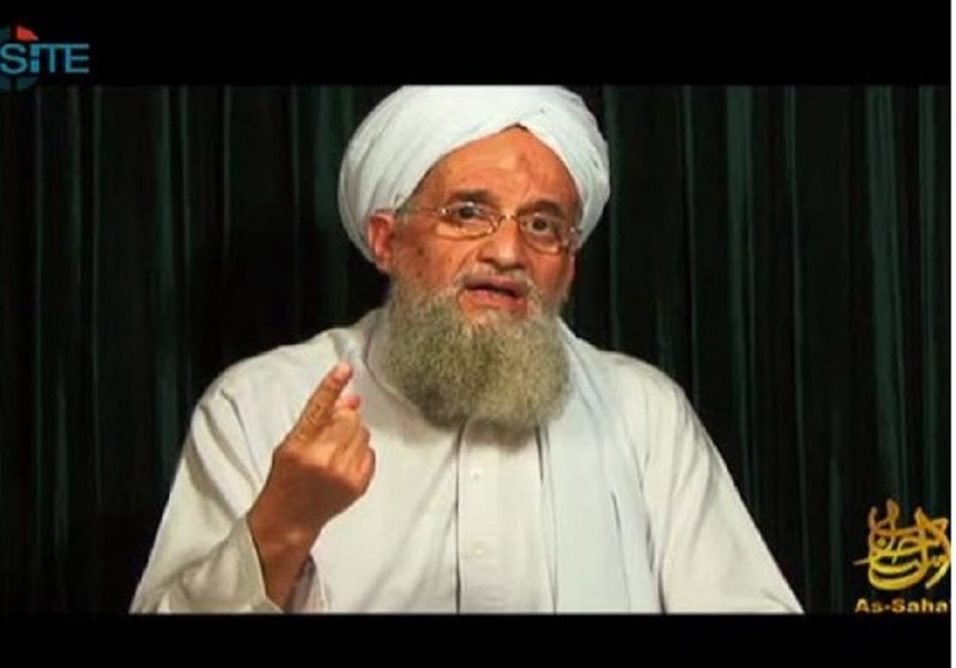
    WASHINGTON — Al-Qaeda leader Ayman al-Zawahiri has denounced what he said was a dishonest propaganda campaign by rival jihadist group the Islamic State against his organisation, in an audio message released Thursday (Jan 5).

    In the message found and translated by US-based watchdog the SITE Intelligence Group, the Egyptian extremist accuses IS leader Abu Bakr al-Baghdadi of slandering his group.

    Al-Qaeda, founded by the late Osama Bin Laden, is locked in a battle with the so-called Islamic State — which sprang from its Iraqi faction — for the leadership of a global jihad.

    In his message, the 65-year-old Zawahiri complained that Al-Baghdadi had alleged that Al-Qaeda opposes sectarian attacks on Shiites and was prepared to work with Christian leaders.

    “The liars insist upon their falsehood, to the extent that they claimed we do not denounce Shiites,” Zawahiri said, according to the translation of the message, which was released by Al-Qaeda’s media arm.

    Zawahiri denied he had said that Christians could be partners in the governance of a future Islamic caliphate, having only said that they could go about their affairs within it.

    “What I have said is that they are partners in the land, such as agriculture, trade, and money, and we keep their privacy in it, in accordance with the laws of our Sharia,” he said.

    And he insisted he had not called for Shiite Muslims to be spared, but had suggested focusing attacks on Shiite-led Iraqi forces and not on random atrocities against civilians.

    “I had told them several times to stop explosions in markets, husseiniyats and mosques, and to concentrate on military, security and police forces and Shiite militiamen,” he said.

    A husseiniyat is a Shiite place of worship and the Iraqi security forces, in their battle against the Islamic State group, are backed by Shiite religious militias.

    The Islamic State group and Al-Qaeda have both carried out hundreds of attacks on civilian targets, but some Al-Qaeda propaganda has called for less indiscriminate tactics.

    Zawahiri also denied Al-Baghdadi’s charge that Al-Qaeda had supported ousted former Egyptian president Mohammed Morsi, an Islamist who attempted to rule through the ballot box.

    The Al-Qaeda leader, who took charge after Bin Laden was killed by US commandos in 2011, is thought to be somewhere in Pakistan’s unruly border region hiding from a global manhunt.

    He communicates with the group’s remaining supporters through semi-regular video lectures, reiterating — as in his latest message — the need to target the United States.

    But Thursday’s message did not include any footage of Zawahiri speaking.

    The audio message restated the urgency of this goal — “Tell America, to other than Allah we do not kneel” — but also argued for a dialogue on tactics with other jihadists.

    “We are not infallible, but we are human beings and we hit and we miss. We must listen to advice,” he admitted, while rejecting Al-Baghdadi’s criticism.

    “What we want is to manage a conversation between those who are working for Islam — and the people of jihad at their forefront — around the best method and wisest techniques to bring victory to the religion,” he said, according to SITE. AFP


    Source: www.todayonline.com

  • Two Indonesians Deported From Singapore For Alleged Plans To Travel To Syria

    Two Indonesians Deported From Singapore For Alleged Plans To Travel To Syria

    JAKARTA: Singapore’s Immigration & Checkpoints Authority on Tuesday deported an Indonesian man and woman who allegedly had plans to travel to Syria to join the Islamic State of Iraq and Syria (ISIS). Both were deported to Batam.

    The man, identified only as MNA, is a 40-year-old native of Medan, reported The Straits Times. The woman, also 40, was identified only as SI, and is known to have lived in West Java province.

    Both had reached HarbourFront Centre on Monday and were held for interrogation before they were deported the next day, said Riau Islands police spokesman Saprono Erlangga.

    The couple had left Batam on a Queens Star speed boat on Monday afternoon. They had planned to continue their trip to Syria after Singapore.

    “They are now under interrogation by police and immigration officers. They planned to go to Syria. Investigation is being carried out intensively on whether they are planning to join ISIS,” Mr Erlangga said.

    This is the second reported case of Indonesians planning to travel to Syria using Singapore as a transit point.


    Source: www.tnp.sg

  • Indonesian Militants Planned Machete-Attack On New Year

    Indonesian Militants Planned Machete-Attack On New Year

    JAKARTA — Indonesian militants supporting Islamic State (IS) planned to attack a police post on New Year’s eve with machetes and knives, the authorities said on Monday, as the country’s elite anti-terror squad foiled yet another attack.

    The latest incident has underlined how the militants are determined to carry out attacks over the festive season, despite a massive nationwide security crackdown.

    National police spokesperson Rikwanto said four militants were preparing to attack a police post in Purwakarta, a city in West Java on New Year’s eve.

    “They had surveyed a few places and in the end they chose the police post as their target … because it has only a few security personnel as compared to the police station and police base,” said Mr Rikwanto, who goes by one name.

    The plot was foiled as Indonesia’s Special Counter-Terrorism Detachment 88, also known as Densus 88, arrested two of the would be attackers (only identified as Ivan and Rizal) on Sunday morning who led them to their hideout.

    Several hours later, police shot dead their two co-conspirators (identified as Abu Sofi and Abu Faiz), after they tried to attack officers.

    “They were told to surrender, but they refused and tried to attack officers with machetes, so we fired warning shots. When they still approached, we shot them,” said Awi Setiyono, another national police spokesman.

    The pair which was arrested on Sunday were taken to a police hospital in Jakarta.

    Mr Rikwanto said that the group is part of the Jamaah Anshor Daulah, an offshoot of the IS in Indonesia. However, he could not confirm the group’s link with Bahrun Naim, an Indonesian from Central Java who is now believed to be fighting for the IS in Syria.

    “We’re still investigating the group’s link with Bahrun Naim. However, they are affiliated with the IS,” he said yesterday (MON).

    Mr Rikwanto said the authorities seized several machetes and documents from the suspects’ house, including a will in which they stated that they had pledged their allegiance to the IS and wished to take part in suicide attacks.

    The latest incident came amid a security crackdown in several cities on Java after police arrested a would-be suicide bomber and other suspected Islamic militants who were allegedly planning a holiday season suicide bombing earlier this month.

    The government has stepped up security across the country, deploying 150,000 security personnel to safeguard churches, airports and other public places.

    Three suspected militants who were allegedly planning a New Year’s Eve suicide bombing were killed in a gunbattle last week on the outskirts of Jakarta.

    Police said the holiday season plot was uncovered during the interrogation of militants arrested on Dec 10 who were planning a suicide bomb attack on a guard-changing ceremony at the presidential palace in Jakarta the next day.

    Police have said the foiled plot planned to take place on Dec 11, in which a woman — who had worked in Singapore as a nanny — was to be the suicide bomber, was orchestrated by Naim.

    Naim is believed to have masterminded several terror plots, including a terror attack in Jakarta in January and a rocket attack against Singapore.

    On Christmas day, the authorities detained three Indonesian nationals deported from Syria for allegedly joining militants in the war-torn country.

    The three men were identified as Tomi Gunawan, 18, a resident of Pekanbaru in Riau; Jang Johana, 25, from Bandung, West Java; and Irfan, 21, from Jakarta.

    On the same day, the Indonesian Foreign Ministry noted that  since Jan last year, there have been 220 Indonesian citizens deported by the Turkish government for being suspected of crossing the border to join IS.

    Those deported from Turkey were brought to the Densus 88 headquarters for investigation upon entering Indonesia.


    Source: www.todayonline.com

  • Russian Ambassador To Turkey Is Assassinated In Ankara

    Russian Ambassador To Turkey Is Assassinated In Ankara

    Russia’s ambassador to Turkey was assassinated at an Ankara art exhibit on Monday evening by a lone Turkish gunman shouting “God is great!” and “don’t forget Aleppo, don’t forget Syria!” in what the leaders of Turkey and Russia called a provocative terrorist attack.

    The gunman, described by Turkish officials as a 22-year-old off-duty police officer, also wounded at least three others in the assault on the envoy, Andrey G. Karlov, which was captured on video. Turkish officials said the assailant was killed by other officers in a shootout.

    The assassination, an embarrassing security failure in the Turkish capital, forced Turkey and Russia to confront a new crisis tied directly to the Syrian conflict, now in its sixth year.

    President Vladimir V. Putin of Russia said on Russian television that Mr. Karlov had been “despicably killed” to sabotage ties with Turkey. Mr. Putin spoke with the Turkish president, Recep Tayyip Erdogan, by phone, and the two leaders agreed to cooperate in investigating the killing, and in combating terrorism broadly.

    In an emergency meeting with Foreign Minister Sergey V. Lavrov and other top officials, Mr. Putin said, “There can be only one answer to this — stepping up the fight against terrorism, and the bandits will feel this.”

    Mr. Erdogan, in a speech late Monday night, said the assassination was a provocation meant to derail efforts by Turkey and Russia to collaborate more closely on regional issues and economic ties.

    “We know that this is a provocation aiming to destroy the normalization process of Turkey-Russia relations,” Mr. Erdogan said. “But the Russian government and the Turkish republic have the will to not fall into that provocation.”

    The assassination came after days of protests by Turks angry over Russia’s support for the Syrian government in the conflict and the Russian role in the killings and destruction in Aleppo, the northern Syrian city.

    The Russian envoy was shot from behind and immediately fell to the floor while speaking at an exhibition of photographs, according to multiple accounts from the scene, the Contemporary Arts Center in the Cankaya area of Ankara.

    The gunman, wearing a dark suit and tie, was seen in video footage of the assault waving a pistol and shouting in Arabic: “God is great! Those who pledged allegiance to Muhammad for jihad. God is great!”

    Then he switched to Turkish and shouted: “Don’t forget Aleppo, don’t forget Syria! Step back! Step back! Only death can take me from here.”

    Hasim Kilic, a Turkish photographer for the Hurriyet news organization who witnessed the attack and sold his images to Reuters, said in a telephone interview that the gunman had fired seven shots at the ambassador — “four from behind, three while the body was on the ground” — as guests screamed and scrambled to hide.

    Mr. Kilic, who was crouched behind a cocktail table about 12 feet away, said the gunman had ordered everyone else out and refused a security guard’s request to drop his weapon. “Call the police, and I will die here,” Mr. Kilic quoted the assailant as saying.

    Turkish officials said the gunman was killed after a shootout with Turkish Special Forces.

    He was identified by Turkey’s interior minister as Mevlut Mert Altintas, from the western province of Aydin and a graduate of a police college in Izmir. Local news reports said that Mr. Altintas’s mother and sister had been arrested and that a computer had been confiscated from their house.

    While it was too early to tell if the gunman acted alone, his use of jihadist slogans and his invocation of Syria raised the possibility that he was a member, or at least a sympathizer, of an Islamist group like Al Qaeda’s Syria affiliate or the Islamic State, two organizations that Turkey has been accused by allies, including the United States, of supporting in the past.

    Russia’s Foreign Ministry spokeswoman, Maria Zakharova, told the Rossiya 24 news channel that Mr. Karlov had died of his wounds in what she described as a terrorist attack. Turkey’s Interior Ministry said the ambassador had died at Guven Hospital in Ankara.

    Russian news agencies said the ambassador’s wife fainted and was hospitalized after learning of her husband’s death. They also said that as a precaution, Russian tourists in Turkey had been advised against leaving their hotel rooms or visiting public places.

    Russia’s Tass news agency said that Mr. Karlov had been shot from behind while finishing remarks at the opening of an art exhibition titled “Russia Through Turks’ Eyes.”

    Mr. Karlov, who started his career as a diplomat in 1976, worked extensively in North Korea over two decades, before changing regions in 2007, according to a biography on the Russian Embassy’s website. He became ambassador in July 2013.

    The attack was a rare instance of an assassination of a Russian envoy. Historians said it might have been the first since Pyotr Voykov, a Soviet ambassador to Poland, was shot to death in Warsaw in 1927.

    For many Russians, the assassination is likely to recall the 19th-century killing in Tehran of Aleksandr Griboyedov, a poet and diplomat who died after a mob stormed the Russian Embassy. That episode is remembered as the most severe insult to Russia’s diplomatic corps in the country’s history.

    More recently, the Lebanese Shiite militia Hezbollah, now allied with Russia in Syria, kidnapped four Soviet diplomats in 1985, killing one and releasing three a month later.

    The United States, which has tangled bitterly with Russia over the Syrian conflict, quickly condemned the assassination in Ankara. In a statement, Secretary of State John Kerry called it a “despicable attack, which was also an assault on the right of all diplomats to safely and securely advance and represent their nations around the world.”

    Other prominent officials who often criticize Russia’s actions in Syria and elsewhere also offered their condolences. “No justification for such a heinous act,” Jens Stoltenberg, the secretary general of NATO, said on Twitter. Secretary General Ban Ki-moon of the United Nations said he was “appalled by this senseless act of terror.”

    President-elect Donald J. Trump, who has been accused by critics of aligning with Russia, said in a statement that Mr. Karlov had been “assassinated by a radical Islamic terrorist.”

    The assassination also illustrated the long reach of the Syrian war. It has destabilized Europe with hundreds of thousands of refugees, spawned terrorist attacks in Paris and Brussels, and led to the rise of the Islamic State, which controls territory across Iraq and Syria.

    When the war began, Turkey was rising and confident, and Mr. Erdogan, then its prime minister, began supporting rebels seeking the ouster of the Syrian president, Bashar al-Assad. Preoccupied with bringing Mr. Assad down, Turkey opened its borders to weapons and fighters flowing to the rebels, turning a blind eye, for a time, when the opposition turned increasingly Islamist.

    As the war ground on, the consequences for Turkey were profound. It was overwhelmed with refugees — more than three million now reside in the country — and the rise of the Islamic State led to terrorist attacks within Turkey’s borders.

    In the fall of 2015, Russia entered the conflict in support of the Syrian government, reinforcing Mr. Assad at a weak moment and dealing a blow to Turkey’s ambitions in Syria. Relations between Turkey and Russia reached a low point in November 2015 after Turkey shot down a Russian jet near the Syrian border.

    But this year, in an effort to restore relations, Mr. Erdogan, now Turkey’s president, met with Mr. Putin in St. Petersburg, and ever since the two countries have largely put aside their differences on Syria and focused on improving economic ties. In August, when Turkey’s military went into Syria to push the Islamic State out of the border town of Jarabulus, the move was widely seen as having been made with the tacit approval of Russia.

    For Turkey, the Ankara attack resonated in the Turkish collective memory: Turkey lost many diplomats in the 20th century to Armenian militants in a campaign to avenge the Armenian genocide during World War I.

    “Turkey is very aware of the size of this failure, and I think the government will make every effort to investigate this fully,” Sinan Ulgen, a Turkish former diplomat who is the chairman of the Center for Economics and Foreign Policy Studies, an Istanbul research organization, said of the Russian diplomat’s assassination. “I don’t expect any crisis between Turkey and Russia.”

    Since the Turkish military incursion into Syria in August, Mr. Erdogan’s criticism of Russia over Syria had been muted. But Mr. Erdogan faced a dilemma: Even as he was warming to Russia, he faced a Turkish public, not to mention the Syrian refugees within Turkey, angry over Russia’s role in the bombing of Aleppo.

    On Monday evening in Istanbul, just after the assassination, a group of protesters gathered outside the Russian consulate on Istiklal Avenue, the city’s largest pedestrian street. The gathering was more street theater than protest, with two men lying on the street, shrouded in bloody sheets and the Syrian flag, and surrounded by candles, to represent the killings in Aleppo.

    Mohammed al-Shibli, a Syrian activist who participated, said, “I felt extreme happiness when I heard the news” of the assassination.

    He continued: “This is the first step in getting justice for the Syrian people. The ambassador is not innocent. He represents the foreign policy of his murderous state and thus he is a murderer, as well. Now we are waiting for revenge against everyone who shed blood in Syria.”
    Source: The New York Times

  • 350 Orang Berjaya Dipindahkan Dari Aleppo; Sedang PBB Bersiap Sedia Hantar Pasukan Pemerhati

    350 Orang Berjaya Dipindahkan Dari Aleppo; Sedang PBB Bersiap Sedia Hantar Pasukan Pemerhati

    Sekitar 350 orang masih berjaya meninggalkan bandar Aleppo pada Ahad (18 Dis), kata seorang pegawai perubatan.

    Ini meskipun pemindahan para penduduk dan pemberontak di bandar itu ditangguhkan secara rasmi.

    Berpuluh-puluh bas sudah memasuki Aleppo semalam bagi menyambung semula pemindahan, tetapi rancangan berkenaan dibatalkan pada saat-saat akhir selepas kenderaan-kenderaan yang digunakan bagi dua buah kampung lain diserang.

    Perkembangan ini dilaporkan sedang Majlis Keselamatan Pertubuhan Bangsa-Bangsa Bersatu (PBB) bersiap sedia untuk mengundi bagi menghantar para pemerhati ke Aleppo.

    “Lima bas membawa para penduduk yang dipindahkan dari bahagian timur Aleppo,” kata Ahmad al-Dbis, yang menerajui pasukan doktor dan relawan yang menyelaras pemindahan ke Khan al-Assal. Dari situ, mereka yang dipindahkan boleh ke bahagian-bahagian lain Aleppo dan wilayah Idlib.

    Badan pemerhati, Syrian Observatory for Human Rights, menyatakan 350 orang itu dapat dipindahkan selepas Rusia dan Turki menggesa rejim Syria supaya membenarkan konvoi bas itu untuk meneruskan perjalanannya.

    Pemindahan digantung pada Jumaat (16 Dis), sehari selepas konvoi-konvoi itu mula meninggalkan Aleppo di bawah satu perjanjian yang membenarkan rejim Syria mendapat kuasa penuh ke atas Aleppo.

    Source: Berita MediaCorp