Tag: turkey

  • Bitcoin Is Un-Islamic, Says Turkey, As Price Soars Above $10,000

    Bitcoin Is Un-Islamic, Says Turkey, As Price Soars Above $10,000

    Turkish authorities have declared that Bitcoin is not accordant with Islam and has warned its citizens against buying the world’s most popular cryptocurrency.

    Turkey’s Directorate of Religious Affairs, known as Diyanet, said that the cryptocurrency is widely used for nefarious and illegal activities, and is not sufficiently regulated, making it far more volatile than other currencies.

    “Buying and selling virtual currencies is not compatible with religion at this time because of the fact that their valuation is open to speculation, they can be easily used in illegal activities like money laundering and they are not under the state’s audit and surveillance,” Diyanet said. It added that Bitcoin had not been authorized by the state.

    The religious body took a decision on the digital currency at a meeting last Friday. Turkish citizens have still invested in Bitcoin despite the warnings from the government, and criminals are also capitalizing on the rise in the currency’s value.

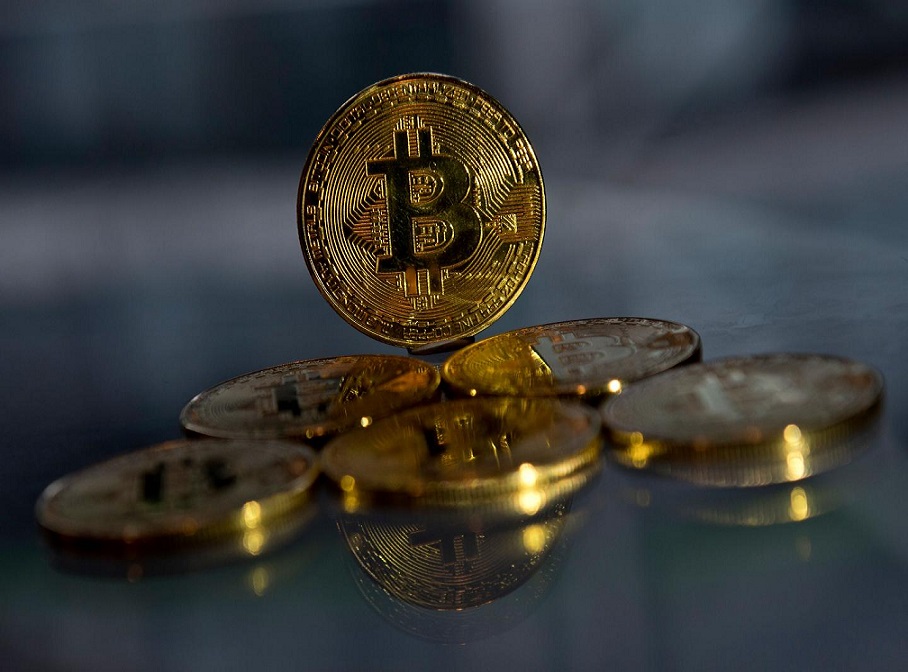
    Gold plated souvenir Bitcoin coins are arranged for a photograph in London on November 20, 2017. Bitcoin, a type of cryptocurrency, uses peer-to-peer technology to operate with no central authority or banks. Justin Tallis/AFP/Getty

    Earlier this month, Turkish police captured a gang who had extorted 450 bitcoins, worth around $3.3 million at the time, from a wealthy businessman, forcing him to transfer them from his laptop and hand over his online banking passwords. The gang targeted him because he showed off his flashy lifestyle on social media.

    As the digital currency rises in popularity, the president of Turkey’s Central Bank said that research is taking place into cryptocurrencies more generally. Murat Cetinkaya said that such digital currencies could “contribute to financial stability,” according to Bitcoin.com.

    The cryptocurrency is the financial story of 2017, rising from less than $1,000 at the start of January to more than $10,000 at the time of writing. Enthusiasts of the digital currency say it could continue its ascent, but financial juggernauts have expressed cautioned about its lack of regulation.

    Bitcoin’s market value remains less than $200 billion, a slither of the world’s $200 trillion in financial market assets, and cryptofunds—some run by top U.S. financiers—are beginning to pop up as confidence around Bitcoin’s potential spreads.


    Source: Newsweek

  • CEO Hyundai Di Turkey Berpuasa Penuh Sepanjang Ramadan Meskipun Bukan Beragama Islam

    CEO Hyundai Di Turkey Berpuasa Penuh Sepanjang Ramadan Meskipun Bukan Beragama Islam

    Sempena bulan Ramadan, umat Islam kian memperbanyakkan ibadah selain menahan lapar dan dahaga bagi menghayati keindahan bulan mulia ini.

    Yang jelas, terdapat pelbagai manfaat kesihatan daripada amalan berpuasa, antaranya bagi mengeluarkan toksin tubuh dan menyihatkan sistem pencernaan. Namun, bukan umat Islam sahaja yang mahu merasai nikmat berpuasa, nampaknya sebilangan masyarakat bukan Islam juga ingin saling menghormati bulan suci ini.

    Malah, sesetengah daripada mereka bukan sekadar tidak makan di hadapan rakan Islam yang berpuasa, mereka juga ikut berpuasa selama sebulan! Salah seorang daripadanya adalah Ketua Pegawai Eksekutif (CEO) Hyundai, di bandar Assan, Turki.

    CEO Hyundai itu, Mong Hyun Yoon, sudahpun berpuasa sejak tahun lalu dan tindakannya itu jelas amat dihargai oleh para pegawainya.

    “Sejak tahun lalu, saya sudah mula berpuasa dengan keluarga Hyundai Assan untuk merasakan apa yang mereka rasakan selama berpuasa,” tulisnya dalam sebuah surat untuk pegawai yang jadi tular sejak beberapa hari lalu.

    “Saya ingin menunjukkan rasa bangga saya terhadap mereka. Betapa kagumnya saya melihat para pegawai berpuasa dengan senang hati, tidak menganggap puasa sebagai suatu urusan yang berat,” katanya.

    “Melihat para pegawai saya tetap bekerja dengan baik meskipun berpuasa membuat saya berasa simpati terhadap mereka dan belajar memahami orang-orang yang kelaparan di luar sana, hal ini adalah pelajaran yang sangat penting dari Al-Quran.”

    Selain ikut berpuasa, Encik Mong Hyun Yoon malah turut memberikan ganjaran kepada pegawainya yang tetap bekerja keras sepanjang bulan Ramadan.

    Yang pasti, dengan wujudnya sikap toleransi dan prihatin oleh CEO mereka, para pegawai ternyata semakin dapat melakukan tugas dengan tenang dan gembira.

    Malah, CEO yang bertugas di Turki sejak tahun lalu itu memang terkenal dengan sikap bijak menyesuaikan diri sehingga turut menghafal lagu kebangsaan Turki pada tahun lalu.


    Source: http://berita.mediacorp.sg

  • Russian Ambassador To Turkey Is Assassinated In Ankara

    Russian Ambassador To Turkey Is Assassinated In Ankara

    Russia’s ambassador to Turkey was assassinated at an Ankara art exhibit on Monday evening by a lone Turkish gunman shouting “God is great!” and “don’t forget Aleppo, don’t forget Syria!” in what the leaders of Turkey and Russia called a provocative terrorist attack.

    The gunman, described by Turkish officials as a 22-year-old off-duty police officer, also wounded at least three others in the assault on the envoy, Andrey G. Karlov, which was captured on video. Turkish officials said the assailant was killed by other officers in a shootout.

    The assassination, an embarrassing security failure in the Turkish capital, forced Turkey and Russia to confront a new crisis tied directly to the Syrian conflict, now in its sixth year.

    President Vladimir V. Putin of Russia said on Russian television that Mr. Karlov had been “despicably killed” to sabotage ties with Turkey. Mr. Putin spoke with the Turkish president, Recep Tayyip Erdogan, by phone, and the two leaders agreed to cooperate in investigating the killing, and in combating terrorism broadly.

    In an emergency meeting with Foreign Minister Sergey V. Lavrov and other top officials, Mr. Putin said, “There can be only one answer to this — stepping up the fight against terrorism, and the bandits will feel this.”

    Mr. Erdogan, in a speech late Monday night, said the assassination was a provocation meant to derail efforts by Turkey and Russia to collaborate more closely on regional issues and economic ties.

    “We know that this is a provocation aiming to destroy the normalization process of Turkey-Russia relations,” Mr. Erdogan said. “But the Russian government and the Turkish republic have the will to not fall into that provocation.”

    The assassination came after days of protests by Turks angry over Russia’s support for the Syrian government in the conflict and the Russian role in the killings and destruction in Aleppo, the northern Syrian city.

    The Russian envoy was shot from behind and immediately fell to the floor while speaking at an exhibition of photographs, according to multiple accounts from the scene, the Contemporary Arts Center in the Cankaya area of Ankara.

    The gunman, wearing a dark suit and tie, was seen in video footage of the assault waving a pistol and shouting in Arabic: “God is great! Those who pledged allegiance to Muhammad for jihad. God is great!”

    Then he switched to Turkish and shouted: “Don’t forget Aleppo, don’t forget Syria! Step back! Step back! Only death can take me from here.”

    Hasim Kilic, a Turkish photographer for the Hurriyet news organization who witnessed the attack and sold his images to Reuters, said in a telephone interview that the gunman had fired seven shots at the ambassador — “four from behind, three while the body was on the ground” — as guests screamed and scrambled to hide.

    Mr. Kilic, who was crouched behind a cocktail table about 12 feet away, said the gunman had ordered everyone else out and refused a security guard’s request to drop his weapon. “Call the police, and I will die here,” Mr. Kilic quoted the assailant as saying.

    Turkish officials said the gunman was killed after a shootout with Turkish Special Forces.

    He was identified by Turkey’s interior minister as Mevlut Mert Altintas, from the western province of Aydin and a graduate of a police college in Izmir. Local news reports said that Mr. Altintas’s mother and sister had been arrested and that a computer had been confiscated from their house.

    While it was too early to tell if the gunman acted alone, his use of jihadist slogans and his invocation of Syria raised the possibility that he was a member, or at least a sympathizer, of an Islamist group like Al Qaeda’s Syria affiliate or the Islamic State, two organizations that Turkey has been accused by allies, including the United States, of supporting in the past.

    Russia’s Foreign Ministry spokeswoman, Maria Zakharova, told the Rossiya 24 news channel that Mr. Karlov had died of his wounds in what she described as a terrorist attack. Turkey’s Interior Ministry said the ambassador had died at Guven Hospital in Ankara.

    Russian news agencies said the ambassador’s wife fainted and was hospitalized after learning of her husband’s death. They also said that as a precaution, Russian tourists in Turkey had been advised against leaving their hotel rooms or visiting public places.

    Russia’s Tass news agency said that Mr. Karlov had been shot from behind while finishing remarks at the opening of an art exhibition titled “Russia Through Turks’ Eyes.”

    Mr. Karlov, who started his career as a diplomat in 1976, worked extensively in North Korea over two decades, before changing regions in 2007, according to a biography on the Russian Embassy’s website. He became ambassador in July 2013.

    The attack was a rare instance of an assassination of a Russian envoy. Historians said it might have been the first since Pyotr Voykov, a Soviet ambassador to Poland, was shot to death in Warsaw in 1927.

    For many Russians, the assassination is likely to recall the 19th-century killing in Tehran of Aleksandr Griboyedov, a poet and diplomat who died after a mob stormed the Russian Embassy. That episode is remembered as the most severe insult to Russia’s diplomatic corps in the country’s history.

    More recently, the Lebanese Shiite militia Hezbollah, now allied with Russia in Syria, kidnapped four Soviet diplomats in 1985, killing one and releasing three a month later.

    The United States, which has tangled bitterly with Russia over the Syrian conflict, quickly condemned the assassination in Ankara. In a statement, Secretary of State John Kerry called it a “despicable attack, which was also an assault on the right of all diplomats to safely and securely advance and represent their nations around the world.”

    Other prominent officials who often criticize Russia’s actions in Syria and elsewhere also offered their condolences. “No justification for such a heinous act,” Jens Stoltenberg, the secretary general of NATO, said on Twitter. Secretary General Ban Ki-moon of the United Nations said he was “appalled by this senseless act of terror.”

    President-elect Donald J. Trump, who has been accused by critics of aligning with Russia, said in a statement that Mr. Karlov had been “assassinated by a radical Islamic terrorist.”

    The assassination also illustrated the long reach of the Syrian war. It has destabilized Europe with hundreds of thousands of refugees, spawned terrorist attacks in Paris and Brussels, and led to the rise of the Islamic State, which controls territory across Iraq and Syria.

    When the war began, Turkey was rising and confident, and Mr. Erdogan, then its prime minister, began supporting rebels seeking the ouster of the Syrian president, Bashar al-Assad. Preoccupied with bringing Mr. Assad down, Turkey opened its borders to weapons and fighters flowing to the rebels, turning a blind eye, for a time, when the opposition turned increasingly Islamist.

    As the war ground on, the consequences for Turkey were profound. It was overwhelmed with refugees — more than three million now reside in the country — and the rise of the Islamic State led to terrorist attacks within Turkey’s borders.

    In the fall of 2015, Russia entered the conflict in support of the Syrian government, reinforcing Mr. Assad at a weak moment and dealing a blow to Turkey’s ambitions in Syria. Relations between Turkey and Russia reached a low point in November 2015 after Turkey shot down a Russian jet near the Syrian border.

    But this year, in an effort to restore relations, Mr. Erdogan, now Turkey’s president, met with Mr. Putin in St. Petersburg, and ever since the two countries have largely put aside their differences on Syria and focused on improving economic ties. In August, when Turkey’s military went into Syria to push the Islamic State out of the border town of Jarabulus, the move was widely seen as having been made with the tacit approval of Russia.

    For Turkey, the Ankara attack resonated in the Turkish collective memory: Turkey lost many diplomats in the 20th century to Armenian militants in a campaign to avenge the Armenian genocide during World War I.

    “Turkey is very aware of the size of this failure, and I think the government will make every effort to investigate this fully,” Sinan Ulgen, a Turkish former diplomat who is the chairman of the Center for Economics and Foreign Policy Studies, an Istanbul research organization, said of the Russian diplomat’s assassination. “I don’t expect any crisis between Turkey and Russia.”

    Since the Turkish military incursion into Syria in August, Mr. Erdogan’s criticism of Russia over Syria had been muted. But Mr. Erdogan faced a dilemma: Even as he was warming to Russia, he faced a Turkish public, not to mention the Syrian refugees within Turkey, angry over Russia’s role in the bombing of Aleppo.

    On Monday evening in Istanbul, just after the assassination, a group of protesters gathered outside the Russian consulate on Istiklal Avenue, the city’s largest pedestrian street. The gathering was more street theater than protest, with two men lying on the street, shrouded in bloody sheets and the Syrian flag, and surrounded by candles, to represent the killings in Aleppo.

    Mohammed al-Shibli, a Syrian activist who participated, said, “I felt extreme happiness when I heard the news” of the assassination.

    He continued: “This is the first step in getting justice for the Syrian people. The ambassador is not innocent. He represents the foreign policy of his murderous state and thus he is a murderer, as well. Now we are waiting for revenge against everyone who shed blood in Syria.”
    Source: The New York Times

  • Failed Coup In Turkey: Returning Travelers Recall The Fear And Chaos

    Failed Coup In Turkey: Returning Travelers Recall The Fear And Chaos

    With helicopters buzzing overhead, the sound of gunshots and soldiers in full battle dress with weapons at the ready – it was total chaos at Istanbul’s Ataturk airport in the hours after Friday night’s attempted military coup in Turkey.

    Singaporeans who returned from Istanbul to relieved family members yesterday described scenes of fear, with travellers hiding in toilets to wait out the siege.

    Jet planes would take off and thunder past so close that the windows would vibrate.

    “It sounded like explosions,” said Ms Joanne Lim, 33, who is in between jobs.

    She was one of the Singaporeans who arrived home yesterday evening on a Turkish Airlines flight. She spent 24 hours waiting for a plane out of Turkey after her initial flight was cancelled.

    Another Singaporean, Ms Grace Feng, 33, said she was at the airport waiting for her flight to depart at about midnight, when all flights were suddenly cancelled.

    Ms Feng, a teacher, said it was “a huge mess” and that travellers were piecing together what happened from television broadcasts and news on their mobile phones.

    People also started running in panic after a glass wall broke at the airport, she said.

    Ms Feng said that what was “most scary” was the sense that “anyone could just walk in” to the area where travellers were huddled in the airport in the middle of the night. She added that people were sleeping at restaurants in the transit area.

    At Changi Airport yesterday, travellers were also faced with a frustrating wait at the baggage belt, as luggage from their flight went through additional screenings.

    At the Terminal 1 belt, security staff were also seen scanning people with metal detectors.

    Two hours after the flight landed at about 8pm, families were still waiting anxiously for their loved ones. Some, like Ms Feng, shared a tight embrace with family members after finally coming out of the baggage area.

    Many family members said they were worried after hearing about the attempted coup and the airport being closed.

    Musician John Chua was waiting for his cousin, who told him that bombing sounds could be heard at the airport.

    “We were worried, we also weren’t sure if he was telling us everything that was happening,” said Mr Chua, 31.

    Mrs Lyn Sam, 71, said her son – who was returning from a business trip – had to queue for more than three hours to get his ticket revalidated for the new flight.

    “It sounded like a harrowing experience, with the helicopters and soldiers standing outside the glass door with guns,” said the housewife.

    Earlier yesterday morning, a group of 10 ITE College Central students and their lecturer also arrived back from Istanbul via Kuala Lumpur.

    The group, comprising students aged between 18 and 21, were stranded at Ataturk airport for about 13 hours and had hid inside a toilet, said an ITE spokesman, who added that they were relieved at the “safe return of all students and staff”.


    Source: The Straits Times

  • Damanhuri Abas: The Turkey Failed Coup Exposes Western Hypocrisy On Democracy

    Damanhuri Abas: The Turkey Failed Coup Exposes Western Hypocrisy On Democracy

    The failed coup in Turkey exposes again (but conveniently ignored in mainstream discourse) western hypocrisy. It can be deduced from western mainstream media as the coup unfolds, their inclination to see Erdogan go. Shamelessly discarding their mantra of the defender of democracy. They were probably hoping that like Morsi in Egypt, to just let another of this ‘Islamist’ disappear ‘into the night’ quietly.

    By the Grace of God, the people of Turkey unlike the Arabs in Egypt, stood together as one united people in denouncing the Military (most probably western backed) coup. Even the so-called secularist had the integrity to see through the game being played and stood by the democracy they believed in where differing opinions are discussed and debated and where disagreements do not mean hatred for each other.

    This coup also exposes the conniving hypocrites in the ranks and file of state institutions in Turkey who instead of addressing grievances through the ballot box, had the audacity to resort to non-constitutional means to overthrow an elected government.

    There is a lesson in all this for everyone who shout so much about rule of law, that when it comes to their own interest/preference (even in Singapore), they are likewise guilty of fanning this hypocrisy by rooting the illegal coup ‘quietly’ wishing for the overthrow of Erdogan. When will we grow up to behave like mature adults to debate and discuss and differ too but respect the rule of law to ensure justice for all within the democratic process. Or are we in truth only pretentious and not so civilized after all.

    Integrity is the true test of character and sadly in the aborted coup event in Turkey, in our instinctive response, exposes our severe lack of it. Failure in our collective consistency to always follow agreed rule of law (local or international) but instead flip-flopping shamelessly, has led to the mess in the middle east when western powers since the time of colonization until today, deemed it their strange privilege to decide leaders of countries justified by their own self-interest ignoring the wishes of the indigenous population.

    We will continue to allow this injustices on earth through our selective conscience so long as we choose to look the other way when our comfort zone, our people, our religion, our heritage, our civilization, our guy is doing the bad thing.

    Instead we who claimed to be educated, modern and the so-called proud believers in democracy must raise our collective voices in praise of the success of the people of Turkey in fighting back and defying rogue elements of the Turkish military with their lives. In truth, the Turks in the streets of Ankara and Istanbul last Friday are fore runners in moving humanity forward in the spirit of defending civilization than all of us put together.

    Walk the Talk people!!!!


    Source: Damanhuri Abas