Tag: Walid J. Abdullah

  • The Hypocrisy Of Racism And Multiracialism In Singapore

    The Hypocrisy Of Racism And Multiracialism In Singapore

    *when an old man hurls racist insults at a Malay lady*

    ‘Oh, this is a one-off incident. This should be condemned, but it is not reflective of our society at all.’

    *when madrasah kids are labeled extremists*

    ‘Oh, that is just one sick dude’s comments. Ignore him.’

    *when building a fence is suggested to cordon off foreign workers*

    ‘You must understand the context of the post. She is not racist; in fact, she gets along with the foreign workers in her ward very well!’

    *when an influential person remarks that Malays and Indians cannot speak English well*

    ‘His comments were taken out of context. Let us not be so quick to judge others.’

    *when racist, xenophobic and Islamophobic comments are made (on Facebook) on the comments sections of ST articles*

    ‘Those are just keyboard warriors. Who hide behind anonymity. Most Singaporeans are not like that.’

    ———

    *when there is one incident of Malays at a wedding standing up for a Chinese funeral procession that was passing by*

    ‘This is what makes Singapore, Singapore. *tears a bit* I love this country. Multiracialism, at its best. Majulah Singapura!’


    Source: Walid J. Abdullah

  • Walid J. Abdullah: Racism Should Be Eliminated Regardless Of How Poorly Other Countries Are Doing

    Walid J. Abdullah: Racism Should Be Eliminated Regardless Of How Poorly Other Countries Are Doing

    Amongst the most common statements made when one recounts instances of racism in Singapore, or even discusses ethnicity in the first place is, ‘At least minorities here have it better than anywhere else in the world. Can you name me anywhere in the world where racism is less rampant?’

    Aside from the condescension in the statement, and the fact that many who make such statements have actually never lived in other countries – lived, not visited for a week and then speak as though one knows everything about a place -, there are more serious questions to be asked about the statement and question.

    Firstly, I do not get a vote in Malaysia, or India, or the USA. Nor do I live in those countries. I do get a vote, however, in Singapore. I do live here, as does my family. So i should be bothered about what happens here.

    Secondly, how on earth does pointing out worse situations absolve oneself of blame or self-introspection? These people are essentially saying that ‘others have it worse, so do not complain.’ Why does that even make sense?

    ‘Oh don’t complain or do anything about your stage 1 cancer. Others have stage 4 cancer.’

    And most importantly, when a person makes that statement and/or asks that question, he/she is basically devaluing my citizenship. Why should i compare myself to a Rohingya in Myanmar, or a Palestinian, or an Egyptian Copt? I should be comparing myself to other Singaporeans!!!!

    Whether people realize it or not, when they make such statements or ask such questions, they are, in actuality, saying that minorities SHOULD NOT expect equal rights in this country. And that is an assumption we should all reject.

    For us minorities, when someone asks ‘where else in the world are minorities treated better?’, we should not even legitimize the question by thinking of countries where minorities have it good. We should just point out how bigoted that question is in the first place.


    Source: Walid J. Abdullah

  • Muslims Must Find Allies Among Non-Muslims In Fight Against Islamophobia

    Muslims Must Find Allies Among Non-Muslims In Fight Against Islamophobia

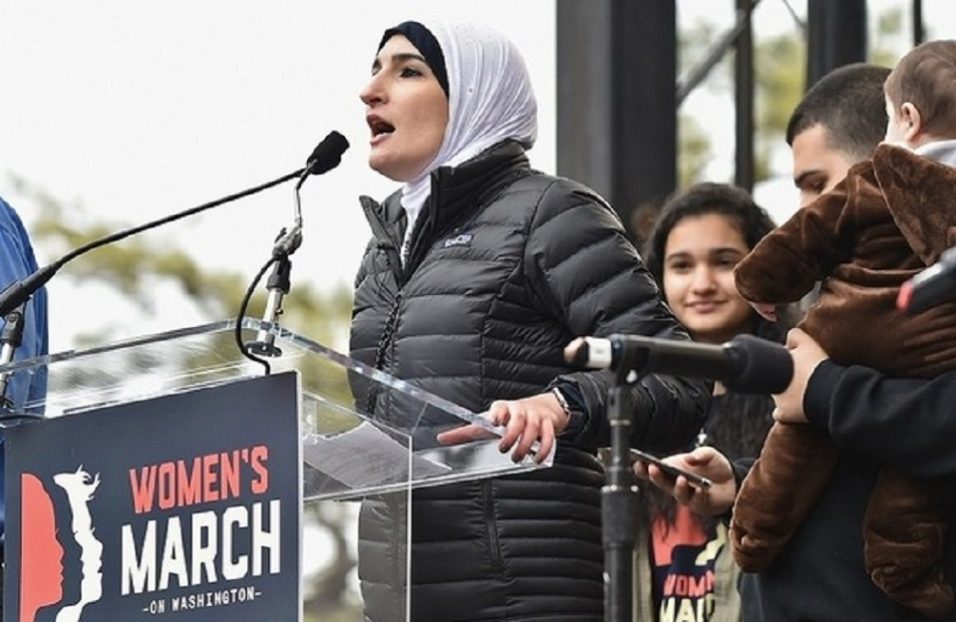
    Possible lessons from the Linda Sarsour episode:

    (For those who are unaware, she is a Palestinian-American and a social activist who participated in the women’s march held a few days ago. She gave a rousing, inspiring speech. Unfortunately, but predictably, she was slammed by many people; those on the far-right, but also, some Muslims.)

    1) Some men just cannot stand strong women, who have loud voices and are not afraid to articulate their opinions. This is regrettably still true, and it is really futile to pretend that it is not.

    2) As long as Muslims do not conform to certain expectations held by others, there will be efforts to ‘reform’ Islam and ‘modernize’ it. Can’t help but feel there would be fewer criticisms if she had not donned the hijab, or if she was a self-styled Muslim ‘reformer’.

    3) We should always challenge terminologies that are put forth by others. When others use the term ‘moderate’, or ‘progressive’, or ‘conservative’, do not let that slide, or worse, embrace them uncritically. This is not a matter of being an ‘academic exercise’; rather, it could have real-life implications.

    In this case, the term ‘anti-Semite’ was bandied about casually. Is she anti-Semitic because she is Palestinian? Aren’t Arabs Semites in the first place???

    Do not let others define the terms of discourse for us.

    4) Muslims should be aware that many of those who are defending Linda are those from other/no faiths. Yes, in the Western world, there are plenty of Islamophobes who wish to see Islam disappear from the face of the earth, and/or want Islam to be changed wholesale.

    At the same time, there are many who are allies and potential allies, who have stood up and will continue to stand up for us. It is crucial to recognize this.

    Muslims hate it when people paint us with the same brush. We, of all people, should know not to do that with ‘people in the West’, ‘Jews’, ‘the right’, and the like.


    Source: Walid J. Abdullah

  • Walid J. Abdullah: Jesus Christ Is An Important Figure In Islam

    Walid J. Abdullah: Jesus Christ Is An Important Figure In Islam

    Jesus Christ and Muslims:

    *disclaimer: i am not an Islamic scholar, so these are the opinions of a lay Muslim*

    Jesus Christ is an important figure in Islam. In fact, no Muslim can claim to be one if he/she does not believe in Jesus Christ. Islam is perhaps unique for being a non-Christian faith that requires belief in the Christ in order to be an adherent to the faith.

    This is not to say that Muslims and Christians believe exactly the same things about Jesus. This is an attempt to highlight some similarities and differences on Jesus Christ in the two great Abrahamaic faiths.

    Similarities:

    Like Christians, Muslims believe Jesus was born of a virgin. Both Mary and Jesus are accorded important positions in Islam. Three of 114 chapters of the Quran are named after Jesus/his family/occurrences in his life: Jesus is mentioned 25 times by name in the Quran.

    Jesus is a righteous Messenger and Prophet. And, Muslims actually believe he is the Messiah promised by the God of Abraham to the Jewish people.

    Muslims also believe that Jesus will be reappearing near the end of days, for the second coming. His reappearance, will be one of the major signs of the last hour.

    Differences:

    Muslims however, depart from Christians on an important point: we do not believe that Jesus was divine, God, the son of God, or a second person of the trinity.

    Muslims also believe that Jesus was not crucified, or according to some scholars, he did not die by crucifixion. Details aside, the Quranic narrative is that Jesus did not die on the cross.

    Furthermore, Muslim theology is similar to Jewish theology in the sense that each person is accountable for his or her own sins, or as stated in the book of Ezekiel, ‘the father shall not bear the iniquity of the son; the son shall not bear the iniquity of the father. The righteousness of the righteous shall be upon him; the wickedness of the wicked shall be upon him.’ Thus, Muslims do not believe that Jesus, or anyone else, could die for the sins of mankind.

    —–

    Obviously, there will be other similarities and differences; these are perhaps the main ones.

    If we are serious about inter-faith dialogue and understanding, we must be honest about what we agree on, and where we disagree. ‘Feel-good’ dialogues that talk about similarities are as unproductive as rants focusing exclusively on differences.

    True harmony can only be achieved, i think, when people understand where they disagree, and agree to accept those disagreements as part and parcel of life. Pretending that we share same theologies is not just dishonest, but can be counter-productive.

    And, we must also get over the idea that just because we disagree (not just in religion, but in politics and everything else!), we must hate each other. And just because we like each other, we must not talk about differences. Both these notions will end up achieving very little for a multi-cultural, multi-religious society.

    Merry Christmas to my Christian friends!


    Source: Walid J. Abdullah

  • Walid J. Abdullah: Do Not Forget About The Concept Of ‘Justice’ In Islam

    Walid J. Abdullah: Do Not Forget About The Concept Of ‘Justice’ In Islam

    Lately, people have been emphasising the importance of the concept of mercy in Islam. Personally, i feel this is a great thing. I do wish at times that some Muslims would follow the example of our Christian brethren in underscoring love and mercy in their faith. Gentleness would undoubtedly be a better ambassador than harshness in most cases.

    Yet, one must be cognizant of certain realities. One who constantly talks about love and mercy, but chooses to remain silent when there is a need to speak of justice and condemn oppression, has very little credibility then when he/she champions the former qualities as essential aspects of Islam. It is only natural that people would question what his/her motives are when he reiterates love and mercy, but neglects justice or fairness.

    What, or perhaps whose, agenda is one serving when one engages in such cherrypicking?

    To paraphrase Professor Tariq Ramadan, when people with religious authority condemn acts of violence by the lay people, but are silent when dictators commit oppression, that is a sure way to drive more young people toward the path of extremism.

    It is indeed strange that some people harp on mercy, but ignore justice. Worse still are those who are quick to display harshness when Muslims are aggressors, but somehow suddenly find their merciful side when Muslims are victims, or when powerful people are doing the oppressing.


    Source: Walid J. Abdullah