Category: Agama

  • Muslims has obviously been suppressed.

    Muslims has obviously been suppressed.

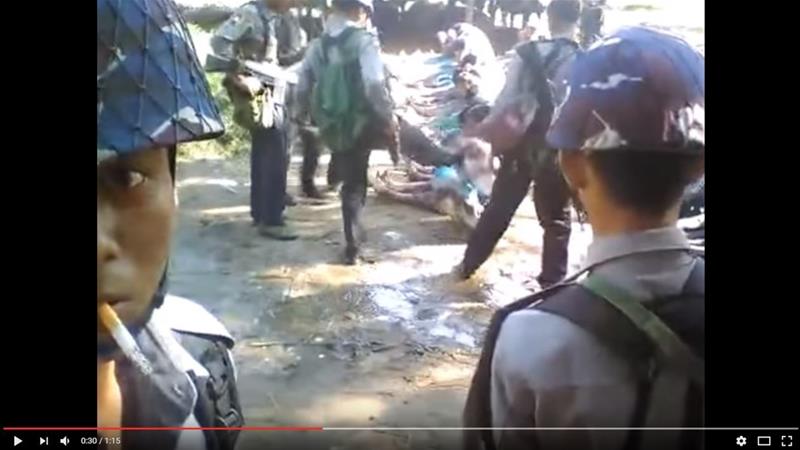
    I just want to share an opinion which i think maybe i think too much or deep. Just recently, a viral video about cruelty of police officers towards the Rohingyas was captured on tape. To make it worst, a Myanmar police was the one filming their activities without showing any sign of guilt. The officers abused and kicked the Rohingyas who were seated on the ground in a line. After some investigating the Myanmar government have come out to say that 4 officers have been caught for the incident and will be taking action against them. This is good right?? But actually it is really not so let me explain. A few weeks back in the news, a man claimed to be Islam and purposely crashed a lorry in an act of terrorism. He drove the lorry into a Christmas market and killed several people. The police in Germany end up catching the wrong person and because the runaway is a muslim, the case became even bigger and is all over the news. So what is my point? I don’t know how to make comparison of one muslim guy with a entire muslim community (rohingya) anyway but if you look properly how come the one single guy gets more attention instead of the Rohingyas?? Then also what if the video was never captured, will we ever get to hear the Myanmar government admitting to abusing their community because this is rare. Senang cakap, orang melayu sudah kene tindas. Can’t you see that we Muslims have been suppressed?


    Siti

    Reader’s Contribution

  • Tricky, but necessary, to build resilience against security threats

    Tricky, but necessary, to build resilience against security threats

    Terrorism and radicalisation will be an inescapable part of our lives from here on, and the main threats for 2017 and beyond should be divided into two parts.

    The first is the foreign fighter blowback. With the so-called Islamic State (IS) suffering reverses on the battlefield in Iraq and Syria, many South-east Asian fighters will return home to Indonesia and Malaysia. They may also seek new safe havens such as in the southern Philippines.

    In addition, they will seek to leverage issues which give them propaganda mileage that can reinvigorate their social media campaigns — such as the plight of the Rohingya.

    And we should not be so quick to assume that it is simply South-east Asian fighters we will need to reckon with. One cannot discount the possibility of a wider movement of battle-hardened Uighur veterans who, for various reasons, cannot return to their home countries elsewhere.

    For some sense of what is likely to happen with these returnees, we can look to Europe, where Western fighters have been trickling home for some time now.

    Many are embittered by their experiences and disillusioned by the depravity of the IS; but some have come back even more determined to wreak havoc, and even more radicalised.

    There is no reason to suppose that a similarly mixed scenario should not play out in South-east Asia.

    RADICALS OF ANY FAITH

    The second threat is radicalisation in general. We have to accept that this is not simply an issue of Islamist radicalisation. Religious revivalism is increasingly present in other major faiths.

    Radicals inhabit the fringes of all these. And the sobering fact is that we live in a future where all sorts of individuals are going to be “radicalised” in some form or other — even those without strong religious convictions.

    We should not forget that we have had an individual, a Singapore citizen, who has tried to join Kurdish militia to fight IS. Whatever his motivations — and there is some suggestion of alienation and wanting to do good — we need to understand that, in future, all sorts of people are going to want to fight for causes, or else take up some form of muscular activism.

    This will be a rising trend and these impulses, if not managed, will lead to schisms within societies.

    Terror networks can be interdicted and taken down. Security services are actually pretty good at this sort of thing. However, what all of us need to get our heads around is the rising tide of intolerance and, more precisely, tolerance for intolerance.

    This is the second big issue we need to face. It is a phenomenon that did not start in South-east Asia, but it is creeping in. Traditional forms of syncretistic religious practice that have existed here for centuries (if not longer) are being replaced by a more hardline, less inclusive type of observance.

    This type of feeling is fuelled by social media. As Foreign Affairs Minister Vivian Balakrishnan said last year: “We now live in a world of fragmented echo chambers — we hear what we want to hear, we ignore what we don’t want to hear, or inconvenient truths are not heard.

    “And in fact, from an academic point of view, this leads to a ‘shallowing’ of discourse, a world in which there is a dearth of deep thought and cogent discussion across diverse perspectives. You get a more monochromatic world and a narrowing of minds.”

    Singapore will have to maintain its values of multiculturalism and tolerance. These will be increasingly valued in an era where these are becoming rare commodities (and, indeed, in an era where these qualities are persecuted in some quarters).

    It is my view that Singapore will increasingly come to be seen as a beacon, not simply on account of good policymaking, which we have, but because parts of the world and our immediate environment are becoming increasingly insalubrious.

    A POST-TRUTH WORLD

    The echo chambers that Dr Balakrishnan and other leaders have talked about suggest a milieu in which people can choose simply to hear what they want to hear. This is especially problematic for a number of reasons.

    One is that state and non-state actors are increasingly taking advantage of various mechanisms to subvert the truth and to peddle their own information, which may actually be quite distant from the facts. These may all the more easily be lapped up by groups of people within society who, for some reason or the other, might be susceptible to this kind of subversion.

    Consider, for example, the masterful information-operations campaign that Russia has waged in Ukraine. There was a cyber takedown of the power grid, but more importantly was the media (including social media) manipulation and distortion of information which led many to believe the Russian point of view.

    Seen from that point of view, what Russia had done was an entirely legitimate protection of Russian minorities living under persecution. The real point is, of course, that information had been bent and twisted to a level where no one was sure where fact ended and fiction began.

    As commentators have increasingly observed, we live in a post-truth world. One could also argue that Russia did something very similar in the United States election. Why not? A state can nowadays accomplish aims allied to its self-interest that promise outcomes that are much more certain than diplomacy and much less costly than warfare.

    BEWARE THE SLOW-BURN ATTACK

    The people of Singapore, therefore, should not assume that the “attack”, when it does come, will be a mass-casualty terror incident. This is what our agencies routinely hold drills for.

    But the attack might equally be a cyber takedown — either a hacking attempt (and at least one government ministry, the Foreign Affairs Ministry, has suffered a major cyber hack) or some seemingly low-level but nonetheless persistent and insidious cyber effort to chip away at the resilience of our people.

    The basic point is that, while keeping a wary lookout for Black Swans, we need to be aware of slow-burn issues too — particularly the kind that amount to attempts to sap away at the will of a people until the nation is itself shrivelled from within.

    How do we counter this? Part of the answer lies in critical thinking — the ability to ruthlessly interrogate source material that comes before us. In this, the post-truth era, those digital natives who grow up knowing — either instinctively or through some form of instruction — the difference between the objective facts and fake news will have an intrinsic advantage over others.

    A great deal will also boil down to resilience. This could be divided into two kinds. The Government has succeeded in hardening the obvious targets in Singapore and, over the past 10 years or so, focusing some attention on the “bounce-backability” of society.

    The second part is more tricky but achievable. This has to do with how our society coheres and prevents fissures from forming after an event. This next leg is about a certain toughness and resolve that we need to develop more of.

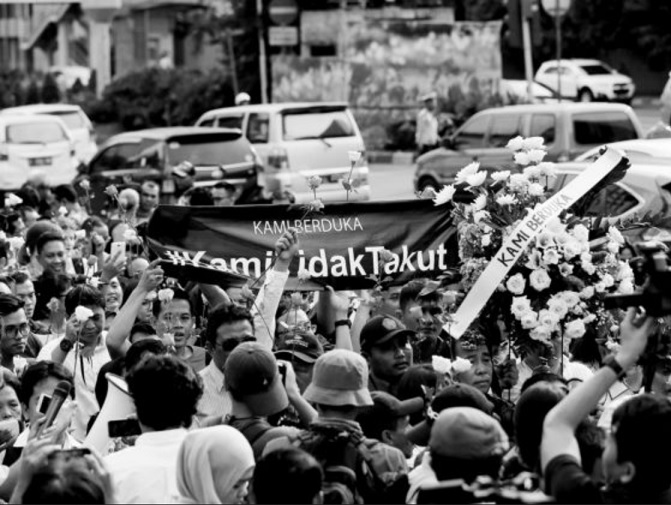
    Consider, for example, what happened after terror incidents and attacks worldwide. The Sydney hostage-taking in December 2014 was followed by a dignified viral campaign, “I’ll Ride with You”, to show solidarity with Australian Muslims. The Charlie Hebdo attacks in Paris in January 2015 saw the ground-up viral campaign “Je Suis Charlie”, while the Jakarta attacks in January 2016 saw the hashtag #KamiTidakTakut (Bahasa Indonesia for “We are not afraid”) go viral.

    Each of these was seen to be a grassroots event and response. Do the people of Singapore have the wherewithal and gumption to rise up, to come together with dignity, resilience and resolve, and with minimal government intervention? Whether and how we can we can do this will be a telling indicator of the shape or form in which we make it to SG100.

    ABOUT THE AUTHOR:

    Dr Shashi Jayakumar is a Senior Fellow and head of the Centre of Excellence for National Security at the S Rajaratnam School of International Studies, Nanyang Technological University.


    Source: Today

  • Myanmar detains cops over Rohingya abuse video

    Myanmar detains cops over Rohingya abuse video

    YANGON • Myanmar’s government yesterday said it has detained several police officers over a video apparently showing Rohingya civilians being beaten, a rare admission that the authorities may have carried out abuses against the Muslim minority.

    Tens of thousands of people from the persecuted ethnic group – loathed by many of Myanmar’s Buddhist majority – have fled a military operation in Rakhine province launched after attacks on police posts in October.

    Bangladesh says some 50,000 Rohingya have crossed its borders over the past two months. Many have brought harrowing accounts of rape, murder and arson at the hands of Myanmar’s security forces. Their stories have raised global alarm and galvanised protests against Myanmar’s de facto leader, Ms Aung San Suu Kyi, who has been accused of not doing enough to help the Rohingya.

    Her government has said troops are hunting militants behind deadly raids on police border posts, denying claims of atrocities and launching a dogged information campaign against reports of abuse.

    However, the authorities yesterday pledged to take action “against police officers who allegedly beat villagers during area clearance operations on Nov 5 in Kotankauk village”.

    Ms Suu Kyi’s office named four officers who were involved in the operation, including constable Zaw Myo Htike, who filmed the “selfie-style” video.

    “Those who (were) initially identified were detained,” it said in a statement. “Further investigations are being carried out to expose other police officers who beat villagers in the operation.”

    Dozens of videos have emerged apparently showing security forces abusing Rohingya, but this is the first time the government has said it will take action over them.

    The footage shows police hitting a young boy on the head as he walks to where dozens of villagers are seated in rows on the ground, hands behind their heads. Three officers then start attacking one of the men, beating him with a stick and kicking him repeatedly in the face.

    A Rohingya activist contacted by Agence France-Presse said the footage had been verified by a refugee from the nearby camp, Shilkhali.

    Around 600 people have been detained since the military operation, according to state media, including six who have died in police custody.

    Buddhist-majority Myanmar has long discriminated against the stateless Rohingya, who rights groups say are among the most persecuted people in the world.

    More than 120,000 have been trapped in squalid displacement camps since violence erupted in 2012 in Rakhine, where they are denied citizenship, access to healthcare and education.

    More than a dozen Nobel laureates wrote to the UN Security Council last week urging action to stop the “human tragedy amounting to ethnic cleansing and crimes against humanity” in northern Rakhine.

    Last month, UN rights commissioner Zeid Ra’ad Al Hussein criticised the government’s “callous” handling of the crisis, describing it as “a lesson in how to make a bad situation worse”.

    Under Myanmar’s junta-era Constitution, Ms Suu Kyi’s civilian administration has limited power over the army, which maintains control of the defence, home and border ministries.


    Source: The Straits Times

  • It’s payback time.

    It’s payback time.

    Dear Friends,

    It’s payback time.

    It has been a joyous 2016 for me. For those who have been supporting me, I cannot thank you enough. Words are powerless to express my gratitude.

    I’m taking this opportunity to pay it forward for all the blessings.

    Kindly link me up to whoever you think is in need of a kitchen cabinet but doesnt have the means to.

    Im looking at someone who is from the low income family and whose kitchen is in dire need of a restructuring.

    The makeover is worth $1770 and it includes;

    – 8ft bottom kitchen cabinet (enough space for a proper kitchen sink and cooker hob)
    – Kitchen cabinet base
    – Single bowl kitchen sink
    – Kitchen sink tap
    – Electrical and plumbing works for the new installation
    – Removal and disposal of existing cabinet (if need be)

    I will not take credit for this deed. The recipient of this project will be informed that the goodwill is from my past clients.

    For those of you who have done your house renovation with me in 2016, part of the profits will go towards this project under your name. You know who you are.

    And for those who want to contribute to this project and add value, you are also welcomed to participate. No amount is too small.

    Let’s put a smile on someone’s face today.

    Tagged someone or refer me to those who deserve this. Thank you!

    PS: I will be selecting and visiting 3 homes and make a personal assessment of who needs it the most. Priority will be given to those families with low income or under public assistance.

    #Bizpayback


    Khan Osman Sulaiman

    Reader’s Contribution

  • A Singaporean In Iran: Life In A Shi’ite Seminary

    A Singaporean In Iran: Life In A Shi’ite Seminary

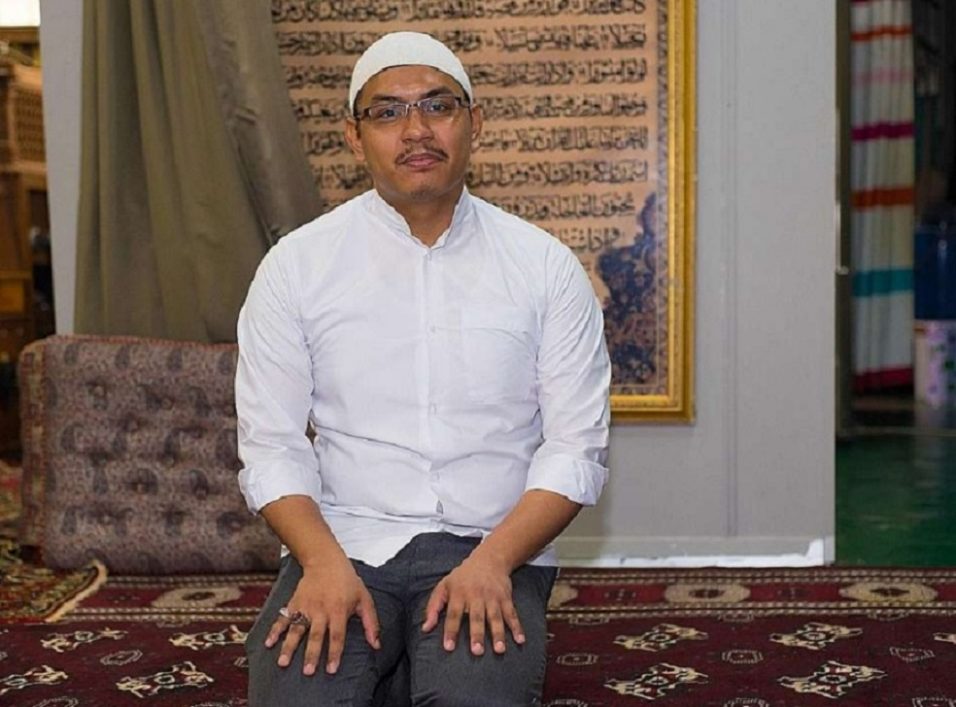
    Mr Ahmad Murtadha Rosli, 26, is not your typical Singaporean university student. He attends classes from 8am to 5pm every Saturday to Thursday and shares a dormitory with nine other students.

    His teachers are all men who wear turbans and long, flowing cloaks and teach using thick, vintage tomes. That is because Mr Ahmad is studying in a hawza that is a renowned Shi’ite Islam seminary in Qom, Iran.

    Shi’ite Islam is the second-largest sect of Islam, after Sunni Islam. Both branches agree on many aspects of the religion, but are divided over Prophet Muhammad’s rightful successor.

    More than 85 per cent of the world’s 1.5 billion Muslims are Sunni. In Singapore, Shi’ites make up less than 1 per cent of its Muslims, the majority of whom are Sunni.

    The hawza in Qom, home to about 70,000 students, teachers and academics, is the largest Shi’ite seminary in the world. Smaller seminaries exist in other parts of Iran and in neighbouring Iraq, and even in Canada and the United Kingdom. Hawza graduates are accomplished in fields like Islamic law and faith. Many go on to become religious teachers, while some end up in politics. Iran’s Supreme Leader, Ayatollah Ali Khamenei, graduated from Qom.

    The seminary attracts students from across the globe. Many come from India and Pakistan; others from countries like China, Austria and Russia. Singaporean students are rarer. Mr Ahmad’s father, Ustaz Mohammad Rosli Hassan, graduated from Qom nearly three decades ago. Now 52, Ustaz Rosli is the leader of the 5,000-strong Shi’ite community in Singapore.

    “My name was placed under ‘Thailand’ when I first joined because ‘Singapore’ wasn’t in its system,” said Mr Ahmad. “There were a few other students from Singapore but, sadly, they (didn’t finish), maybe because the way of living over in Iran is too different.”

    Since there was no other suitable candidate, Mr Ahmad added, he felt a responsibility to eventually replace his dad as leader.

    Ustaz Rosli said: “Not everyone likes that role; it is a very challenging role. The community needs leadership – whether it comes from my family or not, it doesn’t matter. I am happy that Ahmad is willing (to take over from me), but there are tough challenges ahead.”

    BACKACHES AND LONELINESS

    The seeds of Mr Ahmad’s calling were planted when he was a 10-year-old seeing the hawza for the first time during a holiday in Qom. “I always told my dad I wanted to go there,” he said.

    He attended secular schools and went from Yusof Ishak Secondary School to Ngee Ann Polytechnic, from where he graduated with a Diploma in Civil and Environmental Engineering. The decision to make the switch to a religious institution did not come easily.

    “Being a religious teacher, you won’t be earning a lot,” Mr Ahmad said, as he worried about raising a family and not having enough savings to buy an HDB flat. “I thought about all that – it’s a sacrifice I have to make for the community.”

    Two years ago, after completing his national service as a firefighter, Mr Ahmad packed his bags and left. “I thought it was like going to any other boarding school,” he said. “But at the end of the day, it’s a very different lifestyle.”

    Until recently, Mr Ahmad’s classrooms did not have air-conditioning, computers and projectors. When he stepped inside his small dorm, he was shocked to find bunk beds that did not come with mattresses. “I was sleeping on a wooden frame,” he said. “My back was aching very badly.”

    When it comes to classes, Mr Ahmad has the same timetable – comprising subjects like Persian, Quran studies and Islamic history – every day. Revision is done in pairs, where students take turns explaining a topic they learnt in class to each other. The school believes that encourages critical thinking and helps students to clarify misconceptions.

    Mr Ahmad also had to adapt to unfamiliar conditions in Qom, a desert city 125km south-west of the capital, Teheran. “Singapore is very green, but Qom is very brown,” he said. “If you leave your shoes outside for three days, it will be covered with dust.”

    On Fridays, when it is the weekend and there are no classes, Mr Ahmad plays football on a synthetic pitch with his friends from Malaysia. As meals are not provided on Fridays, they would cook dishes from home, like tom yam and chicken curry. “But it’s hard to find red chilli there,” he said. “Whenever someone visits, we would ask them to bring chilli powder or flakes.”

    However, the company of friends did not stop him from missing home. “Sometimes, I would be very lonely,” he said. “I would just sit in my room and look at old pictures on my phone.” Despite that, Mr Ahmad felt encouraged by his desire to please his parents, whom he described as “very religious”. “This is the time I can prove to them that I want to be successful,” he said.

    His moment of glory came when he scored full marks for an Arabic exam, a subject he initially struggled in because he lacked the foundation. “I would spend four hours doing my homework over and over again, just so I could get it right,” he recalled.

    Mr Ahmad plans to study in Qom straight through to a PhD in the fundamentals of Islamic law – a process that will take at least 10 years. He doesn’t intend to return to Singapore until his father “decides to retire one day, or if he’s too old or sick”.

    Right now, Mr Ahmad is taking a break from his studies. He has been back in Singapore since March last year to get married to his girlfriend of six years. The pair met and got together during their polytechnic days, when she was still a Sunni interested in the Shi’ite sect. About a year into their relationship, she switched over.

    “Before, her parents were good to me,” he said. “After finding out that I was a Shi’ite and that she was slowly converting, things changed.” When Mr Ahmad approached her parents about tying the knot, they rejected him. So, the pair went straight to the Registry of Muslim Marriages. According to the Administration of Muslim Law Act, a Muslim marriage can still be solemnised by a religious official, or kadi, even if the bride’s parents object to it. But after questioning Mr Ahmad about his Shi’ite background, the kadi refused to proceed with the marriage.

    “Now, we have to appeal through Muis (the Islamic Religious Council of Singapore); they are helping us a lot in settling the issue,” he said. Ustaz Rosli is confident his son will prevail in this “unwanted episode”. “Like it or not, he will be married officially in Singapore,” he said.

    Mr Ahmad expects to know the outcome of his appeal soon. If things go to plan, his future wife will accompany him back to Qom, where she intends to enrol in the hawza. He just wants his ordeal to be resolved quickly. “I’m very much missing everything in Qom,” he said. “I wish the authorities would do things a lot faster.”

    LIKE FATHER, LIKE SON

    For Ustaz Rosli, life in the hawza could not have been more different. He arrived in Qom in 1986, during the tail end of the Iran-Iraq war that killed nearly half a million people.

    “People were living in a tough situation,” Mr Ahmad recalled his father telling him. “Everything was so expensive back then.” During meal times, he added, students were issued coupons that entitled them to a serving of meat. “They didn’t get to eat meat or chicken on a daily basis, like how it is now.”

    Ustaz Rosli graduated in 1990 before returning to Singapore, where he is now president of the Jaafari Muslim Association, a Shi’ite organisation based in Geylang. “There were people before us who lived through life in the seminaries with difficulties,” he said. “Anyone who wants to succeed me must be spiritually strong.”

    Ustaz Rosli has also been a full-time religious teacher for more than 25 years, a job that has taken him to countries like Indonesia, the Philippines and the United States, where he gives lectures on Islamic studies. Mr Ahmad said his dad wanted to challenge the perception that religious teachers cannot be successful. “Back then, people used to think that there was no future in being an ustaz,” he said.

    When Mr Ahmad comes home, he wants to be a religious teacher too. He thinks he will have no problems registering under the Asatizah Recognition Scheme, which requires Islamic religious teachers in Singapore to have at least a diploma in Islamic studies from a recognised institution.

    The mandatory scheme, which kicks in from this month, aims to recognise qualified teachers and combat extremist ideology. “Although the majority of Muslims in Singapore are Sunni, Islam in Singapore is not monolithic. Sunnis and Shi’ites have lived in harmony in Singapore for many years,” said a spokesman for Muis. The scheme will ensure that asatizah can “serve as a reliable source of reference” for the Muslim community in Singapore, he added. “The Asatizah Recognition Board has begun engaging asatizah as well as centres providing Islamic education.”

    Mr Muhammad Al-Baqir Buang, who is president of the Muslim Youth Assembly, another Shi’ite group with about 200 members, said: “The scheme will help to reduce extremist or radical thoughts from being spread to the masses by unqualified teachers. However, I have doubts about how far it can be implemented, given that there are some asatizah who teach in homes, and other loopholes that can’t be totally monitored.”

    Nevertheless, Mr Ahmad said the scheme helps to deter “extreme” Islamic teachers who might label Shi’ites as heretics. “The authorities are trying to promote harmony between Shi’ites and Sunnis,” he said. “That is something that is good.”


    Source: www.straitstimes.com

deneme bonusu