Category: Agama

  • Anti-Foreigner And Anti-Islam Sentiments Dividing Germany

    Anti-Foreigner And Anti-Islam Sentiments Dividing Germany

    DRESDEN (Germany) — The fear of foreigners, especially Muslims, threatening or drowning out national and regional identities forged over centuries seems to have a growing pull in Europe, where populists and nationalists scored record gains in elections in May for the European Parliament and where recent protests against immigrants flared up in Germany and Sweden.

    The simmering resentment and suspicion have driven debates across Europe about tighter controls on immigration. Worries about immigration have helped buoy right-wing parties in Britain, Denmark, France and Hungary. German officials recorded more than 70 attacks on mosques from 2012 to 2014, including a case of arson, and the police in Britain have recorded an increase in hate crimes against Muslims.

    Protesters marched in several German cities on Monday against higher levels of immigration and what they see as the growing influence of Islam, in defiance of an appeal from Chancellor Angela Merkel to spurn rallies she views as racist.

    The German rallies, organised by a new grassroots movement known as PEGIDA, or Patriotic Europeans Against the Islamisation of the West, have become an almost weekly event in the east German city of Dresden in recent months. About 18,000 people, the biggest number so far, turned out in Dresden on Monday, but similar rallies in Berlin and the western city of Cologne were heavily outnumbered by counter-protesters who accuse PEGIDA of fanning racism and intolerance.

    In her New Year address last week, Ms Merkel urged Germans to shun the anti-Muslim protesters, saying their hearts were full of hatred. “We need to … say that right-wing extremism, hostility towards foreigners and anti-Semitism should not be allowed any place in our society,” she said on Monday in the eastern town of Neustrelitz.

    Ms Merkel was joined in her sentiment yesterday when top-selling German tabloid Bild and 50 prominent Germans called for an end to what they see as rising xenophobia. Bild published a “No to PEGIDA” appeal yesterday, covering the front page and a double page spread on pages 2 and 3 with quotes from the 50 politicians and celebrities.

    “(They) are saying ‘no’ to xenophobia and ‘yes’ to diversity and tolerance,” Bild deputy editor Bela Anda wrote in a commentary. “We should not hand over our streets to hollow rallying cries.”

    Elsewhere, hundreds of Swedes gathered last Friday outside the royal palace in Stockholm and in other cities to show solidarity with the Muslim population a day after an unknown assailant threw a bottle filled with flammable liquid at a mosque in the northern city of Uppsala and sprayed racist slogans on the building. The firebomb caused no injuries and did not damage the building.

    But as each day brings more reports of immigrants who have boarded ships and sneaked across European borders, the famous tolerance of the Swedes is being tested as never before.

    Despite a lacklustre economy, Sweden was third behind only Germany and France in the number of people registering for asylum in 2012, said the Migration Policy Institute in Washington. Relative to its population, Sweden received the second-highest share of asylum applications in the European Union after Malta, the institute said.

    Even so, there are few places where the turn against immigrants is more surprising than Sweden, where a solid core of citizens still supports the 65-year-old open-door policy towards immigrants facing hardship that has long earned international respect for the country.

    The Syrian conflict has boosted the number of asylum seekers. Of 81,000 people seeking asylum in Sweden in 2014, roughly half were from Syria, the Swedish Migration Board said.

    Opposition to the rising numbers is growing. The far-right, anti-immigrant Sweden Democrats had their best showing ever, nearly 13 per cent of votes, in elections in September.

    Mr Omar Mustafa, president of the Islamic Association of Sweden, which represents about 40 communities across the country, said the recent fires at mosques were the culmination of a year of rising anti-Islamic attacks, from women having their hijabs, or head coverings, pulled off in the streets to the vandalism of 14 mosques, as well as racist or anti-Muslim vitriol spread through social media.

    “It is a scary development in Swedish society,” Mr Mustafa said in a telephone interview. “It is a big movement that is moving from the Internet to the real world.”

    Germany, too, has some of the world’s most liberal asylum rules, partly due to its Nazi past. The number of asylum seekers arriving in Germany, many from the Middle East, jumped to around 200,000 last year, four times as many as in 2012. In Cologne, home to a large Muslim population, there were 10 times as many counter-demonstrators as PEGIDA protesters. In similarly multi-ethnic Berlin, about 5,000 counter-demonstrators swamped around 400 anti-Muslim protesters, local police said.

    “Germany is a country where refugees are welcome and the silent majority must not remain silent but rather go out onto the streets and show itself,” Justice Minister Heiko Maas said at the Berlin counter-demonstration.

    Cologne Cathedral, one of Germany’s most famous landmarks, switched its lights off to protest against the anti-Muslim rallies. Berlin’s Brandenburg Gate turned off its floodlights in a similar gesture of solidarity.


    Source: www.todayonline.com

  • Osman Sulaiman: MUIS Perlu Ambil Sikap Terbuka Dengan Masyarakat Demi Kebaikkannya Sendiri

    Osman Sulaiman: MUIS Perlu Ambil Sikap Terbuka Dengan Masyarakat Demi Kebaikkannya Sendiri

    Baru2 ini, saya ada mengetengahkan beberapa isu tentang pengendalian Majlis Ugama Islam Singapura (MUIS). Sayangnya, ada juga rintangan dari sesetengah pihak, Ini saya anggap normal. Setiap perbuatan kita, akan ada yg tidak berapa senang atau setuju. Tapi malangnya, bantahan mereka tidak ada asas yg kukuh.Sebagai umat Islam di Singapura, saya berhak mendapat ketelusan dari MUIS. Walaupun MUIS ialah badan yg tertinggi di Singapura untuk mengendalikan hal2 ehwal Islam, sebagai individu, saya juga mempunyai tanggungjawab atas apa yg berlaku kepada MUIS.

    Isu2 yg di bangkitkan dari sosial media bukannya hanya khabar angin atau sangkaan semata. Banyak juga isu dapat di cungkil dari penyata kewangan MUIS tahun 2013. Sayangnya MUIS tidak mahu respon kepada komunitinya. Ia cuma mengeluarkan iklan di suratkhabar tetapi tidak menjawab soalan2 penting yg di utarakan.

    Ramai yg telah menghantarkan email kepada MUIS sama ada mahu berjumpa untuk mendapatkan duduk perkara, ataupun mengutarakan isu2 untuk mendapat keterangan. MUIS tidak menjawab dan memberi jawapan.

    Antara isu2 yg harus diperjelaskan ialah:

    1) Perihal MUIS berurusan dgn riba.

    2) MUIS is a gov stat board tapi ia membayar gaji perkerjanya dari duit Zaka

    3) Kepimpinan MUIS dilantik oleh pemerintah dan bukan komunitinya

    Dari 3 perkara diatas, saya berpendapat yg ianya penting supaya MUIS menjawab atau memberi keterangan untuk perkara2 tersebut. Pengendalian MUIS harus transparent dan accountable.

    Jatuhnya MUIS bukan dari orang yg mempersoalkan pengendaliannya, tetapi jatuhynya MUIS akan datang dari orang yg taksub dan berduduk diam apabila retakan2 kecil mula berlaku.

    Saya harap tidak ada yg mencumuh saya hanya kerna saya bertanyakan soalan2 ini kepada ‘kuasa tertinggi’ Islam di Singapura. Ini hak saya dan tanggungjawab saya sebagai umat islam. Wasaalam.


    Osman Sulaiman

  • Keep Alcohol Out of Kampong Glam URA

    Keep Alcohol Out of Kampong Glam URA

    If you have not done so, you might want to check out Facebook community, Alcohol Free Kg Glam Conservation Area.

    For the local Arab and Malay Muslim community who have longed for the ban of alcohol in the vicinity of Kg Glam, this is the page where you can be heard and where you can obtain latest updates on the matter.  The more ‘likes’ the page receives, the more the relevant authorities will have to listen to our voices. Isn’t this the hallmark of a more consultative government that PAP aspires to be?

    Alcohol Free Kg Glam

    Politics aside, this is a serious matter which has been brought up and championed by numerous individuals such as Habib Alwi Al Habshi and Dr Ameen Talib, the owner of Cafe Le Caire. Despite their best efforts, there has yet to be a satisfactory response from the authorities.

    Dr Ameen Talib Habib Alwi Al Habshi

    Alcohol has never been a part of Kg Glam’s heritage. It should not be part of its future.  There are many examples of alcohol-free zones around the world, including in Western countries like Australia and the UK. Here, the authorities have also acted to enforce an alcohol-free zone in Little India following the riots. They have also acted to weed out sleazy activities and booze in Joo Chiat and Clarke Quay after much lobbying by the residents.

    Alcohol Free Zoen Kg Glam

    So why not in Kg Glam? Today, people drink alcohol openly without any regard for the majestic place of worship that anchors the area, Masjid Sultan.  Some blatantly consume alcohol even in front of ‘halal’ banners in the area.

    Halal Banners

    This is a man-made situation.  It was never this way.  A reminder of what Kg Glam used to be, taken from URA’s own website (www.ura.gov.sg/uol/conservation/conservation-xml.aspx?id=KPGL).

    Kampong Glam probably derived its present name from the gelam tree. The bark of the gelam tree was used by the Orang Laut to make awnings and sails. Its timber was often used for constructing boats and also served as firewood. Its fruit was ground and used as pepper – mercha bolong; and its leaves boiled and concocted into the Cajeput oil, a medication for rheumatism and cramps.

    The area is well known for two major landmarks: Sultan Mosque, Singapore’s most important mosque, and the Istana Kampung Gelam, the former Sultan’s palace. Aside from the Sultan’s family, residents of the area included the Arabs, Boyanese, Bugis and Javanese, and by 1824, at least 1/3 of the residents were Chinese.

    Different streets were settled by Muslims from different parts of South-East-Asia. Other major community and religious landmarks are the Hajjah Fatimah Mosque (National Monument), the Malabar Mosque and the Madrassah Alsagoff Al-Arabiah.

    The commercial landscape of Kampong Glam was characterised by many traditional businesses that catered to the Malay/Muslim community and beyond: frame makers, tombstone carvers, textile wholesalers, spice traders and perfumers, sandal makers, Muslim food caterers, and retailers of gemstones, rattan handicraft and religious paraphernalia.

    Many streets also had their own unique trades. North Bridge Road was known for many tailors and Chinese-run goldsmith shops. Sultan Gate used to be dominated by stone masons and blacksmiths. The Beach Road waterfront before reclamation was the focal point of trading and shipping services that thrived on the arrival of Bugis ships and traders. Haji Lane, named after the ‘Hajj’ – which is the pilgrimage undertaken by Muslims to Mecca and Medina, and the stretch of Bussorah Street nearer to Sultan Mosque were residences and also centres for pilgrimage services, serving Muslim pilgrims from around the region.

    Kampong Glam was also a centre for publications dealing with Islamic and Malay literature, and education for the Muslim community. Madrassahs, educational institutions based on Islamic principles were set up. One such institution is the Madrassah Alsagoff Al-Arabiah.

    Kampong Glam has a rich history which should be acknowledged by the authorities.  This is how we want to remember Kg Glam.

    Istana Kg Glam Masjid Sultan Old Photo


    Not like this.

    Alcohol Kg Glam


    So friends, please do your part to ‘like’ the page.  Share it with your friends and family and encourage them to ‘like’ the page too.


    Contributor: Aku Tak Mau Glam-our

  • 6 Muslim Beliefs About Jesus That Every Christian Should Know

    6 Muslim Beliefs About Jesus That Every Christian Should Know

    Muslims and Christians have much in common, both groups have enjoyed an amicable relationship throughout history (apart from a few unfortunate hiccups). After all, it was the then Christian ruler of Abyssinia who granted refuge to early Muslim converts who were fleeing persecution from the Polytheists of Makkah. They were advised to go there by the Prophet Muhammad himself (peace be upon him).

    The following are 6 Muslim beliefs about Jesus (peace be upon him) every Christian must know.

    1. One cannot be a Muslim without believing in Jesus

    Muslims must believe in and respect all of the prophets in order to be counted as a believer. From Adam to Noah and from Moses to Jesus up to the final prophet, Muhammad (peace be upon them all).

    Say, [O believers], “We have believed in Allah and what has been revealed to us and what has been revealed to Abraham and Ishmael and Isaac and Jacob and the Descendants and what was given to Moses and Jesus and what was given to the prophets from their Lord. We make no distinction between any of them, and we are Muslims [in submission] to Him.” Qur’an, 2:136

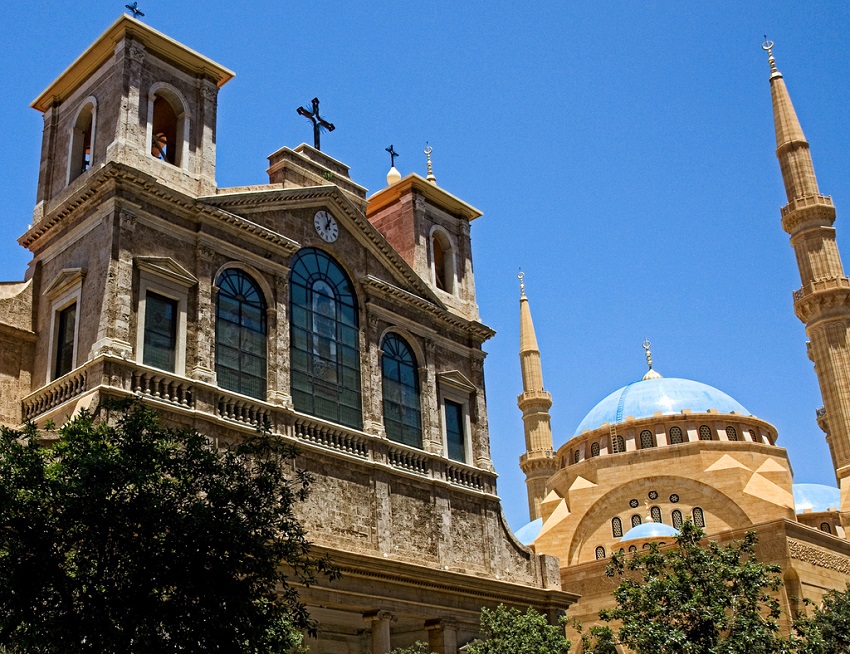
    ChurchMosque

    Photo by Lebnen18 via Wikimedia Commons

    2. He had a miraculous birth

    Muslims also believe Jesus was born miraculously without a father to the Virgin Mary. His mother is also respected and venerated across the by Muslims and she is known to have been a pious and devout person. An entire chapter of the Qur’an is named after her.

    3. He performed miracles

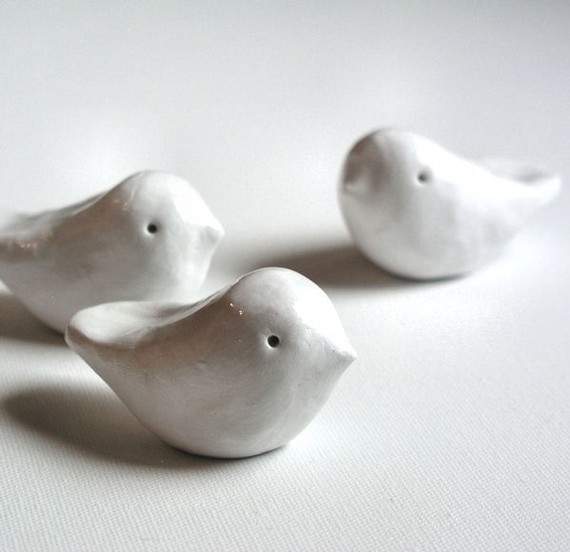
    clay bird

    Muslims believe Jesus performed many miracles such as creating a bird from clay or curing the blind and leper and bringing the dead back to life.

    And [make him] a messenger to the Children of Israel, [who will say], ‘Indeed I have come to you with a sign from your Lord in that I design for you from clay [that which is] like the form of a bird, then I breathe into it and it becomes a bird by permission of God . And I cure the blind and the leper, and I give life to the dead – by permission of God. And I inform you of what you eat and what you store in your houses. Indeed in that is a sign for you, if you are believers. Qur’an, 3:49

    Notice how God explains that all the miracles were carried out only with the permission of God lest people start thinking he was God.

    4. He is not God

    Muslims believe he was one of the greatest prophets sent by God but he was not divine. Muslims do not believe he was the son of God or God incarnate, they believe he was a human being who was given the task of conveying the message to the people and to preach that there is only One God.

    5. He was not crucified

    cross

    Christian belief holds that Jesus was crucified but Muslims differ. Muslims believe Jesus was raised to the heavens by God and instead, one of his foes was made to look like him who was crucified instead.

    And [for] their saying, “Indeed, we have killed the Messiah, Jesus, the son of Mary, the messenger of Allah .” And they did not kill him, nor did they crucify him; but [another] was made to resemble him to them. And indeed, those who differ over it are in doubt about it. They have no knowledge of it except the following of assumption. And they did not kill him, for certain. Qur’an 4:157

    6. Jesus will return

    Muslims believe Jesus will return before the final days and will establish peace and justice on Earth. As part of a longer narration, the Prophet Muhammad is reported to have said:

     “By the one whose hands my life is in, surely the Son of Mary will descend amongst you as a just ruler…” Sahih Al Bukhari

    By Abu Safiyyah Follow on Twitter @AbuSafiyyah88


    Source: http://ilmfeed.com

  • MUIS Staying Silent Despite Calls For Greater Transparency On Its Accounts

    MUIS Staying Silent Despite Calls For Greater Transparency On Its Accounts

    There have been some disclosures made about MUIS on this page recently.

    Whether it is turning away the needy, the use of zakat to pay MUIS staff salary, lack of transparency in waqf or riba, there are real concerns in how MUIS is conducting itself.

    For instance, is MUIS dealing with riba with its own subsidiaries?

    According to MUIS annual report, MUIS charges 3.75% interest on a $29,528,837 loan to its subsidiary.

    Why is MUIS, supposedly the highest Islamic authority in Singapore dealing with riba?

    When Allah has declared war against anyone who are involved with riba.

    We emailed MUIS last Friday and did not even receive an acknowledgement.

    MUIS Accounting

    Nevertheless, we will like to remind our brothers and sisters to reserve judgement until there is full disclosure.

    And reserve judgement until we hear from MUIS.

    We are raising questions. We have contacted MUIS to gain clarification.

    MUIS has refused to respond.

    This is one of the problems we face as a community. MUIS does not respond to the community. It is a statutory body that reports to the government.

    Not to us.

    And yet, they are supposed to be the highest Islamic authority.

    This is where the problem lies. It demands the authority to lead us but refuse to explain itself or its decisions.

    Not even the Khulafah Ar Rasyideen behaved in this way. The Khulafah accepted being questioned and corrected in public.

    MUIS refuse to even respond. Instead, they took out advertisement to tell the community a half truth.

    Insha Allah we will reveal a lot more issues concerning MUIS. Until they respond, we suggest that while all of us recognise the problems, let us continue to reserve judgement.

    May those granted amanah live up fully to it.

    May those who lead us gain the courage to truly lead.

    And May we be a community that is always on haq.


    Source: Singapore Muslims for an Independent MUIS Facebook Group