Category: Agama

  • How Would Muslims In Singapore Bury Their Dead Once Land In Singapore Runs Out?

    How Would Muslims In Singapore Bury Their Dead Once Land In Singapore Runs Out?

    Someone posed this question on the Internet, hoping to get some answers.

    Mohammad Sakib Arifin from Bangladesh opined that land will never run out but if it does then Muslims will bury the dead in existing graves. Burying in mass graves is also permissible he added. As evidence, he quoted the following:

    Citing from Fataawa al-Lajnah ad-Daa’imah:

    The basic principle in Islam is that each deceased person should be buried in a separate grave if possible, and no one else should be buried with him, whether that is someone who died at the same time as him or someone who died after him. Similarly, the basic principle is that it is not permissible to disinter the dead after a while, remove them from their graves and put them in a single hole.

    But if it is not possible (to bury each person in a separate grave) because of lack of space, and there is no other space available, or it will cause a great deal of hardship to bury each person on his own, because there are so many dead people due to epidemic, mass killing and so on, it is permissible to bury more than one dead person in a single grave.

    End quote from Fataawa al-Lajnah ad-Daa’imah, 7/285

    Another user of the platform, Wei Jun from Singapore replied, “The straightforward answer would be to exhume and allow the re-use of the land to continue to function as a grave site or to redevelop the land for future uses.”

    “Did you know that you can dig up an old grave and bury a new body at the same place?,” asked Zawar Mahmood from Pakistan.

    He explained that Christians also bury their dead as well other religious folks. “The best option is to bury them in the ground and old graves that no one visits any longer – can be dug up and have another person can be buried there.”

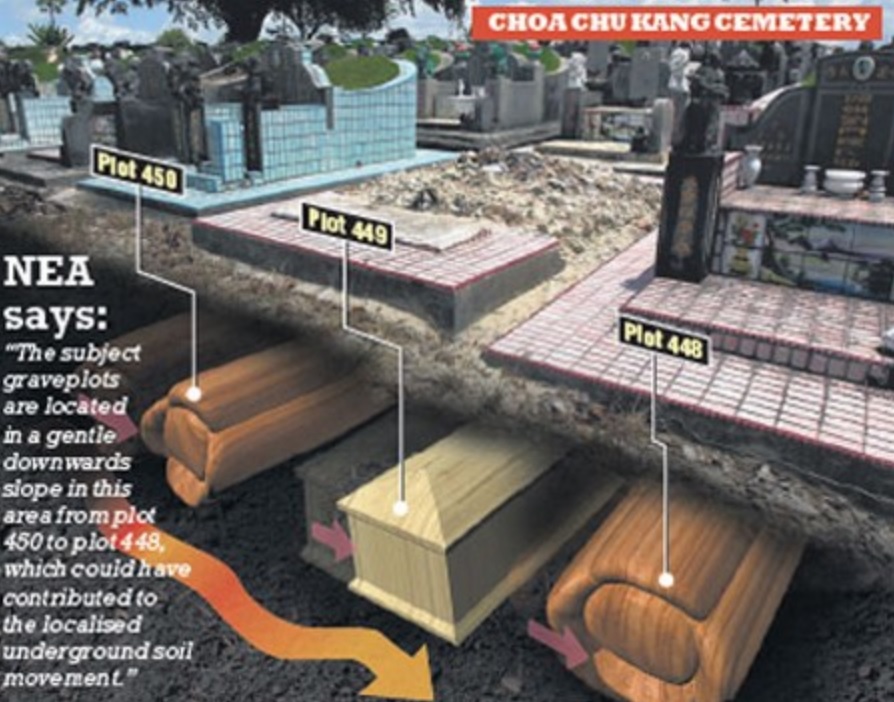
    Therefore to ensure sufficient land for future burials, NEA has undertaken exhumation programmes at Choa Chu Kang Muslim Cemetery. Exhumations at Blocks 3, 4 and 5 were completed in 2013. Muslim graves at Blocks 6, 7*, 8, 9, 19 & 20 will be exhumed, beginning 26 Sep 2018. The remains will be reinterred at Choa Chu Kang Muslim Cemetery. National Environment Agency (NEA) has appointed Majlis Ugama Islam Singapura (Muis) to carry out the registration, exhumation and reinterment services for Phase 6. Family members are invited to claim the remains of their Next-of-Kin (called the “Principal Deceased”) buried in these sections of the cemetery from 26 Sep 2017 till 25 Sep 2018. The claim period will last for one year. Costs of the exhumation and reinterment will be borne by the Government.


    Source: quora/pusarasg

  • ‘I’ll Be Muslim Too’: Fans Embrace Liverpool’s Mo Salah

    ‘I’ll Be Muslim Too’: Fans Embrace Liverpool’s Mo Salah

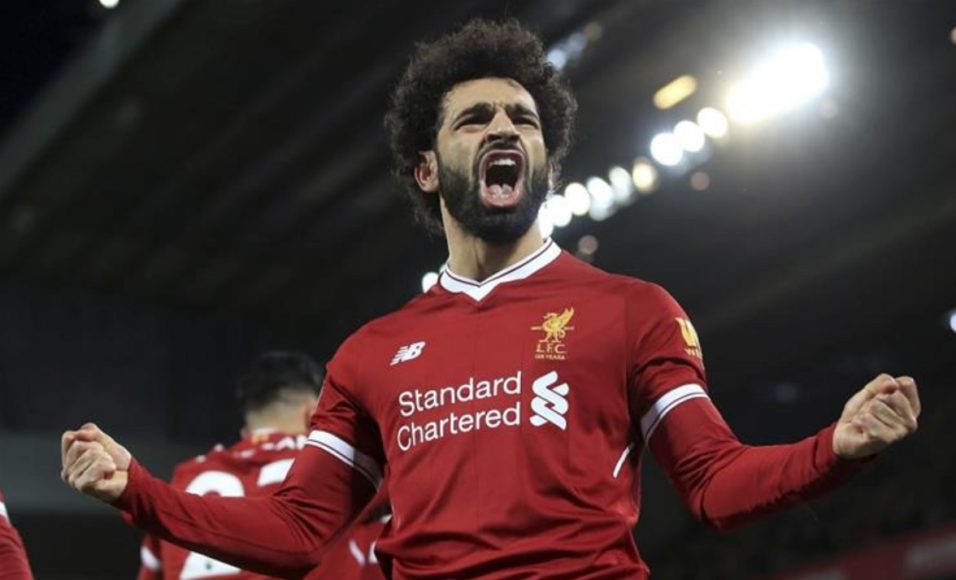
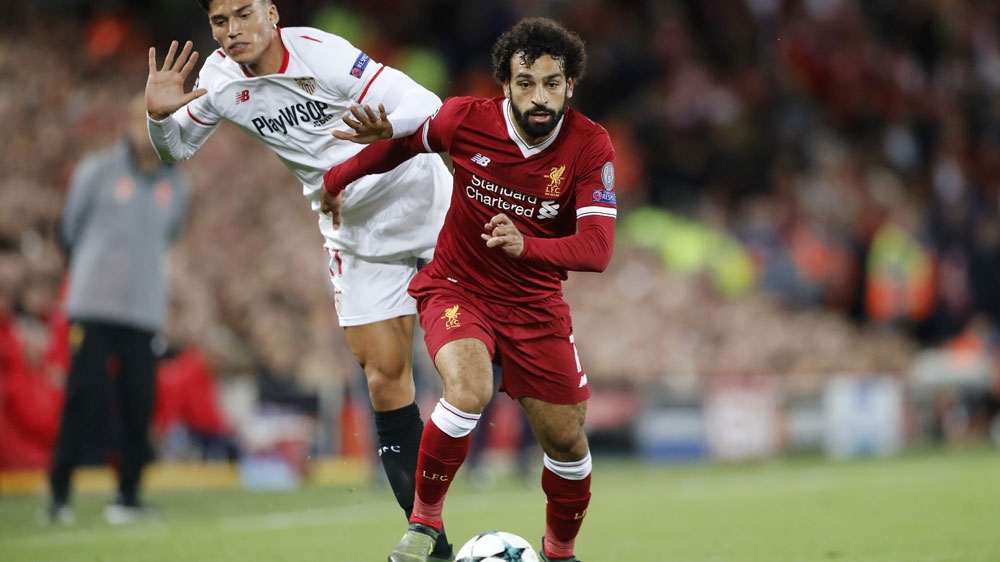
    Liverpool Football Club fans have embraced Mohamed Salah, an Egyptian player, with a new chant that celebrates the 25-year-old forward’s faith.

    “Mo Sa-la-la-la-lah, Mo Sa-la-la-la-lah, if he’s good enough for you, he’s good enough for me, if he scores another few, then I’ll be Muslim too,” fans have been filmed chanting from the stadiums to the pubs as they watch Salah’s footwork at play.

    The rhyme continues: “He’s sitting in the mosque, that’s where I want to be.”

    Saleh, who also plays for Egypt’s national team, is quickly becoming a darling of the English football community.

    In 2017, he was named the BBC’s African Footballer of the Year. 

    On Wednesday, he became the thirteenth player in Liverpool FC’s 125-year history to score his 30th goal in a season in a match against Porto, prompting some to compare Salah with Argentina’s footballing legend, Lionel Messi.

    Luis Suarez, who plays for FC Barcelona, was the last player to achieve 30 goals in a season, in April 2014.

    Liverpool’s Mohamed Salah is one of few footballers who has scored 30 goals in a season [Frank Augstein/AP]


    The chant for Salah, nicknamed the Egyptian King, is being seen by some as a feat against endemic racism in English football.

    In a report on February 7, Kick It Out – an organisation working to end discrimination in football – said the number of incidents of discrimination at the midway point of the 2017-2018 season had risen.

    The organisation received more than 300 reports relating to 282 incidents of discriminatory abuse by the end of 2017, covering the professional game, grassroots football and social media. This marked an increase of 59 percent from the same period last season, when there were 177 incidents.

    ‘Mo Salah is going to stop Islamophobia’

    Several people on social media welcomed the Liverpool FC fans’ chorus. 

    “Mo Salah doing more to end the clash of civilisations than anyone else in the world,” joked satirist Karl Sharro. 

    User @Femi_SB said: “Mo Salah is gonna stop Islamophobia.”

    “I’m not a Liverpool fan but you must believe Football builds bridges with this Red chant for Mo Salah,” wrote Gbolahan Obisesan, a writer and director.

    Sam Egerton, a rugby player for Old Elthamians, wrote on Twitter: “Loving this Mo Salah chant. [Love] for Muslims should be amplified.”

    Several people joked, as the song does, that they were considering converting to Islam on account of Salah’s talent.

    “Mo Salah is so good I’m considering turning Muslim #TheEgyptianKing” joked @bairdy_10. 

    “I think I’m about 10 Mo Salah goals away from becoming Muslim,” wrote @OSMLFC.

    “Mo Salah has turned me in to a devout Muslim catch me outside the mosque if you’re looking for me,” said @bradleymaguire_.

    Source: aljazeera


    Rilek1Corner

  • Why Not Make Thaipusam A National Holiday Again Alongside Deepavali, CNY And Hari Raya?

    Why Not Make Thaipusam A National Holiday Again Alongside Deepavali, CNY And Hari Raya?

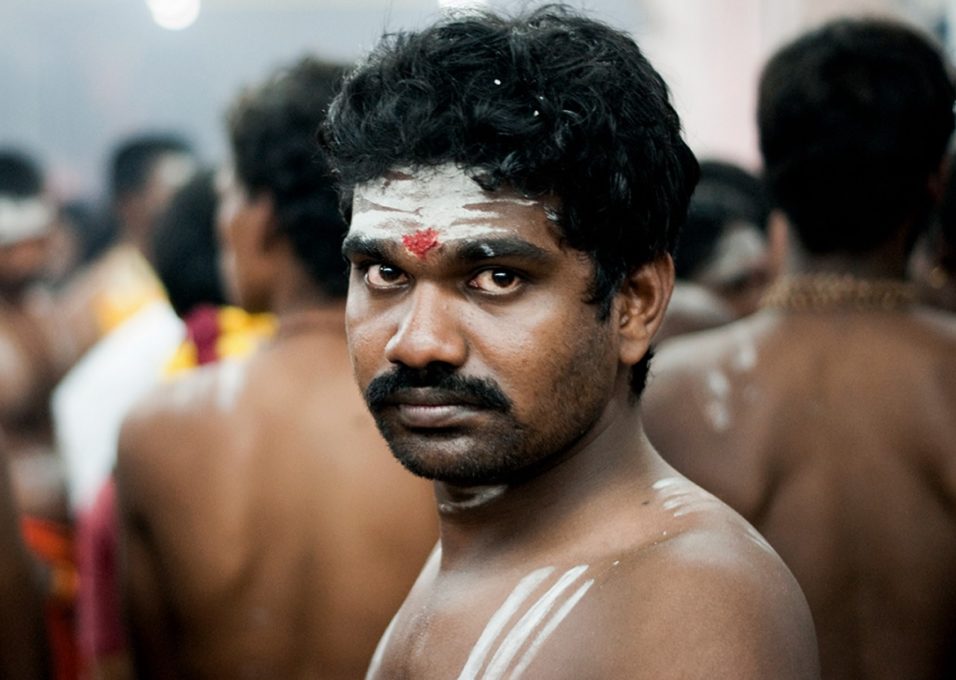
    Another year, another incident. You’ve probably seen it – that viral video taken at the Thaipusam procession, or at least heard of its existence: How a volunteer officer from the Hindu Endowment Board (HEB) allegedly disrupted a procession over the use of musical instruments and amplification.

    Netizens have criticised the HEB and the authorities for disrupting the procession. Several in the Hindu community that The Pride spoke to feel that the authorities should allow them to carry out their religious rites without interference. The authorities have clarified that they have been accommodating to the Hindu community even if some may have broken the law, and the HEB has also since stated that the most recent incident has been settled amicably with the devotees.

    Yet, each year, what is supposed to be a joyful, religious festival for the Hindus seems only to be remembered for the disputes between devotees and the authorities.

    There have been umpteen calls to lift the ban on musical instruments at the procession – a ban which was put in place to control the noise levels. Those arguing against the ban often point out that lion dance troupes make plenty of noise – in public – too.

    Lion dance troupes with their drums and cymbals that are so active during the Chinese New Year period are arguably a lot noisier and affect far more people over a longer period than the Thaipusam devotees with their hand-held instruments and amplified voices, but Law Minister K Shanmugam, in a Facebook post made three years ago, said that lion dance troupes perform during social or community events and not religious events.

    This ban on music is not in place to discriminate against Hindus. Mr Shanmugam said that Hindus are given exemption from the law against religious foot processions during Thaipusam. He added that the Thaipusam procession goes through major roads – a privilege not afforded any other religious group.

    The procession is by no means a silent one: This year, there were 19 points along the 3.1km stretch from which music was transmitted and three stages along the route where live music was played.

    Retired police officer M Kunalan, 70, carried the spiked kavadi several times during his younger days. He says that there are troublemakers among the younger group of devotees who challenge the authorities and play their music loudly, disturbing the peace in what is supposed to be a solemn occasion.

    “These groups should be investigated and brought to task under the law. They bring shame to the Hindu community during a sacred festival,” he told the Pride.

    But is there a way to be even more accommodating to the Hindu community? Could there be more done to ensure that they are allowed to celebrate Thaipusam – which is to mark the victory of the deity Lord Murugan over evil?

    How about making Thaipusam a national holiday?

    The procession, with devotees bearing elaborate kavadis, is in itself a spectacular affair and communities other than Hindus or the predominantly Tamil devotees could join in the celebrations as respectful observers. Tourists could also soak in the festivities of such an event.

    “Thaipusam is not an easy event to organise. Logistically, it can be a nightmare and the devotees, even those who carry the kavadi, have to go through the added hardship of not having a public holiday on such an important occasion. Making it a holiday would go a long way in helping the Hindu-Tamil community,” said Mr Kalidass SKS, managing director of a security services company.

    The last time a call to turn Thaipusam into a holiday was in 2015, and the Ministry of Manpower (MOM) explained in nine points why not having it as a holiday would best serve Singapore. Thaipusam used to be a public holiday until 1968.

    It is regarded as a religious holiday, but if you considered it a holiday for Indians, which are largely represented by the Tamil community, there seems to be a fair argument for its reinstatement as a public holiday: The Chinese have two days – the first two days of the Chinese New Year, the Malays have Hari Raya Haji and Hari Raya Puasa, and the Indians currently have only Deepavali as a national holiday. Making Thaipusam a public holiday would mean the three main races of Singapore have two public holidays each.

    According to the MOM then, “the decision on which public holidays to give up was reached only after careful consultation with religious groups”.

    But that was in 1968. And the only religious festival that seems to be experiencing any sort of problem appears to be Thaipusam. Could we not all give up one day of work so that Thaipusam can get the space it needs?

    Residents in the area would probably be more forgiving of noise created as a result of the festivities if it were a holiday. Organisers of the procession would have a bigger pool to choose from for volunteers and helpers at the occasion. There will be less inconvenience to traffic if it weren’t a working day. And everybody in Singapore would begin to think of Thaipusam as a Singaporean religious festival instead of dismissing it as a day when Indians struggle in their fight against evil.

    MOM also explained that when the number of public holidays was set at 11 in 1968, the reason was this: “Faced with the British withdrawal and the need to compete in global markets, the government decided to reduce the total number of public holidays, among other things.”

    So never mind the music for now: The British have long departed. Singapore is suitably plugged into and very competitive in global markets. We could leave it to the economists to determine if one day less of work would plunge our economy into recession, and trust that city-planners and the Singapore Tourism Board would capitalise on the event to promote Singapore as a culturally rich and diverse destination.

    So, as the majority of Singaporeans prepare to celebrate Chinese New Year, which is just around the corner, perhaps it’s time to consider giving our Indian countrymen another public holiday.

    Source: PrideKindnessSg


    Rilek1Corner
  • PyeongChang 2018 Winter Olympics: Muslim Prayer Room Scrapped Due To Strong Anti-Muslim Protests

    PyeongChang 2018 Winter Olympics: Muslim Prayer Room Scrapped Due To Strong Anti-Muslim Protests

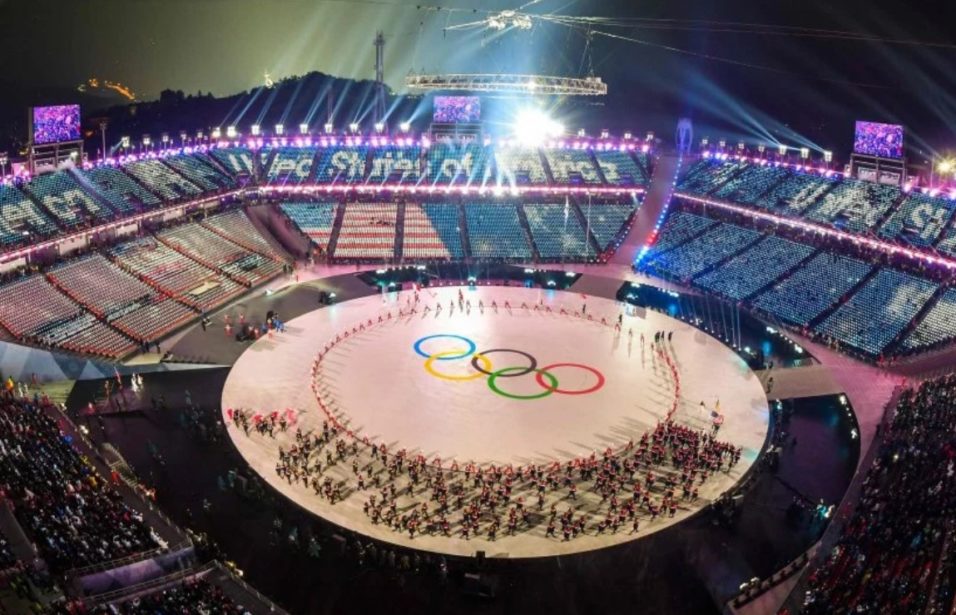
    By and large, PyeongChang has gone out of its way to welcome the world for the 2018 Winter Olympics. But not everyone in the South Korean host city is feeling the Olympic spirit.

    The Korea Tourism Organization (KTO) has announced that it will no longer go forward with plans to set up a mobile multi-faith prayer room for spectators in Gangneung, where all of the Games’ indoor events are taking place, following “strong opposition” from anti-Muslim protestors, according to Al Jazeera’s Haeyoon Kim and Faras Ghani.

    “We sat down with them for talks, but in the end, we had to cancel the plans,” Gangneung city government tourism division chief Kang Suk-ho told Al Jazeera.

    The KTO’s Kim Yeong-ju told Korea Exposé’s Ho Kyeong Jang that opposition to the prayer rooms was so strong that local officials “could no longer do their jobs.”

    Much of the hostility has flowed from the PyeongChang Olympics Gangwon Citizens’ Islam Countermeasure Association, a relatively new group that pushed a petition against the prayer room via Google. The petition — which stoked fear about radical Islam in the South Korean province of Gangwon — has collected more than 56,000 digital signatures.

    “The government has already spent too much of the taxpayers’ money on the Games, and we shouldn’t spend more building a prayer room,” Seo Ji-hyun, the director of operations at the Islam Countermeasure Association, told Al Jazeera. He also suggested that Muslims should refrain from prayer at the Olympic Games as they supposedly would while flying or driving.

    Islamophobia is nothing new in South Korea, where Muslims comprise just 0.2 percent of an overall population of 51 million. The Citizens’ Association for a Proper Country, a civic group led by Jeong Hyeong-man, has advocated against halal-friendly establishments and warned against “the increase of Muslim terrorist bases in Korea.”

    Muslim athletes in PyeongChang still have access to a cafeteria serving certified halal food. And all visitors to the Winter Games who adhere to the faith can count on vociferous support from the Korean Muslim Federation.

    This decision demonstrates that we, as a host country, lack thoughtful understanding,” Lee Ju-hwa, a KMF representative, told Al Jazeera in a statement, before adding, “Instead of claiming that the installation of a prayer room is preferential treatment given to a certain religion, we need to raise awareness that it was to consider others with different faith and beliefs.”

    The move comes as another blow to the host country’s attempts to bolster its image as a “Muslim-friendly Korea.” According to the KTO, South Korea saw a 33-percent year-over-year increase in Muslim tourists between 2015 and 2016, and welcomed 1.7 million members of the faith as visitors in 2017.

    Source: sports yahoo


    Rilek1Corner

  • Harga Pakej Haji Singapura 2018 Diumumkan; S$7,000 (Yang Termurah) Dan S$18,465 (Paling Mahal)

    Harga Pakej Haji Singapura 2018 Diumumkan; S$7,000 (Yang Termurah) Dan S$18,465 (Paling Mahal)

    SINGAPURA: Harga pakej-pakej haji yang diluluskan oleh Majlis Ugama Islam Singapura (MUIS) tahun ini, berharga antara sekitar S$7,000 (yang termurah) dengan S$18,465 (paling mahal).

    Harga-harga tersebut tidak termasuk harga tiket kapal terbang dan cukai semasa.

    Pada tahun 2017, pakej terendah ialah S$6,215, iaitu sekitar S$800 lebih murah berbanding tahun ini. Tetapi, pakej termahal berharga S$18,632 pada tahun itu.

    Tahun ini, 30 jenis pakej haji ditawarkan untuk para jemaah haji Singapura dan harganya sudah termasuk Cukai Nilai Tambah (VAT) sebanyak 5 peratus yang dikenakan ke atas semua barangan dan perkhidmatan di Arab Saudi. Cukai tersebut dikuatkuasakan kerajaan Saudi bermula 1 Januari 2018.

    MUIS menasihatkan para bakal jemaah haji agar menilai dengan hati-hati “berdasarkan kemampuan dan keperluan individu”, sebelum memilih pakej haji masing-masing. Bakal jemaah juga dinasihatkan supaya jangan membuat sebarang pembayaran kepada ejen-ejen haji sehinggalah mereka mendapat surat pengesahan dari MUIS bahawa mereka terpilih untuk mengerjakan haji tahun ini.

    Lima ejen pelancongan Islam dan tujuh konsortium ejen-ejen pelancongan Islam dilantik MUIS untuk menawarkan pakej haji untuk musim 2018 ini.

    Lima ejen pelancongan individu yang dilantik itu terdiri daripada:

    1. Halijah Travels
    2. Jalaluddin Travel & Services
    3. Noor Mohamad Services & Travel
    4. Shahidah Travel &Tours
    5. TM Fouzy Travel & Tours

    23 ejen pelancongan yang lebih kecil pula membentuk konsortium dengan bergabung bagi memberikan khidmat.

    Kesemua tujuh konsortium dibentuk daripada 23 ejen pelancongan berkenaan, seperti berikut:

    1. Afandi Travel & Services (Ketua konsortium)
    Al Firdaus Travels
    Evershine Travel & Services

    2. Azza Travel & Tours (Ketua konsortium)
    AQ Travel & Tours
    Tri-Ways

    3. Hagel Travel & Tours (Ketua konsortium)
    Rafflesia Travel & Tours

    4. Hahnemann Travel & Tours (Ketua konsortium)
    An-Nur Travel

    5. Nurhikmah Travel & Tours (Ketua konsortium)
    Abu Bakar Travel Services
    Babus Salam Holidays

    6. Primula Travel & Tours (Ketua konsortium)
    Al Qaswa Tours & Travel
    Qu’ins Travel & Tours

    7. Sha Travel & Tour (Ketua konsortium)
    Al-Fattah Travel & Tours
    Hamidah Travel & Tours
    Ruby Rashid Travel & Tours
    Smiling Travel
    Thoha Travels & Tours
    Travelconnect.sg

    Pada masa ini MUIS masih dalam proses untuk memaklumkan para jemaah yang termasuk dalam senarai kuota rasmi 800, agar mereka dapat mengorak langkah memilih pakej haji pilihan masing-masing.

    Secara keseluruhannya, daripada 30 pakej haji yang diluluskan, 10 pakej menawarkan perjalanan pendek – iaitu antara 13 dengan 22 hari sahaja.

    Hanya dua pakej menawarkan pakej tempoh masa panjang, iaitu antara 32 hingga 35 hari.

    Kedua-dua pakej paling murah (S$7,000) dan paling mahal (S$18,465) ditawarkan oleh Shahidah Travel & Tours.

    Secara purata menurut MUIS, pakej haji 2018 ini berharga sekitar S$11,500 tanpa mengambil kira tiket pesawat dan cukai semasa.

    Source: beritamediacorp


    Rilek1Corner