Category: Komentar

Send in your opinion to [email protected].
Kirimkan pandangan anda kepada [email protected].

  • What Lessons Can Be Learned From Singapore’s Religious Regulatory Framework?

    What Lessons Can Be Learned From Singapore’s Religious Regulatory Framework?

    The city-state has developed an interesting model, but one that cannot be lifted wholesale into other environments, writes HA Hellyer.

    In the last year, several cases of abuse perpetrated by Muslim religious figures have been widely discussed in Western Muslim communities. It is not relevant to comment too deeply on those cases in terms of specifics, that requires investigations that others are carrying out, but these examples brought up an interesting question. What do Muslim communities, particularly in the West, do when religious leaders are accused of carrying out ethical violations, which are not necessarily against the law, but are contrary to their commitments as religious leaders?

    As part of a broader project around the engagement of the Islamic tradition with issues of fundamental rights, I was interested in looking at different models that sought to address how ethical violations were being dealt with in Muslim communities. To that end, a very interesting model – if very particular to its own context – is being developed in Singapore.

    The inspiration for Singapore’s religious regulatory framework came from neighbouring Malaysia, where religious activity for Muslim preachers and teachers has been regulated for much longer. Indeed, the initial regulatory instrument of Singapore for Muslim religious activity – the AMLA – was inspired to a very large degree by a similar law in one of Malaysia’s federal states.

    That regulatory instrument brought the Majlis Ugama Islam Singafora (the Islamic Religious Council of Singapore) into life in 1968. Generally, that body did not really regulate religious leaders: it managed items such as zakat, mosques, the existence of a mufti and other administrative functions. That began to change in the late 1990s, when Pergas, an association for religious teachers, sought the establishment of a religious teachers recognition board. There was no particular appetite at the time, and thus it was left by the way side until the 9/11 attacks in the United States.

    It’s unfortunate indeed that it was the threat of extremism that led to this renewed concern in what is essentially a far wider and less negative concern. But nothing induces political will more than threats and in 2005, the Asatizah Recognition Board was formed to oversee the Asatizah Recognition Scheme. It remained a voluntary association for much of its existence and only became a legally established body last year.

    It’s an interesting model. It engages in the training of imams and religious teachers for different skills; it provides for a recognition of religious qualifications that may not come from widely recognised university establishments; indeed, the religious teachers themselves stand to gain a great deal from the model. But the ARB is also a disciplinary institution. It is a place where religious teachers who have been accused of ethical violations may be questioned. It is made up of religious teachers who are widely respected in the Muslim community.

    In that regard, the scheme operates much like a professional syndicate and officials engaged within it openly admit that they took a lot of inspiration from other professional syndicates in terms of what services the ARB ought to provide its membership. Regular skills training is provided and is a condition of membership. The skills are meant to ensure the religious training of the teachers in question are also contextualised to Singapore’s realities – much like how, for example, the Cambridge Muslim College in the UK, or the Zaytuna College in the US, are aimed at ensuring imams and religious teachers are fully aware of the social realities in which they live.

    But here is the catch – membership of the ARS is mandatory for any religious teacher. Without it, they cannot teach. More than that, the ARB can impose penalties on teachers who have run afoul of ethical prescriptions – penalties that can include fines or even imprisonment. There exists no other such regime for other religious communities in Singapore.

    I spoke to several officials and civil society activists engaged in the wider administration of Muslim religious life on a recent trip to Singapore – who, like me, seemed suspicious of any state power being utilised in the regulation of religious life in this manner. Some confided in me that to begin with they had opposed the compulsory nature of the scheme and weren’t entirely happy about certain aspects of how it was being imposed. And yet, at the same time, for those who were particularly engaged, they admitted there were problems with a few religious teachers, whom they thought required a certain heavy-handed approach. It’s clear there are teething problems, but almost no one I met in Singapore considered the existence of a compulsory syndicate for religious teachers to be a bad idea.

    It’s an interesting model and one that cannot be lifted wholesale to other environments. In the UK, for example, a legally imposed syndicate for religious teachers would raise genuine concerns around religious freedom. But the idea of a religious teachers’ syndicate is not so unusual. The main question is how to ensure it gains social credibility among the community it ministers to, and those who are to be its members, because legal compulsion of any kind may not be the answer in many contexts. How that is all to be done, particularly with such variety among Muslim Western communities, is yet to be seen and at the same time, given the clear problems that exist without regulation at all, it is probably only a matter of time before Muslim Western communities themselves create their own mechanisms. As they seek to do so, they might learn certain lessons from their Singaporean co-religionists.

    Source: thenational


    Rilek1Corner

  • Murid Buat Salah, Guru ‘Letak Tangan’, Mak Murid Tetap Bela Anaknya. Siapa Betul Siapa Salah?

    Murid Buat Salah, Guru ‘Letak Tangan’, Mak Murid Tetap Bela Anaknya. Siapa Betul Siapa Salah?

    Siapa betul siapa salah?

    Sebagai seorang cigku atau guru, selagi kau dah letakkan tangan kat murid, engkau sudah tidak selamat. Kenape? Sebab undang-undang tetap undang-undang, dan undang-undang itu akan kejar kesilapan “letak tangan” kau itu. Tengok aja zaman sekarang in, murid siap dengan ambil video lagi dan ibubapa semakin tegas dengan apa-apa kejadian di sekolah.

    Seorang mak bukan nak galakkan kesilapan anaknya, tidak juga berkata yg sebuah kesilapan itu betul, dan tidak cakap yg anaknya tidak apa-apa buat salah. Tapi kerana naluri mak, mak tetap akan mempertahankan anaknya kalau anaknya tercedera. Lagi-lagi kalau dicederakan oleh orang luar atau seorang guru dengan sengaja. Patut ke tak pasal-pasal sebab kecuaian orang seorang mak kehilangan anaknya.


    Reader’s Contribution

    Rilek1Corner

  • Komentar: Hentikan Mengguna Agama Sebagai ‘Momok’ Untuk Tujuan Menakutkan Rakyat

    Komentar: Hentikan Mengguna Agama Sebagai ‘Momok’ Untuk Tujuan Menakutkan Rakyat

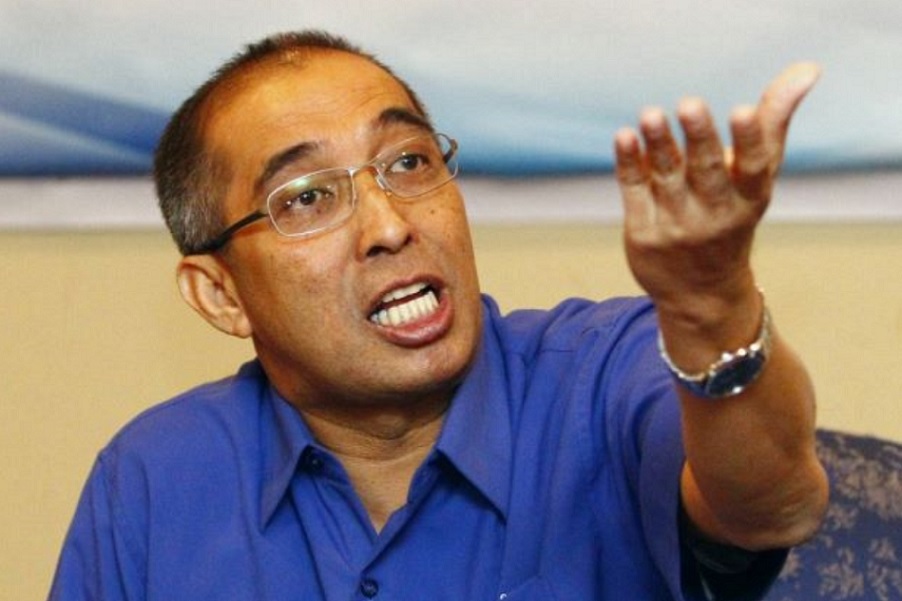
    Menteri Komunikasi dan Multimedia Malaysia, Datuk Seri Dr Salleh Said Keruak, menggesa masyarakat khususnya ahli-ahli politik agar berhenti menggunakan agama untuk tujuan menakutkan rakyat.

    Beliau berkata bahawa adalah malang apabila sesetengah anggota politik menggunakan agama sebagai momok untuk tujuan memecahbelahkan rakyat.

    Memetik keunikan di Sabah dan Sarawak, Dr Salleh berkata kedua-dua negeri tersebut tidak pernah berdepan masalah agama “tetapi kini sebilangan ahli politik cuba membangkitkan sentimen agama sebagai sebahagian strategi politik mereka”.

    “Ini bukan sahaja licik tetapi juga berbahaya. Malah (pemimpin veteran DAP (Parti Tindakan Demokratik)) Lim Kit Siang juga memperkatakan mengenai agama dalam catatan blog terbaru beliau,” kata Dr Salleh dalam catatan blog beliau hari ini (27 Nov).

    AHLI POLITIK ‘CETEK IDEA’

    Beliau menambah, banyak contoh dapat dilihat di seluruh dunia tentang apa yang berlaku apabila konflik agama dibangkitkan.

    “Mengapa kita mesti memisahkan umat Islam menjadi umat Islam yang moderat dan ekstrem dan seterusnya mengasingkan orang Islam dan bukan Islam? Hanya ahli politik yang cetek idea akan melakukan perkara ini.

    “Ia juga ironik apabila mereka yang melakukan pemisahan itu, merungut mengenai masalah tersebut dan berkata Malaysia perlu diselamatkan. Ia seperti ‘the fox offering to save the chickens from getting eaten by other foxes’ (Harapan diletakkan pada bahu seseorang tetapi akhirnya orang itu pula yang merosakkannya),” katanya.

    Dr Salleh juga menegaskan pembinaan negara tidak dapat dicapai dengan memisahkan rakyat.

    “Jadi mari kita dengar penyelesaian daripada mereka yang cuba memecahbelahkan Malaysia. Bercakap mengenai betapa teruknya pemisahan ini, tidak akan menyatukan negara. Ia hanya akan memisahkan rakyat Malaysia.

    “Kita terus mendengar mengenai masalah ini tanpa memberi penyelesaian. Dan mereka yang mengkritik itu sebenarnya yang bermasalah,” katanya.


    Source: berita.mediacorp.sg

  • 3 Bukti Lelaki Lebih Muda Adalah Calon Suami Yang Paling Terbaik

    3 Bukti Lelaki Lebih Muda Adalah Calon Suami Yang Paling Terbaik

    Kebiasaannya, ramai wanita yang akan mencari lelaki yang lebih berusia daripada mereka sebagai teman lelaki ataupun calon suami.

    Tetapi, tahukah bahawa lelaki yang lebih muda merupakan calon suami yang lebih ideal berbanding dengan yang lebih tua?

    #1. Lelaki muda juga bijak dan matang.

    Kematangan seseorang lelaki itu tidak diukur dari usia mereka. Terdapat ramai lelaki yang lebih tua daripada anda tetapi mempunyai sikap yang kebudak-budakan dan terdapat juga ramai lelaki yang lebih muda tetapi terbukti lebih matang dalam kata-kata.

    #2. Pengalaman hidup anda menjadi daya tarikannya.

    Terdapat juga lelaki yang lebih muda yang menyukai wanita yang lebih berusia kerana mereka miliki lebih banyak pengalaman hidup yang dapat membantu apabila sudah berumahtangga kelak.

    #3. Peluang untuk hamil lebih tinggi.

    Lelaki yang lebih muda akan memberikan peluang yang lebih tinggi untuk anda hamil. Perkara ini telah dibuktikan daripada sebuah kajian yang ditulis di dalam jurnal Fertility and Sterility di mana peluang untuk wanita yang berusia 40 tahun ke atas adalah lebih tinggi untuk hamil.


    Source: taikotai.tv

  • Commentary: Retired Military Generals Are Only Familiar With Simulated Situations, But Not For Real Life Issues

    Commentary: Retired Military Generals Are Only Familiar With Simulated Situations, But Not For Real Life Issues

    The long time practice of putting retired military generals to take charge of public institutions that are vital to the social and economic lives of citizens – even if they had volunteered for the job – may not be the wisest thing to do after all. They may be scholars no doubt, but if they had spent all their working lives running military outfits, day in and day out facing simulated situations, they may not find it easy to adapt to real life issues.
    For example what technical experience does an ex general have to run a train system that is increasingly sophisticated and vital to the economic and social lives of the nation? What we need for the job is a first class engineer with good management experience who, if necessary, is prepared to even defy his political bosses with sound and practical solutions.
    The same thing goes for the management of our national shipping line which went to the dogs when a military general was put in charge. In spite of his scholar reputation I am quite sure he would have zero knowledge about shipping which is a world of difference from what he had been accustomed to.
    It is very easy to sit in your comfortable offices and earn big bucks but if you know nuts about the bolts (and nuts) of what makes the company tick, you are not the man for the job. Simple as that.
    If we see no change in the way appointments are made, be prepared for more cock-ups.
    Our selected president who is supposed to have the power to veto appointments should look into this.


    Source: Mohamed Jufrie Bin Mahmood