Category: Komentar

Send in your opinion to [email protected].
Kirimkan pandangan anda kepada [email protected].

  • Me Against The Muslim community: A Convert’s View Of Islam

    Me Against The Muslim community: A Convert’s View Of Islam

    After almost 20 years as a Muslim, I have arrived at some conclusions that put me at odds with the community.

    1. I do not believe the hijab is necessary. It is a cultural affection of the Arabs that evolved into a political statement. It is not mentioned in the Qur’an. And the same with the niqab.

    2. I think halal certification is either a scam or an unfortunate cost. Unless there are obvious reasons to suspect otherwise, everything is automatically halal.

    3. I do not believe damnation permanent. Neither do I believe Salvation is exclusive to Muslims. That limits God’s Mercy.

    4. I think many “authentic” narrations, even in Swahih al-Bukhari, are fabricated. We should exercise more skepticism of problematic ahadits.

    5. I do not believe dog saliva is najis al-mughalazhah, or any restrictions on dogs as pets. That contradicts the Qur’an.

    6. I do not believe that non-Muslims are restricted from inheriting from Muslims. There is no such stipulation in the ayat. There were historical reasons for the hadits.

    7. I do not believe all forms of interest is necessarily usury, riba’. That is a fundamental ignorance of economics.

    8. I certainly do not believe in gender segregation in public places. Strict gender segregation is unnatural.

    9. The concept of an Islamic state is an oxymoron.

    10. Drawings and artistic representations of the Prophet (s.a.w.) are not automatically blasphemous.

    11. Stoning is not a valid means of capital punishment.

    12. Most hudud punishments are outdated, and specific to certain conditions that do not exist for most of us.

    I admit I never cared what Muslims think of me, orthodoxy or otherwise. I did not come to Islam to follow ingrained cultural practices and social beliefs masquerading as religion.


    Source: Terence Helikaon Nunis


  • Jangan Bermimpi Nak Bergelar Ibu Bapa Kalau Tiada Tahap Kesabaran Yang Tinggi

    Bagi yang mengenali aku, pasti mereka mengetahui yang aku merupakan seorang yang begitu baran dan tinggi egonya. Bukan mudah untuk aku bersabar dengan orang-orang yang menyakiti aku. Tetapi wahai rakan-rakanku, ajaibnya, aku mampu bersabar dengan bayi yang meraung dan kanak-kanak yang begitu nakal dan degil sekali.

    Sehingga ke hari ini, tidak pernah walau sekali aku meninggikan suara apatah lagi memukul anak-anak buah aku atau kanak-kanak lainnya. Aku yakin ini adalah anugerah Allah kepada aku. Apabila kanak-kanak ini bertindak nakal, aku akan menegur mereka dengan tegas dan diselangi dengan gurauan.

    Apakah salah kanak-kanak yang tidak berdosa ini? Mengapa begitu mudah kita menyakiti mereka? Tidakkah kita ketahui bahawa kanak-kanak itu adalah realiti kita sewaktu kecil? Pernahkan anda disakiti sewaktu kecil? Sekiranya tidak, maka mengapakah anda menyakiti kanak-kanak tersebut? Sekiranya anda pernah disakiti sewaktu kecil, mengapakah anda melampiaskan dendam itu terhadap kanak-kanak yang tidak berdosa ini?.


    Wahai para ibu dan bapa, sekiranya anda tidak mempunyai ketahanan sabar yang tinggi, janganlah sesekali anda mengimpikan untuk mempunyai anak! Mungkin pada awalnya anda hanya akan berimaginasi betapa indahnya mempunyai anak tetapi selepas anda mempunyainya, barulah anda tahu ujian Allah yang sebenar. Bersabarlah dengan kanak-kanak! Mereka langsung tidak berdosa!.

    Sekiranya kanak-kanak itu begitu nakal dan tidak menghormati orang lain, adakah anda akan menyalahkan mereka atau anda akan menyalah diri anda sendiri?! Bagaimanakah didikan anda terhadap mereka? Bukankah ibu dan bapa itulah yang mencorakkan kehidupan anak mereka? Kutuk dan marahlah diri anda dahulu sebelum memarahi mereka.

    Wahai rakyat jelata, adakah kita hanya akan terus menerus mendiamkan diri dengan segala perlakuan binantang terhadap kanak-kanak? Jenayah yang membabitkan kanak-kanak termasuklah penderaan bayi dan serangan seksual atau pedophile. Apa yang menggerikan lagi, jenayah ini semakin meluas! Ianya benar-benar menakutkan!.

    Adakah kita hanya melepaskan tanggungjawab ini kepada pihak berkuasa atau kita bersatu dan berganding bahu bekerjasama dengan mereka?!. Ayuhlah bertindak, jangan hancurkan masa depan kanak-kanak ini.

    Baran aku tiada tandingan tetapi kesabaran aku terhadap kanak-kanak tiada batasan! Lelaki sejati tidak akan pernah menyakiti kanak-kanak apatah lagi menodai mereka!. Saya ada sediakan pamplet tentang ini untuk anda sekiranya anda berminat untuk edit, print serta sebarkan kepada masyarakat. anda boleh berikan email kepada saya.


    Source: OhMyMedia

  • KOMENTAR: 30 Saat Yang Memperlihatkan Wajah Sebenar Kita! Fikirlah

    KOMENTAR: 30 Saat Yang Memperlihatkan Wajah Sebenar Kita! Fikirlah

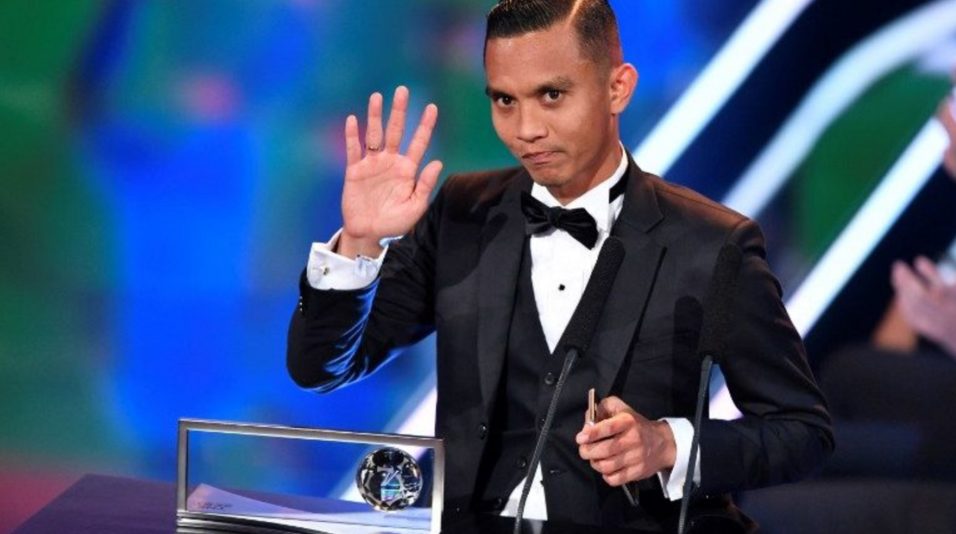
    Baru-baru ini pemain bola sepak Malaysia, Faiz Subri mencatat sejarah bagi negaranya apabila beliau merangkul Anugerah Puskas bagi gol tercantik FIFA untuk tahun 2016. Namun, anugerah breprestij itu nampaknya disambut bercampur-campur oleh Faiz Subri, yang disaat menerima kemenangan, juga mengalami ujian yang dahsyat. Di saat Faiz di puncak kejayaanlah, kutukan terbesar diterima.


    Dari soal baju yang dipakainya, sehinggalah kepada bahasa Inggeris yang dituturkannya semasa menerima Anugerah Puskas.

    Wartawan Bernama, Ali Imran Mohd Noordin mempersoalkan dan mengupas kesantunan orang Malaysia dalam artikel Komentar tulisan beliau ini, yang mahu pembaca negaranya “Tanya balik diri sendiri, bagus sangatkah kita?”.

    Kekurangan Faiz Subri itulah menampakkan wajah sebenar kita.
    Sejak saat Faiz menjaringkan gol menentang Pahang awal tahun lalu, ada semacam asbab baharu untuk rakyat Malaysia bersatu.

    Daripada saat desakan di media sosial supaya FAM hantar pencalonan untuk Anugerah Puskas, kemudian dolak-dalik FAM jawab itu ini dilawan balik oleh rakyat, akhirnya FAM meneruskan dengan urusan menghantar penyertaan.

    Buat peminat bola sepak negara, itu adalah kemenangan yang pertama. Sesudah dicalonkan, kisah Faiz Subri senyap seketika. Pasukan Pulau Pinang menamatkan saingan dengan keputusan yang ala kadar sahaja.

    Buat sementara nama Faiz lekang daripada bualan peminat bola sepak negara.

    Kejayaan JDT memenangi Liga Super buat kali ketiga dan hebatnya Tan Cheng Hoe serta anak-anak buahnya memenangi Piala Malaysia menjadi tumpuan kita.

    Tidak lama selepas itu, negara diberitahu bahawa undian sudah dibuka, kebetulan pada masa sama pelawak sensasi Harith Iskander juga memerlukan sokongan rakyat Malaysia untuk pertandingan manusia paling lucu di dunia yang disertainya.

    Tanpa berdalih kita kerja tanpa disuruh. Dengan kekuatan sebahagian besar daripada 20.1 juta, pengguna internet berganding bahu. Ada yang berkempen dengan pelbagai cara kempennya.

    Bagi yang mengundi pula pukul canang beritahu sudah mengundi dan mengajak orang lain pun turut serta.

    Di mana sahaja kita dapat melihat kempen yang begitu gigih kita kerjakan secara bersama. Di Facebook, Instagram, Twitter, bahkan dalam grup Whatsapp surau dan masjid pun ada yang kempen juga!

    Ia seakan sebuah pesta yang kita sama-sama raikan dan sama-sama nikmati. Ia adalah satu saat yang indah buat kesatuan bangsa di negara ini.

    Kerja keras ini membuahkan hasil. Faiz tersenarai antara tiga penerima undi tertinggi. Sekali lagi rakyat Malaysia berpadu tenaga untuk memastikan Faiz menjulang kemenangan!

    Kempen kembali dibuat. Kali ini memang tekan minyak sepenuhnya. Bak kata orang putih, “It is now or never!”

    Modal yang diguna dalam mesej yang diterima penulis menggunakan sentimen emosi ‘Faiz kini di tangga ketiga, ini mungkin kali pertama dan terakhir pemain Malaysia berpeluang menang anugerah FIFA’. Ternyata strategi ini menjadi.

    Sampai saat akhir pada 9 Jan, masih ada yang berkempen. Di jam-jam terakhir sebelum undian tutup, pelbagai ruangan sukan dan bola sepak merayu undi rakyat Malaysia melalui Facebook, Twitter dan Instagram.

    Ya, memang ada undian orang dari negara lain tetapi apa yang ditekankan di sini, sebagai rakyat negara ini kita nampak kepentingan untuk menaikkan nama negara di persada dunia.

    Malangnya, sudah menjadi lumrah mana-mana perjuangan, di saat hampir sangat ke kemenangan itulah terjadinya ujian yang dahsyat.

    Dimulakan dengan pakaian Faiz dijadikan isu. Baju Melayu yang mana nak

    dipakai, mana yang lebih sesuai?

    Terjadilah peperangan di Facebook. Yang sokong Baju Melayu dengan hujahnya,

    yang pro keris pula ada jusitifikasi sendiri, yang tak kisah baju apa pun mahu juga bersuara.

    Akhirnya Faiz memilih berpakaian formal ala barat, sekali lagi beliau menjadi sasaran sindiran netizen. Tambahan pula seorang daripada pengacara majlis pakai baju yang menampakkan bahu, bertambah-tambah lagi kritikan dilemparkan terhadap Faiz.

    Sekali lagi ada yang mengutuk dan ada juga yang mempertahankan. Namun kisah ini belum berakhir.

    Di saat beliau diumumkan sebagai juara. Seluruh negara semua bersorak gembira. Faiz berjalan gagah ke pentas untuk terima plak kemenangan daripada legenda Brazil, Ronaldo.

    Bukan sedikit antara kita yang berjaga malam untuk menonton majlis ini secara langsung. Apabila keputusan diumumkan, masing-masing mengurut dada tanda bangga.

    Datang satu lagi ujian. Di saat Faiz di puncak kejayaanlah, kutukan terbesar diterima.

    Dalam masa tak sampai 30 saat daripada pengumuman yang mana kita semua berlinang air mata tadi, kegagalan beliau menghidupkan telefon, membuka teks ucapan dan menyampaikan ucapan dalam Bahasa Inggeris yang fasih dijadikan asas baharu serangan terhadapnya.

    “Kenapa letak ucapan dalam telefon?”

    “Kenapa tak cakap Melayu sahaja?”

    “Malulah cakap Inggeris tergagap-gagap”

    “This is not the reflection of real Malaysians English standard” (ini tidak
    menunjukkan standard sebenar banasa Inggeris di Malaysia).

    Pelbagai komen dilontar. Bermulalah satu lagi pertandingan kutukan yang sekali lagi menjadikan kita terbahagi kepada yang mengeji dan yang mempertahankan.

    Meminjam kata pengkiritik sukan, Daniyal Kadir, kejayaan Faiz menjaringkan gol itu atas kapasiti kemampuan individu.
    Cuma kali ini sebab dia di sana dan ada perkataan ‘Malaysia’ di kulit passport beliau, rakyat Malaysia seluruhnya merasa punya ‘saham’ dalam proses kemenangan ini.

    Ya, kita memang ada saham untuk menyokong beliau dengan mengundi. Namun itu tidak menjadikan kita sebagai ‘tuan besar’ yang harus dipuaskan hatinya olah Faiz Subri.

    Mudah cerita, rentetan kisah Faiz inilah sebenarnya wajah kita. Orang Malaysia yang acap kali berbangga sebagai bangsa yang santun, berpekerti tinggi, punya kualiti dan bijak serba-serbi.

    Tanya balik diri sendiri, bagus sangatkah kita?

    Tangan kanan kita bekerja keras membangun kejayaan. Dan di saat kejayaan menjelma kita serahkan piala ke tangan kiri yang menukar ia kepada kemusnahan.

    Cuma 30 saat. Itulah sela masa yang diperlukan untuk menjatuhkan kejayaan
    yang gigih dibina kita semua sepanjang tahun 2016.

    (Komentar ini adalah pendapat peribadi penulis dan tidak membayangkan pendirian BERNAMA akan apa yang dinyatakan oleh penulis)

    Source: BeritaMediacorp

  • What Is Islamic Law? — Jahaberdeen Mohamed Yunoos

    What Is Islamic Law? — Jahaberdeen Mohamed Yunoos

    It may sound ironical to ask the question what is “Islamic law” in the 21st century when it is generally thought that the body of what constitutes Islamic law has already been crystallised and settled.

    If indeed it has crystallised into a recognisable and unchangeable body, then it is logical that there would only be one universal Islamic law. However, an observation of Islamic law between various countries and even between various states in Malaysia would evidence the fact that the laws are not uniform.

    It would seem that what is Islamic law is still developing, in a state of flux and diverse. Shariah, on the other hand is a separate concept altogether.

    Every Muslim would agree that Islam is a simple religion. The pillars of Islam are said to be only five that is, declaration of faith or the syahadah, the daily five times prayer, fasting in the month of Ramadan, payment of the zakat and the performance of the pilgrimage by those who can afford it.

    However, Islam is seen not only as a religion in the typical sense but also as way of life that is complete and encompasses every aspect of our life.

    In other words, Muslims believe and accept that Islam provides the necessary guidance and imposes certain obligatory behaviour in order to achieve the pleasure of God in this life and the next.

    It is this belief that has lead the scholars of Islam to discern principles, precepts and law affecting life from the scriptures and the Sunnah of the Rasul.

    Thus, began the role of the jurists or scholars of law in interpreting and developing various legal, social, economic and religious laws, conducts of behaviour and so on for the Muslim. These active role of the jurists began some many decades after the passing of the prophet.

    I believe they reflected the intellectual response to the needs of a growing civilisation to derive various legal principles and codes of conduct necessary to create an orderly society consistent with the understood commandments of Allah in the Quran and the injunctions of the Sunnah.

    It is from such need and environment that the development of usul al fiqh or Islamic jurisprudence took place.

    In Islamic jurisprudence history, the al madhahib or schools of law that became famous are the Hanafite, the Malikite, the Shafi- ite and the Hanbalite though there were also other schools in the history of Muslim jurisprudence.

    It is important to pause at this stage to reflect and note that prior to the development of these schools of jurisprudence, the primary source then for Muslims was simply the Quran and the Sunnah of the Prophet.

    With the development of the schools of jurisprudence, therefore, the primary sources of Islamic law expanded to become the Quran, Sunnah, Ijma’ (consensus of the jurists) and Qias (judgement upon juristic anology).

    Later, other secondary sources of Islamic jurisprudence were developed. Hence, there clearly was liberalisation of the sources from which Islamic jurisprudence began to expand and develop.

    Any modern lawyer will appreciate this development as law is considered to be a “living creature” that develops as life and its circumstances change and develop.

    However, it is worrisome whether some conservative scholars today are fully aware that no human being’s interpretation of Allah’s will can be absolute because only Allah alone is the Absolute Interpreter.

    If this point is correct and properly understood then “Islamic law” as developed and developing can be relevant to contemporary situations and the very understanding of what embodies “Islamic law” can undergo fresh perspective without departing from its fundamental adherence to the Quran and most authentic Sunnah.

    In the history of Muslim jurisprudence, a study and consideration of what are the objectives of the Shariah also too place. From a modern perspective, this would be an inevitable development.

    The great university professor and scholar of Islam Imam Al Ghazali identified five essentials of the maqasid or the objectives of Syariah namely, preservation of religion, human life, the faculty of reason, progeny and material wealth.

    As to whether or not the objectives or the maqasid should be limited to five is a subject of vigorous debate among the scholars.

    Later scholars have added on to these five for example, the attainment of justice. This debate is understandable and in fact encouraging because life is constantly evolving with new experiences, new sets of circumstances, higher levels of knowledge, information and technology and discovery of new facts.

    Hence, the perception and understanding of life today cannot be limited to the experiences and perception of life by previous scholars alone.

    After all, Muslims believe that the law giver is Allah and any scholar cannot have a claim to monopoly of interpreting Allah’s intent, however knowledgeable he may be acclaimed to be.

    It can, therefore, be seen from the discussion that “Islamic law” is in a state of development as is the case with many other aspects related to Muslim thinking such as political Islam, Islamic economics and so on.

    The field of Islamic law and jurisprudence has become a complex discipline and Muslims must be careful that the legalistic aspect of Islam does not overshadow the spiritual and moral aspect of the religion such that it stifles faith or creativity of the individual Muslim in particular and the society in general.

    In the context of Malaysia, as a Muslim, it is my hope that contemporary Muslim scholars maintain an open mind within the principles of the Quran and the most authentic Sunnah when they discuss and try to apply the Islamic law as developed by classical jurists who, without doubt has made great and laudable efforts.

    There is sufficient evidence in Muslim jurisprudence history that the classical jurists never claimed their interpretations and their views to be beyond criticism or rejection if it is not consistent with the Quran, most authentic Sunnah or not relevant to the times.

    In this regard it may be helpful to realign our Muslim outlook, for example, to evaluate whether some of the legislation that has been passed by our Parliament are in fact consistent with the primary sources of Islamic jurisprudence and hence “Islamic”.

    This may be a better and useful approach than trying to impose classical formulation of laws in contemporary settings which are different.

    If my argument is correct, this may lead to a more holistic understanding of what Shariah is unlike the current trend that what is defined as “shariah laws” are the only ones that are “shariah.” With this approach, probably large segments of what is now classified as “civil laws” may qualify as “shariah.”

    I opine that the government’s effort to introduce the idea of Shariah compliance is a step towards this direction in the long run.


    Source: themalaymailonline

  • Aku Tak Kenal Siapa Shia

    Aku Tak Kenal Siapa Shia

    I never had a friend who is Shia or anything other than Sunni. I was brought up in Singapore as a normal Muslim child. went to school, had a decent education and made several friends of different ethnicity.

    As i grew older, i had to fill up more forms like the G50, insurance papers or even resume and interview details of myself, and i got to know about my sect. that was when i learnt that i am a sunni. embarrassingly, i was a drop out from religious school back then when i was younger due to certain circumstances so this was something new to me. “Ini kau letak je sunni”, that was what i was told to write by a friend without any hesitation. And i still remembered it till today.

    So out of curiosity i asked him what the other side of sunni was (if there is any) and i was told about Shia. A small community of muslims that are of different teachings from us that we should not really speak of or supposed to know of. It was a surprise to me but i did not pursue the issue any further. Perhaps i would never know anything more anyway.

    I don’t know anything about shia or who are these shias in singapore. some people say that they may be among us and we would not know it. the question now comes down to how can we effectively embrace everyone in Islam, if there are like “closeted” muslims living around us though abiding by the same religion Islam? can they come out? Or are they not supposed to come out?


    Teh O

    Reader’s Contribution