Category: Politik

  • No By-Elections; Strong Indication Of PAP’s Inability To Honour Championing Of Minority Representation

    No By-Elections; Strong Indication Of PAP’s Inability To Honour Championing Of Minority Representation

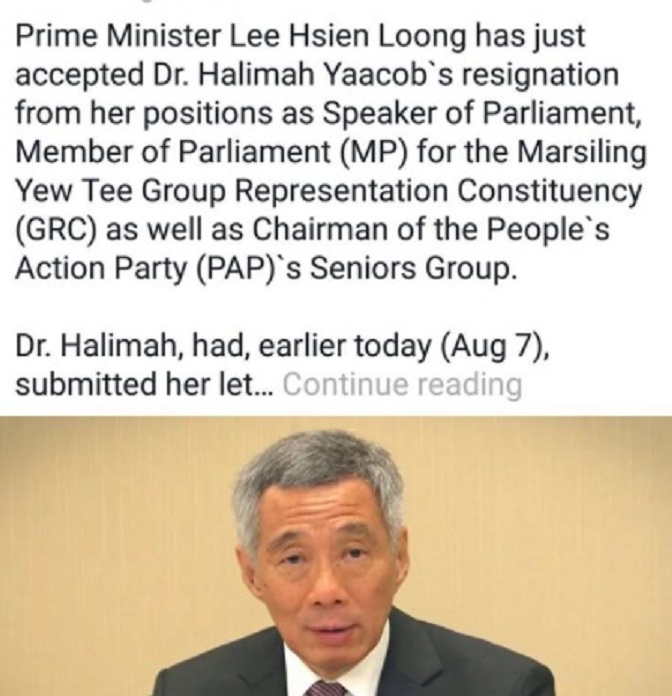
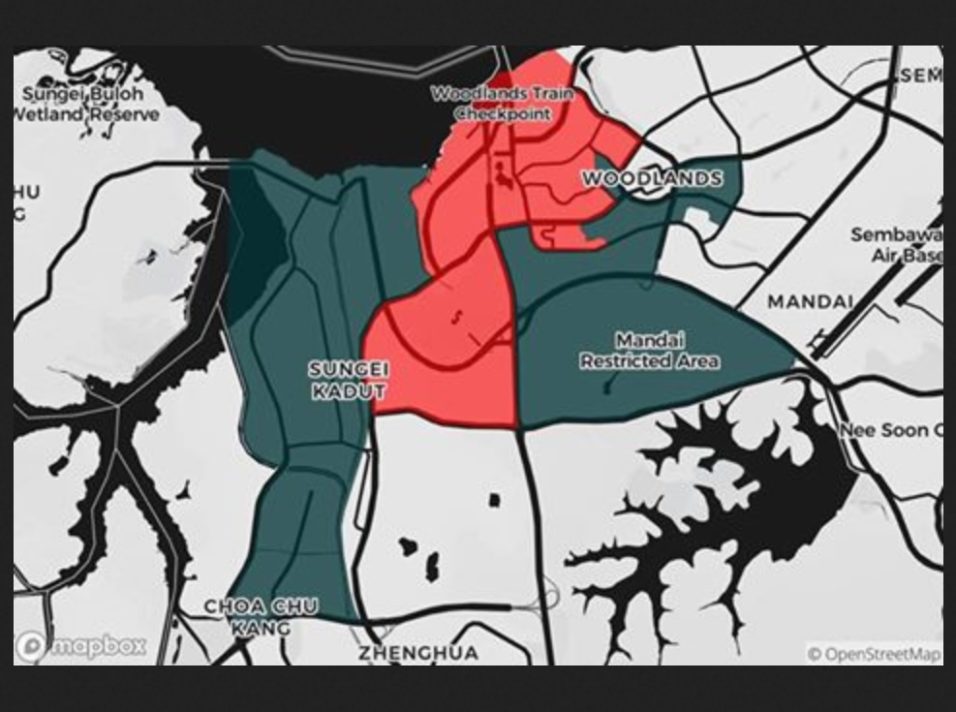
    Halimah Yacob resigned today from her seat of Marsiling (red) and as the 7th Speaker of Parliament.

    Thanks to a question raised by WP MP Pritam Singh in Parliament, we now know that the Prime Minister will not call for a by-election in Marsiling-Yew Tee GRC (shaded below).

    This is very worrying on two fronts.

    Firstly, this 4-member GRC is, by law, one of the GRCs reserved for Malay minority candidates presumably because of its higher Malay population. With Halimah’s departure, the GRC will have no minority MPs at all. Many of us may not agree with the mechanics or even the basis of the GRC system and may wish to see it reformed. Nonetheless, not calling for a by-election to reinstate a minority Member would speak volumes about the PAP’s commitment to playing by its own rules in its own game that is the much-vaunted GRC system.

    Secondly, the PM’s intention to appoint a Grassroots Advisor in Marsiling ward, instead of calling for a by-election, raises very unsettling questions about how the Government recognises the legitimacy and authority of elected MPs. Does this mean that Government agencies will now accord Grassroots Advisors with as much recognition as elected MPs when residents attend Meet-the-People Sessions seeking help? Does this mean that these unelected Grassroots Advisors can take on other roles that presumably only MPs can undertake? If the answer to these questions is no, then without a by-election, Marsiling-Yew Tee residents are being short-changed. If the answer is yes, it would be even worse, for this would be an admission that the Government can appoint a PAP member to be the Grassroots Advisor for Marsiling with inordinate power and authority, without a single vote having been cast for that person by Singaporeans living there. This would be unsurprising given that PAP candidates who lose in Opposition wards are immediately appointed as the Grassroots Advisors for these wards after each General Election.

    Unsurprising, but inherently unfair to voters.

    Given that we are less than half-way through the term of the present Parliament, not calling for a by-election in Marsiling-Yew Tee GRC would be an affront to parliamentary democracy in Singapore, and would be a strong indication of the PAP’s inability to honour its own supposed status of being a champion of minority representation.

    Instead, we are faced with a reserved Presidential Election which harms our social fabric more than it purports to help it, because it may just entrench the idea in people’s minds that minorities are unelectable by way of their own merits alone. How does this advance our progress as a nation?

    (To find out more about how the ward-level layer was made, visit my blog at: https://mappedmusings.wordpress.com/…/mapping-our-home-mapp…. Designed with Map Box.)


    Source: Yudhishthra Nathan
  • Halimah Yacob’s Decision To Contest EP Dilutes Representation Of Malays

    Halimah Yacob’s Decision To Contest EP Dilutes Representation Of Malays

    And so the non-newsy news gets announced, with Mdm Halimah Yacob announcing her candidacy for the reserved presidency.

    The reserved presidency was ostensibly done in a bit to protect multiculturalism, to give the Malay community a chance to have representation in the presidency, after a hiatus, post Yusof Ishak.

    Putting aside the skepticism and critique (and there are many) of the reserved presidency for the moment, is the Community better off in terms of representation, especially in light of the fact that there will be no by-election in Marsiling-Yew Tee GRC to find a replacement for Mdm Halimah?

    Well, the Community lost a Speaker of Parliament (the first woman Speaker too), and Malay MP in Parliament.

    And the Malay residents in Marsiling-Yew Tee GRC have lost their representative voice in Parliament.

    After all, the very purport of the GRC is to apparently ensure a certain level of minority representation in Parliament.

    And it is a considerable period of time till the next GE (which must be held by Jan 2021).

    The argument is that other MPs can stand in for Mdm Halimah.

    But (again putting aside critique of the GRC system for the moment) the raison d’être of the GRC system is precisely that the minority MP is there to represent minority aspirations and concerns.

    Why deprive the minority of Marsiling-Yew Tee of their rights?

    Also, the other MPs (whether of majority or minority ethnicity) would have had their full load of responsibilities too. It won’t be fair on them either.


    Source: Nizam Ismail in Suara Melayu Singapura

  • Not A Great Start For Reserved EP Contest

    Not A Great Start For Reserved EP Contest

    Singapore’s worst-kept secret is out. Or maybe it’s not a secret. It’s speculation that lacked confirmation – which wouldn’t come. Until last night. So Speaker Halimah Yacob has decided to throw her hat (tudung?) into the presidential ring. The surprise would be if she said she wouldn’t.

    Will anyone question her ethnicity like what happened with the two men who had indicated their intention to run for the top job? Businessman Mr Salleh Marican isn’t fluent in Malay while corporate man Mr Farid Khan is of Pakistani descent. Probably not, or the committee which screened her for suitability as a minority candidate in a Group Representation Constituency for general elections would have much to answer for.

    So that’s a hurdle cleared. Will she pass the other criteria on ability to manage large sums of money and big organisations? The other two contenders are said to be below the threshold for private sector aspirants, which is set as the top executive who runs a company with at least $500 million in shareholder equity, widely acknowledged to be a very stringent criteria. This doesn’t knock them out automatically. They can still make their case before the Presidential Elections Committee by citing other factors. Madam Halimah has no such worries because Speaker of Parliament is one of the public sector jobs that are on the list. Plus, she has been on the job for more than three years.

    In fact, the talk about her possible candidacy surfaced almost as soon as the G published its White Paper in response to the report of the Constitutional Commission on amendments to the presidency. The Commission had suggested that the candidate, whether from the public or private sector, should have at least six years in the top job to “capture at least some elements of the applicant’s performance”. The G decided to keep to the old three years of experience. That meant that Madam Halimah just about made it on the three-year front.

    During the parliamentary debates on the amendments, MPs did not raise queries on the three-year threshold directly, except to note that the private sector requirements seemed rather more onerous than those for the public sector track.

    Then on Feb 6, Minister in the Prime Minister’s Office Chan Chun Sing let slip and twice referred to Madam Halimah as “Madam President” in Parliament – on the same day that changes to the Presidential Elections Act were debated. Most considered that a show of the PAP’s intentions and now, after some humming and hawing, she has, as expected, put her name in the hat.

    Would Madam Halimah have run if this was not a reserved presidency? Why has she been so coy all this while? One answer could be that she really hadn’t decided whether to run. Another could be that she was waiting for Dr Tan Cheng Bock’s application to the court to declare whether the start date for a reserved presidency, which is this year, was right. A third could be she wanted to announce her intention to her constituents first, in a National Day dinner.

    There is something strange (for want of a better word) about people intending to contest when such a critical matter hadn’t yet been settled – unless it doesn’t matter to them whether it is a reserved or open election. Checks showed that Mr Salleh declared his intention on May 31, more than three weeks after Dr Tan applied his legal challenge on the reserved election to the court (May 5). Mr Farid did so on Jul 11 after Dr Tan failed in his first attempt on Jul 7. Dr Tan appealed the decision the next day (Jul 12). A five-judge court heard arguments from both the G and Dr Tan’s counsel on Jul 31. With the Chief Justice promising a verdict as soon as possible, a week has passed and Madam Halimah has spoken.

    When Mr Farid was asked about Dr Tan’s legal challenge, he said he would contest the election whatever the court outcome. He put his name out early because he was an unknown quantity to the people who would be voting.

    Madam Halimah should have waited; she doesn’t need any name recognition. It can’t be too long before the Chief Justice delivers a verdict given that President Tony Tan’s term expires at the end of this month. Delaying the announcement would be a nod to the dignity of the court and to those who still think that the G (and Parliament) did wrong to count the late Wee Kim Wee as Singapore’s first elected president. In fact, her announcement only adds to the cynicism about the coming election, as if the court verdict is a foregone conclusion. Unless she makes clear it didn’t matter which way the verdict turned.

    But let’s say it will be a reserved election this year, then the hope is that even more Malay candidates will come forth. During the parliamentary debate on the amendments, Workers’ Party MP Pritam Singh made this comment: “I take the position that because minority candidates are likely to be few to begin with, many candidates are likely to enter Presidential elections through the public sector track or public sector deliberative tracks rather than the more stringent private sector track with its $500 million threshold. This may render hollow the Government’s claims that it is not relaxing the criteria to make it easier for minorities to assume the presidency as a result of the latest constitutional changes.’’

    So far, we have two private sector candidates who do not make the automatic threshold and a public sector candidate who just about cleared it. Not a great start.


    Source: http://themiddleground.sg

  • Halimah Yacob’s Candidacy Is Jumping The Gun On Ruling On Dr Tan Cheng Bock’s EP Challenge

    Halimah Yacob’s Candidacy Is Jumping The Gun On Ruling On Dr Tan Cheng Bock’s EP Challenge

    Why is HY so eager to announce her candidacy for the EP and why is PM so eager to endorse her?

    What is their reason for jumping the gun ahead of the judgement of the 5-judge Apex Court on TCB appeal? There are three possible reasons:

    1. They are confident that the judgement will be in their favour.

    2. They have a sinister motive.

    3. To tell the public that whatever the judgement – open or closed only to the Malays – HY will be the PAPpie standard bearer.

    I think and hope it is the third scenario. If it pans out, I will be the first to declare my support for her.

    Otherwise, I will stay out and not be a party to a farce.


    Source: Ismail Kassim

  • SDP: Halimah’s Resignation Is A Deliberate, Calculated Ploy By PAP To Remove One Of Its MPs To Stand For Another Election

    SDP: Halimah’s Resignation Is A Deliberate, Calculated Ploy By PAP To Remove One Of Its MPs To Stand For Another Election

    Ms Halimah Yacob has announced that she will contest in the coming Presidential Elections and has resigned as MP for the Marsiling-Yew Tee GRC.

    The GRC system was introduced in 1988, the official reason being “to ensure that Singapore’s parliament would always be multiracial in composition and representation.” As such, the constitution requires that GRC teams include at least one member from a minority community.

    Given this rationale, Ms Halimah’s stepping down as MP runs counter to the essence of the GRC system both in letter and spirit. Her resignation must necessarily trigger a by-election in Marsiling-Yew Tee.

    The government determines the number of GRCs needed at any one general election necessary for fair representation. If the government can remove a minority MP at will after he/she is elected, why set the number of GRCs – and therefore the number of minority MPs – to be contested in the first place?

    In addition, the government stipulates the particular ethnic representation for a particular GRC so as to ensure that the ethnic community in that GRC is adequately and effectively represented. By removing that MP, is the government not also removing that community’s representation in Parliament?

    To be clear, Ms Halimah’s resignation is a deliberate and calculated ploy by the PAP to remove one of its MPs in order that she may stand for another election. The PAP cannot be allowed to vacate elected Parliamentary seats just to maximise its electoral chances for another office. It is an abuse of the system and makes a mockery of the general elections.

    If the PAP insists on taking such a step, it must abide by the rule of law and call for a by-election. It cannot have its cake and eat it too.

    Minister Chan Chun Sing says, however, that no by-election will be held if Ms Halimah were to resign from her seat. Such a unilateral and unconstitutional measure runs counter to the concept of the GRC system and must be challenged.

    To this end, the SDP will actively explore legal remedies to ensure that the PAP does not willy-nilly change rules or interpret the law to suit its own political ends by calling for a by-election in Marsiling-Yew Tee.


    Source: http://yoursdp.org