Parents hoping to place their six-year-olds in five of the most popular primary schools this year may face a ballot next week.
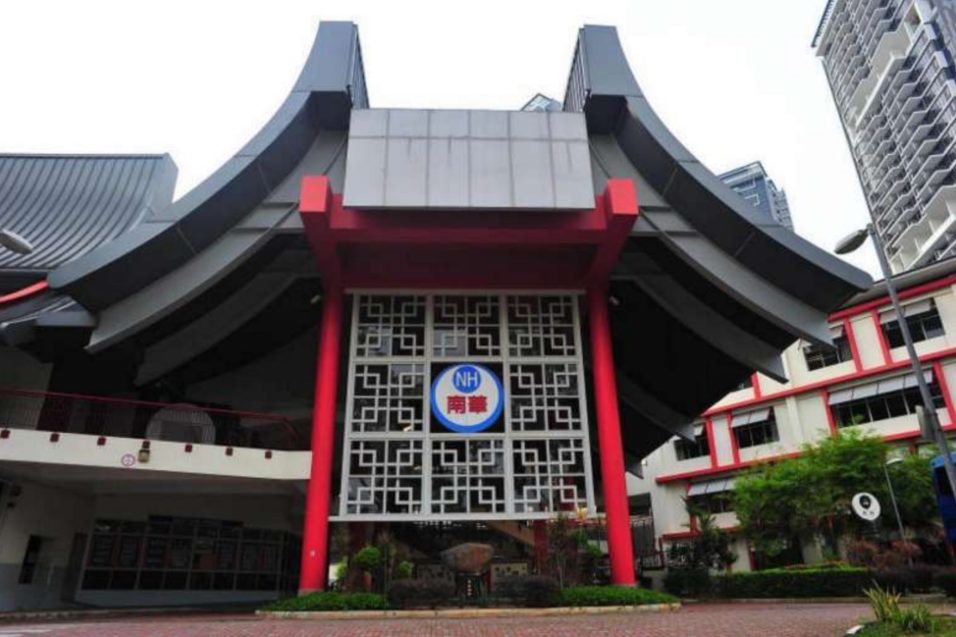
The schools are CHIJ St Nicholas Girls’ School, Nanyang Primary, Nan Hua Primary, Red Swastika School and Catholic High School.
A total of 29 schools were left with fewer than half of their vacancies after Phase 2A1, the second of seven Primary 1 registration stages, closed on Wednesday. Last year, only 19 schools were in this situation.
The phase, which follows Phase 1 for children with siblings currently studying in the school, is for children whose parents had joined the school alumni association at least one year ago, or are on the school advisory committee.
The next phase, 2A2, is for children whose parents or siblings are former pupils, or whose parent is a staff member at the school. Registration starts next Tuesday and ends the next day.
A rule introduced in 2014, which requires all primary schools to set aside 40 places for children in the later stages, may also put a squeeze on places available for the next phase. The 40 places will be split equally between children registering in Phases 2B and 2C.
In the past three years, balloting has been taking place at an earlier stage of the registration exercise, partly as a result of this new rule.
Phase 2B is for children whose parents are school volunteers, active community leaders or have ties with church or clan associations directly connected with the schools. Phase 2C is for children with no ties to the school.
After reserving the 40 places, CHIJ St Nicholas has only seven spots left for Phase 2A2, after 95 children registered this week.
Nanyang Primary and Nan Hua Primary have 10 and 19 places respectively left for Phase 2A2, while Red Swastika and Catholic High have 23 and 31 spots respectively left for Phase 2A2.
Communications professional Ow Yong Weng Leong successfully registered his daughter for a place at Red Swastika School this week.
“The school offers Higher Chinese from Primary 1, so I hope it will help my daughter in becoming bilingual as she currently speaks English more,” said the 37-year-old.
Editors Note:
Based on sources, students who take Malay as a second language cannot enrol in any of the five popular primary schools namely CHIJ St Nicholas Girls’ School, Nanyang Primary, Nan Hua Primary, Red Swastika School and Catholic High School (https://www.moe.gov.sg/a…/primary-one-registration/vacancies). Perhaps if they make millions, one day one of them they can become President of Singapore. What a shame.
Is the kind of elite tokenistic multiracialism the DAG believes in?
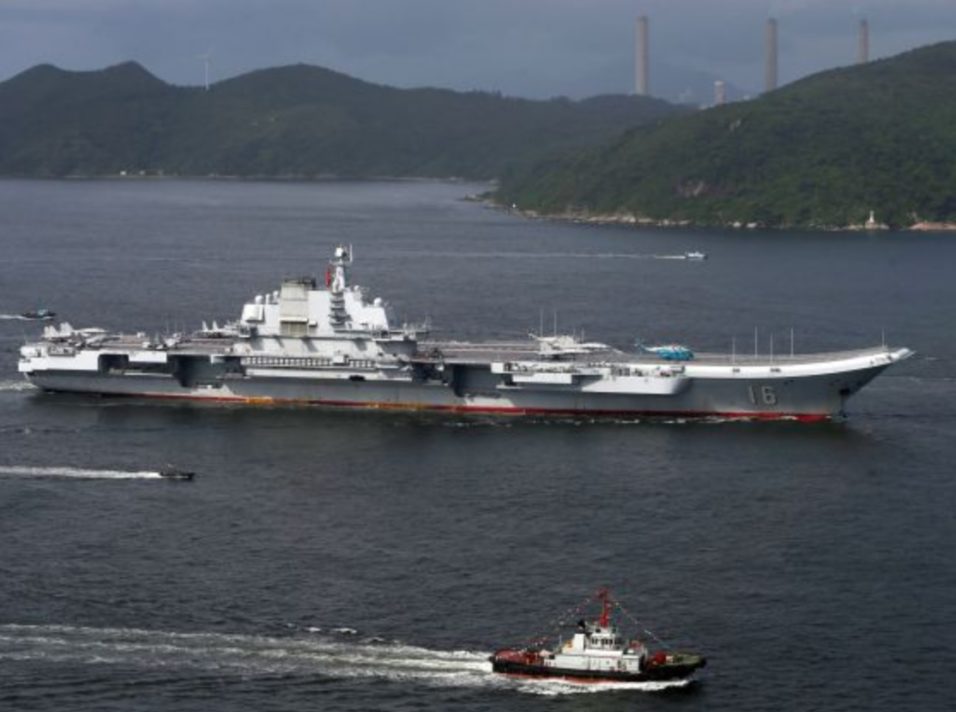
Last weekend, China is opened up its aircraft carrier Liaoning to the public for the first time. The ship arrived in Hong Kong on Friday (July 7), accompanied by two destroyers and a frigate. Only 2,000 tickets for the tour at the weekend were handed out, leaving many who had lined up for hours disappointed. But for the lucky few, the visit is a peek into a highly specialised community, one that works, eats and sleeps together in a maze of hallways and rooms, surrounded by some of the most sophisticated technology and weapons in the Chinese military.
There are more than 3,800 rooms in the ship, including ones for sleeping, eating, exercise and laundry. There’s also the mess hall and even a store, where sailors can buy snacks and everyday items. For security reasons, every sailor carries a photo ID, which must be swiped to enter areas. Access is restricted according to a sailor’s assigned department. Men and women live apart, and fingerprint scanners restrict entry to the women’s quarters. Most sailors are given single beds about 1m wide and 2m long.
With nearly 20 ethnic minorities on board, it’s varied. The ship’s crew eat in 10 cafeterias, including ones specially designed for Muslims. They are offered four appetisers, six main courses and two desserts, going through two to three tons of food per day. When the crew really need to stretch out, the flight deck is turned into a makeshift soccer pitch. There is also an annual basketball competition, with 15 teams competing.
Editors note:
The Chinese Navy can accept 20 ethnic minorities. The RSN cannot even accept one because its ships don’t have halal kitchens. Which one is more inclusive? Hendak seribu daya, tak nak seribu daleh kan. They won’t be ‘losing face’ so to say if they employ a handful of Malays on board because everyone knows that Malays are just a small group in Singapore. We are the minorities and that perhaps may not be changing anytime soon.
What if food was not the issue here since there are halal combat ration already available in SAF. Are they still questioning our loyalty? Still having doubts in Malays in Singapore? Maliki Osman dan Yacoob Ibrahim diam ke tentang isu ini?
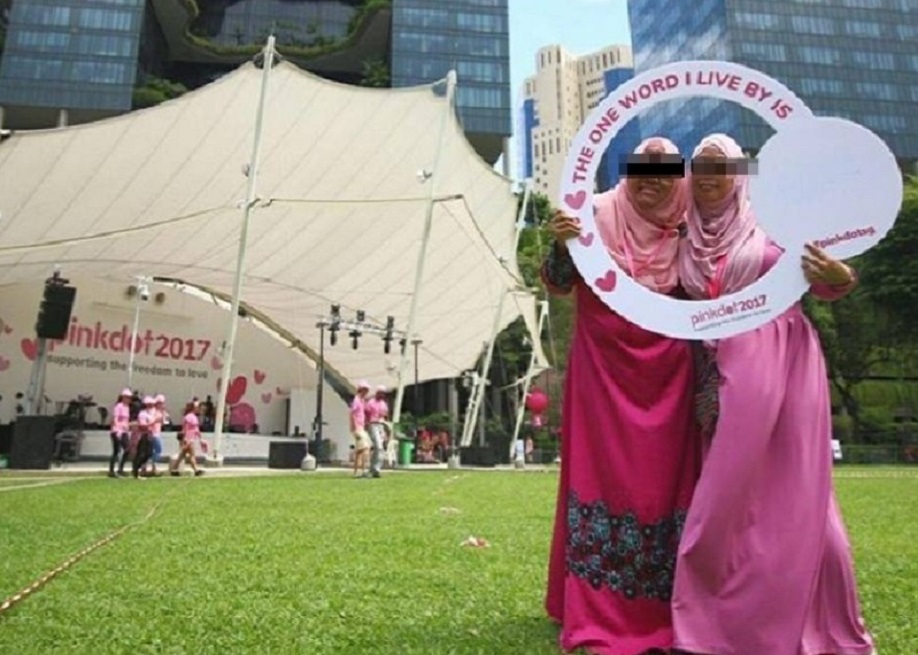
So I recently chanced upon a photo of two hijab women at a Pinkdot event. People wanna be confrontational about things these days, that’s why they have PinkDot. Let me be confrontational about it too.
Go to Pink Dot all you want. But with a hijab over your head, know that you have a religious+social+moral responsibility. Of course they will love it – who says outward Muslims can’t be supportive of LGBT right?
The way Islam views LGBT is with respect, I feel. We see it as a test and recognise it as an inner struggle that God wills to give to some people. We are to respect people who disagree. We are to agree to disagree. But to paint a false picture of our principles and beliefs is wrong. We respectfully disagree with LGBT and we don’t need anybody going around conflicting it. We don’t need the impression and confusion that non-Muslims might get from seeing the photo. We don’t have a strong enough reason to drop by the event to show some love when clearly the motive of the campaign is to support LGBT.
There is a reason why when we sin, our duty is to not reveal our sins. In fact it is God’s form of mercy when He does not reveal our sins – so why reveal it ourselves? It is another sin on top of another to reveal your sins to others. Thus what they did, if they were actually gay, is to reveal themselves. Similar concept with how wrong it is to openly eat in public during the fasting month.
Now I wish people would respect my religion as much as we are to respect the existence of their campaign and all. Gay or not, I hope the sisters are given hidayah.
Ps. I still love my gay friends but like I said, I am firm on agreeing to disagree.
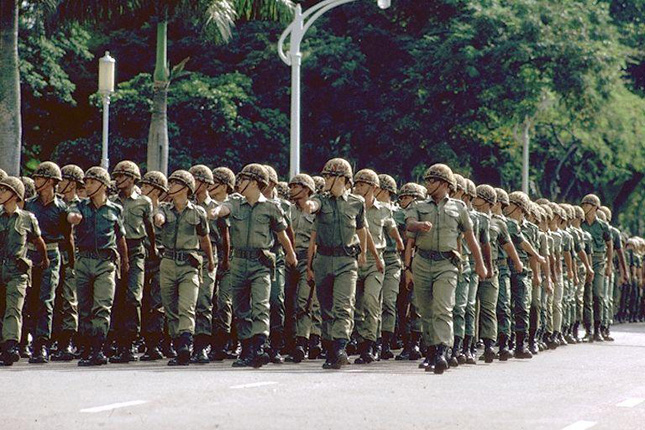
Despite all our gripes and grouches about National Service (and its yearly reservist call-ups) it’s widely regarded as A Good Thing for a variety of reasons: Singapore has too small a population to rely on citizens volunteering for the military, it forces people from different backgrounds to assimilate, etc. etc.
It’s been 50 years since mandatory conscription came into effect, and it’s become a cultural phenomenon unique enough to inspire films and literature revolving around national service. Criticisms abound, of course, but nobody can deny that Singapore stands ready when disaster (or God forbid, war) goes down.
NS50, the year-long commemoration of National Service’s 50th anniversary, however does not bring back warm nostalgic memories for all Singaporean men. We’re not even talking about recalling the time you messed something up and caused everyone else to be punished, nor the time you wore the same dirty underwear for a week straight in the field — we’re talking about structural discrimination that disadvantaged people based on their race.
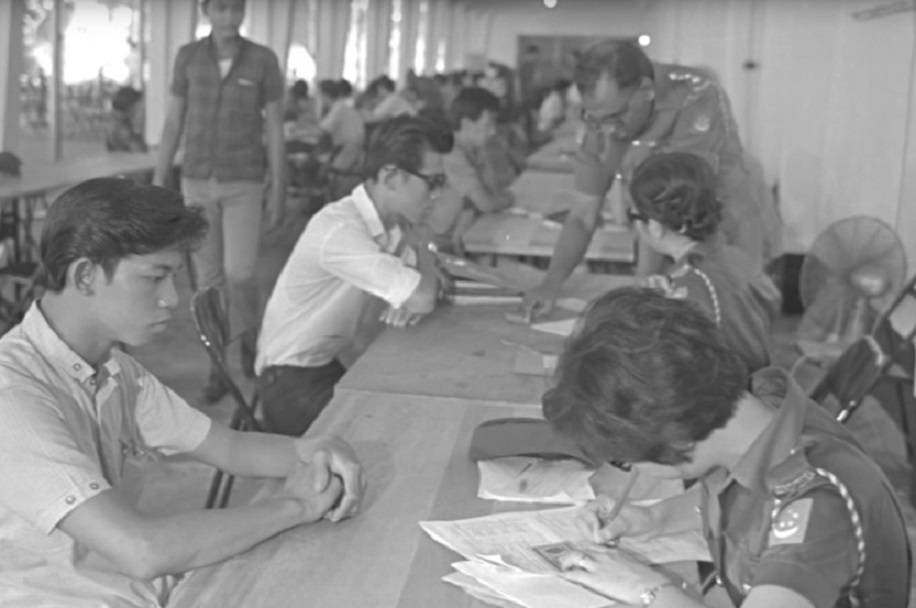
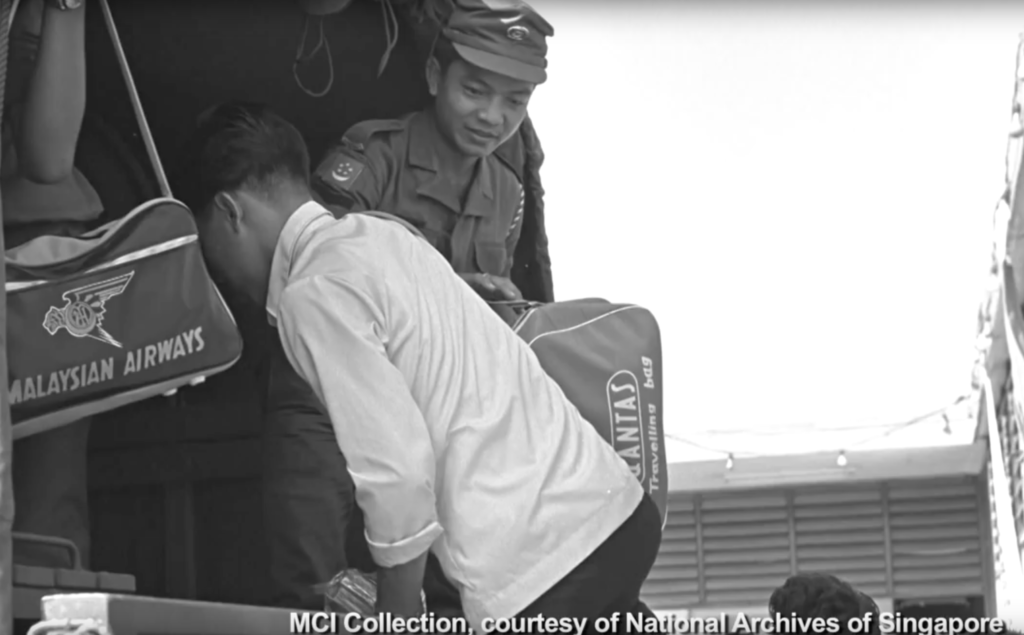
Suspiciously missing from all the NS50 bluster and forced pride is the fact that Malay youths were virtually (not officially, mind you) excluded from conscription from 1967 till 1977.
Even when they were eventually let in, they were mainly positioned to serve in the police force or the fire brigade. The small minority of Malays who manage to be called up into the military were given menial jobs, and are (almost always) excluded from key defense roles such as intelligence, the air force, commandos, artillery units and more — a practice that arguably continues to this day.
The Ministry of Defence keeps insisting that the selection of personnel in various military vocations is not based on race. “The ethnic composition of commanders is similar to that in the general population,” Minister for Defence Dr Ng Eng Hen said in a 2014 response to a Parliamentaryquery about the racial breakdown across National Service vocations.
The unofficial, widely understood reason is this: There is uncertainty as to where the loyalties of the Malay community lie should Singapore engage in war with neighboring Muslim-majority countries such as Indonesia and Malaysia.
“By the second half of the 1970s, Malay exasperation with military recruitment and discrimination polices reached an all-time high. Even without official data, Malay parents knew that their children alone were not called upon to serve. Malay officers and (non-commissioned officers) who had been transferred from field command positions to the logistics corps were also frustrated. Nearly every officer knew that military units had informal quotas on Malays.”
Though pleas were made to Malay leaders to change things, the figures of the day didn’t help ease the malaise. They stated that Malay youth lacked education and couldn’t speak English well (even though drafted Chinese Hokkien youth were the same). They argued that the government didn’t have enough facilities to train Malay soldiers (even though race should make no difference to when it comes to military training).
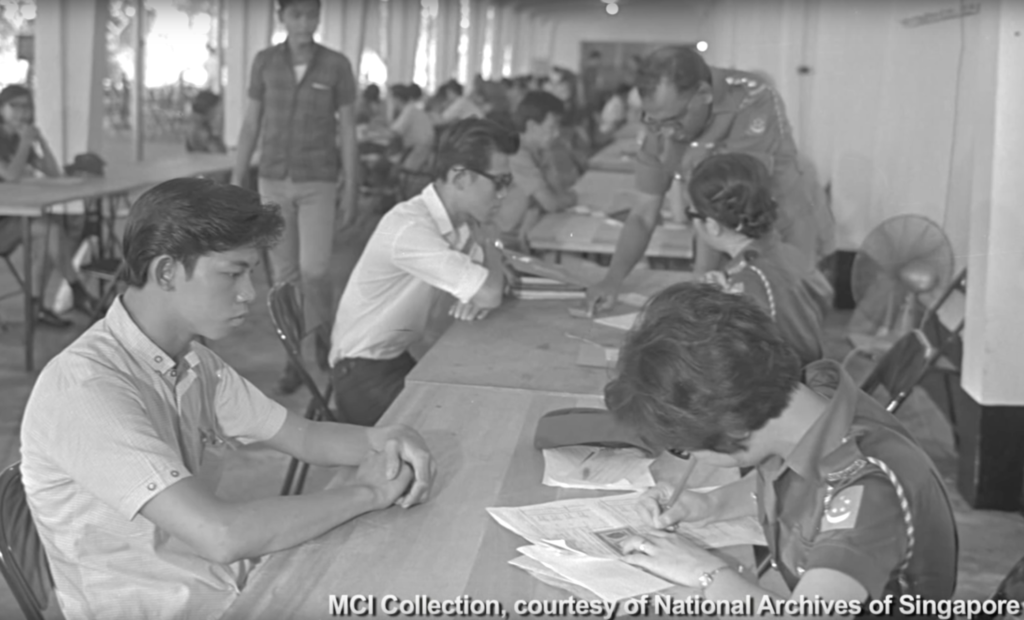
1969 image from National Archives of Singapore
It may not be much of an issue today, but the impact of Singapore’s blatant exclusion of Malays in the service back then was severe. Tania Li argues in her book Malays in Singapore: Culture, Economy, and Ideology that it left the Malay community behind in socio-economic standing.
“There was an unfortunate side effect to the non-recruitment of Malays into National Service. Employers in Singapore are generally unwilling to recruit or train young male workers who have not completed National Service or obtained exemption papers as these youths can be called up at any time. Since Malays were not officially exempted from National Service, Malay youths were unable to obtain apprenticeships or regular jobs, and many were forced into an extended limbo period of about 10 years from ages 14 to 24 … (this) was in part responsible for the high percentage of Malay youths who became involved in heroin abuse during the late 1970s”.
Peled repeats similar sentiments.
“Malay servicemen were pushed out of the military, and young Malays found that the military doors, once their prime avenue for social mobility and a promising career, were firmly closed. Years of exclusion resulted in social bitterness, frustration and a major collision between the state and its principal ethnic minority group”.
The silent ostracizing did not last, fortunately. Policies were eventually eased as the Malaysian invasion threat diminished, and Malay citizens were slowly integrated into the military. By the 1980s, more Malays were being posted in sensitive positions, including the Commando Battalion, while more began graduating as officers.
The memories of the past however are hard to erase, and for former Straits Times’ senior political correspondent Ismail Kassim, the ongoing NS50 campaign did nothing but revive painful memories. Nonetheless, he asserts that it’s a good time for the government to make amends for the past wrongdoings.
“Surely it is not beyond the ability of the present star-studded scholar-leaders to think of some way to assuage the hurt of the past.”
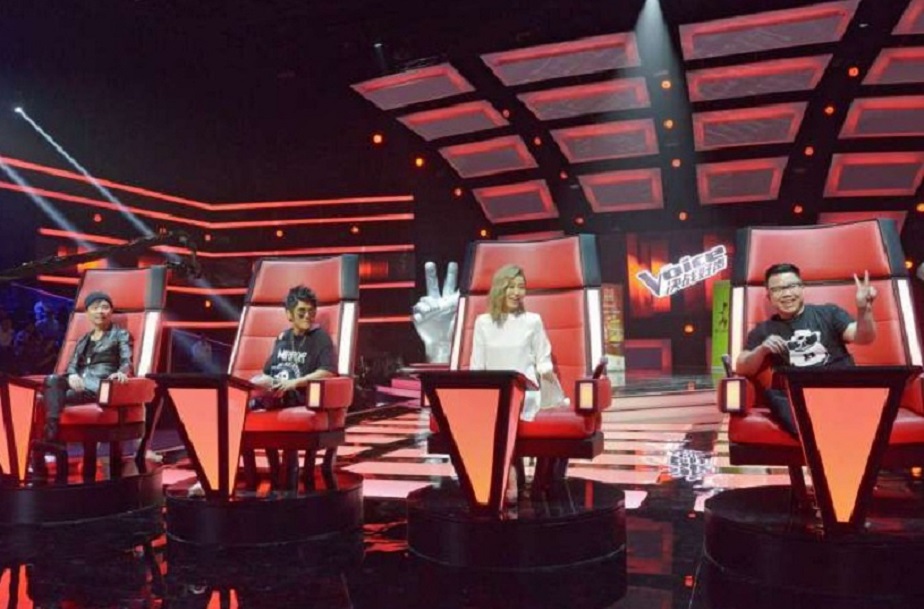
The celebrity judges of the inaugural Singapore/Malaysia edition of reality singing show The Voice agree that in future, the show should consider lifting its Mandarin-speaking requirement.
At the show’s first press event held at Hotel Jen in Johor Baru on Tuesday (July 4) evening, Malaysian singer Gary Chaw, one of the four mentor-judges on the show, told The Straits Times that the show should “diversify”.
The 37-year-old said in a mix of English and Mandarin: “This is just the first season, but going forward, perhaps the producers could work out something with the franchise rights holder where the show could work in many languages.
“After all, Singapore and Malaysia are multi-racial countries, and so we should diversify.”
The producer of the show, mm2 Entertainment, had told The Straits Times in May that it had acquired the format licence to produce the Singapore/Malaysia version of The Voice in Mandarin “based on the assessment that it is most commercially viable.”