Category: Singapuraku

  • Accuser, Mana ‘Wedding Caterer’ That Dumped Curry Waste Into Pasir Ris River?

    Accuser, Mana ‘Wedding Caterer’ That Dumped Curry Waste Into Pasir Ris River?

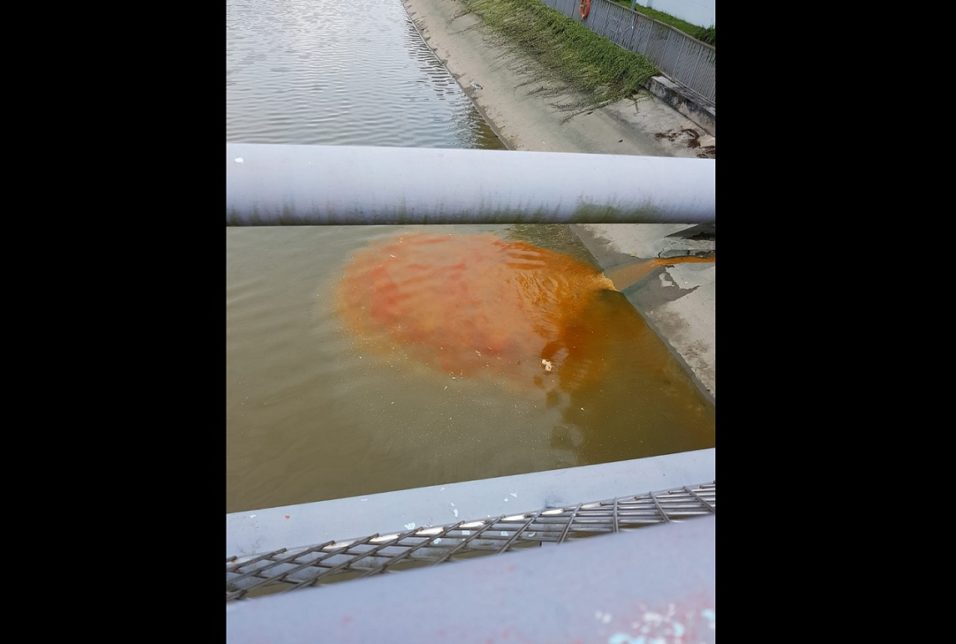
    “Just like this picture, we can say many things nowadays through social media. Accuse, report, stomp and simply tarnish someone’s reputation just like that.

    If you have evidence for example pictures of the “caterer” themselves throwing curry waste into the canals that lead to the river, then the necessary actions to be taken by the respective authorities will follow. Else naturally if you don’t have such proof then is it fair to expect people to believe this piece of news?

    Then again, nowadays everything can be made up just to “kill off” somebody for whatever reasons. No justifiable proof, just pick your bullets and post it online. Well maybe this is the Singapura that we know 

    The photo was originally sent in by Shirley Lc Tan.

    “This wedding caterer at the void deck of Blk 408 Pasir Ris (510408) just simply dump their curry gravy into our river next to it. The river where there are plenty of monitor lizards and our beloveds Pasir Ris’ family of otters..”

    Source: Rilek1Corner Reader

    (PS: Please lah Singaporeans don’t anyhow make up stories. When the river colour macam TEH TARIK no one complain.. Rest our case siol!!)


    Rilek1Corner

  • What Lessons Can Be Learned From Singapore’s Religious Regulatory Framework?

    What Lessons Can Be Learned From Singapore’s Religious Regulatory Framework?

    The city-state has developed an interesting model, but one that cannot be lifted wholesale into other environments, writes HA Hellyer.

    In the last year, several cases of abuse perpetrated by Muslim religious figures have been widely discussed in Western Muslim communities. It is not relevant to comment too deeply on those cases in terms of specifics, that requires investigations that others are carrying out, but these examples brought up an interesting question. What do Muslim communities, particularly in the West, do when religious leaders are accused of carrying out ethical violations, which are not necessarily against the law, but are contrary to their commitments as religious leaders?

    As part of a broader project around the engagement of the Islamic tradition with issues of fundamental rights, I was interested in looking at different models that sought to address how ethical violations were being dealt with in Muslim communities. To that end, a very interesting model – if very particular to its own context – is being developed in Singapore.

    The inspiration for Singapore’s religious regulatory framework came from neighbouring Malaysia, where religious activity for Muslim preachers and teachers has been regulated for much longer. Indeed, the initial regulatory instrument of Singapore for Muslim religious activity – the AMLA – was inspired to a very large degree by a similar law in one of Malaysia’s federal states.

    That regulatory instrument brought the Majlis Ugama Islam Singafora (the Islamic Religious Council of Singapore) into life in 1968. Generally, that body did not really regulate religious leaders: it managed items such as zakat, mosques, the existence of a mufti and other administrative functions. That began to change in the late 1990s, when Pergas, an association for religious teachers, sought the establishment of a religious teachers recognition board. There was no particular appetite at the time, and thus it was left by the way side until the 9/11 attacks in the United States.

    It’s unfortunate indeed that it was the threat of extremism that led to this renewed concern in what is essentially a far wider and less negative concern. But nothing induces political will more than threats and in 2005, the Asatizah Recognition Board was formed to oversee the Asatizah Recognition Scheme. It remained a voluntary association for much of its existence and only became a legally established body last year.

    It’s an interesting model. It engages in the training of imams and religious teachers for different skills; it provides for a recognition of religious qualifications that may not come from widely recognised university establishments; indeed, the religious teachers themselves stand to gain a great deal from the model. But the ARB is also a disciplinary institution. It is a place where religious teachers who have been accused of ethical violations may be questioned. It is made up of religious teachers who are widely respected in the Muslim community.

    In that regard, the scheme operates much like a professional syndicate and officials engaged within it openly admit that they took a lot of inspiration from other professional syndicates in terms of what services the ARB ought to provide its membership. Regular skills training is provided and is a condition of membership. The skills are meant to ensure the religious training of the teachers in question are also contextualised to Singapore’s realities – much like how, for example, the Cambridge Muslim College in the UK, or the Zaytuna College in the US, are aimed at ensuring imams and religious teachers are fully aware of the social realities in which they live.

    But here is the catch – membership of the ARS is mandatory for any religious teacher. Without it, they cannot teach. More than that, the ARB can impose penalties on teachers who have run afoul of ethical prescriptions – penalties that can include fines or even imprisonment. There exists no other such regime for other religious communities in Singapore.

    I spoke to several officials and civil society activists engaged in the wider administration of Muslim religious life on a recent trip to Singapore – who, like me, seemed suspicious of any state power being utilised in the regulation of religious life in this manner. Some confided in me that to begin with they had opposed the compulsory nature of the scheme and weren’t entirely happy about certain aspects of how it was being imposed. And yet, at the same time, for those who were particularly engaged, they admitted there were problems with a few religious teachers, whom they thought required a certain heavy-handed approach. It’s clear there are teething problems, but almost no one I met in Singapore considered the existence of a compulsory syndicate for religious teachers to be a bad idea.

    It’s an interesting model and one that cannot be lifted wholesale to other environments. In the UK, for example, a legally imposed syndicate for religious teachers would raise genuine concerns around religious freedom. But the idea of a religious teachers’ syndicate is not so unusual. The main question is how to ensure it gains social credibility among the community it ministers to, and those who are to be its members, because legal compulsion of any kind may not be the answer in many contexts. How that is all to be done, particularly with such variety among Muslim Western communities, is yet to be seen and at the same time, given the clear problems that exist without regulation at all, it is probably only a matter of time before Muslim Western communities themselves create their own mechanisms. As they seek to do so, they might learn certain lessons from their Singaporean co-religionists.

    Source: thenational


    Rilek1Corner

  • Halal Subway Outlets In The UK Are ‘Way Ahead’ Of Singapore By 10,000 Years

    Halal Subway Outlets In The UK Are ‘Way Ahead’ Of Singapore By 10,000 Years

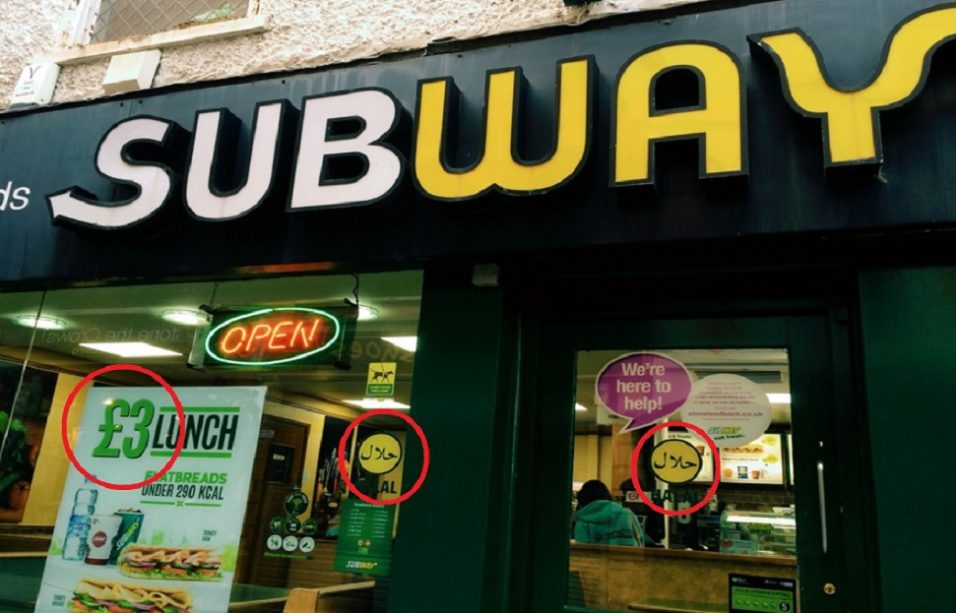
    Not trying to “potong stim” here but the UK has Halal Subway since long, long, long, long, long, long, long, long, long, long, long, time ago already.

    “The HalalNews SG understands that the Subway delegation has held a formal meeting with MUIS officials at the end of 2017 to explain and clarify the aspirations and efforts they have made to meet all Halal MUIS certification requirements for all Subway branches in Singapore.”

    This piece of news has been well received by the Muslim community in Singapore as previous attempts by the Singapore’s Muslim community to seek Subway’s consideration in making its stores Halal have failed

    There was a petition titled “Make Subway Singapore Halal” by Shaik Syasya made about 2 years ago which garnered 130 signatures. “I love eating sandwiches esp subway. Its a hassle to commute to Johor just when u crave for Subway. So please make Subway Singapore halal,” someone said.

    However it is not known why Subway Singapore took so long to start halal-certifying its stores. In United Kingdom (UK) where only 5.4% of its population is made up of Muslims (compared to Singapore’s 14.3% Muslim population), there’s about 10% of Subway outlets in the UK that are halal (202 out of 2000 Subway stores across UK). All Halal meats catered to Subway in the UK was certified by The Islamic Foundation of Ireland and surprisingly, the Central Islamic Committee of Thailand.

    In 2010, Subway Singapore replied to its customers on Facebook:

    “Dear fans,

    We would love to be able to go Halal and we have looked into it very seriously. As we grow, more and more of our suppliers are giving us Halal options but unfortunately not all of them. To go Halal would increase our operational costs significantly as we will not be able to participate in SUBWAY restaurants’ huge global supply chain. And we do not want to hurt any of our customers by increasing prices. We know many of our competitors are Halal, but our menu is a lot more diversified with a lot more ingredients making the shift a more difficult task. So – we hear you. We’ll keep working on it and will review the situation periodically, and hopefully be able to satisfy all our customers eventually.

    Subway Team”

    Then again, there are currently around 2,000 Subway stores in the UK and Ireland, 202 of which are Halal stores selling only certified Halal meats. To be fair, the meats served at halal Subway stores have been produced to meet Subway stores high standards in taste, look and quality. The objective was to ensure the taste of the Halal products matched the taste of the Subway stores “Gold Standard” meats.

    So why have Singaporeans been deprived of Halal Subway stores and who should the good people put the blame on? Consider the following:

    1) Subway Singapore giving lame excuses. 2) Inaction of local Muslim body MUIS. 3) Bad luck Singapore.


    Rilek1Corner

  • YouTube Star Hirzi Zulkiflie And First Ever Pink Dot Muslim Ambassador Takes A Bow

    YouTube Star Hirzi Zulkiflie And First Ever Pink Dot Muslim Ambassador Takes A Bow

    In a few hours, comedy duo Munah & Hirzi will stage a farewell show at the Capitol Theatre, dubbed “Munah & Hirzi Live: Curtain Call”. The one night only, two-hour show –in their own words– celebrates “the end of an era”. The twosome has always said that they would leave the scene after 10 years.

    Amidst his busy schedule in preparation for the show, Hirzi Zulkiflie visited the ZYRUP office for this interview, which, more than anything, turned out to be an hour-long career retrospective.

    It all started in 2007, where the then-polytechnic friends paired up and participated in a video competition. Thankfully, it wasn’t a one-off partnership. Recognizing the potential they possessed, the pair continued to make regular videos (“with our bags as tripods!”) on YouTube under the mantle “Munah & Hirzi”.

    “When we were ending [our time in polytechnic], one of my biggest worries was that I was going to end this ‘era’ with her. The YouTube channel became something to sort of ‘sustain’ that friendship.”

    “There’s something honest and earnest [about the early days] that I miss a lot,” he added.

    “It was beautiful. It was just us. We had no pressure, no qualms. I think that was the magic of ‘Munah & Hirzi’. It was just two friends who captured themselves in the most honest and raw form; no filters.”

    It was this authentic, organic brand of content that allowed the pair to connect with viewers online, and as the years went by, they garnered thousands of fans not just in Singapore, but also across the causeway, striking a chord with the Malay-speaking audience.

    By 2012, which he refers to as their “peak year”, they had their own talk-show (Munah & Hirzi: Action!) that was broadcasted on national television, as well as starring in comedy production Happy Ever Laughter, alongside veterans like Gurmit Singh and Kumar.

    Meanwhile, their YouTube channel, with music video parodies and the now-iconic series like ‘10 Dares’ and ‘Sex Appeal and Jokes’, catapulted them to top status among YouTubers. Fan-favourite characters played by Hirzi, like Leticiacia and Corporal Hassan, also featured prominently in their videos. No other YouTuber balanced slapstick humour and social issues like they did.

    The immense growth meant reaching a wider audience – and not everyone approved.

    “Some in the Malay community were up in arms against us having our own TV show,” he explained.

    “The conservative Malays felt that ‘Munah and Hirzi’ [do not] deserve their own show because they were not exemplary to Malay millennials, and by that virtue, they should never, ever get [access to] all these platforms and exposure.”

    “[But] we knew who were our die-hards. And we knew that was the direction we needed to go. We knew who were our detractors too,” he added.

    “The challenge was to bridge these voices together, or to consistently progress the Malay community towards the concept of pluralism, which is something that is so hard to impart onto our society.”

    However, it was when the duo decided to take on the roles as ambassadors for 2015’s Pink Dot event that proved to be the hardest thing they would have to go through.

    They were the first ever Muslim ambassadors of the annual lesbian, gay, bisexual and transgender (LGBT) event.

    “When Pink Dot happened, even our tribe had to be divided. Here were our die-hards, conflicted between religious convictions and a fanbase connection they had with us.”

    Following the announcement of their ambassadorship, they received a slew of online attacks, and advertisers shunned them.

    However, Hirzi admitted that it was the reaction from family members was the “hardest thing” to deal with.

    Devastated from the backlash they received, the two would meet in Munah’s car every night for a month, crying, with only each other to lean on.

    “We didn’t realize how big of a news it would be. It was hard for us.”

    I feel bad that I put Munah through it. All she did was stand up for something she believed in, and what her best friend told her should be done. I have never seen her break down. By then I’ve known her for 9 years – never have I seen her like that, so broken.”

    I note that he must have at least been aware of the kind of responses they would receive by taking on the roles, even if he was not able to grasp the magnitude of the situation. Why then, still take the risk?

    He took a moment to collect his thoughts.

    “Until today, I remember this story. Until today, I remember their faces. I still get goosebumps telling this story.”

    It was at the 2015 YouTube FanFest meet and greet session. With some time to spare, the pair opened the floor to fans. While he expected silly, light-hearted banter, things took a surprising, sombre turn.

    A 14-year-old Muslim girl had come forward, and asked him how she would be able to overcome her self-mutilation. The girl revealed that she was conflicted with who she was – on one hand, having an attraction to other girls, and on the other, trying to be an exemplary Muslim girl she was raised to be.

    “I said to her: ‘For legal reasons, I cannot give you the answer I want to give you. But my best answer to you is to find a support system.’”

    “Surprisingly, it was such heavy topic, but the kids in the room were all singular in their thoughts. There was no judgement.”

    One by one, other kids in the room started coming out with their issues and problems. It was then that Hirzi realized the impact that the characters he played had on the viewers, beyond being mere entertaining caricatures.

    “I didn’t see that what these kids saw was, for the first time, a physical embodiment of gender questioning characters. You see, I had Kumar. You know of Kumar if you’re an adult. But I guess for the kids, to be on YouTube, I was a role-model for them.”

    He recalled another incident where a stranger splashed coffee on him on Orchard Road following the news of his Pink Dot ambassadorship. Furious, he posted what had happened on his personal Facebook account, which in turn attracted the attention of his journalist friends.

    “[The press] wanted to ride on that story, but [I realized] this is not a time about me,” he said.

    “My participation in Pink Dot was for the kids who were waiting for a Malay voice. [Having the story released back then] would feel like one step forward, five steps back.”

    In a few hours, Hirzi will revisit said “gender questioning characters” for one last time. While fans can expect their signature no holds barred brand of comedy, it won’t be a surprise to find the show tackling or making nods at deep-seated issues as well.

    As the characters who we’ve grown up with over the past decade take a final bow, they leave behind a legacy that Hirzi hopes will inspire the next generation to further progress the conversation.

    “What we hope will start after we step down is that others step up to the plate.”

    Credit: Zyrup


    Rilek1Corner
  • Interview With A Malay Singaporean Who Moved To Brunei And Is Not Coming Back

    Interview With A Malay Singaporean Who Moved To Brunei And Is Not Coming Back

    What do you think of this?

    ***

    “My name is J. I’m 55 years old now. I’m not highly educated but only managed to complete GCE ‘O’ Level with 3 credits. Started working at the age of 18 in a big and rich company in Singapore. I studied bookkeeping and accounting while working and managed to work in the Accounts Dept in this company for 16 years and earned quite good salary.

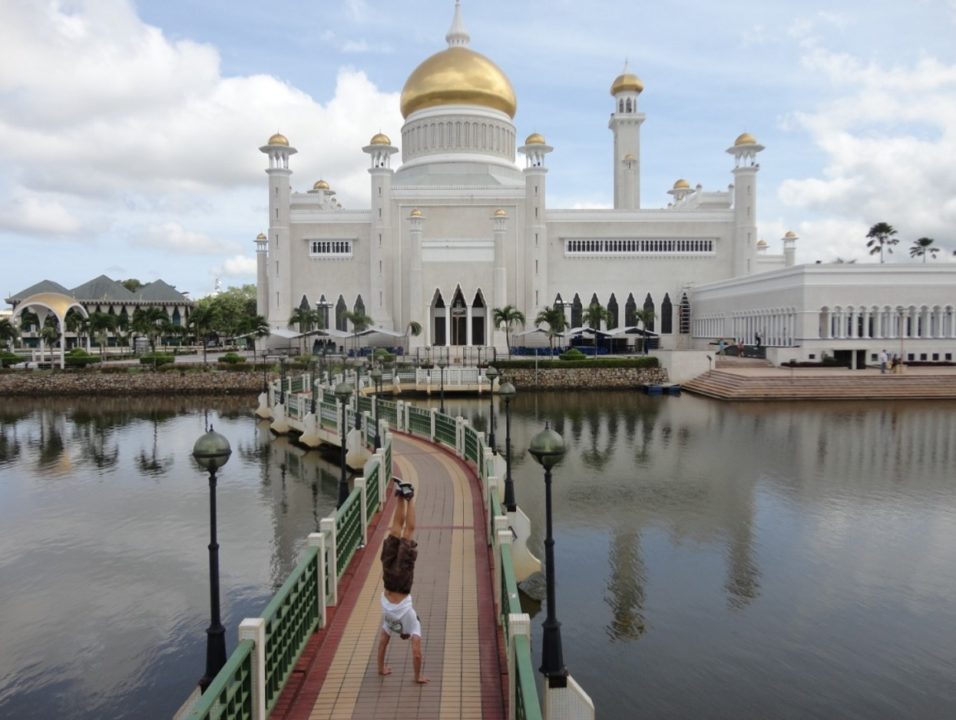
    I am now living in Brunei Darussalam with my wife. Brunei is a peaceful country governed by a caring King, Sultan Hassanal Bolkiah and the people of Brunei are very nice. Its a little bit back dated though, with kampong style of environment.

    There’s not much adjustment actually because the people in Brunei are just like the people in Singapore. The main occupants are Malays and Chinese and there are other immigrants like the Indian, Indonesian and Filipino. I can say there’s less stress in Brunei.

    My wife and I loved staying here so much. We intend to stay here permanently. By living abroad we learned to appreciate other peoples’ customs, beliefs and practices. We have no difficulties finding job here because I set up a company and employs the locals. We move out of Singapore to find a cheaper place to stay. Living in Singapore is very expensive, with new rules in every now and then, especially that CPF thing.

    For those who want to migrate, please do a study in every aspect. Even if you hate Singapore, please do not give up your citizenship easily. Think over and over again. Be a PR is just as good. So if have any problem at least you can turn back to be “mama” son.”

    Source: FB


    Rilek1Corner