Category: Sosial

  • Fluff Bakery Tebar Sayap Ke Kuala Lumpur

    Fluff Bakery Tebar Sayap Ke Kuala Lumpur

    Fluff Bakery, kedai kek cawan atau ‘cupcake’ popular Singapura, sudahpun mula menebarkan sayapnya ke Kuala Lumpur. Ini apabila ia melancarkan kedai sementaranya yang pertama di ibu kota Malaysia itu.

    Kesemuanya, Fluff Bakery akan membuka empat kedai sementara itu di sana.

    Bagi kedai sementara yang pertama itu, ia dilancarkan lebih seminggu lalu (14 Jan) dalam satu acara privet. Ia dihadiri para penaja, rakan-rakan dan keluarga. Acara itu berjalan dengan lancar dengan hampir kesemua 450 kek cawan yang dibawa dari Singapura, disapu bersih!

    “Kami sebenarnya tidak percaya dapat respons yang begitu baik. Tetapi Alhamdullilah semuanya baik hingga kami risau jika bekalan kami bawa ke Kuala Lumpur tidak mencukupi,” ujar pemilik bersama Fluff Bakery Mohammad Ashraf Mohammad Alami, 35 tahun.

    RANCANG 4 KEDAI SEMENTARA DI KL

    Kedai sementara yang berlangsung hanya sehari itu adalah yang pertama daripada empat siri yang akan diadakan Fluff Bakery di merata Kuala Lumpur.

    Meskipun kedai sementara yang pertama itu diadakan secara privet, Fluff Bakery menyatakan tiga lagi kedai seumpamanya akan didedahkan kepada orang ramai pada masa yang terdekat.

    “Insyaallah, menjelang bulan Mei nanti kami akan menubuhkan kedai yang tetap di Kuala Lumpur,” kongsi Nursyazanna Syaira Md Suhimi, 29 tahun, pemilik bersama dan ketua pembuat kek Fluff Bakery.

    Pasangan suami isteri itu turut berkongsi kepada BERITAMediacorp bahawa impian untuk menembusi pasaran Kuala Lumpur atau Indonesia sudah lama terpendam sejak mereka bermula menapak di dunia perniagaan pada bulan November 2013.

    “Memang sudah lama kami impikan menembusi pasaran lain dan pada masa yang sama, menyasarkan menjadi antara yang utama di Asia Tenggara,” tambah Encik Ashraf kepada BERITAMediacorp.

    ISTERI JOVIAN MANDAGIE TAWAR BANTUAN

    Fluff Bakery menyatakan terdapat ramai pelanggan mereka di Singapura, juga datang dari negara jiran. Pelanggan-pelanggan itu juga memberi maklum balas yang positif terhadap kek cawan mereka.

    Namun penantian hendak menebarkan sayap ke Malaysia hanya berlaku apabila seorang lagi pasangan suami isteri yang juga pemilik kafe, Double A dari Malaysia, mempelawa Fluff Bakery untuk meneroka peluang di Malaysia.

    Kalau sudah rezeki, takkan ke mana. Mungkin itulah pepatah yang sesuai diberikan Fluff Bakery. Ini kerana sejurus selepas idea Double A itu, seorang lagi usahawan Cik Nina Ismail Sabri yang juga isteri kepada pereka fesyen terkenal Jovian Mandagie melahirkan hasrat yang sama kepada kedua-dua Encik Ashraf dan Cik Syaira.

    Menurut kedua-dua pemilik bersama itu, kedai sementara di Malaysia itu dibuat secara privet kerana mahu mendapatkan maklum balas terhadap produk-produk Fluff Bakery.

    Antara mereka yang hadir semasa pelancaran itu adalah pelakon Alvin Chong, usahawan fesyen, Vivy Yusof, dan penulis-penulis blog di Malaysia.

    KEDAI DI KL AKAN BERBEZA DARIPADA DI S’PURA

    Walaupun bimbang andainya langkah itu terhenti separuh jalan, Fluff Bakery berkongsi kepada BERITAMediacorp bahawa masanya sudah tepat bagi mereka berdepan dengan cabaran baru supaya ‘tidak rasa selesa’.

    “Di Singapura, kami sudah stabil. Dan kami berterima kasih kepada masyarakat kita yang sering menyokong perjalanan kami sejauh ini. Tetapi masanya sudah tiba untuk kami berdua ingin melihat berapa jauh ‘bayi kesayangan’ kami boleh pergi,” menurut Syaira dan Ashraf.

    Dengan bantuan daripada rakan-rakan niaga di Malaysia, Fluff Bakery berharap rancangannya dapat berjalan dengan lancar. Apatah lagi, pesaing-pesaing dalam industri makanan di Malaysia memang hebat.

    “Kami seronok dengan perjalanan kami sejauh ini dan tidak sabar untuk fasa seterusnya. Memang banyak cabaran yang akan kami hadapi. Yang utama sekali, kami tidak ada kelebihan dari segi pengikut kedai kami berbanding di Singapura,” ujar Encik Ashraf.

    Kedai tetap yang bakal diadakan nanti di Kuala Lumpur juga berbeza daripada kedainya di Singapura. Di Kuala Lumpur, Fluff Bakery akan mengetengahkan kedai di mana para pelanggan dapat membeli dan menjamu selera di kedai itu sendiri.

    “Isteri saya dan kakitangan kami akan menjalankan latihan untuk bakal pekerja kami di sana dan kami membuat kajian dan mendapatkan nasihat daripada rakan-rakan di sana mengenai selok-belok menjalankan perniagaan di Malaysia,” tambah Encik Ashraf kepada BERITAMediacorp.

    APA RAHSIA SEBENAR FLUFF BAKERY?

    Daripada sekadar mengambil tempahan, kepada ‘bersinggah di kedai orang’. Kemudian memiliki kedai sendiri dan akhirnya impian hampir menjadi kenyataan untuk membuka sebuah kedai tetap di Kuala Lumpur. Apakah sebenarnya rahsia Fluff Bakery?

    Encik Ashraf tersenyum dan mendedahkan bahawa resepi atau senjata rahsia Fluff Bakery adalah… isterinya, Cik Syaira.

    (Gambar-gambar: Instagram/Fluff Bakery/Nursyazanna Syaira)

    “Beliau bukan saja berbakat tetapi juga mempunyai minat yang mendalam apabila timbul perihal membuat kek ini. Beliau tidak penat menukar dan mencari resepi dan kepelbagaian bagi produk-produk kami demi para pelanggan,” kata Encik Ashraf.

    Cik Syaira pula berkongsi kepada BERITAMediacorp bahawa menjaga dan mempertahankan jenama Fluff Bakery itu juga antara perkara yang membuat Fluff Bakery berjaya.

    “Sudah tentu suami saya banyak tolong dalam isu pentadbiran. Kalau harapkan saya, dah pengsan jadinya!” seloroh Cik Syaira.

    Source: http://berita.mediacorp.sg
  • Artmani Italia Closed Down Without Warning, Customers Furious

    Artmani Italia Closed Down Without Warning, Customers Furious

    Ms Teo, an associate director of a recruitment agency, was hoping that a two-seater leather sofa she bought would be the centrepiece of her new home, after she moves in soon after Chinese New Year.

    But she is now missing a sofa, and is $3,000 poorer. She had paid furniture company Artmani Italia in two instalments – one last July and the other two weeks ago – and the firm promised to deliver the sofa to her flat in Boon Keng in early February.

    But Artmani Italia is believed to have shut down, leaving Ms Teo and about 50 others in the lurch. These customers, part of a WhatsApp group, are owed around $65,000 worth of furniture, and they have lodged police reports.

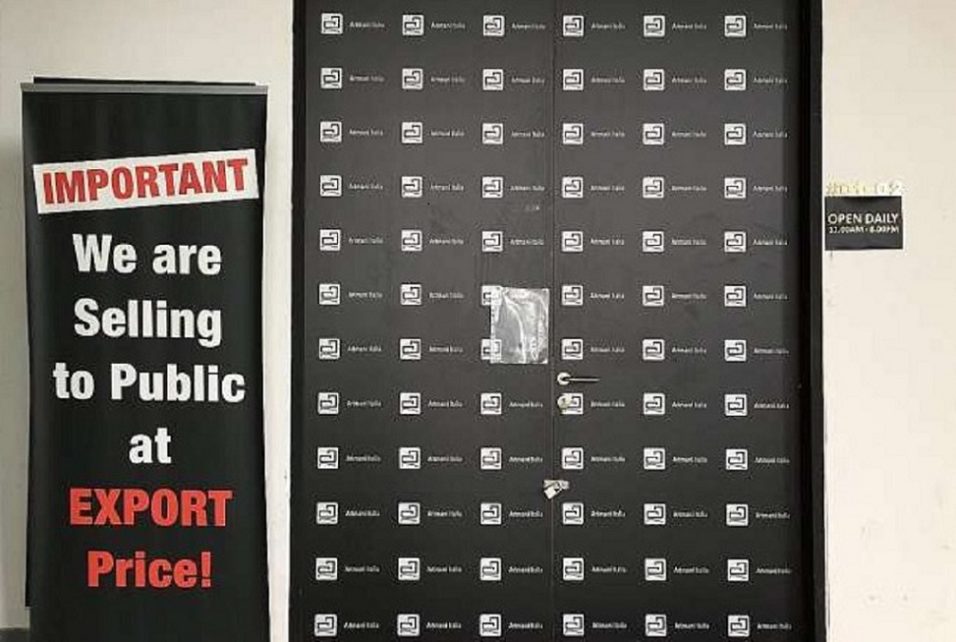
    When The Straits Times visited Artmani Italia’s premises in an industrial building off Hougang yesterday, the firm’s showroom doors were locked.

    At another two units listed under the firm’s name, letters from the landlord were pasted on the front doors, stating that no one was allowed access to the units with effect from Jan 18, unless authorised to do so.

    Others who work in the building saw movers loading furniture from the showroom onto a lorry.


    Attempts to reach the company were unsuccessful.


    One possible avenue for redress for the likes of Ms Teo is to file a claim with the Small Claims Tribunals. For now, she has bought another sofa from another company, with delivery expected in March.

    She still finds it hard to believe that she and her husband could have lost money like this.


    Source: www.straitstimes.com

  • 3 Things SAF Can Do With The Returned Terrexes

    3 Things SAF Can Do With The Returned Terrexes

    Finally, the PRC government is returning our Terrexes to us. They had so much time with the Terrexes that they probably copied every inch of it and are already manufacturing battalion-sized Terrexes somewhere in China now.

    So what do we do with the Terrexes? Here are our suggestions:

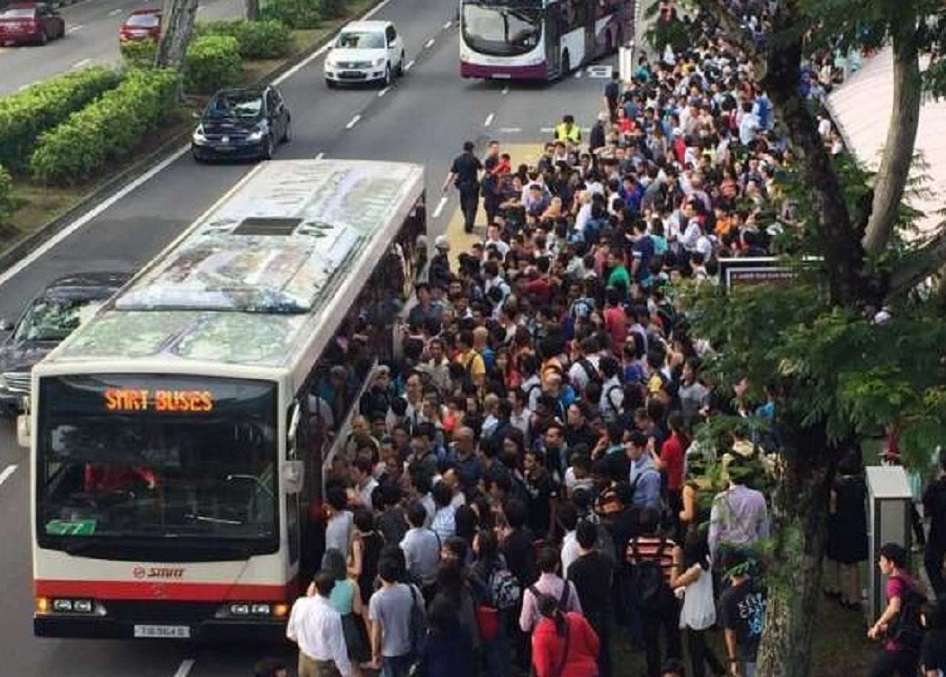
    1. Deploy the Terrexes to ferry people in times of another inevitable MRT disruption. More specifically, they could ferry the very old and very young to their next destinations. Have you seen the crunch that people get themselves into when trying to get on the bridging bus services? With the Terrexes, no one will dare get in their way.Disruption 1Disruption 2
    2. Set them up to provide joy-rides at the Istana, at every public holiday open house. The Istana is sprawling. The children will love the adventure.Open House
    3. Display them in the Army Museum. The best way to learn and progress is to learn from mistakes made in history.Army Museum


    Any better ideas?


    Rilek1Corner


  • Four Decades Of A Malay Myth

    Four Decades Of A Malay Myth

    Masturah Alatas takes a close look at the legacy and impact of her father’s seminal study of ‘Malayness’, The Myth of the Lazy Native, which turns 40 this year.

    “Our Production Manager estimates that we would very likely have finished copies of both books in December, and would therefore be able to publish in January, 1977.”

    With these long-awaited words that reached Singapore in a letter dated 14 September 1976, Malaysian sociologist Syed Hussein Alatas (1928-2007) received confirmation that his books, The Myth of the Lazy Native and Intellectuals in Developing Societies, would finally be published in London by Frank Cass.

    Murray Mindlin was the Cass editor who wrote the letter. He also happened to be the Hebrew translator of James Joyce’s Ulysses, a fitting fact since The Myth of the Lazy Native (henceforth Lazy Native) was caught up in its own, long-drawn-out publishing odyssey. Shunned by publishers in Malaysia and Singapore, Alatas first submitted Intellectuals to Frank Cass in early 1972 at the suggestion of social anthropologist, Ernest Gellner. In corresponding with Cass editors about that book, later the same year Alatas casually mentioned that he was completing the Lazy Native that he had started working on in 1966.

    “At the moment I am finishing a manuscript of about 100,000 words on the myth of the lazy native in the Philippines, Indonesia and Malaysia, from the 16th to the 20th centuries. It is a study of the function and origin of this myth in the colonial ideology. Dutch, Malay and English sources are used. The discipline applied is the sociology of knowledge. To the best of my knowledge, this is the first work of its kind,” Alatas wrote.

    Young editor Jim Muir, who would later become the BBC’s correspondent for the Middle East, immediately asked to see the manuscript. Struck by the title and subject, he felt Lazy Native “would probably fit very well into our Library of Peasant Studies.”

    The story of the publishing vicissitudes of Lazy Native is documented in my book, The Life in the Writing (2010), as is the work’s international reception by the likes of Victor Gordon Kiernan, Edward W Said, Ziauddin Sardar and many others.

    There are several ways to assess the status of Lazy Native in the 40 years of its existence. We can check databases to see where it has been cited and syllabi to know where it is taught. Social media will give us an idea of who is reading it, talking about it, and going to conferences, seminars and festivals where it is studied.

    One could say that a revived interest in the book is due, in part, to the efforts of his son and my brother, Syed Farid Alatas, a sociologist at the National University of Singapore, not just through teaching, public speaking and his own writing but also because he solicited a reprint of a paperback and more affordable edition of Lazy Native from Routledge (2010). Malaysians will remember that the hardback Cass edition of Lazy Native once went for over 400 ringgit (roughly $US90 in today’s money). Syed Farid Alatas was also proactive in getting a second edition of the Malay translation of the book, Mitos Pribumi Malas, reissued with Dewan Bahasa dan Pustaka (2009).

    It is worth mentioning—as translation studies scholar Nazry Bahrawi has noted—that the Malay translation, or rather adaptation of Lazy Native from the 1987 Indonesian translation, contains some omissions, including excluded lines and passages that are present in both the English and Indonesian versions. One omission is the line “The degradation of the Malay character is an attempt by the ruling party to absolve itself from blame for real or expected failures to ensure the progress of the Malay community” (Lazy Native, 1977, p 181). The book contains no note from the translator, Zainab Kassim, as to the reasons for these omissions.

    Whatever the case, we can conclude that irrespective of the availability of the book in English and Malay, what the quality of the Malay translation is, or how much or little it is actually read and talked about, Lazy Native seems to have found its place in the sun as a classic, and not just because Bahrawi and other scholars recognise it as a seminal text located within postcolonial theory. Not only has the Lazy Native walked right out of the Library of Peasant Studies into the libraries of Malay studies, cultural studies, sociology, history and literature—not to mention the personal libraries of many Malaysians— the book also seems to be sitting in the collective Malaysian imagination as a disgruntled trope, even though Syed Hussein Alatas himself had doubts about how many people had actually read and understood it.

    It is therefore legitimate to ask: after 40 years, is the myth of the lazy native still a myth? Former Malaysian Prime Minister Tun Dr Mahathir Mohamad seems not to think so. According to him, the Malays are lazy because they don’t study hard enough, they can’t master English and they prefer to become Mat Rempit (motorcycle gangsters). What is missing from the narrative is if it is laziness or hard work that has to do with how the current Prime Minister, Najib Razak, was able to allegedly channel more than $1 billion into his personal bank accounts.

    Historian Zaharah Sulaiman, instead, believes that if “Malays are called lazy and not innovative, it’s because the knowledge, the peoples who have the knowledge have gone extinct,” and that ‘foreign invasions’ that led to the ‘grabbing’ of riches has a lot to do with the extinction of this knowledge.

    But in the chapter “The disappearance of the indigenous trading class”, Alatas does not so simplistically attribute the destruction of the trading class to foreign invasion. If anything, he provides sociological analysis showing how local rulers were sometimes complicit with colonial masters in bringing about the disappearance of the native trading class — for example when local chiefs acted as agents for the Dutch East India Company.

    Alatas framed his critique of colonial capitalism that exploited the image of the lazy native with economic and sociological analyses. Indeed, he called it “colonial capitalism” and not white capitalism. And nowhere in Lazy Native does he blame the other ethnicities of Malaysia—the Chinese or the Indians—for the condition of the Malays.

    It is important to understand this to distance the kind of critique Alatas performs in Lazy Native and the language he uses from, say, rants about  “Chinese privilege” in Singapore, in which the term itself makes a direct link of ethnicity—one ethnicity in particular—to majority class and political privilege, and abuse of power. If Alatas has tried to help us see the wrongness in the ideological necessity of giving laziness a Malay face, we are invited to think about the wrongness in the ideological insistence of giving a Chinese face to privilege.

    Finally, Lazy Native has inadvertently generated it own myth that needs to be debunked if we are to understand what unique scholarship really means— the claim that the book contributed to Edward W Said’s thesis on Orientalism. This claim has been made by several scholars all over the world.

    Orientalism (1978) was already written and sent off to the publisher when Alatas’ book came out the year before Said’s did. At the time, the two men never even knew or corresponded with each other.

    I know this because both men told me so.

    Masturah Alatas is a writer and teacher who lives in Macerata, Italy. She is the author of The girl who made it snow in Singapore (2008) and The life in the writing (2010), a memoir-biography about her father, Syed Hussein Alatas.

    The Myth of the Native Lazy marks 40 years of publication today.


    Source: www.newmandala.org

  • Jadi Cikgu, Jangan Sombong Dengan Makcik Cleaner

    Jadi Cikgu, Jangan Sombong Dengan Makcik Cleaner

    Minggu pertama sekolah, bila selisih dengan geng cleaner aku cuma senyum sahaja. Masuk minggu ke dua, aku mula menegur dan ajak berborak.

    Soalan pertama aku tanya,

    ” Akak ada anak sekolah tak? ”

    Dua orang cleaner ada anak sekolah, seorang lagi anak semua dah besar-besar dah. Yang ada anak sekolah, aku hadiah beg sekolah. Seronok sangat mereka.

    Nak jadi cerita, hari Khamis minggu lepas, masa aku mengajar kelas 1 Arif, seorang guru perempuan dari kelas tahun 1 Amal datang buat muka Nobita nak minta barang dengan Doraemon. Macam yang aku agak, dia cakap,

    ” Fadli, Fadli. Tolong jap. Ada masalah kat tandas. Murid tu… ”

    ” Kenapa dengan murid pula? Berak dalam seluar ke?” Soal aku bila dia bagi ayat tergantung.

    ” Tak, awak pergi tengoklah,” balas cikgu tu penuh harapan.

    Bila orang minta tolong, takkan nak tolak kan? Cikgu perempuan lawa pula tu yang minta tolong. Alangkan Batman tengah makan nasi pun bila nampak polis suluh lambang dia kat langit dia terus pergi. Aku pun lebih kurang macam tu juga la. Aku pun bergegas la ke tandas, ingatkan kenapa.

    Rupanya seorang budak ni dah bogel dah. Siap keluar tandas lagi. Seluar dah kat lantai. Bau busuk najis menerjah rongga. Sambil tutup hidung aku tanya la,

    ” Awak dah kenapa? Takkan dah tahun 1 tak pandai nak basuh berak lagi?”

    ” Pandai cikgu, tapi tak ada air la,” jawab budak tu cemas.

    Ah sudah. Aku mundar mandir cari baldi dan cebuk. Mana nak cekau tak tahu la. Mak cik cleaner nampak aku keresahan terus tegur,

    ” Kenapa cikgu?”

    ” Budak ni berak kak. Tapi tak ada air.”

    ” Tak apa cikgu, saya pergi ambil baldi dan cebuk, nanti saya ambil air kat paip kantin bawa ke tandas. Kat kantin ada air. Saya uruskan, cikgu pergi la mengajar,” terus mak cik cleaner tawar pertolongan.

    Setelah aku ucap terima kasih banyak-banyak, terus aku masuk kelas. Dah macam kena langgar garuda dah kelas bila cikgu tak ada. Yang ikut aku pergi tandas nak tahu apa kes pun ramai juga. Budak-budak, macam tu lah.

    Kau kalau cikgu ke, kerja opis ke, manager paling berkuasa kat planet bumi ke, jumpa cleaner, tegur-tegurlah. Jumpa orang bawah, jumpa kuli, senyum-senyumlah. Jangan sombong sangat dengan pangkat ni.

    Mana tahu kau tengah berak pula air tak ada. Puas la kau terpekik terlolong kat dalam tandas tu. Kalau kau sombong, cleaner dengar pun dia cepat-cepat lari. Takkan kau nak wasap bini kau kat rumah suruh hantar baldi dan cebok?

    Penyudahnya, lap la bontot kau dengan spender kau tu. Padan muka kau, siapa suruh sombong sangat.


    Source: OMM

deneme bonusu