Blog

  • An Open Letter To Grassroots Leaders About The Word Cum

    An Open Letter To Grassroots Leaders About The Word Cum

    Esteemed grassroots leaders,

    I am writing to highlight an important issue surrounding our banners in this day and age.

    You see, as a local blogger, aspiring journalist and young punk, I am intrigued by the number of posters – even at this day and age – that use the word ‘cum’.

    image

    Reddit

    Yes, ‘cum’. And if you’re giggling, stop.

    Because if you’re giggling, you jolly well know what people think the word ‘cum’ means. And it certainly doesn’t mean ‘in conjunction with’.

    image

    Bukit Batok East blog

    Some of you might be asking: “punk, who gave you the rights to the English language?knnccb, we Singaporeans we like to use the word ‘cum’, cannot ah?”

    Truth be told, your publicity officers (or fellow grassroots leaders) have left the word everywhere.

    image

    Bukit Batok blog

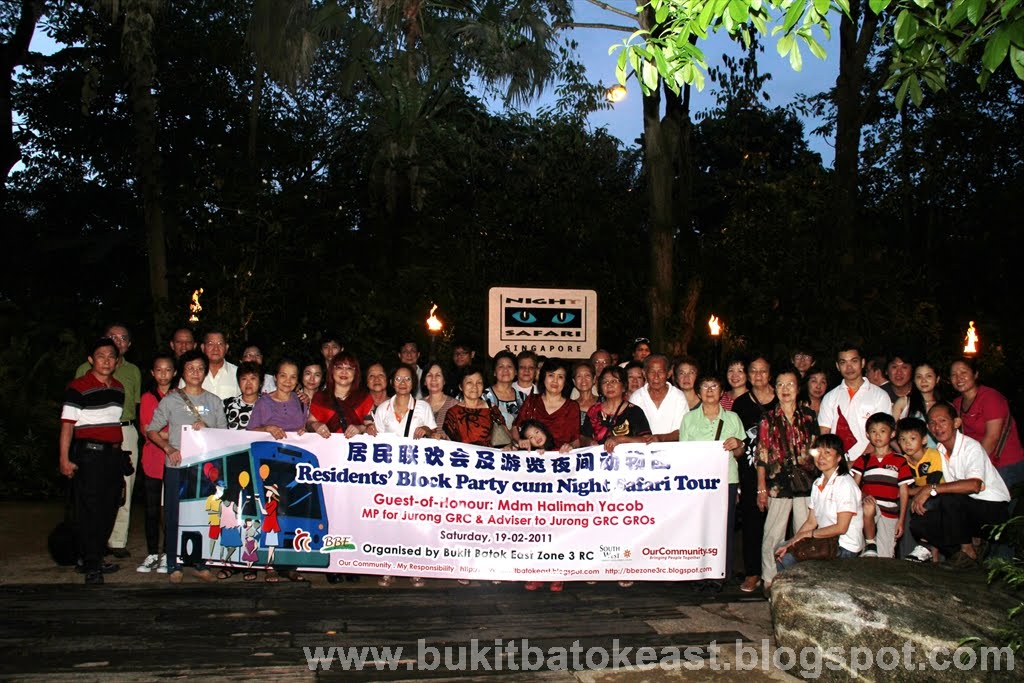
    They’re most commonly found in banners…

    image

    Bukit Batok East blog

    but some of them have gotten in our flyers as well.

    image

    Sembawang Town Council

    They’re even on our websites – and more ironically, on a banner publicising a clean-up day.

    The thing is – the word ‘cum’ can be simply avoided by a matter of planning.

    image

    You can dodge it with an ampersand (for those of you who aren’t atas enough to know what it means, it’s a “&”).

    image

    Everything East

    Or you could simply use the word ‘and’ – it’s frankly not that difficult.

    Given the simplicity of their replacements I have no idea why there are some esteemed leaders who insist on using the word.

    image

    Toa Payoh RC Facebook

    It frankly leaves a bad taste in the mouth – and none of us certainly appreciate it –

    image

    Bukit Batok East blog

    So please, stop getting the word ‘cum’ in our eyes.

    If not, I’ll have to write up another article cum anti-’cum’ campaign to stop you.


    Source: http://the-yishus.sg

  • Some Maggi Noodles With Unsafe Lead Level Exported To Singapore

    Some Maggi Noodles With Unsafe Lead Level Exported To Singapore

    New Delhi: Indian shopkeepers withdrew a popular brand of Nestle instant noodles from their shelves on Wednesday after tests revealed the snack contained unsafe levels of lead.

    India’s states have either ordered the withdrawal of Maggi noodles from shops or are carrying out further tests on noodle samples before taking action in conjunction with the federal government.

    Maggi sales have plunged in India since laboratory tests showed the noodles contained lead at levels far higher than the legal maximum. The tests also detected the chemical flavour enhancer monosodium glutamate, or MSG, which is not mentioned in the product’s list of ingredients.

    On Tuesday, the Delhi government said it had conducted tests on 13 samples of Maggi noodles and 10 were found to be unsafe with lead exceeding the allowable level. Earlier tests, performed by food safety authorities in Uttar Pradesh state, showed that samples contained 17.2 parts per million of lead, many times the allowable limits which range between 0.01 and 2.5 ppm.

    The Delhi government said it will take legal action against Nestle India, which is a subsidiary of Swiss-based Nestle SA, and was meeting Wednesday with company officials. It banned the sale of Maggi noodles in all state-run stores in the Indian capital for 15 days. Several major grocery chains in the city have also announced that they are taking the noodles off shelves.

    A Nestle spokesperson said a majority of Maggi noodles produced in India are sold in India but a limited amount are exported to the U.S. , Canada, the United Kingdom, Kenya and Singapore.

    Maggi noodles are a hot favourite with school and college students and Nestle’s “two-minute” advertising campaign stressing the ease of making the snack have made it a household name in India. The noodles are Nestle’s fastest selling food item in India, clocking around 15 billion rupees ($240 million) in sales annually.

    Excessive intake of lead can cause damage to the kidneys, bones and nervous system. It is particularly harmful to children and can cause learning disorders. Health experts say MSG, often used as a flavor enhancer in processed food and in some restaurants, can damage the nervous system with long-term use.

    The government of the southern state of Kerala has stopped the distribution of Maggi noodles and ordered more than 1,000 state-run grocery stores to withdraw the product. The state governments of Haryana, West Bengal and Maharashtra have begun the process of testing noodle samples for lead and MSG. — AP

    Our Mumbai correspondent adds: Maharashtra’s Food and Drug Administration (FDA), which has collected about 10 samples of Maggi noodles packets, has so far not encountered any negative reports relating to the product by multinational Nestle.

    According to FDA commissioner Harshadeep Kamble, the final test results are expected by Friday after which the regulator will decide on the future course of action. The FDA collected samples from Mumbai, Pune, Nagpur and a few other cities and is conducting tests at its laboratories. While the FDA and the state government have not imposed any ban on the sale of Maggi noodles in the state, there has been a sharp fall in the sale of the popular instant food, following widespread media coverage about actions being initiated by various states including Uttar Pradesh, Kerala and Delhi. The Food Safety and Standards Authority of India has also directed all states to check samples of the noodles and get them tested at laboratories.


    Source: www.allsingaporestuff.com

  • Malaysia’s 2nd Finance Minister: Resolve 1MDB Debt, Otherwise Malaysians Suffer

    Malaysia’s 2nd Finance Minister: Resolve 1MDB Debt, Otherwise Malaysians Suffer

    KUALA LUMPUR, June 3 — Malaysia must resolve 1Malaysia Development’s (1MDB) debt issue or risk a negative chain of events, including a possible downgrade to the country’s credit outlook or a plunge in value of the ringgit, Datuk Seri Ahmad Husni Hanadzlah warned today.

    Explaining this, the second finance minister said if Putrajaya is forced to shoulder the 1MDB debt of RM42 billion on top of its development expenditure of RM52 billion for next year, it would cause the government to fail to meet its targeted Budget 2015 deficit of 3.2 per cent and revert to over 4 per cent instead, he said.

    “What will happen? Our ratings will drop, when our ratings drop, our companies borrow from abroad, our currency value will drop like in 1998 then, when our ringgit at one point was over RM4, how to pay debts?

    “In our context, the main thing is we must solve the issue of debt so the people do not have to worry,” he said in a live interview broadcasted by national television channel TV1.

    During the 1997-1998 Asian financial crisis, the Malaysian currency dipped in value and at one point went over the RM4 mark in exchange rates against the US dollar.

    In March, Putrajaya said it is accountable for a US$3 billion (RM11.1 billion) loan secured by a 1MDB subsidiary using a letter of support from the Malaysian government.

    Last month, Moody’s Investors Services said government support of 1MDB could jeopardise Malaysia’s sovereign credit rating.

    Today, Husni also insisted that the rationalisation of 1MDB’s assets is not meant to “save” it or the government, but is instead a “restructuring” exercise with the aim of paring down its debt.

    He also said his key concern was Malaysians, citing the chain of negative effects that would happen if 1MDB’s debt had to be passed on to the government.

    But Husni also stressed in the same interview that no money has yet been lost by 1MDB, pointing out that the banking sector would otherwise be the first to chase the firm for the money it borrowed in a bid to avoid a high level of non-performing loans.

    “If the financial sector is quiet until now, that means the issue of money lost is not there,” he said.

    When speaking on the passing of 1MDB accounts from audit firm KPMG to Deloitte, he said many firms will review if they should continue using an auditor’s services after three years.

    Husni noted that 1MDB had decided to follow international standards in switching from a Big Four audit firm to the world’s top audit firm.

    On the alleged involvement of billionaire businessman Low Taek Jho in 1MDB’s deals, Husni dismissed the claims, saying the issue does not even arise.

    In March, Prime Minister Datuk Seri Najib Razak ordered the Auditor General and Public Accounts Committee to investigate 1MDB.

    1MDB was incorporated in 2009, after the prime minister announced the decision to turn the Terengganu Investment Authority (TIA) state fund into a federal agency.

    Since then, 1MDB has been dogged by negative publicity over its finances and debt, and most recently cash flow problems that saw it struggle to meet a RM2 billion loan payment.


    Source: www.themalaymailonline.com

  • Malaysia Has More Religious Freedom Than US, Singapore, Christian Group Says

    Malaysia Has More Religious Freedom Than US, Singapore, Christian Group Says

    There is more freedom of religion in Malaysia compared to Singapore and the United States, both of which imposes stricter laws against various faiths, a prominent Christian preacher said today.

    President of a new non-governmental organisation Christians for Peace and Harmony Malaysia (CPHM), Reverend Wong Kim Kong said that an individual preaching a different religion can be prosecuted in Singapore but not in Malaysia.

    “In Singapore, if you preach other religions in a sermon, or you pray to a god made of wood, they’ll report to the police under the Singapore Religious Harmony Act, you’ll (be) prosecuted.

    “In Malaysia, even if you talk bad about a different religion, not that we want to, they won’t disturb you,” he said during a press conference ahead of CPHM’s official launch.

    He claimed Malaysians are also allowed to freely practice their religions at any location while Americans face difficulty even when wanting to pray.

    “For the Christians, the Buddhist, the Hindus, you can build a shrine anywhere, you can open a church in any shop lot.

    “You can even form a church without registration because the constitution allows you to practice your religion.

    “Even in America, you can’t pray. So it just depends on which angle you look at,” he said.

    He also noted that the debacle over the usage if the word Allah, an Arabic word that means god, in Bibles using Bahasa Malaysia has also been misinterpreted as an attempt to convert Muslims into Christianity, which it is not.

    “I want to assure you that the accusation is actually not true. The church, as far as I know, never use the word Allah to preach the gospel,” he said.

    “But the word Allah is used by our Bahasa Malaysia-speaking congregation to denote the god that they believe. So it’s not a tool for evangelism,” he added.

    He further explained that the usage of the term was in no way an attempt to coerce others into Christianity.

    “But I cannot deny the reality that sometimes overzealous Christians share the good news, every religion has this type of people, but by and large the Malaysian Christians are not extremists.

    “We don’t coerce, some may out of enthusiasm, but generally they are peace-making,” he said.

    This comes amid religious tensions silently brewing in Malaysia, with right-wing Muslim groups like Perkasa and the Ikatan Muslimin Malaysia (Isma) pitting themselves against various interfaith groups.

    The country’s minority groups have repeatedly lashed out at the authorities’ allegedly nonchalant responses to remarks issued by Muslim fundamentalists against the sensitivities of the non-Muslims here, insisting that their inaction have only emboldened these groups and others into inciting more violence and hatred.

    Earlier this year, influential UK paper Financial Times columnist David Pilling had written that growing religious intolerance in Asian countries could turn into a “disaster” for the region.

    He cited Malaysia as an example of yet another country with “hardening ideology” but did not elaborate on the disaster this might cause.

    Malaysia also made international headlines when it banned a Catholic Church publication from using the word “Allah”, which is deemed here as exclusive to Muslims, as well as the seizure of Malay and Iban medium Bibles from the Bible Society of Malaysia (BSM) last year.

    In April this year, a group of Muslims protested against a church’s hanging of a cross on its facade, claiming the symbol was a threat to them and their religious beliefs.


    Source: www.themalaymailonline.com

  • HSA Warns Against Consuming Two Illegal Pain Relief Products

    HSA Warns Against Consuming Two Illegal Pain Relief Products

    The Health Sciences Authority (HSA) has warned the public to steer clear of two illegal pain relief products after one left a consumer hospitalised.

    One comes in powder form packed in unlabelled pink sachets. The other drug is a black tablet labelled as a “special effect rheumatism pill” in Mandarin.

    The drugs, which claim to treat pain and rheumatism, were sold by a woman in her 60s.

    The HSA said on Wednesday that laboratory tests of the products found undeclared potent ingredients, such as dexamethasone – a steroid which should only be used under strict medical supervision.

    A woman in her 40s who had consumed the powdered product over a “prolonged period” was hospitalised for delirium, high blood sugar, and electrolyte imbalance in her blood, the HSA said.

    She also had suspected Cushing’s syndrome, which is characterised by a round face or “moon face” and upper body obesity with thin limbs.

    HSA enforcement officers uncovered the other illegal product after they raided the peddler’s home.

    The HSA said that individuals who have been consuming the products should consult a doctor as soon as possible.

    Anyone with information on the sale and supply of these two illegal products or other illegal products can contact the HSA’s enforcement branch at 6866 3485 or email:[email protected]


    Source: www.straitstimes.com