Blog

  • Recipe For Delicious Homemade Dengdeng

    Recipe For Delicious Homemade Dengdeng

    Everytime when it’s Ramadan, people will head to Geylang Serai bazaar to purchase Deng-deng. I find that they’re just expensive and not that great anyways as they’re always thick and soft. So since my family loves Deng-deng so much and requested I made it from scratch for them, I thought why not and here they are… Surprise!!

    I want to share my recipe with you all in case you want to try it out yourself. Trust me, it’s worthed it.

    I used ground beef -2kg and managed to get 15 packs in total.

    For the record, I do not use any measurements in all my cooking. I just put according to judgement and tasting till I’m satisfied they’re good to go. So be prepared that the ingredients I provided below have no measurements. So for the mix, I used;

    1. Light soya sauce
    2. Fish sauce
    3. Sesame oil
    4. Thai sweet chilli sauce
    5. Ground black pepper
    6. Piri-Piri spices
    7. Honey
    8. Fine granulated sugar
    *combine them well and follow the instructions as indicated in the pictures below.

    Step 1

    Step 1 – Final mix and marinate for 4 hours in the fridge

    Step 2

    Step 2 – Place a scoopful in a plastic bag and using the rolling pin to flatten the meat to the thickness of your desire

    Step 3

    Step 3 – This is the final look. Put them in the freezer for a night

    Step 4

    Step 4 – Grilled them in the over at 160 degress for a total of 20 mins. Grilled at 10 mins for each side. Spreading a mixture of oil and sugar water to get the gloss. Leave to rest for 10 mins once it’s out of the oven. Here’s the deng-deng ready to be devoured!!

    -sharing is caring-


    Source: Shifa Surani

  • ‘Pengantin’ Agih Makan Free Berkat Kemajuan Dalam Perniagaan

    ‘Pengantin’ Agih Makan Free Berkat Kemajuan Dalam Perniagaan

    KOTA BAHRU: Dalam kesibukan di waktu pagi, ramai yang tidak menyangka akan mendapat ‘rezeki’ sarapan pagi percuma dari seorang ‘pengantin’ di tepi jalan.

    Nor Hamidi Mohd Nadzir, 27 tahun, mengejutkan sebahagian besar pengguna jalan raya di Jalan Kok Lanas-Machang, Kelantan dengan berpakaian pengantin serba lengkap dan mengagihkan makanan kepada mereka, lapor laman Berita Harian Malaysia.

    Nor Hamidi, yang merupakan pemilik butik pengantin D’Rias Bridal Collection, mengagihkan 120 bungkus bihun dan nasi goreng setiap hari sejak Ahad lalu (15 Mei) sebagai tanda kesyukuran dan mahu berkongsi rezeki setelah pernigaannya mencatat keuntungan pada bulan Februari dan Mac lalu, menurut laman Berita Harian Malaysia.

    Gambar-gambar Nor Hamidi sedang mengagihkan sarapan pagi kepada para pengguna jalan raya turut dimuat naik ke laman Facebook D’Rias Bridal dan disambut baik oleh para pengguna laman media sosial.

    Beliau juga bertukar-tukar baju pengantin setiap hari.

    “Idea berpakaian lengkap sebagai pengantin adalah bagi menarik perhatian pengguna untuk singgah selain tidak memerlukan modal memandangkan saya mempunyai butik pengantin,” katanya ketika ditemui wartawan Berita Harian Malaysia tadi (17 Mei).

    Nor Hamidi, yang masih bujang, berkata beliau dibantu tiga pekerjanya untuk mengagihkan bungkusan sarapan yang dimasak ibunya, Rokiah Idris, 54 tahun.

    Source: http://berita.mediacorp.sg

  • Indonesia Plans To Stop Sending New Live-In Maids Abroad

    Indonesia Plans To Stop Sending New Live-In Maids Abroad

    Indonesia says it will stop sending new live-in maids abroad from as early as next year. Its authorities want domestic workers to live separately from their employers in dormitories, work regular hours, and get public holidays and days off.

    The Indonesian Ministry of Manpower’s director for the protection and placement of Indonesian migrant workers abroad, Mr Soes Hindharno, told The Straits Times that, in turn, employers will get “better-quality” workers. They will be certified in Indonesia and trained to excel in specific skills, such as cooking, childcare and eldercare.

    “They are also free to do other chores, but don’t penalise them if they don’t do too well in areas outside their skill set. We want better protection for our workers. If they are always indoors, we don’t know if they have worked overtime. They should be compensated for that.”

    The move will be made in phases and will first require meetings with the authorities in receiving countries, including Singapore.

    Mr Soes said the initiative will affect only new workers. Maids already working in households abroad who are happy with their employers can extend their visas.

    The move is part of Indonesian President Joko Widodo’s plan to professionalise informal employment. A road map to stop sending Indonesian maids abroad by next year was announced by the previous administration in 2012, amid worries about maids being mistreated.

    Indonesia is the biggest source country for maids in Singapore, with around 125,000 working here.

    Concerns have been raised in Indonesia about the working conditions faced by live-in maids working abroad, and progress on addressing them has not been made fast enough, according to Association of Employment Agencies (Singapore) president K. Jayaprema.

    The association has been working closely with the Indonesian authorities to address these concerns. Ms Jayaprema said: “We also want to ensure quality domestic workers can continue to come to Singapore.”

    Agents said they support formalised training, but logistical issues like lodging, travel and housing will need to be settled if maids live out.

    “It might be difficult to get all employers on board,” said Nation Employment managing director Gary Chin, adding that some might be concerned about unpredictable delays during maids’ commutes.

    One employer, a banker who gave her name as Madam Molly, 53, said she would prefer to have a helper at night as she sometimes works late. “She doesn’t have to do anything after dinner, but it’s just good to have an adult at home with the kids,” said the single mother of two.

    Mr Jolovan Wham of the Humanitarian Organisation for Migration Economics said caregivers could have formal shifts, adding: “If where you live and work is the same, working hours are not clearly defined, and being socially isolated, domestic workers can’t ask for help.”

    A spokesman for Singapore’s Manpower Ministry said it had not received any information from Indonesia about the request for live-out maids, and the live-in requirement is not peculiar to Singapore, as Hong Kong, Taiwan and Malaysia have the same requirement.

    “Singapore does not condone mistreatment of foreign domestic workers and has taken errant parties to task,” said the spokesman.

    Indonesian maid Aisyah, 27, who goes by only one name and has been living in Singapore for six years, was happy to hear about the possibility of a live-out arrangement. “My situation is okay but I have some friends who say they need help but cannot get it because they are always at home,” she said.

    “Living outside will give us more free time, more friends, but some might prefer to stay at home if employers treat them like family.”


    Source: www.straitstimes.com

  • Captured And Tortured By Terrorists, Pakistani Sought Solace In Radio Broadcasts Of Manchester United Games

    Captured And Tortured By Terrorists, Pakistani Sought Solace In Radio Broadcasts Of Manchester United Games

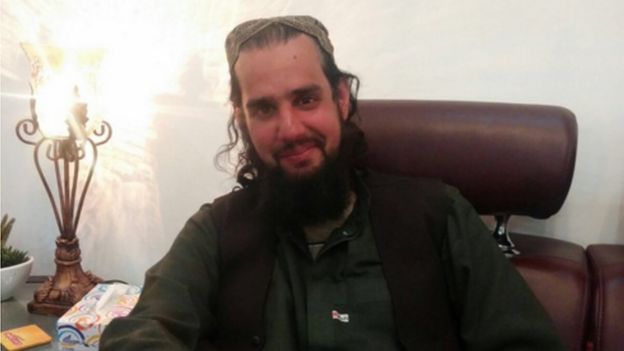
    Shahbaz Taseer, the son of a Pakistani politician, has spoken out about his four years in captivity.

    Mr Taseer was seized by gunmen in Lahore in August 2011, months after his father Salman was killed for opposing Pakistan’s blasphemy laws.

    He told the BBC he was “tortured badly” while being held – but that he found solace in listening to Manchester United matches on the radio.

    He said he was eventually released by a senior member of the Afghan Taliban.

    Mr Taseer was reunited with his family in March, but has not spoken out about his experience in captivity until now, amid unanswered questions over how he was freed or whether a ransom was paid.

    He says he was held by Uzbek militants, before eventually being passed to the Taliban.

    Recounting the day he was captured, Mr Taseer told the BBC’s Today Programme: “I was ambushed by about five men… My first instinct was they were going to kill me.”

    “They drugged me five minutes after abducting me. I passed out – they had beaten me up very badly because I was moving and screaming while being drugged.”

    While held by Uzbek militants, he says he was “tortured badly”, and that he and his captors “could never relate to each other”.

    Shahbaz Taseer after his release (tweeted by Inter Services Public Relations)

    “I didn’t want a friendship. I was [categorical] – you’ve done this for money, you’ve ruined my life. You’re not going to find me being gracious at even a piece of bread you throw me.”

    However, he and his guard did find common ground – because they were both Manchester United fans.

    “I would listen to these Manchester United games every Saturday and Sunday on the radio on BBC. My guard, he was a Manchester United fan, but for him [listening to the games] was a sin.”

    They would listen to the matches together in secret, Mr Taseer said, and celebrate the goals together in silence.

    “Can you imagine, you’re watching a game, your team scores, and everybody screams, but here we are air jamming our celebrations.”

    However, the two were not friends, Mr Taseer said. “For me, [listening to the matches] was [for my] sanity, to listen to something about the world.”

    Mr Taseer said his ordeal ended after he was taken prisoner by the Afghan Taliban, who eventually let him go.

    “I found someone who was senior Afghan Taliban – he worked some magic, organised for me to meet a few motorcyclists who had no idea who I was. I just got on the back of the motorcycle and came to Pakistan.”

    He said being back home, “to wake up and have breakfast with my mother, and see her face”, was “the most unbelievable feeling”.


    Source: www.bbc.com

  • Lee Hsien Loong: Give-And-Take Critical For Racial, Religious Harmony

    Lee Hsien Loong: Give-And-Take Critical For Racial, Religious Harmony

    The racial and religious harmony that Singapore enjoys is a result of give-and-take between the different communities in the country, Prime Minister Lee Hsien Loong said.

    “This is something which we have to always continue to work upon, because it is not something which will ever become a solved problem,” Mr Lee said in an interview with Russian news agency TASS at the Istana on Saturday (May 14).

    “All the major religions of the world are in Singapore. There are three major races, but many other communities in Singapore. We speak very different languages. Tamil is Dravidian, Chinese is totally different from English and we have to get on together.”

    This give-and-take between the different communities is a matter of constant effort, social policy and integration, PM Lee said.

    In his comments responding to a question on how Singapore maintains a harmonious balance between different ethnic groups and religions, Mr Lee added that this policy of integration sees Singaporeans of different races and religions come together in schools, housing estates, workplaces and during National Service and learning to work and live together in a multi-racial context.

    “If you are in Singapore as a Christian, you do not treat this as a Christian country. If you are in Singapore as a Buddhist, this is not a Buddhist country, even though the Buddhist may be one of the biggest religious groups in Singapore. If you are a Muslim in Singapore, you can practice your faith, you can fast, you have mosques, but you understand that this is a multi-racial society and you are working and living within a multi-racial context.

    “It is this give and take, and trust that has been built up over a very long period of time, which we think makes for the nature of our society, which makes for what is gradually emerging as a Singapore identity.”

    RUSSIA CONTRIBUTES TO REGION’S STABILITY: PM LEE

    During the interview, which was held ahead of Mr Lee’s visit to Russia to attend the Russia-ASEAN summit, he also touched on the relationship between Russia and ASEAN, describing bilateral relations as “very good”.

    Singapore appreciates Russia’s participation in regional affairs and its contribution to ensuring stability and peace in South-east Asia, PM Lee added.

    “Russia is an important power and economy in the world. The economic ties between ASEAN countries and Russia have been growing, but (do) not really commensurate with the importance of Russia in the world.”

    This is gradually changing, Mr Lee noted. For example, Singapore is planning to negotiate a free-trade agreement with the Eurasian Economic Union.

    “In this way, by strengthening the ties between Russia and individual ASEAN countries, we can strengthen the ties between Russia and Southeast Asia, and ASEAN region as a whole,” he said.

    50 YEARS OF DIPLOMATIC RELATIONS

    Russia and Singapore will celebrate 50 years of diplomatic relations this year – a “major milestone”, Mr Lee said.

    “Fifty years ago, Singapore was newly independent, and the world was completely different, and Russia was still the Union of Soviet Socialist Republics (USSR). Today, Singapore has celebrated its 50th anniversary of statehood and the world has completely changed,” he said.

    Plans to build a Russian Cultural Centre in Singapore are at an advanced stage, Mr Lee said, adding that a site at a “good location” has been found.

    In terms of economic ties, major Russian companies like Lukoil and Gazprom are in Singapore while Singapore companies like Olam are in Russia and Changi Airports International is co-managing several airports in Russia, he noted.

    The two countries also cooperate in the educational, scientific and cultural fields. Singapore’s universities have cooperation partnerships with Russian institutions, and Singapore is also a popular destination for Russian tourists, he said.

    Still, more can be done in terms of trade between the two countries, Mr Lee said. “Our trade is not in proportion to the potential. It has risen rapidly in the last 10 years – has about quadrupled – but still Russia is just our 21st largest trading partner. It should not be like that.

    “With my trip to Moscow, I hope to meet some Russian business people and executives and get them interested in Singapore a bit. We hope something will grow from there.”

deneme bonusu