Blog

  • Malaysia Ready To Provide Temporary Shelter For Rohingya Fleeing Violence; Coast Guard Will Not Turn The Away

    Malaysia Ready To Provide Temporary Shelter For Rohingya Fleeing Violence; Coast Guard Will Not Turn The Away

    Malaysia’s coast guard will not turn away Rohingya Muslims fleeing violence in Myanmar and is willing to provide temporary shelter for them, the maritime agency’s chief said on Friday.

    Rohingya insurgents attacked several police posts and an army base in Myanmar on Aug. 25. The ensuing clashes and a military counter-offensive has killed at least 400 people and triggered the exodus of more than 160,000 people to neighbouring Bangladesh.

    Malaysia, hundreds of km (miles) to the south on the Andaman Sea, is likely to see more boat people from Myanmar in coming weeks and months because of the renewed violence, said Zulkifli Abu Bakar, the director general of Malaysia Maritime Enforcement Agency. Malaysia is already home to over 100,000 Rohingya refugees.

    “We are supposed to provide basic necessities for them to continue their journey and push them away. But at the end of the day, because of humanitarian reasons, we will not be able to do that,” Zulkifli told Reuters, adding that no fresh refugees had been seen yet.

    Malaysia, a Muslim-majority nation, will likely house the Rohingya refugees in immigration detention centres, where foreigners without documents are typically held, he said.

    Malaysia, which has not signed the U.N. Refugee Convention, treats refugees as illegal migrants.

    Thailand has also said it is preparing to receive people fleeing the fighting in Myanmar

    There are about 59,000 Rohingya refugees registered with the United Nations High Commissioner for Refugees (UNHCR) in Malaysia although unofficial numbers are almost double that.

    In 2015, mass graves were exhumed at jungle camps on the border between Thailand and Malaysia that were thought to be mainly Rohingya victims of human traffickers.

    (Reporting by A. Ananthalakshmi; Editing by Raju Gopalakrishnan)


    Source: http://www.channelnewsasia.com
  • Tutu: If The Political Price Of Your Ascension To The Highest Office In Myanmar Is Your Silence, The Price Is Surely Too Steep

    Tutu: If The Political Price Of Your Ascension To The Highest Office In Myanmar Is Your Silence, The Price Is Surely Too Steep

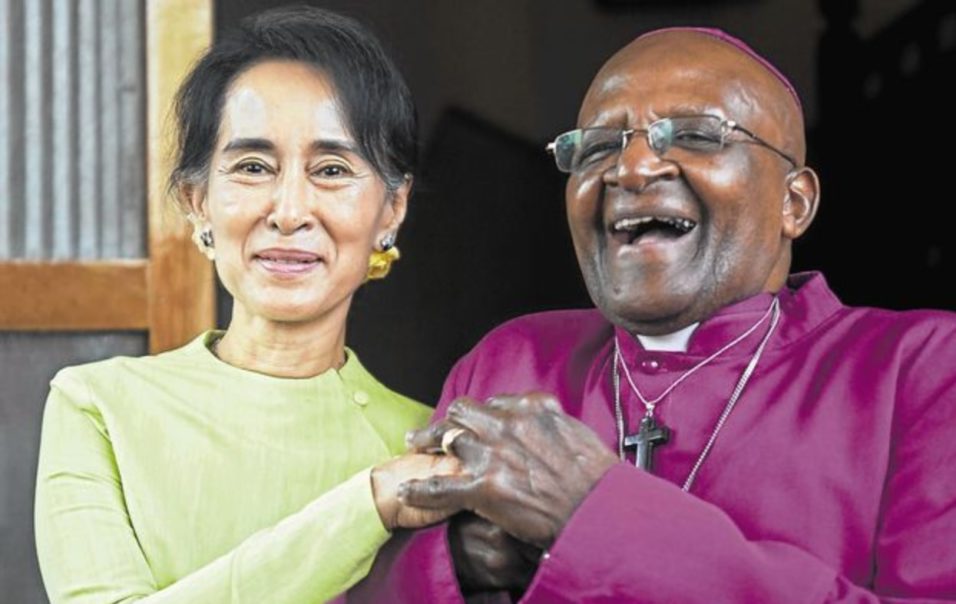
    South Africa’s outspoken Archbishop Desmond Tutu on Thursday (Sep 7) castigated Aung San Suu Kyi over the Myanmar government’s treatment of its Rohingya Muslims and urged her to intervene in the crisis.

    The United Nations on Thursday said that nearly 164,000 Rohingya have escaped to Bangladesh over the past two weeks in the wake of a massive security sweep and alleged atrocities by the country’s security forces and Buddhist mobs against the Rohingya.

    Aung San Suu Kyi, feted for her years of peaceful opposition to Myanmar’s military rulers, has been urged to speak up for the Rohingya, with Muslim nations and the UN leading condemnation of her government.

    Tutu, who helped dismantle apartheid in South Africa and became the moral voice of the nation, joined in the condemnation.

    “If the political price of your ascension to the highest office in Myanmar is your silence, the price is surely too steep,” Tutu said in a statement.

    “It is incongruous for a symbol of righteousness to lead such a country; it is adding to our pain,” he said noting that “the images we are seeing of the suffering of the Rohingya fill us with pain and dread.”

    “As we witness the unfolding horror we pray for you to be courageous and resilient again … for you to speak out for justice, human rights and the unity of your people,” said Tutu.

    Witnesses in Myanmar’s Rakhine state say entire villages have been burned to the ground since Rohingya militants launched a series of coordinated attacks on Aug 25, prompting a military-led crackdown.


    Source: http://www.channelnewsasia.com
  • Veteran Radio Personality Hamish Brown Questions Halimah Yacob’s Independence To Be Elected President

    Veteran Radio Personality Hamish Brown Questions Halimah Yacob’s Independence To Be Elected President

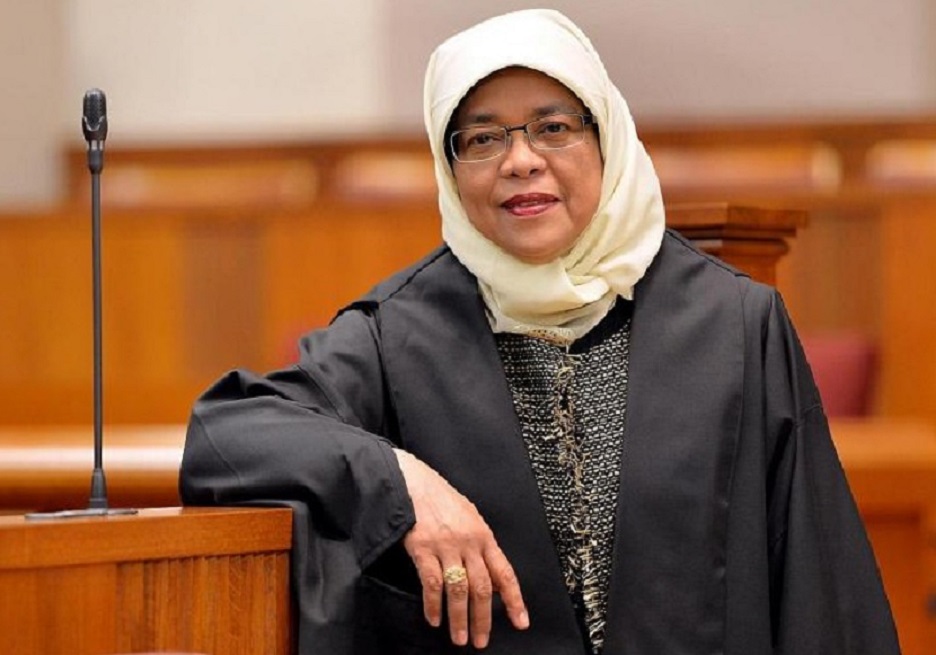
    Prominent radio personality Hamish Brown has questioned if Presidential hopeful Halimah Yacob is as indeed independently-minded as she has claimed in a newspaper interview. In an interview with The New Paper Madam Halimah illustrated an incident where she abstained from voting on an issue after the Whip was listed, to make a point that she not always followed the directions of her political party elders in the People’s Action Party.

    “An occasion she remembered clearly was when she abstained from voting on amendments to the Human Organ Transplant Act in Parliament in 2007. Changes tabled by then Health Minister Khaw Boon Wan would allow organ recipients to reimburse donors’ expenses if they wished. She was concerned that this would lead to poor people being persuaded to “sell” their organs. The party whip was lifted, and she abstained, sending a strong signal of her misgivings.  She recalled: “I decided not to say yes. I didn’t ask the Health Minister how he felt, but I can still remember the expression on his face.””

    Writing in his Facebook Mr Brown said, abstaining from voting doesn’t send a signal that she agrees or disagrees. That Madam Halimah’s decision only showed that her position was a non-committal one.

    “…but abstaining from voting during the Human Organ Transplant Act parliamentary sitting doesn’t show that you do not toe with the party line, it only shows that between standing with voters who agree and voters who don’t, your action was neither, rather your decided course of action was to abstain from voting altogether, an act that really means, I prefer not to stand for either option and just be a fence sitter (so if the proverbial s@&/,! Hit the fan, you would go on record as not having been party to it either way) that’s what abstaining from taking a stand or voting means.”

    Mr Brown further suggested that meritocracy as it is practiced in Singapore, went out the window as soon as this presidential election was reserved for one particular ethnic race over all others.


    Source: http://www.theindependent.sg / Hamish Brown

  • MND Not Evicting Cat Museum Founder, Enforcement Only to Revert Back To Residential Use

    MND Not Evicting Cat Museum Founder, Enforcement Only to Revert Back To Residential Use

    The founder of a volunteer-run cat museum is not being forced out of her premises, the Ministry of National Development (MND) said in a statement on Facebook last night.

    A number of online sites had suggested that Ms Jessica Seet, founder of The Lion City Kitty – The Cat Museum, Muses & Mansion, located on the second storey of 8 Purvis Street, and the cats she kept were being evicted by the MND after an inspection by the Urban Redevelopment Authority (URA).

    “MND did not evict Ms Seet from her premises. In an inspection of the premises in early 2017, URA officers found that the third-storey residential unit had been illegally converted into a cat shelter and adoption centre. Visitors entering the third-storey unit had to first purchase a ticket at the Cat Museum,” MND said.

    Ms Seet, 51, is a tenant of the second to fourth storeys of the building, with the third and fourth storeys registered as her residences.

    MND said URA had issued an enforcement notice to stop the unauthorised use of the third- storey unit and have it reverted back to residential use.

    “The notice does not affect the Cat Museum on the second storey. It also does not restrict Ms Seet from keeping and fostering her cats in her own residential premises,” the statement added.

    The museum has been operating for about 21/2 years.

    Ms Seet told The Straits Times that she had appealed against the enforcement action in June, but was told by MND last month that her appeal had been rejected.

    Meanwhile, the building’s landlord has also decided not to renew Ms Seet’s lease for the third- and fourth-storey units after its expiry at the end of this month.

    MND said: “This is a contractual matter between the landlord and Ms Seet. It is a decision made by the landlord and has nothing to do with the URA enforcement.”

    Ms Seet, who also runs a training company, said she is looking for new homes for the cats and has started a fund-raising campaign to raise $25,000 to rent a new space for the felines, and for equipment to care for neonatal kittens. As of 7.30pm yesterday, $11,500 had been raised.

    “We appreciate the good work being done by Ms Seet in caring for the stray cats,” said MND. “But this should not be done through illegal usage of residential space.”

    It added that it will do its best to assist if Ms Seet needs help looking for an alternative space for a cat shelter and adoption centre.


    Source: http://www.straitstimes.com

  • The Mighty Red Dot; Once Mocked Now A Source Of Pride For Singaporeans

    The Mighty Red Dot; Once Mocked Now A Source Of Pride For Singaporeans

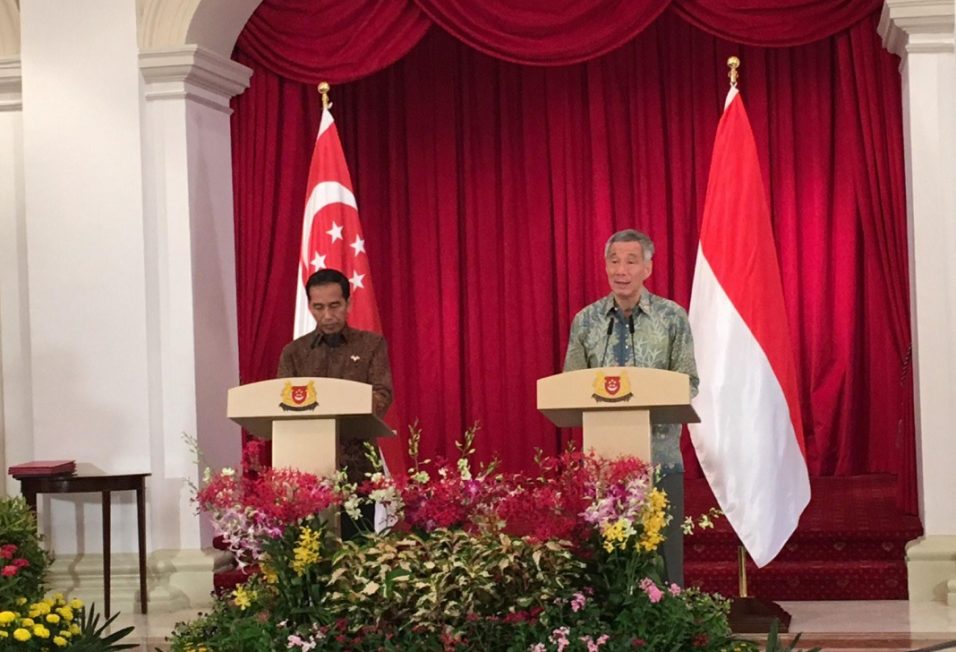
    How is it that Singapore, once mocked as a mere “red dot” state by then president BJ Habibie, became the largest foreign investor, and sent the largest number of tourists to a much more “gigantic” Indonesia in 2016? The moral of the story is: Size alone does not always matter.

    In Thursday’s joint press conference with his guest President Joko “Jokowi” Widodo, Singaporean Prime Minister Lee Hsien Loong announced that his country invested US$9.2 billion in Indonesia last year. Indonesians, who have often blamed the city-state for harboring corruption suspects, may sneer that the investment value is just a “red dot” compared to the huge amount of money invested by corrupt Indonesians and unscrupulous conglomerates in Singapore.

    For many Singaporeans, the “red dot” mockery later became a source of pride because, despite their extremely small size, they became much more prosperous and advanced in nearly all aspects of life compared to their neighboring “big brother.”

    At the time he made his comment, Habibie was upset because, according to him, then prime minister Goh Chok Tong was very late in sending his congratulatory message on his appointment as Indonesia’s third president in May 1998.

    In an interview with the Asian Wall Street Journal, Habibie, who had just replaced Soeharto following his abrupt decision to end his nearly 32-year dictatorship, pointed to a map, and said, “It’s OK with me, but there are 211 million people [in Indonesia]. All the green [area] is Indonesia. And that red dot is Singapore.”

    Singapore denied Habibie’s allegation of belatedly congratulating Indonesia’s new president; but Singaporeans have since taken the phrase as their own, and it has become both a source of pride and an endless source of jokes to tease Indonesia and themselves.

    President Jokowi arrived in Singapore on Wednesday and attended a bilateral summit to commemorate the 50th anniversary of relations between the two countries. Two years after Singapore’s separation from Malaysia to become an independent republic in 1965, Singapore and Indonesia agreed to end military tensions between them.

    In the same year, the two countries, along with Thailand, the Philippines and Malaysia, established ASEAN. Soeharto is always remembered by Indonesia’s neighbors as a leader who created political security and stability in the region, letting them grow and progress together.

    There have always been ups and downs in relations between Indonesia and Singapore, especially after the fall of Soeharto. From the very beginning, Singapore always stood firm against its larger neighbors, including Indonesia — sometimes unnecessarily — while Indonesia is often tempted to show off its muscles to its smaller neighbor, but to no avail.

    PM Lee’s revelation about the investment is strong evidence that Singapore plays an important role in Indonesia’s economy, while Singapore also needs Indonesia’s market and resources. As a pragmatic leader, Jokowi knows very well how to conduct business with his counterpart, based on mutually beneficial relations. Neither Singapore nor Indonesia will ever tolerate bullying from their neighbor.

    Indonesia and Singapore have learned a lot in the last 50 years.


    Source: http://www.thejakartapost.com

deneme bonusu