Tag: Al-Qaeda

  • Crisis In Rakhine State Evoked Strong Emotions Across The Muslim World Drawing In ISIS And Al-Qaeda

    Crisis In Rakhine State Evoked Strong Emotions Across The Muslim World Drawing In ISIS And Al-Qaeda

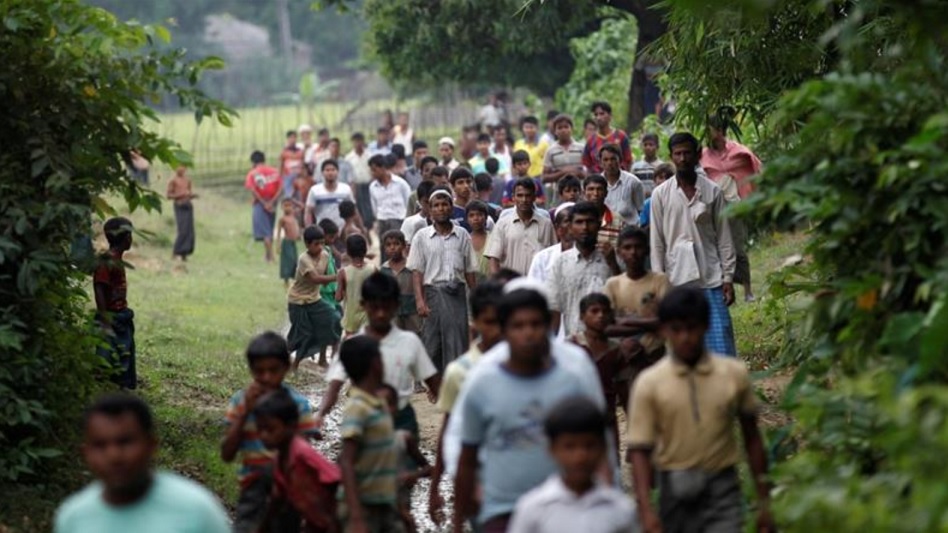
    The plight of the Rohingya, an Islamic minority in Buddhist-majority Myanmar, has evoked strong emotions across the Muslim world.

    Many countries have protested against the persecution of the community, following a violent crackdown by the Myanmar army that left hundreds dead and sparked an exodus of more than 410,000 people from Rakhine to Bangladesh.

    But as rights groups urge world leaders to impose sanctions on Myanmar’s military, which is accused of “ethnic cleansing”, a darker danger lies ahead.

    Counter-terrorism experts say the crisis has attracted the attention of the Islamic State in Iraq and Syria (ISIS), as well as Muslim militants and hardliners in Indonesia and Malaysia.

    This may result in another longstanding conflict in South-east Asia, following the ongoing siege in the southern Philippine city of Marawi by Islamist militants.

    Echoing its strategy in southern Philippines, ISIS has routinely, through its online publication Dabiq, claimed that it plans to establish a base in Bangladesh to launch revenge attacks on the Myanmar government over its treatment of the Muslim Rohingya.

    Malaysian counter-terrorism chief Ayob Khan Mydin Pitchay said earlier this week that ISIS is exploiting the Rohingya crisis to recruit more fighters, particularly from South-east Asia.

    Indeed, latest developments out of Kuala Lumpur have revealed that a group of Malaysians had travelled to Myanmar, via Bangladesh and Thailand, to take on government troops there.

    Malaysian police in Kelantan state, which shares a border with southern Thailand, told news agency Bernama that it has identified more than 100 “rat trails” used for smuggling, and has stepped up patrols there to prevent the illegal entry of Rohingya and “untoward incidents”.

    Meanwhile in Indonesia, the Islamic Defenders Front (FPI) had called for “jihadists” to travel to Rakhine to fight on behalf of the Rohingya. The FPI has shown that it has the ability to mobilise hundreds of thousands of people, as seen in the many rallies it led against former Jakarta governor Basuki Tjahaja Purnama, a Chinese-Christian politician, for insulting Islam earlier this year.

    FPI spokesman Slamet Maarif was quoted by The Australian newspaper earlier this month as saying that the group is prepared to wage “jihad”, or a holy war, in Myanmar if the need arises. “That is why one of the main requirements for our recruits is the willingness to die as a martyr,” he said.

    Centre for Radicalism and Deradicalisation Studies executive director Adhe Bhakti said the real danger for Indonesia lies in whether elements of the Jemaah Ansharut Daulah (JAD), a local terrorist network with ties to ISIS, join the fray. “More influential groups in the context of ‘jihad’ such as the JAD have yet to appeal for fighters. If they do, that may pose a greater risk,” said Mr Adhe.

    Islamist militant groups have previously exploited the Rohingya crisis for their cause, notably in 2012 and 2015, but this current conflict has drawn wider attention.

    Mr Iftekharul Bashar, an associate research fellow at the S. Rajaratnam School of International Studies, said the crisis is unfolding at a time when ISIS is losing much of its territory in the Middle East and is trying to expand its hold in South Asia and South-east Asia.

    “The recent siege of Marawi… shows that ISIS penetration in the Rakhine state conflict cannot be ruled out,” he added.

    Datuk Ayob warned that Myanmar’s proximity to Malaysia would encourage ISIS to tap the conflict in Rakhine. “Myanmar is closer to Malaysia than Syria and the southern Philippines… and now Rakhine has become their latest destination for ‘jihad’,” he told Bernama news.

    The resurgent Al-Qaeda, which was behind the Sept 11, 2001, attacks in the United States, has also started to make its move, issuing a statement on Sept 12 calling for attacks against the Myanmar government over the Rohingya.

    While most of the attention by security agencies has been on ISIS, Mr Bashar warned that Al-Qaeda, and its affiliate in the Indian subcontinent known by the acronym AQIS, is equally dangerous.

    AQIS has not carried out any major attacks in Bangladesh in the past few years, but it has recently mentioned the Myanmar military as a key target, added Mr Bashar. “Although the majority of Muslims still support a peaceful settlement with Rohingya returning to their homeland, a smaller segment thinks that an armed ‘jihad’ is the only solution left to end the plight of the Rohingya.”


    Source: http://www.straitstimes.com/
  • Al-Qaeda Chief Denounces Islamic State Liars

    Al-Qaeda Chief Denounces Islamic State Liars

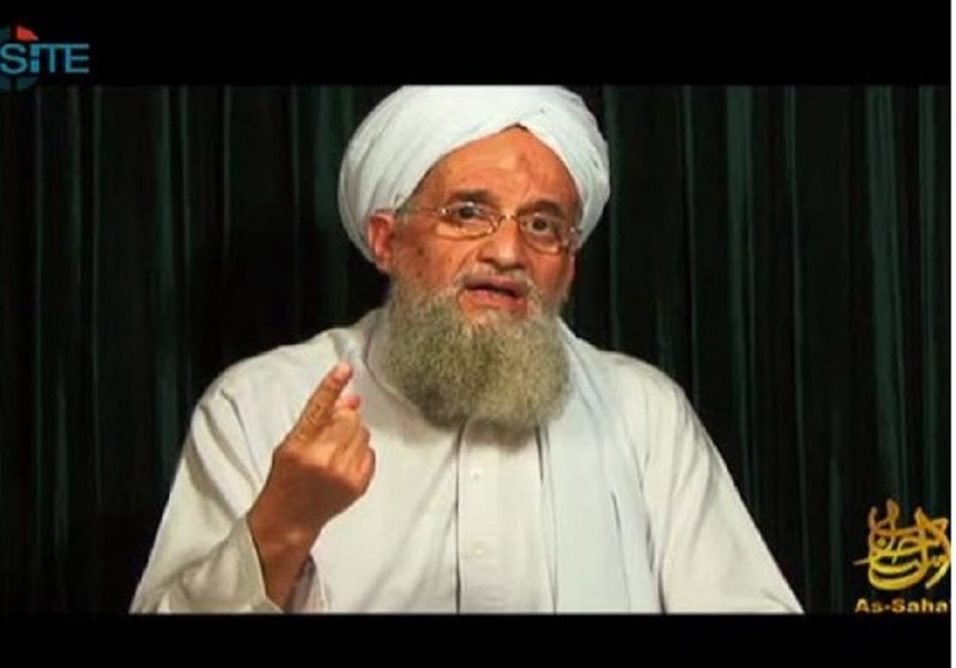
    WASHINGTON — Al-Qaeda leader Ayman al-Zawahiri has denounced what he said was a dishonest propaganda campaign by rival jihadist group the Islamic State against his organisation, in an audio message released Thursday (Jan 5).

    In the message found and translated by US-based watchdog the SITE Intelligence Group, the Egyptian extremist accuses IS leader Abu Bakr al-Baghdadi of slandering his group.

    Al-Qaeda, founded by the late Osama Bin Laden, is locked in a battle with the so-called Islamic State — which sprang from its Iraqi faction — for the leadership of a global jihad.

    In his message, the 65-year-old Zawahiri complained that Al-Baghdadi had alleged that Al-Qaeda opposes sectarian attacks on Shiites and was prepared to work with Christian leaders.

    “The liars insist upon their falsehood, to the extent that they claimed we do not denounce Shiites,” Zawahiri said, according to the translation of the message, which was released by Al-Qaeda’s media arm.

    Zawahiri denied he had said that Christians could be partners in the governance of a future Islamic caliphate, having only said that they could go about their affairs within it.

    “What I have said is that they are partners in the land, such as agriculture, trade, and money, and we keep their privacy in it, in accordance with the laws of our Sharia,” he said.

    And he insisted he had not called for Shiite Muslims to be spared, but had suggested focusing attacks on Shiite-led Iraqi forces and not on random atrocities against civilians.

    “I had told them several times to stop explosions in markets, husseiniyats and mosques, and to concentrate on military, security and police forces and Shiite militiamen,” he said.

    A husseiniyat is a Shiite place of worship and the Iraqi security forces, in their battle against the Islamic State group, are backed by Shiite religious militias.

    The Islamic State group and Al-Qaeda have both carried out hundreds of attacks on civilian targets, but some Al-Qaeda propaganda has called for less indiscriminate tactics.

    Zawahiri also denied Al-Baghdadi’s charge that Al-Qaeda had supported ousted former Egyptian president Mohammed Morsi, an Islamist who attempted to rule through the ballot box.

    The Al-Qaeda leader, who took charge after Bin Laden was killed by US commandos in 2011, is thought to be somewhere in Pakistan’s unruly border region hiding from a global manhunt.

    He communicates with the group’s remaining supporters through semi-regular video lectures, reiterating — as in his latest message — the need to target the United States.

    But Thursday’s message did not include any footage of Zawahiri speaking.

    The audio message restated the urgency of this goal — “Tell America, to other than Allah we do not kneel” — but also argued for a dialogue on tactics with other jihadists.

    “We are not infallible, but we are human beings and we hit and we miss. We must listen to advice,” he admitted, while rejecting Al-Baghdadi’s criticism.

    “What we want is to manage a conversation between those who are working for Islam — and the people of jihad at their forefront — around the best method and wisest techniques to bring victory to the religion,” he said, according to SITE. AFP


    Source: www.todayonline.com

  • Anak Osama Bin Laden Ancam Balas Dendam Pembunuhan Bapa

    Anak Osama Bin Laden Ancam Balas Dendam Pembunuhan Bapa

    Anak pemimpin al Qaeda, iaitu Osama bin Laden mengancam untuk membalas dendam terhadap Amerika Syarikat (AS) atas pembunuhan bapanya.

    Demikian menurut satu rakaman audio yang dimuat naik online.

    Hamza bin Laden berjanji menerusi ucapan sepanjang 21 minit yang bertajuk “Kami Semua adalah Osama”, bahawa dia akan meneruskan perjuangan kumpulan militan tersebut terhadap AS dan sekutunya, menurut kumpulan risikan SITE.

    “Kami akan terus menyerang dan menyasarkan kamu di negara kamu dan di luar negara sebagai respons terhadap penindasan yang kamu lakukan ke atas rakyat Palestin, Afghanistan, Syria, Iraq, Yaman, Somalia dan tempat-tempat Muslim yang lain yang tidak bertahan di bawah penindasan kamu,” tegas Hamza.

    “Ini bukan balas dendam untuk Osama tetapi ini adalah balas dendam bagi pihak mereka yang mempertahankan Islam.”

    Osama bin Laden terbunuh semasa berada di tempat persembunyiannya di Pakistan oleh para komando AS pada tahun 2011 dalam satu serbuan besar-besaran terhadap kumpulan militan yang melancarkan serangan pada 11 September 2011.

    Dokumen-dokumen yang dijumpai di tempat tersebut dan diterbitkan oleh AS pada tahun lalu mendakwa sekutunya cuba menyatukan semula pemimpin kumpulan itu dengan Hamza, yang ditahan dalam rumah oleh Iran.

    Hamza, yang kini berusia 20an tahun, berada di samping bapanya di Afghanistan sebelum serangan 9/11 dan meluangkan masa bersamanya di Pakistan setelah pencerobohan AS menyebabkan kebanyakan pemimpin kanan al-Qaeda ke sana, menurut Institut Brookings.

    Diperkenalkan oleh ketua baru kumpulan tersebut, iaitu Ayman al-Zawahiri dalam satu mesej audio pada tahun lalu, Hamza adalah suara orang muda bagi kumpulan itu di mana para pemimpinnya semakin menua, bersungguh-sungguh mahu memberi inspirasi kepada para anggota militan di seluruh dunia yang sekarang ini mendapat motivasi daripada ISIS.

    “Hamza muka baru bagi al Qaeda, seseorang yang ada kaitan secara langsung dengan pengasas kumpulan itu. Dia musuh yang bijak bertutur kata dan berbahaya,” menurut Bruce Riedel dari Brookings.

    Source: Berita MediaCorp

  • Self-Radicalised Persons In Singapore

    Self-Radicalised Persons In Singapore

    The Ministry of Home Affairs said on Wednesday that it had detained a 19-year-old self-radicalised Singaporean student who was planning to join terrorist group Islamic State in Iraq and Syria (ISIS) and planning attacks here, and arrested another radicalised youth, aged 17, for further investigations.

    The two were the youngest individuals to have been picked up for being self-radicalised in Singapore.

    Self-radicalisation is when individuals are influenced by terrorist ideology through reading or viewing materials, usually online, rather than being recruited by terrorist groups. Instances of this happening in Singapore date back almost a decade.

    We take a look at these past instances of self-radicalised individuals who were detained under Singapore’s Internal Security Act and how they got drawn in to radical ideology.

    1. Abdul Basheer Abdul Kader

    The former lawyer was detained in 2007 at the age of 28.

    He went to top schools like Raffles Institution and National Junior College before graduating from the National University of Singapore.

    He practised law at a top firm here and later became a polytechnic lecturer.

    His militant views were shaped by the Internet and in 2006, he left for a Middle East country to learn Arabic for communicating with “mujahidin” fighters.

    Very soon, the extremist propaganda on the Net so influenced him that he bought a plane ticket to Pakistan, where he planned to get training for a militant jihad or holy war and to go into Afghanistan and join the Taleban.

    He was released in 2010 under Restriction Order, but rearrested in 2012 after he was found to have reverted to his past interest in undertaking militant jihad abroad.

    While still under the post-release supervision regime, Abdul Basheer made enquiries as to how he could leave Singapore, illegally if necessary, to pursue his earlier agenda. He had made plans to take up arms against foreign military presence in places including Afghanistan, Iraq, Palestine and Syria.

    Factors contributing to his relapse include the surfing of radical websites that propagated virulent extremist ideology, and political events in Middle-Eastern countries

    He is still under detention.

    2. Muhammad Fadil Abdul Hamid

    The full-time national serviceman was detained in 2010 at the age of 20.

    He had zealously surfed the Internet for jihadist propaganda and videos while studying in a local polytechnic and later made contact online with a known radical, Anwar Al-Awlaki, and with an Al-Qaeda recruiter who encouraged him to fight in Afghanistan.

    He also searched for bomb-making information online, and posted a self-made video glorifying martyrdom and justifying suicide bombing. He was undergoing section leader training in SAF’s Pasir Laba Camp when he was arrested.

    Fadil was released under Restriction Order in 2012.

    3. Muhammad Zamri Abdullah and Maksham Mohd Shah

    They were both 26 at the time their detentions were announced in 2008.

    Zamri was self-radicalised through propaganda in publications, videos and the Internet. He had even gone overseas to join a “mujahidin network”, so he could wage armed jihad overseas and die a martyr.

    Like Zamri, Maksham also actively consumed radical propaganda in various media.

    Inspired by news footages that showed Molotov cocktails being used in attacks, he then experimented with making improvised explosive devices using material found in sparklers. He even travelled overseas to source for other materials commonly used to make such devices.

    In 2012, Zamri was released under Restriction Order.

    In 2013, Maksham was released on Suspension Direction, meaning he may be detained again if he does not meet conditions of his release.

    4. Asyrani Hussaini

    He was 24 when he was detained in 201 3 after trying to join Thai rebels in their armed insurgency.

    Asyrani had been radicalised by Internet literature and “pursued specific action” to participate in the insurgency, where Muslim separatists have been battling for autonomy.

    He was unsuccessful in attempts to link up with the rebels, and entered another regional country – which the ministry did not name – illegally.

    There, he was arrested and convicted of immigration offences, and deported back to Singapore.

    He is still under detention.

    5. Muhammad Thahir Shaik Dawood

    He was placed on Restriction Order in 2010 at the age of 27.

    While this does not amount to detention, he had to abide by several conditions. For instance, they cannot change jobs, move or leave Singapore without the prior approval of the director of the Internal Security Department.

    He had gone to Yemen to seek out Awlaki, an English-speaking United States-born radical cleric, with the intention of joining an armed jihad overseas. He also enrolled in an educational institution run by an associate of Osama bin Laden’s. However, he failed to get in touch with Awlaki.

    After some time in Yemen, Thahir had a change of heart about armed jihad. He came round to the view that there were other ways of doing jihad, like pursuing knowledge and performing good deeds. He also withdrew from the Yemeni educational institution.

    The RO placed on him was allowed to lapse in 2015.


    Source: www.straitstimes.com

  • Al Qaeda Claim Of Responsibility In Charlie Hebdo Attack Serves As Reminder Of Danger It Still Poses

    Al Qaeda Claim Of Responsibility In Charlie Hebdo Attack Serves As Reminder Of Danger It Still Poses

    WASHINGTON — The younger of the two brothers who killed 12 people in Paris last week most likely used his older brother’s passport in 2011 to travel to Yemen, where he received training and US$20,000 (S$26,600) from Al Qaeda’s affiliate there, presumably to finance attacks when he returned home to France.

    American counterterrorism officials said on Wednesday that they now believed Cherif Kouachi was the aggressor in the attacks — not his elder brother Said Kouachi, as they had first thought — but that Said might also have travelled to Yemen, as the American and French authorities have said.

    A fuller portrait of the brothers has emerged as an international effort is focused on determining who might have been behind the attack on the French newspaper Charlie Hebdo, and what direct role, if any, that Al Qaeda, its affiliates or their bitter rival, the Islamic State, had in planning and ordering the assault.

    In a video and written statement, the Al Qaeda branch in Yemen on Wednesday formally claimed responsibility for the deadly assault. It said the target had been chosen by the Al Qaeda leadership, but did not specify which leaders.

    If the claim of direct responsibility holds up, it would make the attacks in France the deadliest planned and financed by Al Qaeda on Western soil since the transit bombings in London in 2005 that killed 52 people. It would also serve as a reminder of the continued danger from the group at a time when much of the attention of Europe and the United States has shifted to the Islamic State, the militant organisation that controls large swathes of Syria and Iraq and has become notorious for beheading hostages.

    The new information about the Kouachi brothers could help explain what Cherif Kouachi had told a French television station before his death last week; that he had gone to Yemen in 2011, probably through Oman, and was financed by Anwar Awlaki, the American-born cleric who oversaw attacks against the West by Al Qaeda in the Arabian Peninsula, also known as AQAP.

    The American authorities now believe Cherif most likely had contact with Awlaki in Yemen, possibly in person.

    But it is still unclear what specific guidance the Al Qaeda branch gave the Kouachis about carrying out an attack, though it is believed that the satirical magazine was one of the targets discussed, an American counterterrorism official said.

    “I suspect that Cherif Kouachi did engage AQAP members in Yemen, but that he was not fully brought into the organisation,” said Mr Brian Fishman, a counterterrorism researcher at the New America Foundation in Washington. “Perhaps concerned about infiltration by Western agents, AQAP might have offered minimal training, directed the group towards publicly-announced target lists and sent him on his way.”

    Mr Fisher added that if that had happened, “AQAP did not exactly direct the attack, but it had some knowledge of the Kouachis and could plausibly try to claim credit”.

    The statement by the Al Qaeda branch in Yemen called the Kouachi brothers, who were killed by the police last Friday, “two heroes of Islam”.

    But it referred to the actions of Amedy Coulibaly, who attacked a police officer and was killed by the police after holding hostages in a kosher supermarket, as a coincidence and did not take responsibility for them.

    The Office of the Director of National Intelligence in the US said it had determined that the video clip claiming responsibility was genuine, but that it had not reached a conclusion on whether or not the claims being made in the video were valid.

    “The big question that investigators need to look at is, how much of a role did AQAP play in the actual planning in the final stages of this process?” said Mr J M Berger, a fellow at the Brookings Institution. “They could have given these guys money and training three or four years ago, but when they executed it, it could have been done with money (from other sources).”


    Source: www.todayonline.com