Tag: ASEAN

  • Asean No Longer Able To Handle Rohingya Issue, Says KL

    Asean No Longer Able To Handle Rohingya Issue, Says KL

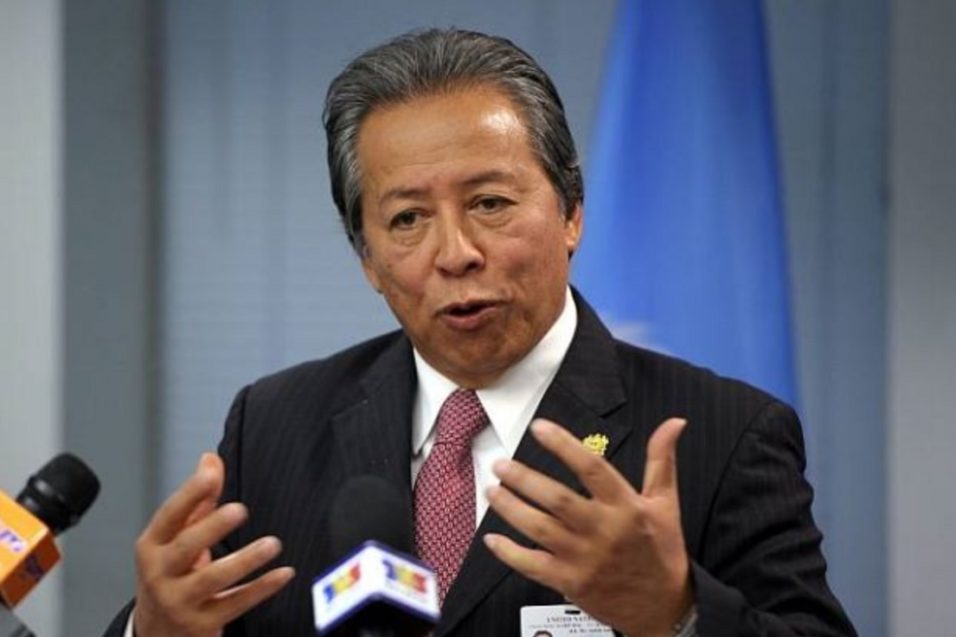
    Asean is no longer able to handle the issue of Rohingya persecution in Myanmar, said Malaysian Foreign Minister Anifah Aman.

    “I think Asean can no longer handle this issue. Within Asean, I have given up hope. We had seven meetings, and Malaysia had expressed our concerns to Myanmar and they (Myanmar) promised to address the concern.

    “Until today, nothing has been done. Therefore, Malaysia may raise it at other levels, like the United Nations and OIC (Organisation of Islamic Cooperation),” he said on Wednesday when asked to comment if Malaysia would bring up the issue of the continuing violence against the Rohingya at this month’s United Nations General Assembly.

    The Foreign Ministry on Tuesday summoned Myanmar envoy U Sein Oo to express Malaysia’s displeasure over the latest violence in Rakhine state. In a statement that day, Mr Anifah was quoted as saying that Malaysia was gravely concerned over the “sustained violence and discrimination” against the Rohingya in Myanmar.

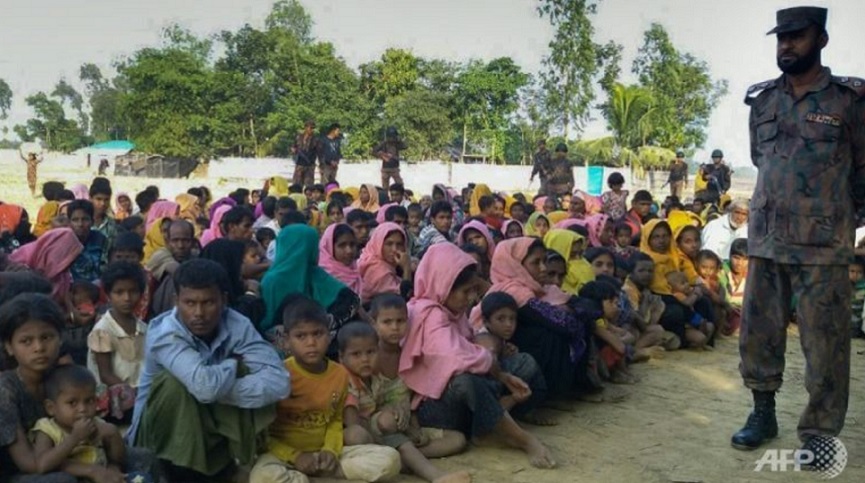
    Some 164,000 mostly Rohingya refugees have now crossed into Bangladesh in the last fortnight to escape fighting between militants and Myanmar’s military, the United Nations said yesterday.

    The latest data means more than a quarter of a million Rohingya Muslims have fled Myanmar since fighting first broke out last October.

    Those flocking into Bangladesh have brought with them harrowing testimony of murder, rape and widespread arson at the hands of Myanmar’s army. Myanmar’s government, led by Nobel Peace Prize laureate Aung San Suu Kyi, has, however, rejected allegations of atrocities, accusing the international media, non-governmental organisations and the UN of fabrications.

    Ms Suu Kyi on Wednesday blamed “terrorists” for “a huge iceberg of misinformation” on the strife in the north-western state of Rakhine but made no mention of the Rohingya who have fled. Yesterday, she repeated that her government was doing its best to protect everyone in Rakhine.


    Source: http://www.straitstimes.com/
  • The Mighty Red Dot; Once Mocked Now A Source Of Pride For Singaporeans

    The Mighty Red Dot; Once Mocked Now A Source Of Pride For Singaporeans

    How is it that Singapore, once mocked as a mere “red dot” state by then president BJ Habibie, became the largest foreign investor, and sent the largest number of tourists to a much more “gigantic” Indonesia in 2016? The moral of the story is: Size alone does not always matter.

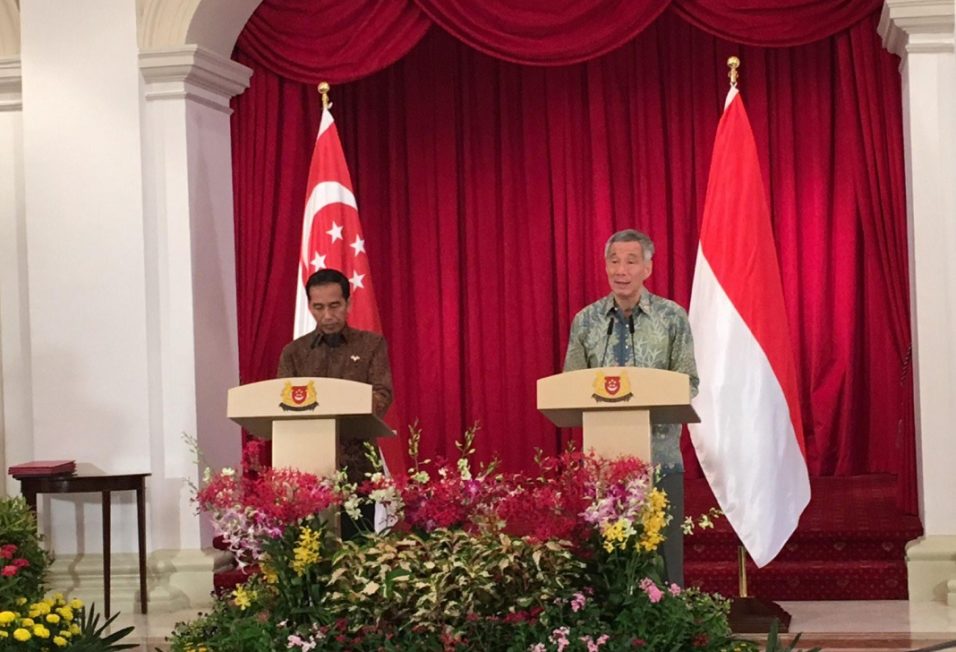
    In Thursday’s joint press conference with his guest President Joko “Jokowi” Widodo, Singaporean Prime Minister Lee Hsien Loong announced that his country invested US$9.2 billion in Indonesia last year. Indonesians, who have often blamed the city-state for harboring corruption suspects, may sneer that the investment value is just a “red dot” compared to the huge amount of money invested by corrupt Indonesians and unscrupulous conglomerates in Singapore.

    For many Singaporeans, the “red dot” mockery later became a source of pride because, despite their extremely small size, they became much more prosperous and advanced in nearly all aspects of life compared to their neighboring “big brother.”

    At the time he made his comment, Habibie was upset because, according to him, then prime minister Goh Chok Tong was very late in sending his congratulatory message on his appointment as Indonesia’s third president in May 1998.

    In an interview with the Asian Wall Street Journal, Habibie, who had just replaced Soeharto following his abrupt decision to end his nearly 32-year dictatorship, pointed to a map, and said, “It’s OK with me, but there are 211 million people [in Indonesia]. All the green [area] is Indonesia. And that red dot is Singapore.”

    Singapore denied Habibie’s allegation of belatedly congratulating Indonesia’s new president; but Singaporeans have since taken the phrase as their own, and it has become both a source of pride and an endless source of jokes to tease Indonesia and themselves.

    President Jokowi arrived in Singapore on Wednesday and attended a bilateral summit to commemorate the 50th anniversary of relations between the two countries. Two years after Singapore’s separation from Malaysia to become an independent republic in 1965, Singapore and Indonesia agreed to end military tensions between them.

    In the same year, the two countries, along with Thailand, the Philippines and Malaysia, established ASEAN. Soeharto is always remembered by Indonesia’s neighbors as a leader who created political security and stability in the region, letting them grow and progress together.

    There have always been ups and downs in relations between Indonesia and Singapore, especially after the fall of Soeharto. From the very beginning, Singapore always stood firm against its larger neighbors, including Indonesia — sometimes unnecessarily — while Indonesia is often tempted to show off its muscles to its smaller neighbor, but to no avail.

    PM Lee’s revelation about the investment is strong evidence that Singapore plays an important role in Indonesia’s economy, while Singapore also needs Indonesia’s market and resources. As a pragmatic leader, Jokowi knows very well how to conduct business with his counterpart, based on mutually beneficial relations. Neither Singapore nor Indonesia will ever tolerate bullying from their neighbor.

    Indonesia and Singapore have learned a lot in the last 50 years.


    Source: http://www.thejakartapost.com

  • Academic: Calls To Make Malay Official ASEAN Language Futile

    Academic: Calls To Make Malay Official ASEAN Language Futile

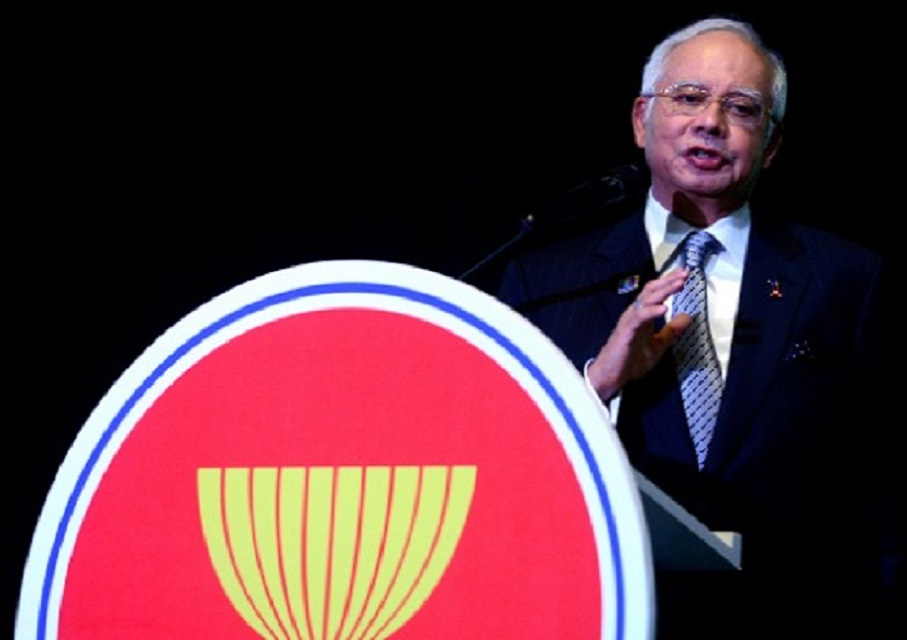
    The proposal to adopt the Malay language (Bahasa Melayu) as ASEAN’s “main and official language” is a non-starter, and even futile. This call, made by Malaysian Prime Minister Najib Tun Razak in Kuala Lumpur on 26 July 2017, comes after a similar suggestion by his Communications and Multimedia Minister Salleh Said Keruak in 2015 when Malaysia held the rotating ASEAN chairmanship. He made the case that Malaysia “need to show that the Malay language is a relevant and dynamic language that can act as the ASEAN language.”

    These calls will fall on deaf ears outside of selected audiences in Malaysia. In the first instance, ASEAN has adopted English as the working language since its establishment in 1967. This practice was later institutionalised in the ASEAN Charter in 2007, Article 34 of which unequivocally states that “the working language of ASEAN shall be English.” Revising this provision requires the unanimous support from Malaysia’s fellow ASEAN member states, most of whom may find it onerous to support a seemingly nationalistic cause to promote the cultural and linguistic heritage of only one particular member state.

    It is interesting to note that the ASEAN Leaders, in approving the Charter, opted for the term “working language” instead of “official language,” which can be interpreted as a sign of respect for the plethora of member states’ national languages. The adoption of any part of a specific Southeast Asian language as the official language would stir political backlash from other ASEAN communities, which may interpret the move as a form of political and cultural dominance. Arguably, the English language might be a non-native language of a former colonial power in the region, but this “neutral” attribute serves to unite ASEAN’s diverse socio-cultural make-up, providing a level political playing field for all member states.

    The fact that English is lingua franca has facilitated ASEAN’s interactions with its Dialogue Partners and the wider global community.  ASEAN can play a more effective role in bring the “regional story” beyond Southeast Asia and reaching out to other regions using a global language. In multilateral organisations throughout the world like the United Nations and World Trade Organisation, English is the working language. Thus, attempts to replace English as the working language with any other languages would rollback ASEAN’s gains in positioning the regional organisation as a global entity, and hamper future efforts to connect with the wider global community.

    At face value, Prime Minister Najib’s proposal is an attempt to bolster his political credentials by championing the Malay language ahead of the general elections due by May 2018. However, his actions cannot be summarily dismissed as a domestic matter because as an ASEAN Leader, he has the recourse to push this cause at ASEAN Summits. If he follows through with this unrealistic proposal at the regional level, he might force his fellow ASEAN leaders into the conundrum of having to defend the primacy of their respective languages and promote their language as ASEAN’s main and official language as well.

    Instead of focusing on the trivial, ASEAN should attend to more urgent and pressing matters of community-building. Playing up the divisive nature of language politics might fray ASEAN unity.

    The writer, Dr Tang Siew Mun, is Head of the ASEAN Studies Centre, ISEAS–Yusof Ishak Institute.


    Source: https://iseas.edu.sg


  • Countering Terrorism And Violent Extremism Key Concern For Singapore, Region: MFA

    Countering Terrorism And Violent Extremism Key Concern For Singapore, Region: MFA

    Countering terrorism and violent extremism is a key concern for Singapore and the region, given the risks posed by returning ISIS fighters as well as the group’s radical propaganda in Southeast Asia, the Ministry of Foreign Affairs (MFA) said on Thursday (Mar 23).

    Singapore’s Foreign Affairs Minister Vivian Balakrishnan met with US Secretary of State Rex Tillerson and participated in the Meeting of the Foreign Ministers of the Global Coalition on the Defeat of ISIS in Washington DC on Wednesday.

    MFA said Singapore welcomed the Meeting of the Foreign Ministers, hosted by Mr Tillerson.

    “Singapore has consistently supported the coalition’s efforts through contributions of military assets and personnel, and believes in the need for a comprehensive response that encompasses addressing economic, social and political factors,” it said in a statement.

    At the meeting, MFA said Dr Balakrishnan and Mr Tillerson reaffirmed the “deep and multi-faceted relations” between Singapore and the US in the areas of defence, economic and security.

    They also discussed regional developments as well as ways in which the US could build on its enduring strategic and economic interests in the Asia-Pacific and strengthen its engagement of ASEAN, the ministry added.

    Dr Balakrishnan will meet Chairman of the Senate Foreign Relations Committee Bob Corker before departing the US for Singapore on Friday, according to MFA.


    Source: CNA

  • Myanmar Minta Diberi ‘Masa Dan Ruang’ Untuk Huraikan Krisis Rohingya

    Myanmar Minta Diberi ‘Masa Dan Ruang’ Untuk Huraikan Krisis Rohingya

    Timbalan ketua pertahanan Myanmar pada Isnin (23 Jan) menggesa dunia supaya memberi “masa dan ruang” kepada pemerintah negara itu untuk menghuraikan krisis yang melibatkan Muslim Rohingya di tengah-tengah kebimbangan bahawa kumpulan militan mungkin akan mengeksploitasi keadaan yang bergolak itu.

    Laksamana Muda Myint Nwe memberitahu satu forum keselamatan di Singapura bahawa pemerintah Myanmar “cukup sedar akan keprihatinan yang kian meningkat mengenai laporan-laporan tentang keadaan di wilayah Rakhine”, yang didiami orang Rohingya dan komited untuk menangani isu tersebut dan menghukum mereka yang bertanggungjawab.

    Sejak Oktober tentera Myanmar sudah melancarkan “operasi pembersihan” di utara wilayah itu untuk menghapuskan para pemberontak yang dituduh menyerang pondok-pondok polis sempadan.

    Sekurang-kurangnya 66,000 orang Rohingya yang sudah melarikan diri ke negara jiran, Bangladesh, mendakwa bahawa pasukan keselamatan Myanmar merogol, membunuh dan mendera kaum itu.

    Myanmar sejak sekian lama berdepan dengan kritikan masyarakat antarabangsa berhubung layanannya terhadap kaum Rohingya. Kebanyakan rakyat Myanmar yang beragama Buddha menyifatkan orang Rohingya sebagai pendatang haram dari Bangladesh.

    Laksmana tersebut berkata demikian sebagai respons kepada ucap tama yang disampaikan oleh Menteri Pertahanan Malaysia Hishammuddin Hussein di Forum Fullerton yang dianjurkan oleh Institut Antarabangsa bagi Pengajian Strategik.

    Hishammuddin memberi amaran bahawa keadaan di Rakhine – jika tidak ditangani dengan betul boleh dieksploitasikan oleh kumpulan ISIS untuk mengukuhkan pangkalannya di Asia Tenggara.

    Myint Nwe berkata bahawa Yangon dan masyarakat antarabangsa harus menumpukan perhatian kepada usaha untuk mencari “huraian yang berkekalan” bagi masalah tersebut.

    Hishammuddin berkata bahawa ASEAN – sebuah perkumpulan serantau yang dianggotai Malaysia dan Myanmar – harus memainkan peranan penting dalam mencari huraian bersama para pemimpin Myanmar.

    Source: BeritaMediacorp