CAIRO – An audio message purporting to come from the spokesman of Islamic State called on followers to launch attacks in the United States, Europe, Russia, Australia, Iraq, Syria, Iran, and the Philippines during the Islamic holy month of Ramadan, which began in late May.
The audio clip was distributed on Monday on Islamic State’s channel on Telegram, an encrypted messaging application. It was attributed to the militant group’s official spokesman, Abi al-Hassan al-Muhajer.
The authenticity of the recording could not be independently verified, but the voice was the same as a previous audio message purported to be from the spokesman.
“O lions of Mosul, Raqqa, and Tal Afar, God bless those pure arms and bright faces, charge against the rejectionists and the apostates and fight them with the strength of one man,” said al-Muhajer. Rejectionist is a derogatory term used to refer to Shi’ite Muslims.
“To the brethren of faith and belief in Europe, America, Russia, Australia, and others. Your brothers in your land have done well so take them as role models and do as they have done.”
Amid the sea change happening in the world, it is time we asked ourselves this question.
History may have decided for us how we were governed and educated in the last two hundred years. The English language has helped us tap international commerce and adopt technologies. We are fed Western pop culture and news that shape how we understand the world. But are all these cast in stone?
While we have adopted the language, we have imperceptibly adopted the West’s superiority complex.
In fact, many among us want to have nothing to do with anything non-Western, and view such things as inferior.
But does this hold true in the changed economic, geopolitical and social reality we witness now?
All through Asia, we see the desire for progress translated into action – infrastructural build-up, the adoption of technologies and an overhaul of electoral systems.
The economic betterment of the people is self-evident. It seems that ideology has given way to economic progress.
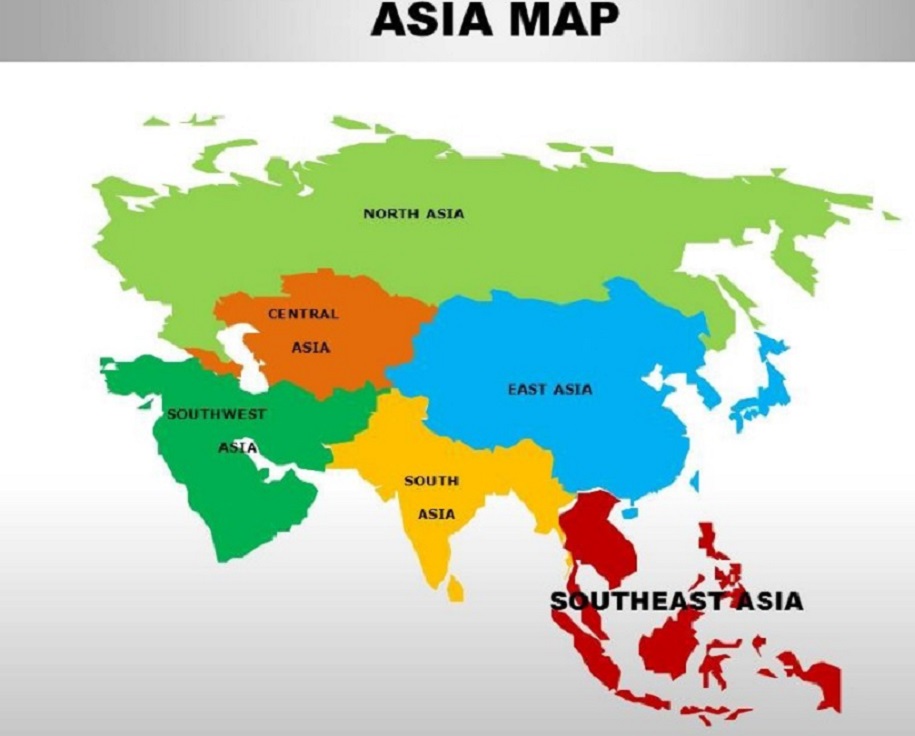
All these are happening in our neighbourhood. Asean, India, China and the vast Central Asia easily make up the majority of the world’s population.
We should not let this huge tsunami of change pass us by just because we hold fast to archaic notions.
Therefore, there must be a greater need to understand the region we live in.
We are what we read. We should diversify our sources for news and information.
More importantly, we should understand Asia through its own platforms and not cling to digesting feeds that are monolithic in portraying Asia as backwaters, or its people as repressed.
We must understand Asia through Asia’s eyes.
It is time we re-orientated our bearings, amid the rise of Asia.
It will be perilous for us to ignore all that is happening at our doorstep.
Timbalan ketua pertahanan Myanmar pada Isnin (23 Jan) menggesa dunia supaya memberi “masa dan ruang” kepada pemerintah negara itu untuk menghuraikan krisis yang melibatkan Muslim Rohingya di tengah-tengah kebimbangan bahawa kumpulan militan mungkin akan mengeksploitasi keadaan yang bergolak itu.
Laksamana Muda Myint Nwe memberitahu satu forum keselamatan di Singapura bahawa pemerintah Myanmar “cukup sedar akan keprihatinan yang kian meningkat mengenai laporan-laporan tentang keadaan di wilayah Rakhine”, yang didiami orang Rohingya dan komited untuk menangani isu tersebut dan menghukum mereka yang bertanggungjawab.
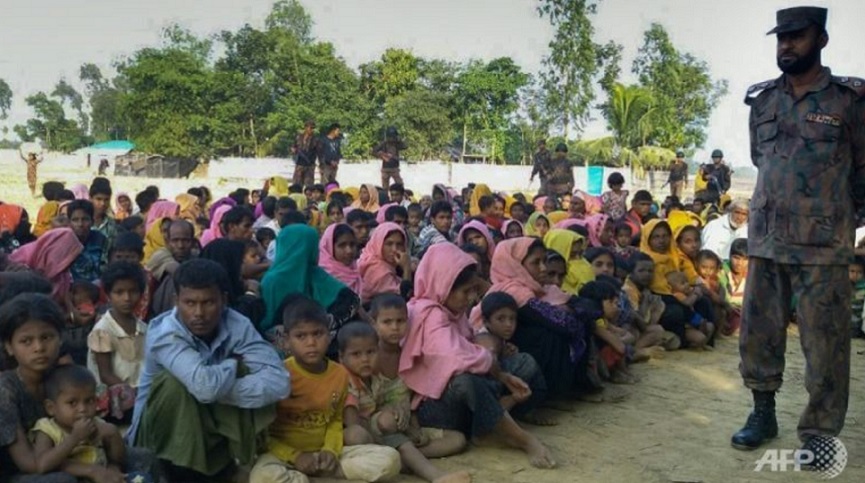
Sejak Oktober tentera Myanmar sudah melancarkan “operasi pembersihan” di utara wilayah itu untuk menghapuskan para pemberontak yang dituduh menyerang pondok-pondok polis sempadan.
Sekurang-kurangnya 66,000 orang Rohingya yang sudah melarikan diri ke negara jiran, Bangladesh, mendakwa bahawa pasukan keselamatan Myanmar merogol, membunuh dan mendera kaum itu.
Myanmar sejak sekian lama berdepan dengan kritikan masyarakat antarabangsa berhubung layanannya terhadap kaum Rohingya. Kebanyakan rakyat Myanmar yang beragama Buddha menyifatkan orang Rohingya sebagai pendatang haram dari Bangladesh.
Laksmana tersebut berkata demikian sebagai respons kepada ucap tama yang disampaikan oleh Menteri Pertahanan Malaysia Hishammuddin Hussein di Forum Fullerton yang dianjurkan oleh Institut Antarabangsa bagi Pengajian Strategik.
Hishammuddin memberi amaran bahawa keadaan di Rakhine – jika tidak ditangani dengan betul boleh dieksploitasikan oleh kumpulan ISIS untuk mengukuhkan pangkalannya di Asia Tenggara.
Myint Nwe berkata bahawa Yangon dan masyarakat antarabangsa harus menumpukan perhatian kepada usaha untuk mencari “huraian yang berkekalan” bagi masalah tersebut.
Hishammuddin berkata bahawa ASEAN – sebuah perkumpulan serantau yang dianggotai Malaysia dan Myanmar – harus memainkan peranan penting dalam mencari huraian bersama para pemimpin Myanmar.
I have noticed that many students in Singapore converse only in English.
It causes me to wonder if our mother tongues have all been reduced to just examination subjects.
This is of concern. In the light of Asia’s resurgence, are we pitching our sails right to catch the wind of change, vis-a-vis our language policies?
English has served us well as a language for commerce and technology, but our grasp of the other languages seems less adequate in plugging us into the new realities of the future.
Language is more than a code. It communicates customs and habits through the nuances embedded in it. Speaking the same language helps to strike instant rapport even between strangers, and enables people to understand and be understood by each other quickly.
Asean’s 625 million inhabitants speak a myriad of tongues. Together with India and China, the region easily makes up half the world’s population. Its potential is beckoning and it is imperative that we prepare ourselves to tap the Asian market.
While English has kept us ahead, this competitive advantage may be eroded as our Asian counterparts focus on English to complement their already strong mother tongues. They will be quicker in understanding contracts and conducting negotiations outside the English domain.
Perhaps we can design a track that coaches students in the various languages’ official terms used in commerce, science and technology from an early age.
The focus should be on enabling them to experience alternative cultures in Asia through extended cultural immersion programmes abroad.
This would allow them to better grasp how others think, and network with future leaders. They could form the backbone of leaders in different disciplines, with Asian perspectives on geopolitics, the economy and diplomacy.
A rethink of our language policy is timely, if not urgent.
We will have to bear the blame if we fail to prepare our young for their future, which will be starkly different from ours.
The spate of terrorist attacks and the attendant violence witnessed in the last couple of months, including the recent attacks in Dhaka, Kishoreganj and Ektarpur in Bangladesh, and Nice in France, brings home the truth that something perverse is happening within Islam and Muslims alone can fight that scourge.
Analysts attribute the growth of Islamist radicalism to Muslim grievances about their culture and way of life not being given what they consider their rightful place in their own societies; transnational links with organisations like Al-Qaeda and now an even more dangerous phenomenon called the Islamic State in Iraq and Syria or Daesh; hostility towards the policies of the West, in particular the United States and its support of Israel’s policies towards the Palestinians, the occupation of Iraq and now intervention in Syria; and opposition to crackdowns on domestic militancy like in Bangladesh.
These factors have, undoubtedly, contributed to a sense of growing alienation and feeling of victimisation and oppression among certain Muslim groups, and to an attempt to redress their grievances and frustrations through violence and terror.
More importantly, a fundamental transformation is taking place within the Muslim community all over the world – an identity formation based on a world view taken from early Quranic precepts and a code of conduct resembling a way of life that was prevalent in the Arab world in the mediaeval period during the formative stage of Islam.
This form of identity is premised on an understanding and belief that to be a true Muslim, one has to be different from “others” in every aspect of life and that there cannot be a meeting ground between Islam and other religions. Adaptation to other customs, traditions and cultures in its path towards the expansion of the religion had only led to aberration and corruption of original and pristine ideas of Islam. It is only through the practice of mediaeval Arab traditions and way of life that the evil eyes of other religions can be kept at bay.
A group of Indonesian women with their children offering morning prayers during Eid al-Fitr celebrations in Tangerang, Jakarta, earlier this month. Since the first Muslims were mostly Arab, everything associated with them has been associated with Islam, even though the vast majority of Muslims today are not Arabs. PHOTO: AGENCE FRANCE-PRESSE
Such an exclusivist world view may not be the most predominant among the Muslims of the world yet, but is surely gaining slow and steady ground. The external manifestation is the wearing of Middle Eastern clothes by men and women. Strict observance of fundamentalist Islam is also a means of asserting identification with reform and protesting against upper-class corruption in many societies, which might somewhat explain the fundamentalists’ prescription for an austere way of life free from temptations and pleasures.
Since the first Muslims were mostly Arab, everything associated with them – their culture, names, and family structures – has been associated with Islam, even though the vast majority of Muslims today are not Arabs. The niqab ( face-veil) was rarely seen outside the Arab world until most recently. Most Muslims see the niqab as a by-product of Arab culture. The practice of wearing veils can be traced from a Quranic prescription given at the time of Rasullulah, who saw Arab women wearing veils – not due to any religious motives but rather due to the harsh and dusty desert climate – but leaving their bosoms wide open. He then urged the women “to wear their veils over their bosoms” for modesty, but this was not necessarily a particular dress code. It is only recently that the veil has been interpreted as religiously authentic, instead of a cultural expression, and therefore a must for all Muslim women.
Arabisation and Islamisation are inseparable parts of a single cultural ideal that now pervades the Arab world. In their drive towards authentication and uniformisation of Islam, the transmitters (Saudi Arabia and other Arabic countries) and the recipients (non-Arab Islamic societies) are equally emphasising “Arabisation” as the norm of the pure and ideal form of Islam to be followed by Muslims all over the world.
The Hadith, or records of the sayings of Prophet Muhammad, is the basis for the development of notions of syariah (Islamic law) that are heavily influenced by early and mediaeval Arab cultural norms.
Arabisation poses a threat to all Muslims who believe in Islam’s divine character and universalism, and can be combated only by them.
It is not a crisis between civilisations as Samuel Huntington noted, but a crisis within civilisation, and it needs to be fought from within.
Arabisation’s major appeal emanates from Islam’s millenary expectations and the unfounded utopia of a just and prosperous society under Islamic rule. This is also fed by the silence of the moderates in the face of the more vocal minority trying to hijack Islam for their perverted gain.
Christianity has passed through this phase and the contradictions between the sacred and the profane were resolved by separating the Church from the State during the period of renaissance and reformation.
If the powerful, modern ideas of “jihadi” Islamism are not met in the marketplace of ideas with an equally vigorous, contemporary articulation of peaceful, syncretic and inclusive Islam, then “the centre of gravity” of public discourse will inevitably slide towards those ideas that appear most powerful and relevant to the modern world.
The progressive interpretation of Islam developed by the late Nurcholish Madjid and former president Abdurrahman Wahid in Indonesia, Anwar Ibrahim and Dr Chandra Muzaffar in Malaysia, Dr Surin Pitsuwan, the former secretary-general of Asean, in Thailand, and progressive intellectuals from India and Bangladesh, represent a powerful alternative to “jihadi” Islamism.
The need of the hour for Muslims in Asia is to de-Arabise Islam from its exclusivist mould and promote a more inclusive Islam based on their own indigenous cultures and traditions blending with the universal message of Islam, as was the case in Indonesia, Malaysia, India and Bangladesh in the period before the inroads made by the Islam of the desert.
There is also an urgent need for the moderates to break their deafening silence against the tyranny of the small minority who are bringing shame and a bad name to the religion, and shed their inertia and fear of being branded as not “good Muslims” by the perverted radical minority.
In this project, Indonesia and India, the two largest Muslim countries in the world, can make a positive contribution in projecting their composite culture manifested in Borobudur and Prambanan in the former and Ajmer Dargah Sharif and Fatehpur Sikri in the latter.
The writer, Baladas Ghoshal, is secretary-general of the Society for Indian Ocean Studies based in New Delhi, India.