Tag: Constitution

  • Of TCB And Salleh Marican: Both Directly Associated With The Establishment, Both Blocked From Potentially Contesting The Presidency

    Of TCB And Salleh Marican: Both Directly Associated With The Establishment, Both Blocked From Potentially Contesting The Presidency

    I am one of those who have highlighted the hypocrisy on both sides upon observing both sides and my views are from my personal perspective.

    Categorically, I am against the manipulation of the constitution particularly the reserved election on basis of race by the government of the day to maintain grip of power bases. This however does not automatically mean I am supportive of any claim of an alternative voice challenging the primary power base.

    There are inconsistencies in what have been said, what have been allowed to be said, what have been silence and what have been forced to be silenced.

    The example of double standard begins with the hashtag campaign of #notmypresident pointing to the legitimacy of the presidency rather than #notmygovernment or #notmydemocracy that would point to the mechanism and ideology used to manipulate the constitution. The campaign of #notmypresident must be nuanced with an alternative person for presidency. This is perhaps presented in the person of Dr Tan Cheng Bock, the best loser for PE2011. This is with the assumption that an open election by the revised criteria, he would qualify for candidacy. However, the little has been said about the Dr Tan’s capacity to meet the $500m company criteria that saw Mr Salleh and Mr Farid disqualified.

    The #notmypresident campaign was preceded with a spoil your vote campaign which in sum was intended as a protest against the reserved election (almost without mention of the manipulation of the eligibility criteria) simultaneously denouncing the nomination of Mr Salleh and Mr Farid as potential candidates who have stepped forward in full awareness of the changes of the eligibility criteria.

    What makes the movement inconsistent and precursor to double standard is the treatment and opinion accorded to Dr Tan, a former PAP MP who was blocked from contesting primarily on the grounds of a racially reserved election and the treatment and opinion accorded to Mr Salleh, a voluntary director at Temasek Foundation Cares on the grounds of not meeting the $500m criteria.

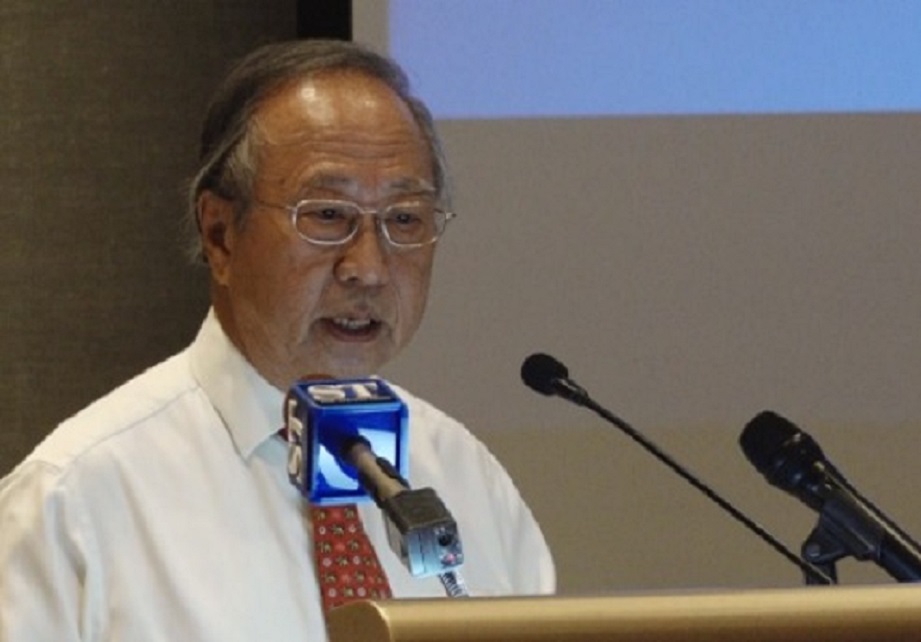
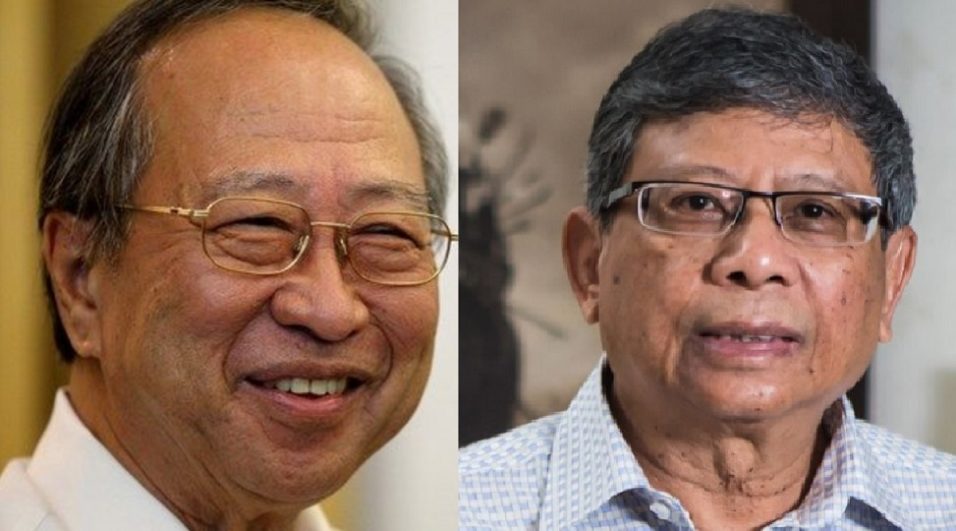
    Dr Tan was hailed as being robbed of the presidency while Mr Salleh was portrayed as a crony despite both are directly associated with the establishment and both were blocked from potentially contesting the presidency.

    The above inconsistency prompted me to ask if the anger was due to violated principles or violated opportunity of an individual.

    Unreservedly, I am supportive of Dr Tan’s challenge to the presidency. This does not mean that should a more qualified candidate be available, I should ignore.

    For example it has been widely publicised that Mdm Halimah has no financial background to be a custodian of the reserves. However, would Mr Salleh Marican be less qualified than Dr Tan C B in this aspect. What would the principle of meritocracy suggest?

    It is also known that Mdm Halimah is an immediate alumni of the establishment, however between Mr Salleh and Dr Tan, the association to the establishment of Dr Tan is as a former card carrying allowanced PAP MP who has refrained from joining a different political party since stepping down, while Mr Salleh was a volunteer director at a nonprofit community service arm of Temasek. What would the principle of independence suggest?

    Categorically I qualify that I am here not to pit Dr Tan against Mr Salleh but to highlight the tenor and treatment put forth by the alternative movement on two violated candidates, both with sound financial acumen, both with ties with the establishment and both non partisan to any political party at the time of planned candidacy.

    Thus I have to undertake a personal reflection and question aspects of privilege, rights and principles. With that, I need to caution myself against getting caught in a cult of personality because Democracy is not simply the propelling the voice of the majority (in the widest sense) or the rule of majority, democracy stands in symbiotic coupling to ensuring minority (in the widest sense) rights (in a sense just as wide).

    Without the latter, a discourse on Civil Liberties and Civil Rights that ensues will sit on an oppressive high ground as demand for justice on aspects where the majority feels shortchanged are heard loud while privileges that propels benefits to the same majority are retained in silence.


    Source: Rafiz Hapipi
     

  • Dr Tan Cheng Bock: Don’t Be Afraid To Fight For What’s Right

    Dr Tan Cheng Bock: Don’t Be Afraid To Fight For What’s Right

    Happy National Day 2017

    Dear Singaporeans,
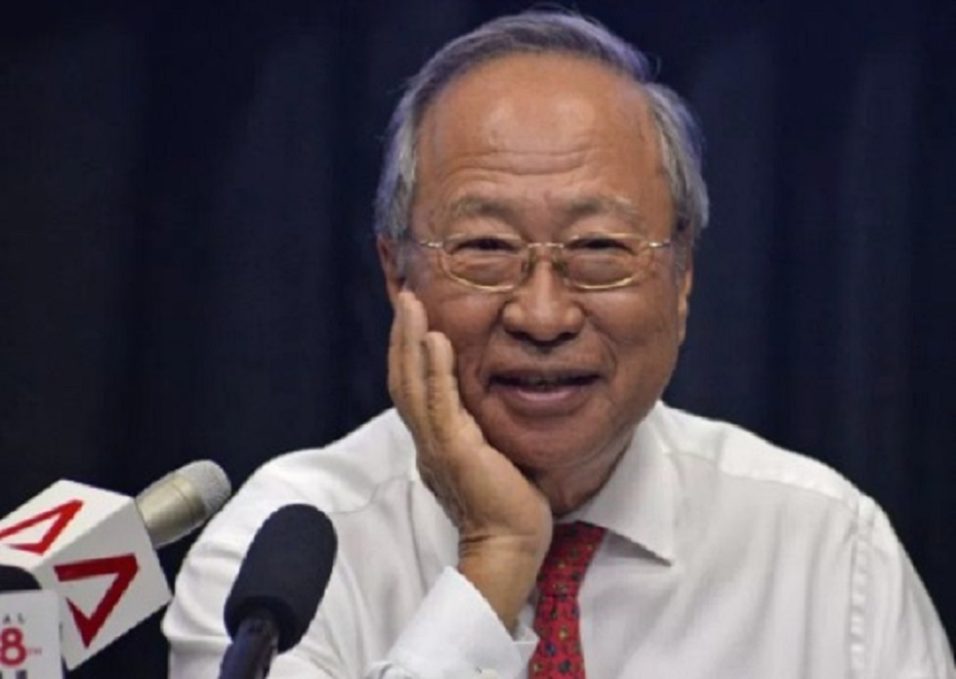
    This year has been an eventful year for me. In all that I have done, I believe that it has been for the good of our country. I want future generations to be proud of Singapore and all its achievements. Let us have the courage to stand up for our convictions. Never be afraid to fight for what is right. We all want the best for our nation.

    I look forward to celebrating National Day with my family and friends, and enjoying my grandchildren.

    My family and I wish you all a Happy National Day.


    Source: Dr Tan Cheng Bock

  • Dr Tan Cheng Bock: In A Democracy, We Must Question, Exchange Ideas

    Dr Tan Cheng Bock: In A Democracy, We Must Question, Exchange Ideas

    What is the definition of an Elected President? Does the government have the discretion to decide when to start a term count before a reserved election is triggered? And was the Attorney-General’s Chamber’s (AGC) advice to the Prime Minister on the reserved election a “mistake of law”?

    These were the issues that took centre stage during former presidential candidate Tan Cheng Bock’s appeal against a High Court ruling on his constitutional challenge to the timing of the reserved presidential election

    The case was heard on Monday (31 July) in a packed gallery at the Court of Appeal before five judges: Chief Justice Sundaresh Menon, Judge of Appeal Judith Prakash, Judge of Appeal Steven Chong, Justice Chua Lee Ming and Justice Kannan Ramesh. Some 50 members of the public, many of them supporters of Tan, also waited outside the courtroom.

    Tan and his wife Cecilia were both present. Aljunied Member of Parliament Sylvia Lim, whose name was referenced several times during the hearing, was spotted in the gallery, along with former National Solidarity Party chief Lim Tean.

    The High Court ruling

    This year’s presidential election is reserved for Malay candidates, following constitutional amendments last year that reserves an election for a particular racial group that has not been represented in the office for five consecutive terms. The term count starts from the late Wee Kim Wee, according to the government, as he was the first to wield the powers of an Elected President.

    Earlier this month during a High Court hearing on his legal challenge, Tan argued through his lawyer Chelva Retnam Rajah that the term count should start from the late Ong Teng Cheong as Wee was not elected by a popular vote. In rejecting his arguments, Justice Quentin Loh noted that the Constitution states that a President can be “any person for the time being exercising the functions of the office of the President”.

    Loh referred to two articles of the Constitution. Specifically, “Article 19B(1) provides for a Reserved Election for a community if no person from that community has held the office of President for any of the five most recent terms of office of the President” while “Article 164(1)(a) provides for Parliament to specify the first term of office of the President to be counted under Article 19B(1) (“First Term”).”

    The High Court then also found that there is nothing in the text or textual context which limits Parliament’s power by requiring Parliament to start the term count from the term of office of a popularly elected President.

    The appellant’s claims

    Rajah, who represented Tan again, argued his case against the ruling on three main points. Firstly, he maintained that Article 2 of the Constitution, which sets out the definition of the “president of Singapore”, refers only to an Elected President. The term count should therefore start with the late President Ong.

    Secondly, President Wee’s second term in office was only chosen for the start of the term count because Parliament mistakenly thought he was an Elected President. Rajah pointed out that the “specific mischief” outlined in Article 19B(1) was to invoke a reserved election if a particular race had not been represented for five consecutive elections.

    Thirdly, Parliament acted under a “mistake of law”, based on the advice of the AGC, which has not been publicly disclosed. Rajah noted Prime Minister Lee Hsien Loong’s speech to Parliament on 7 November last year, when Lee said, “We have taken the Attorney-General’s advice. We will start counting from the first President who exercised the powers of the Elected President, in other words, Dr Wee Kim Wee. That means we are now in the fifth term of the Elected Presidency.”

    Rajah noted that during the parliamentary debate on amendments to the presidential election last November, Aljunied MP Sylvia Lim had prefaced her questions with a statement that the Attorney-General advised the PM to start the term count from President Wee, “no one corrected her, not even PM Lee”.

    CJ Menon noted, “You’re saying (that) Parliament’s decision was repeatedly framed by the Attorney-General’s advice (and) predicated on legal advice which you contend is wrong.”

    In response, Rajah quipped, “Your Honour has perhaps understood my argument better than I have.”

    The respondent’s claims

    Proceedings were temporarily interrupted when Zeng Guoyuan, a would-be parliamentary candidate on multiple occasions, was escorted out of the gallery by a security officer after he continually interrupted the hearing with his remarks. “Don’t waste the court’s time,” he said, as he walked off.

    Representing the government, Deputy Attorney-General Hri Kumar said, “There has been a narrative since this application was filed…that there has somehow been a re-writing of history…that Wee Kim Wee has been deemed an elected president. (But) no one said he was an elected president…the government had to start the count somewhere and it gave its reasons for starting with Wee Kim Wee.”

    Kumar charged that Tan’s case was based on “staggering errors of fact, law and logic”. He stressed that Article 164, a transitional provision for Article 19B, gives Parliament “unfettered” discretion to decide when to start the term count and does not restrict it to popularly elected presidents.

    Addressing Rajah’s claim that there had been a “mistake of law” following the Attorney-General’s advice on the reserved election, Kumar denied this. “The nature of the advice was not disclosed or even discussed in Parliament. The Prime Minister started the count from Wee Kim Wee not because he was an elected president, but because he exercised the powers of the Elected President. It was a policy decision.”

    He added, “The appellant asserted that the Attorney-General had told the Prime Minister to start the count from Wee Kim Wee, which is not what the Prime Minister said at all.”

    Judgement has been reserved in the case. It is not known when the Court of Appeal will make its decision known.

    Speaking to reporters at the end of the hearing, Tan said, “It is not just acceptance (of the government’s decision), we must question it…If at the end, it is found we were wrong, then we accept it. That is what democracy is about: exchange of ideas.”

    His wife Cecilia added, “If we are right, the government should accept it as well.”

    Source: https://sg.news.yahoo.com

  • M Ravi Files Constitutional Challenge Against Changes To Elected Presidency

    M Ravi Files Constitutional Challenge Against Changes To Elected Presidency

    Human rights lawyer M. Ravi yesterday filed a constitutional challenge against changes to the elected presidency made last year.

    The changes, which Parliament approved last November, tighten the qualifying criteria for candidates, and include a provision to reserve a presidential election for candidates from a racial group that has not been represented in the office for five continuous terms.

    Mr Ravi argues that the changes are unconstitutional because they deprive citizens of their right to stand for public office and discriminate on the grounds of ethnicity.

    The High Court confirmed that Mr Ravi had filed an originating summons and supporting affidavit.

    A spokesman for the Attorney-General’s Chambers told The Straits Times that “it will study the papers” filed by Mr Ravi.

    Mr Ravi, currently a non-practising lawyer, said on Facebook that he filed the application in his capacity as a private citizen.

    His is the second legal challenge related to the elected presidency mounted this month.

    On May 5, former presidential candidate Tan Cheng Bock filed a challenge over whether the upcoming presidential election should be a reserved one.


    Unlike Dr Tan, Mr Ravi challenges the entire reserved election mechanism as unconstitutional, he said on Facebook yesterday.

    He believes that the elected presidency is not consistent with Article 12(2) of the Constitution.

    It states that unless expressly authorised by the Constitution, there shall be no discrimination against Singapore citizens on the ground only of religion, race, descent or place of birth in any law, or in the appointment to any office, or employment under a public authority.

    “The right to stand for the elected presidency should be no different from the right to participate in parliamentary elections – all citizens should be equal,” he wrote.

    “The selection of the elected candidate should be based on merit, all other relevant requirements being fulfilled.”

    Mr Ravi also contends the amendments run counter to a legal principle called the basic structure doctrine, which he says applies here.


    Source: www.tnp.sg


  • In History Of Presidencies, Colour Blind Reality Of The Ordinary Singaporean Is The One Factual Highlight

    In History Of Presidencies, Colour Blind Reality Of The Ordinary Singaporean Is The One Factual Highlight

    A letter from Patrick Low on the Elected President.

    Dear Fellow Singaporeans

    Comes September 2017 we may be going to the polls to elect our 8th President reserved for the Malay race only. Notwithstanding the constitutionaI amendments passed in Parliament I am not convinced of the wisdom and logic of changing our Presidential system to ensure that a member of the minority must always have a chance to become President via rotation.

    As a Singaporean who lived through the time of our first President or the Yang di- Pertuan Negara appointed in 1959 in self governing Singapore to the 7th President elected in 2011 race was never an issue in my mind and in the minds of countless Singaporeans.
    He can be Chinese Malay Indian or Eurasian elected or appointed it did not make any difference. What matters most is the President must serve the people. If he is honest sincere and capable he will be able to unify all Singaporeans regardless of race language class and religion.

    As a 72 year old Singaporean it is my privilege to grow up colour blind even through the worst racial riots in 1951 1964 and 1965. I was a child of 6 when I first witnessed the horrors of the Maria Hertog riot from a cubicle window in Jalan Besar. Then came the 2nd and 3rd racial riot in 1964/65 when we were part of Malaysia. We were at the Cathay Cinema when racial riots broke out and we were told to go home.

    But none of these riots change our generation’s perception that in multiracial Singapore race should not matter and should never be allowed to matter certainly not in the choice of a President whether he is black white brown or yellow.

    It never occur to me that a Malay should not be the head of state in Chinese majority self governing Singapore in 1959. Neither did I have any reservation to a Eurasian President Dr. Benjamin Sheares a distinguished gynaecologist who served us well from 1971 to 1981.
    Then came our third President Mr. Devan Nair an Indian MP who came from the ranks of the PAP. He unfortunately had to leave office after 4.5 years as a result of personal health problem.

    Next came President Wee Kim Wee another appointive President who hailed from the Straits Time Press. He was a “baba” Chinese Singaporean who performed his role so well that he became known as the People’s President.

    Another well loved President was Mr. Ong Teng Cheong the first elected President in Singapore history. He was our Deputy Prime Minister before he took office but completed only one term owing to differences in perception of the President’s role as a guardian of our reserve.

    After him came the 2 term President S R Nathan a civil servant who was moderately popular with the people attending President’s Charity galas to raise funds for the people. Again race was not an issue even though the previous Indian President did not fare too well and had to leave office under a cloud.

    Now we are nearing the end of the term of Mr Tony Tan an endorsed elected Chinese PresIdent who was a former DPM in the PAP government.

    So all in all we have had 7 Presidents over 58 years. 1 Malay, 2 Indians, 1 Eurasian and 3 Chinese. Out of the seven 4 were appointed and 3 were elected. As far as the people are concerned it does not matter as long as they are men of integrity and perform the jobs well to serve the people.

    Without going into the merits and demerits of the government’s rationale for amending the Constitution to allow for a reserved Presidential Election for only members from the Malay race my main objection is that such a change violates the Singapore Constitution and undermines the daily National Pledge recited by all school children every morning that:

    “We the citizens of Singapore, pledge ourselves as one united people, regardless of race, language or religion to build a democratic society based on justice and equality so as to achieve happiness prosperity and progress for our nation”.

    If we have any regards at all to the history of our Presidencies one fact that stands out is the colour blind reality of the ordinary Singaporean. There was never any perceived notion that the Presidency must be rotated by race to ensure fairness to the minority. All the friends acquaintances and strangers I meet on the streets and in the parks in the last one year invariably dismiss race as a factor in their reckoning of what makes a good President.

    The issue of the President holding the second key to the national reserve should also not be an issue for he is surrounded by the Council of Presidential Advisors whom he has to take advice from. So whether he is Malay Chinese Indian or others the key that he holds is a collective key held by a panel of advisors nominated by the government.

    As for the financial qualifications required of a Presidential candidate it is most unlikely that the government would be able to headhunt for one who would meet all the stringent requirements.
    In fact all our past Presidents never had the experience of running a $500 million company. Where then do they get the forte to disagree with the government on opening our national coffers.
    However in raising the bars so high the government turns what should be a level playing field into a pole vault pitch ruling out the possibility of sourcing for a few good men who can genuinely understand the plight of the ordinary people and work for their welfare.

    The office sadly is in danger of becoming the precinct of the rich and powerful.

    In this day and age when governments all over the world are beginning to lose the trust of the people it is incumbent on the PAP leadership not to erode that trust further by imposing a albatross around the people’s neck.

    Given the challenge from a former Presidential candidate Dr Tan Cheng Bok that the reckoning of the first elective President does not reside in Mr Wee Kim Wee’s term but rathet in Mr. Ong Teng Cheong’s it would be prudent for the government to pause before rushing to implement it’s Reserve Presidency – an area where angels may fear to tread.

    It would also be doing itself a huge favour to hold a referendum to ascertain the wishes of Singaporeans whether race is indeed a factor in the choice of our Head of State. Afterall what is the hurry when more haste produces less speed and further undermines the trust of the people in the midst of a economic recession and a very uncertain world.

    Patrick Low
    4th April 2017


    Source: Soh Lung Teo from Patrick Low