Tag: diabetes

  • Diabetes In Singapore: Here Are Facts Based On What The Government Has Documented

    Diabetes In Singapore: Here Are Facts Based On What The Government Has Documented

    DIABETES IN SINGAPORE – AS REPORTED & DOCUMENTED

    Following up from my last post (Thanks everyone for the colourful comments! It was a cracker to read! Didn’t think such a post would have gathered such traction), here are the facts based on what the government has documented.

    This time, I’ll use 2013 statistics (2016/2017 statistics last I checked weren’t ready yet).

    ‘The majority of adults with self-reported diabetes were men (53.3%) and almost two-thirds (65.2%) were Chinese. More than three-quarters (81.2%) had an educational level of secondary/GCE O/N level and below. Slightly more than half (54.8%) were not working. One-quarter (26.3%) of these self reported diabetic adults resided in HDB 1-3 room flats.

    The mean age of onset of diabetes reported by these diabetic adults was 50 years old. The mean duration of diabetics reported was 11 years. Four in five (80.9%) were currently on oral hypoglycemic agents.’

    ‘One in five (19.3%) of the adults with self-reported diabetes were obese.’

    ‘Almost two-thirds (65.3%) of the adults with self-reported diabetes did not participate in any physical activity during leisure time, compared with 48.3% of the general population.

    Top reasons for not doing so were:
    1 – No time due to work or family commitments (36.3%)
    2 – Too old (19.6%)
    3 – Poor health (18.4%)’

    Okay, so why did diabetes made it to NDR 2017? This is probably why.

    ‘The Ministry of Health (MOH) has declared war on diabetes to stem a healthcare threat that is costing the Government more than $1 billion annually.

    This figure could rise to $2.5 billion in 2050 after taking into account both medical costs as well as indirect costs such as loss of productivity and premature mortality.’

    So much so that a ‘Diabetes Prevention & Care Task Force’ has been setup.

    ‘In Singapore, one out of 9 people aged 18 to 69 has diabetes. That’s about 11.3% of our population or more than 400,000 people!’

    Since diabetes is primarily a self-managed condition, what can we do especially if you are prone to it?

    As a person who is prone to diabetes based on family condition, I am also particularly concerned and worried about my own health. So, for the past year I’ve been tracking my health status using a simple mobile app available on both Android and Apple, Tactio Health.

    Hopefully this will be helpful for you as well. Diabetes is a sucker of an illness. My late grandmother suffered from it, my dad is keeping it under control and I certainly hope that I can manage by staying healthy through regular exercise and eating healthy.

    But I admit that eating healthy isn’t easy in Singapore, I find myself eating fast food more often than I should. But I guess, that’s how life in Singapore is. We’re so busy working trying to make ends meet that we don’t have enough time to exercise and if we do have time, we would rather spend it with our family members.

    Perhaps, we can incorporate exercise as part of family activities and hopefully, we can keep diabetes under control, one family at a time.

    https://www.moh.gov.sg/…/national-population-health-survey-…

    https://www.singstat.gov.sg/…/pub…/health/ssnsep16-pg5-9.pdf

    https://www.reach.gov.sg/…/multipronged-approach-in-battle-…

    https://www.moh.gov.sg/…/P…/Annex%20B%20-%20TF%20Members.pdf

    http://www.diabetes.org.sg/


    Source: Abdillah Zamzuri

  • Malays And Indians Need To Change Their Eating Habits To Fight War Against Diabetes

    Malays And Indians Need To Change Their Eating Habits To Fight War Against Diabetes

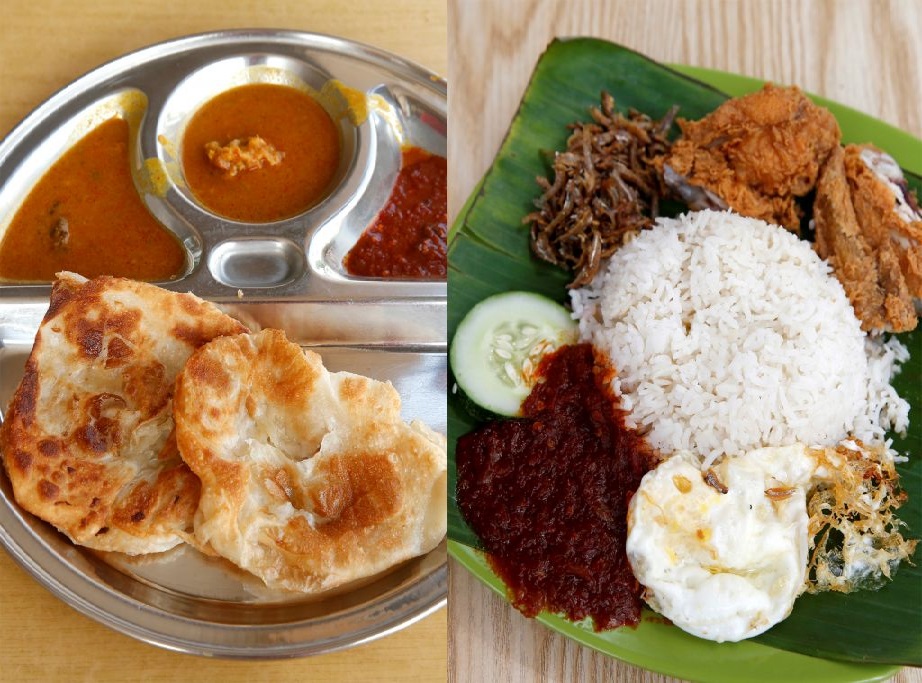
    For Malay food vendor Aida Manapi, 50, the tastiest ayam penyet (smashed fried chicken) must be crispy and glistening, and there is only one way to cook it — “deep fried”. And when it comes to roti prata, no one serves it by being stingy on ghee (clarified butter), said stall vendor Senthilvel Vedachalam, 43. Such traditional methods of cooking or serving Indian and Malay favourite dishes, along with mindsets that they have to be cooked in a certain way for best results – have made it difficult for many hawkers and home cooks to change the way they prepare these dishes. For them, unlike Chinese dishes, one cannot produce a healthier, yet still tasty ayam penyet or roti prata by simply using less oil, salt or sauce. But change they must if the two communities are to win the war against diabetes, which Prime Minister Lee Hsien Loong described as a “health crisis” for Malays and Indians during his National Day Rally (NDR) on Aug 20.

    Mr Lee also shared some sobering figures, noting that six in 10 Indians, and half of Malays above age 60 are diabetic, compared to 2.5 in 10 for the Chinese. With the fight against diabetes in Singapore being stepped up, community leaders and some members of the Malay and Indian communities have called for more targeted measures to deal with the problem. One area that needs to be addressed is their eating habits, even though those interviewed acknowledged that it will be an uphill task. Mr Rathinasamy Murugesan, owner of Greenleaf Cafe, an Indian restaurant in Little India, pointed out that many Indians eat a lot at one go, three times a day. They also tend to prefer 9pm dinners, which are close to bedtime, and need to round off their meals with a satisfying, sugar-rich dessert.

    “My Chinese friends would take the Indian sweet, and (throw up) because it is too sweet for them, but we Indians can take four or five of those,” said the 44-year-old. Getting these people to change their eating habits, even when they know that such practices heighten their risk of getting diabetes, will not be easy, he added. Taxi driver Hartono, 56, is one of those who find it difficult to change his eating habits even though he is a diabetic. He loves the rendang that is chock-full of coconut milk, and believes that Malay food should be all about “the colour and spice”. He finds such Malay dishes much more attractive than the “bland” soups, steamed food and stir-fries common in Chinese cooking.

    While his wife, a nurse, and his doctor often chide Mr Hartono for his food choices, the man himself finds it just too hard to give up his beloved buffets and nasi briyani. After losing weight during the fasting month by eating mainly cereal, it was “back to square one” after the Hari Raya season, no thanks to all the feasting during festive gatherings and wedding banquets. “The doctor talks like it’s very easy (to change), but our lifestyle is not like the Chinese lifestyle. For them, they go qigong, they go exercise … Our culture is different, we like to gather and cook, go picnic, go makan… You see (the Malays) carrying their pots to Changi Village to go there to eat, sleep, swim (all day),” he said.

    Some hawkers mentioned that their patrons are often not in favour of replacing the coconut milk in their dish with low-fat milk, as suggested by PM Lee in his NDR speech. When hawkers ask patrons if they would replace the coconut milk in their dish with low-fat milk, a common reaction is: “Sure not nice… So thin,” said Madam Salama Salim, 52, summing up her customers’ sentiments on why they do not like low-fat milk. Even though her Malay food stall at Our Tampines Hub offers healthier options, she feels obliged to go “full flavour” because of demand.

    For Madam Mizrea Abu Nazir, 45, “nasi lemak would not be nasi lemak” without coconut milk, and her stall usually uses two litres of coconut milk to cook a large pot of the rice. Her family owns the popular Mizzy Corner Nasi Lemak at Changi Village. While she does not mind cutting down on coconut milk on request at special events, the reality is that people often ask for “more”, rather than less. “In our lontong, ayam lemak, most of the cooking is about using a lot of coconut milk and oil. At the moment, I don’t (see the need to change) because everyone is still enjoying what they eat… That’s how it is,” Mdm Mizrea said.


    ‘GO TO WHERE THEY ARE’

    While anecdotal evidence seems to suggest that there is a lack of healthier choices for the Malay and Indian communities, the Health Promotion Board (HPB) said that popular Malay and Indian dishes such as mee soto, thosai masala and puttu mayam (steamed rice flour noodles) with dhal curry are among 63 types of dishes “among our everyday hawker fare that are already lower in calories”. The HPB’s current approach is to work with the managing agents for new hawker centres to encourage stall owners to offer healthier options progressively for Singaporeans.

    As of mid-August, there are over 3,100 stalls across 67 hawker centres and 450 coffee shops in Singapore, offering at least one healthier option in their menus, the HPB said, without revealing how many of those are Malay and Indian stalls. On its part, since 2016, the HPB has scaled up efforts tailored for the Malay and Indian communities in its awareness programmes by working closely with mosques, temples and community partners such as Mendaki, Mendaki, Jamiyah, Muhammadiyah and Our SWAMI Home. The board has also expanded its partners to include both the Malay and Indian activity executive committees, which organise activities at community centres.

    The Hindu Endowment Board (HEB), which holds annual health fairs at Sri Srinivasa Perumal temple in Serangoon, told TODAY that it sees a big need to ramp up efforts to promote health-screening and awareness among the Indian community. About 3,000 have been screened at the fairs over the past three years. Noting that current efforts are “not sufficient”, the HEB’s chief executive officer, Mr T Raja Segah, said discussions are underway to improve the health screening’s follow-up system, and hold more health fairs at community centres. However, to truly nip the problem of unhealthy food habits of the ethnic minorities in the bud, more needs to be done, such as “to go to where they are in the communities… See what their lifestyle is there (and) introduce changes there”, said Ms Julie Seow, a life coach at Touch Community Services’ diabetes support arm.

    For example, after failing to get Malay beneficiaries to attend its group sessions, the organisation, recognising how “communal” the Malays are, started a Malay support group. “They don’t come singly,” she said. Dr Fatimah Lateef, a Member of Parliament for Marine Parade GRC, said a long-term solution to the problem is to make diabetes risk-management “family-initiated”. She called on mothers to be “ambassador for change” in their day-to-day cooking. In her own home, Dr Fatimah shared, there is “absolutely no sugar, no salt, no oil”. Instead, she uses spices, chilli, lemon and lime to bring out the flavours. “The first thing that (people) ask is,‘Then what do you eat? Are you suffering?’ People have a (misconception) that they need to have all these to have good and nice food”. However, no one complained about her no-sugar-no-salt-no-oil food when her relatives come to her house during Hari Raya, Dr Fatimah added.


    Source: Today

  • More Malays Suffering From Kidney Failure

    More Malays Suffering From Kidney Failure

    Kidney failure rates are shooting up among Malays here, with their risk – already higher than the other races – going up by 50 per cent over the past decade.

    Ten years ago, Malays had twice the risk of getting kidney failure, requiring either a transplant or dialysis, compared to Chinese, and 1.5 times compared to Indians.

    Today, their risk has grown to almost triple that of Chinese and more than twice that of Indians.

    The latest figures are from 2014 since it takes two years to confirm a diagnosis. They show that the age standardised rate, which takes into consideration the age at which kidney failure hits, was 643 per million people for Malays, compared to 224 for Chinese and 274 for Indians.

    Dr Marjorie Foo, head of renal medicine at the Singapore General Hospital, said the high rates of kidney failure among Malays could be because more of them suffer from diabetes and high blood pressure – both risk factors – compared to the other races.

    Professor A. Vathsala, a senior nephrologist at the National University Hospital, added: “We believe that late diagnosis of diabetes, perhaps a higher proportion of smokers among Malays and obesity contribute to the increased risk of kidney disease among Malays in Singapore.”

    In absolute numbers for 2014, kidneys failed in 1,109 Chinese, 408 Malays and 118 Indians.

    A study of 58,000 diabetic patients at the National Healthcare Group Polyclinics from 2006 to 2009 found that among the three major ethnic groups here, Malays had the highest incidence of diabetic kidney failure while Indians, in spite of poorer control of diabetes than the other races, fared best.

    The researchers, who published their findings in the journal Nephrology, suggested this could be caused by delayed diagnosis in Malays resulting in more advanced complications, coupled with Malays having low levels of exercise and the highest incidence of smoking.

    According to the National Kidney Foundation, Malays make up 30 per cent of patients undergoing dialysis at its centres.


    Source: www.straitstimes.com


  • Diabetes: The Rice You Eat Is Worse Than Sugary Drinks

    Diabetes: The Rice You Eat Is Worse Than Sugary Drinks

    The health authorities have identified one of their top concerns as they wage war on diabetes: white rice. It is even more potent than sweet soda drinks in causing the disease.

    Sharing his battle plan to reduce the risk of diabetes, Health Promotion Board chief executive Zee Yoong Kang said that obesity and sugary drinks are the major causes of the condition in the West.

    But Asians are more predisposed to diabetes than Caucasians, so people do not have to be obese to be at risk. Starchy white rice can overload their bodies with blood sugar and heighten their risk of diabetes.

    Mr Zee is armed with data. A meta- analysis of four major studies, involving more than 350,000 people followed for four to 20 years, by the Harvard School of Public Health – published in the British Medical Journal – threw up some sobering findings.

    One, it showed each plate of white rice eaten in a day – on a regular basis – raises the risk of diabetes by 11 per cent in the overall population.

    Two, it showed that while Asians, like the Chinese, had four servings a day of cooked rice, Americans and Australians ate just five a week.

    But Mr Zee does not plan to ask Singaporeans to stop eating rice, a popular feature of meals here. What he would like is to see more people turn to healthier varieties.

    Long grain white rice is also better than short grain when it comes to how it spikes blood sugar – a rise in sugar levels causes the pancreas to produce more insulin, and frequent spikes can lead to diabetes.

    He would also like people to try adding 20 per cent of brown rice to their white rice. This amount is enough to reduce their risk of diabetes by 16 per cent.”There is no need to fully replace what they now eat. Just increase the quantity of whole grain and brown rice.”

    Health Minister Gan Kim Yong said last month that this disease is already costing the country more than $1 billion a year. Diabetes is a major cause of blindness, kidney failure and amputations in Singapore.

    Dr Stanley Liew, a diabetes expert at Raffles Hospital, advised people to eat less rice. He added that most junk food and sodas are just as bad and should be discouraged.


    Source: www.straitstimes.com

  • Local Study: Fasting During Ramadan Improves Blood Sugar Levels In Diabetics

    Local Study: Fasting During Ramadan Improves Blood Sugar Levels In Diabetics

    A team of experts here has found that fasting during Ramadan can help to improve blood sugar levels in people with type 2 diabetes. This is especially so if patients adjust their medications during the this period.

    The study, led by Associate Professor Joyce Lee and graduate student Ms Melanie Siaw from the department of pharmacy at the National University of Singapore, looked at 153 patients before, during and after Ramadan three years ago.

    The study was done after over 5,000 patients in a local chronic disease database showed improving blood glucose control during Ramadan, the ninth month of the Muslim year during which fasting is observed from sunrise to sunset.

    Patients in the latest study were given questionnaires on their diet and physical activity while blood tests were done to determine blood sugar levels at specific times.

    Those with type two diabetes can safely do so as long as their diabetic medications are adjusted beforehand, to prevent abnormally low blood sugar levels, said Prof Lee.

    This year, Ramadan – traditionally a time of prayer and abstinence for Muslims – falls on June 18.

    Prof Lee said that the next step would be to develop guidelines so doctors can tell diabetic patients how much medication they need to take during the fasting period. Such guides are available in places such as the United Kingdom and Saudi Arabia, but not in Singapore.


    Source: www.straitstimes.com