Tag: discrimination

  • Angry Netizens Deleting Meituan En Masse After Delivery App Introduces Separate Boxes For Halal Food

    Angry Netizens Deleting Meituan En Masse After Delivery App Introduces Separate Boxes For Halal Food

    Popular food delivery app Meituan has stirred up controversy online after announcing that it will begin offering separate logistics infrastructure for halal food, causing Chinese netizens to condemn the company for “discriminating against” non-Muslims while also worrying about the “rise of Islam” in their country.

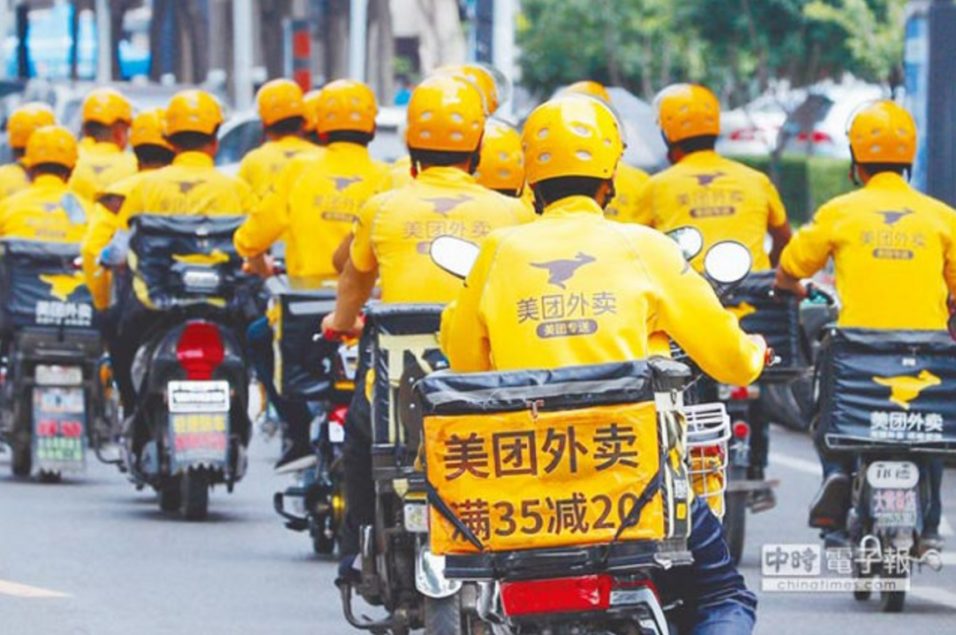
    Meituan couriers on bikes will now be armed with two delivery boxes, a normal one for non-halal food and a smaller one for halal food, the company announced recently, a change that many netizens apparently see as discriminatory, vowing that they will delete the app en masse.

    One Weibo thread on the controversial topic currently counts nearly 50,000 comments. “Meituan is really acting outside natural morality,” reads the top comment with more than 18,000 likes. Meanwhile, other Weibo users have more specifically charged the company with discriminating against Han people, wondering why separate delivery boxes are not also offered for them or for Buddhists or for people with other religious beliefs which affect their diet. “I don’t like to eat lamb, can I have my own separate delivery box as well?” asked another Weibo user.

    “Meituan delivers both halal food and non-halal food. That really isn’t proper or harmonious. In order to safeguard the sanctity of minority food, we non-halal diners should start using Ele.me [another popular delivery app] instead. That way Muslims will have their own halal app,” argued another netizen, joining calls online to boycott Meituan and delete the company’s app.

    Others have voiced their dissatisfaction with the policy change in different ways. For instance, Twitter user @kitmention points out one netizen who asked Meituan on Weibo to: “Please put my pork soup in your halal-only delivery box.”

    meituan_halal3.jpg

    Meanwhile, some netizens have wondered who exactly is discriminating against whom in this matter. In one popular post, a Weibo user asks “Have anyone’s rights been hurt?” by this logistics change, adding that if you believe that Muslims are really unfairly forcing you to accommodate to their religious beliefs, then are you not also committing the same sin by raising a fuss and calling for a boycott over this issue?

    In response to this argument, another Weibo user has argued that, in fact, separate boxes mean increased delivery costs that will be borne by all customers, not just halal ones, so the change will have direct consequences on the app’s users. And, as for the negative societal effects of such a policy, the netizen worried about how continuing to cater to religious customs could lead to problems down the road, arguing that consumers should be free to vote with their wallets to support or not support Meituan’s new halal boxes.

    More broadly, the controversy over halal delivery boxes appears to have reawakened ethnic fears among Chinese netizens against Muslims. A post by one female business owner on “rising Islamization,” which includes screenshots of a rather Islamophobic story, has gone viral on Weibo with nearly 40,000 shares. The comments below the post are filled with netizens condemning Islam and cautioning their Han brothers and (especially) sisters to be careful about the creeping influence of Islamic culture.

    Founded in 2010 and headquartered in Beijing, Meituan started life as a group buying website that emerged in the wake of the Groupon craze. It merged with restaurant reviews app Dianping in 2015 to form Meituan-Dianping, which now claims to be the world’s largest on-demand delivery platform, receiving up to 10 million orders every day.


    Source: http://shanghaiist.com
  • Celebration Of 50 Years Of National Service Forgets Past Discrimination Against Malays

    Celebration Of 50 Years Of National Service Forgets Past Discrimination Against Malays

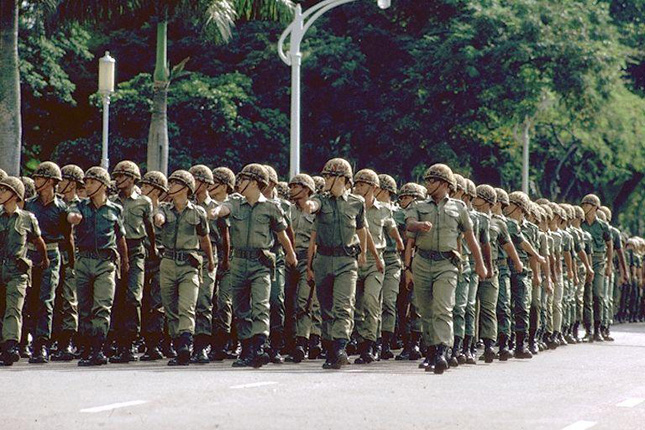
    Despite all our gripes and grouches about National Service (and its yearly reservist call-ups) it’s widely regarded as A Good Thing for a variety of reasons: Singapore has too small a population to rely on citizens volunteering for the military, it forces people from different backgrounds to assimilate, etc. etc.

    It’s been 50 years since mandatory conscription came into effect, and it’s become a cultural phenomenon unique enough to inspire films and literature revolving around national service. Criticisms abound, of course, but nobody can deny that Singapore stands ready when disaster (or God forbid, war) goes down.

    NS50, the year-long commemoration of National Service’s 50th anniversary, however does not bring back warm nostalgic memories for all Singaporean men. We’re not even talking about recalling the time you messed something up and caused everyone else to be punished, nor the time you wore the same dirty underwear for a week straight in the field — we’re talking about structural discrimination that disadvantaged people based on their race.

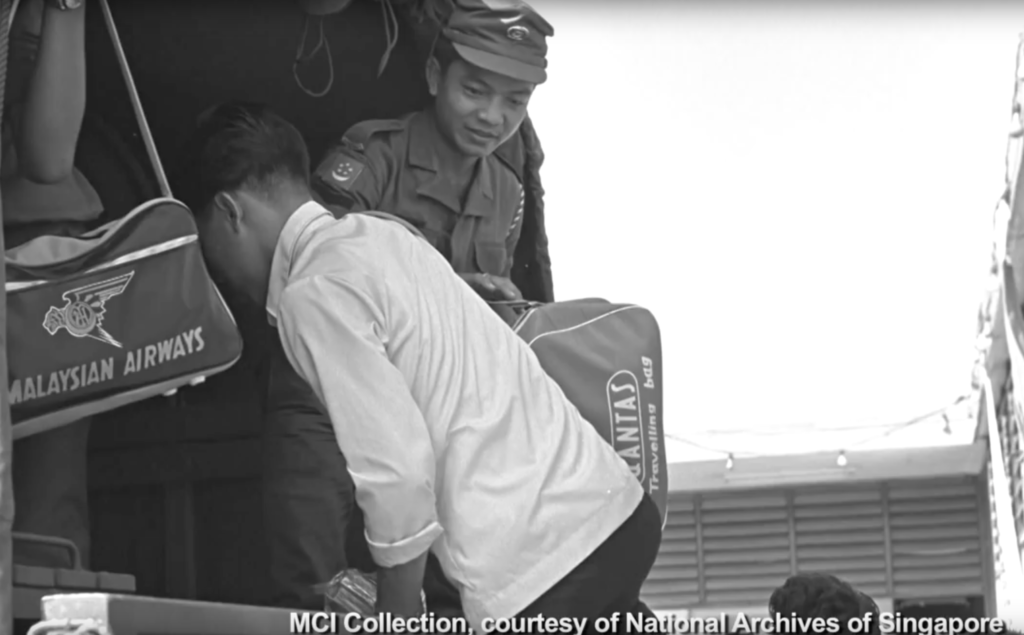
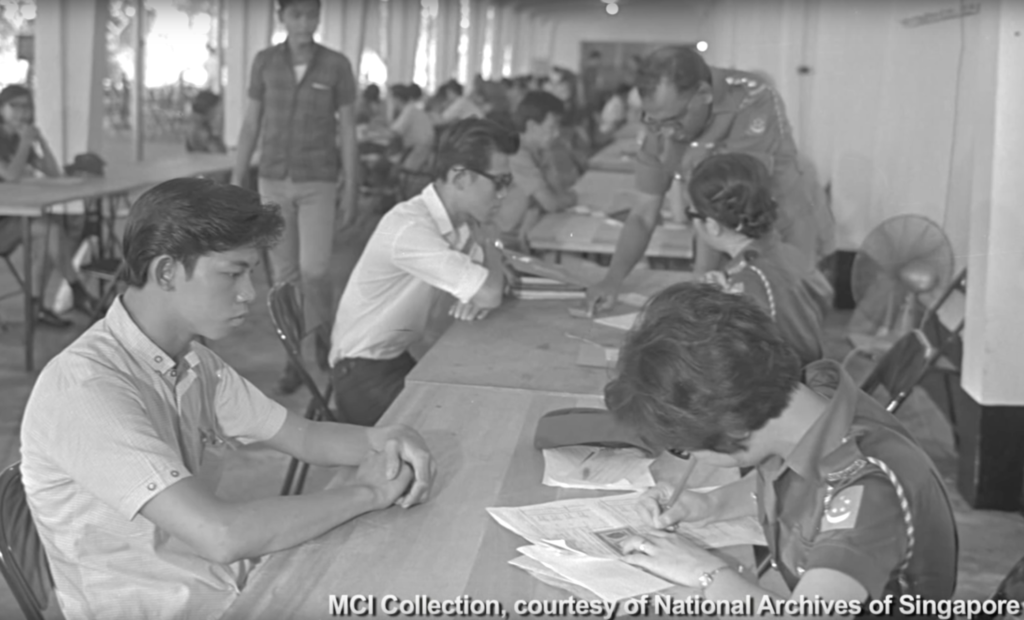
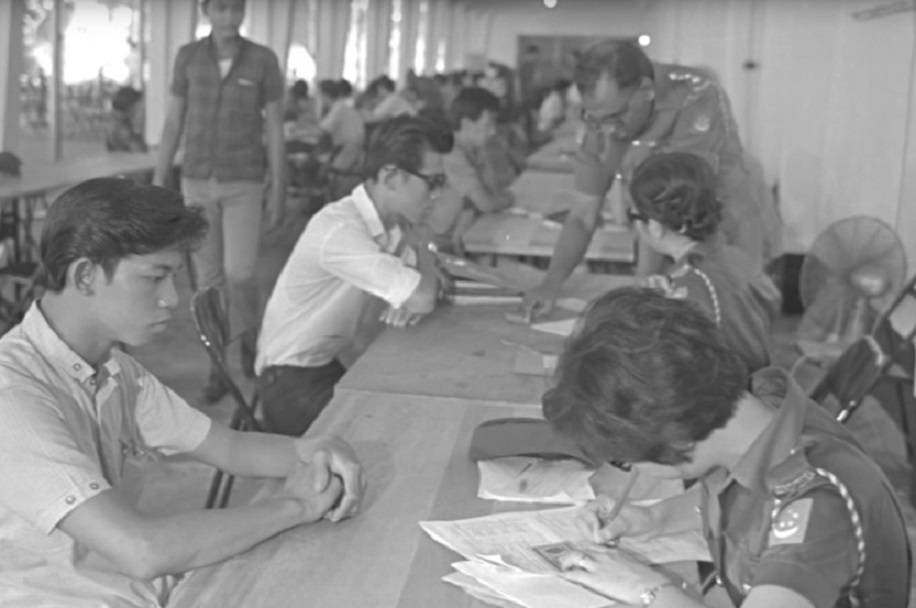
    Suspiciously missing from all the NS50 bluster and forced pride is the fact that Malay youths were virtually (not officially, mind you) excluded from conscription from 1967 till 1977.

    Even when they were eventually let in, they were mainly positioned to serve in the police force or the fire brigade. The small minority of Malays who manage to be called up into the military were given menial jobs, and are (almost always) excluded from key defense roles such as intelligence, the air force, commandos, artillery units and more — a practice that arguably continues to this day.

    The Ministry of Defence keeps insisting that the selection of personnel in various military vocations is not based on race. “The ethnic composition of commanders is similar to that in the general population,” Minister for Defence Dr Ng Eng Hen said in a  2014 response to a Parliamentary query about the racial breakdown across National Service vocations.

    The unofficial, widely understood reason is this: There is uncertainty as to where the loyalties of the Malay community lie should Singapore engage in war with neighboring Muslim-majority countries such as Indonesia and Malaysia.


    Alon Peled, an associate professor and political scientist at the Hebrew University of Jerusalem, noted in his paper (A Question of Loyalty: Ethnic Minorities, Military Service and Resistance) that discrimination against Malays in the military didn’t need to be spoken out loud to be felt.

    “By the second half of the 1970s, Malay exasperation with military recruitment and discrimination polices reached an all-time high. Even without official data, Malay parents knew that their children alone were not called upon to serve. Malay officers and (non-commissioned officers) who had been transferred from field command positions to the logistics corps were also frustrated. Nearly every officer knew that military units had informal quotas on Malays.”

    Though pleas were made to Malay leaders to change things, the figures of the day didn’t help ease the malaise. They stated that Malay youth lacked education and couldn’t speak English well (even though drafted Chinese Hokkien youth were the same). They argued that the government didn’t have enough facilities to train Malay soldiers (even though race should make no difference to when it comes to military training).

    1969 image from National Archives of Singapore

    It may not be much of an issue today, but the impact of Singapore’s blatant exclusion of Malays in the service back then was severe. Tania Li argues in her book Malays in Singapore: Culture, Economy, and Ideology that it left the Malay community behind in socio-economic standing.

    “There was an unfortunate side effect to the non-recruitment of Malays into National Service. Employers in Singapore are generally unwilling to recruit or train young male workers who have not completed National Service or obtained exemption papers as these youths can be called up at any time. Since Malays were not officially exempted from National Service, Malay youths were unable to obtain apprenticeships or regular jobs, and many were forced into an extended limbo period of about 10 years from ages 14 to 24 … (this) was in part responsible for the high percentage of Malay youths who became involved in heroin abuse during the late 1970s”.

    Peled repeats similar sentiments.

    “Malay servicemen were pushed out of the military, and young Malays found that the military doors, once their prime avenue for social mobility and a promising career, were firmly closed. Years of exclusion resulted in social bitterness, frustration and a major collision between the state and its principal ethnic minority group”.

    The silent ostracizing did not last, fortunately. Policies were eventually eased as the Malaysian invasion threat diminished, and Malay citizens were slowly integrated into the military. By the 1980s, more Malays were being posted in sensitive positions, including the Commando Battalion, while more began graduating as officers.

    The memories of the past however are hard to erase, and for former Straits Times’ senior political correspondent Ismail Kassim, the ongoing NS50 campaign did nothing but revive painful memories. Nonetheless, he asserts that it’s a good time for the government to make amends for the past wrongdoings.

    “Surely it is not beyond the ability of the present star-studded scholar-leaders to think of some way to assuage the hurt of the past.”


    Source: https://coconuts.co

  • Commando Melayu – Bangga Dapat Peluang Jadi Commando

    Commando Melayu – Bangga Dapat Peluang Jadi Commando

    KETIKA berada di sekolah rendah dan menengah, berat badannya berlebihan.

    Beliau kemudiann melakukan perubahan yang besar kepada dirinya.

    Kini, Koperal Muhammad Haidhir Jasmani, 20 tahun, berkhidmat dalam Batalion Komando Pertama (1 Cdo Bn) Angkatan Bersenjata Singapura (SAF).

    Tahun ini, 1 Cdo Bn mengekalkan kedudukannya dengan memenangi Anugerah Unit Penggempur Terbaik (Best Combat Unit) bagi Peraduan Unit Terbaik SAF.

    Sejak peraduan itu diperkenal pada 1969, 1 Cdo Bn telah diiktiraf sebanyak 31 anugerah.

    Koperal Haidhir berbangga unitnya telah memenangi anugerah tersebut kerana ia bermakna kerja kerasnya ketika latihan dan misi berhasil.

    “Latihan di sini mencabar dan saya perlu sentiasa mendorong diri saya menguatkan ketahanan mental dan fizikal.

    “Pengalaman di sini mengingatkan saya ketika saya bersekolah di menengah empat.

    “Pada waktu itu, saya sedar tahap kecergasan saya jauh berbeza berbanding teman saya yang berada dalam Pasukan Kadet Nasional (NCC).

    “Saya terfikir, apabila mereka perlu menjalani perkhidmatan negara nanti, mereka akan lebih bersedia daripada saya kerana stamina mereka yang kuat,” kata beliau, yang menuntut di Sekolah Menengah Pasir Ris.

    Pemikiran itu telah mendorongnya mengurangkan berat badannya dengan kerap ke gimnasium.

    Apabila beliau menuntut di Maktab Rendah Tampines pula, beliau menyertai Kelab Kesihatan dan Kecergasan.

    “Pada waktu itu, untuk mencapai matlamat kesihatan saya, saya harus mempunyai daya tahan dan ini sama seperti situasi saya sekarang,” ujarnya.

    Koperal Haidhir mengakui bahawa latihan yang dilaluinya di kem lebih mencabar daripada misi sebenar.

    Antara latihan yang dilaluinya adalah senaman Cabaran Komando yang merupakan latihan litar.

    Bagi cabaran tersebut, Koperal Haidhir perlu menterbalikkan tayar seberat 120 kilogram dan berlari sejauh 400 meter sambil mengangkat beg pasir seberat 15 kilogram.

    Senaman Cabaran Komando dilakukan sekitar dua kali seminggu.

    Koperal Haidhir, yang mempunyai dua lagi adik-beradik berusia 24 dan 26 tahun, merupakan pakar senjata unitnya.

    Beliau perlu mempunyai pemahaman yang mendalam mengenai senjata dan penggunaannya.

    Ketika teringatkan pertama kali beliau melakukan operasi turun daripada udara, beliau berkata latihannya telah membina keyakinan dirinya.

    Beliau memikirkan kesemua kemungkinan buruk yang boleh berlaku apabila beliau melompat daripada pengangkutan udara seperti helikopter dari ketinggian 1,000 kaki.

    “Saya membayangkan payung terjun saya rosak dan saya berasa sangat takut.

    “Namun, saya menguatkan semangat dan memberanikan diri supaya saya dapat menamatkan misi tersebut.

    “Operasi itu sebenarnya telah menguji ketahanan mental lebih daripada ketahanan fizikal saya,” katanya yang telah berjaya melakukan operasi tersebut sebanyak lapan kali.


    “Latihan di sini mencabar dan saya perlu sentiasa mendorong diri saya menguatkan ketahanan mental dan fizikal.”
    – Koperal Muhammad Haidhir Jasmani, 20 tahun, pakar senjata dalam Batalion Komando Pertama (SAF). Antara latihan yang dilaluinya adalah senaman Cabaran Komando yang antara lain memerlukan beliau menterbalikkan tayar seberat 120 kilogram dan berlari sejauh 400 meter sambil mengangkat beg pasir seberat 15 kilogram.


    Source: http://berita.mediacorp.sg

  • How To Show Appreciation To NSmen When Pioneer Generation Malays Were Discriminated In Or Excluded Altogether From National Service

    How To Show Appreciation To NSmen When Pioneer Generation Malays Were Discriminated In Or Excluded Altogether From National Service

    The NS50 nationwide campaign has revived painful memories to many Malays of my generation.

    How do we take part in this campaign to show our appreciation of National Servicemen when many of us were not called up; and of the small minority that were selectively called up, many also faced all kinds of invisible barriers during their service!

    Some were shunted to the cook house, others diverted to the transport section and became drivers, while a handful were deployed as physical instructors, as meritocracy and equality were thrown overboard..

    The first ten years were the worst as tens of thousands were left in limbo, in the twilight zone, unwanted by NS and because of that, they were not able to get jobs, leading to widespread unemployment within the Malay-Muslim community.

    I know so many of these people had to go to Mindef and begged to be taken into NS or to get a letter of exemption; most of their requests were ignored as callousness towards the community was then the order of the day.

    Those were the cruel days for the community until the top leaders see the light and gradually adjusted policies to make life easier for the community.

    But the discrimination against the community in NS and in the uniformed services, both subtle and otherwise, continues till today.

    To dismiss all this pain as just a perception, as a Malay Minister did recently in Parliament, is perhaps the unkindest cut of all.

    It is tantamount to rubbing chilly on wounds – despite the passage of 50 years – that have not yet completely healed.

    The current appreciation campaign, however, gives the government a golden opportunity to make amends.

    Surely it is not beyond the ability of the present star-studded scholar-leaders to think of some way to assuage the hurt of the past.


    Source: Ismail Kassim

  • The Voice SG & MY: Participants Can Be Of Any Race Or Nationality, But Have To Be Fluent In Mandarin

    The Voice SG & MY: Participants Can Be Of Any Race Or Nationality, But Have To Be Fluent In Mandarin

    Popular international reality TV show The Voice has now made its mark in Southeast Asia, with a new show aimed at Singaporean and Malaysian audiences.

    The singing competition will now be adapted for the countries under one program, co-produced by mm2 entertainment along with cable providers StarHub (Singapore) and Astro (Malaysia).

    They’ve now opened entries to aspiring singers from these two countries, and they assure that they’re “on the search for true talents with good voices regardless of their appearances.” But there is one curious catch: you must be able to sing in Mandarin.

    “There is no restriction on race as long as you have a good voice, are fluent in Mandarin, and are able to perform Mandarin songs,” they state on the FAQ page on their official website.

    It appears that this version of The Voice is primarily targeted towards Mandarin-speaking audiences. This differs from the Singaporean adaptation of American Idol, where contestants sang in English.

    Social media users are understandably angry over this rule, raising questions over the show’s language exclusivity.

    It’s likely that this show is aiming to reach the level of success of Sing! China, which was formally known as The Voice of China and mainly featured singers, which included finalist Nathan Hartono last year, performing in Mandarin. mm2 will not be allowing entrants to sing in Hokkien or Cantonese.

    While some are crying foul over the show’s discrimination against non-Mandarin speakers, B-Quartet frontman Bani Haykal threw in a slightly different perspective on the matter on Twitter: speculating that the rule is likely a strategic move for the show to appeal to audiences in China, the same way Sing! China became popular with audiences in Southeast Asia.

    He explains more in an entire Twitter thread, and it is an interesting argument: Sing! China‘s finals broke viewership records in China, and the country remains an extremely attractive prospect for foreign media to target (*cough* The Great Wall).

    The Voice for Singapore and Malaysia could simply be an attempt at replicating the success of Sing! China, but with the emphasis on multi-racial growth in both countries, could this be simply a tone-deaf strategic move by mm2?

    Registration

    StarHub announced on Friday (May 5) that those aged 16 and up can begin to apply for a spot on the show as of 6pm.

    Again, although participants can be of any race or nationality, “talents have to be fluent in Mandarin and able to perform songs in Mandarin”, according to a press release from StarHub.

    They must also submit a clip of themselves singing. Clips must be no longer than 90 seconds, and dialect songs such as those in Cantonese or Hokkien are not allowed. Other than that, there is no restriction to the language or genre of the song selected, and applicants may choose between singing a cappella or with an instrument, said the press release. Singing with accompanying music tracks is not allowed.

    The auditions close on May 31. Visit www.thevoicesgmy.com


    Rilek1Corner

    Source: https://www.bandwagon.asia and http://www.todayonline.com