Tag: elite

  • 6 Reasons Why Fandi Ahmad Should Not Run For Presidency

    6 Reasons Why Fandi Ahmad Should Not Run For Presidency

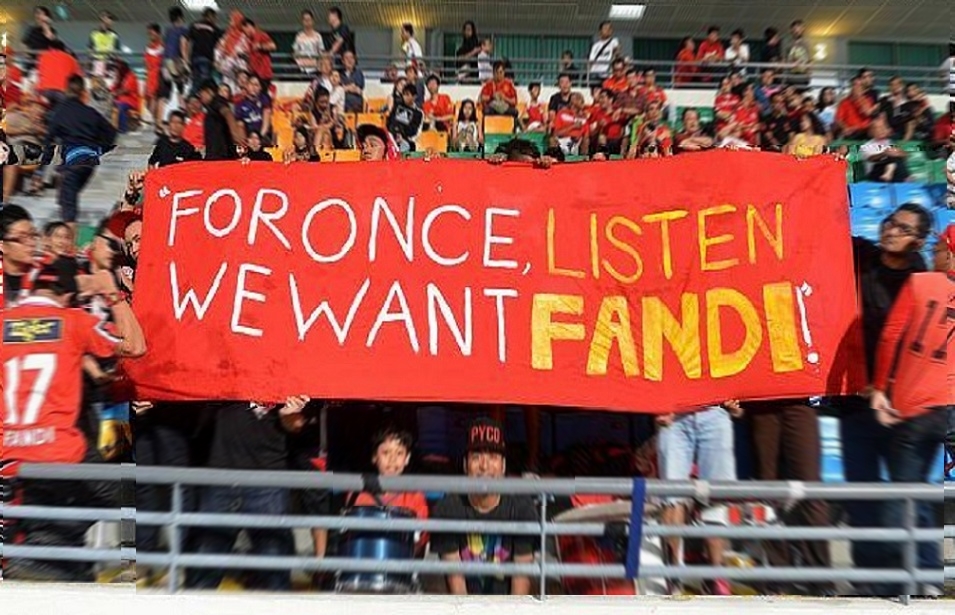
    Halimah Yacob, Salleh Marican and Farid Khan – three names that have not inspired confidence in their race to the Istana. Singaporeans are getting desperate to the point of encouraging presidential hopeful, Dr Tan Cheng Bock to become Malay. And then there’s Singapore’s favourite footballing son, Fandi Ahmad – a popular choice, even though we don’t see him qualifying as a candidate.

    Will Fandi make a good President?

    Here are 6 reasons why Fandi Ahmad should totally not become President:

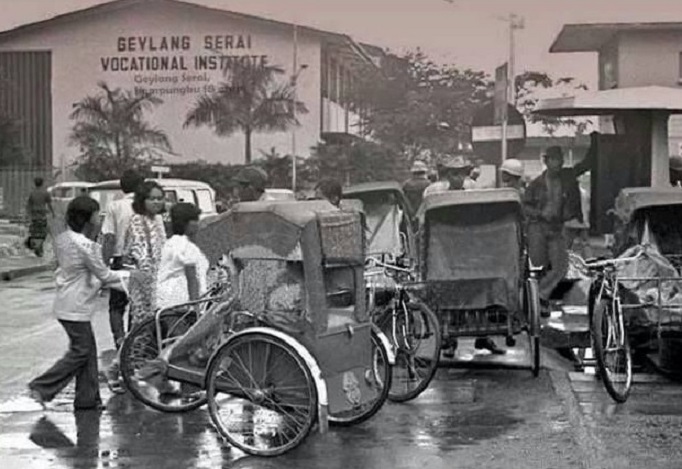
    1. He is not educated. He was from a vocational school and has never graduated from a university like many of our very elite millionaire Ministers. Even though he became rich from playing football and his business interests, he is still not considered elite like our Ministers.
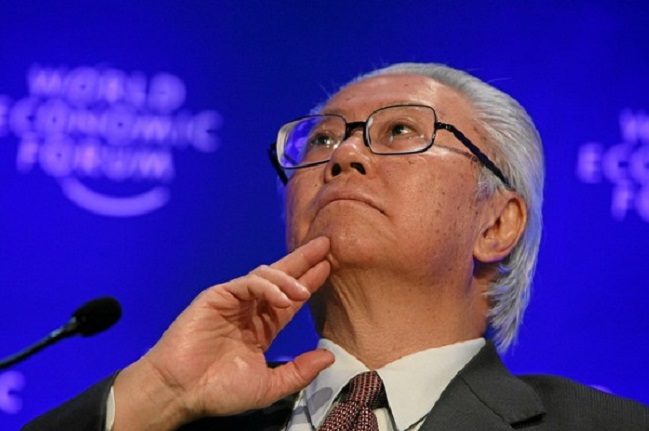
    2. Fandi doesn’t have the look of a President. He doesn’t have a back comb, and wear large glasses like our current President who is very Presidential and charming. When Tony Tan speaks, the room is quiet (because people fall asleep). Compare that to Fandi. Wherever he turns up, people make a lot of noise and mob him. How very un-presidential. Who would support Fandi?
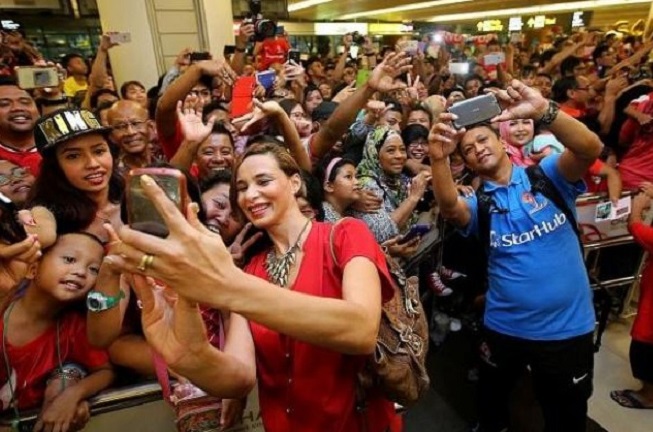
    3. He is too handsome. The only President that was handsome was the late President Yusof Ishak. He will make all the men jealous. They will ban their wives from going to Istana open houses and National Day parades. We don’t want that too happen do we?
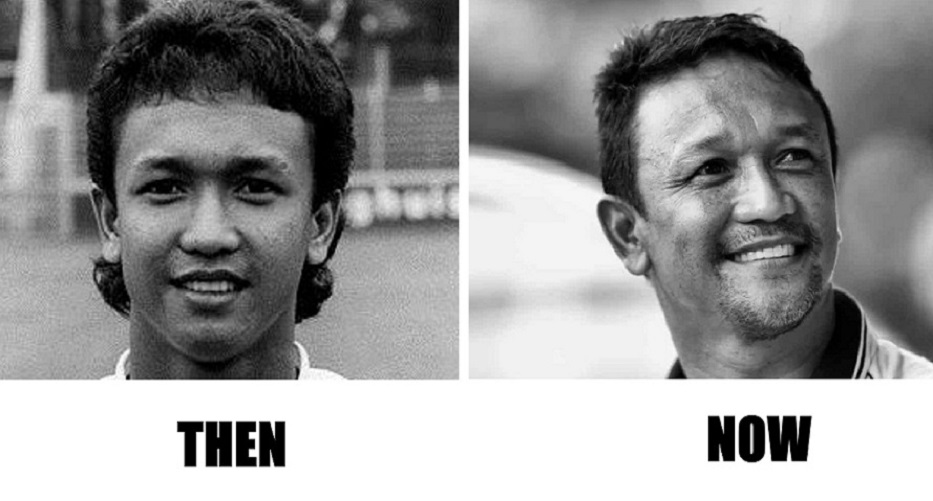
    4. Fandi is a sporting legend and national icon. How many sporting icons have served in public office? Sporting icons contribute back to the country through their grassroots work. Don’t meddle in the work of the elite leaders and the natural aristocrats of our land.
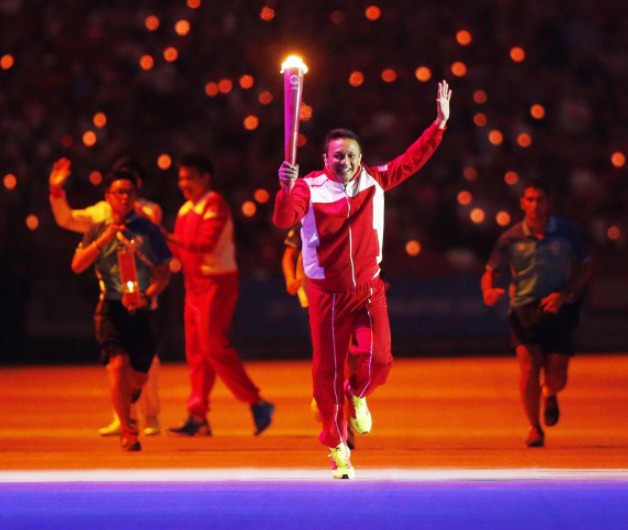
    5. For a prospective Malay President, he has too many friends from other races to be called truly Malay.
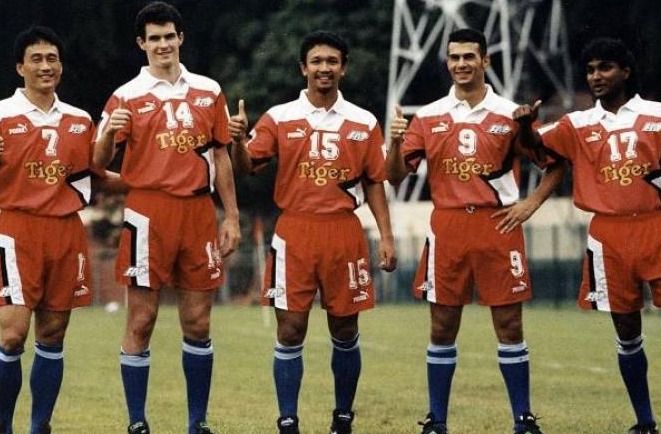
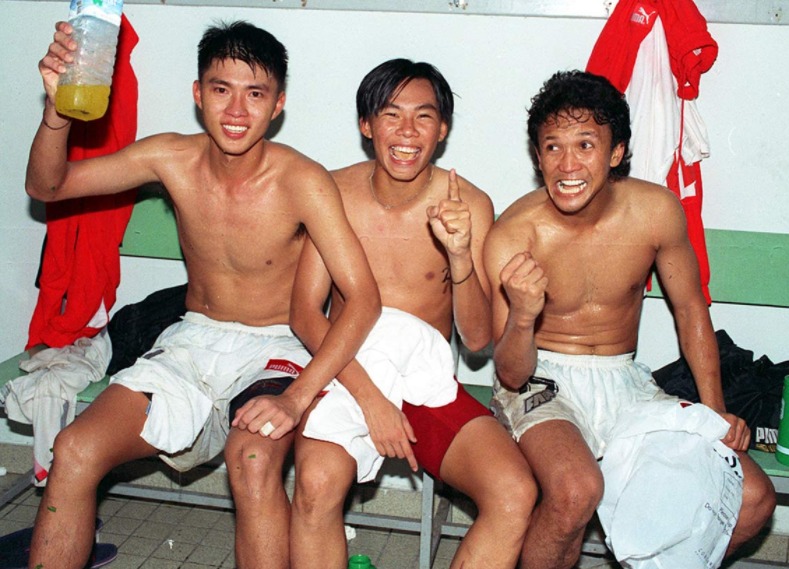
    6. Lastly, Fandi Ahmad is too humble. His humility is the stuff of legend, just like the man himself. Presidents cannot be too humble because they need to keep the political elites and natural aristocrats in check.
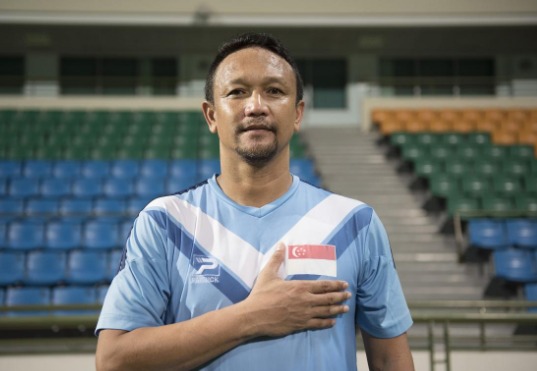
    There you have it, 6 reasons why abang Fandi shouldn’t run for Presidency. We totally don’t want a down-to-earth, humble, handsome and capable President who is Malay.

    Convinced yet?


    Rilek1Corner


    Disclaimer: We would totally vote abang Fandi if he runs for Presidency. Totally. We know Singaporeans would too. 
  • Early P1 Ballot Likely At 5 Popular Schools; Not For Malay Students

    Early P1 Ballot Likely At 5 Popular Schools; Not For Malay Students

    Parents hoping to place their six-year-olds in five of the most popular primary schools this year may face a ballot next week.

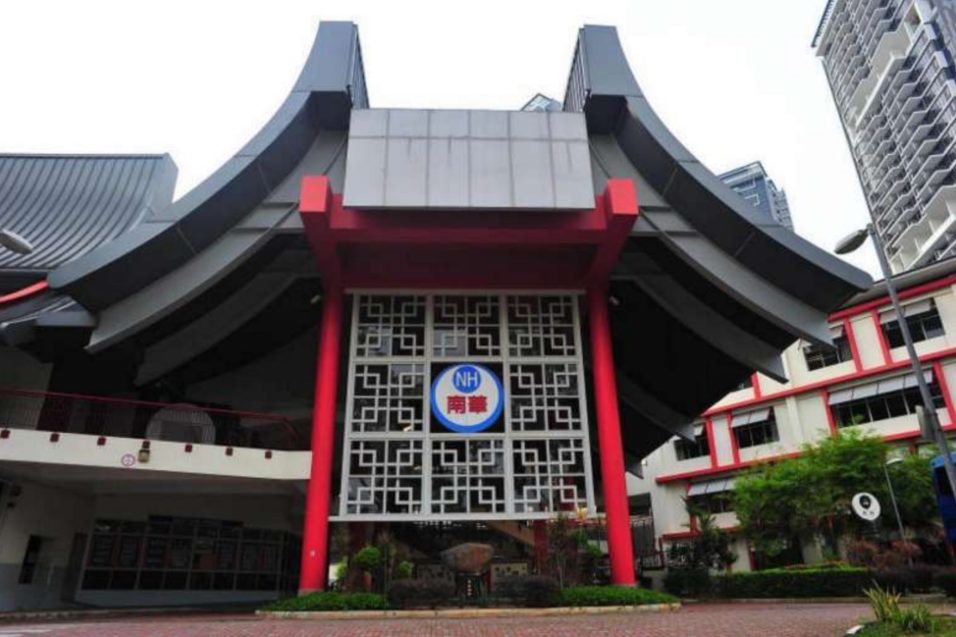
    The schools are CHIJ St Nicholas Girls’ School, Nanyang Primary, Nan Hua Primary, Red Swastika School and Catholic High School.

    A total of 29 schools were left with fewer than half of their vacancies after Phase 2A1, the second of seven Primary 1 registration stages, closed on Wednesday. Last year, only 19 schools were in this situation.

    The phase, which follows Phase 1 for children with siblings currently studying in the school, is for children whose parents had joined the school alumni association at least one year ago, or are on the school advisory committee.

    The next phase, 2A2, is for children whose parents or siblings are former pupils, or whose parent is a staff member at the school. Registration starts next Tuesday and ends the next day.

    A rule introduced in 2014, which requires all primary schools to set aside 40 places for children in the later stages, may also put a squeeze on places available for the next phase. The 40 places will be split equally between children registering in Phases 2B and 2C.

    In the past three years, balloting has been taking place at an earlier stage of the registration exercise, partly as a result of this new rule.

    Phase 2B is for children whose parents are school volunteers, active community leaders or have ties with church or clan associations directly connected with the schools. Phase 2C is for children with no ties to the school.

    After reserving the 40 places, CHIJ St Nicholas has only seven spots left for Phase 2A2, after 95 children registered this week.

    Nanyang Primary and Nan Hua Primary have 10 and 19 places respectively left for Phase 2A2, while Red Swastika and Catholic High have 23 and 31 spots respectively left for Phase 2A2.

    Communications professional Ow Yong Weng Leong successfully registered his daughter for a place at Red Swastika School this week.

    “The school offers Higher Chinese from Primary 1, so I hope it will help my daughter in becoming bilingual as she currently speaks English more,” said the 37-year-old.


    Editors Note:

    Based on sources, students who take Malay as a second language cannot enrol in any of the five popular primary schools namely CHIJ St Nicholas Girls’ School, Nanyang Primary, Nan Hua Primary, Red Swastika School and Catholic High School (https://www.moe.gov.sg/a…/primary-one-registration/vacancies). Perhaps if they make millions, one day one of them they can become President of Singapore. What a shame.

    Is the kind of elite tokenistic multiracialism the DAG believes in?


    Source: StraitsTimes

  • Netizens Angry Over NTU’s Elitist Email

    Netizens Angry Over NTU’s Elitist Email

    An e-mail sent out by Nanyang Technological University’s (NTU) School of Humanities and Social Sciences (HSS) to its final-year students has raised the ire of a number of undergraduates and netizens.

    Last Wednesday, Mr Joel Chong, a final-year student at the HSS, uploaded a screen-shot of the e-mail, which asked for inspirational stories from its undergraduates.

    Besides stories from prodigies, outstanding undergraduates with multiple job offers awaiting them, and those who have overcome great odds, the school also asked for stories from “graduating VIP students from an important or well-known family, sons or daughters of politicians, professors, celebrities etc”.

    That line has angered a number of netizens, and Mr Chong’s post has since garnered more than 400 likes and over 700 shares.

    Speaking to The New Paper yesterday, Mr Jonathan Ang, 23, a third-year student at HSS, said: “Why does it even matter what your surname is? That group shouldn’t even be there at all, it’s not about phrasing but the subject matter itself that is wrong.”

    Miss Emi Morihata, 21, a third-year student at NTU’s Wee Kim Wee School of Communications and Information, was also disappointed with the HSS.

    “Their view of ‘inspirational stories’ is so superficial.

    “The fact that they are setting these narrow-minded measurements as indicators of an eligible candidate already shows that they are just doing it for the sake of publicity to showcase the school.

    “Graduation is a celebration of the students who have worked hard through the years. If they really want to highlight these hardworking people who overcame challenges during their academic life, such indicators won’t be on the e-mail in the first place.”

    Responding to Mr Chong’s Facebook post last week, a spokesman for NTU felt he had been unfair in singling out the particular line, causing “the spirit and meaning of our open request for nominations” to be “misinterpreted and distorted”.

    Responding to queries from TNP yesterday, an NTU spokesman said: “We understand the concerns raised and it was never our intention to focus on only individuals of certain backgrounds.

    “The highlighted line could have been better phrased.

    “Convocation is a celebration of our students’ achievements and knowledge, and as always, we will be as inclusive as possible and portray this by featuring stories of students from all walks of life.”

    Sociologist Tan Ern Ser felt the line in the e-mail suggested elitism.

    “In a meritocratic society, we celebrate achieved status – that is, achieved through individual merit, ability and diligence – rather than social background, which is not within our control.

    “Highlighting a person’s social background is not only elitist but also contrary to our core values.

    “Perhaps, the ones who penned those requirements have good reasons for doing so, and I am sure many would like to know what those reasons are,” he said.


    Source: www.tnp.sg


  • Remember Wee Kim Wee? We Won’t Get A President Like Him Again If PAP Has Their Way

    Remember Wee Kim Wee? We Won’t Get A President Like Him Again If PAP Has Their Way

    Of all our presidents, I remember Wee Kim Wee the fondest. Maybe that is because he looked a little like my late father.

    In my mind, Wee Kim Wee was a great president. I remember seeing him on tv and thinking, “What a gentle soul.” Always with a smile, and as I recall, he lent his presence and name to many charitable works during his 8 years as head of state.

    And the fact that he chose to be buried among the common people at the Mandai Crematorium, says it all.

    A president is more than a CEO, more than someone who can handle $100 million, or even $1 billion. He is more than just another run-of-the-mill elite, picked from an exclusive group.

    For me, a president is someone who is able to stand above everyone and everything else, especially petty politics of the politicians and the political parties.

    President Wee was such a person.

    It is thus a shame that even if we ever have another Wee Kim Wee, he will never be deemed qualified to be our president, under current laws and under the expected changes to the law.

    It is a shame because it seems we have lost sight of what really the president is, and what the presidency means.

    He has become nothing more than a watchdog, relegated to guarding at the threshold, like an outpost looking out for trouble, and expected to bark when trouble comes.

    It is such a shame how we have stripped the presidency of all nobility.

    We do not need another aristocrat picked from among the elite.

    We need another humble, inspiring man like Wee Kim Wee. And such a man can come from anywhere, even among the ordinary.

    Don’t be fooled into thinking that only someone with some nebulous “financial expertise” or knowledge is qualified to be president.

    In fact, it is precisely such illusions which is now threatening to destroy all that the presidency is supposed to be.


    Source: Andrew Loh

  • Malays Are Underrepresented In Elite JCs

    Malays Are Underrepresented In Elite JCs

    Females and non-Malays are likelier to enrol in elite junior colleges (JCs), particularly those located in wealthy neighbourhoods, a study by two Singaporean researchers has found.

    Analysing data from more than 5,000 classrooms in six JCs over 40 years — from 1971 to 2010 — National University of Singapore (NUS) sociologist Vincent Chua and University of Melbourne economist Swee Eik Leong discovered persistent gender and ethnic disparities in the profiles of students who enrol into elite JCs located in neighbourhoods that have become wealthier.

    Over time, the representation of females in elite JCs increased, while that of Malays decreased. Malays were less well-represented in elite JCs than in non-elite ones, with the gap being largest in the wealthiest neighbourhood, the data showed.

    The three elite JCs (National, Anderson and Temasek) and three non-elite JCs (Catholic, Nanyang and Tampines) covered were located in neighbourhoods of high, medium and low wealth, measured by their share of landed property.

    “Overall, we find that females are more likely to enter elite schools located in wealthy neighbourhoods because these neighbourhoods tend to be more centrally located,” the researchers stated in the study, which was presented on Friday (May 27) at an international sociological conference hosted by the Centre for Family and Population Research at NUS.

    “We also find that minority Malays are less likely to enrol in elite schools located in wealthy neighbourhoods because these neighbourhoods lack the ethnic solidarity among minorities that less wealthy neighbourhoods have,” they added.

    It was the multiplication of school and neighbourhood characteristics that produced segregated patterns of enrolment, the researchers argued in the study, which is being reviewed by a journal. “Therefore the argument in popular discourse — that education is a social leveller — is not supported by these data; instead, it illustrates that education can facilitate growing inequalities,” they wrote.

    School performance indicators compiled by the Ministry of Education were used to distinguish elite schools from the non-elite ones. The study used data from the JCs’ yearbooks (documenting each school from its first graduating cohort), national censuses and statistical yearbooks.

    The study controlled for the observation that schools with more arts classes tend to have more females and schools that offer more classes in a language medium tend to draw particular ethnic groups, Dr Chua said. It also controlled for gender and race over-representations at the neighbourhood level, as well as permanent differences among JCs such as the grade requirements that affect the enrolment of gender and ethnic groups.

    Dr Chua said: “So having controlled for all of these (variables), we still find a strong neighbourhood effect. Indeed, the elite characteristic of schools interacts with neighbourhood wealth to reinforce certain patterns of educational inequality between gender and ethnic groups.”

    The study suggests that the location of the JCs mattered. “We emphasise that social and spatial characteristics work in combination to shape and influence inequality outcomes. It’s not a case of one or the other, it’s a combination,” he said.

    Both researchers said that the study exploited the unique setting of Singapore’s pre-university system, where public elite and non-elite schools are spatially well-distributed across neighbourhoods here.

    The findings suggest that policymakers could adopt a “cross-cutting” strategy by locating elite schools in less wealthy neighbourhoods and vice versa, he added.

    The research began in 2012, so it covered schools up until 2010. Dr Chua said that there could be changes due to policy shifts in education since 2010.

    All neighbourhoods here are well-resourced but inequalities exist, and the Government’s initiatives to help disadvantaged families could also help narrow ethnic inequalities, he added.


    Source: www.todayonline.com