Tag: HDB

  • Chee Soon Juan: Goh’s Folly – Commodification Of Public Housing

    Chee Soon Juan: Goh’s Folly – Commodification Of Public Housing

    IT IS SAID that a politician thinks of the next elections but it takes a real leader to think of the next generation.

    And so it is with Mr Goh Chok Tong who may, having bolstered the PAP’s grip in politics through his asset enhancement and HDB upgrading schemes, lay claim to being a brilliant politician but, through these same policies, demonstrated utter failure as a leader.

    In 1991, under pressure to deliver a good result to secure his mandate as the new prime minister after taking over from Lee Kuan Yew, Mr Goh introduced the asset enhancement programme which, for all intents and purposes, cajoled (or threatened, as some saw it) Singaporeans into voting for his party in return for enhancing the prices of their HDB flats.

    The plan worked brilliantly, securing for the prime minister and his party mates a healthy victory. But it also started the pernicious mentality among Singaporeans that one’s flat was a commodity whose price stood to appreciate markedly over a short span of time.

    As a consequence, few thought little of shelling out huge sums of money, mainly by using their retirement funds, to finance HDB purchases. The motivation was that one could monetise the asset and realise robust capital gains at a later stage.

    Such a trend had two unfortunate effects: The first was that using CPF savings to service HDB mortgages would leave many financially wanting in their retirement years.

    The second is that as prices rose, young entrants into the public housing market would find it prohibitive to start a home. As a result, many young couples put off having children as their finances come under pressure.

    The propaganda, pushed by a media that act more like cheerleaders than vehicles for thoughtful deliberation, compounded the public’s exuberance for asset enhancement. Duly stoked, homeowners devised ways of using their flats to turn a profit.

    Some have even resorted to buying older flats at high prices with the view to reaping the benefits of redevelopment through the Selective En bloc Redevelopment Scheme (SERS).

    (The SERS selects older blocks of flats for demolition and replaces them with new ones. Displaced occupants stand to gain from a fresh 99-year lease of their new flats and are, in some cases, compensated financially or given subsidised prices for their new flats.)

    Related article: SDP proposes Non-Open Market flats

    This prompted the National Development Minister to step in and point out that SERS, as the name suggests, is selective – extremely selective, in fact – of blocks earmarked for redevelopment; only four percent have come under the scheme since it was launched in 1995.

    In addition, the Minister reminded, when the 99-year lease is up, a flat would have to be returned to the state. In other words, it becomes worthless.

    How does this square with Mr Goh Chok Tong’s vaunted promise to enhance one’s asset in return for voting for the PAP?

    A cynical ploy

    It was the height of irresponsibility to make a promise that the government is ill-equipped to deliver. For one thing, property prices are not determined by fiat. Much of it relies on the state of the economy. With an increasing number of workers being retrenched (or if they remain employed, having their wages frozen) and the young finding it more difficult to find jobs, how are Singaporeans going to afford bigger and more expensive flats or, for that matter, even their first one? And if they can’t, how is value of HDB property going to go up?

    With the global economy showing little appetite for the kind of exploitative trade seen over the past few decades, Singapore’s economic fortunes have dimmed considerably. The inexorable march of automation also means that more and more Singaporeans will be out of jobs, replaced by robots. Add to these China’s determination to by-pass Singapore (a staunch US ally) as a trading centre in order to secure its own shipping interests, our economic future looks shaky.

    In the face of such uncertainty, how is the PAP going to make good on its asset enhancement promise? It was, to begin with, unrealistic to expect prices to appreciate indefinitely. Yet, Mr Goh and company chose to ignore the pitfalls in a cynical bid to buttress its political hegemony.

    The policy also has ramifications at the macro level. With a significant portion of income tied up in property, consumer spending and other forms of domestic investment are necessarily curtailed. Investments in higher education or to start-up businesses are also reduced. All these have serious implications for our economy as we move ahead.

    In the final analysis, housing – in particular public housing – should not be a tradeable commodity. It is our home in which we bring up our children, that roof over our heads when ill-winds blow. It should never have been turned into a commercial entity.

    ​Therein lies Goh Chok Tong’s ultimate folly.


    Source:www.cheesoonjuan.com

  • Single Mother-Caregiver Of Told To leave Flat Because Of $99 Unpaid Rents

    Single Mother-Caregiver Of Told To leave Flat Because Of $99 Unpaid Rents

    Jobless single mum with sick dad who is suffering from a heart attack forced to leave rental flat by 30th April after owing HDB 3 months of rent amounting to $99!

    Source: Gilbert Goh

  • Jurong West Coffeeshop Toilet Too Dirty For NEA, Ordered To Shut Down, Operator Fined

    Jurong West Coffeeshop Toilet Too Dirty For NEA, Ordered To Shut Down, Operator Fined

    A coffeeshop at Jurong West will be shut on Friday (March 17), after it was found to have violated several health violations related to its restrooms.

    According to National Environment Agency (NEA), the eating house, at Block 503 Jurong West Avenue 1 #01-855, had failed to maintain sanitary fittings in good working condition and repair. It also did not provide hand soap in the toilet.

    The whole eating house, will be required to cease operations for a day while the operator has been fined S$1,000.


    Source: www.todayonline.com


  • MPs – Public Service Serving With No Heart, Compassion

    MPs – Public Service Serving With No Heart, Compassion

    Several Members of Parliament yesterday called for greater compassion from a public service that has, in Nee Soon GRC MP Louis Ng’s words, “lost its heart”, citing examples of how people have been turned away because public servants were doing things strictly by the book.

    Citing a resident who was slapped with letters demanding mortgage and tax payments while struggling to provide for her late sister’s two children, Mr Ng said: “I asked the HDB (Housing and Development Board) why they did that. The answer was that they didn’t know the letter was sent as it was computer generated … Our aim seems to be to process each case as fast as possible and to follow the book as strictly as possible.”

    He lamented: “In our pursuit to automate most things, we now have a system without a heart.”

    Nominated MP Kuik Shiao-Yin, meanwhile, urged the Government to extend a “compassionate” helping hand to those mired in the poverty cycle.

    While the slew of handouts — from education subsidies to Goods and Services Tax U-Save Vouchers — were helpful, they are but “drops in a constantly-leaking bucket” for these families, said Ms Kuik, who called for more universal support to meet needs such as eldercare, quicker access to affordable housing and respite for caregivers.

    The working poor, she noted, hold full-time jobs and slog to support their families but still cannot seem to break the poverty cycle.

    Not only do they feel left out, those struggling to make ends meet are left behind by the Government’s calls each year to “upskill”, “internationalise” and “innovate”.

    This is neither the result of nonchalance nor laziness, but because “they’re just busy trying not to drown under wave after wave of new demands, new costs and new changes”. To this group, even the “calmest and most reasonable technocratic explanation” on why a water price hike is justifiable would feel like “salt on a wound”, said Ms Kuik.

    What preoccupies them is that they “don’t have enough, I’ll never have enough and I’m not enough and you don’t care”, she added.

    The disadvantaged lack the luxury of breathing space to weigh alternatives and plan for their future, and rather than brush them off with “don’t know, go talk to your MP” — as some frontline officers do — conveying available solutions compassionately is the key, she said.

    Dr Lee Bee Wah (Nee Soon GRC) noted that some civil servants tend to be more concerned with the “rules of their own agency” than what might benefit Singaporeans.

    And public agencies often have requirements that contradict one another, said Dr Lee, citing the example of an “incomplete” covered linkway in Khatib that was left with a gap because the HDB could not meet other agencies’ requirements to build a seamless linkway.

    “These are only small projects and we meet so many obstacles … Can’t our civil servants be more result-oriented and objective-driven, instead of just guarding your own turf?” she asked.

    Calling for better communication between the Government and the public, Ms Joan Pereira (Tanjong Pagar GRC) said: “Seniors used to joke that the answers to their queries at Government departments always start with ‘www’… Making adjustments to accommodate our seniors is a signature of a caring society.”

    Saying that the public service defends policies rather than listen to ideas on how to make them better, Mr Ng called for greater innovation in the public service.

    “A crucial player in the implementation (of the Budget) is our public service … I hope that every public servant has a heart full of grace and a soul generated by love,” he said.


    Source: www.todayonline.com

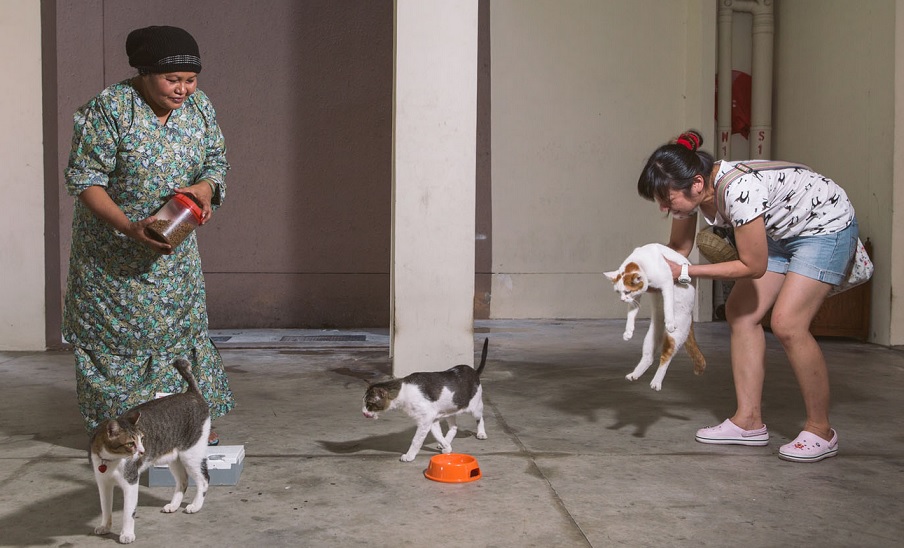
  • Cat Issue Likely To Become The “Solution” For Annoyed Cat Haters To Retaliate

    Cat Issue Likely To Become The “Solution” For Annoyed Cat Haters To Retaliate

    “Cats are not allowed in flats. They are generally difficult to contain within the flat. When allowed to roam indiscriminately, they tend to shed fur and defecate or urinate in public areas, and also make caterwauling sounds, which can inconvenience your neighbours.”

    I saw that my buddy Sameer Ab. Kadir received a HDB letter as a result of a neighbour complaining. So, decided to check the HDB website for the law on this and true enough, they did list it down.

    The ruling also didn’t provide any provision, unlike they had for dogs. So, if the cat can be contained, does not roam indiscriminately, shed fur, defecate or urinate in public areas nor make caterwauling sounds, shouldn’t the cat then be allowed?

    I believe that HDB needs to assess such complaints on a case by case basis. To go down to the location to conduct a personal observation to assess before issuing such a letter informing the owner that they will have the said pet removed from the premises by a certain date.

    The pet cat, like the pet dog, is a part of the family and being dependent on the owner for its sustenance, it will suffer its own form of PTSD or panic attack when removed from familiarity and may not survive in a new environment.

    Hope that HDB will be able to exercise discretion in handling this matter and to the neighbour who made the complain, I hope you spend a little bit more time with animals.

    My fear with such a complain going viral is that it then provides others who hate cats an ‘exit solution’ to their annoyance for cats and abuse the law to their own convenience.

    I’m sure a lot of people are shocked and will be standing in solidarity with Sam on this though.

    Hope your cats will get a fighting chance to stay at your home Bro. Give them that fight.


    Source: Ab Di Lar